(This post is “too long for email”, so if you want to read it all, you’ll have to click through.)
So all I want to do is find you in the material world.
I want to find you on telephone poles and on bulletin boards, on the door of the local coffee shop, at the back of the weekly paper, in the classified ads. I want to find you in the record store, the bookshop, the diner, the back of the bulletin at church. I want to find you in the Yellow Pages. I want to find you within the circumference of my arms, as I turn in a circle. I want to be able to keep track of you. I want to be able to put you where I know how to find you, and I want to be able to find you.
I want you to be exactly as you are. I want you to never feel you have to write with the other hand or hide your home way of speaking. I want to see the world as you do, in your words, in your ways of moving. I want to recycle your letter, hang the postcard you sent me above my desk. I want to carry a sign with you. I want to see your handwriting on a wall. I want to sit with you on the front steps. I want to put my arms around you. I want to go for a walk with you. We will get tired, and we will go home and have a cup of tea, and sit on those front steps. When you leave, we will each go to the Post Offices in our neighborhoods and buy stamps for the next round of letters.
I want to see you everywhere. Your mark: whole world of words and images we move through. Irreplaceable each! And the place I can see you, find you, want to slow down time to be with you is that world, the one that reminds me that we are all made of dust. So take your time.
I can’t keep track of things very well on the internet or on my computer, and I think that’s because those are two basically limitless spaces. I use Zotero, I use my Notes app. I use tags and labels and folders. I reorganize my computer files, figure out better ways to name them. I keep lists in my notebook. But I can’t navigate it all. I have seventy-five tabs open, even though last month I closed seventy open tabs and said to myself, never again! You don’t even go back to them!. There is just too much there. And it’s not only a matter of I can’t find you. It’s also a matter of I don’t know where to begin, which often leads to I feel incapable and lost. So I want to stop this: stop adding my pretense of weightless, frictionless, easeful endlessness to the pretense of weightless, frictionless, easeful endlessness of screen-based technologies and social media. I want to let friction, weight, and space teach me how to be. With you.
I want to spend the bulk of my creative time and energy and life making things, and having things, reading things, seeing things, that I can hold in my hands, and you can hold in yours. Finite material objects, for our finite material world. Using material reminds me that material is precious—even (especially?) those everyday kinds of material called “paper” and “ink” and “staples”. I can’t keep everything. I can’t make everything. There’s already so much out there. (The moment I started seeing junkmail as printmaking supplies, and jars as glasses and vases, and plastic tubs as paint and ink containers… it became difficult to look at all the packaging around me as anything but a miraculous—because look at all this useful and useable stuff!—and horrifying waste.) There is not unlimited space to store things. We have to work to the dimensions of our actual spaces. Material itself makes demands on us: space, time. However, it also makes certain things possible: by its limits, material frees us from the infinite scroll/infinite search, from the appearance of availability that makes everything (including our own taste, our own desires, our motivation, our imagination) hard to locate. Material reminds us how much knowledge there is in our hands and other sense organs.
Also, to get right down to it, you can pass around a physical copy of a book, and that’s a different sense of sharing than a post on the latest “social” network. And if you make it, or I make it, no billionaire makes it, and no billionaire owns it, and ideally we can, to some degree, take care to make the book in such a way as to make it possible for those involved (printers, postal workers, etc.) to have a life as rich as the one we want for ourselves.
Let’s do that.
So, material. Abundant Number is in print. It is available for now as a subscription of four issues, sent irregularly, for €20. (That pretty much covers shipping—worldwide, which is included in the price—tax, and printing. The four-issue subscription is numbers 1-4, so whenever you subscribe you’ll get the first four volumes.) If the subscriptions sell out, the form will stop accepting responses and there will be other information there.
Here is where you can find out about, and check in on, Abundant Number. Everything will be in print, but that static webpage and its linked forms have and will have basic, updated information. (Some essays that first appeared at Bewilderment will appear in print in AN, and disappear from here. In fact, essays have already begun to be taken offline. I will be removing most of the work from this place in the next few months.)
Here is where you can subscribe, and how. Yes, it’s going to be the postal service, trust, paper, and time for us! Let’s see how it goes. If you put your details into a form a month or two back, asking to be notified when subscriptions became available, you should have had an email from me with all of this information. If you have already subscribed, your first issue will be in the mail by the end of August.
If you want to know more, I also talked about Abundant Numberhere and here. Those posts will give you some background on the project.
If you aren’t interested in Abundant Number and just want to hear from me if/when I have a new book out, am teaching a class, etc., you can put your details here.
No sending work for now, thank you, but you can (please do!) send a classified ad (or more than one!): you can sell something, announce something, ask for something, thank your patron saint or deity for something, pronounce something, wish for something, put a hex on something, wonder about something, share information about something. It can be playful and unimportant; it can be serious and important; it can be goofy; it can be po-faced; it can be both, something else, or on a spectrum between points. If I print your ad, I’ll send you a copy of the volume it appears in. If you’d like to be involved, i.e., in Abundant Number, in the future, then the best thing would be to get a copy of one volume from me or someone else (maybe a friend or a stranger will have one and send it to you; ideal) and see what the feeling is. This is less “literary magazine” than “indie weekly, slowed way down”, or “Fluxus object”, or “table of zines”, or “happy accident”.
One exception to the above: if you make a comic that you draw by hand, and you’d like to have your strip printed—one-off or serialized—in Abundant Number, please be in touch. I am thinking of how formative Violet Days, Red Meat, Dykes to Watch Out For, the comics of R. Crumb, Daniel Clowes, Lynda Barry (etc.) were for me. Absurdity, yes. Banality, yes. Profanity, probably. Weirdos are welcome.
Thank you again for reading over the past 15 months. When I come upon you in the world I feel less alone and less afraid. I want to be found by your questions anywhere I go.
Peace everywhere in the world, the active peace which is the presence of justice and liberation. Free Palestine.
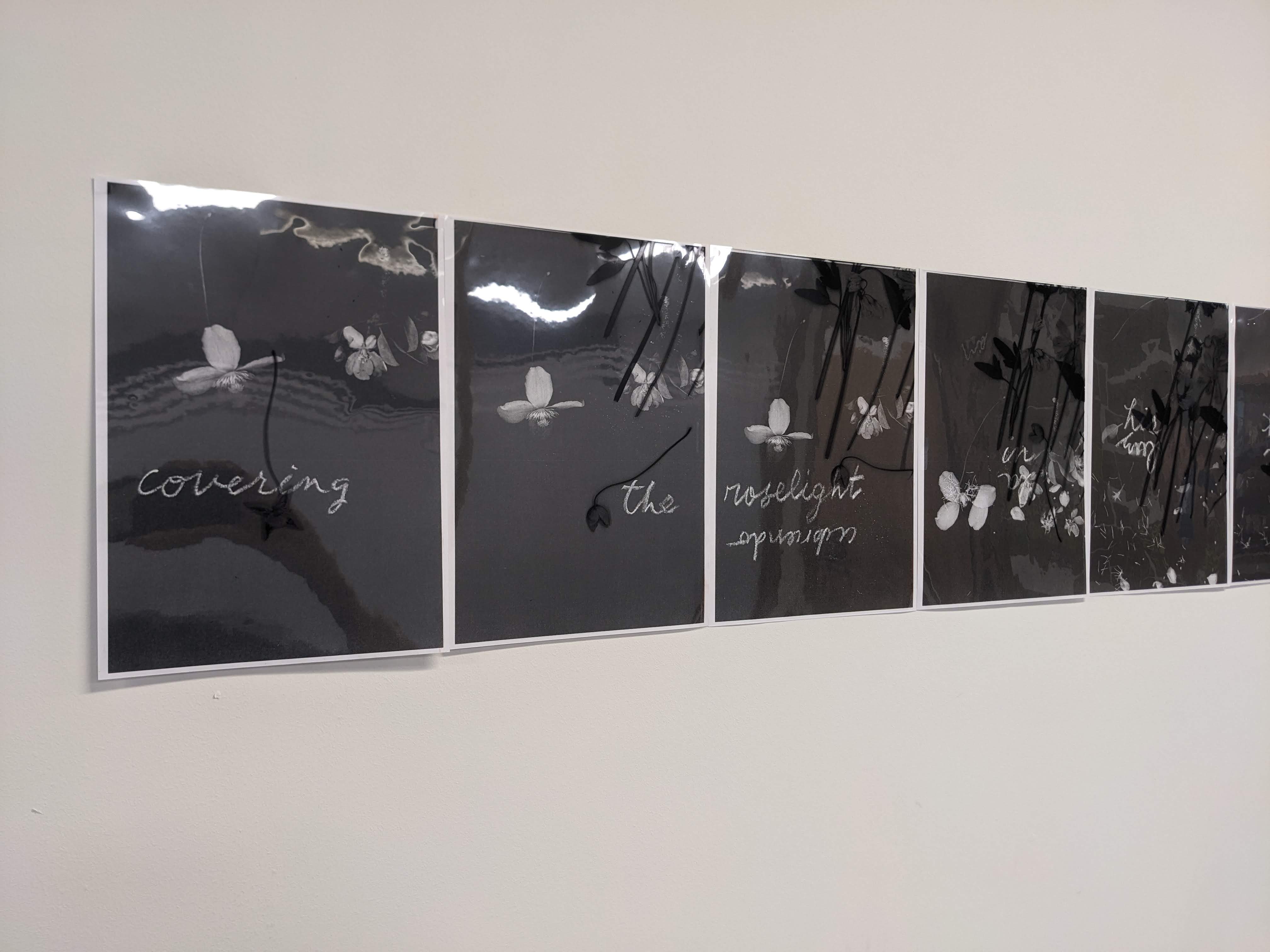
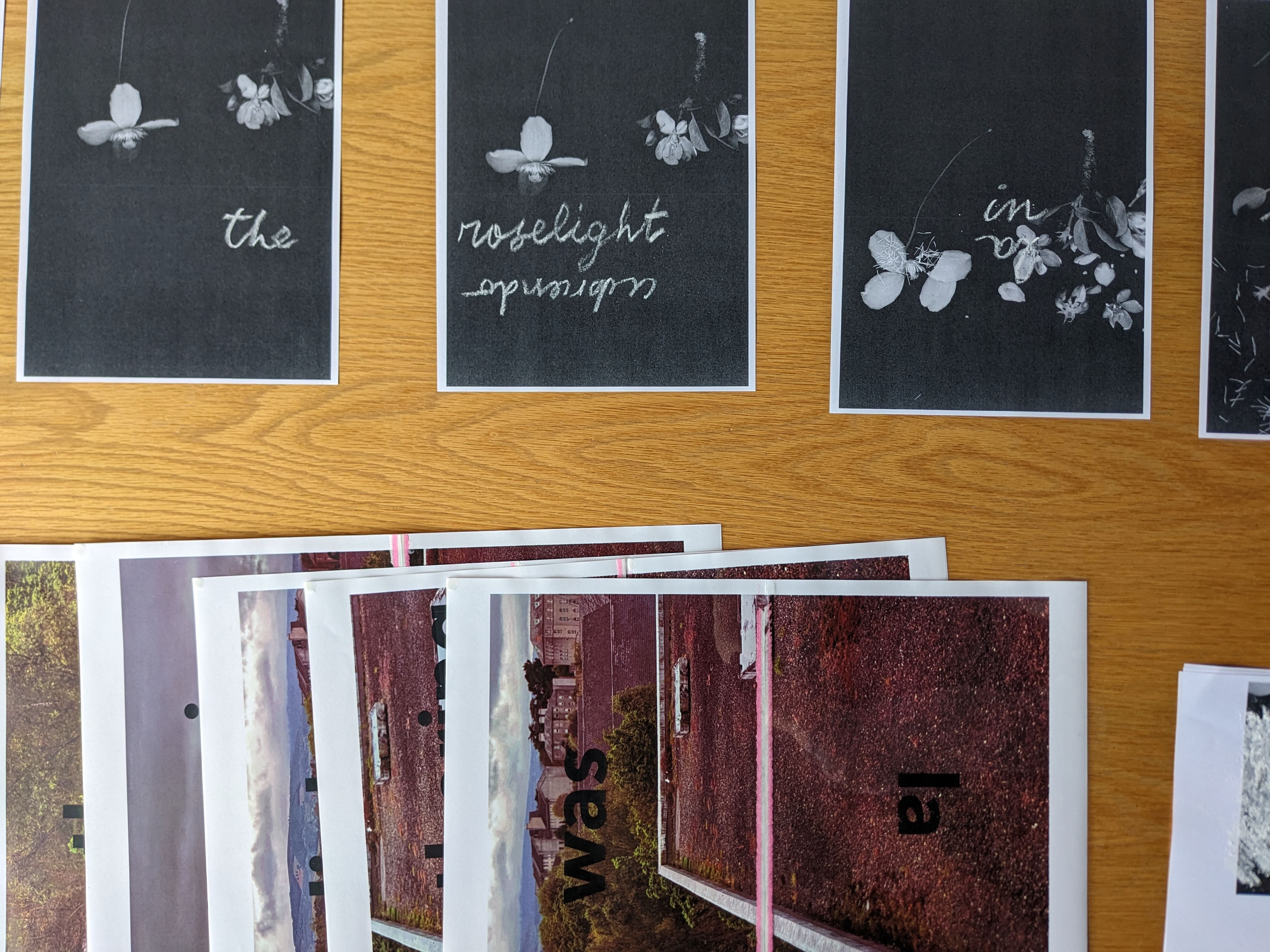
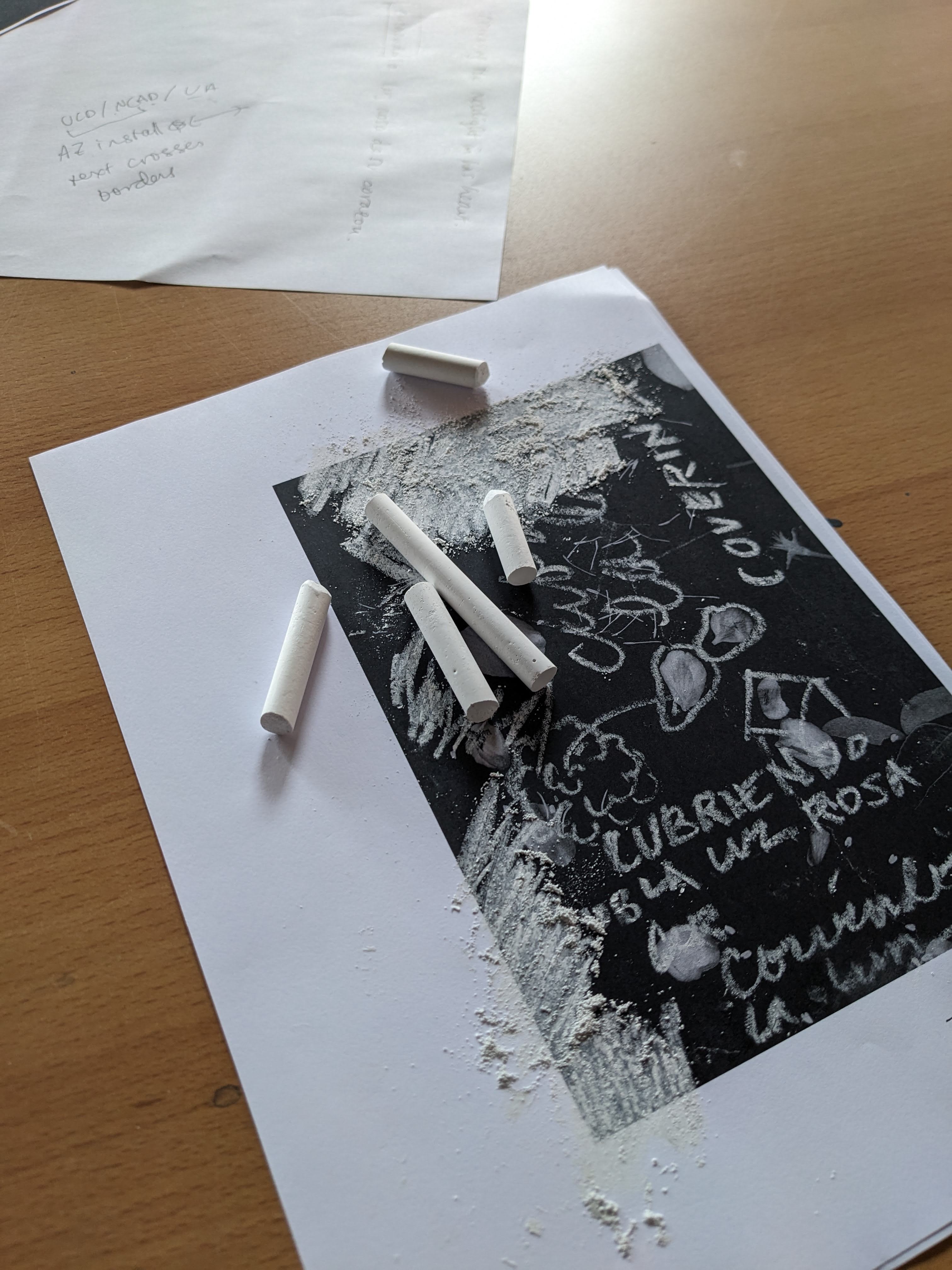
Nicole Antebi, Éireann Lorsung Covering the roselight in his heart / Cubriendo la luz rosa de su corazón (2024) Animation, plant matter, acetate, paper, chalk, text, light, institutional constraints Edition of two
The text of this piece comes from James Joyce’s Portrait of the Artist as a Young Man and its Spanish translation by Pablo Ingberg. Two identical pieces were made, one to be installed in Dublin, Ireland, and the other to be installed in Tucson, Arizona, US, the places where each of us lives. Covering the roselight…/Cubriendo la luz rosa… has as its ground an animation of plant matter gathered in Dublin. The animation was produced using a photocopier. The “lag” of the translation (the English text begins before the Spanish translation, and the translation ends after the original) speaks both to the time involved in translation and the time involved in animation.
The animator, filmmaker, and artist Nicole Antebi and I made this piece and one other in early May, on a gray day, in the southern part of Dublin, in a university building with a view of mountains in the distance. The text above is what we said about one piece we made together, and it’s true. But what couldn’t we fit on the labels we hung next to the pieces we made and installed?
We began planning to do something together a long time ago: maybe four years ago? We talked on the phone. We did things in our separate places, responding to one another. We had video chats across a continent. We had video chats across an ocean. We looked at one another’s work. We talked about what it means to make art. We talked about working in universities, both our histories of uncertain and underpaid work in them and our presents of relatively secure and well-paid work in them. We talked about animation and poetry, language, time, and borders. We continued to make the things we make: drawings, animations, poems, movies, things made of language and things made of images. We realized there is a lot of overlap among and across these.
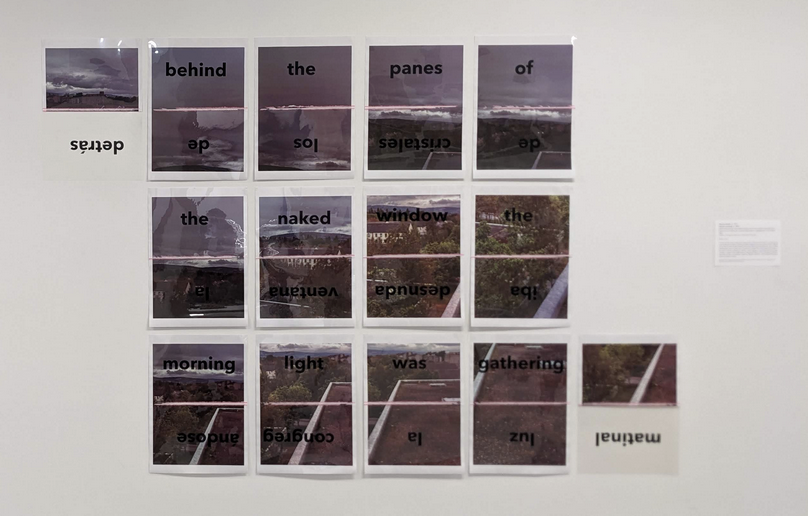
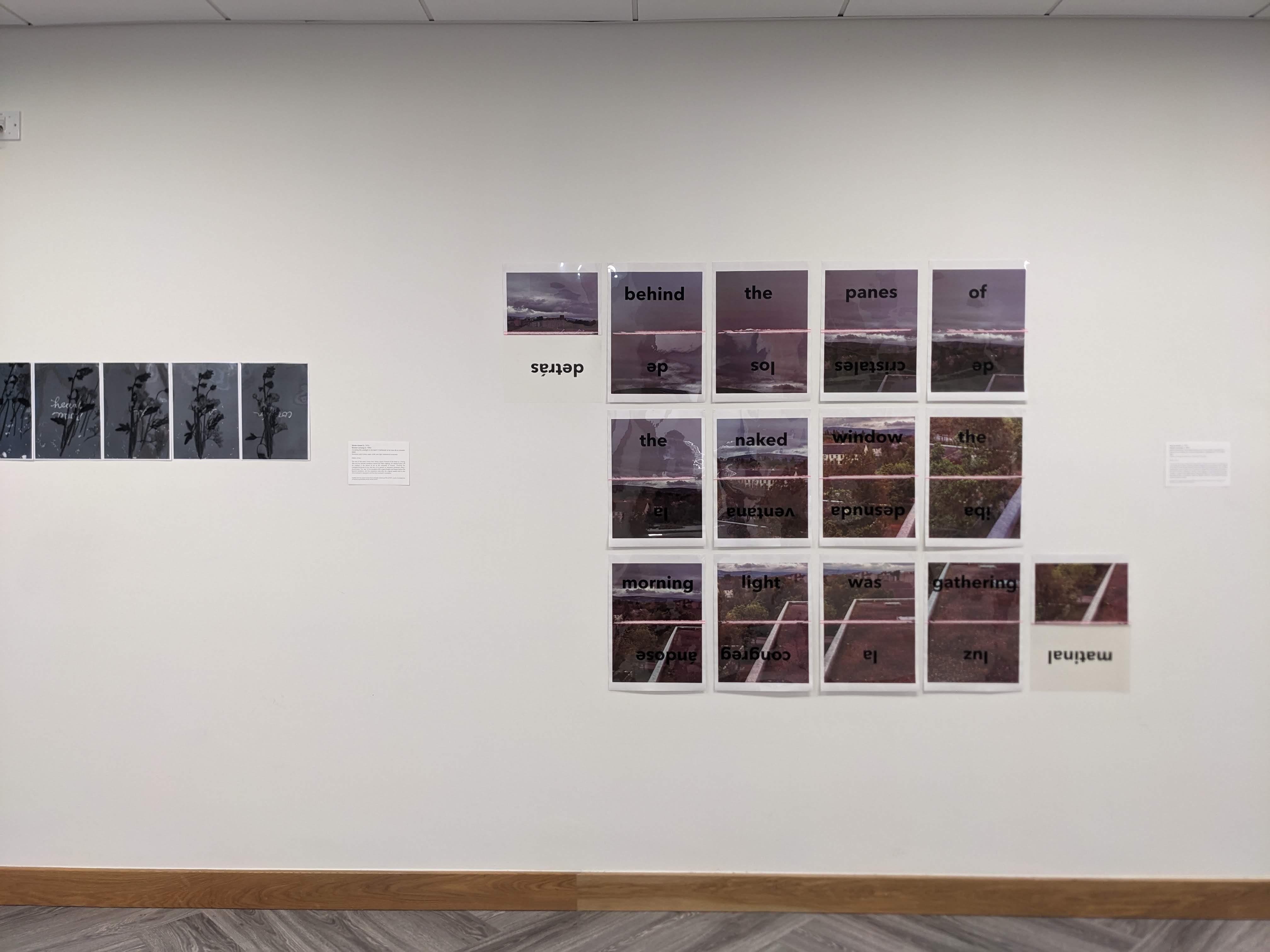
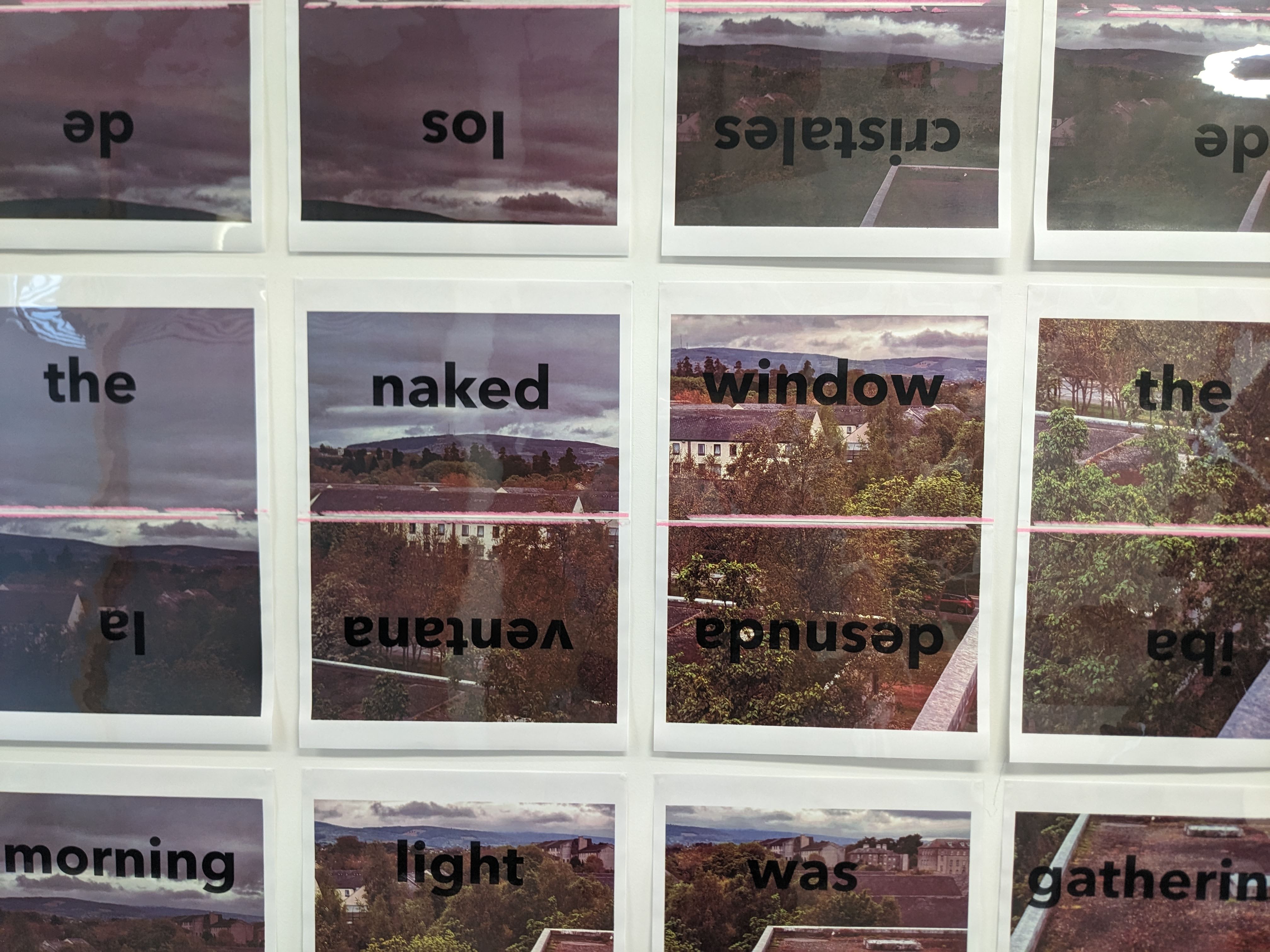
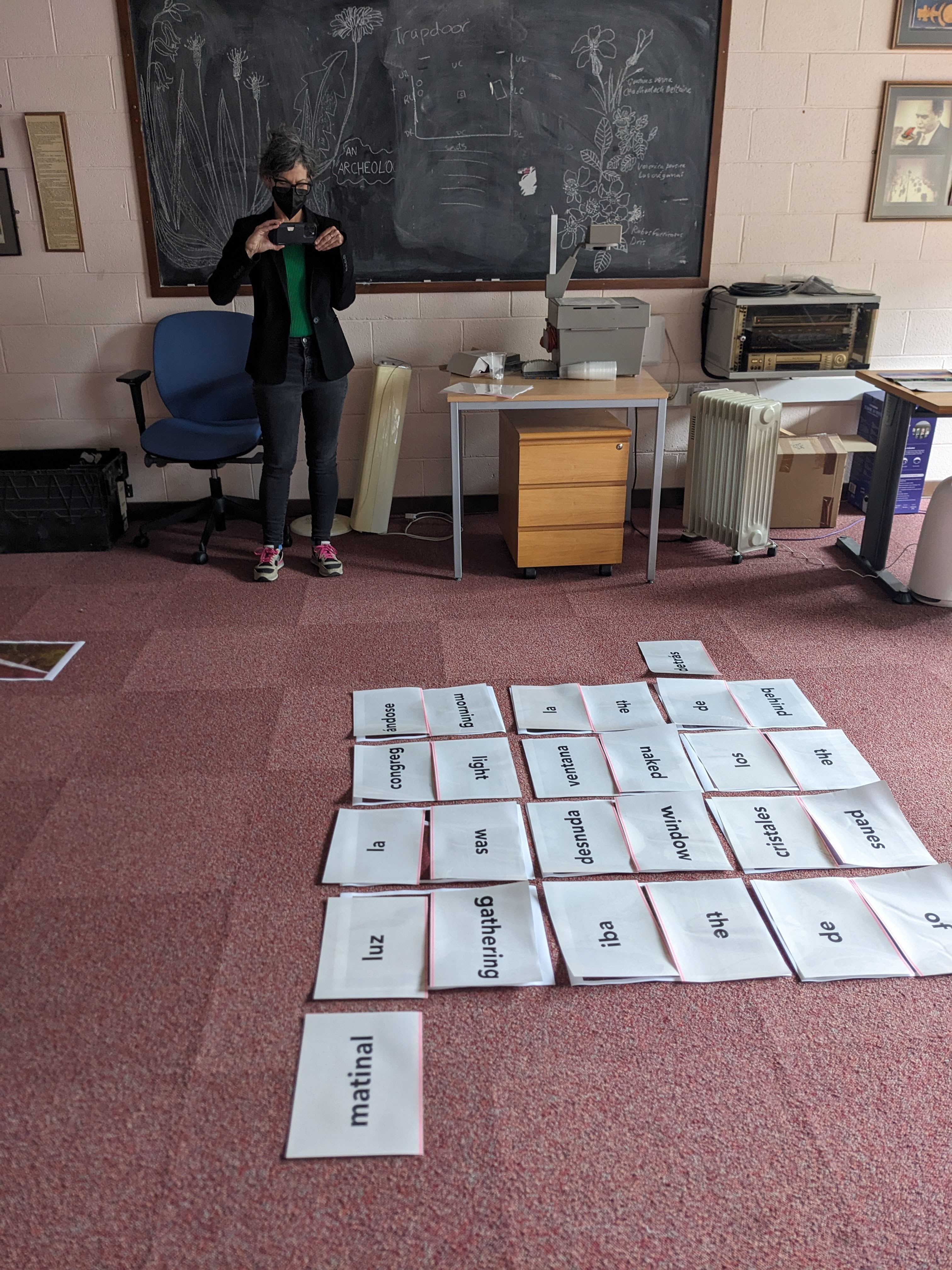
Nicole Antebi, Éireann Lorsung Behind the panes of the naked window the morning light was gathering / Detrás de los cristales de la ventana desnuda iba congregańdose la luz matinal (2024) Acetate, photographs, light, text, institutional constraints Edition of two
(The text of this piece comes from James Joyce’s Portrait of the Artist as a Young Man and the Spanish translation by Pablo Ingberg. Two identical pieces were made, one to be installed in Dublin, Ireland, and the other to be installed in Tucson, Arizona, US, the places where each of us lives. Behind the panes…/Detrás de los cristales… superimposes Joyce’s words and Ingberg’s translation over a view from the upper floor of a university building in Dublin where this piece was made. Here, text crosses the “border” of the image in a way that echoes other “borders” crossed in this collaboration: institutional, international, linguistic, modal [digital/analogue], formal.)
We didn’t do this alone. From 2020-2022 we were part of a collective of artists and writers who met online to talk about artmaking and writing and helped one another keep our studio practices alive during the early part of the pandemic. Our conversations came from there but didn’t begin there—they began a few years earlier, via social media, where friends of friends connected us to one another. And even our work together on these two in-person improvisations wasn’t possible with just us: Chloe Brenan, an artist and a teacher in Dublin, did the bulk of the institutional work to invite Nicole to come to Dublin to give a workshop, deliver a talk, and install new work. And we worked in the shadow of so many other artists who have in turn felt the shadow of Joyce on them: we worked with Joyce and with his translator Ingberg at the distance of print media and time. We were assisted by the hands of the photocopier technicians whose work we had not seen but we could sense, not to mention those people who had taught us decades before to see the clear acetate of the overhead projector’s transparencies, and those whose labor produced the materials and equipment we used.
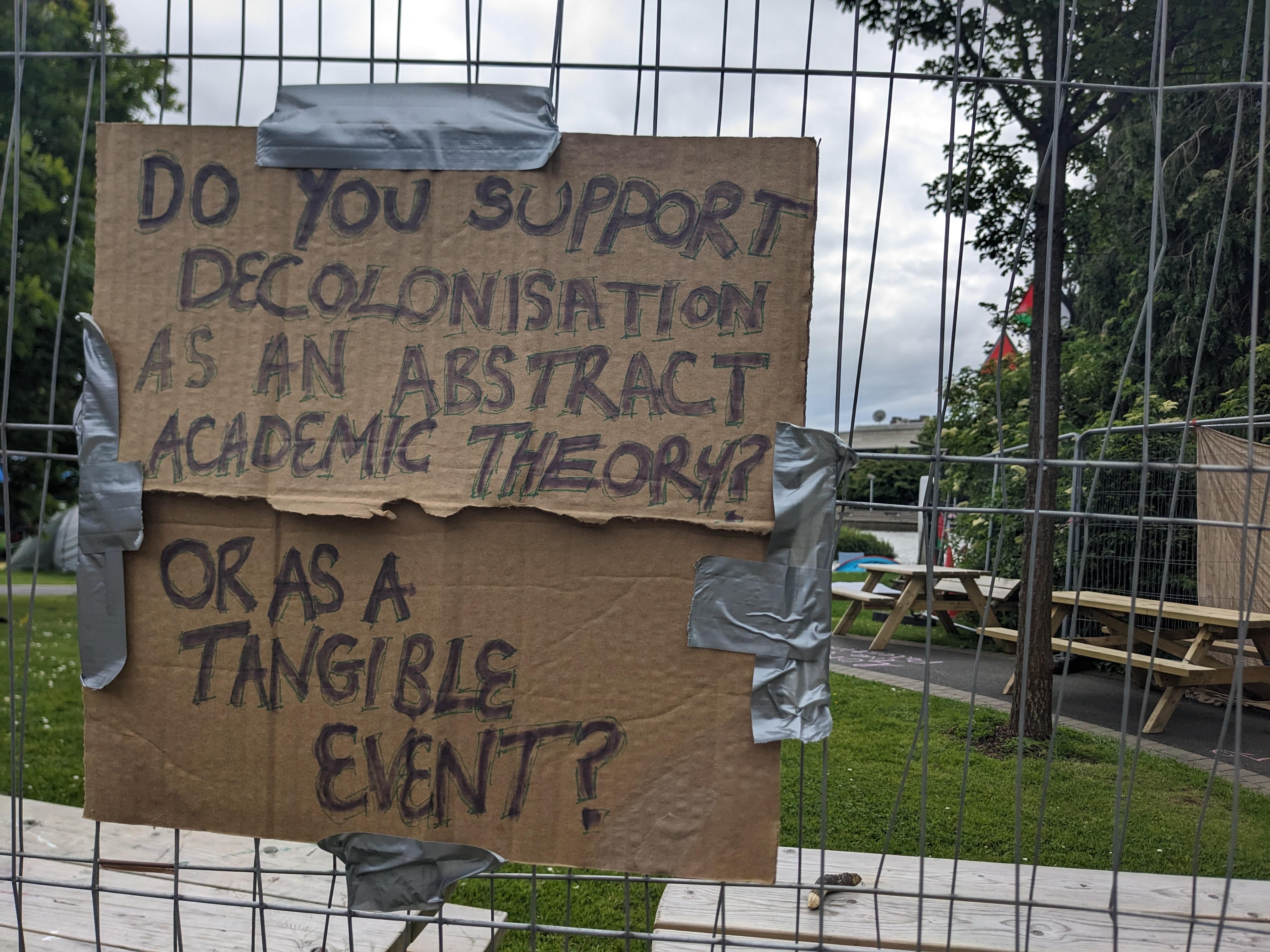
And we were prepared: we had been improvising with students and peers for a long time. We had been making art in the cracks around the demands of our day jobs. We had been working quickly, on borrowed time in between institutions or on weekends. We had been working outside of prestigious institutions, or working on their margins. We had been borrowing JSTOR logins and making photocopies after hours. We had read Fred Moten and Stefano Harvey, who write that “it cannot be denied that the university is a place of refuge, and it cannot be accepted that the university is a place of enlightenment. In the face of these conditions one can only sneak into the university and steal what one can. To abuse its hospitality, to spite its mission, to join its refugee colony, its gypsy encampment, to be in but not of—this is the path of the subversive intellectual in the modern university” (“The University and the Undercommons”). We had been making art despite living in cultures and economies that say what’s the point as well as not for you. We had been practicing seeing our surroundings as already full of the materials of art so that we did not have to overcome a sense of “being without the correct materials” or a sense that “art is only made with art supplies”. We had built up a lot of flexibility, a lot of resilience, a lot of just-start, a lot of let’s-find-out, a lot of what-happens-if, a lot of saying-yes-to-whatever-happens. We weren’t put off by distinctions between high and low materials, high and low processes, or high and low ways of installing work. We were like gymnasts who, having practiced since childhood, can completely trust their hands and arms, feet and legs to catch them: and so barrel forward toward the spring, which appears to come from nowhere.
So when we walked into a room one Saturday in early May and said to ourselves, let’s make something, we were neither alone, nor were we beginning from zero.
We worked very steadily for about eight hours, with no plan in advance except to use some part of Joyce’s Portrait and Ingberg’s translation as the basis for our collaboration. We began by making things that were “not going to be the work”—an animation on the photocopier—and then we realized that the images there recalled the “roselight” of the passage we had chosen. What material could make marks on the dark surface of the prints? Oh: chalk. A piece was readily available. We tested it: yes, it will write on the toner. Capital letters? Cursive letters? We made decisions rapidly and assuredly, without thinking too much. Let’s see what happens. We passed the pages from one hand to the next, transcribing Joyce in English (me) and Ingberg’s Spanish translation (Nicole). The decision to invert the pages for the translation and to allow the “lag” happened in a split second. Shall we? Yes, let’s. The acetate with its second animation came much later, after we had tried out the acetates over the large photographs. Again, shall we? and yes, let’s. Using “low” materials—photocopiers, printer paper—freed us to play. Nothing is beneath notice and nothing is beneath us as material. If an idea didn’t work, we would try it a different way: move things around, change plans, cut, copy, paste. We could say yes to whatever happened, because it was all unforeseen and the stakes felt low. Something would happen. That was for sure. And it did. We did it together.
Art is play and practice. Housemaking is play and practice. Literature is play and practice. Relation is play and practice. All of this is attentive, demanding play built on lifetimes of practice. And the practice isn’t just art school, though if you happen to have gone that’s a special kind of intensive practice in certain areas. The practice is life itself: it’s walking while looking around, feeling the rhythm of your gait and noticing the world around you. It’s improvising in the kitchen with the last of the groceries. It’s having siblings and parents who want different things than you do, and finding ways to live together. It’s your secret play in childhood where a few ordinary objects became magical. It’s the human work of imaginative extension toward one another and toward the world. What artists do in practice is take the imagination we are all endowed with, and bring it into relation with the histories of forms (narrative, visual, conceptual, poetic, social…) and formal meanings, with the conventions and histories of usage, and with other patterns of meaning that establish the fields in which we think. But it’s not so different than what we all do in practice, every day.
Start where we are. Work with what we have. Not least of all one another.
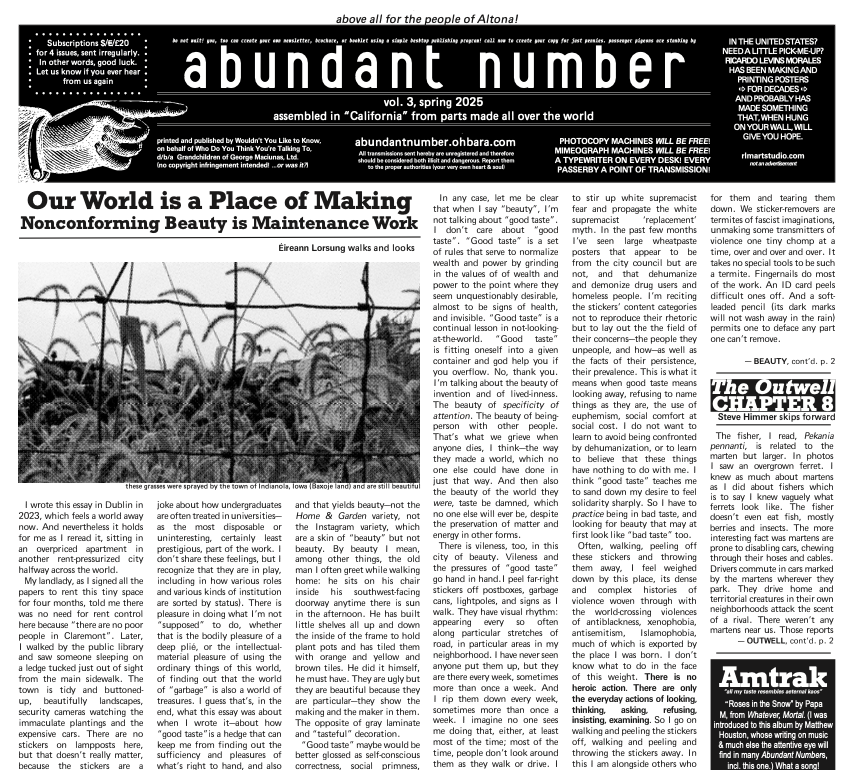
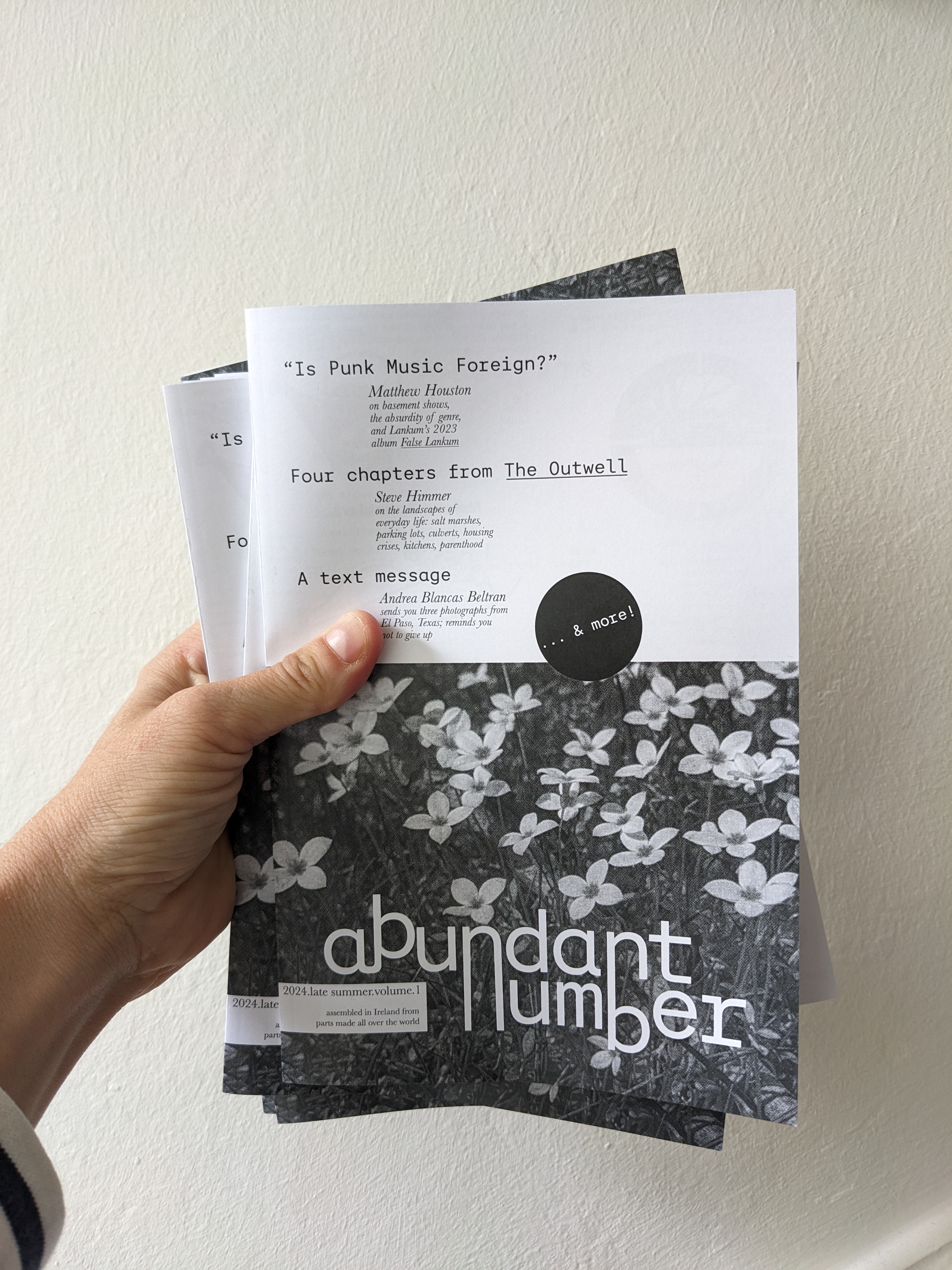
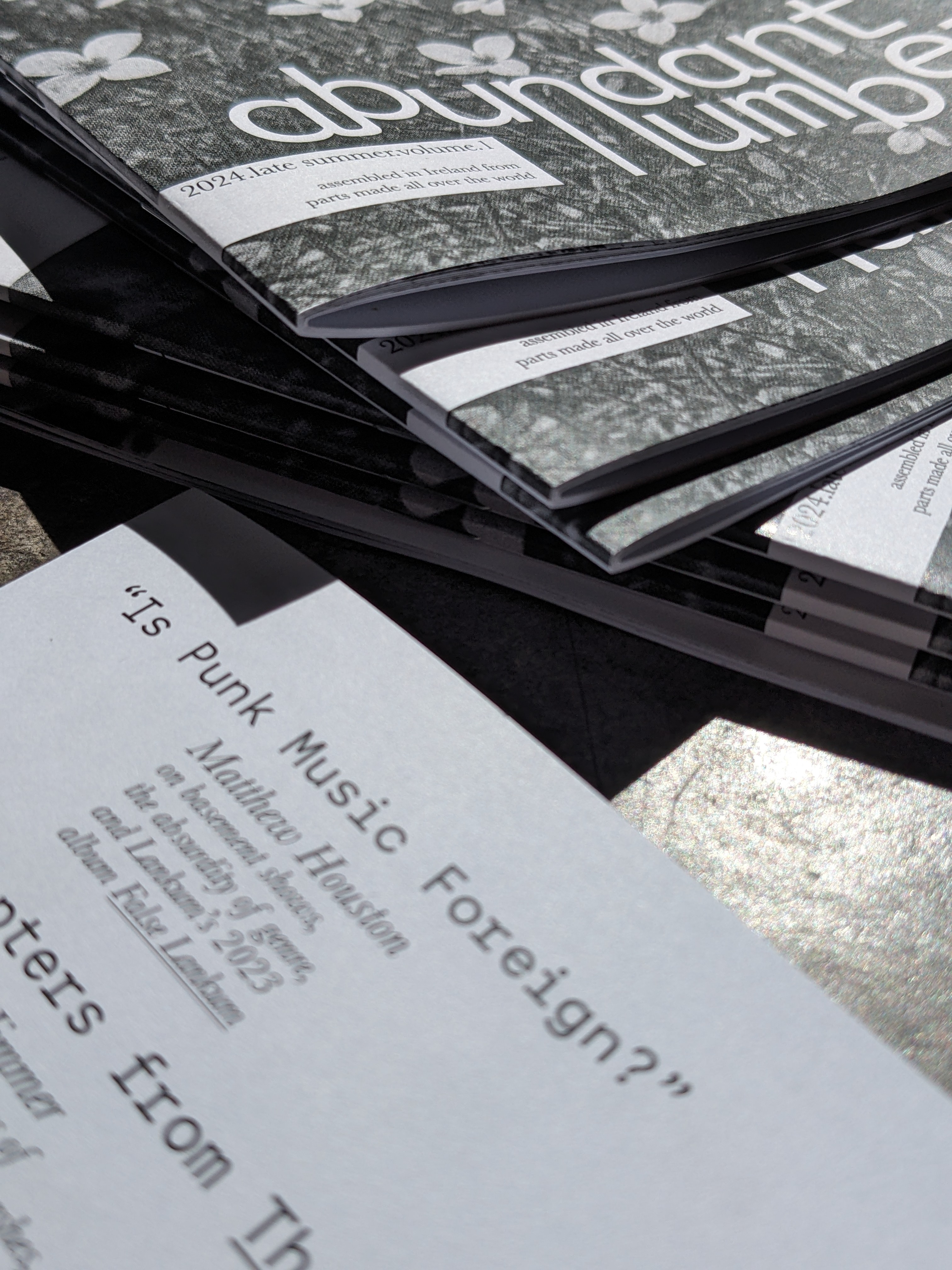
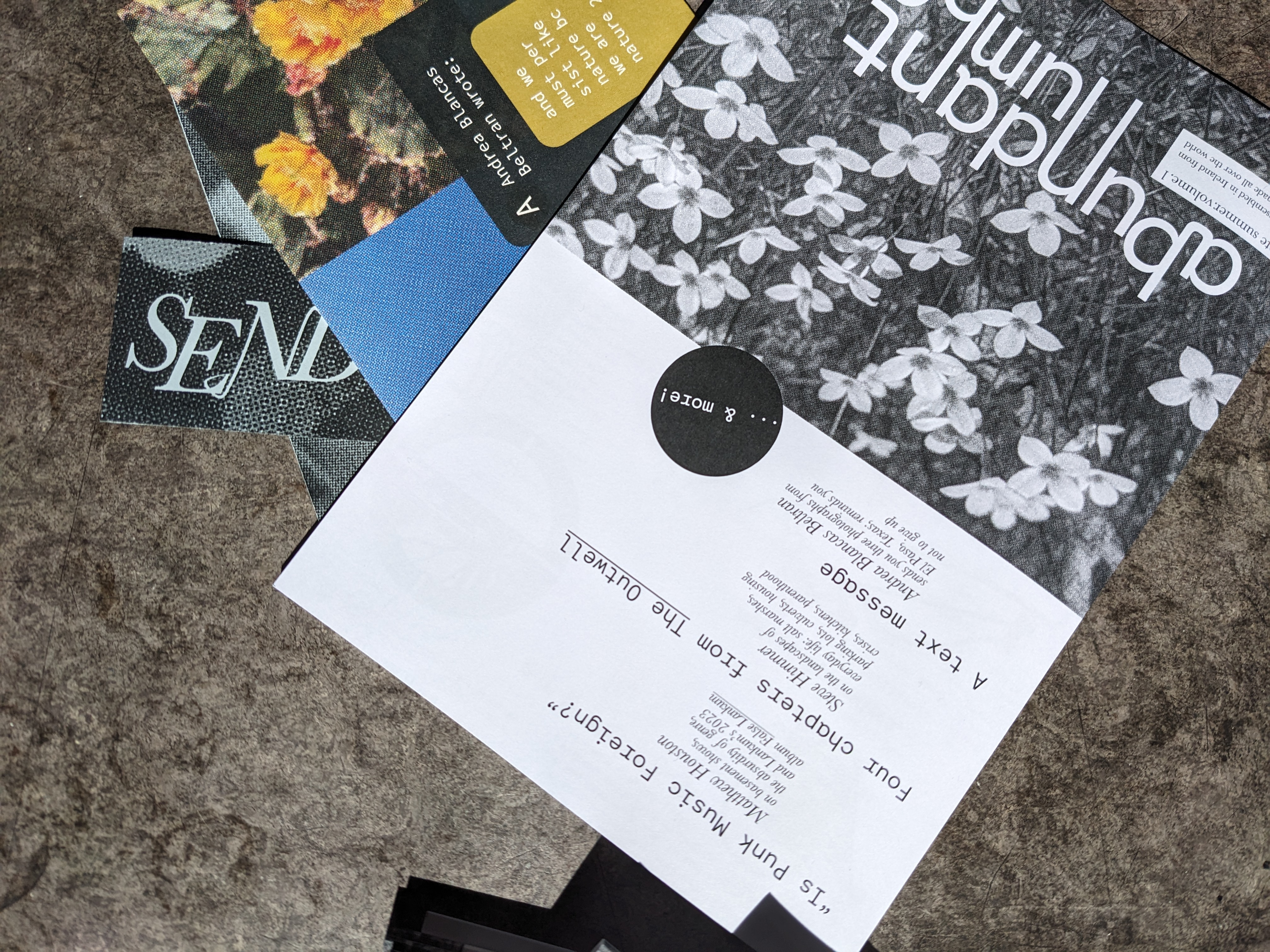
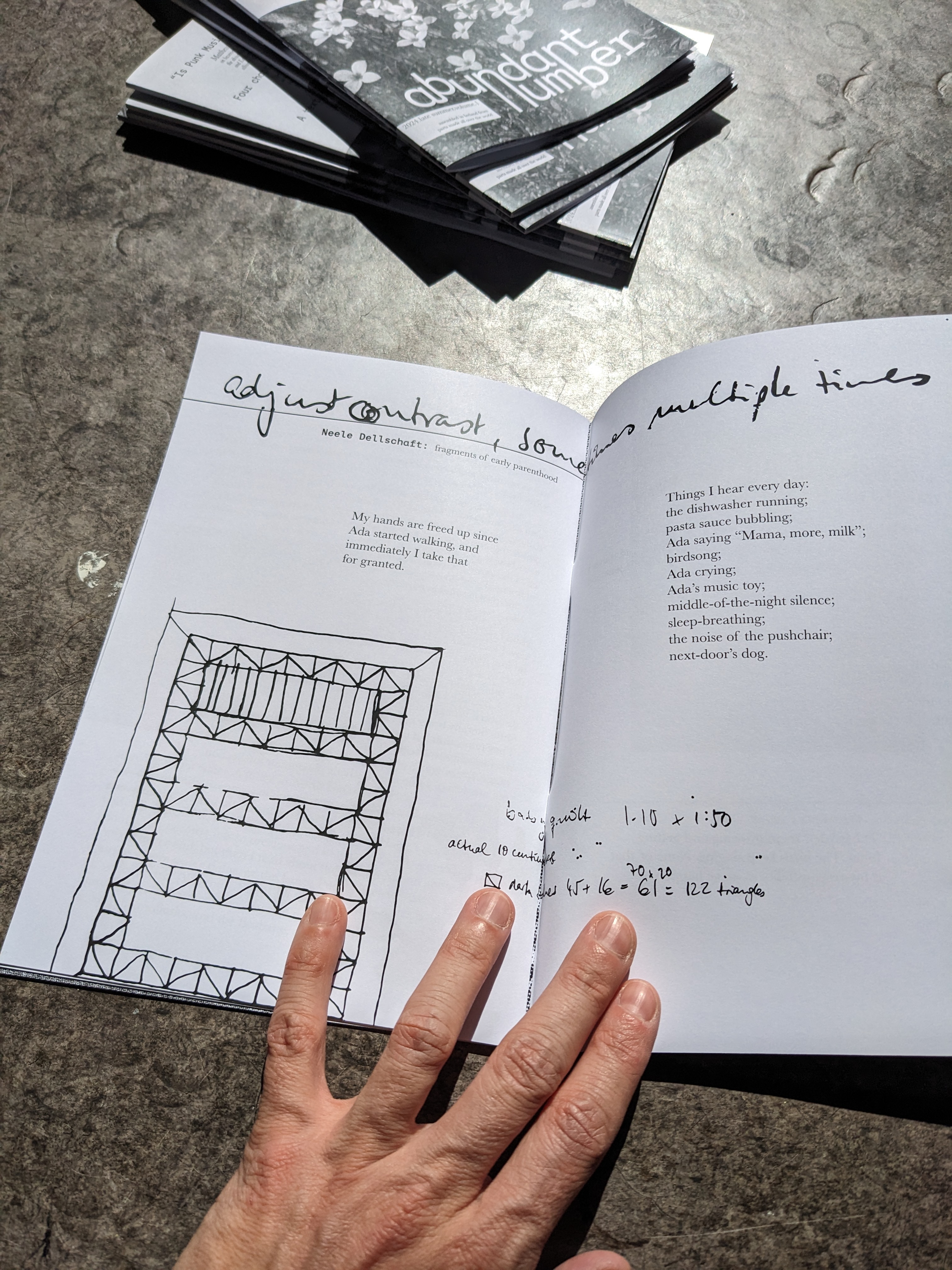
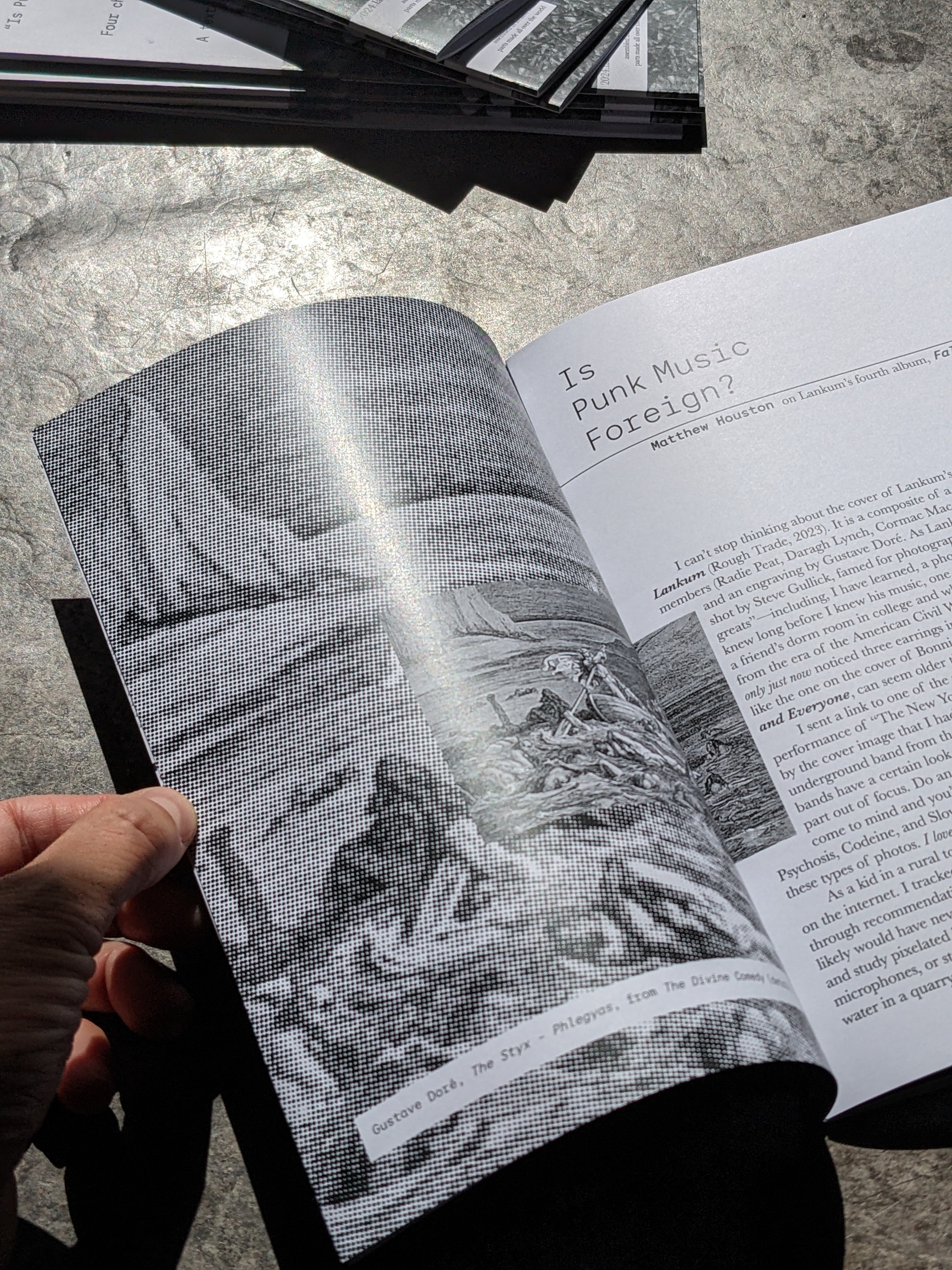
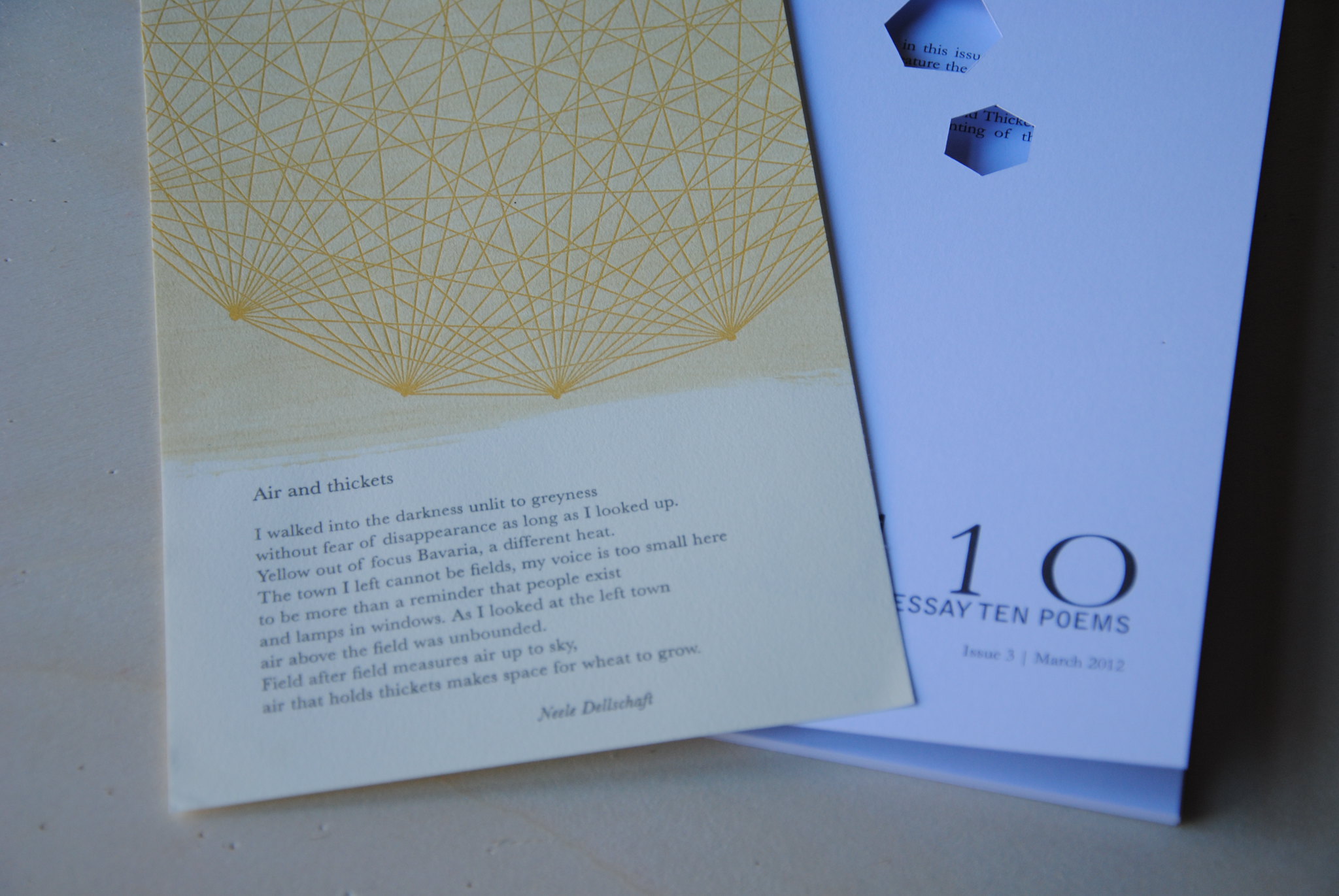
Essays from 2023-24 are beginning to disappear from this space. Some will appear in Abundant Number, a series of booklets full of slow things. Abundant Number will have a first issue this summer. In AN.1, you will find a couple of walks from me as well as an album review by Matthew Houston, chapters from a novel by Steve Himmer, and a few other pieces of writing TBD.
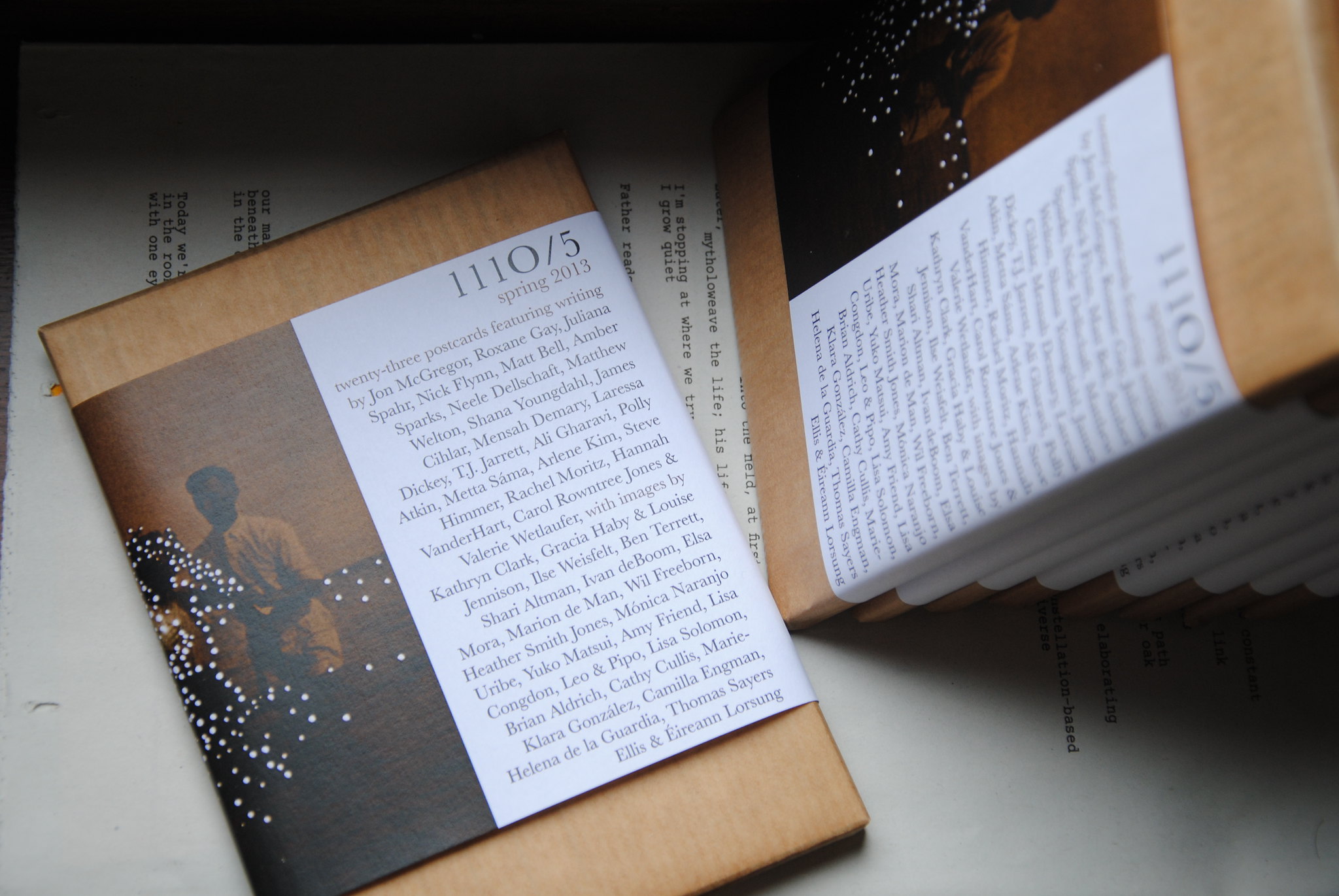
Inside the first volume of Abundant Number, there will be a postcard that is also a text message. You can send it to a friend, a very delayed SMS. You’ll just need a stamp. Images and text by Andrea Blancas Beltran.
If you’d like to be notified when you can get ahold of a copy of Abundant Number or about subscribing, you can put some information here.
More news and more to read here in late June. I hope you’re well. I hope you’re safe and happy, that you’re free and able to do what makes you more alive. I hope that the occupation of Palestine, and the ongoing genocide there, will end. I hope that people everywhere will have safety, and comfort, and companionship, and freedom from fear.
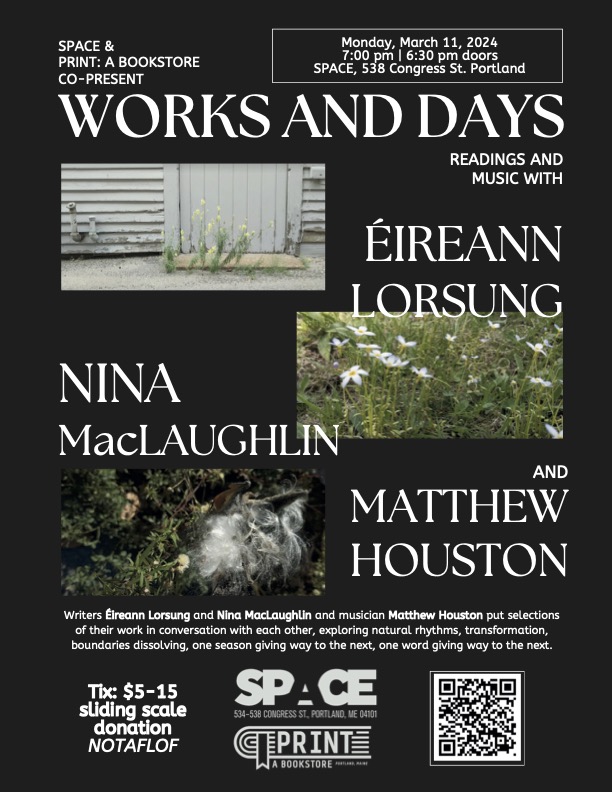
Upcoming performance: If you will be in Portland, Maine, on March 11, maybe you’d like to come to WORKS AND DAYS, a collaboration about small things, time, seasons, process, repetition, and improvisation between Nina MacLaughlin, Matthew Houston, and me. Sliding scale at the door.
So here we are, reader: you and I, in the little room of the word.
Just over a year ago I set out to write an essay a week and put those essays in a public place (here)—a challenge to my tendency to squirrel things I write away, then wonder why no one knows I’ve written them, and a challenge to the part of me that resists a deadline. I set out to think for a year, loosely, about an essay called “Bewilderment” that has stuck with me since I was first given it, in a creative writing class in my last year of college, by my teacher Ray González. I set out to make a place for myself, for saying and for seeing—for looking at and thinking about what I think matters, why I think those things matter, what it means that they do, and how I work those questions out. I set out to make a record of the walks I take and of the other repetitive processes (teaching, housework, writing, artmaking) that fill my days.
I have done what I said I would. And now I am done. The weekly pace has been exhilarating. It has also been exhausting. I have a list of ideas that I’ve kept and there are many more ideas than there have been weeks, but the need for pause is calling. For the most part I have been able to manage the writing tempo with enjoyment (in part by storing up drafts in less busy weeks that I have developed in more busy weeks); it was only at the very end, in the last month, when other pressures impinged, that it began to feel like work. That means I have truly found the end of this phase of making and writing. The form is complete.
What have I found in this form and these weeks? I have found that I do think seriously and centrally about teaching; that I think of teaching as a creative act in itself; that I think of students as collaborators; that I think of my own teachers nearly every day. I have found that I like to think about paintings and other works of art, and I also like to think about the objects and views of my everyday life (as art). That I like to read and I like to be read. That I can’t separate my politics from my aesthetics; not that I thought I could. That “the world is charged with the grandeur of God” (however that last word is to be understood) feels about right to me. That doing anything over and over for a long duration will teach me in ways I can’t anticipate, and will yield interest and meaning. That, in other words, the process is the thing. Amen.
I have also found that, more and more, I want to limit my attention. I want to use my energy to make a few things really well, in a few carefully defined regions. I want to know more about those regions and their adjacent areas. I want to read more in the coming year. I want to read carefully. I want to read in ways that allow me to just be reading—not also looking at lights on a screen, not navigating among tabs. I have found a new appreciation for literary journals, reviews, and magazines as well as for long-form interviews, really well-made podcasts, and books that show me the writer’s mind at work. I like the limits of the page and the book form. The apparent endlessness of the internet, which can be so immediately alluring, these days feels overwhelming to me. I want to spend my time in the lands of finitude. I want to work in the realm of material objects. I’d like to learn anew what I used to know, which is how to find things in three-dimensional space; how to live at the pace of the postal service; how to read and write criticism and formulate an understanding of a corner of a field.
So this brings me to the ‘directions’ part of this week’s Bewilderment: where to next? Well, to objects: to things that can be help in the hand, read, looked at, and passed along to someone else. Things that, once the requirements of production have been satisfied, stop using electricity and water. Things that incorporate their own finitude. I’m thinking about Corita Kent’s “Irregular Bulletins”, about photocopiedzines and newsletters, about chapbooks, about band flyers hanging in the doorway of the co-op or record store, about notes and notebooks, letters, postcards, and the pleasure of handling paper. And I’m thinking about the magazine and books I made, with a bunch of you, for about seven years. (MIEL is still on hiatus, because the books are still in an attic in Flanders. And I do still hope to get them back.)
So, in any case, reader, that’s what’s next. I’m going to make some books, and some magazines, and some of what I make will appear here (or, really, will appear in a twinned location, a place I plan to move Bewilderment to in a month or so), but most of it will appear in your real, live, postal mailbox, if you sign up for it. (Sign up how? Information to come in May or June.) The first installment will contain a number of the walking essays from this year of Bewilderment, and I hope it will be ready in the middle of summer. The second installment, if all goes well, will be on writing and teaching, and I hope to have it ready in September. What will follow? Space for other writers (information about how to get involved yourself will also come in May or June) and for more b/Bewilderment.
The two ends of time are always touching, past and future. They often touch inside the pages of a book. There we go. Thanks for being here. Hope you’ll come along.
To keep up what’s coming next with Bewilderment, you don’t have to do anything. Once things are migrated to the new site (information about the planned move is halfway down this post), if all goes well you’ll receive emails just as you do now when a post goes up. And you’ll hear from me via these channels about how to get a copy of Bewilderment on paper sent to your mailbox. This marks the end of my weekly essays here, and the beginning of the evaporation of the archive. I’ll be back in early April, mid-May, and mid-June with an essay and some news.
Thanks again for reading my work over the past year. And as always: Comfort for everyone, and safety, and beauty, and belonging. And freedom from occupation, and from fear, everywhere. And shared, active liberation, to make a world where we all are free. And peace of the positive kind, that is the presence of justice. Swords into ploughshares. Free Palestine.
(Hello. This post is “too long for email”, so you may need to click through and read it in your browser. It’s actually a very short post by word-count. If you’re looking for longer things to read this morning, may I suggest this, about the purpose of arts education; or this, about the US and the culture of remembering some deaths and forgetting others; or this, about how much you can do with a pencil and paper; or this, about looking at weeds?)
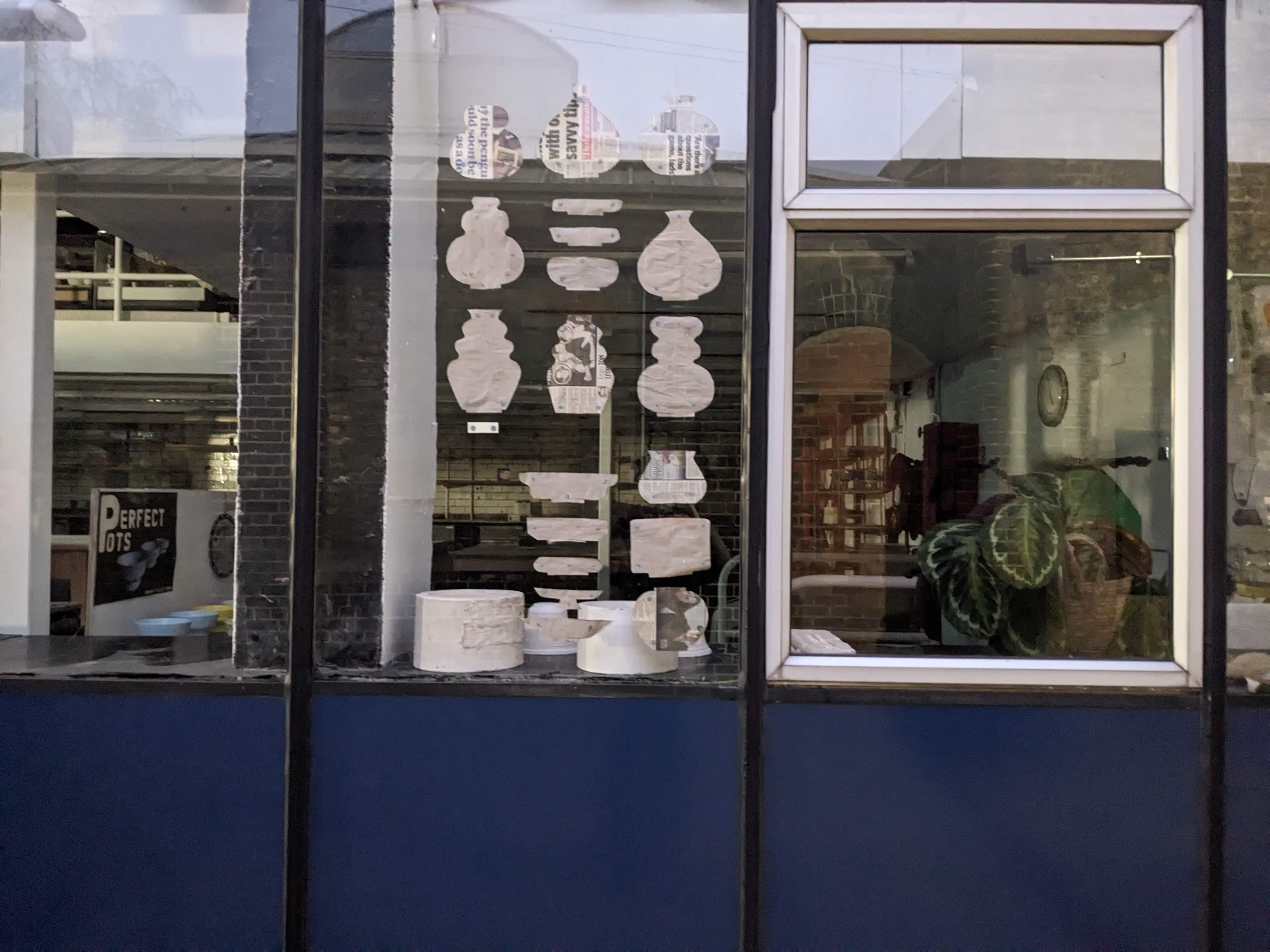
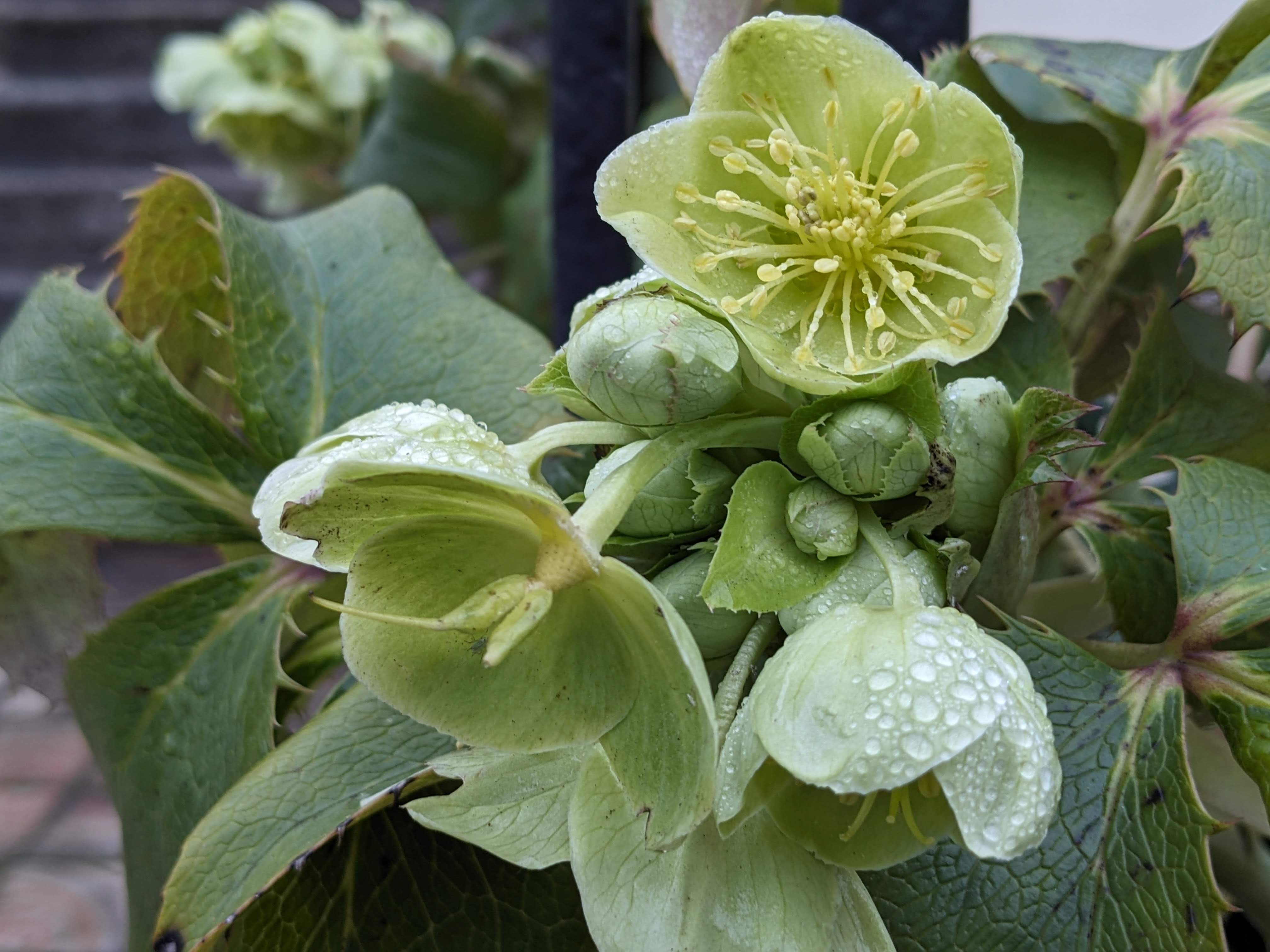
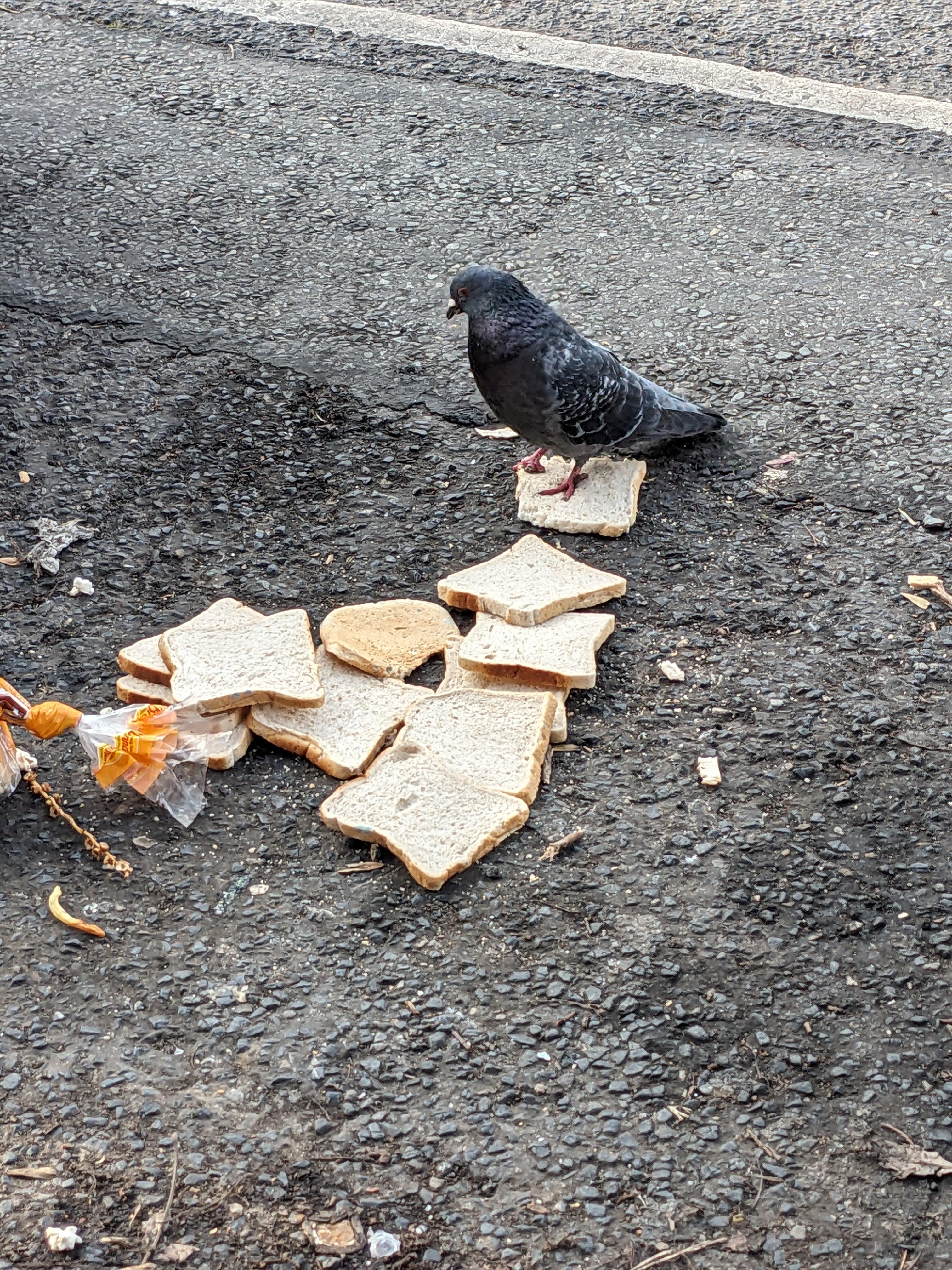
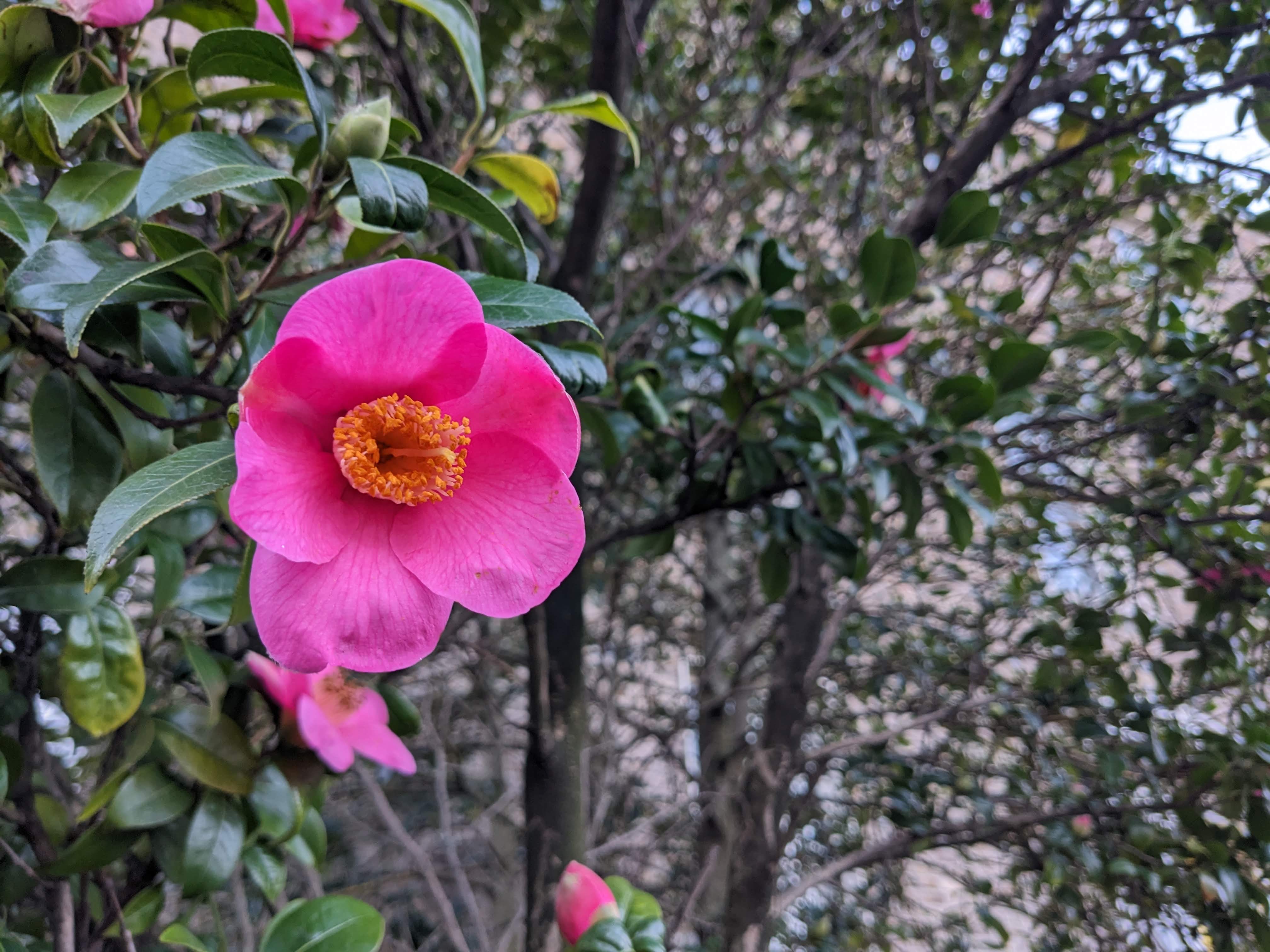
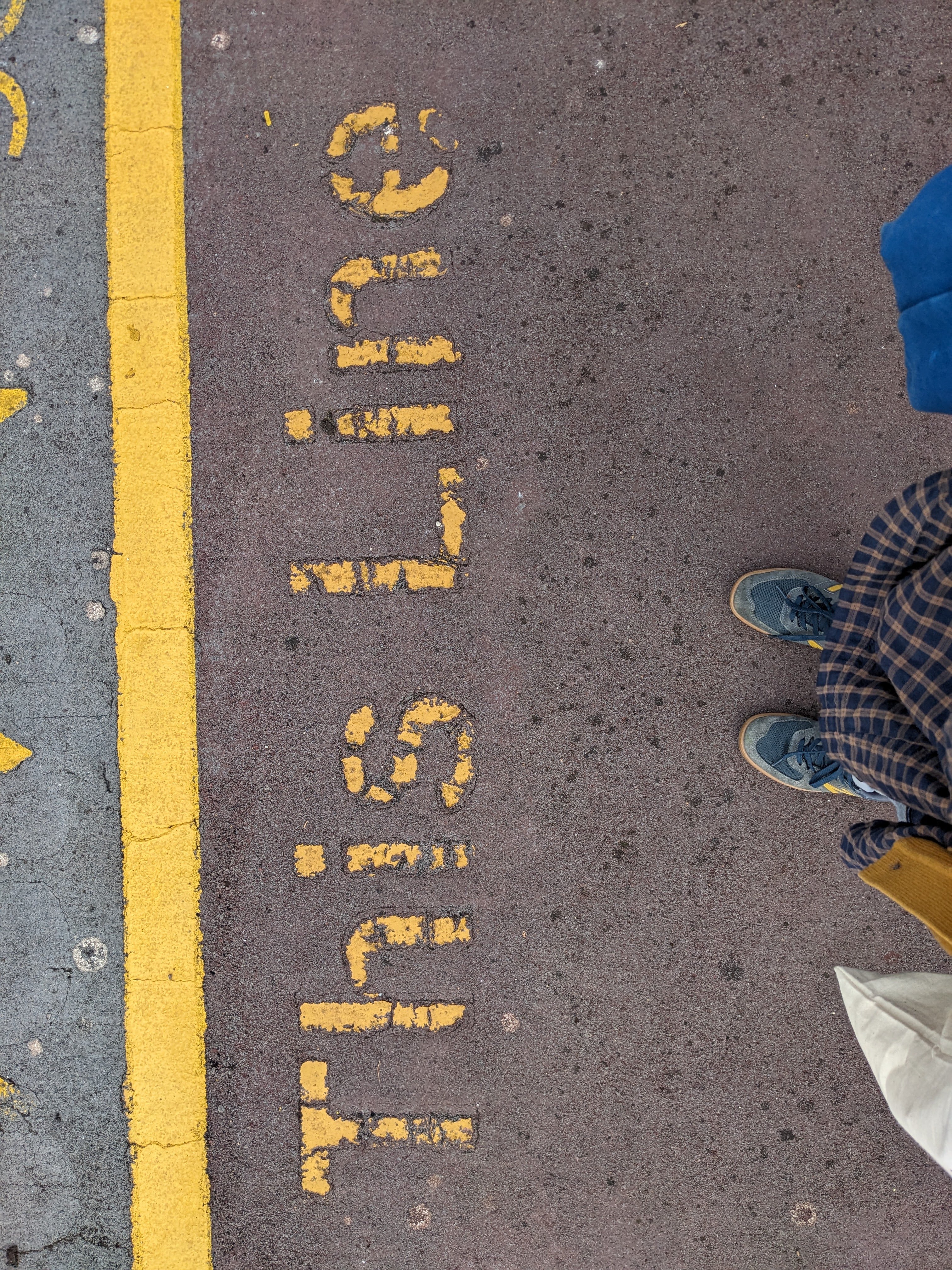
There is no possibility of boredom in this world.
Not when its things and its beings collaborate to make puns like this.
Not when it looks right back at your curious eyes with its own.
Not when it speaks itself so perfectly and particularly.
Not when it offers lessons in form around every corner.
Not when it teaches color theory with a gentle insistence.
Not to mention the lessons it offers in comedy, and in sheer pleasure.
Not when it articulates its understanding of time in neon pink, in January.
Not when it is always reminding us how our letters are made.
No, no boredom possible in a world that is always showing me how to make poems (how to think relation, how to notice similarity and difference, how to attend to texture, surface, movement, shape, tone).
Not in this world, which has given me the instructions for artmaking so plainly.
No boredom, it says. Open, open.
A few things in the world recently: The Bar Harbor Webcam lets you see the tides (and, recently, the terrible storms) at Bar Harbor (Maine, US) from anywhere with an internet connection. Our Grief is Not a Cry for War, Jim Costanzo, 2001. “A War Without End”, Ursula Le Guin. This is how you do courage and care. Organizing Power, a zine that costs $5 and explains how to organize in the workplace. The subtitle on this week’s post is from this poem.
I saw someone articulate online that a ceasefire is called for as an end to an armed conflict, not an end to a genocide, which requires different demands. That makes sense. As the International Court of Justice has concluded that genocide is plausible, the demand must be an end to genocidal activities. Let’s make those demands. In the US. In Ireland. Easy enough to find a way wherever you are. Also if your country has defunded UNRWA as mine has, you can put some lunch money here.
Thanks for reading. Go look at the world and please report back. See you next week.
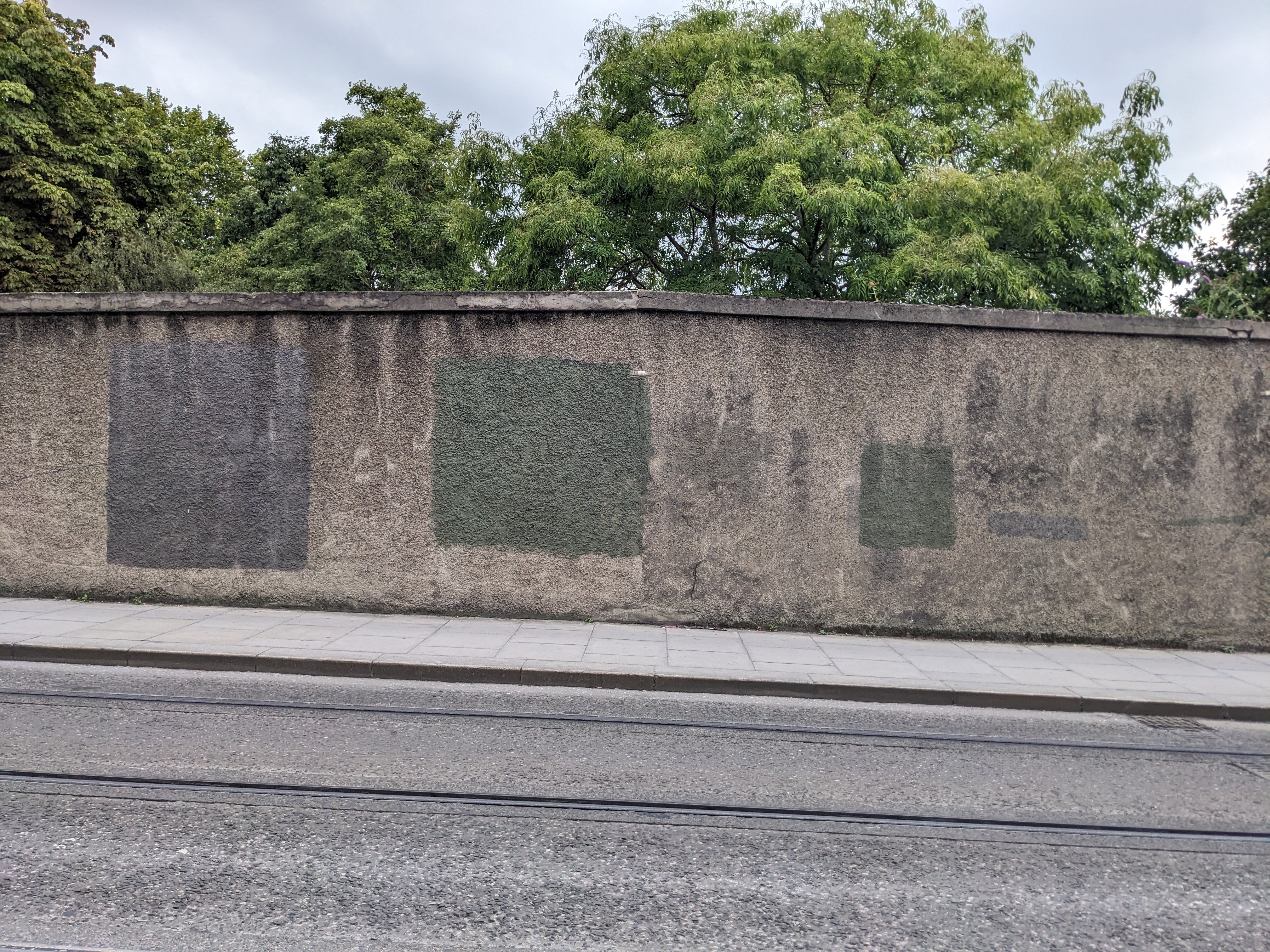
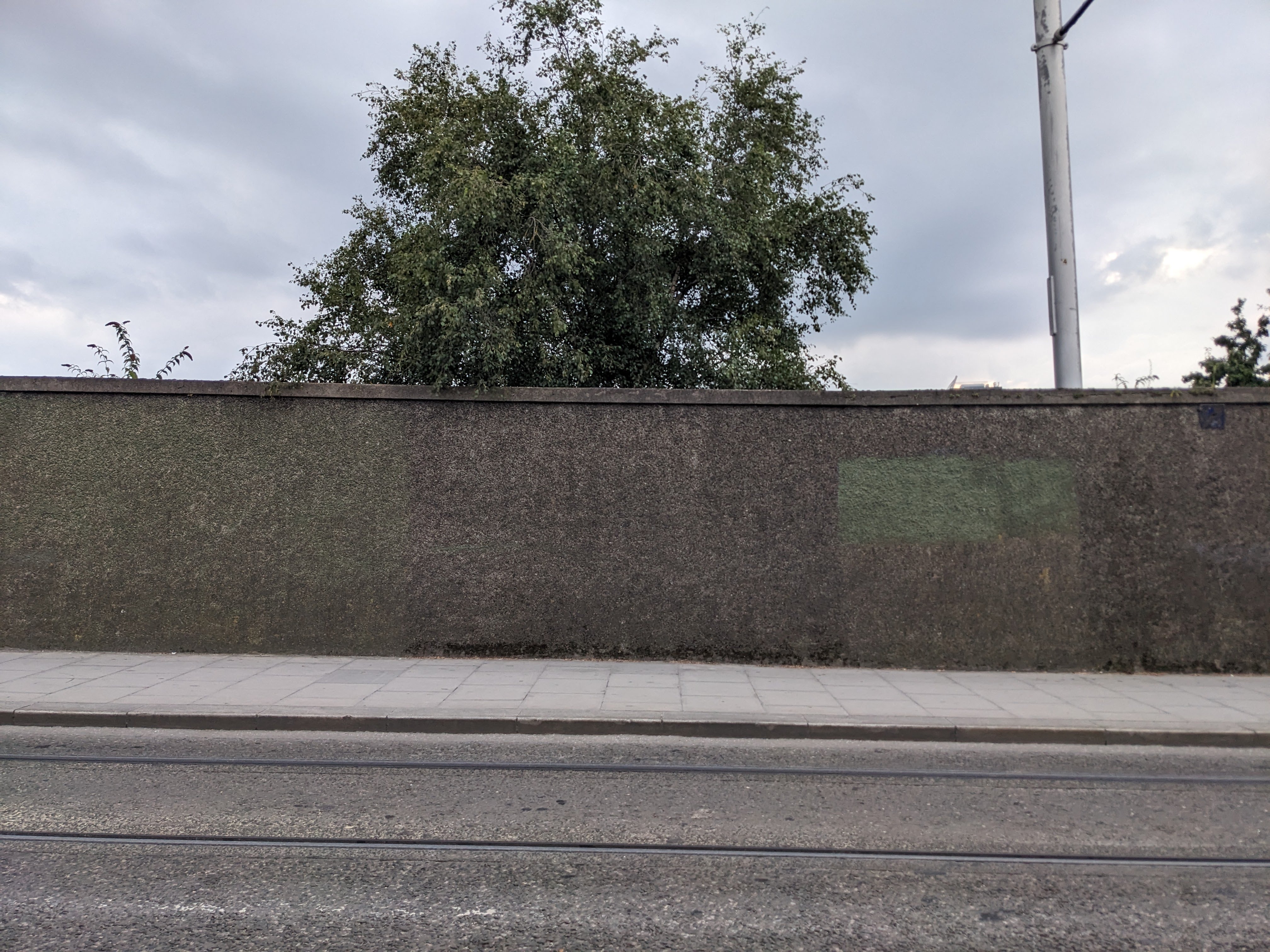
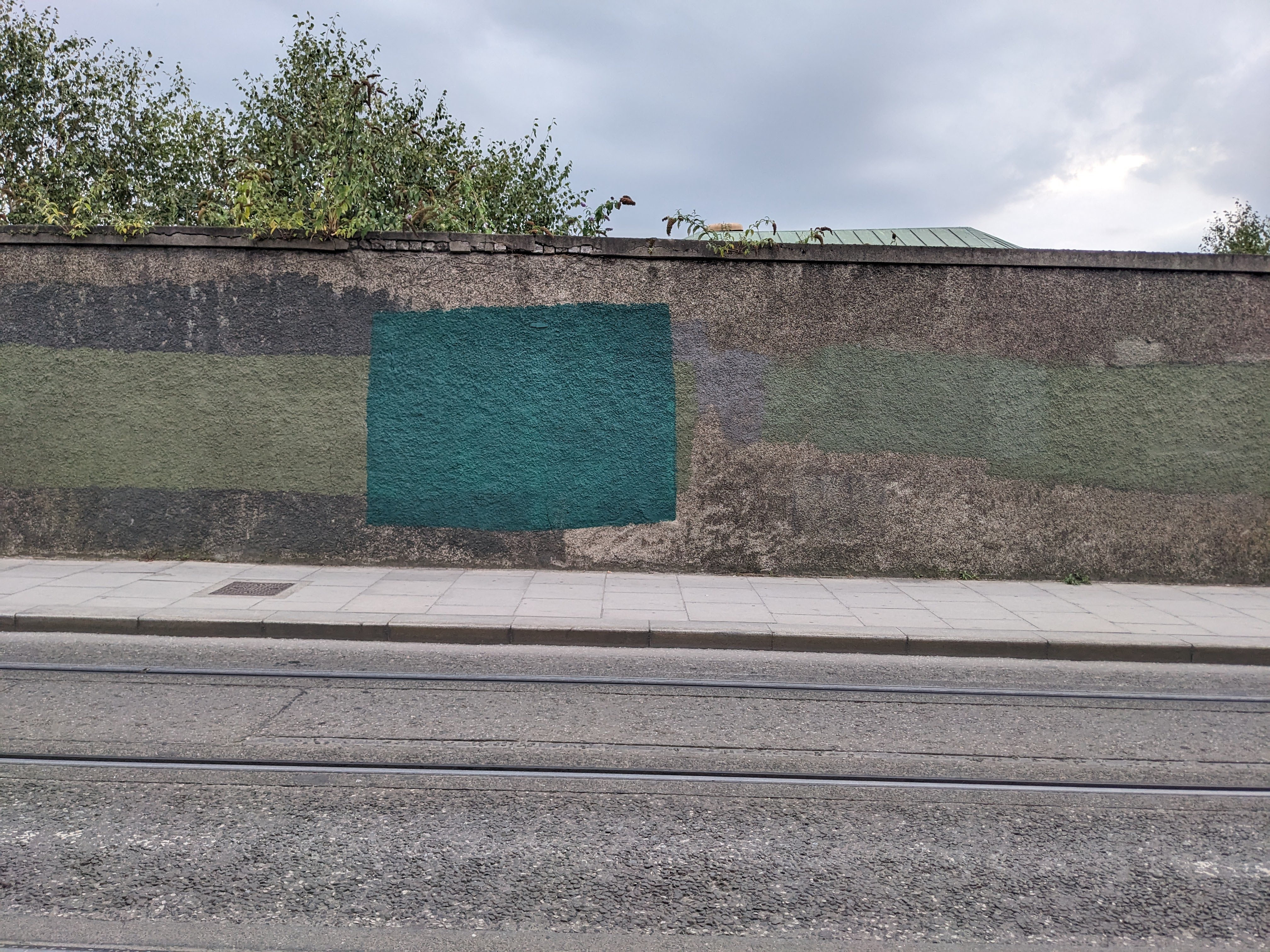
Before getting to the grays and greens, I wanted to direct your gaze toward some people I care about who make art and whose work is available to you. Jon McGregor, whose writerly friendship has been a gift for so long I had to really think to remember how we met, some years ago founded a journal called The Letters Page. It’s out of the university where he works, and it’s directed now by very capable and thoughtful students. A year or two ago, they changed format: each issue is now an aerogram, sent in the mail to all subscribers (and the subscription model is also really nice). The Letters Page only publishes work in epistolary forms, so if you have something letter-shaped, or you have an idea for a letter, send it to them! The most recent aerogram contained scanned leaves and one real dried leaf. Very charming.
Late Night Copies Press, a collaborative, artist-run photocopier press based in Minneapolis, MN, has just put out a new laundry zine ($6). If you read the post here in November with gift ideas, you will have seen my enthusiastic review of this one. I love what Late Night Copies Press does (including their open copy nights) and you might, too.
Finally, my brother, who generally makes things you can’t have in your house (institutional kilns, big machines, installations), gave himself the challenge of spending time this year making things that could hang on the wall, and that would be affordable for most people with a salary. (He also gave himself the, to my mind, more daunting challenge of actually putting these things up for sale.) His work is about industry and family, memory and material, in the context of the deindustrialized Upper Midwest/Rust Belt US. If you’re interested or know someone who might be, there are about eight works up in his online shop now.
One of my students wrote in her final reflection that she now sees poems everywhere. The best possible result of a poetry class. My god. The world is full of the things we call art and poetry, all for free, all moving, all teaching, all around us. Sure, poetry and art are the nomenclature we use when someone puts their hands, the camera, a pen, a viewfinder cut in a piece of paper up to the world and holds it still for us. But it’s all right there.
In class, at talks, at writers’ conferences, at the end of readings there are often questions about inspiration. How do you, writer at the front of the room (whoever it is) “get inspiration”? Where do your ideas come from? And in class with apprentice writers I often hear someone say “I don’t have any ideas”, or “I only write when I have a lot of inspiration”. Similarly, and not only in the classroom, I have heard: “I don’t want to read too much in case it changes what I think” and “I need to keep my ideas fresh”.
At what point do we forget or unlearn, culturally, personally, that the ideas aren’t in us at all? That ideas aren’t boundaried like that (and, really, neither are we)—that everything we can think has been given to us or crossed into us, from the highest theory right down to the organizaton of the world into A–B–C? I think children know that ideas aren’t in them—they are always looking, asking, touching. No, ideas aren’t in us. They are in the world. The world has the ideas. We make the frames.
Practice in the arts (which means learning to see and name the received forms, modes, styles, etc., as well as to learn to improvise and respond to the formal, textural, linguistic, etc. pressures in one’s own thinking) gives us ways to see pattern, see relation, see difference; it gives us the discipline to continue to look—listen—touch—gather sense data of all kinds (including the kinds called ‘reason’ and ‘intellection’) even when we don’t feel inspired. Because inspiration is rare. But the world is always there. Practice in art gives us the muscle memory for arrangement of the things that are. And, later, it allows us to regard what we have arranged with a critical (and self-critical) eye, to try to understand it. It is, after all, now also in the world, part of the world. It has become something that can give us ideas.
I do not know any way to ‘find inspiration’ or to ‘be inspired’. I recognize the elation of a moment of real epiphany, and I remember from my early 20s the feeling of excitement when I ‘had an idea for a poem’. I now think that these feelings are the celebrated or more visible parts of the ongoing and often less glamorous process of being in the world as a writer and artist. I am convinced that it is that being-in-the-world part, not the tangible results it sometimes leads to, that makes one an artist or a writer. I’m interested in how to see that process-time, the middle time, as the active part of artmaking and writing. What that asks of me is not to write anything off as uninvolved with what I think of as “my art” or “my ideas”, and not to give up. Okay, not always easy—but it’s something I can do tomorrow again even if I failed today.
What I do know, reliably, because I have based all of my work on this method, is that trying to perceive what is around me will make me think—with my eyes, ears, hands, nervous system, education, etc.—and give me things to think about in new ways (or in repeated ways). I know that boredom is often a sign of something interesting happening that I haven’t yet been able to see. I know that doing the same thing over and over can make interesting work even if the doing doesn’t interest me. And I know also that the reading of books and the viewing of artworks and the listening-to of music (just another kind of trying-to-perceive-the-world-around-me) will have given me forms that I can repeat, borrow, adapt, refuse, etc. In short, I know that I am not the only one responsible for making my work, and I know that the interest there is doesn’t have to be my invention—a walk will work as well as, or better than, a blood-from-a-turnip session at the computer.
There is no shortcut, but there is also no delay. It’s all right there: all the inspiration in the world.
Still against the bombing of Gaza, the occupation of Palestine, apartheid, empire, all wars, all dehumanization, all destruction of land, water, air, living things, by the way. Still walking around with this song in my head. How do we do it? Notalone, that’sforsure (there are five links there, O you reader!).
Walking is one thing that shows me how to make images and that teaches me to think. It creates time. It is a distraction from grief, anxiety, boredom, self-doubt. It’s a physical pleasure. It’s the way I learned to pass Sundays when I first left the US to live elsewhere, days there was no work to go to and everyone else was with their family and friends. It is a practical solution to the problem of not having groceries or wanting to go somewhere. It is a way of understanding where I am and what my relation to place can be. It is my primary mode of transit. Walking is a way of looking, and, because I walk in the same places over and over, it is a way of looking that forces me to find interest in things that sometimes feel very interestless. Walking is an experience of in-the-midstness that has come to be the basis for all the things I think and how I think them.
Walking feels slow but in fact it’s pretty fast. When I’m walking with someone else I can be self-conscious about the fact that I want to stop and look, stop and take photos, stop and write something down, stop and listen or record. But we’re moving fairly quickly even then. Even when I’m on a beeline to the shop for milk, wishing I could go faster, get home faster, I sometimes realize just how much faster walking is than perceiving. I have to remind myself to try to see and not just pass by, even things I think I know.
Drawing is something else that teaches me to see, distracts me from grief, creates my experience of time, helps me understand where I am, forces me to be interested in my everyday life.
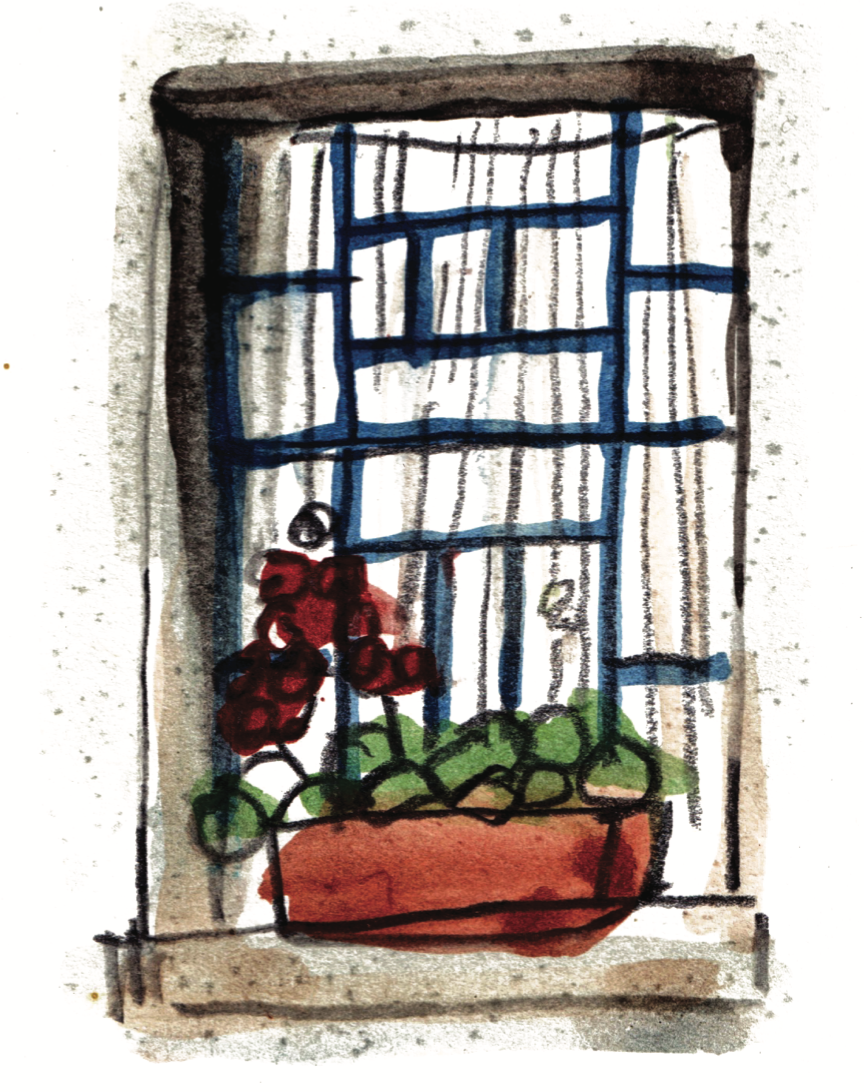
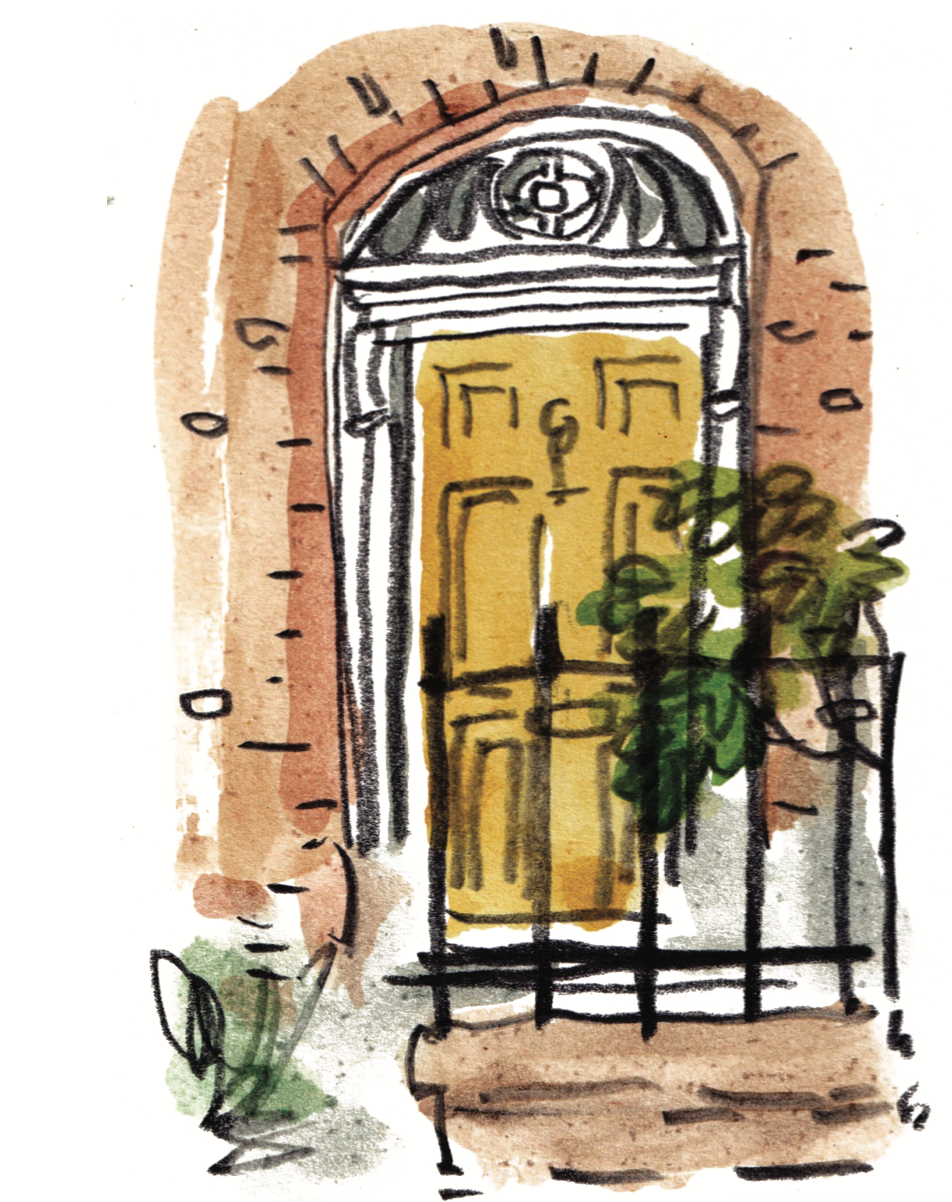
So I’ve done something to bring them together, the walking and the drawing. Twelve glimpses from my walks here in Dublin, done at the speed of perception, the speed of walking, and the speed of drawing. Ordinary things: doors and flowers, curtains and birds, made with my ordinary watercolors and a heavy pencil.
From 2010 until 2018 I made a calendar every year and sold copies. In 2021 and 2022, I made calendars that could be downloaded and printed at home for free. In 2023 I didn’t make a calendar. I’ve made these drawings into a calendar for 2024, and from now until Saturday, January 13 at 9 a.m. Irish time (that’s 4 a.m. US Eastern), you can download it for free and print a copy at home or at a copy shop. This calendar is my attempt to translate the quickness of perception at the speed of walking to the page. There is one small drawing each month.
Some details: the format of the file is A4, but you can scale it to print on letter paper; you could also print two pages per page and trim them down on both or all four sides for a calendar slightly smaller than A5. I think a mid-weight paper, 120gsm to 250gsm, would work best, but you should use what you have. The calendar is published under a Creative Commons BY-NC-ND 4.0 license, so you can print it for your own use but not for sale (full details of the license here).
Enjoy! And see you next week. And let’s agitate, together, for a world where everyone can walk, look, draw, and make things in wholeness and liberty and peace.
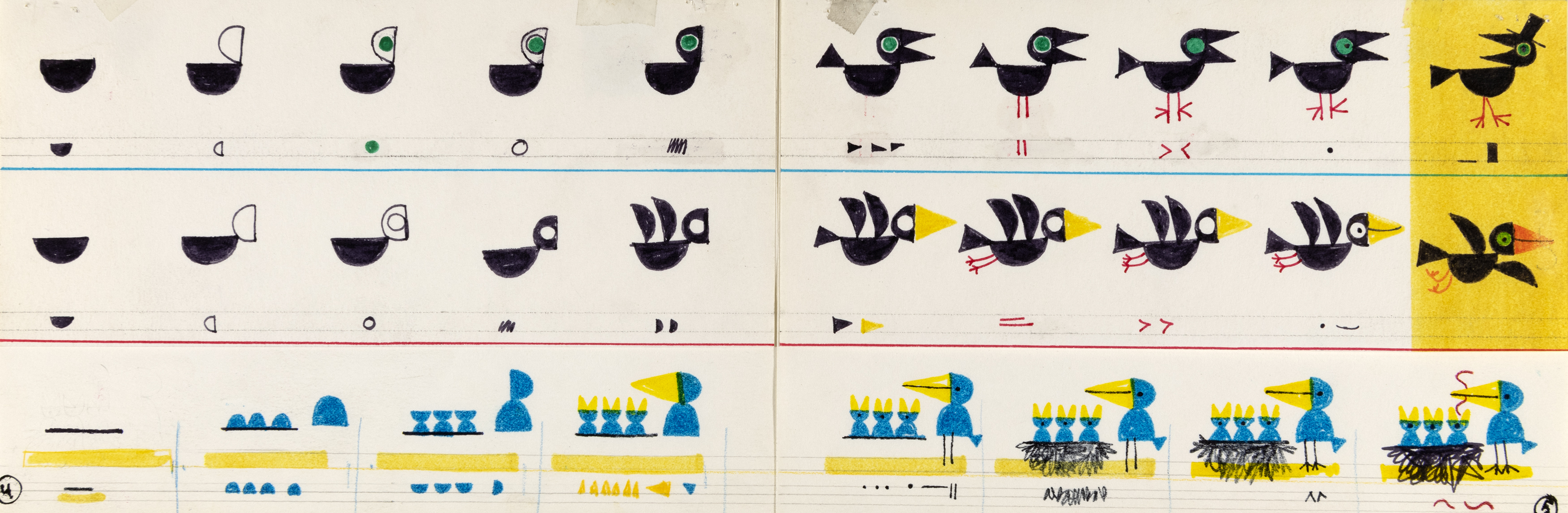
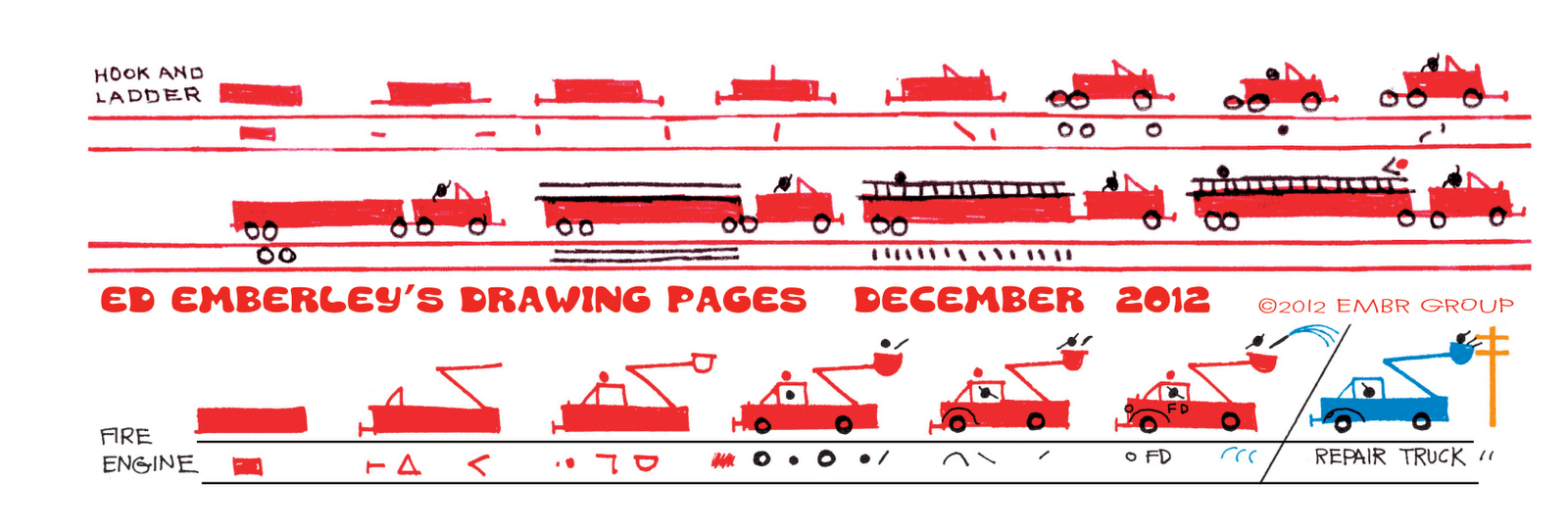
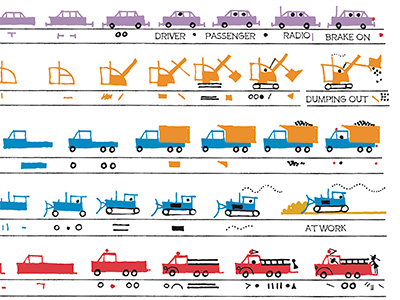
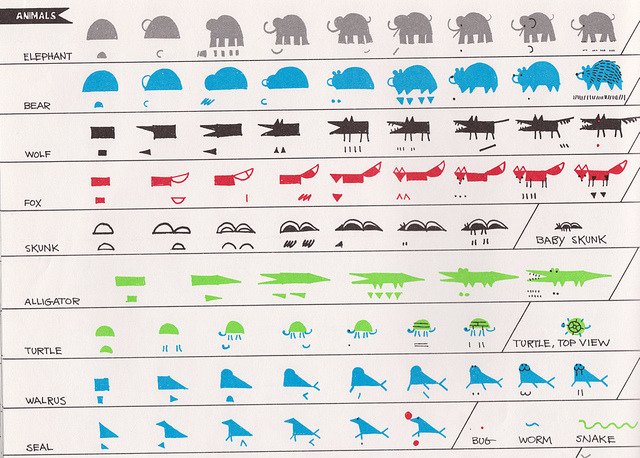
Did any of you have an Ed Emberley drawing book called Make a World as a child? (You can see someone flip through it on YouTube here.) Emberley broke down hundreds of everyday objects, animals, plants, buildings, and bodies into component parts beginning with the simplest shapes. By paying attention to each part and its relation to the other parts, you could learn to draw all kinds of things. I loved this book. I loved looking at all the orderly grids of shapes becoming animals or castles or furniture. And I loved that I could go to the book with something I didn’t know how to draw and learn to see it as pieces, put those pieces together, and then know how to draw its basic form. Ed Emberley’s book taught me to improvise, and it taught me about seeing, and it also taught me that images are made by people. As a person, that was an important lesson: there is no image made that isn’t made by a person, and so you, too, can make images. It never felt, using Make a World as a reference, that I was intended to make a perfect copy of Emberley’s drawings, although I sometimes tried (because those neat little rectangular deer were so charming). Instead it felt like Emberley was just showing me that it was possible to draw things, that drawing wasn’t something out of my hands and reserved for Real Artists but was instead very much in my hands, in every sense.
Every page in the Ed Emberley drawing book was covered in dozens, even hundreds of drawings, all of which I could make myself (and make my own), as many times as I wanted. And every other reader could, too: the adult across the table, the sibling to my right. Firetrucks and cows, apple trees and suspension bridges: we drew them all, and multiplied the world at our fingertips across sheet after sheet of mimeograph paper my dad brought home from work.
On the other side of the table, where the adults sit with their newspaper and their notebook, there is a different kind of accounting, and the world does not present itself as quite so multiple. For example, there is only one set of Pulitzer Prizes given each year. One set of Ruth Lilly Awards. One set of Guggenheims. Getting onto the New York Times bestseller list is both unlikely and byzantine, and the spots are limited each week. The NEA goes to twenty or twenty-five writers each year. The Cullman Center Fellowships, the Whiting Awards, the Stegners; Arts Council awards from your state, region, or nation; the Pushcart Prizes, all go to just a few writers each year. The most competitive MFA programs take five or ten or fifteen people a year and give them two or three funded years to learn to write. In the first quarter of 2020, Publishers Marketplace reported a total of 14 ‘deals’ (sales of manuscripts to publishing houses) over $500,000. The math of that side of the table is a math of slim chances. It’s the math of the lottery ticket, but a lottery ticket costs a dollar and a life as a writer costs a whole life, however you spend it. Those statistics about what success looks like in the commercial world of literary publication are quite a lottery to hitch a writing life—meaning a human life, a life of making things, asking big questions, thinking with others and alone, being in the world—to. But how else?
It takes a lot of concentration and a lot of attention to what’s in front of us to make what only we can make. It takes a lot of time and patience to take in the world around us—the world of shapes and forms, traditions and norms and habits—and to make something of it that really does what we are; that, in Hopkins’ words, “selves—goes itself”, that “speaks and spells” itself.
The world of public acclaim and awards, the world of pressure to publish poems and stories and essays and books and and and (wait—can we ask why, first?)—the world of status as a Writer, or as a good writer or as the Best Writer, is like a sun. It is so massive that its gravitational pull acts on us even, maybe especially, when we aren’t aware of it. And, like the sun, sometimes it gets between us and the thing we are doing, the human thing we are meant to do—make art, write—and because it is so large and bright it’s hard to see around it. Publishing and awards are out there at the center of the solar system, and we float around them, drawn by their gravity, until what we produce finds a way toward the center, often along well-established routes of access, privilege, power, and money. And so it can seem like the thing we are meant to do is to publish, or to win awards, or to receive acclaim.
But wait—that’s not what Ed Emberley’s hand says.
What Ed Emberley’s hand says is: you can make a world, not you’re going to get a book deal, and what it says is look at what you’re doing—there’s real pleasure there! Maybe it says, Shakespeare said “present mirth hath present laughter” or maybe it says, Robert Herrick said “gather ye rosebuds while ye may” and hey, here’s how you draw a rose. It definitely doesn’t say your life is a game of chance and you should only make bets that look like winners from the start. But okay, it’s a talking hand; you might be disinclined to take its advice.
Sometimes I forget that at the end of the line of shapes on the page (let’s say these basic drawn shapes can be a metaphor for all the ways we learn about writing—the practice we get with received and organic forms, how we learn about style, what we receive from a tradition in this or that genre, our awareness of the kinds of books that make money or get reviews in the New Yorker) there is a drawing that could only have been made by Ed Emberley. And when I make those shapes, no matter how carefully I look to his model, naturally my hand transforms what I make into something only I could make. And that that is the right outcome: not a replica, a transformation.
Something else I loved about the pages of Make A World—actually, I still love this—is that they were full. There is no page where there are not a dozen things happening. Often there were little visual jokes, like the moment the seal gets a red ball, or the top view of the turtle, or the baby skunk, or the backhoe dumping out gravel. You can almost see Emberley having an idea in those drawings. Those moments of play seem to me not like invitations to copy but invitations to invent and imagine, and models for how to have ideas that don’t end with a copy that can be checked off but end with me drawings things that aren’t even in the frame. The drawing doesn’t end at the end of the row of shapes; it begins there, because that’s the point where your hand takes over and figures out what comes next. I loved that the pages were so full of possibilities and that the possibilities all seemed to point to more off the page. There is no end to imagination. You just keep going, all your life, and that’s how you make a life, and an art. It’s kind of the opposite world, if you think about it, to the world of waiting for awards and prizes and acclaim and publication with a Big Five house (or with Faber, or with Graywolf, or whoever is your ideal publisher).
The world of Ed Emberley’s Make a World is open. You take a running jump off the end of the page, and there you go, making your own world. You start by learning to draw a seal, and then you imagine the rocks, the ocean water, the seaweed, the barnacles, a sea kayaker, their helmet, gannets or oystercatchers or puffins, weather blowing in from the west….
Now what could a writing world like that look like? Starting with the things you learn to make by reading but that, in making, is so transformed it could only be your own, and growing from the word toward the world—not the publishing world, grateful as we may be for its existence, but the world of our invention and our shared relation with everything that lives? What would a writing world look like where we could see writing (a poem, a book) not as the end of our imaginative work but as the start, a point from which to begin making everything that touches a poem or a book?
I think such a writing world would be full and busy, not scarce or scanty. It would have to feel endless in the way the drawings made as a child felt endless—more always possible. It would occupy our time and hands and minds as well, and in doing so I think the very doing would make us happy, the kind of happiness one gets when one is making something with thought and care. It would probably have to be close to home, in full or in part, and be of a scale that could involve us directly. It would have to be relatively small—not in idea or in scope or in imagination but in terms of production and material, because things need space. It would have to be made of materials we could get our hands on, with equipment we could use ourselves.
There are very real pressures to take part in the public side of the literary world (by which I mean the system of prizes, fellowships, awards, and publication that is for the most part driven by an economics of scarcity, made precious by how few make it to the center). And even those of us who have been published or won awards still experience the discomfort that comes about when those awards or publications enact their gravitational pull on us: wondering what the point is of writing, or why we do this work when finding readers is so hard and the odds are so slim. In my line of work it’s basically de rigeur to publish, and I wouldn’t have gotten my job if I hadn’t published books with a major literary nonprofit press in the US. I’m very grateful to a professor in the final year of my MFA program who took me at my word that my “publishing strategy”, which we had to outline for a class project, was to print a dozen copies of my MFA thesis and leave them on buses around the city; that professor sent my manuscript to Milkweed, and that resulted in the publication of my first book. Without that professor and that kindness and that book, I would not be where I am.
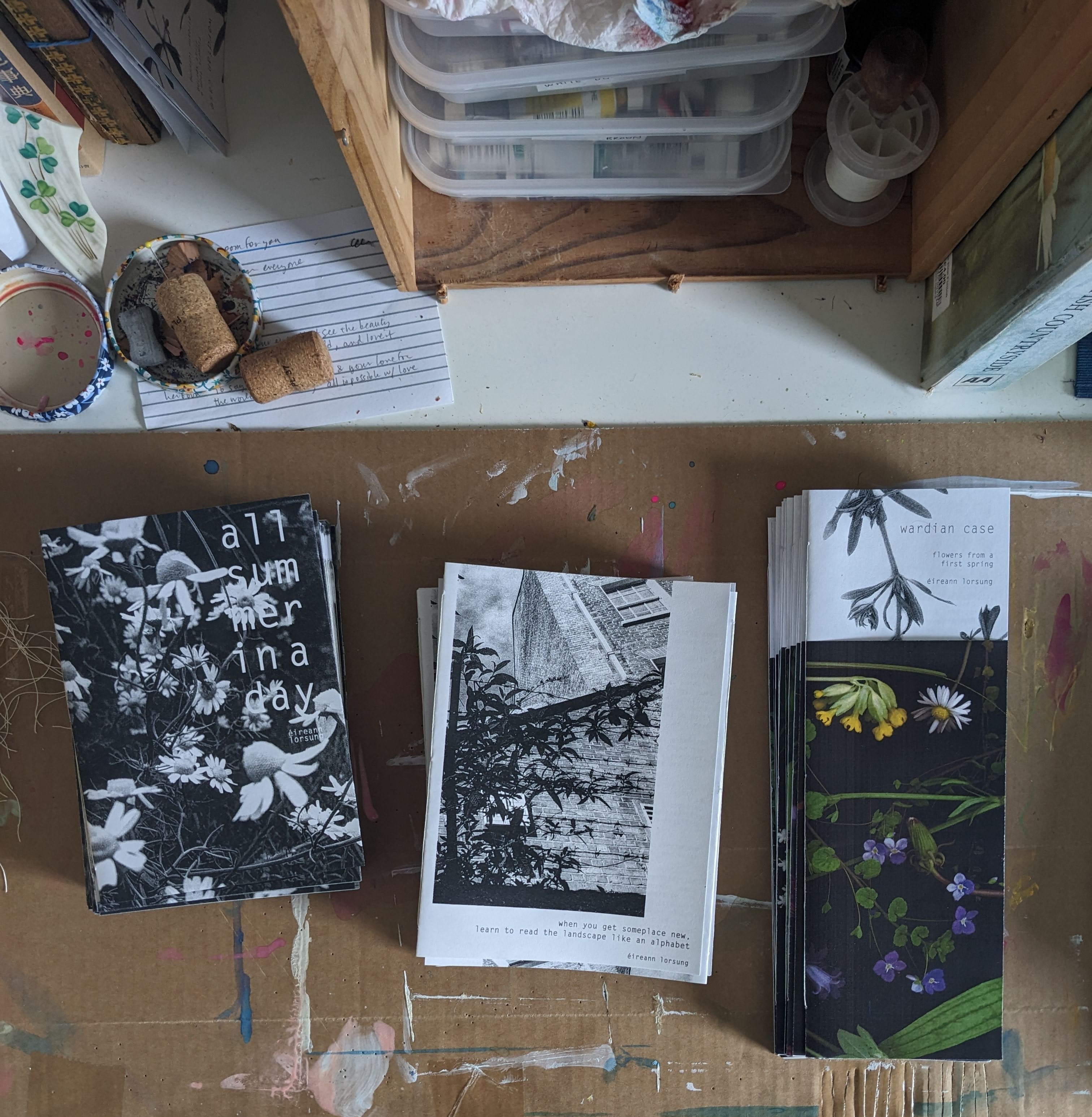
But I would still, I am absolutely sure of it, be writing. And I would definitely be making books, because making books is something I’ve done since I was a very little person, looking at Ed Emberley’s drawings and making my own. Making books is something we can all do, right here at the table between us, and it’s a first step toward a second, third, millionth world made by hand to live alongside the world of commercial publishing and to remind us that writing is not the end but the beginning—that writing teaches us, step by step, to make a whole world.
To me bookmaking is also one of the most immediate ways to remember that we can refuse to compete; we can treat the logic of the competitive system we live within as optional. We can divert, invent something else. After all, aren’t we ‘creative’ writers? Doesn’t that mean, to make something up? If we can make a poem, we can make a book; if we can make a book, we can make a room for that book and others’ books; we can make a reading or an event series. We can begin to see and name the structures and norms we live inside, and we can follow that other ordinary writer in saying, sometimes, that we would “prefer not to”. Making the text is just the first shape on the page, and then our imagination can say—go!
Publishing is a joy; it’s a pleasure and a real honor to join with others who think and have thought about writing and who write or wrote; with those who read and those talk about ideas. It’s a pleasure and an honor to be read. It is so, so special and it is also so, so normal—it is so human to want to make things, including language-things, and to share them with other people. The trick, to me, is remembering that the people whose work is made visible within mainstream publishing and prizegiving’s economy of scarcity are not the only people who write, talk about ideas, think about books. We all can. And the people who can make publishing possible are not only in the well-known houses in New York or London; they are also right here, sitting across the table from us. Pass the scissors. Pass the thread.
If we want to see one another, let’s see one another. If we want to be seen, ourselves, let’s make a space in which—it doesn’t matter if it is small or humble; that seems very natural and neutral to start and also to go on—we can be seen by one another, and in which to see others’ work.
Redirect. To your fingertips. My fingertips.
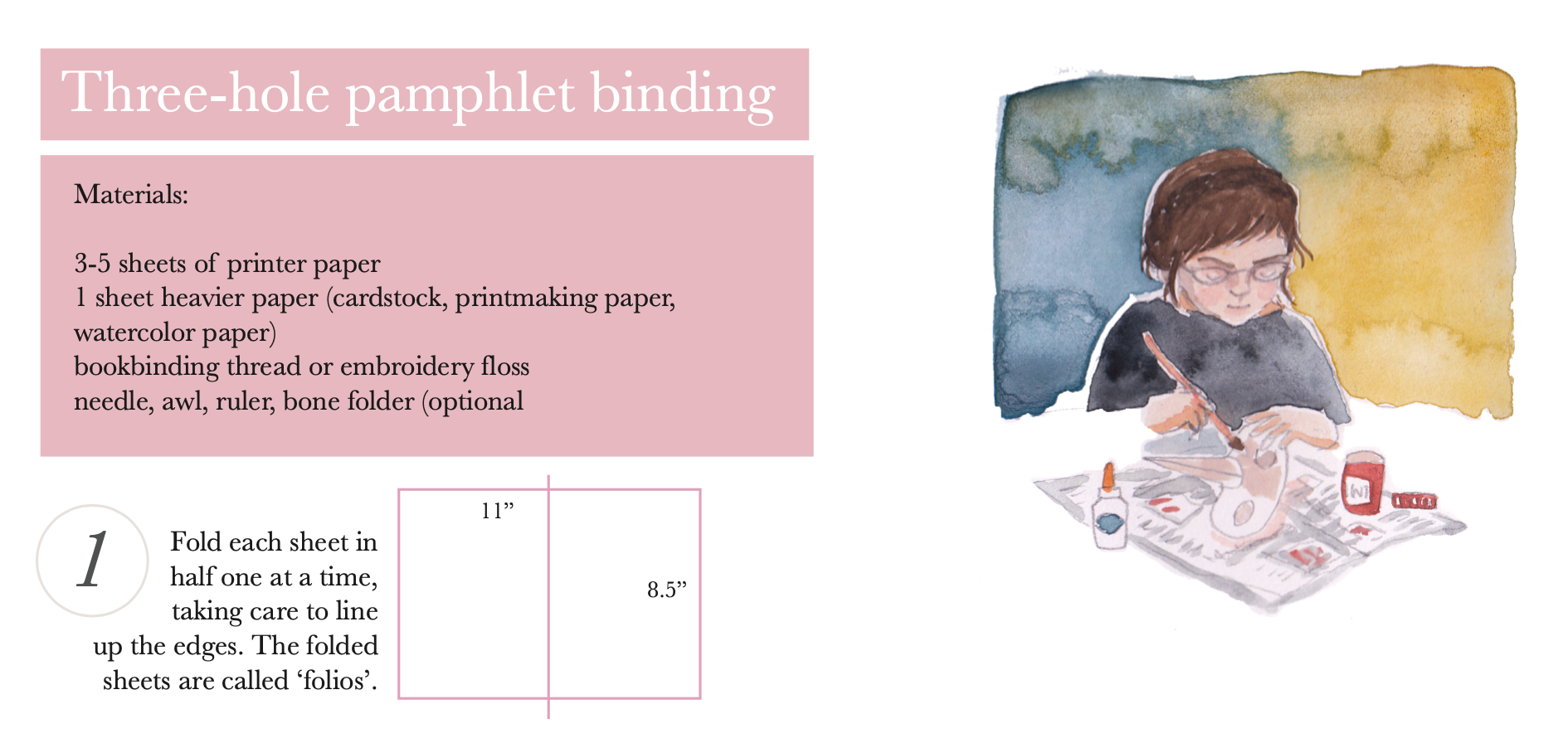
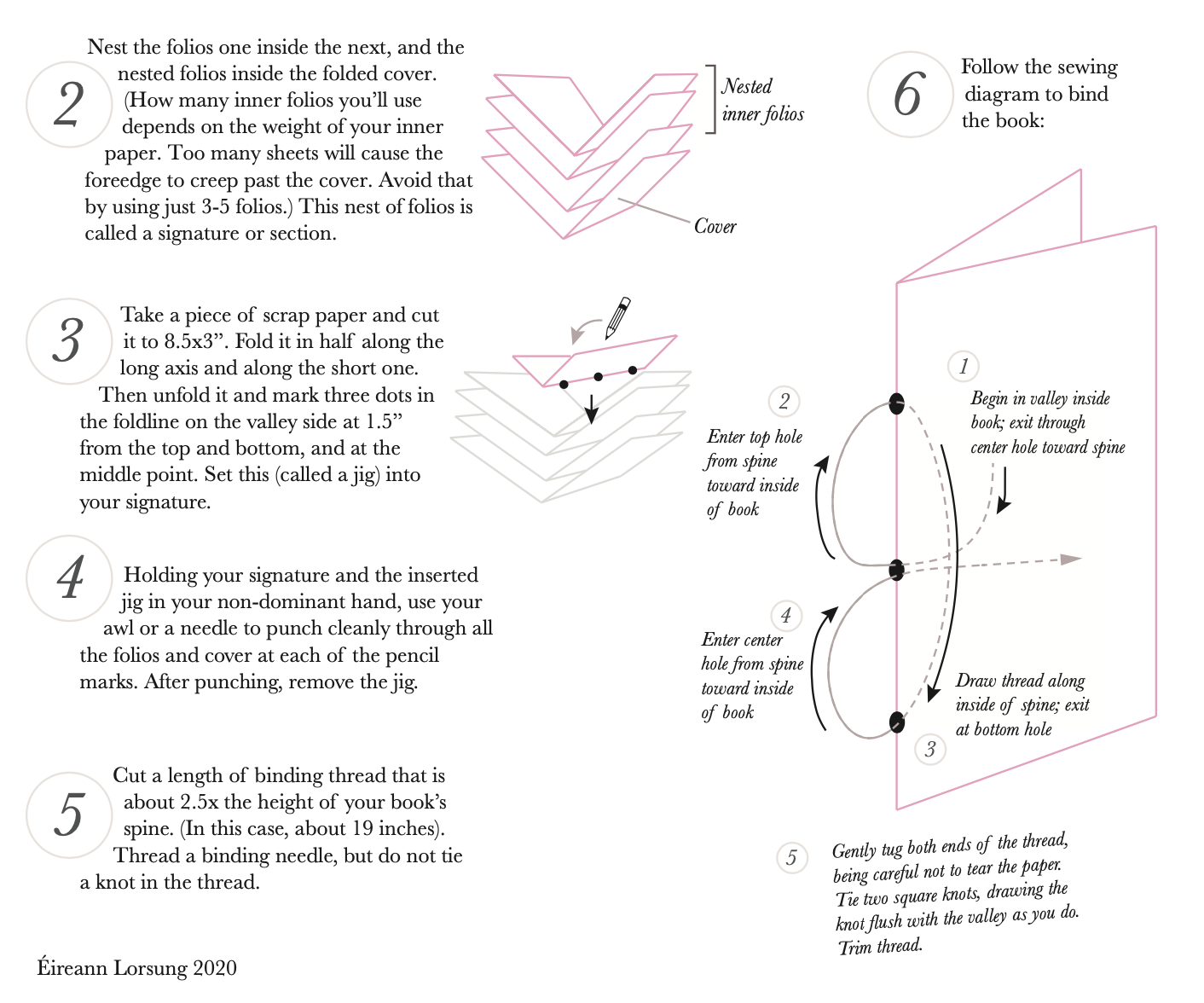
If scarcity is the engine that orients our imaginations toward structures that mostly leave most of us out, then muchness must be part of the reply. Availability. Right-here-ness. The images above are a right-here technique I often use, that I’ve been using since 2007 or so and that has alleviated much of my worry and also much of my loneliness in writing. Make a book of your own. Right now. With whatever is to hand, about nothing much at all. Then make one of your friend’s work. Then make a dozen copies of your friend’s book: now you have a press. Now there’s one more place that can publish other people.
You want to be published? You want your friends to be published? Make the world in which that’s possible. Use the copy machine after hours. Save up and buy a printer. Get friendly with your local offset and digital shop (they probably do a lot of ad printing and will enjoy taking your jobs on). Get a few friends in on it if you don’t want to or don’t have the skills to do it all alone. You don’t have to wait for Hachette or The Song Cave or anything in between to see you, though they may well and how wonderful if they do: in the meantime, which is your life, you can see you. You can see the ones you love. You can make the books to hold the things you’re thinking and seeing. You can make them now, with your own hands: as pamphlets, or as posters wheatpasted to the sidings of construction sites, or as postcards mailed to anyone who’ll pay for a stamp, and, doing so, you’ll be in a rich tradition, stillongoing, of people who’ve looked at a book and thought, well, I can do that. And it’s not one or the other, if you make a book of your own: who knows what else is possible for that writing? But right now, if you have the choice between longing to be published by someone else and making a book of your own or a friend’s yourself, I’d say make that book.
You can make a world.
About as often as a nonfiction teacher reminds their students that “essay” comes from the French verb “essayer”, which means “to try, to attempt”, a poetry teacher reminds their students that the word “poem” comes from the Greek verb for “to make”. And that’s the point, isn’t it? In the end? Not to win, but to make; to be part of the made and making world, to make things? To refuse, even, the terms by which some of us might be ‘winners’ and the others—not? The point of writing poetry is that the poem leads us, as Ed Emberley’s drawings do, not to a single end but to the edge of the page which we are meant to leap off of, toward the whole world, also ours to make alongside everyone else. Make poems, yes. Make books, make magazines, make newspapers; make postcards and posters, make classrooms and residency spaces, make kitchen table conversations and make walks where anyone can join. A world. The poem doesn’t end at the end of the line; the ‘aim’ of writing is not the bestseller list. It’s here: your hand holding the pencil as your mind suggests the horse’s mane not hanging but flowing, and the legs, then, not standing but running. And the grasses, then, and the wind bowing the grasses down so that they resemble the mane of the horse; and the flowers among the grasses, and the pollen invisibly flying from them, and the wide open sky under which everything is possible.