This is dedicated to Nina, who said, about one year ago exactly, that I should write the “essay about ‘Joy to the World’ [I had] been thinking about”. So now I am.
This week and next I’ll be writing about Christmas, after a fashion. (You can read the first essay in this series, and about the background that leads to and shapes my thinking, here.) This week is the Sunday of rejoicing (‘gaudete!’) even as the nights grow longest. It is a night of pink candles for joy. To me, pink is the color of anarchism, opening, liberation, possibility, togetherness—the everything of Advent. Despite the subtitle of this essay, my answer is both indirect and incomplete. But a person’s reach should exceed their grasp, or what’s a sobstarch for?
“Anarchism meant [‘release and freedom from conventions and prejudice; freedom, the right to self-expression, everybody’s right to beautiful, radiant things’] to me, and I would live it in spite of the whole world—prisons, persecution, everything. […] I would live my beautiful ideal.” – Emma Goldman, Living My Life
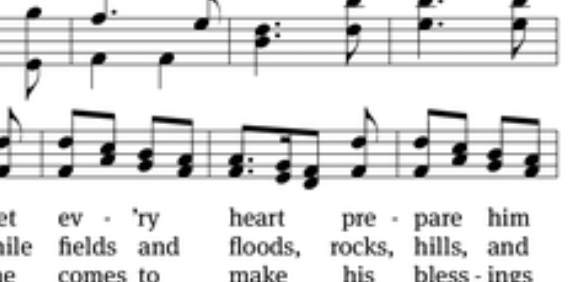
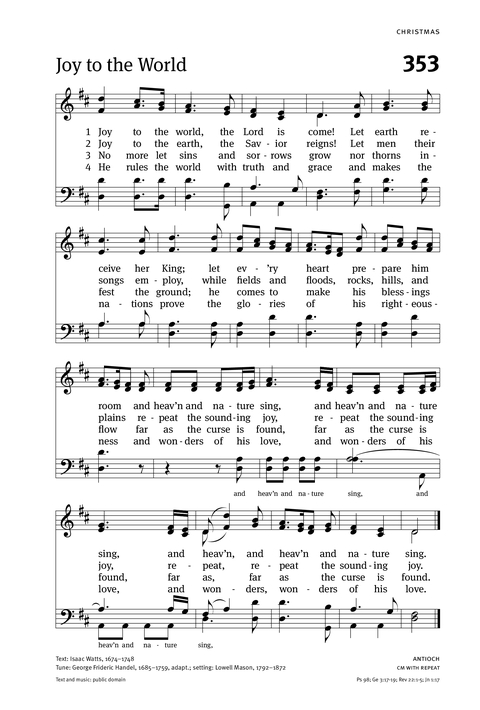
There is a song I have known from childhood—if you speak English and celebrate Christmas, or grew up doing so, you likely know it, too. It is an old and very popular song for that holiday, written in 1719 by a nonconforming minister, and mostly sung now to a tune composed in 1848. For some years now I have been thinking about this song, in the way you sometimes do with things familiar from childhood. Having taken it for granted a long time, you begin later in life to sense a thing’s strangeness and complexity. What had seemed straightforward, even obvious, is revealed not to be.
Here is the song. It is is in great part a celebration of power. Written in the 18th century, in England—an England both monarchical and imperial—it brings assumptions from that time along with it like one brings the cold in on one’s coat in a northern, midcontinental December. The song talks about “ruling”, “reigning”. The people of earth are “men”, God is a “Lord” and a “King” (definitely also a man). The earth (figured in the feminine) is there to “receive” and to “prepare him room”. Okay. So far, so limited in imagination. Those parts, the obvious parts, the song’s opening in particular, are all brass, shined to a high polish by the assumption that empire is the way to go, that status necessarily and even rightly seduces, that power looks like power as kings and wannabe kings (the wannabe kings of political, social, cultural, familial power and access) conceive it. These polished surfaces that reflect worldly power and assume it’s the nature of divine being are the reason that for so long I resisted the song’s pull.
But I can’t keep resisting, not entirely, because something in me insists that the song has a subversive thread to it, as when, in a shopping mall, someone has stickered the benches to insist on public space and public speech inside the privatized spaces that pass so often now for public ones. Or as when, in a massive expensive grocery store, the employees all turn a blind eye to the person putting in the code for bananas in place of bulk nuts. The edifice crumbles only after ants begin, over years, to displace one grain, then another. As so often is the case, I’m looking for tiny indices that describe the failings of systems that seem both total and natural, and that point to liberation.
What draws me to think about this song, and what keeps me thinking there, are the parts of the song where everything in the universe sings. The parts I am interested in are not made of shiny stuff—they are made, and made much more strangely and much closer to home, of human hearts that can expand and of “wonders” of “love”. They are made from what the hymnist calls “joy”. In fact the whole song is about joy—it is called “Joy to the World”, after all—which makes me ask, as I think about it, what it is that thing called “joy” might be.
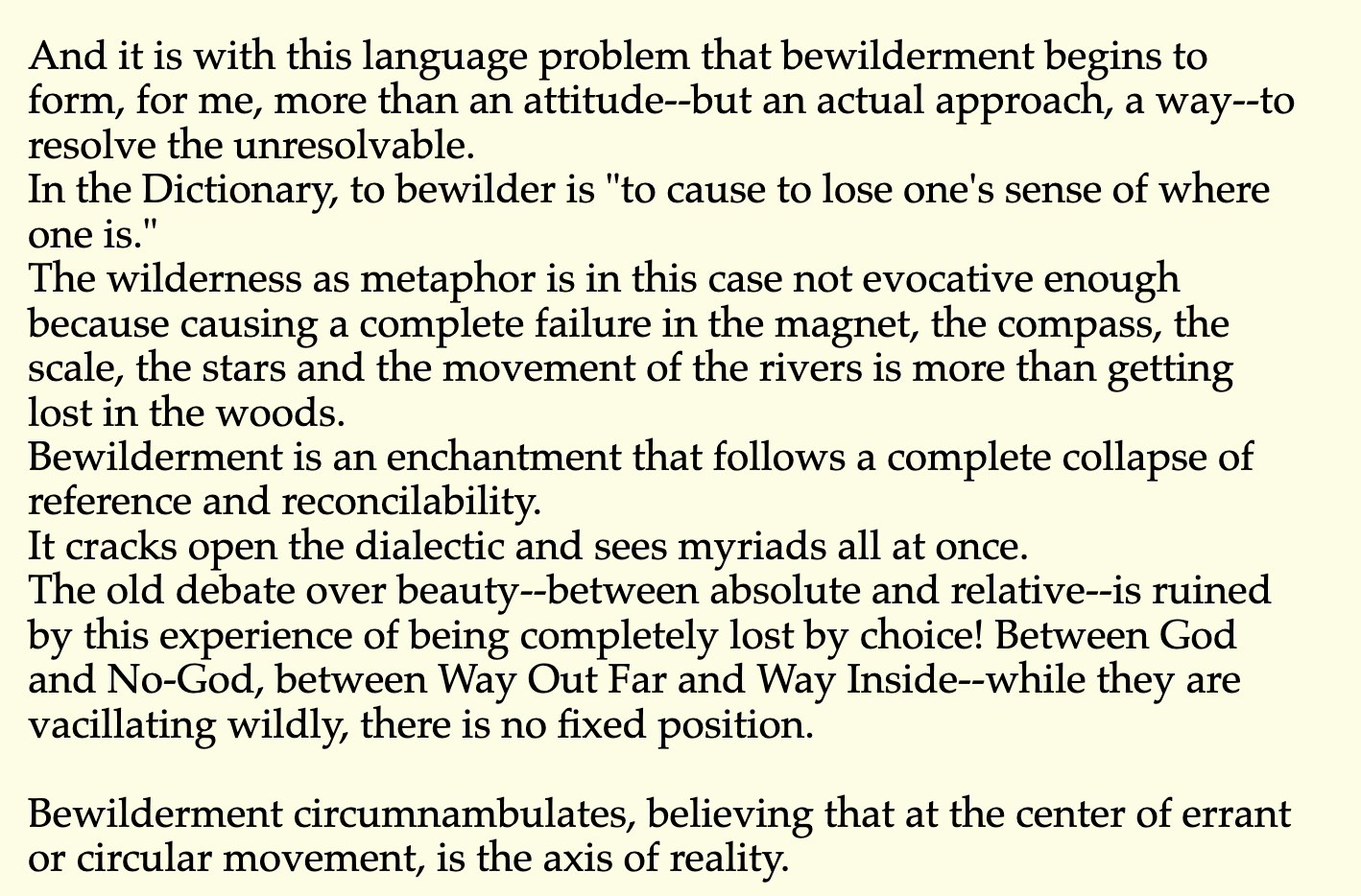
I think joy is not happiness. It is not even elation, or the ecstatic and momentary feelings of triumph or delight or pleasure. I think joy is more like the sublime than like these words that are used as its synonyms—I think that joy has some of the sublime’s knife-edged terror to it. I think joy is what Fanny Howe calls “a complete failure in the magnet, the compass, the scale, the stars”. Joy is a reordering of the world, a reordering that feels like total disorder—thus the edge it shares with terror. In Howe’s words, bewilderment is “an enchantment that follows a complete collapse of reference and reconcilability” that ruins not only our navigational tools but the systems of placing ourselves that they relied on in the first place. Like Howe’s bewilderment, joy is something that forces us to circumnambulate rather than to know where we are and how to move. It does not permit us the straight highway or self-assured knowledge. It makes us move in (seeming) error—Howe reminds me that the root of the word “error” is wandering, not mistake—and the gestures of of this ‘erring’ reveal the “axis of reality”.
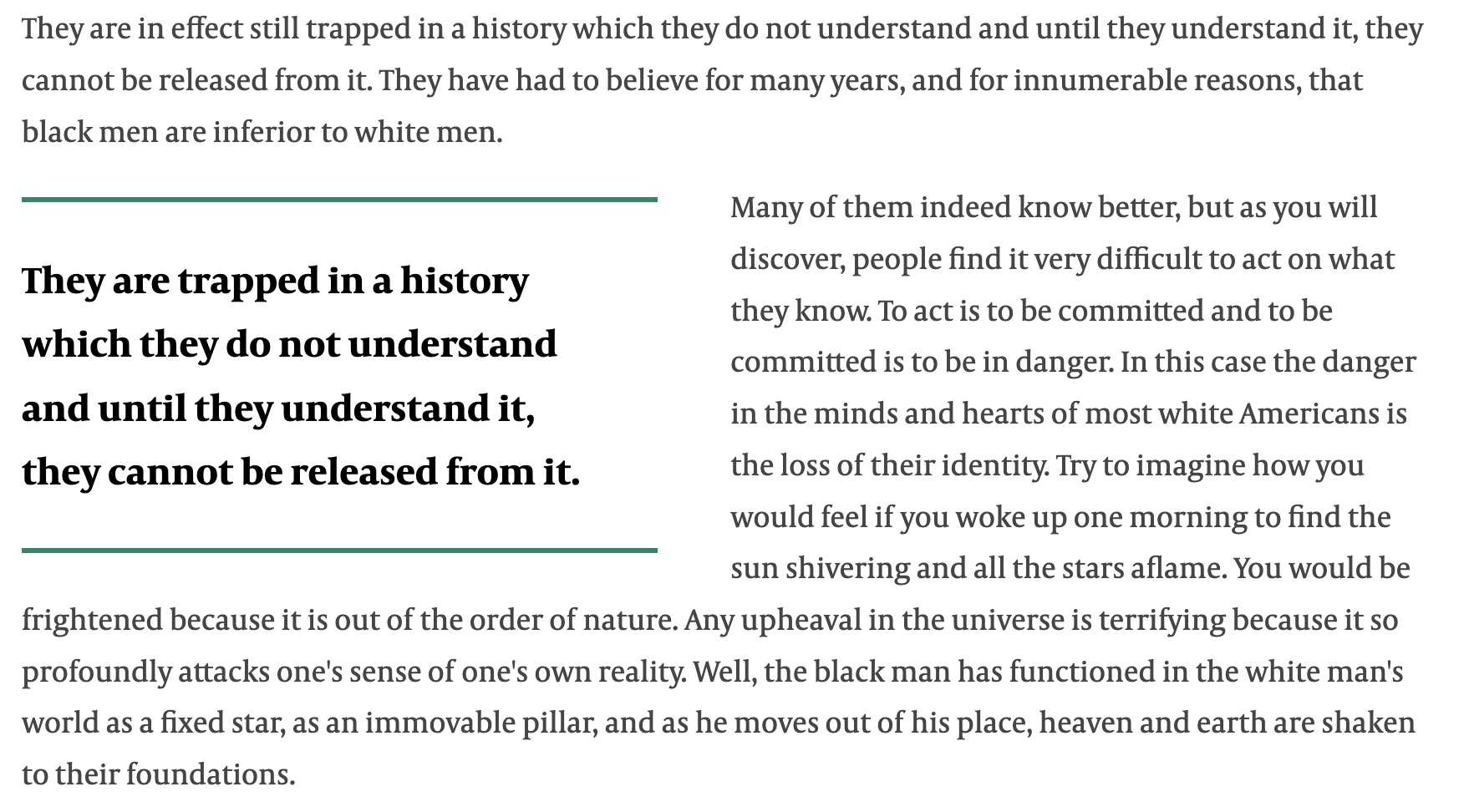
When I think about Fanny Howe and her poetic-ethical idea of bewilderment, I have to think about James Baldwin, too, because there is a moment in his essay “A Letter to My Nephew on the One-Hundredth Anniversary of Emancipation” (in The Fire Next Time) that Howe’s failing compass reminds me of every time I read “Bewilderment”. There’s an explicit link that takes me from Howe Baldwin, and it’s a writerly one—it’s a metaphor. When Baldwin talks about the white experience of Black liberation (which is universal liberation in the end), he compares it to waking up “to find the sun shivering and all the stars aflame”. This sounds like “a complete collapse of reference and reconcilability” (Howe) to me. And Baldwin writes that “Any upheaval in the universe is terrifying because it so profoundly attacks one’s sense of one’s own reality. Well, the black man has functioned in the white man’s world as a fixed star, as an immovable pillar, and as he moves out of his place, heaven and earth are shaken to their foundations”. There’s the same kind of image as Howe’s compass, magnet, scales, stars: the fixed star, the navigational device that allows some of us to move freely through a universe we are allowed to feel we both make and ordain.
Let me slowly bring us through Howe’s bewilderment and Baldwin’s letter, and back to joy. I will. But give me time.
Howe writes that the bewilderment that results from the compass failing is not a ‘merely’ artistic question (as if art could ever be separated from life). She explicitly names bewilderment an “ethics” as well as a “poetics”, a “way to enter the day”—our ordinary lives. And she also writes that “A big error comes when you believe that a form, name or position in which the subject is viewed is the only way that the subject can be viewed. That is called ‘binding’ and it leads directly to painful contradiction and clashes”. What Howe calls ‘binding’, this thing that is both in error and painful, sounds like all kinds of assumptions about value that are structured by the networks of power and relation we live inside.
The belief that one knows how things are and that that is the only possible way for them to be sounds like Baldwin’s “fixed star” to me. I know that Howe is thinking about whiteness elsewhere in the book that contains “Bewilderment”, and so I can’t help reading whiteness as one such ‘binding’, because whiteness is about ordaining, sorting, and control. And that brings me again to Baldwin, who writes that “people find it very difficult to act on what they know. To act is to be committed and to be committed is to be in danger. In this case the danger in the minds and hearts of most white Americans is the loss of their identity”, an identity, Baldwin writes, that is established in relation to the “fixed star” of Blackness figured, imagined, and situated (socially, culturally, economically, historically) as lesser other. When Howe writes that bewilderment requires us to “circumnambulate”, she is insisting that a reordering of the universe will require us to take paths we may not have even known existed, paths that may seem nonsensical or impossible or nonexistent. To circumnambulate is to be committed?
What if I place Baldwin’s idea of commitment and Howe’s of circumnambulation together? Both writers seem to suggest that to rely on the systems of knowing, being, moving, having, and relating that we already know will merely replicate those systems’ painful, unjust, and unfree hierarchies and binaries. Bewilderment, on the one hand, and commitment, on the other, “crack open the dialectic” to show us “myriads all at once” (Howe); they put us “in danger” because they require us “to act” . And that is the knife-edge I find in the song I’m trying to write about here—the knife-edge of the world that changes, or cracks open (with all the violence that verb implies), along the lines of repressive and oppressive habits of being both social/cultural and personal.
I live in a culture (not the only culture on earth, but a dominant one) where it is commonly held that there are speaking kinds of beings and thinking kinds of beings, and there are beings who do not speak, and beings who do not think. (The rubric of “non-thinking/non-speaking” is and has been variously applied to humans as well as to non-human beings.) I live in a culture where there are more and less valued ways of being a thinking-speaking being, all of which are almost always more valued than being a non-speaking-non-thinking being, and than being a ‘non-being’. I live in a culture that has a sense that these are settled questions, “fixed star[s]”, “the only way the subject can be viewed”. I live, in other words, in a culture that has at its heart a sense of ranking and a sense of sorting, and a belief, often untroubled, that ranking and sorting are so natural as to come from the ground itself, like elements. A lot of the song I’ve been talking about is preoccupied with the trappings of this culture, its reigns and its kings and its nations and its proving and its rules.
But then there are the non-speaking-non-thinking beings and non-beings in the song, the fields and floods; the rocks, hills, and plains. And what do these do? —They disturb the universe of order and of “sense”. They shake “the heavens and the earth to their foundations” (Baldwin). How? Joy. It says so right there in the song. What does joy do? It makes it possible not only for “fields and floods, rocks, hills, and plains” to sing, but for us to hear them. That is not a description of “happiness”, but a deep disturbance of order. A breakdown of the rules that seemed to be effects of a natural order, revealing them to be contingent. A rearranging of the cosmos. The failure of a compass that I had trued to stars I thought fixed—stars of an order that arranges things so that what I know is what there is to know.
Singing rocks, singing land, singing water: an inversion of my habitual assumption—my knowing, my unerring knowing—of who speaks, who listens, who it’s possible to be here with, and how we can be together. When I read Howe, I learn to look not for the earthquake but the wobbling compass needle as an indicator of a necessary collapse of meaning. When I read Baldwin I am reminded that what feels like the end of the world may be a door opening to a completely new one, one the fixity of my gaze had occluded, and one inviting my commitment—that is to say, my action. The fields and floods, rocks, hills, and plains are not passive (the land we live with, through, in is not subordinate to humans). They sing and repeat the song (their own song), a song that calls for a total “upheaval in the universe” (Baldwin).
It is not for a crown-wearing, oilfield-owning, prizewinning, property-hoarding king that the hills and fields, the rocks and the water are singing, but for the joy that is the disorder of all systems of dominance, all systems of unequal being, all systems depending on the oppression of one sorted and categorized kind of being for the seeming, though not actual, freedom of other kinds of being. It is a song for the child of poor people, soon to become refugees, born without even a bed, if you need that image to get the inversion I’m talking about, although I don’t think that image is necessary. I think it’s enough to think about those singing hills, singing rocks, singing springs of water and take that song literally, to experience the upheaval and inversion of our given modes of understanding. After all, here we are in the world so many of us were—I was—mostly given to understand as non-speaking-non-thinking. And here it is. All around us. Singing.
The human being is holy, the land and water are holy, the animals and plants, fish and birds and insects are holy. End all wars forever. Free Palestine.
Thank you for reading—I will be here next week with one more piece in this series about Christmas.
This week and the following two weeks I’ll be writing about Christmas, after a fashion. I was raised in a Catholic parish renewed by radical nuns after Vatican II, and dedicated to liberation theology, the priesthood of the people, and the preferential option for the poor. I want to think and write through that lens about this time of year. So if that’s not your thing, or you’re simply saturated, this might be a good time to ignore the weekly essays. (Maybe I should note that I’m not interested in a theological debate. I have no stakes in anyone else’s belief or nonbelief in my [unsettled, sometimes contradictory, still-in-progress] theology, and no interest in converting anyone.) As always, I’m trying to write through, with, into, and toward bewilderment in Howe’s sense.
Tonight at 7 Irish time/this afternoon at 2 US Eastern time, I’ll give the second Annulet Linkages Lecture. It’s called “On the line” and you are very welcome if you’re interested. Sign up via this link.
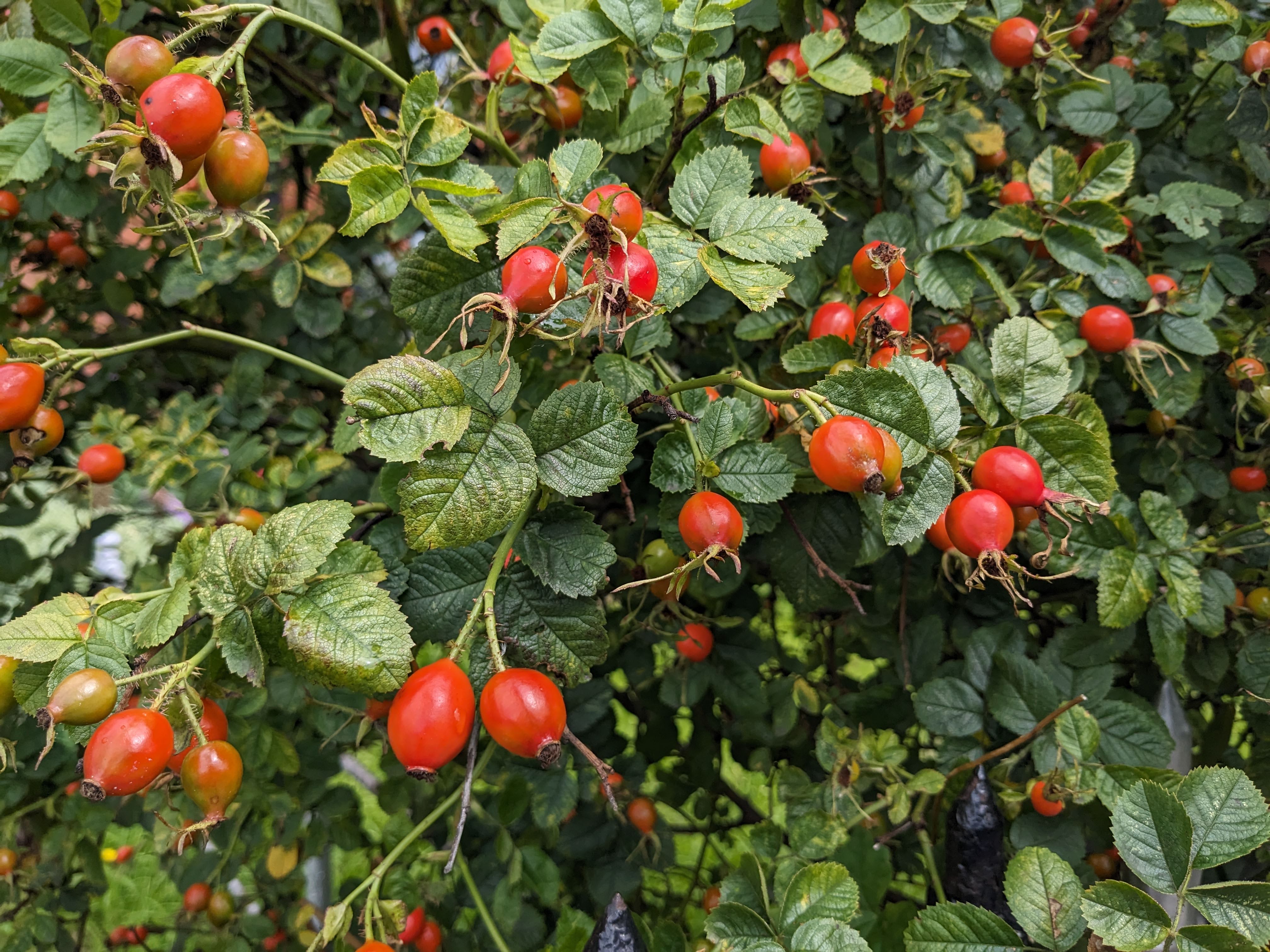
Listen. There is a voice calling to us in the wilderness. There are gold stitches on blue cloth like the gold marks in the deep blue sky. The wind goes through the rushes where the tents have been pitched along the canal and the rushes hum with that wind, and the tiny fish swim oceanward in the dark water. In the tents the light from a cell phone is blue-white for a moment, then extinguished. A long time ago a census was undertaken and everyone was required to return to their homeplace. People move across the land and the water, using what conveyances they can find. The cost of living rises so quickly that it is impossible to find a place to stay. The landlord opens the door and the apartment stinks of mold. It has only one window, which will not open. The night sky above us spins with galaxies that distant telescopes record. Through the universe the thread of song comes: and is gone again. Overnight the pink roses outside the public library open their buds despite a hard frost. And the temperature rises, and the ones sleeping among the rushes are a little warmer in their sleeping bags. The man and his pregnant wife bend against the wind as they walk a road that seems never to end, toward a town where they don’t belong. When they arrive, who will open the door? Listen: there is a person calling to us from the street corner.
In the desert the billionaire stands on the cliff surrounded by data centers. The United States vetoes the ceasefire. Soldiers and police exchange expertise online. They may seem to constitute the world but they are not the world. Violence, resource hoarding, fear—these occlude, by their greedy gobbling of our attention and even our understanding of what is normal, the granular facts of the world of the miraculous real.
I think the word ‘miracle’ is not a description of something that once happened as if by magic, or by a power beyond comprehension; I think that word is a direction toward the world we know we need and have been infinitesimally schooled by capitalism (with its roots in racism and patriarchy) out of being able to name, out of longing for—sometimes even out of knowing what it is possible to long for. In that sense, to me ‘miracle’ is a word that points us toward a living and livable place where no one is outside the circle. It is a word that first and foremost means imagine and understands that imagination is world-making work, the founding gesture of the possibility of change and toward the kinds of work and kinds of company necessary for that change.
That something is unlikely does not mean it is impossible. That the word ‘miracle’ has come to imply extraordinariness does not mean that miracles are out of our hands. The people stand between the oil pipeline company and the river. The trade union closes the arms factory for a day, then for a second day. The tenants union finishes raising funds and buys their building. The city passes the basic income ordinance. The passersby make eye contact with the woman sitting on the pavement. The public library is open seven days a week and taxes on corporations pay for medical care for everyone. The light in the sky is a light in the sky. The people are grass, and the canal is a canal.
Listen, the prophet says, and directs my ears to grass, to water, to the ones all around me, near and far in endless concentric rings. Listen, the prophet says, and the scroll unfurls to words that proclaim release to the captives, that direct oppressors to let the oppressed go free. What is holy? Answering the poor and needy who seek water with water. Honestly? Abolishing the police. Banning fossil fuels. Living wages for liveable hours of dignified work. Sharing our food with one another.
Near the canal someone is cooking over a camp stove. The government announces that refugees will be housed in tents in the countryside. Swans dive into the clear water to eat the thin stems of lilies. The news report indicates a rising death toll in Gaza, and in cities and towns, in villages and in rural places all over the world people leave their intact and warm and sweet-smelling dwelling places to insistover and over that it is wrong to murder any people, it is wrong to bomb houses, wrong to destroy universities, wrong to target hospitals, wrong to poison the earth, wrong to inflict suffering at any scale.
Teach us what enough means. World of infinite beauty, right here around us. We make it together. Above us, way out in an atmosphere we can never reach but that touches us, the stars continue shining.
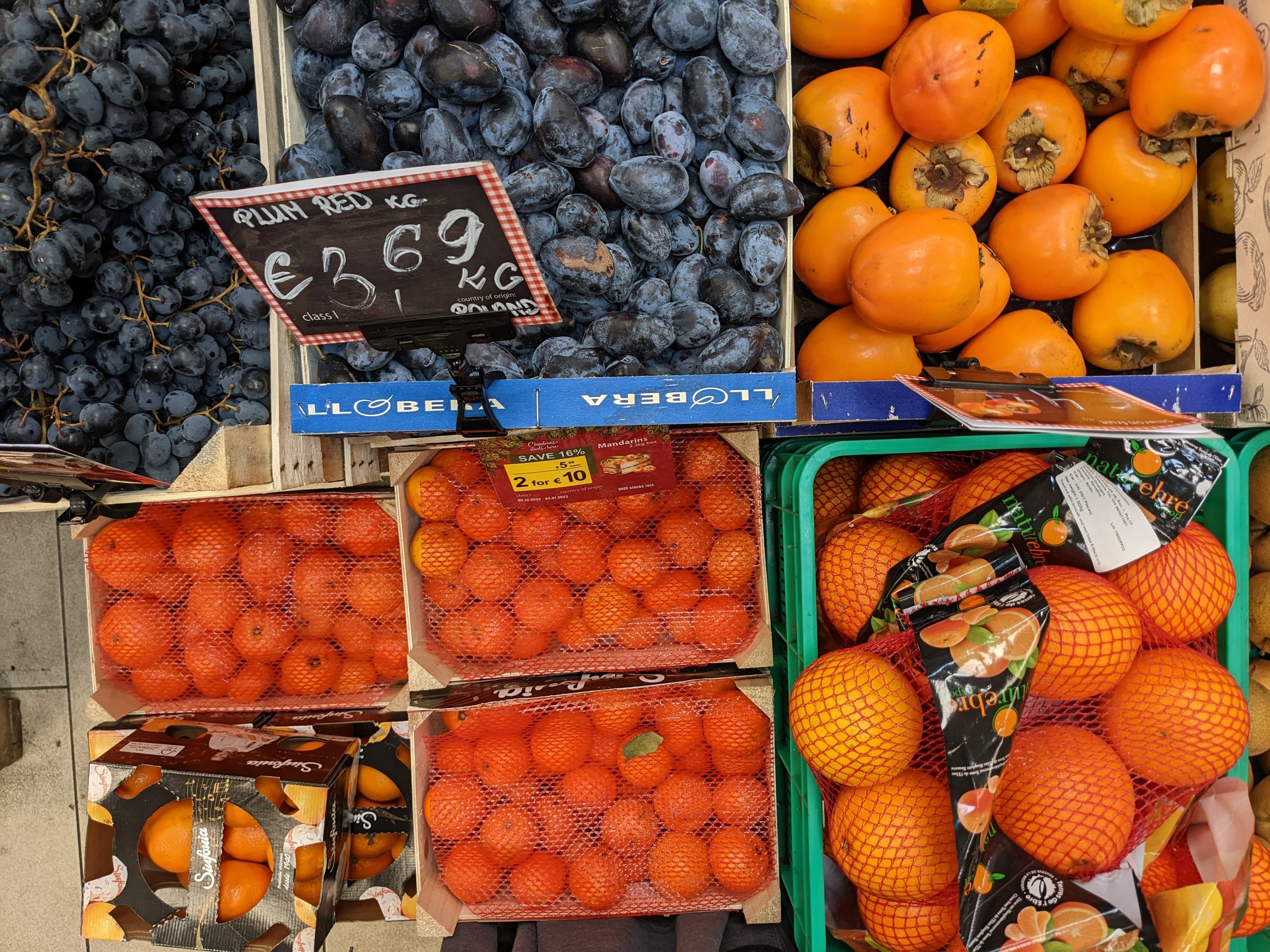
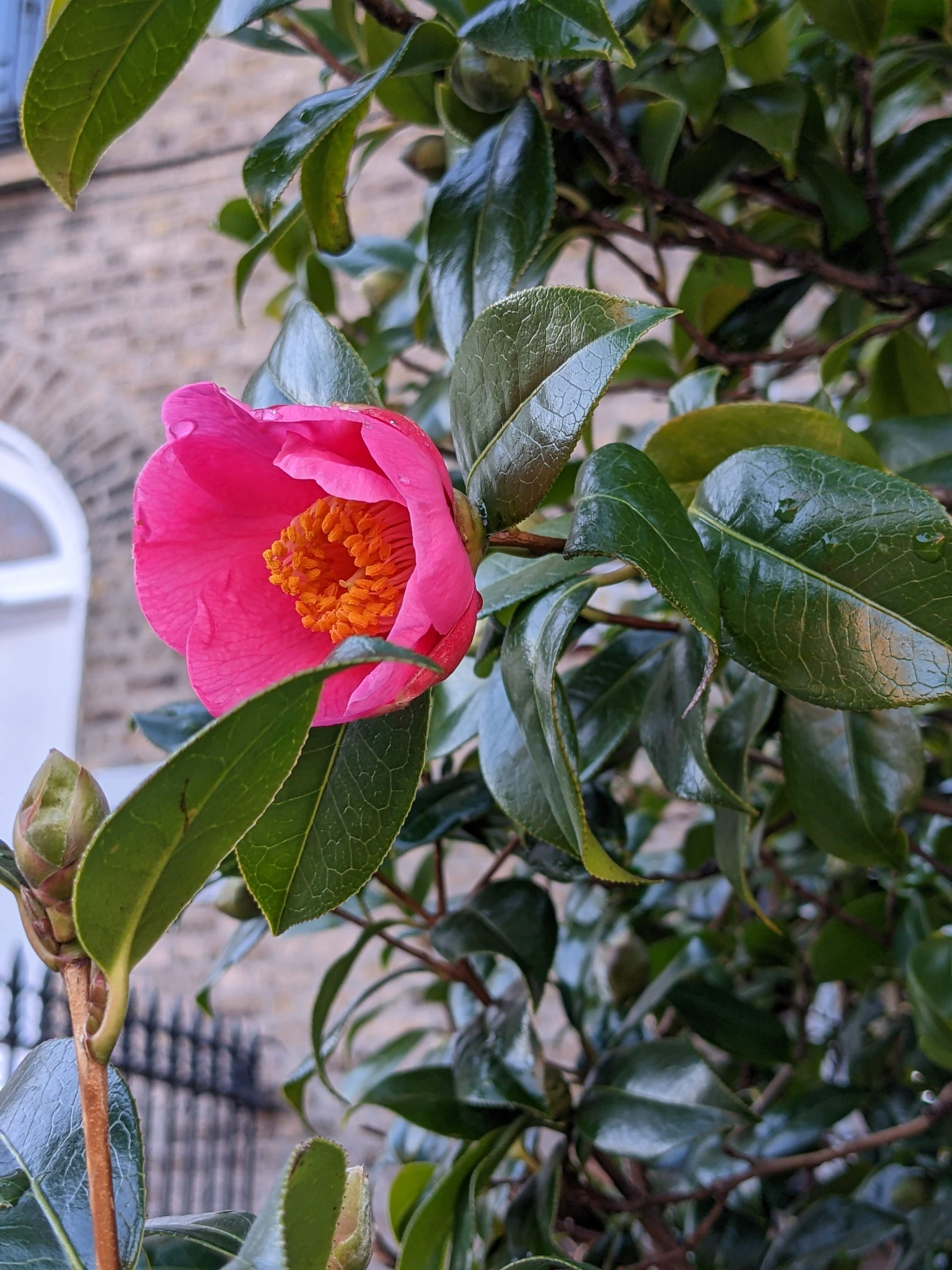
Colors for this time of year: almost-not-there blue, camellia pink, translucent orange, wet street gray, dark brown, red-brown, light purple, opal pink, dust-blue, persimmon, faded red, porcelain blue, condensation gray, gold, glaucous green, anther yellow. The meek, the poor, the vulnerable, the mourning, the hopeless, the abandoned, the neglected, the excluded, the overlooked, the weak—this is their season. These are their colors, how beautiful. The colors of justice, liberation, courage, solidarity.
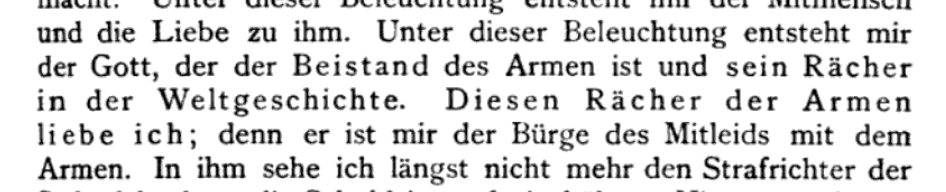
Hermann Cohen: “the God who appears to me is the comforter of the poor and their avenger in world history. This avenger of the poor is the God I love.”
This afternoon at 2 p.m. US Eastern (this evening at 7 Irish time) I will give the first of two lectures as the Annulet Inaugural Linkages Lecturer, a talk entitled “When you get someplace new, learn to read the landscape like an alphabet”. This talk will be broadcast online, for free. To register, please click here.
On November 21, I will read and talk with Majed Mujed and Hua Xi as part of the Trinity College Literature & Resistance Series, in the Trinity Long Room Hub. You can book a place here (in-person only).
On December 10at 2 p.m. US Eastern I will give the second of the Linkages Lectures. I will give a talk entitled “On the line”. This talk will be broadcast online, for free. To register, please click here.
Once these are done, I am never doing anything in public again. For at least a month. But I’m sure by the start of the new year I will be full of vim again. If you’d like to have me to read or speak at your university, school, class or organization in 2024, please drop me a line.
This week, something a little different to what I usually do here, at least in some ways.
The world is hard. It is also full of beauty. Looking for beauty doesn’t mean ignoring the hardness and pain of the world; we can hold the facts of devastation together with the facts of late roses in the autumnal dark. Beauty—the richness of ordinary life—is a reminder of why we go on, and what we go on for. Maybe it is even simply why we can go on, and how. Ordinary beauty is a signal of what we want for one another. It’s a sign of care, pleasure, warmth, safety, complexity.
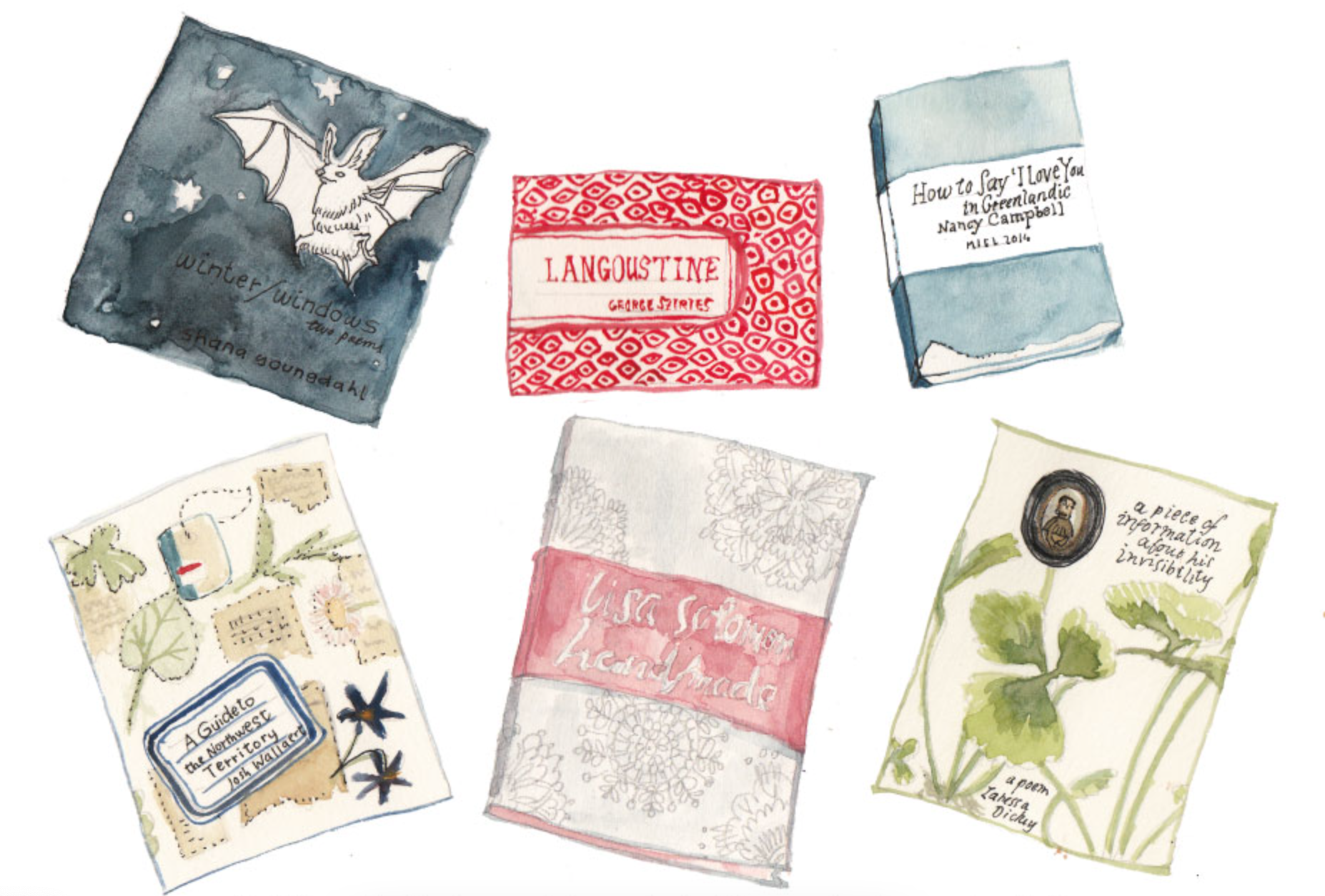
A long time ago, I ran a small press called MIEL that made books as well as other things. (The name of the press means HONEY. I chose it for its sweetness and its made-by-bees-ness and its cultural properties and its color.) One of the things I did as part of bring the work of the press to readers was to write a blog about interesting, enchanting, desirable, unusual, and beautiful things that other small presses, artists, and craftspeople made. I loved to scour the much earlier internet for things that would surprise and delight both giver and receiver. I tried to look for things that were not mass-produced and that were made with care, the kinds of things that might mean giving just one present, but a very well-made one.
This month as I’ve written about books and reading, I thought about MIEL and those blogposts, and decided that in place of this week’s essay I would look for and write about pleasing things. Maybe you are looking for or thinking about presents at this time of year; maybe not. Either way, I hope there is some reminder of how rich and beautiful the world of made things is.
Most things I’ve collected here are either made by the person who sells them, or sold by someone who runs a small business. In the case of books, I’ve linked to secondhand sites or independent bookshops if possible. The makers and sellers are spread across the world, so if buying from shops and makers in your city or neighborhood matters, consider these categories of interest or ideas. I’ve indicated a couple of places where shipping may require special attention. If I can vouch directly for the object (because I’ve bought it or been given it), I’ll say so. No one has paid me or offered me anything to write about any of this. Whether or not you celebrate Christmas or any other present-oriented winter holiday, I hope you’ll enjoy my recommendations of beautiful, practical, and pleasant things.
Finally, if you are in a position to do so: there are about 191,000children in New York City who do not have a place to live. Some of them celebrate Christmas. The organization The Sled makes it possible for us, strangers, to buy one of those children a present they’ve asked for. You can do that here. (When I posted this elsewhere, someone replied that they were going to share this with their PTA. If you have that kind of connection, too, please share onward.)
For artists and writers
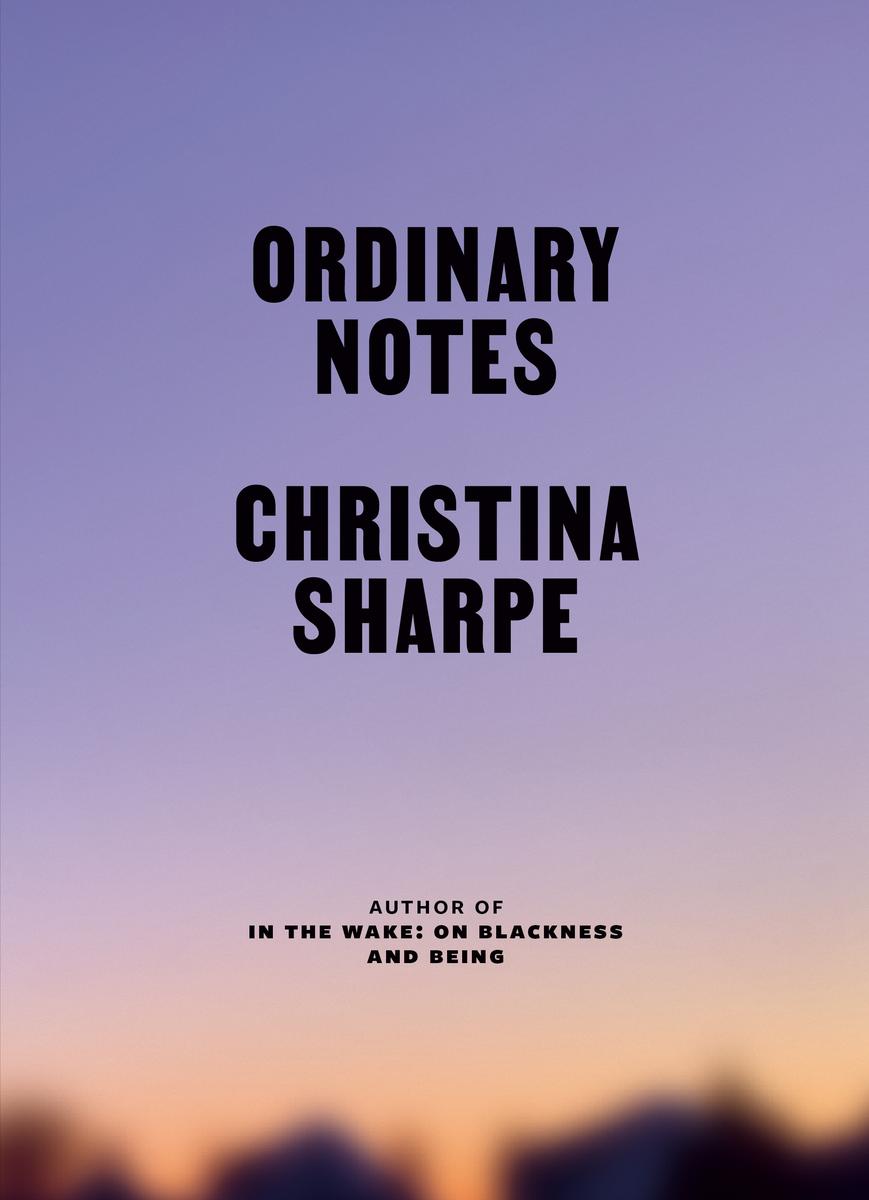
There is no recent book I can recommend more highly than Christina Sharpe’s Ordinary Notes(link to purchase in the EU; in the UK). It is complex, intricate, exacting—and enacts, across its several hundred pages of text and image, a vital definition of beauty as “method”. This book thinks about seeing, about how to live together, about memory and memorials, about artmaking. It’s also about what Saidiya Hartman calls the “afterlife of slavery”, and for Sharpe that’s not unrelated to the practice of beauty as a method, or to the documentation of and sharp attention to all of ordinary life. If you have a writer, thinker, or artist in your life who hasn’t read this book, give it to them.
There will probably not be another post like this, but maybe you want to read about walking, writing, looking, etc.:
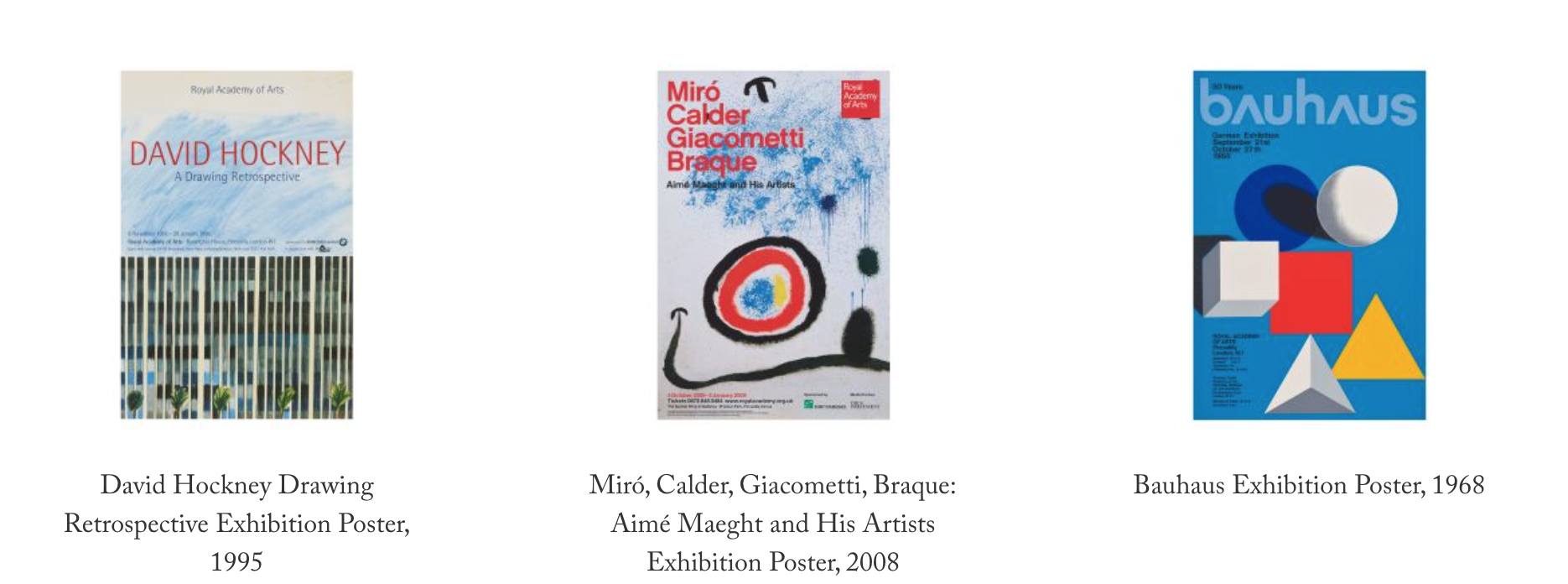
If you are in the UK (shipping elsewhere may be prohibitive), the Royal Academy shop often has older exhibition posters for sale, some very cheaply. Be sure to check the dimensions; some are deceptively small, some deceptively large. (Last year I ordered two posters for my office where I work and was surprised when they came—they are the really big ones that would be posted outside to advertise an event. They were carefully packaged for shipping and the paper is a nice heavy weight.)
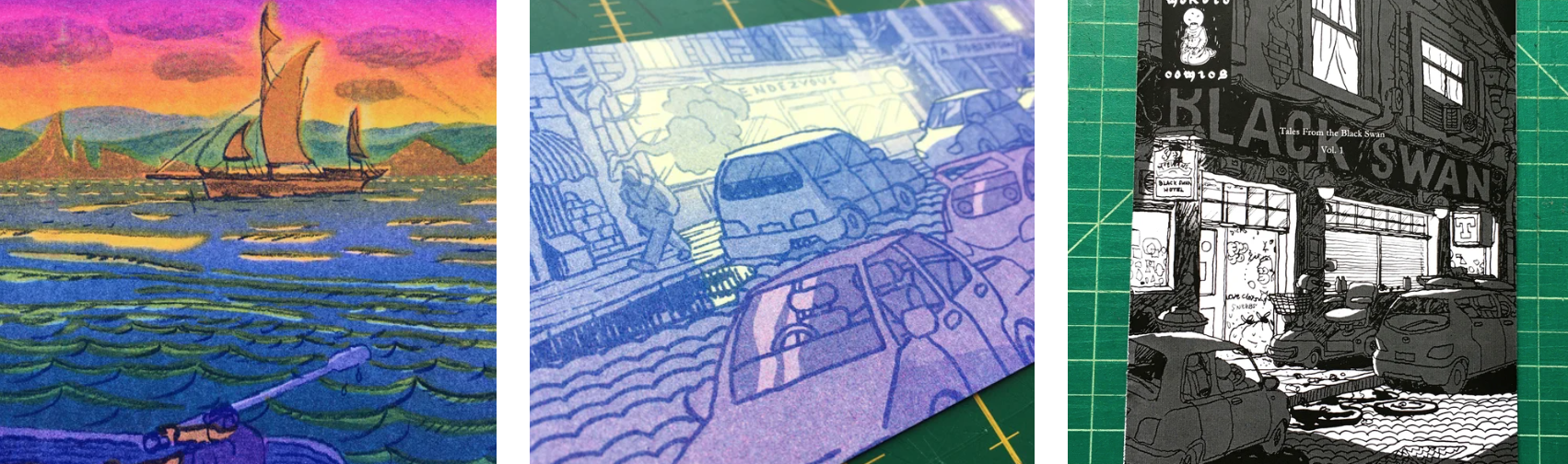
Jamie Kinroy’s prints and zines are strange, spooky, and often very funny. He’s based in the UK. For young and old, but maybe an especially nice present for a teenager who likes to draw weird things. I know Jamie and his work, and have given several of his zines as presents.
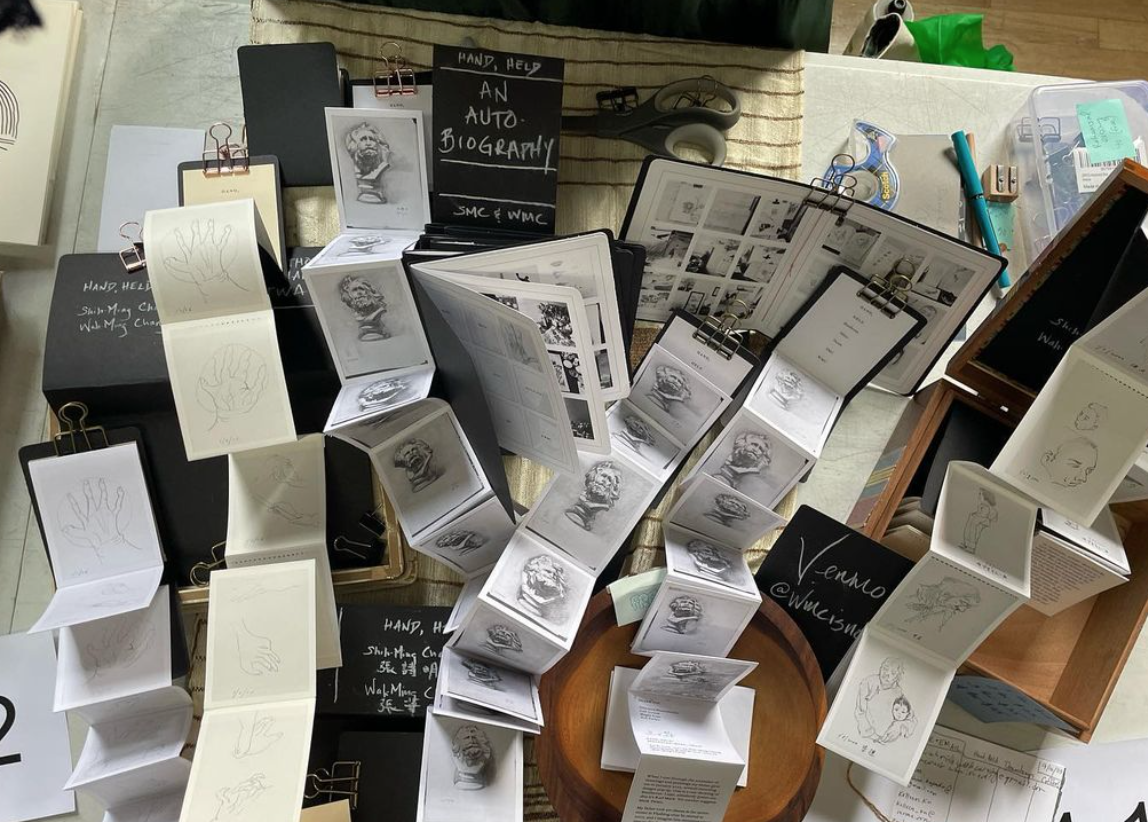
Wah-Ming Chang is making a moving, poignant series of books and booklike objects in a series she’s calling Hand, Held as she works on a biography of her father, an artist. She sells them via contact on Instagram, and you can find them here.
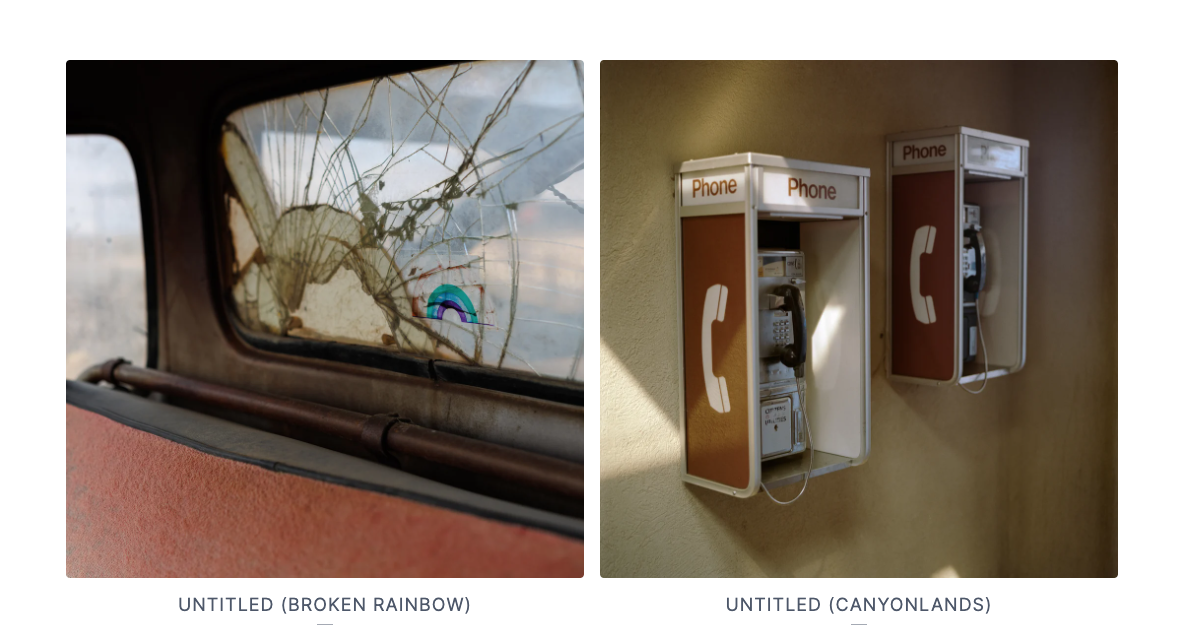
Printmaker and photographer Andrew Schroeder has been collecting images of ordinary life for as long as I’ve known him. Working as a photo tech for colleges means he comes across the paraphernalia of past ways of making images, and he’s recently begun collecting those, too, making photographs of slides, negative carriers, and other ephemera. I love how in his photos what might be overlooked or discarded comes to the center of my vision.
For people with children and their children
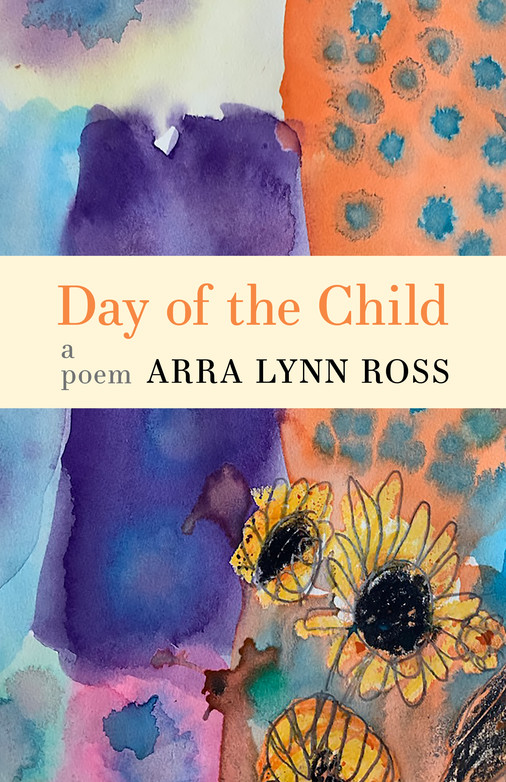
Arra Lynn Ross’s slender book Day of the Child(UK) is a long poem in short pieces. It deftly captures the day-to-dayness of living with others and what Roland Barthes called “idiorhythmy,” a state in which people, living together, make space for multiple tempos and experiences of time. It’s a great example of a work made by many small returns to the page, and as such might be meaningful to anyone struggling to balance the demands of a domestic life with those of an artistic life. (Full disclosure: I provided a blurb for this book—and have read it several times, given it to others, and talked about it elsewhere. It’s good!)
Mitsumasa Anno’s books—of alphabets, numbers, animals, and imaginary and real places—are beautiful to look at for children and adults alike. A selection of used copies is generally available on eBay. I treasure the copies I have from my childhood.
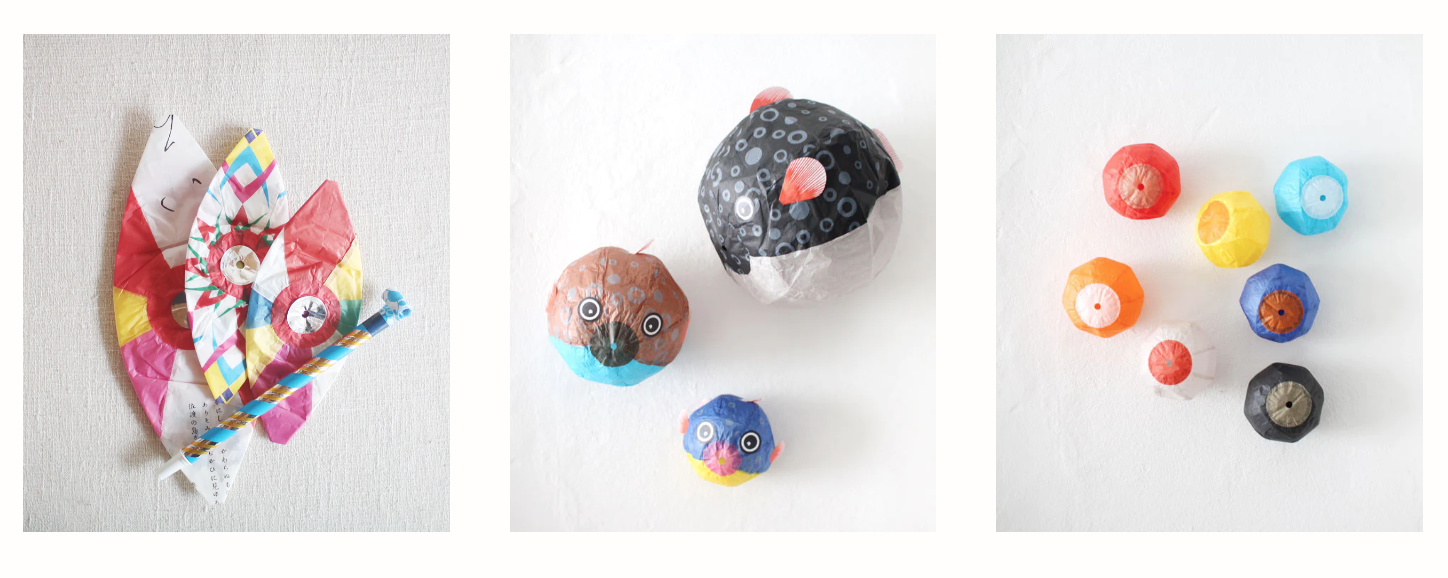
Uguisu has a collection of paper balloons that are charming and will delight anyone under the age of 100. You may also be able to find these in a shop near you, especially a Japanese department store, a Japantown, or an art supply store. (On a related note though in a different shop altogether: Here is some exceptionally cute washi tape with designs of Japanese folk toys on it.)
I have ordered things from Uguisu in the past and they always arrived safely and well-packed, often in beautiful envelopes!
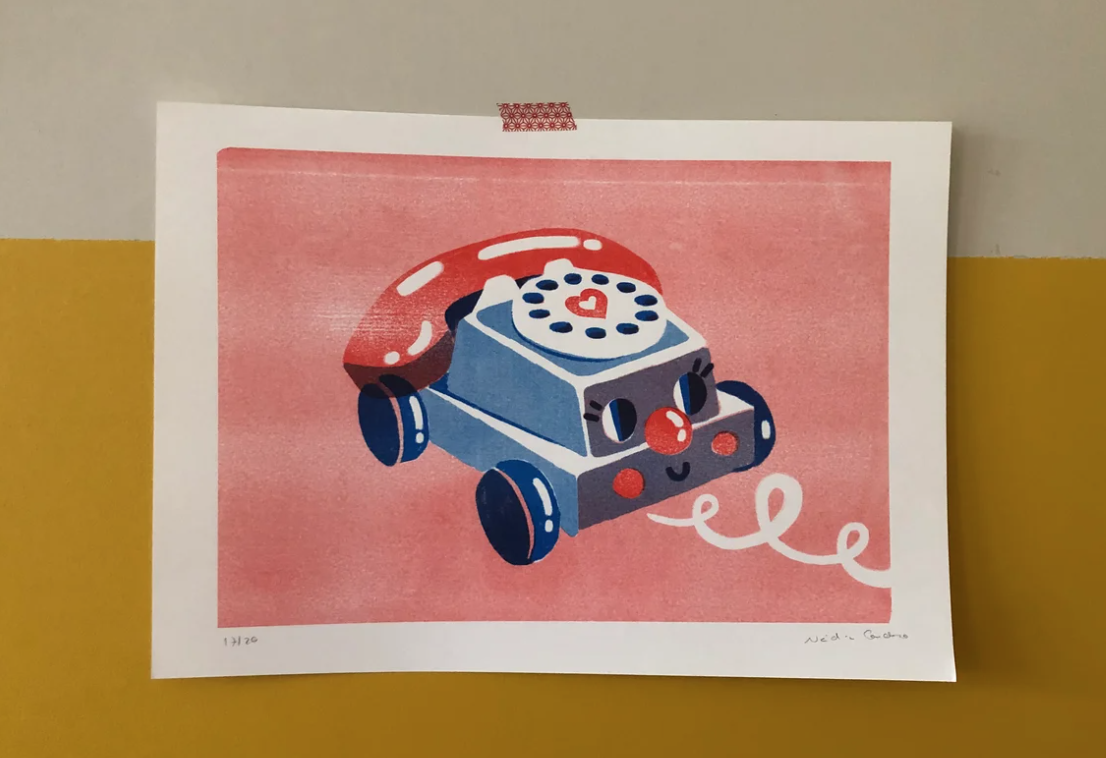
Speaking of toys, Nadia Cardoso’s risograph print of the Fisher-Price telephone is perfect. She also makes very adorable ceramics, most of which sell out immediately. She’s based in Dublin and often exhibits at Dublin Comic Arts Fair, which is where I encountered her well-made and carefully packaged work.
Finally, the easiest presents are sometimes the ones that can go in an envelope and fly across the sea. I remember the sheer pleasure of a sheet of stickers from childhood (and, ahem, more recently). Meowashi on Etsy sells extremely cute stickers you may have trouble making decisions about. Consider yourself warned.
For color-lovers
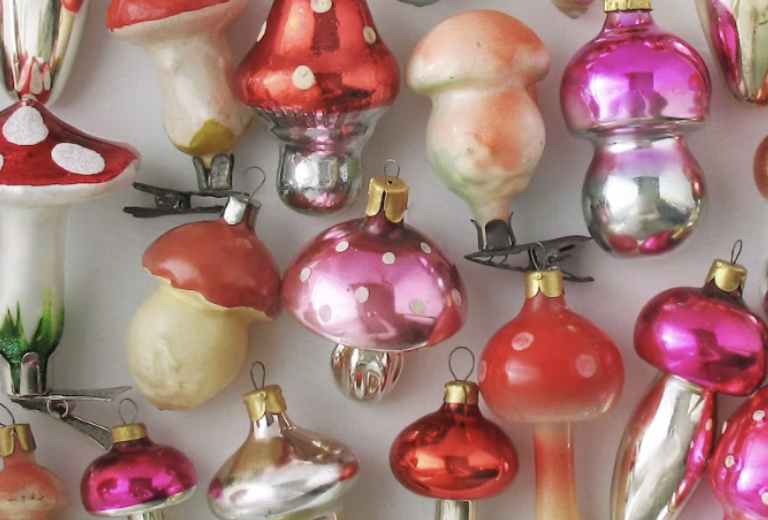
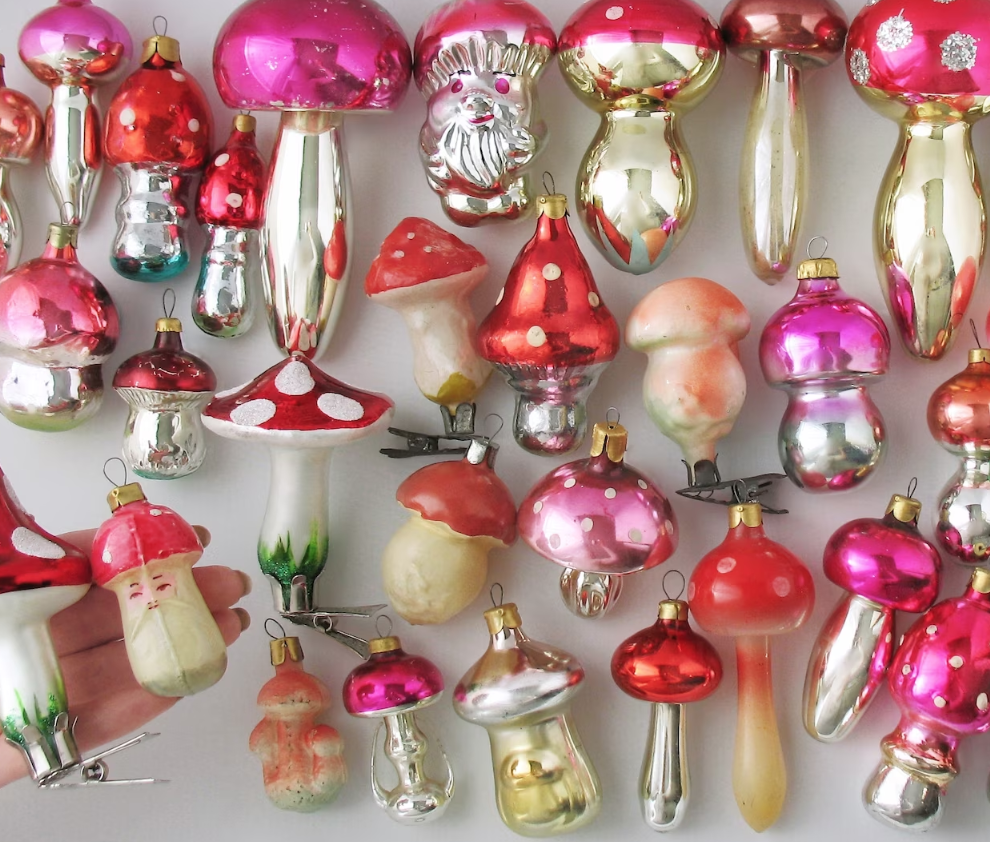
There are several shops on Etsy—most that I can find seem to be based in Ukraine—that sell vintage glass ornaments. The above image is from Vintage Glass Decors. Most ornaments are priced between €5 and €15—not cheap, but if you’re looking for something unusual, or just want to look at the pretty shapes and colors, worth a browse.
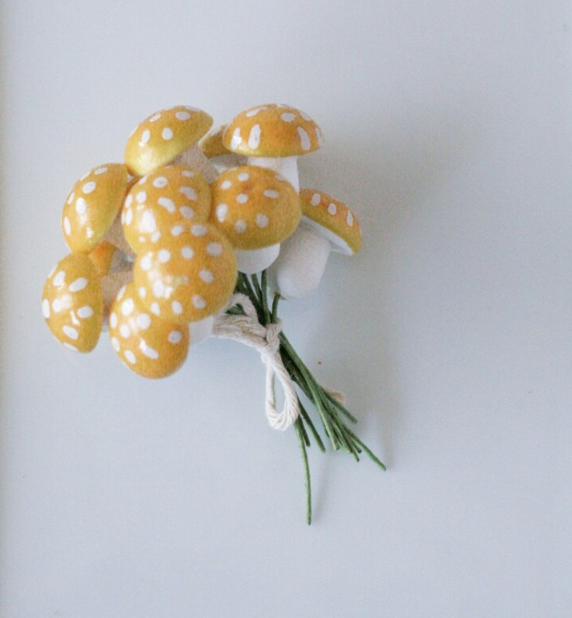
Simply for the charm of them, spun-cotton mushrooms. The Etsy shop Caramelos usually has several colors in stock. I have ordered from Caramelos in the past and always had good experiences.
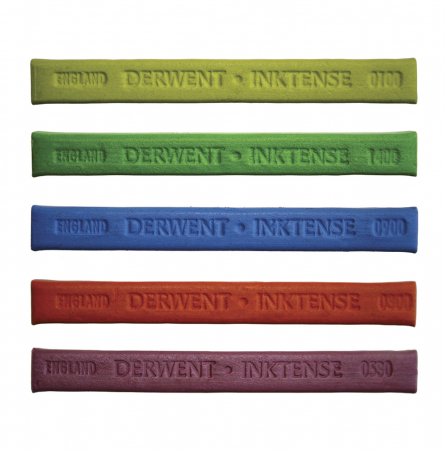
Derwent Inktense blocks give saturated color and can be used to draw or used wet as paint. They are really pleasing to work with. In Ireland here; in the UK here; in the US here, or ask at your local art store. They can be purchased individually or as sets in a tin. Anyone who loves color will enjoy these.
For people who sew
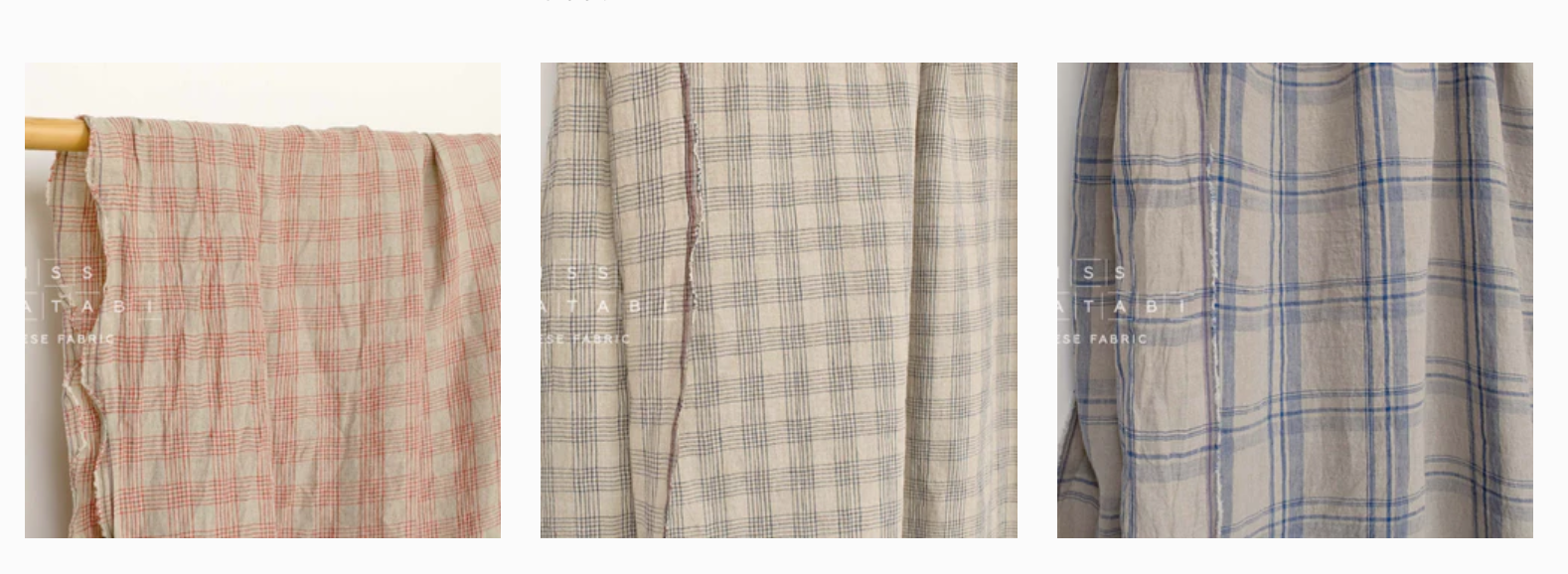
Miss Matatabi has a collection of soft cottons with subtle plaids, good for garment sewing. (I haven’t ordered any of these but I’ve ordered from Miss Matatabi many times over the years and have always found the shop to have good service.)
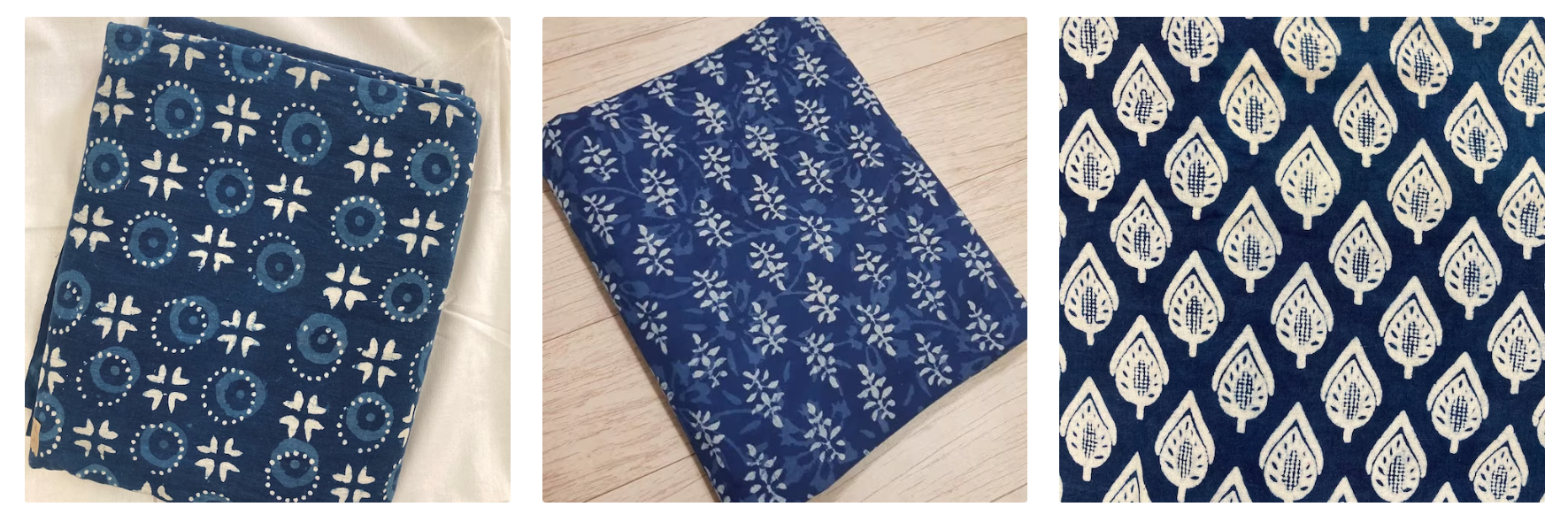
The block-printed fabrics at Cotton Weavers are really nice. They are lightweight, have a (to me) pleasant smell from the production process when they first arrive, and I have had excellent experiences with this shop’s shipping.
In Ireland, The Fabric Counter has a nice range of 100% linen fabric. It’s good quality—may seem a little shiny when it arrives, but the sizing washes out and the hand is very soft and supple after that. Great for garment sewing. I can’t vouch for shipping as I’ve only purchased in the shop. They do ship outside of Ireland.
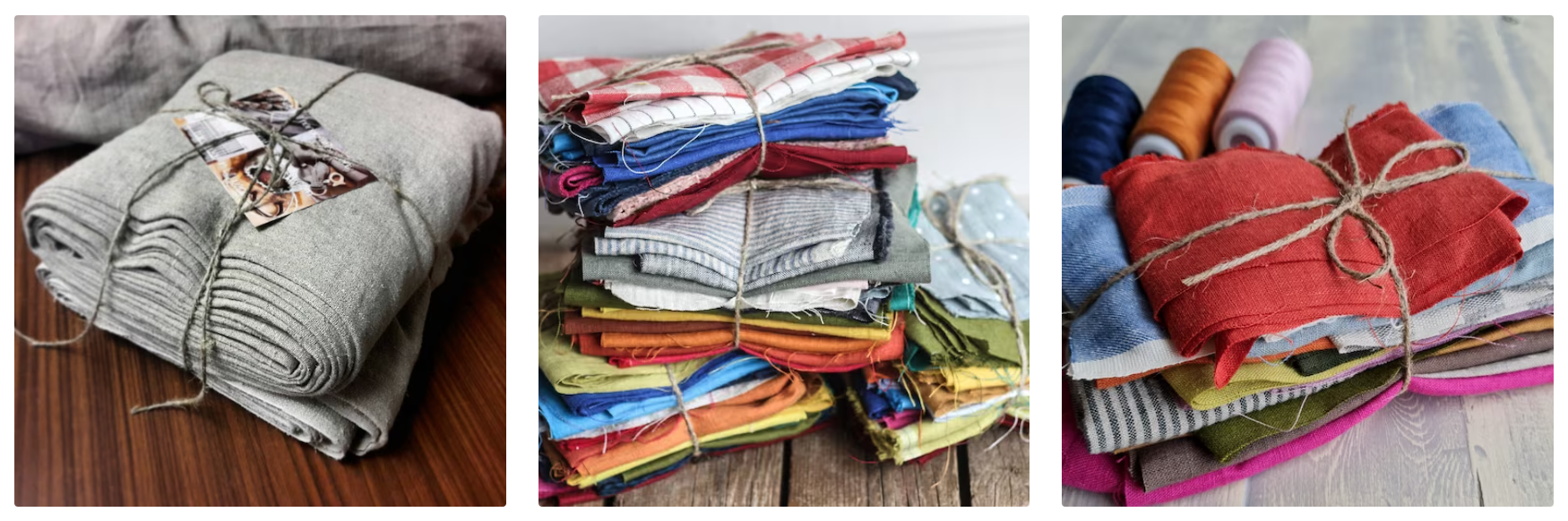
The Raw Linen is one of many Lithuanian linen sellers on Etsy. They sell finished objects, but what I’ve bought from them in the past are bundles of scrap fabrics. You can specify colors and they are really good about making sure you get what you ask for. The fabrics are very high quality, 100% linen. Great for someone who makes or would like to make quilts or toys or small objects or patchwork of any kind.
If you have someone in your life who likes to sew, Gütermann makes 100% cotton threads that are a treat to work with. Here is a place in the UK that sells ‘30’ (a slightly heavier thread, good for hand-sewing especially). Here is a place in Ireland selling a lighter weight 100% cotton thread. Gütermann threads are widely available in the US and elsewhere; ask your local fabric shop.
For the pleasure of everyday life
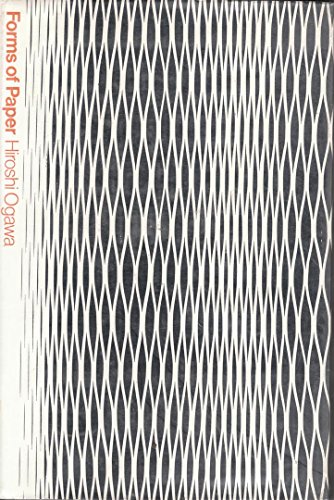
How To Wrap Five Eggs: Traditional Japanese Packaging by Hideyuki Oka and Forms of Paper by Hiroshi Ogawa are simply beautiful objects to have around. They will give you new ways of looking at your everyday surroundings and of thinking about the composition of the world.
Not cheap at all, but Uguisu has some unusual candles in very appealing colors and shapes, as well as cast-iron candle holders.
I have ordered beeswax candles from this company in the US and they were good quality. Beeswax candles are such a nice present; if you have a local farmer’s market or similar shop, there is a good chance someone there is selling them. Ditto to un- or lightly scented soap. I am sure I’m not the only person here whose favorite ‘department store’ as a child was Walgreens? Soap, tealights, chocolate, and stationery still make good presents.
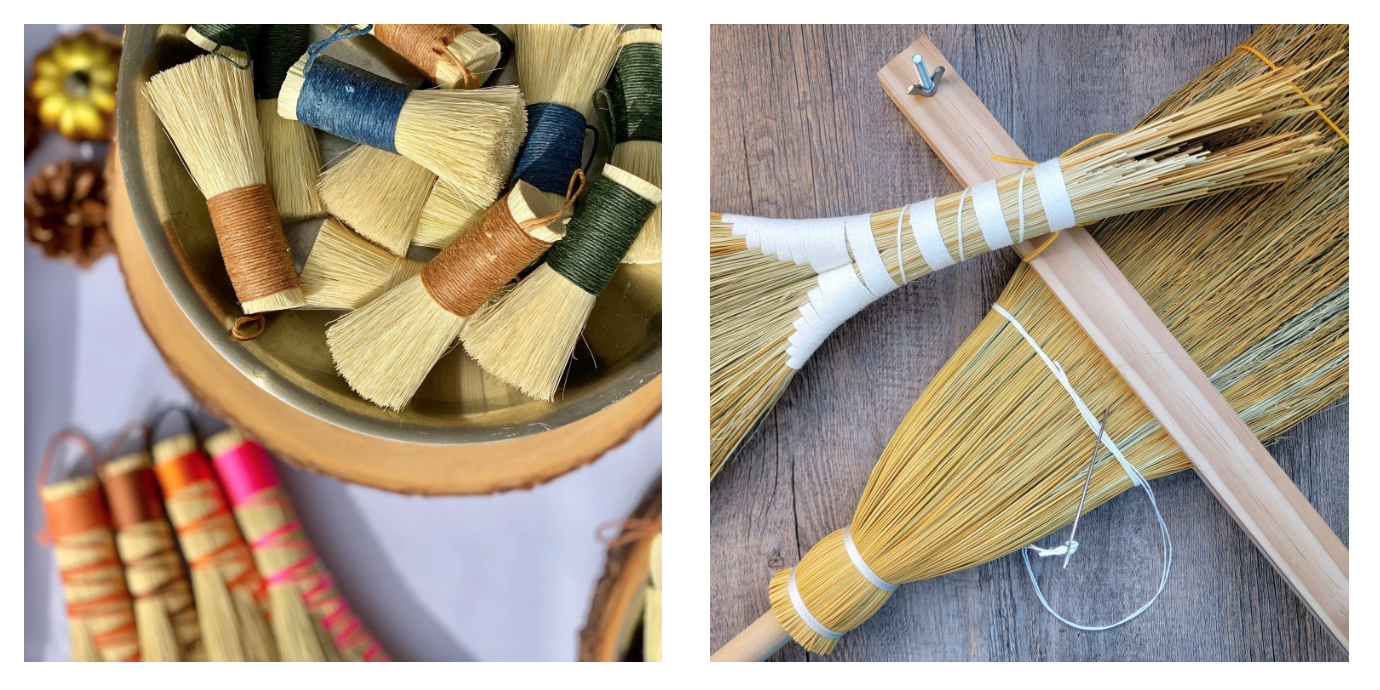
We gave a newlywed couple a pair of brooms made by Redmond Philbert. They loved them. We bought them in this shop when we lived in Maine. There may be a traditional broom-maker near you, or maybe you’re near one of these upcoming markets.
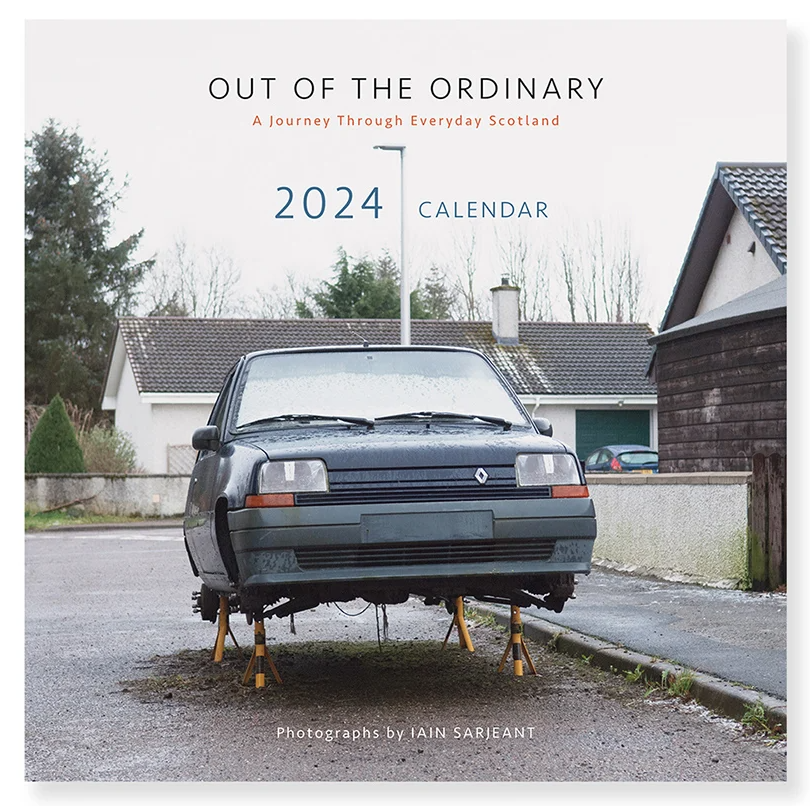
I only recently came across Another Place Press, but their calendar looks like it would be a delight every month.
For music-lovers
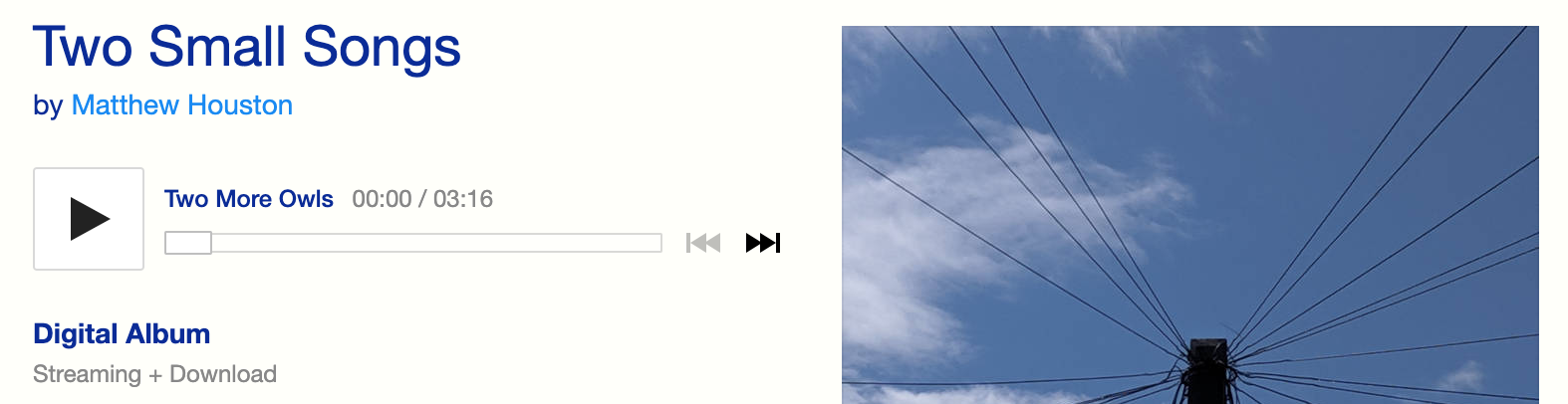
The album Two Small Songs(2020; digital only): gentle lyrics, thoughtful playing. “Night/Words” is one of my favorites of Matthew Houston’s songs. Full disclosure: he’s my partner. And he’s also a really good musician.
A lot more raucous is So Said So’s 2022 release Evil Wants You(digital, on cassette, and CD). Made by a trio comprising Matthew Houston, Cory McWilliams, and Dominic Grosso, this album is a call to pay attention to and care for the world around us, the people in it, and the art we make. My favorite track is “When My Sister Called Me”.
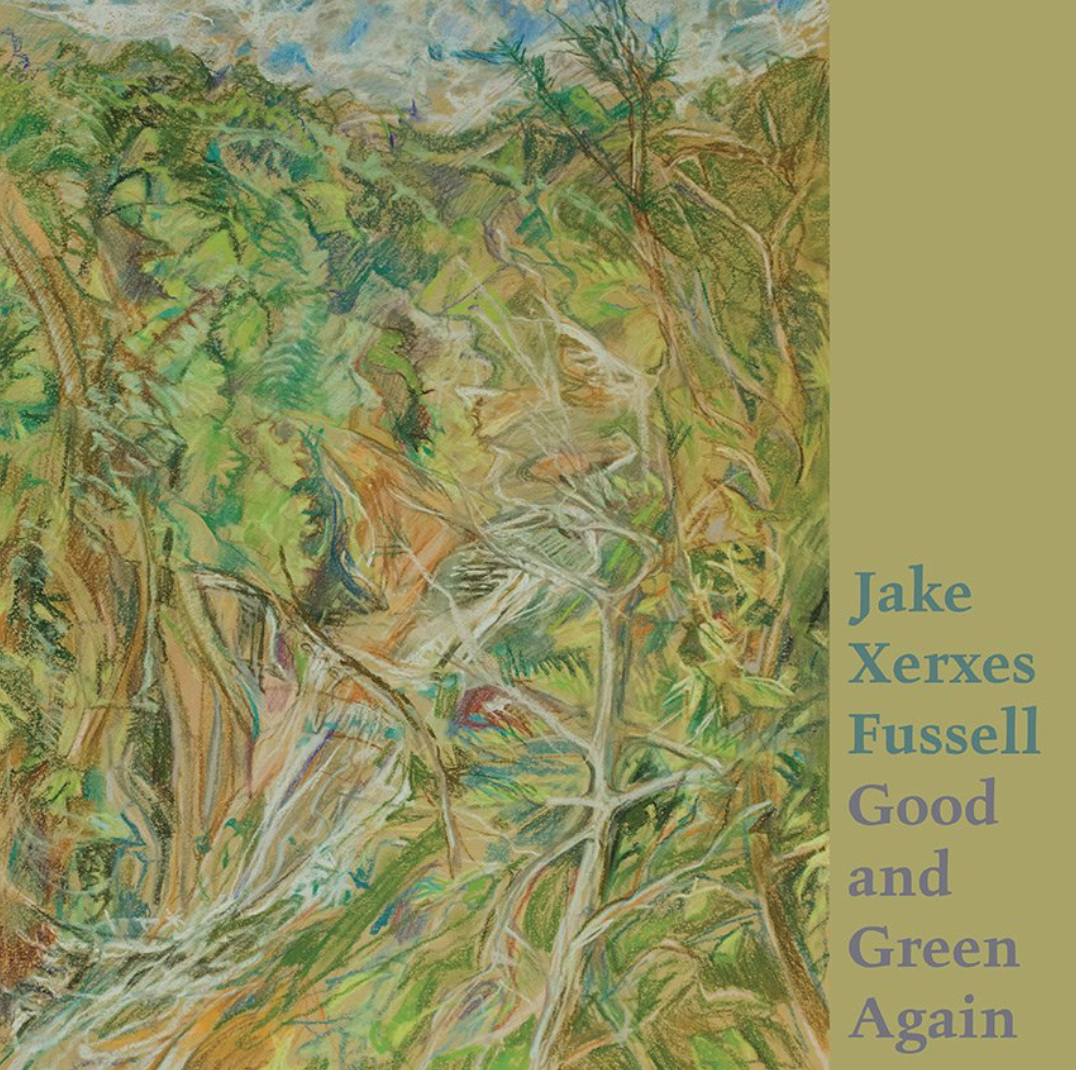
Jake Xerxes Fussell’s album Good and Green Again(2022, on vinyl and CD) is beautifully picked US folk: melodic and slightly melancholy, it does sound green to me.
Ichiko Aoba’s atmospheric and delicate music is sure to delight. She has many albums, so have a listen on Bandcamp. Some are solo guitar, some are with electronics, some are with other players. Some releases are digital-only; others have physical media.
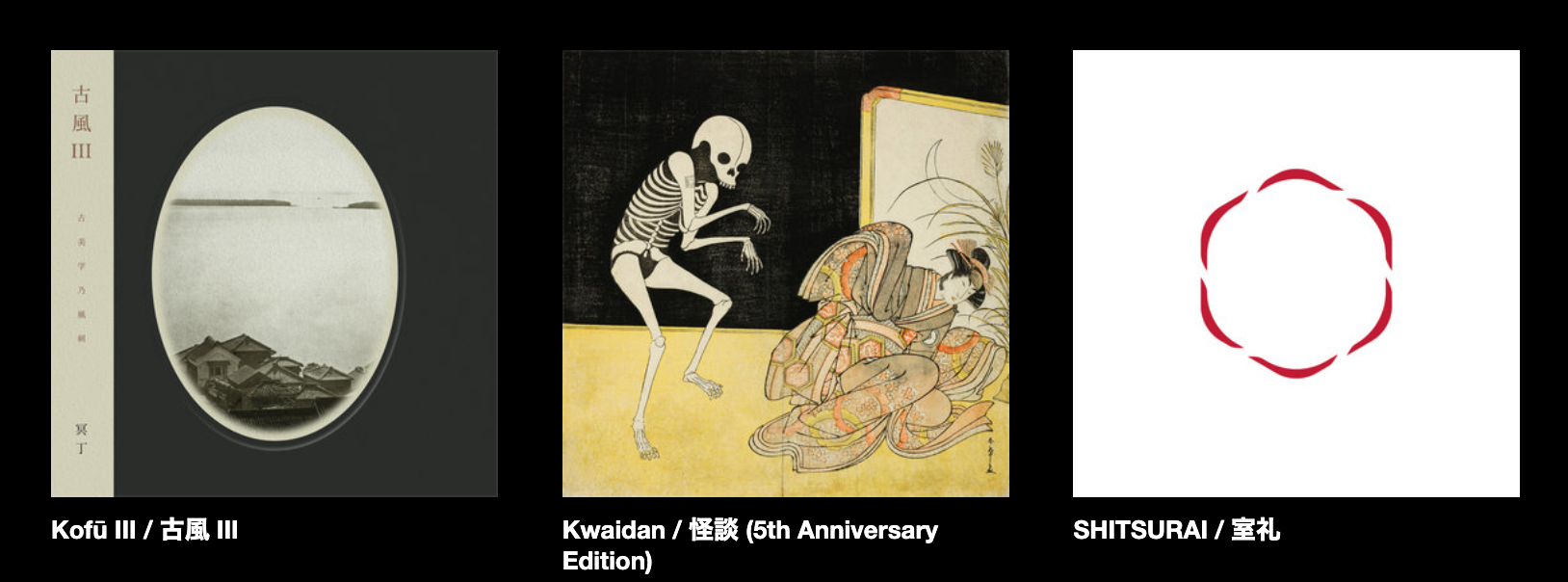
Everything Meitei makes, I love. Great music for train journeys, for evening listening, for writing (if you write with music/sound). Complex and layered and endlessly interesting. Some releases are digital-only; others have physical media.
For pretty much anyone
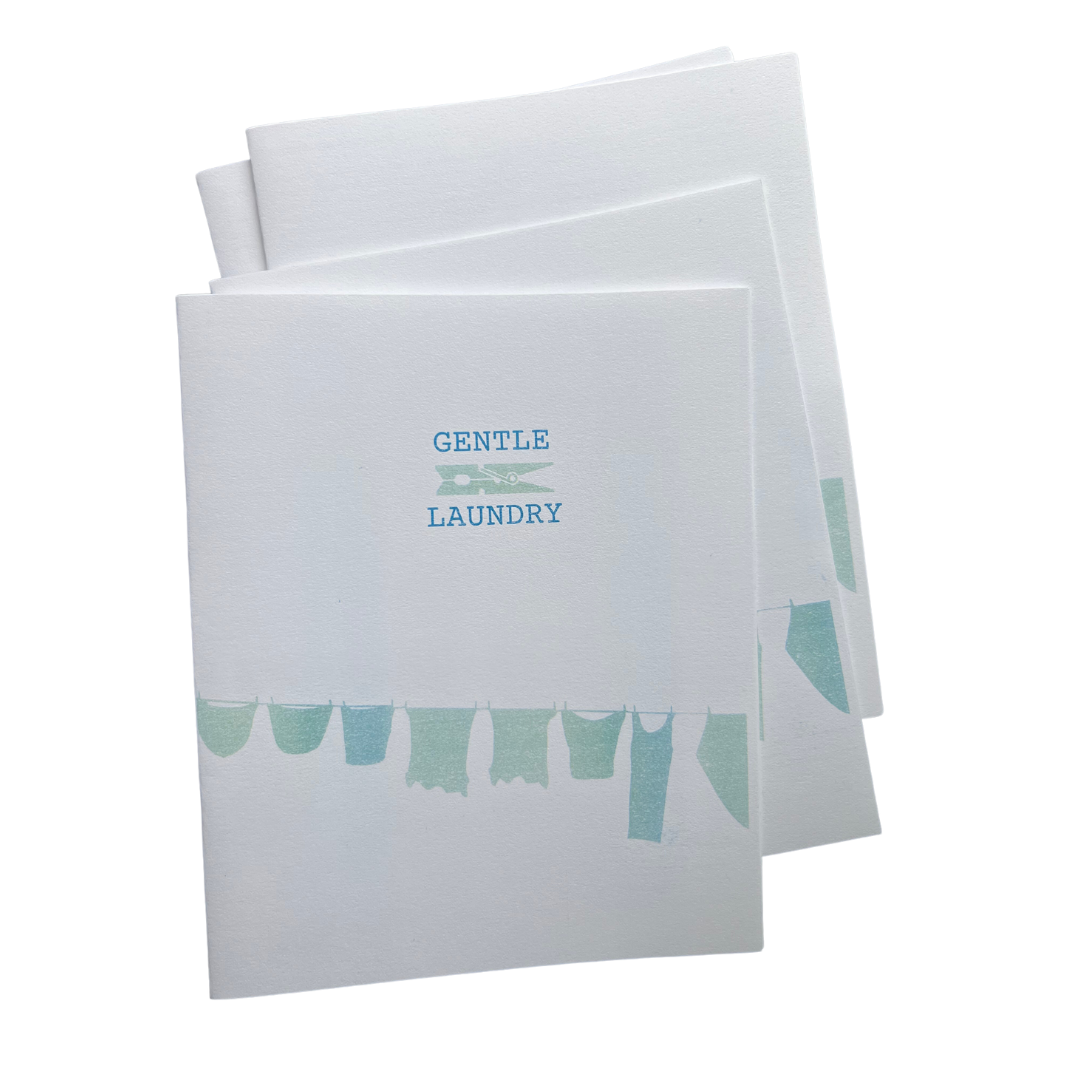
And last but not least, one of the best purchases of my year was Gentle Laundry, a zine from Late Night Copies Press. (Note: they only ship once a week, or sometimes once a fortnight, and they use media mail. So order from them early if you have a deadline!) Gentle Laundry is informative, interesting, well made, and took me back to the pleasure of reading early issues of Martha Stewart Living. The press (and the artist who made this zine) makes/does a lot of stuff I like, and this zine is a hands-down winner. For anyone in your life, including yourself, who would be curious about chemistry, home economics, what to do with smelly clothes, and how to use (and make) non-petroleum-based washing detergents. (And what the differences are between a soap and a detergent, too!!) Can you tell I’m very enthusiastic about this? For $10+shipping, your clothes-washing life will change.
I hope you’ve enjoyed this catalog of pleasures. I’m interested to know if there is something made by a small press, an artist, or a craftsperson that you’ve loved or would recommend.
And finally— Let all beings be free, safe, beloved, and well. Stop the bombs. Swords into ploughshares. Free Palestine.
A note about a few upcoming events this month and next:
First of all, this week (!) on November 9at 8 p.m. Irish time (note time change; doors at 7:30) in the Classical Museum at UCD, Jeanne Tiehen will direct a staging of my work An Archaeology, for which I’m making costumes and props. In-person only; tickets are free but very limited. Email sasha.smith@ucd.ie to book.
On November 19at 2 p.m. US Eastern I will give the first of two lectures as the Annulet Inaugural Linkages Lecturer. I will give a talk entitled “When you get someplace new, learn to read the landscape like an alphabet”. This talk will be broadcast online, for free. To register, please click here.
On November 21, I will read and talk with Majed Mujed and Hua Xi as part of the Trinity College Literature & Resistance Series, in the Trinity Long Room Hub. You can book a place here (in-person only).
On December 10at 2 p.m. US Eastern I will give the second of the Linkages Lectures. I will give a talk entitled “On the line”. This talk will be broadcast online, for free. To register, please click here.
Once these are done, I am never doing anything in public again. For at least a month. But I’m sure by the start of the new year I will be full of vim again. If you’d like to have me to read or speak at your university, school, class or organization in 2024, please drop me a line.
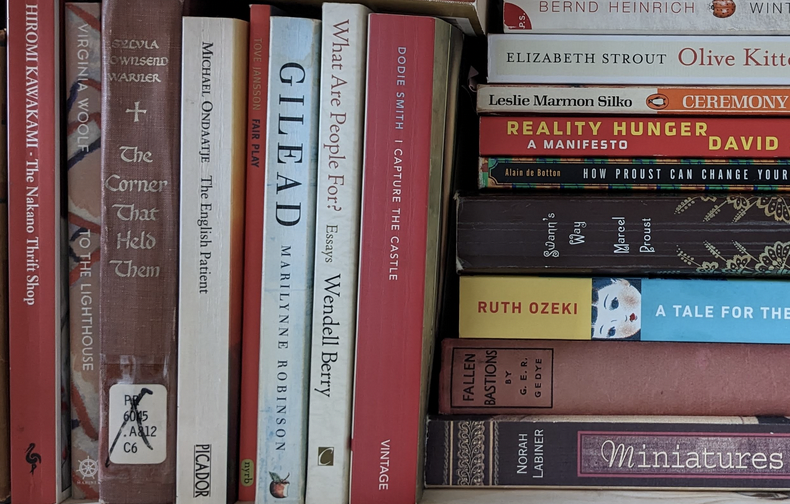
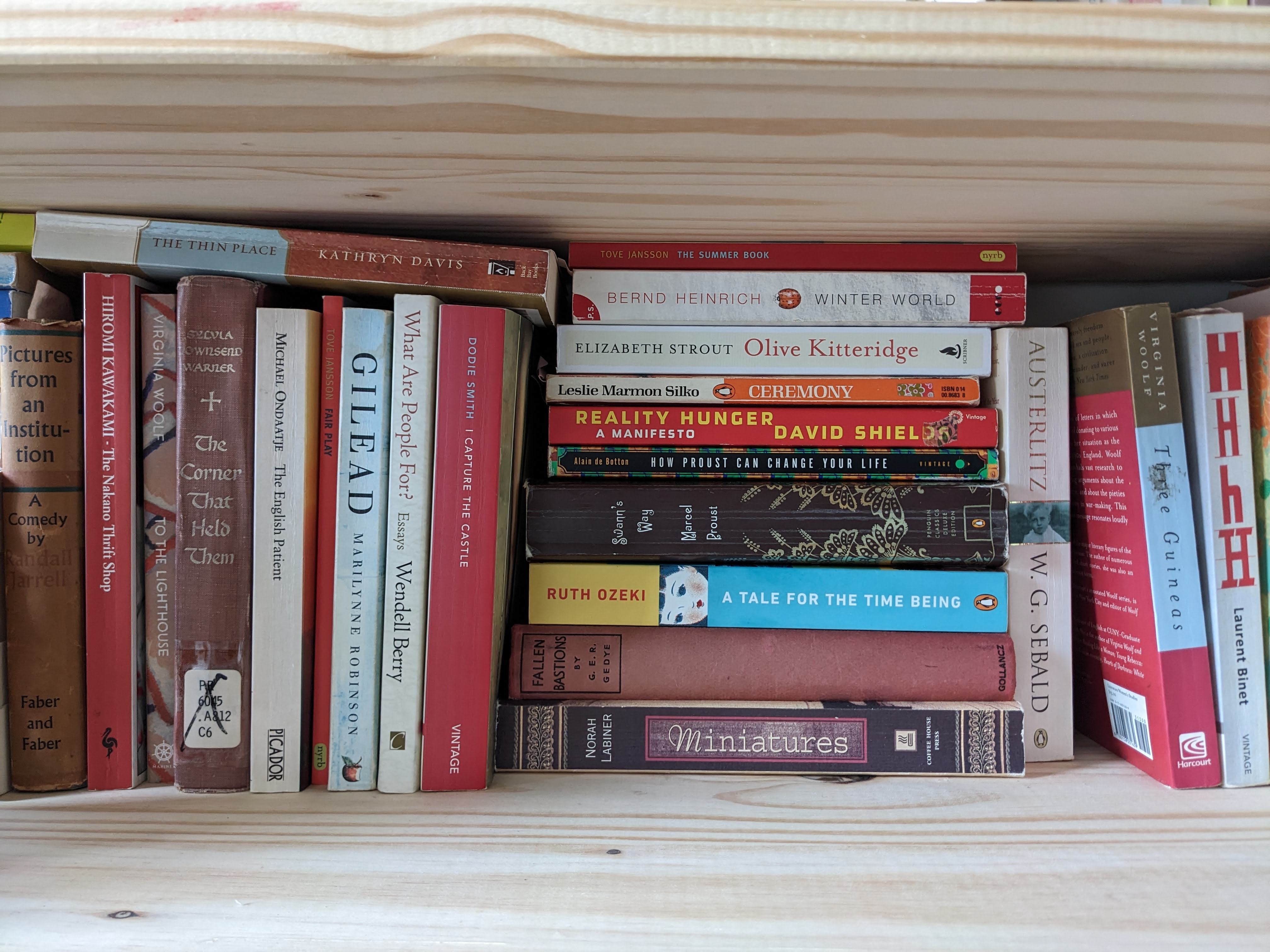
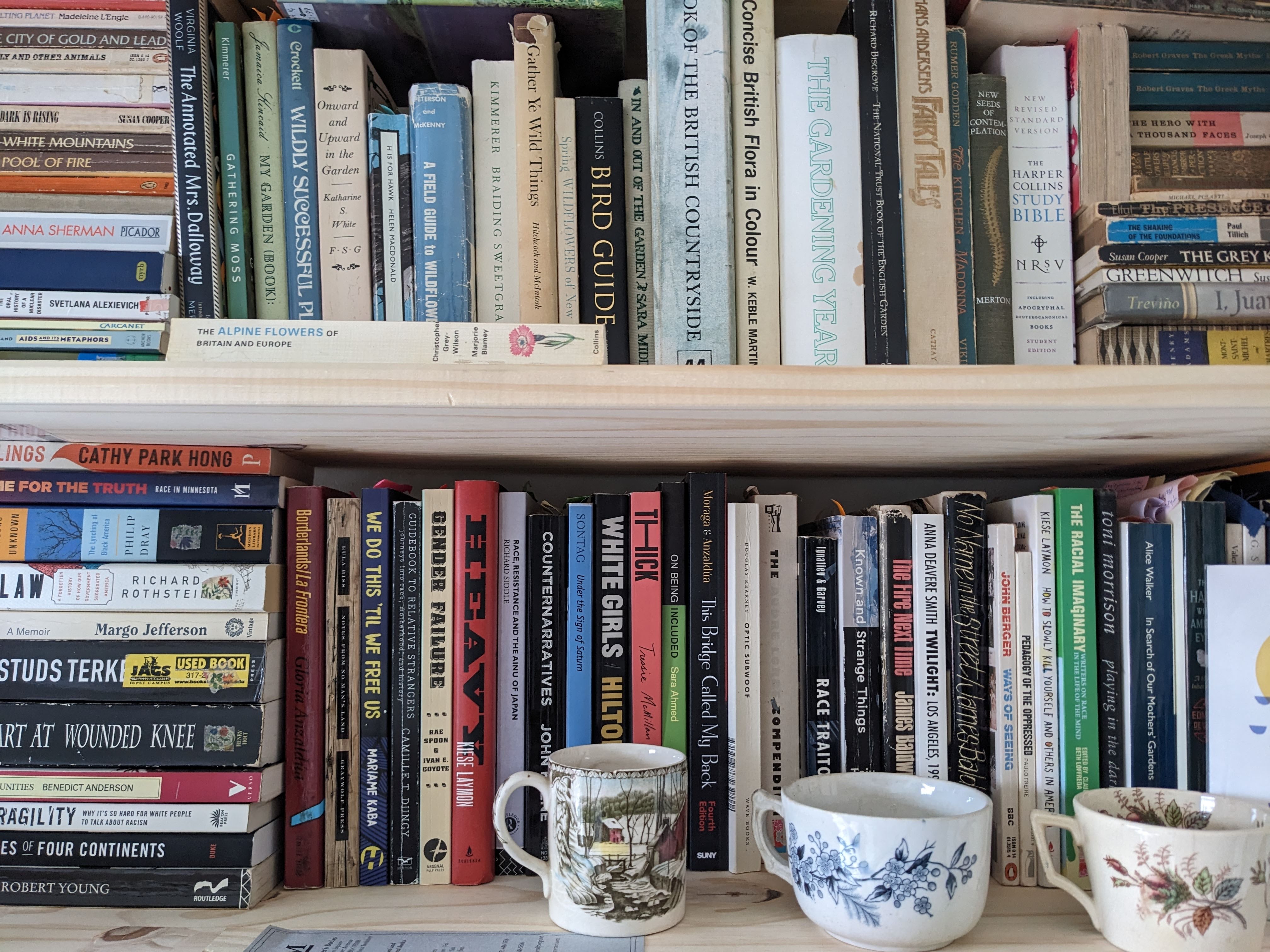
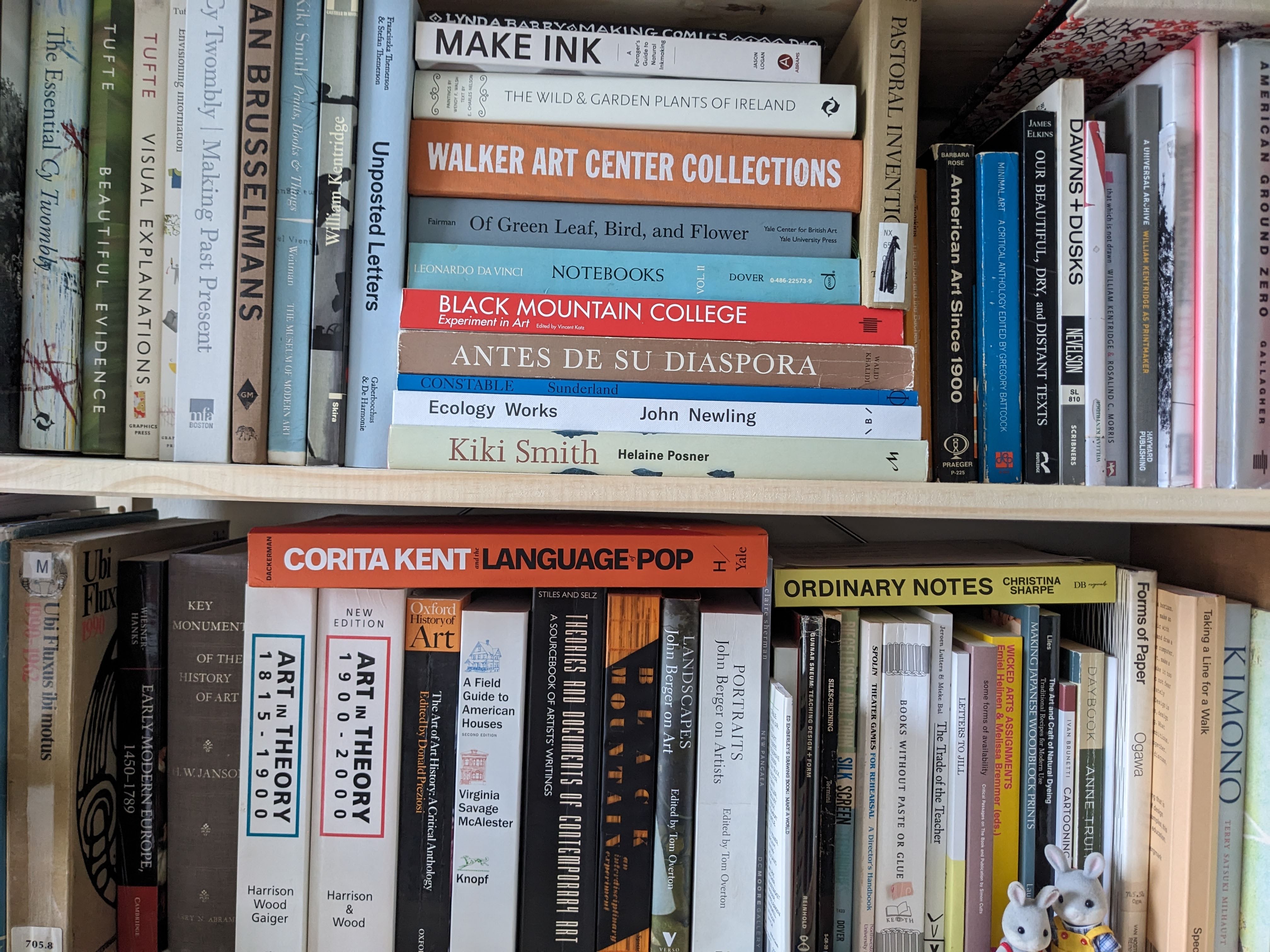
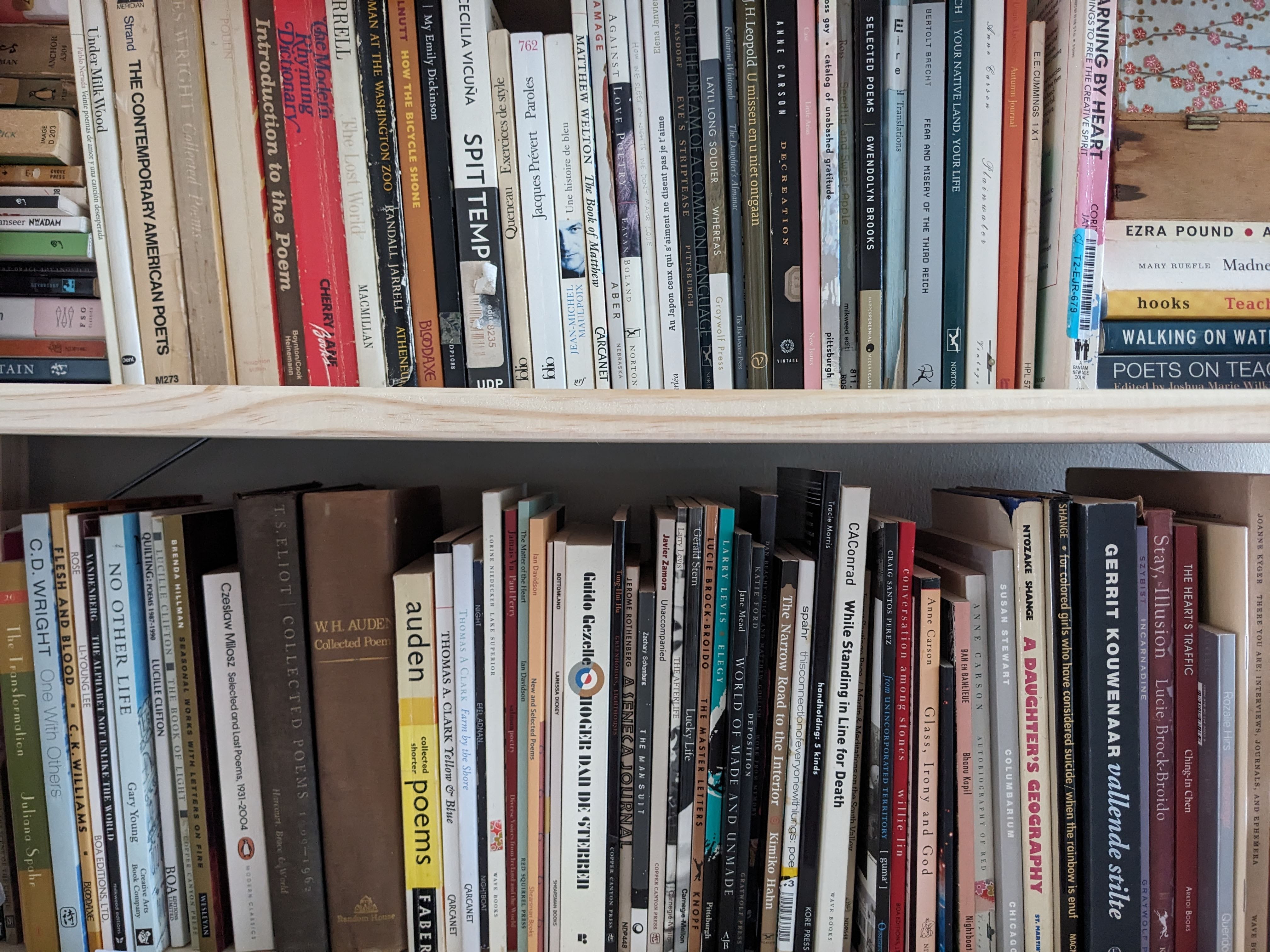
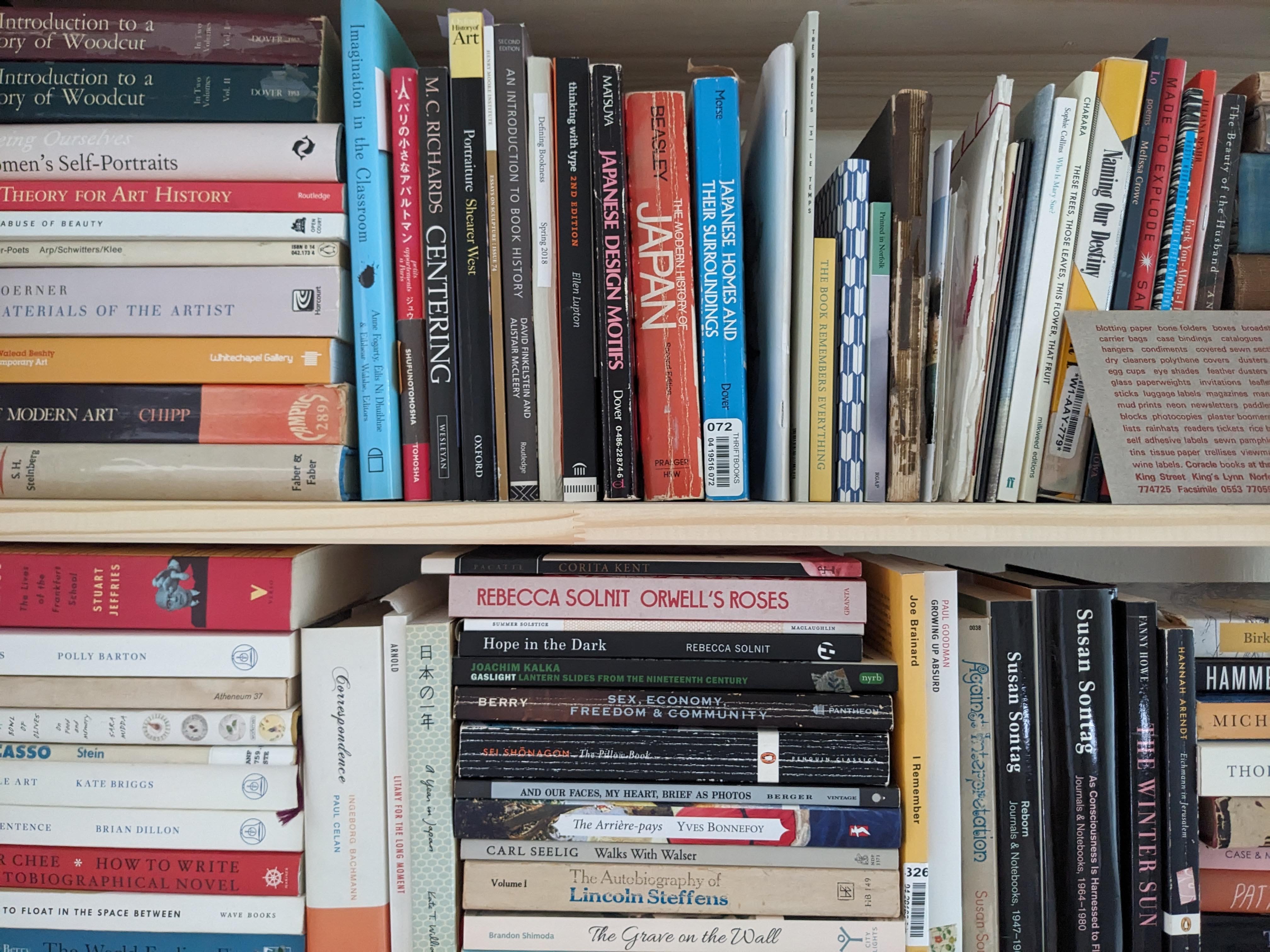
For the first time in my adult life, I have bookshelves that aren’t made of bricks or crates and boards. And for the first time in almost four years, I also have all my books with me, out of boxes, and on those shelves.
Looking at my books, I realized how clearly they hold the history of my learning and thinking. I wasn’t able to name that fact until recently. Between 2017 and 2022, I moved house seven times. Two of those moves crossed the Atlantic. A lot of books flowed out of my possession across those years—books I often find myself searching for, only to conclude that I must have thought at one point that I’d never want to read that book again, or that I could easily get ahold of another copy if I did. (These are both fallacies.) In addition to the fact that moving = shedding books, most of the books I held onto across moves stayed in boxes between May of 2020 and August of 2023. When I finally was able to receive and then open those boxes this summer, it was like seeing myself in a mirror for the first time in a long time. Oh—this is why I am the kind of writer I am. This is the frame within which my work makes sense. This is where I get my understanding of the world and of how things fit together. Books are the thinking apparatus we carry outside of ourselves.
I thought I would make a list: books and poems and essays that have been central to my life as a person-in-the-world as well as to my thinking about writing and art, my teaching, and my ethical/religious formation. (These aren’t exclusive categories—most, probably all, of these texts cross them multiple times.) Some of these texts are recent encounters. Some of them have been with me for decades. Some fall in between. I find them beautiful, moving, stirring, intellectually and humanly rousing. They have given me ideas and given me language, taught me to make art and taught me to make a life.
As I made the list, I tried to think about categorizing the works on it—how could I make my list and its elements legible to a reader, one who didn’t know a work, or wanted to know what kind of book a given work was? But the categories I came up with didn’t make sense to me because they suggested things like genre (but that’s not why I read or how the books I love teach me) and theme (my least favorite way of categorizing). My books are shelved sometimes roughly by genre (poetry together—but plays and some teaching books are there with the poems—and art books together, because they are the same size) but more often by what I’d call texture and color, a synesthetic experience that underlies much of how I think and learn to think.
It feels unnatural to use external guides to divide the books and poems and essays I love by type, kind, subject, or ‘lesson’—because so many of these cross my artistic life, my teaching life, my life in the world (which are all one life, after all), and also because the books/poems/essays are whole things, irreducible to one facet, and finally because that latter way of categorizing—the ‘lesson’, or the ‘what-it’s-aboutness’ of a work—feels reductive to me. So I’m presenting them to you as they came to mind, together and in no particular order, and quite certainly with titles left off the list. Some links go to individual essays or poems online. Most go to an independent bookshop in the city where I grew up—if you find yourself on a different landmass, or near a different bookshop, I hope you will be able to find a copy there. WorldCat will also provide in most cases.
So here is my list of some (definitely not all of the) books, poems, and essays that have taught me to write, think, live, ask questions. If you are looking for something to read over the coming darker months (in the northern hemisphere), I hope it will suggest itself here. And in the comments, I’m more than happy to make recommendations if you’re looking for something specific, and to answer questions about what, why, when, and how these books entered and changed my writing and my life.
I would also love to know what appears in your pantheon—the poem whose lines are always on your mind, the book you’ve read a dozen times, the text that taught you, the essay you will never come to the end of trying to understand—and why.
And finally— Let all beings be free, safe, beloved, and well. Stop the bombs. Swords into ploughshares. Free Palestine.
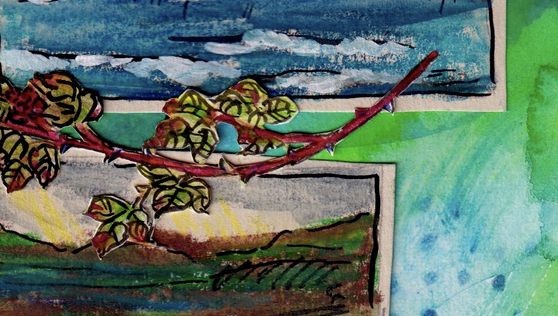
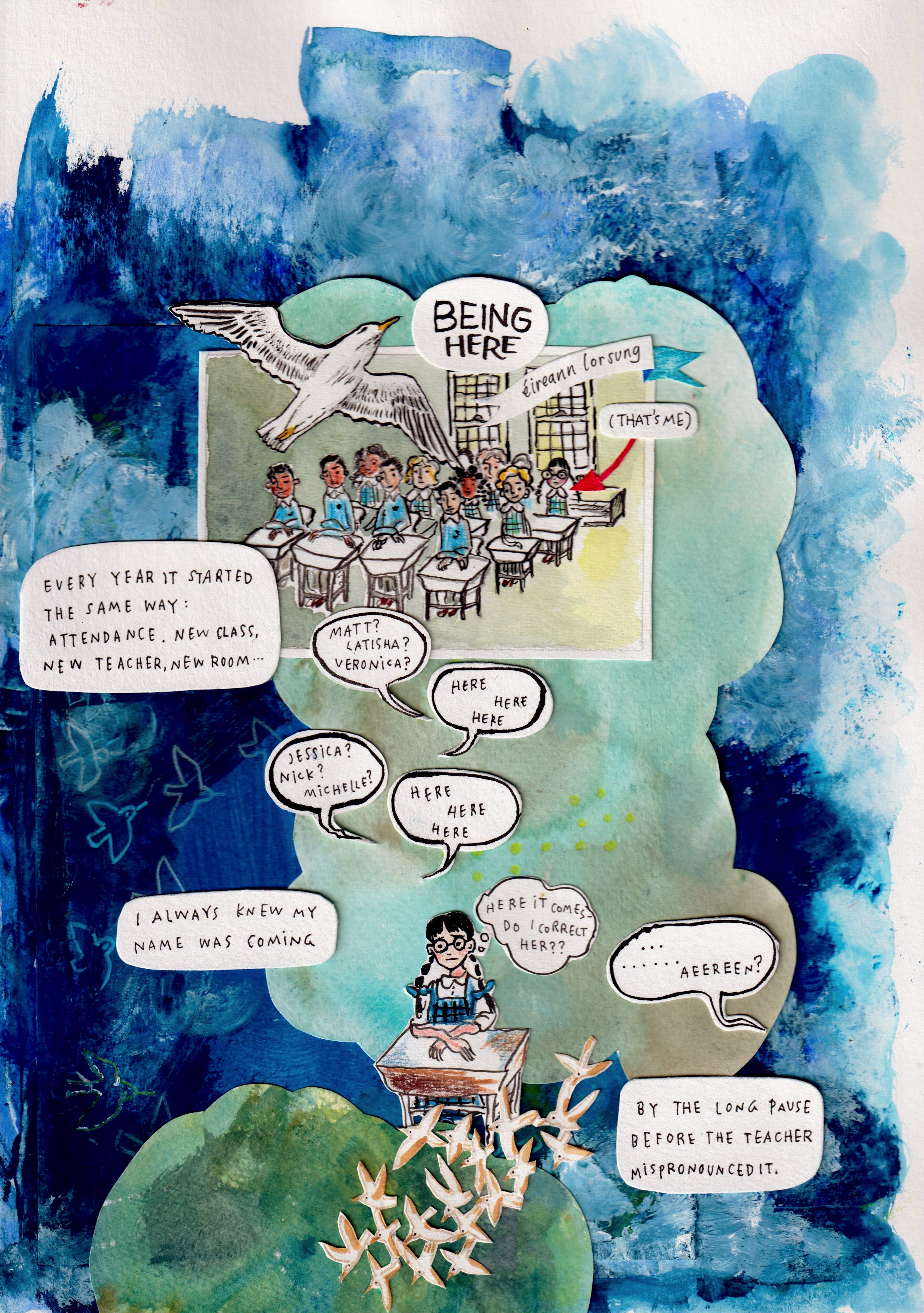
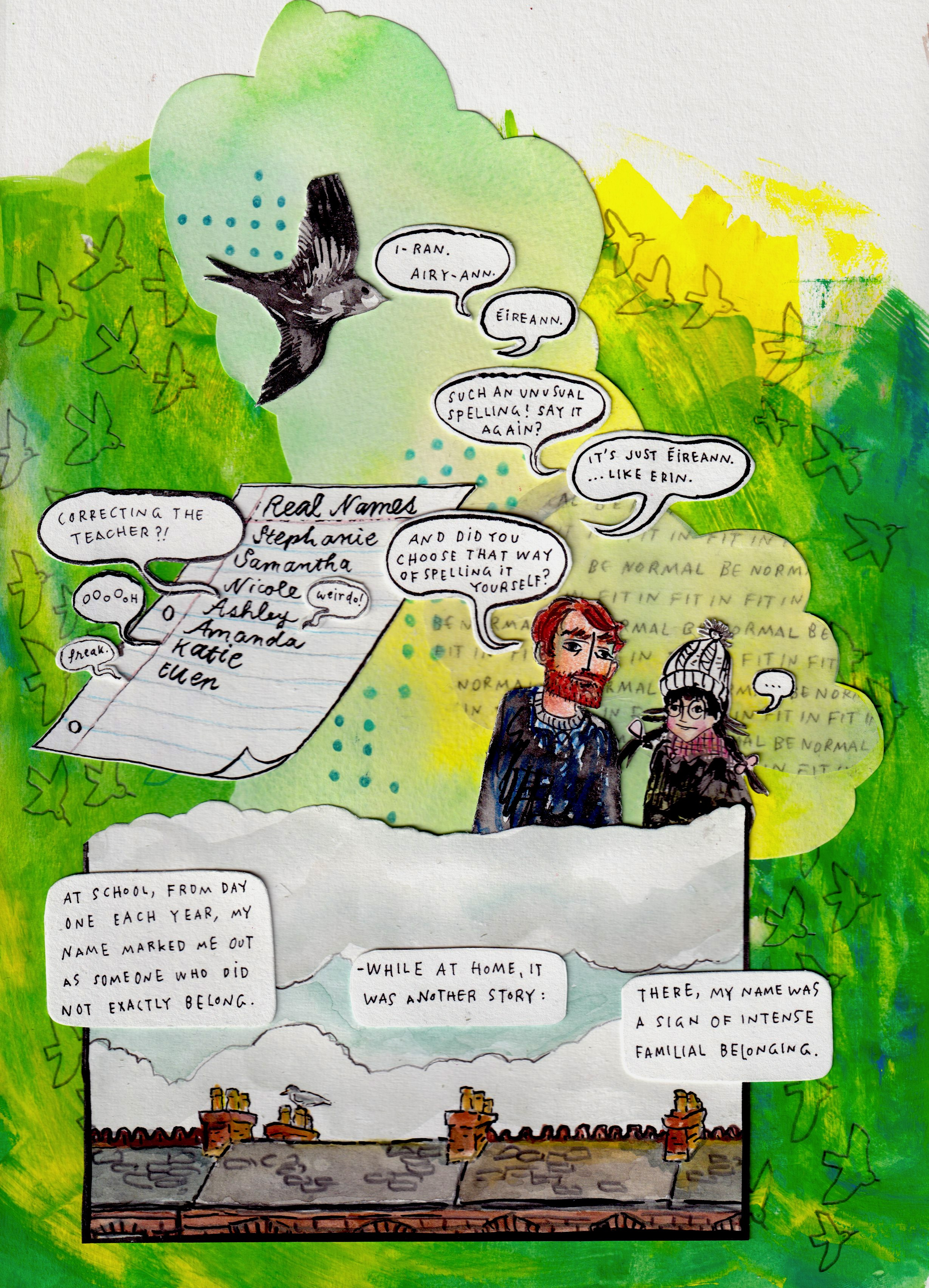
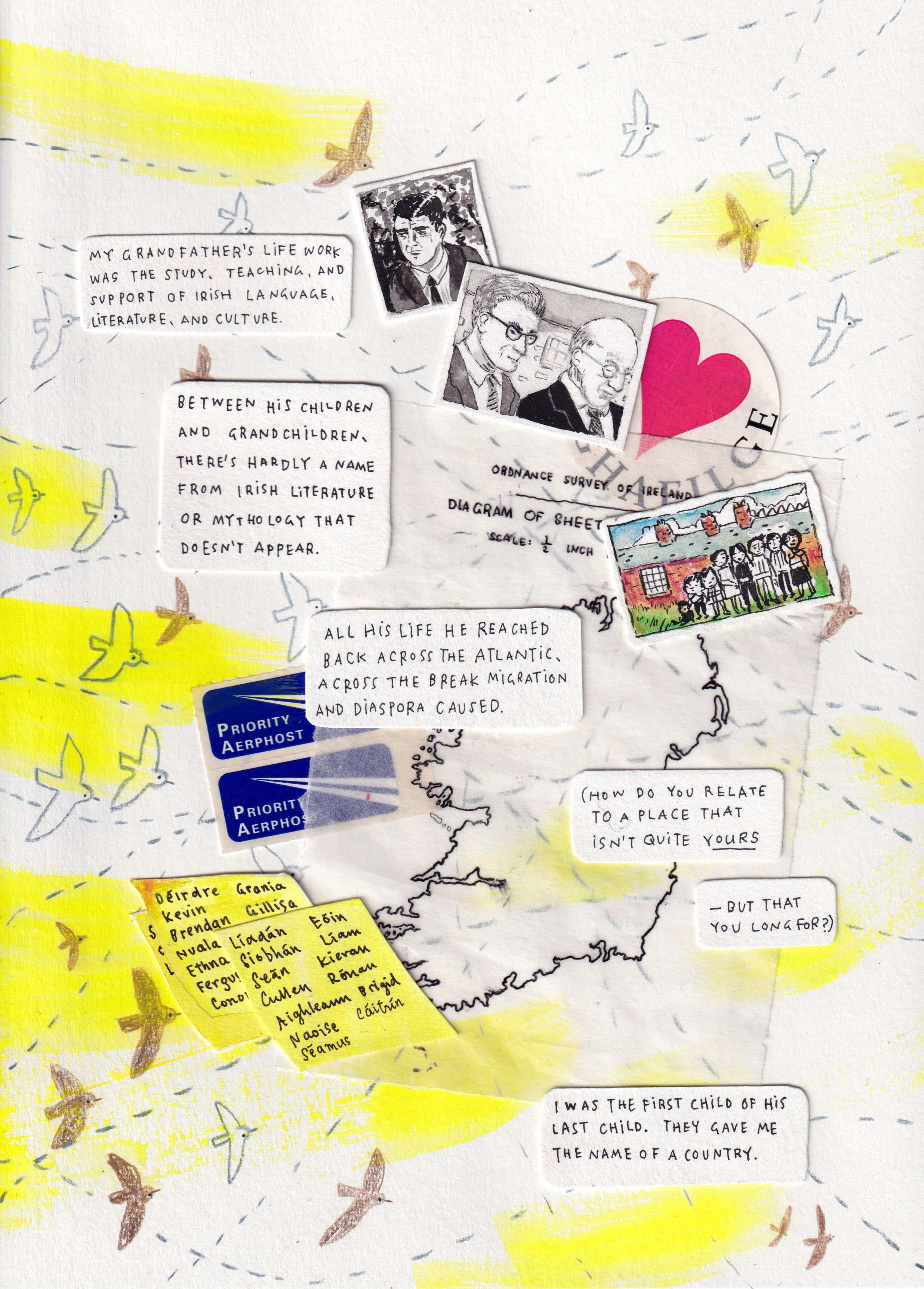
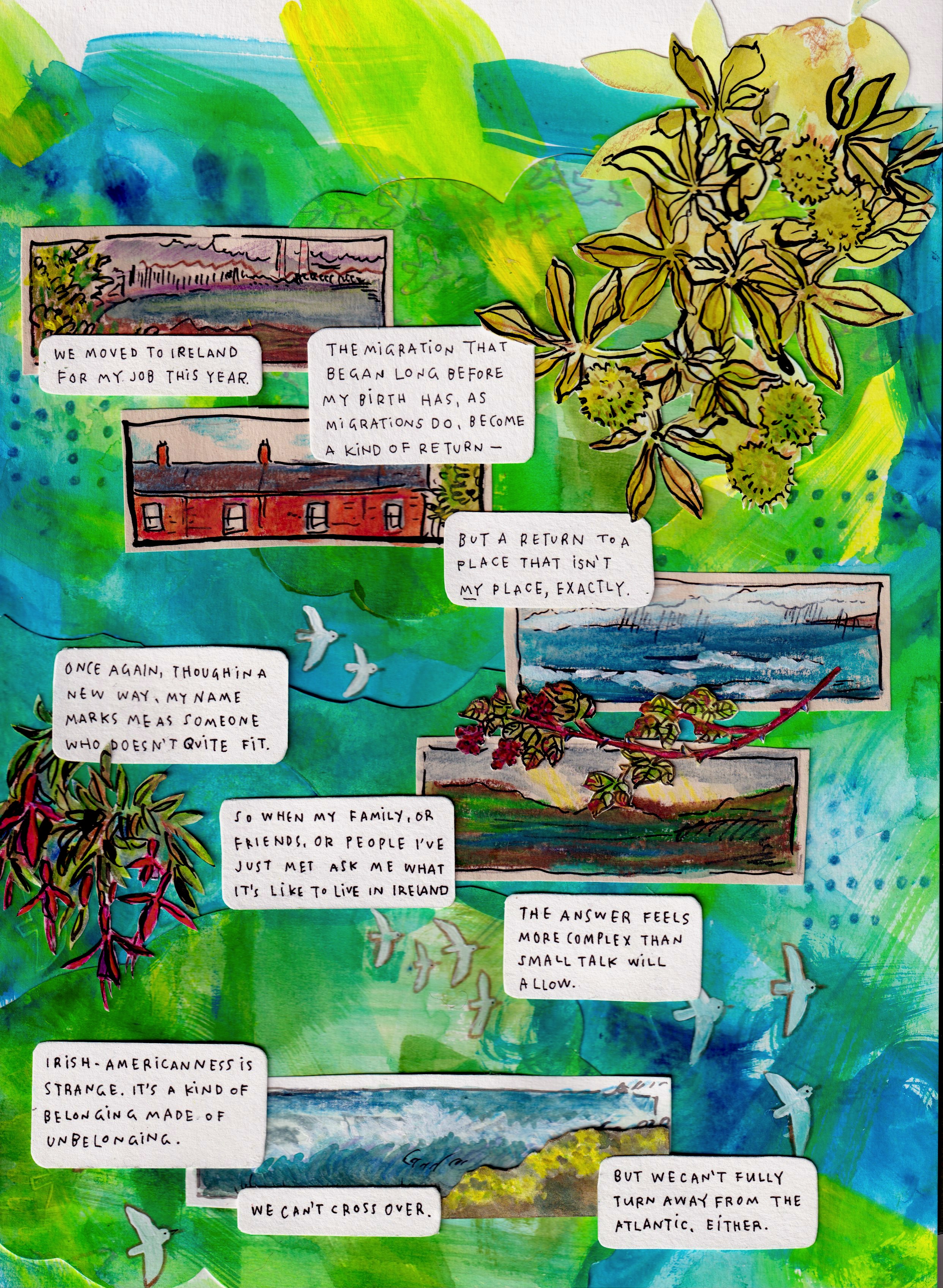
This week’s Bewilderment is a comic called “Being Here” that I made in fall 2022, when we were newly arrived in Ireland. I made it to be part of the Home anthology put out by Dublin Comic Arts Festival. The call for work asked people to talk about what it’s like to think of Ireland as ‘home’—for immigrants, emigrants, and people with other tenuous or attenuated relationships to this place.
Before I get to that, though, just a note about a few upcoming events in November and December.
First of all, on November 9at 7 p.m. Irish time in the Classics Museum at UCD, Jeanne Tiehen will direct a staging of my work An Archaeology, for which I’m making costumes. In-person only; tickets are free but very limited. Email sasha.smith@ucd.ie to book.
On November 19at 2 p.m. US Eastern I will give the first of two lectures as the Annulet Inaugural Linkages Lecturer. I will give a talk entitled “When you get someplace new, learn to read the landscape like an alphabet”. This talk will be broadcast online, for free. To register, please click here.
On November 21, along with two other writers to be confirmed, I will read and talk with the others as part of the Trinity College Literature & Resistance Series, in the Trinity Long Room Hub. Event and booking information will be here (in-person only).
On December 10at 2 p.m. US Eastern I will give the second of my Linkages Lectures. I will give a talk entitled “On the line”. This talk will be broadcast online, for free. To register, please click here.
So. “Being Here”. It’s useful to look back at this work, made almost exactly a year ago, when we had only been in Ireland a few months. I can see the big questions of my life in it—questions of place, belonging, migration. When I made it, I wasn’t thinking about the big picture; in fact, I felt a little unsure about why I had pitched it. It felt like I was going far afield from my central projects. But now I can see that both the method and the themes are part of the larger cloth of my life and art practice. A good reminder that I don’t always know the pattern when I’m weaving; sometimes I need time and space, need to step back and wait and then, later, return to see the pattern emerge in a larger field.
As I drafted and gathered notes toward this comic, I thought about my family’s history of emigration and my grandfather as a subject of diaspora, how that break echoed and echoes (in many different ways) in the my life, my siblings’ lives and my cousins’lives, as well as in my mother’s life and her siblings’ lives. I also thought about my name, which is on every official document, sign, placard, and water manhole here—it is one Irish word for this country—and about the way it makes me be here in a magical, linguistic way. I thought the way no one could pronounce my name growing up in the US, and how my name has been something that, in every place I’ve lived, marked me out as “not belonging”.
How strange it is to end up in a place where my name belongs, but not as a person’s name! And how strange to be in a place where the fact of my name brings all kinds of assumptions about what it means that I was given it, assumptions that make me think about family, and belonging, and place, and home every time I introduce myself.
Huge thanks are due to Kat Foyle (editor) and Debbie Jenkinson (designer) as well as to all the others in the volume, which was nominated for a 2023 Ignatz Award for ‘Outstanding Anthology’. The comic is made of painted, collaged, and cut paper with ink and pencil drawings and ink text.
Today’s Bewilderment is an essay that was published in fall 2022 in Arnoldia, the quarterly of the Arnold Arboretum at Harvard University. I’m grateful to Matthew Battles and the production team there who made a place for this essay and one of the paintings I made in 2021 that deals with the same questions of seeing and relation with plants.
I am also very pleased to be able to let you know about a few upcoming events in November and December.
First of all, on November 9at 7 p.m. Irish time in the Classics Museum at UCD, Jeanne Tiehen will direct a staging of An Archaeology, for which I’m making costumes. In-person only; tickets are free and I will post more information when I have it.
On November 19at 2 p.m. US Eastern I will give the first of two lectures as the Annulet Inaugural Linkages Lecturer. I will give a talk entitled “When you get someplace new, learn to read the landscape like an alphabet”. This talk will be broadcast online, for free. To register, please click here.
On November 21, along with two other writers to be confirmed, I will read and talk with the others as part of the Trinity College Literature & Resistance Series, in the Trinity Long Room Hub. Event and booking information will be here (in-person only).
On December 10at 2 p.m. US Eastern I will give the second of my Linkages Lectures. I will give a talk entitled “On the line”. This talk will be broadcast online, for free. To register, please click here.
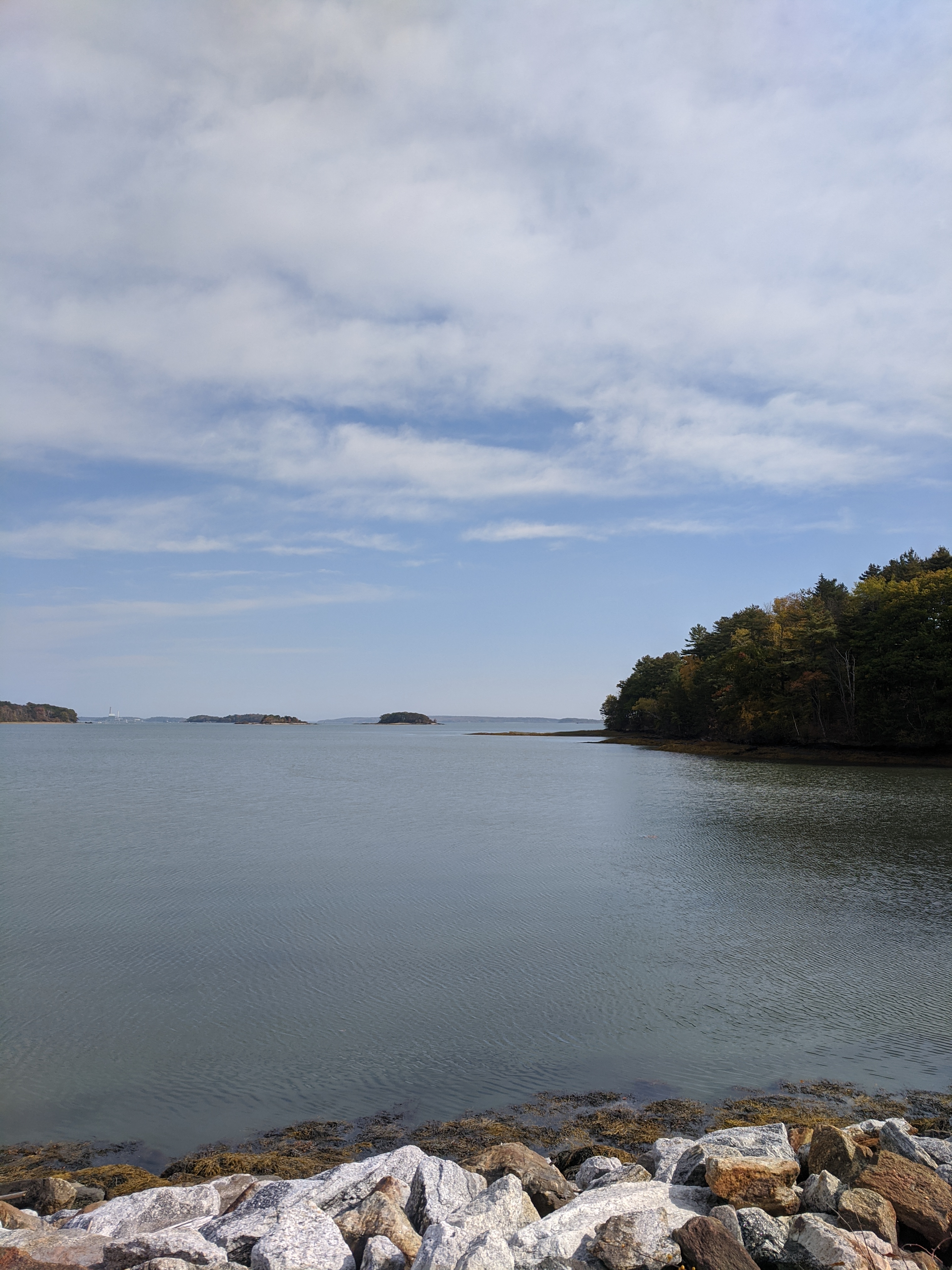
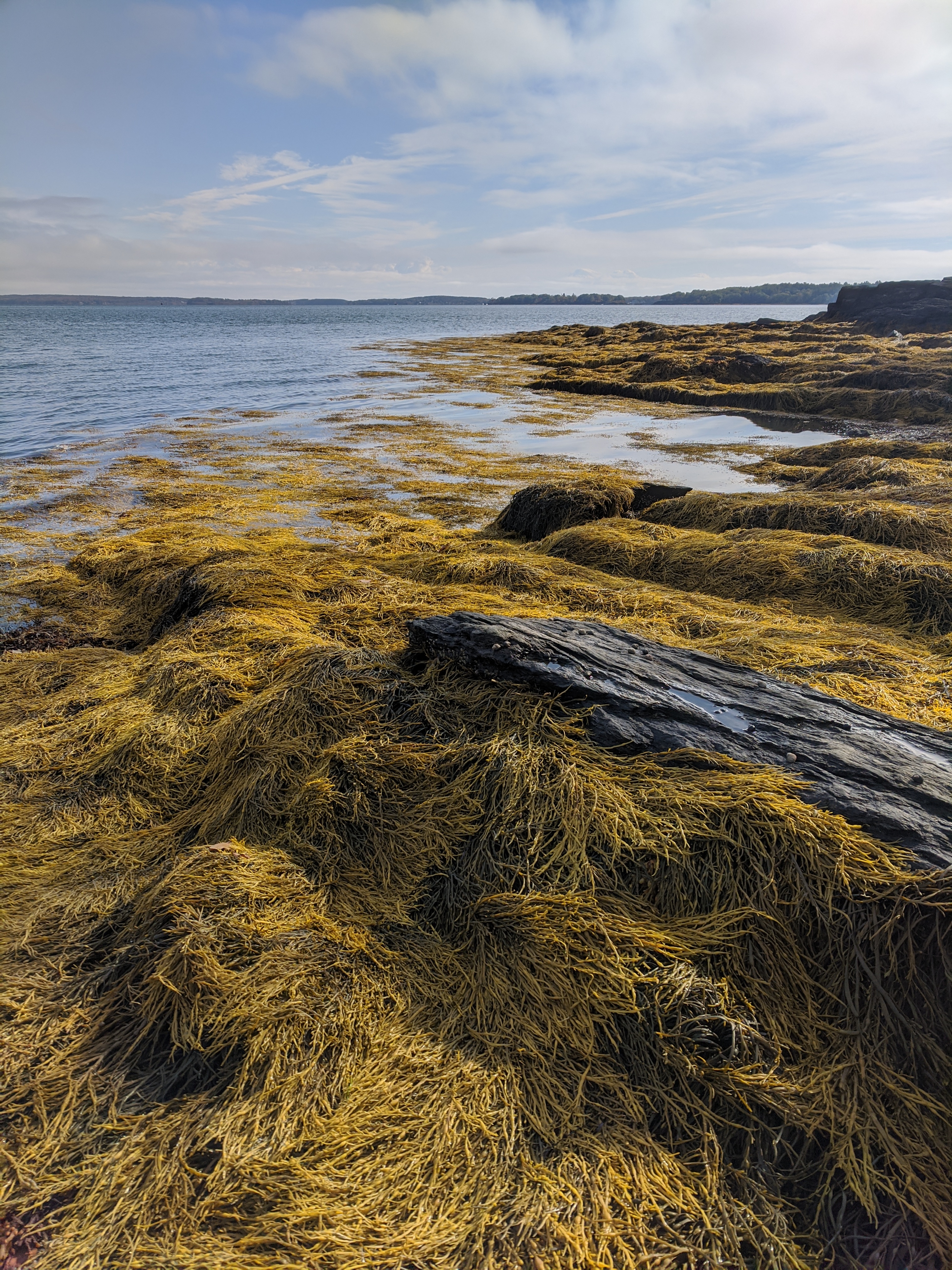
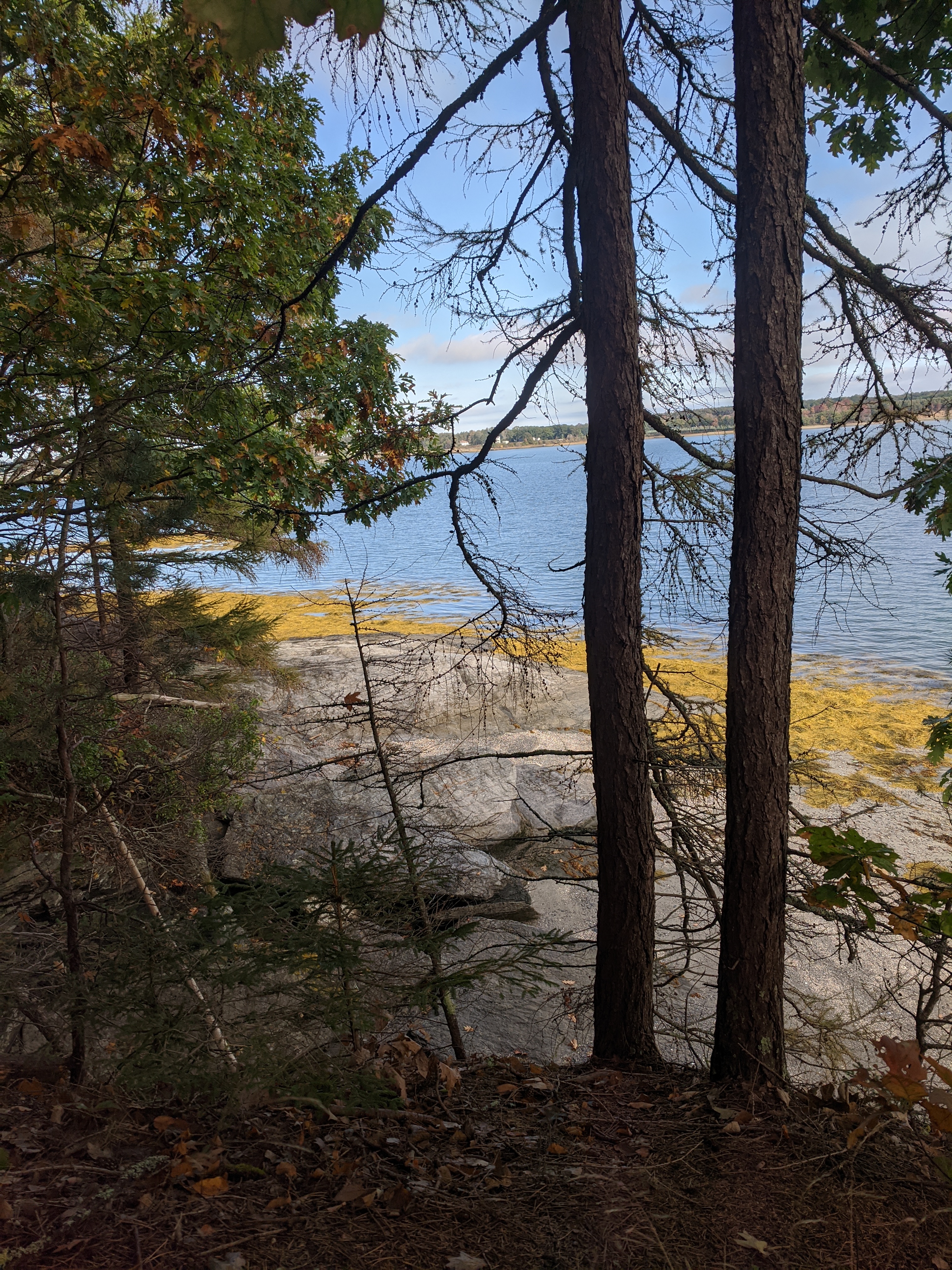
The largest city in the place I call Maine is called Portland, and it lies along the Atlantic coast in the northeast of the country called the United States. For as long as the city has existed as a city, its industries have been tied to the sea: fishing, lobstering, clamming, oystering, seaweed-picking—though that is changing: wealth clusters along the seafront and the city’s industry turns toward tourism. At low tide the horizon goes even further out than you’d think possible, and between the expensive houses and the drawn-back water, the seaweed pickers go, bent over, along the little strip of land that belongs to everyone. The coastline just north of the city becomes rocky, and small granite islands house wealthy summer residents and year-round island people who know the ferry schedule by heart
.A map eye and a surveyor’s eye, a deed eye; an insurance company’s eye, a property investor’s eye, a painter’s eye; an art collector’s eye beholding the paintings of the “empty” landscape that hang in the well-appointed houses in the best neighborhoods, in the white cool rooms of the city’s art museum. We perceive the beauty of a map or painting in the manageable space between the object and ourselves, the gaze a place that holds the object still. In the map and the landscape painting—objects I feel such a fondness for—the place that holds me is reduced to a place that I can hold. It becomes property and I am its arranger.
The world goes on around the museum and the city records office, in infinite overlapping circles. The room and the building, the city and the state, are permeated by economies and public-health statuses and modes of transit and pollution, by taste and custom and the determining structures of US racial and class hierarchies. We work temporary jobs in Portland and pay two-thirds of our income to the landlord. It is a pandemic, so we don’t go anywhere. We couldn’t afford to go out in this city in any case. To occupy my time and thoughts, I take walks and ride my bicycle: watching the light change is free, noting down the seasonal appearance of weeds in the cracks is free. I am moving through a landscape that is unfamiliar to me, and I cannot see it from outside—outside the drafty, unheated apartment, outside the exorbitant rent, outside the virus transmitted by breath. Nor from outside the sea air, the smell of the white pines, the sting of first snow on a stiff breeze. Only from inside, where I am: with you
.I find my way, in copper October, along a causeway to an island that houses the state school for Deaf and Blind students, a cemetery where the dogs and horses of a former governor have long since turned into soil themselves, and a clearing in which visitors build structures out of twigs, leaves, shells, seaweed, rocks, pinecones, and a winking belief in fairies. (The children who visit to see the fairy village do not wink, and their houses are furnished with bright orange berries, mushrooms, moss carpets, colorful and smooth stones, the best shells.) The name I know for this island is Mackworth.
Among the trees, the name I know falls away, insubstantial as a piece of Scotch tape. Its granite edges, its carpet of rust-orange pine needles, its non-local roses trimmed back by state park service employees, its sumac, its dulse. I have names for these, and yet the names cannot hold them. They exceed my ability to call them
.In every season, the island’s white pines establish the architecture of my passage there. I walk the circumference in autumn’s fullness, then in the silence of winter as the wind stirs the ocean into gray slush, and in spring as a bright yellow haze passes through the deciduous trees of the understory. And in the summer, in the rich quick bright unbearable green of living things that know how soon they will be dying.
The tall gray bodies of the pines set a rhythm for seeing. Their needles form paths and fields among the trees. The sunlight falling through them, I receive. The sky they orchestrate among their openings. They are an uncapturable color, a green that is not singular green but green-prismatic with all earth colors: chlorophyll, umber, ochre, iron oxide. Light and vision refracting in air. Among the white pines, at the foot of them, I find a distinct understanding of my proper proportion. The placedness that makes me among and with and makes my gaze through and in rather than at. From the edge of the city I see them, objects on a horizon: but among them, my sight is transformed and I am a subject among subjects. I would like to hold them in this withness and throughness
.”Landscape” is an effect of an exterior position. I am wrestling with my love of landscape painting and my position as an outsider to that tradition, by virtue of gender, training, and class—and I am wrestling with the fact of my being-settler in this place, with the history of ownership-as-land-relation I belong to. From a distance, the painter or surveyor perceives an interplay of light, shadow, form, movement. These are arranged as painting or as map, or, if in the mind rather than in material, as property. But this island is a freely offered immersion in color, perspective, time. Surrounded by white pines, it is impossible to take distance. I cannot stand back and see myself apart from them. They remind me we have always been involved in one another, whether I knew it or not.
I was formed in a scientific and religious environment where human beings and other beings are unequal. But despite how my imagination or understanding was formed, the white pines’ way of being requires, structurally, that I am among them, beneath them, between them, in their midst. It changes the kind of relationship I can have, and not just to the white pines. The withness they do to me extends limitlessly. They with me, and they with their understory. They with the greyness of the ground, scattered with their rust-orange needles, after long weeks without rain. They with the chipmunks who make holes at their feet. They with and are withed by the non-local roses and the local ferns, the lichen, the sound of the tide arriving, the bladderwrack, the smell of the mud on a hot afternoon coming through the closer sweetness of the needles that carpet the dry ground. They with the conditions of the air—humidity, pollution—and of the water, weather, the salt marshes, the bogs beyond, the fields beyond that. The way the white pines are makes me with, a with that exceeds them and far exceeds me—and exceeds the pronoun “me”. Here, among the trees, I find myself one among many, even unseen many, moving in a concert it is impossible to know in full.
The island, the ocean, the iron streaks in granite, the yellow seaweed and its scent in the afternoon air, the red hips of the roses spattering September air: I don’t want a painting I can own as soon as I see, that lets me say I know what you are. I want something that can do to me again what has been done here—that amongs me. As color does to me, as scent does: throughs me. Withs me. Bewiths me. This human head and your lowest branches. The light held there, having fallen through you from the nearest brightest star. The air I expel from my lungs and take into my lungs. The words-failness of that light, air, open, up, around space. An experience closer to what I name preposition than noun: more than thing it is movement, direction, location, a totality of space and passage.
The pines make this sense as they move through time and space. By the time I arrive where they are, they have ordained an entire way of being, and I enter it. This is true of almost all places I go: the city and its apartments, the museum and its rooms. They have been made in advance and they will outlast me. Among the white pines on this rocky island I am altered to fit the time and space of the pines. What is this alteration? It changes the I that I am, and the eyes that I have. The duringness and withinity of the pines are a grammar that refits me to an accompanied and accompanying multiple subjecthood. No longer the center of the sentence-shaped universe or the distant viewer of a landscape made to hold, I am here: with the pines, with the world they are.
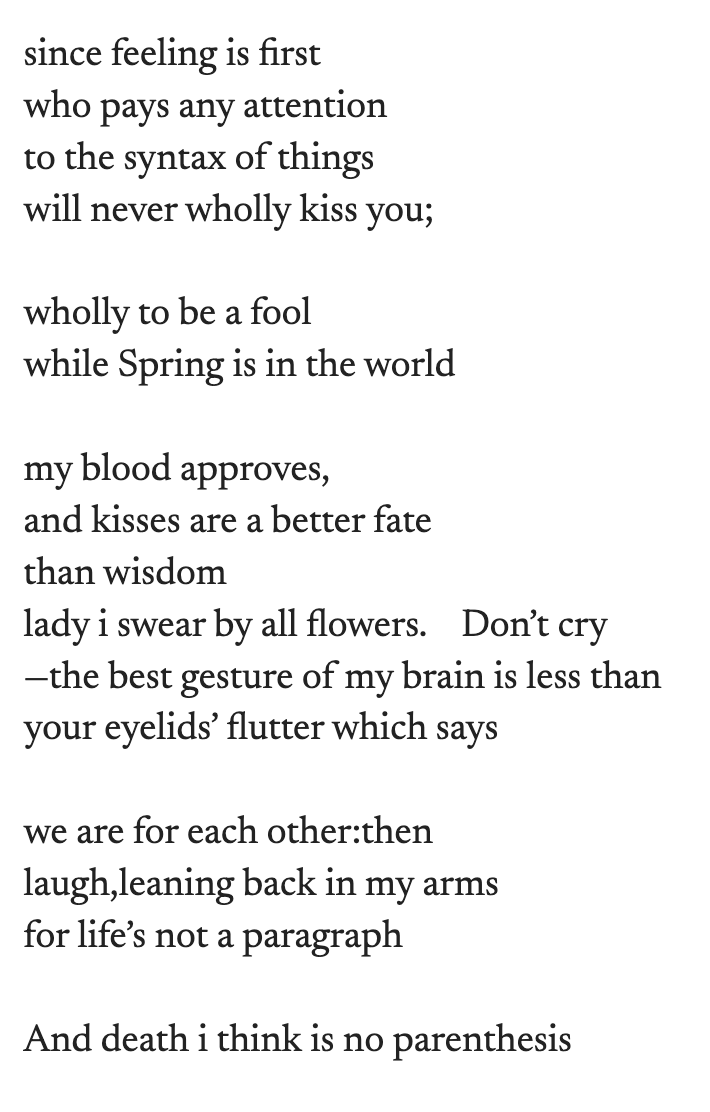
This poem is one of my favorites. Like many of e.e. cummings’ poems, it seems at first a little opaque. What is going on with the sentences? We have fallen right into the middle of something. And why are there things that look like “mistakes” all over the place here? Did the typesetter mess up? Is the poet ignorant of “correct English”? I think I love it because it makes me learn to read, and that teaches me to write, and I learn to do both here by letting go of the guideropes—my certainty about “how language works”, what is “correct” or “possible” in English and in poetry, “standard” punctuation and grammar, my familiarity with “what poems are”—and by falling into what’s actually on the page. How do I love it? Let me count the ways.
So: this poem makes an argument, and the argument comes right away. The first line argues (“since”, as in “hey, since after all we both agree that…”) “feeling is first”. First could mean both “primary, privileged”, and “taking place before other things do”. In the poem, whatever else happens, even “wisdom”, is second in all ways to feeling—comes after feeling, and is not as important as feeling.
If feeling is first (best, primary), it can only be so by comparison. We have to know what isn’t first (best, primary). What is feeling different from here? One thing that seems to be opposed to feeling right away is “the syntax of things”. What is “syntax”? The correct arrangement of things, of words in a sentence or, by metaphorical extension, of the parts of something relative to its norms. The correct or habitual order of things; the order that makes sense in a kind of passive way, the sense we hear and can immediately process and agree or disagree with.
One thing I love about this poem is that it requires me to feel toward understanding—to follow feeling and believe it: that there is meaning here, despite the poem’s refusal of the “syntax of things” (in this case, the usual ways sentences tend to arrange themselves over lines in English-language poems). And I love what this teaches me about reading and writing poetry: that making art means making something that feels ‘wrong’ or like a failure, because that’s what going outside the bounds of familiar syntax feels like. This poem reminds me that making poems isn’t about being well-behaved according to the history of prosody, but about paying attention to the felt ways of knowing that precede the codes, systems, and names of schools that follow them—even though knowing like that can feel very much like falling.
When I read the lines “who pays any attention/ to the syntax of things/ will never wholly kiss you” my attention clicks together the poem’s playful refusal of poetic ‘syntax’ and grammatical normalcy with the argument it’s making. It isn’t just telling me how things should be or are: it’s doing those things. So the argument in the first four lines seems to be something like, since, after all, feeling is both fundamental and the first thing to happen, those who operate primarily (first of all, fundamentally) by reference to an existing framework of rules—a grammar of behavior or of ways of being; a rules-based rather than a felt and responsive, bodily approach to the world—will never wholly kiss you. A whole kiss? A kiss totally present and fully experienced? Is not a syntactical, rule-checking kiss but a kiss from feeling. A kiss, it turns out, from fooling.
The word “wholly” occurs twice (lines 4 and 5) in relation to the verb “kiss” and the phrase “to be a fool/while Spring is in the world”. Completely, entirely being a fool and completely entirely kissing are two things that are unlike the “syntax of things” and also unlike a person “who pays any attention/ to the syntax of things”. Being a fool (in spring! season of emergence and renewal and burgeoning and sex) means being a person who is to some extent outside the rules that govern normal behavior, or a person willfully contravening those rules, or even being someone who is unversed in or unaware of those rules and so appearing foolish to those who know them. A fool may not have a place in the “syntax of things” but, the speaker says, “my blood approves”. What could be more intrinsic than the approval of one’s own blood? This is not a pat on the head from a boss or a look of approbation from a public genius. It comes entirely from inside. And, after all, “kisses are a better fate/ than wisdom”.
What looks like failure at first, in artmaking, is often just difference from the syntax of things.
Recently a writer friend asked me if I feel guilty when I’m not writing and it gave me pause. I don’t, I said, and my mind searched for a metaphor. Then I asked her, does the world feel guilty when the tide goes out? Although I respect my friend’s very different and normal experience of the world, it seems to me that not-writing, or failing at writing, or writing things that fail is a normal, necessary, even living part of writing anything at all. Failure means play, not moral insufficiency (or artistic insufficiency). Failure (looks like pause, looks like does not move me, looks like not quite, looks like too much like someone else and not like me, etc.) means something is happening. The tide is out? —then the tide is out. The land lies fallow for a season: so normal, so necessary. Sometimes you need a winter in order to have a time when “spring is in the world”. But my friend is not the first writer I have heard talk about the feeling that there is a right way to write and a wrong way, and that she is doing it wrong—and ending up feeling bad about it. Not the first writer I’ve talked to for whom failure alternately looms and motivates. I hear echoes of this when I hear students talk about failure as something to avoid, or when I come across writing tips online that more or less come down to how to succeed in business without really trying.
It’s difficult to disentangle the fact that to make art that means with one’s whole life, attention, and being requires one to be willing to fail and even to fail much of the time from the facts of an education system that experientially equates failure to shame and reduction of status, and a literary world in which success is visible and sensationalized while failures of all kinds, from the ordinary and necessary “failures” (drafts, learning to think, getting it wrong, change over time) that are just another name for process, to the ordinary and common “failures” (rejections, going unnominated or unpublished, anonymity, marginal position) that are the natural outcome of treating the human need to make meaning as grounds for economic and social competition, are mostly hidden from view. I want to be clear that I am using the quotation marks around the word “failure” here because to me these seem less like failures than like part of the pattern of an artmaking life.
It is a fact that to find out what we mean, like learning to walk, means falling over and over as we try to understand in body and mind what gravity is, how foot can feel (being unshod), and how locomotion among and through other moving beings and static objects works. And then we do that again and again! No less, all our lives, do we learn subtly to change, adapt, grow, adopt new manners, skills, attitudes. None of it easy; we fall down often. And then we change tactic, do it again. Just part of life. Failing, falling, cannot be separated from learning to move, think, be, write.
Artmaking and writing are responsive processes. They respond to our knowledge (which changes over time) and to our perceptions, to the world around us, and to the processes themselves as we undertake them. These processes of meaning-making may sometimes have recourse to the “syntax of things”, but they are not that. To make a poem is not to replicate the habits and gestures of the thing called “poem” but instead, having carefully examined those things called “poem” and having deeply attended to the ways they make meaning, to ask, then what is “poem”? and to make an object that replies as a flower replies, or an eyelid’s flutter replies, or a kiss replies, in the way only the living thing can.
We are not made to fit ourselves mechanically into pre-made molds, whether those are received forms or other people’s ways of working. We are made to pay attention to what is in front of, inside of, around and through us, including received forms and others’ ways of working, and to discern the ways meaning can be made, changed, extended, complicated. We use language and form (visual, sonic, conceptual, and other forms), in the case of poetry, to attempt to accomplish some communication of what our attention has given us. And of course we fail—and of course we need fallow time—because this is difficult. It is very, very difficult to make a world. It takes so much imaginative work to make the world a poem is. Even a place as comparatively small as Rome wasn’t built in a day.
It might seem like following rules and guidebooks and lists of tips on writing websites will get us safely where we have to go. But will it? And would it be so foolish to fail, in any case? In the world of cummings’ poem, those who pay “any attention/ to the syntax of things” are incapable of “wholly” kissing or “wholly” being “a fool”. It’s pretty clear that the poem values both kissing and fooling! There’s a line in the poem that for me connects the two nouns “fool” and “wisdom”, and it’s a line of binary opposition. Which is better? To be a philosopher or a fool?
In the poem, the speaker says it is “blood”, common substance of all bodies, that “approves” being a fool. Not a government, not a religion, not a grammar. No top-down rule that can approve this, but one’s own vital blood. “Wholly to be a fool” is to invert a hierarchy that might otherwise value “the best gesture of my brain” over “your eyelids’ flutter”, the trappings of syntax (brains, wisdom, paragraphs) over the “best gesture[s]” of the living body (laughter, flutters, flowers). But Cummings does not simplyinvert the hierarchy of fool/philosopher, because both live together in the complex space of the poem. He inserts an inversion of value (kisses>wisdom, life>paragraph) into a proof that, though broken across lines, obeys syntactic logic. The world in which feeling is first lives in relation to a world of syntax, a both-and world. Where the poem falls or fails it is also held. I think he probably had to fail in the making to find his way to this form.
This is a poem—there are several of cummings’—that I feel I could spend years talking through. They are tiny, intricate syntax-and-feeling puzzles. I can’t imagine they came fully formed. In fact I know they did not, because, reading through cummings’ collected poems I can see his ability to move and use and play in/with language change over time. We embark on thinking, writing, making, being at the beginning of these processes. To do them well is not a question of arriving at some absolute point of ability but a question of reflective continuation after repeated failures—and also a question of learning to see what might look or feel like a failure as just part of the act of thought.
Be beginning. Be feeling it out. Be paying attention. Be open to what isn’t yet or “couldn’t possibly be”. Do what shouldn’t or can’t and see what happens. Because we can’t know what we think until we write it. We can’t know in advance what the writing will be until we do it, and then again. We are not here simply to fill in forms, governmental or poetic. We are here to find out what it can be, our art, when we cross for our few brief years of life its immense history, and then pass it on to unknown others, changed. The thing about poetry is, remember, it comes from make. And that’s our job: to make it, to make it new in ways we couldn’t have imagined yesterday and that often require us to feel as if we’re falling from the paths we know to find them.
This goes for what writing looks like, too, I think. Factory work is harmful for human beings and our world. It does not enliven or delight. So what convinces us to think about writing as a question of productivity? Why is the assembly line the image for a writing life? Writing is not for producing writing; writing is for being in the world. The books come along if we can do that second (first!) part with care, returning to it over and over. We need the parts of writing that look like rest or walking or looking or reading or listening to music or thinking, and the parts that look like not-knowing, and the parts that look like getting it wrong. And we also, I think, need the parts of life, the ‘failures’ at writing, that teach us to discern what the difference is between exhaustion and fear or avoidance or laziness or too much Twitter. We need to fail because it teaches us how to understand what we want and where and how to find that.
Be gentle, writer. Writing is endless because language does not end: we are in an ongoing process of learning to make what doesn’t yet exist, and learning to suss out what kinds of actions can bring us to make what we need to make. There is enough room and time for all of us. And I think allowing writing to be all it is, including its fallow times and its failures, can help us understand how “to be a fool/ while Spring is in the world”, which is to say, how to write poetry, but also to say, how to be human with other humans, in this living, changing place that only lasts an hour.
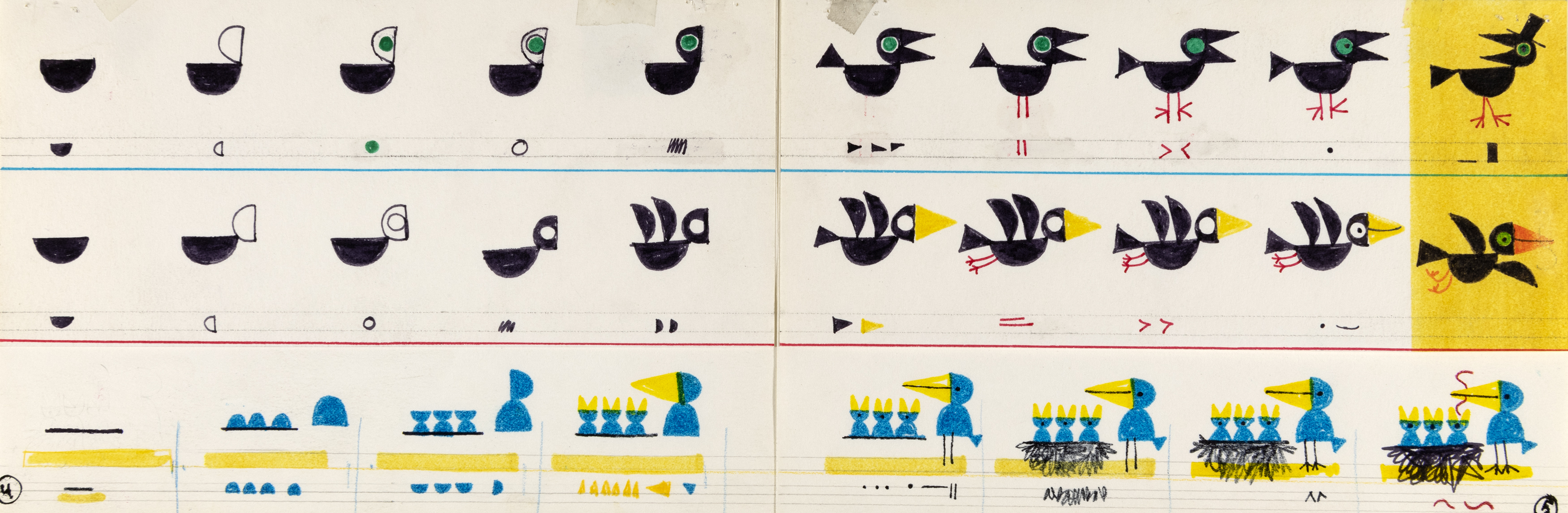
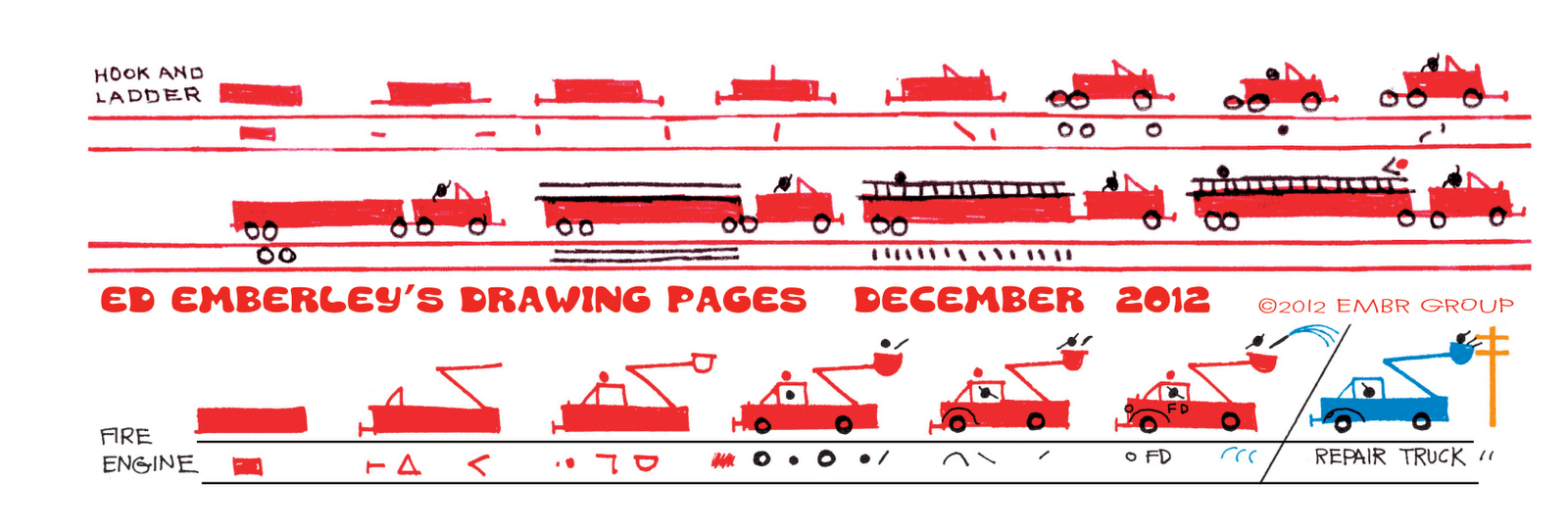
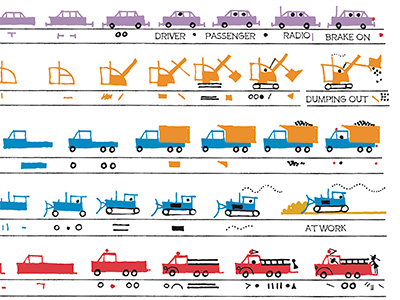
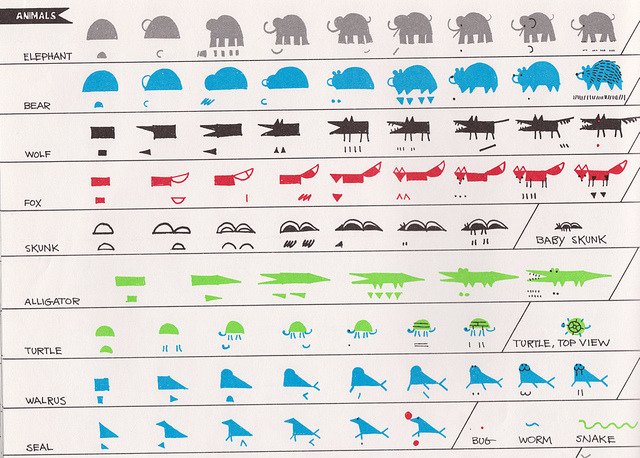
Did any of you have an Ed Emberley drawing book called Make a World as a child? (You can see someone flip through it on YouTube here.) Emberley broke down hundreds of everyday objects, animals, plants, buildings, and bodies into component parts beginning with the simplest shapes. By paying attention to each part and its relation to the other parts, you could learn to draw all kinds of things. I loved this book. I loved looking at all the orderly grids of shapes becoming animals or castles or furniture. And I loved that I could go to the book with something I didn’t know how to draw and learn to see it as pieces, put those pieces together, and then know how to draw its basic form. Ed Emberley’s book taught me to improvise, and it taught me about seeing, and it also taught me that images are made by people. As a person, that was an important lesson: there is no image made that isn’t made by a person, and so you, too, can make images. It never felt, using Make a World as a reference, that I was intended to make a perfect copy of Emberley’s drawings, although I sometimes tried (because those neat little rectangular deer were so charming). Instead it felt like Emberley was just showing me that it was possible to draw things, that drawing wasn’t something out of my hands and reserved for Real Artists but was instead very much in my hands, in every sense.
Every page in the Ed Emberley drawing book was covered in dozens, even hundreds of drawings, all of which I could make myself (and make my own), as many times as I wanted. And every other reader could, too: the adult across the table, the sibling to my right. Firetrucks and cows, apple trees and suspension bridges: we drew them all, and multiplied the world at our fingertips across sheet after sheet of mimeograph paper my dad brought home from work.
On the other side of the table, where the adults sit with their newspaper and their notebook, there is a different kind of accounting, and the world does not present itself as quite so multiple. For example, there is only one set of Pulitzer Prizes given each year. One set of Ruth Lilly Awards. One set of Guggenheims. Getting onto the New York Times bestseller list is both unlikely and byzantine, and the spots are limited each week. The NEA goes to twenty or twenty-five writers each year. The Cullman Center Fellowships, the Whiting Awards, the Stegners; Arts Council awards from your state, region, or nation; the Pushcart Prizes, all go to just a few writers each year. The most competitive MFA programs take five or ten or fifteen people a year and give them two or three funded years to learn to write. In the first quarter of 2020, Publishers Marketplace reported a total of 14 ‘deals’ (sales of manuscripts to publishing houses) over $500,000. The math of that side of the table is a math of slim chances. It’s the math of the lottery ticket, but a lottery ticket costs a dollar and a life as a writer costs a whole life, however you spend it. Those statistics about what success looks like in the commercial world of literary publication are quite a lottery to hitch a writing life—meaning a human life, a life of making things, asking big questions, thinking with others and alone, being in the world—to. But how else?
It takes a lot of concentration and a lot of attention to what’s in front of us to make what only we can make. It takes a lot of time and patience to take in the world around us—the world of shapes and forms, traditions and norms and habits—and to make something of it that really does what we are; that, in Hopkins’ words, “selves—goes itself”, that “speaks and spells” itself.
The world of public acclaim and awards, the world of pressure to publish poems and stories and essays and books and and and (wait—can we ask why, first?)—the world of status as a Writer, or as a good writer or as the Best Writer, is like a sun. It is so massive that its gravitational pull acts on us even, maybe especially, when we aren’t aware of it. And, like the sun, sometimes it gets between us and the thing we are doing, the human thing we are meant to do—make art, write—and because it is so large and bright it’s hard to see around it. Publishing and awards are out there at the center of the solar system, and we float around them, drawn by their gravity, until what we produce finds a way toward the center, often along well-established routes of access, privilege, power, and money. And so it can seem like the thing we are meant to do is to publish, or to win awards, or to receive acclaim.
But wait—that’s not what Ed Emberley’s hand says.
What Ed Emberley’s hand says is: you can make a world, not you’re going to get a book deal, and what it says is look at what you’re doing—there’s real pleasure there! Maybe it says, Shakespeare said “present mirth hath present laughter” or maybe it says, Robert Herrick said “gather ye rosebuds while ye may” and hey, here’s how you draw a rose. It definitely doesn’t say your life is a game of chance and you should only make bets that look like winners from the start. But okay, it’s a talking hand; you might be disinclined to take its advice.
Sometimes I forget that at the end of the line of shapes on the page (let’s say these basic drawn shapes can be a metaphor for all the ways we learn about writing—the practice we get with received and organic forms, how we learn about style, what we receive from a tradition in this or that genre, our awareness of the kinds of books that make money or get reviews in the New Yorker) there is a drawing that could only have been made by Ed Emberley. And when I make those shapes, no matter how carefully I look to his model, naturally my hand transforms what I make into something only I could make. And that that is the right outcome: not a replica, a transformation.
Something else I loved about the pages of Make A World—actually, I still love this—is that they were full. There is no page where there are not a dozen things happening. Often there were little visual jokes, like the moment the seal gets a red ball, or the top view of the turtle, or the baby skunk, or the backhoe dumping out gravel. You can almost see Emberley having an idea in those drawings. Those moments of play seem to me not like invitations to copy but invitations to invent and imagine, and models for how to have ideas that don’t end with a copy that can be checked off but end with me drawings things that aren’t even in the frame. The drawing doesn’t end at the end of the row of shapes; it begins there, because that’s the point where your hand takes over and figures out what comes next. I loved that the pages were so full of possibilities and that the possibilities all seemed to point to more off the page. There is no end to imagination. You just keep going, all your life, and that’s how you make a life, and an art. It’s kind of the opposite world, if you think about it, to the world of waiting for awards and prizes and acclaim and publication with a Big Five house (or with Faber, or with Graywolf, or whoever is your ideal publisher).
The world of Ed Emberley’s Make a World is open. You take a running jump off the end of the page, and there you go, making your own world. You start by learning to draw a seal, and then you imagine the rocks, the ocean water, the seaweed, the barnacles, a sea kayaker, their helmet, gannets or oystercatchers or puffins, weather blowing in from the west….
Now what could a writing world like that look like? Starting with the things you learn to make by reading but that, in making, is so transformed it could only be your own, and growing from the word toward the world—not the publishing world, grateful as we may be for its existence, but the world of our invention and our shared relation with everything that lives? What would a writing world look like where we could see writing (a poem, a book) not as the end of our imaginative work but as the start, a point from which to begin making everything that touches a poem or a book?
I think such a writing world would be full and busy, not scarce or scanty. It would have to feel endless in the way the drawings made as a child felt endless—more always possible. It would occupy our time and hands and minds as well, and in doing so I think the very doing would make us happy, the kind of happiness one gets when one is making something with thought and care. It would probably have to be close to home, in full or in part, and be of a scale that could involve us directly. It would have to be relatively small—not in idea or in scope or in imagination but in terms of production and material, because things need space. It would have to be made of materials we could get our hands on, with equipment we could use ourselves.
There are very real pressures to take part in the public side of the literary world (by which I mean the system of prizes, fellowships, awards, and publication that is for the most part driven by an economics of scarcity, made precious by how few make it to the center). And even those of us who have been published or won awards still experience the discomfort that comes about when those awards or publications enact their gravitational pull on us: wondering what the point is of writing, or why we do this work when finding readers is so hard and the odds are so slim. In my line of work it’s basically de rigeur to publish, and I wouldn’t have gotten my job if I hadn’t published books with a major literary nonprofit press in the US. I’m very grateful to a professor in the final year of my MFA program who took me at my word that my “publishing strategy”, which we had to outline for a class project, was to print a dozen copies of my MFA thesis and leave them on buses around the city; that professor sent my manuscript to Milkweed, and that resulted in the publication of my first book. Without that professor and that kindness and that book, I would not be where I am.
But I would still, I am absolutely sure of it, be writing. And I would definitely be making books, because making books is something I’ve done since I was a very little person, looking at Ed Emberley’s drawings and making my own. Making books is something we can all do, right here at the table between us, and it’s a first step toward a second, third, millionth world made by hand to live alongside the world of commercial publishing and to remind us that writing is not the end but the beginning—that writing teaches us, step by step, to make a whole world.
To me bookmaking is also one of the most immediate ways to remember that we can refuse to compete; we can treat the logic of the competitive system we live within as optional. We can divert, invent something else. After all, aren’t we ‘creative’ writers? Doesn’t that mean, to make something up? If we can make a poem, we can make a book; if we can make a book, we can make a room for that book and others’ books; we can make a reading or an event series. We can begin to see and name the structures and norms we live inside, and we can follow that other ordinary writer in saying, sometimes, that we would “prefer not to”. Making the text is just the first shape on the page, and then our imagination can say—go!
Publishing is a joy; it’s a pleasure and a real honor to join with others who think and have thought about writing and who write or wrote; with those who read and those talk about ideas. It’s a pleasure and an honor to be read. It is so, so special and it is also so, so normal—it is so human to want to make things, including language-things, and to share them with other people. The trick, to me, is remembering that the people whose work is made visible within mainstream publishing and prizegiving’s economy of scarcity are not the only people who write, talk about ideas, think about books. We all can. And the people who can make publishing possible are not only in the well-known houses in New York or London; they are also right here, sitting across the table from us. Pass the scissors. Pass the thread.
If we want to see one another, let’s see one another. If we want to be seen, ourselves, let’s make a space in which—it doesn’t matter if it is small or humble; that seems very natural and neutral to start and also to go on—we can be seen by one another, and in which to see others’ work.
Redirect. To your fingertips. My fingertips.
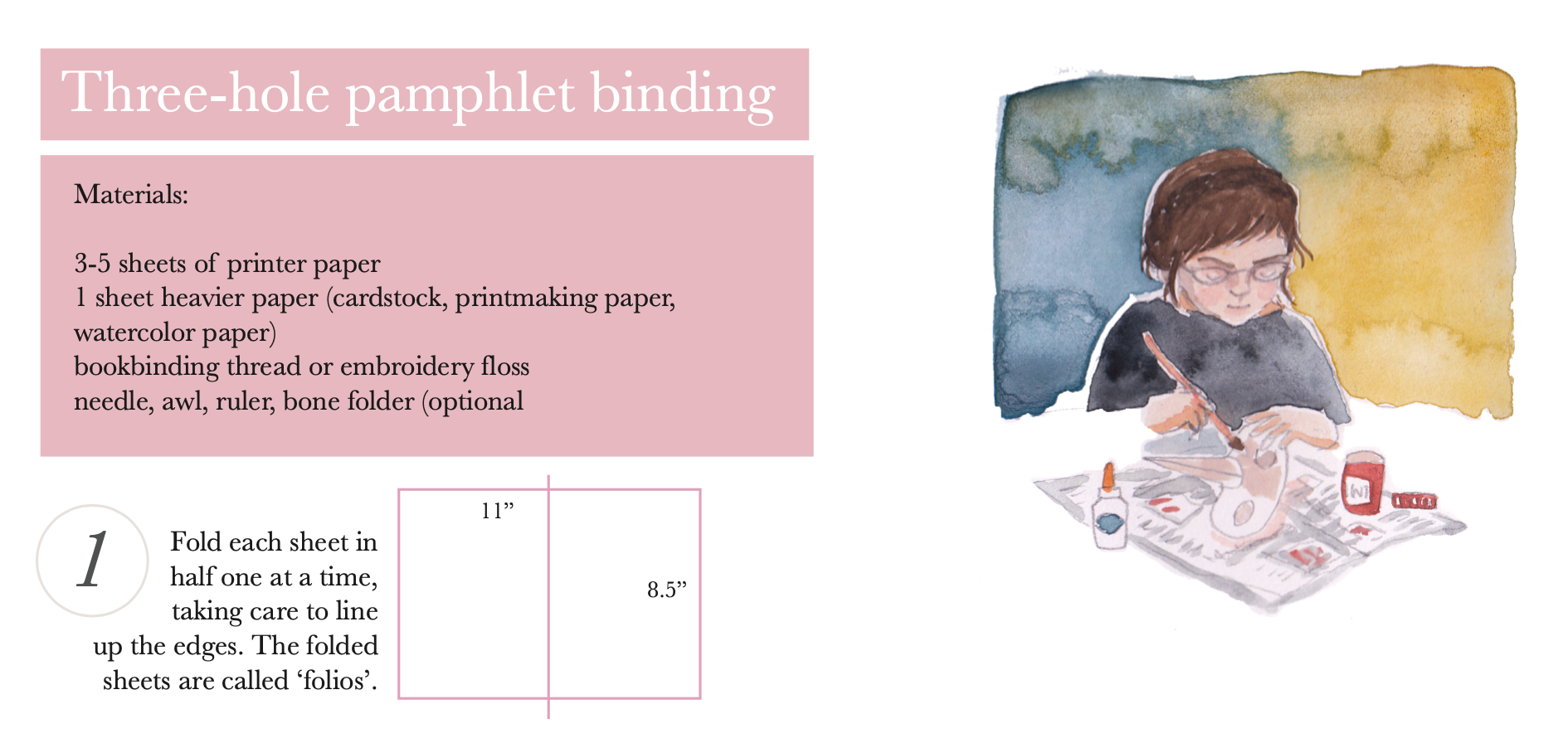
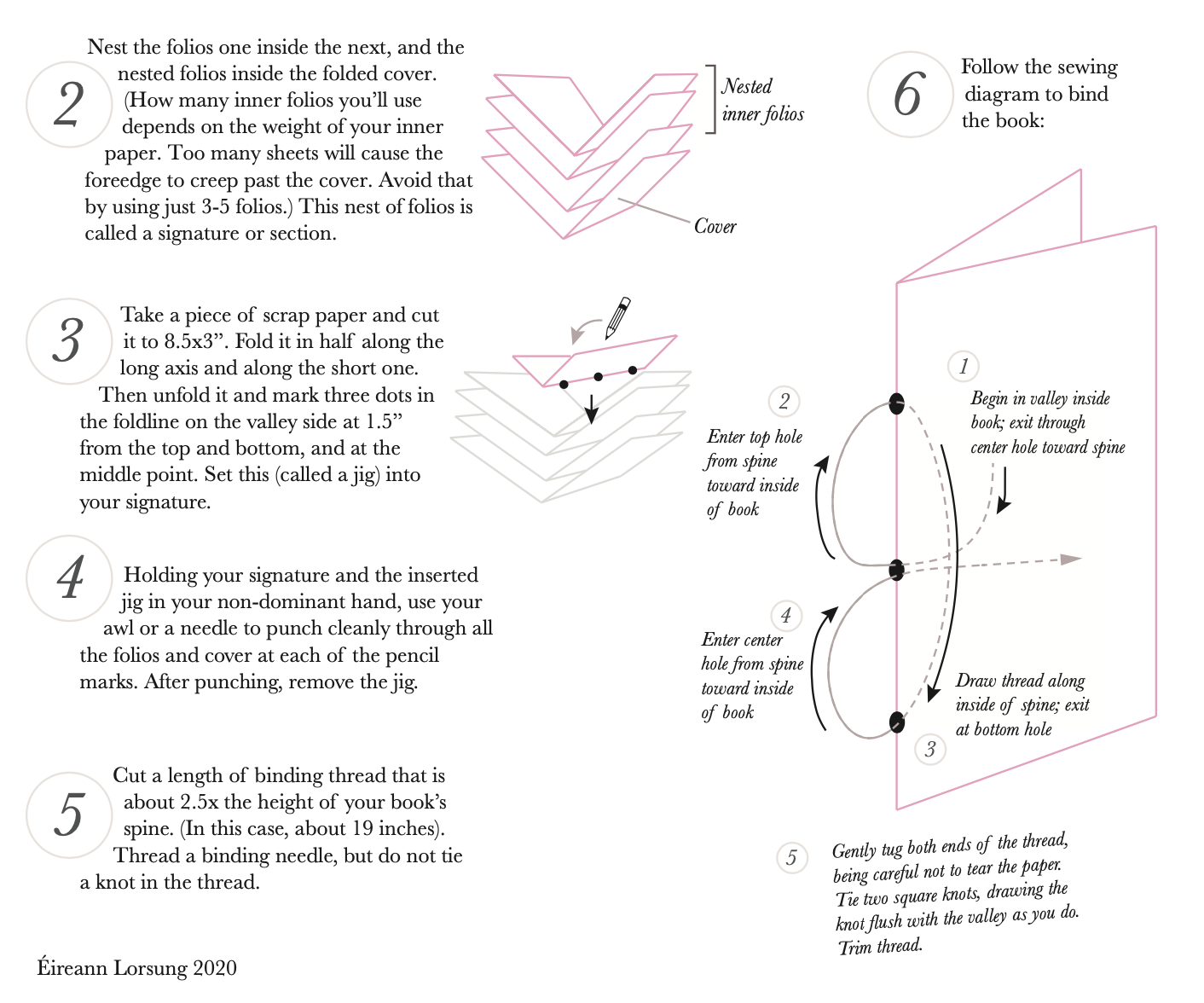
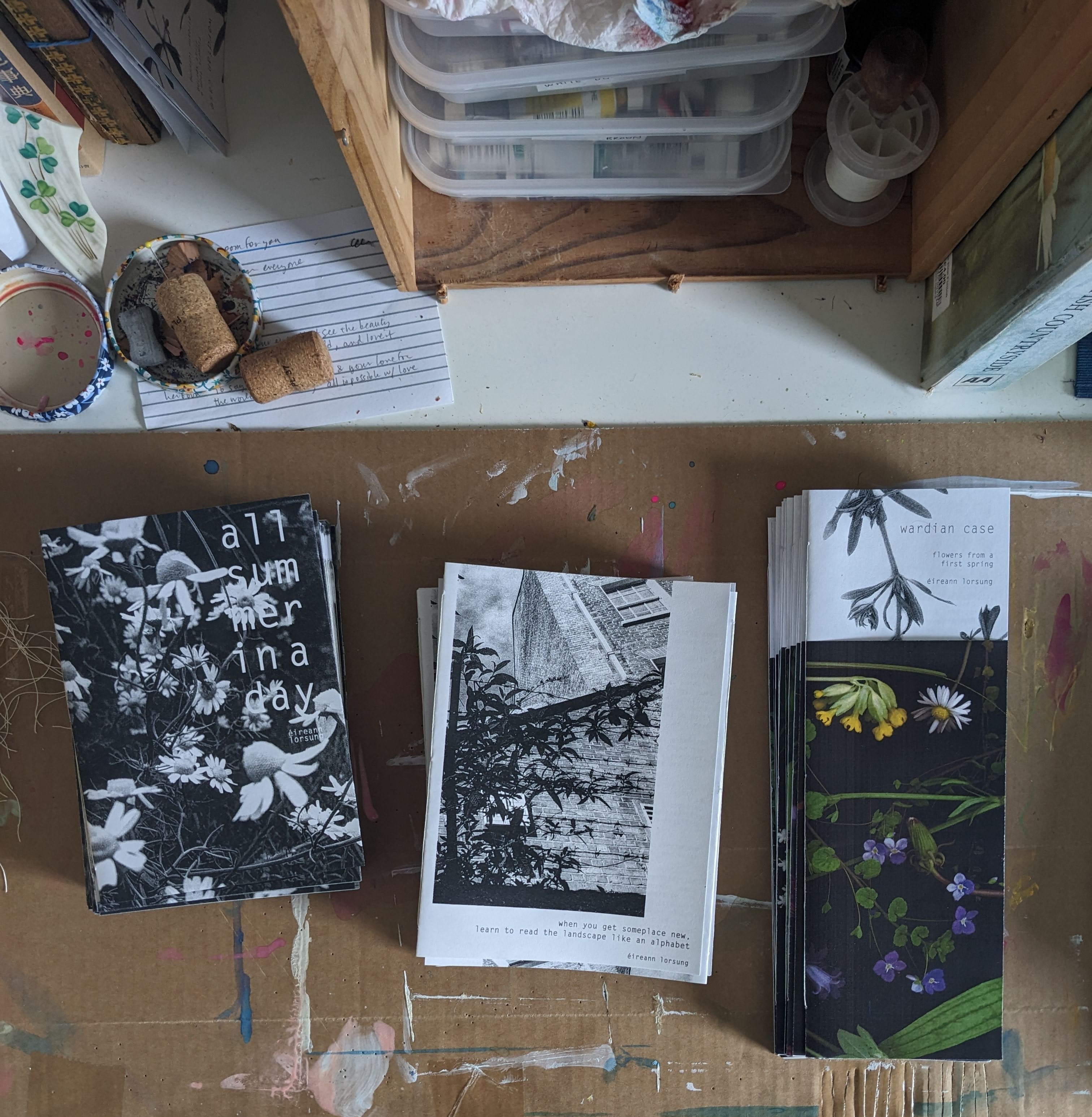
If scarcity is the engine that orients our imaginations toward structures that mostly leave most of us out, then muchness must be part of the reply. Availability. Right-here-ness. The images above are a right-here technique I often use, that I’ve been using since 2007 or so and that has alleviated much of my worry and also much of my loneliness in writing. Make a book of your own. Right now. With whatever is to hand, about nothing much at all. Then make one of your friend’s work. Then make a dozen copies of your friend’s book: now you have a press. Now there’s one more place that can publish other people.
You want to be published? You want your friends to be published? Make the world in which that’s possible. Use the copy machine after hours. Save up and buy a printer. Get friendly with your local offset and digital shop (they probably do a lot of ad printing and will enjoy taking your jobs on). Get a few friends in on it if you don’t want to or don’t have the skills to do it all alone. You don’t have to wait for Hachette or The Song Cave or anything in between to see you, though they may well and how wonderful if they do: in the meantime, which is your life, you can see you. You can see the ones you love. You can make the books to hold the things you’re thinking and seeing. You can make them now, with your own hands: as pamphlets, or as posters wheatpasted to the sidings of construction sites, or as postcards mailed to anyone who’ll pay for a stamp, and, doing so, you’ll be in a rich tradition, stillongoing, of people who’ve looked at a book and thought, well, I can do that. And it’s not one or the other, if you make a book of your own: who knows what else is possible for that writing? But right now, if you have the choice between longing to be published by someone else and making a book of your own or a friend’s yourself, I’d say make that book.
You can make a world.
About as often as a nonfiction teacher reminds their students that “essay” comes from the French verb “essayer”, which means “to try, to attempt”, a poetry teacher reminds their students that the word “poem” comes from the Greek verb for “to make”. And that’s the point, isn’t it? In the end? Not to win, but to make; to be part of the made and making world, to make things? To refuse, even, the terms by which some of us might be ‘winners’ and the others—not? The point of writing poetry is that the poem leads us, as Ed Emberley’s drawings do, not to a single end but to the edge of the page which we are meant to leap off of, toward the whole world, also ours to make alongside everyone else. Make poems, yes. Make books, make magazines, make newspapers; make postcards and posters, make classrooms and residency spaces, make kitchen table conversations and make walks where anyone can join. A world. The poem doesn’t end at the end of the line; the ‘aim’ of writing is not the bestseller list. It’s here: your hand holding the pencil as your mind suggests the horse’s mane not hanging but flowing, and the legs, then, not standing but running. And the grasses, then, and the wind bowing the grasses down so that they resemble the mane of the horse; and the flowers among the grasses, and the pollen invisibly flying from them, and the wide open sky under which everything is possible.
Hello readers—thanks for being here. It’s been six months of this experiment now: six months of weekly essays here. Kind of hard to believe. I have benefitted from your presences and am grateful to be read by you. Thanks for your comments and thank you for sharing what I’ve written with others.
Just a note to say that if you are receiving these essays in your email but email stresses you out, you can always read them in-browser, or, if you use an RSS reader, you can add them using the address https://bewilderment.substack.com/feed. Once a week is a fast pace for writing and a very fast one for reading, especially when your inbox probably already has a lot of other interesting (?) things in it.
This month, a back-to-school month, I’m going to try to write four pieces loosely about writing—about teaching it and studying it, making it and doing it. For any and all who are re-entering the beautiful and difficult space of the classroom, happy new year!
I teach writing in universities as well as outside of universities. Right now I am employed by a university to teach writing. At many universities there is the writing everyone does, and then there is this other kind of writing: “creative” writing. That’s what the writing I teach is called, though I prefer to call it “writing” so as not to differentiate it too much from the process and activity that happens in biology labs and in literature classrooms. The adjective “creative” changes the ordinary activity called “writing”: in some circumstances it can make the writing seem suspect: is this ‘actual thought’? ‘real work’? just flights of fancy? therapy? What is this writing-with-the-adjective-creative-in-front-of-it? In other circumstances, I have seen the word “creative” make writing and the writing classroom feel impossibly out of reach, painful, or rarified. In this case, “’creative writing” becomes a place where one may be ranked (a “good” writer, a “bad” writer) or even a place where one cannot enter (because one senses or has been told that one is “not a writer”). So I think a lot about these two words, “creative” and “writing”, and how they are deployed together and apart in the places I work, and where those deployments come from, and what effects I observe and extrapolate from them.
The way I learned to write, to think about writing, and to think about “creative writing” means I can only imagine writing as something that’s done in the company of other people. This is the foundational truth about writing: we don’t do it alone. I mean it literally, too: I learned to write at the kitchen table and grew up doing my thinking and writing there, with at least one but up to five other people around me. Given this, how could I untangle some parts of my thinking and call them purely ‘mine’? As far back as I remember, thinking and writing have been things to which incidental noise, speech, music, and others’ ideas have contributed. And, of course, as most people do where I come from, I went to school, and there I learned to think and to write (and to draw and to sing and to run) in the company of peers and teachers.
Now I am the teacher, and the other people in the room when I think about and practice writing are students. In the writing classroom, in the best cases, there is the incredible sensation of—a student once called it ‘flying’—thinking together. Not me telling you, not us competing to be heard, but us, together, working something bigger than any of us out. It’s an incredible gift, that feeling of thinking-flight. And it has never happened to me when I’m working alone, but it’s happened many times when I’ve been thinking with others.
When I say ‘we don’t write alone’, I mean this in a permeating way, even outside the rooms where we are physically together. We don’t invent the alphabet, we don’t design private grammars, we don’t learn to speak or think in isolation. Our ideas come from our contexts, contexts of thought and of body. We read and are read books, we hear songs, we attend services in our religious traditions, we eavesdrop on strangers on the bus, and we sit in class where dozens or even hundreds of other language-users immerse us in the complexities of language. We learn about the world from others, in formal and informal education—even the hot pot that, touched, teaches me it is hot is an other whose company made it possible for me to know.
And writing itself is only possible because of other people’s labor, now and in the past. Not only my ideas and the technology of alphabet and grammar book, but the material possibility of writing is given to me by others. Everything that my writing uses to make itself is shared or inherited, from the design of the ballpoint mechanism in a pen, to the circuitry of my laptop keyboard, to the format of the A4/Letter paper the printer is built for, to the syntax of English, to our literary traditions that will, often before I realize it, make it possible for me to sort a given piece of text into the categories “poem” or “not-poem”.
All that said, I was educated in the way most people of my age and place were, which is to say in a system of education that was more or less openly competitive, in which one wanted—I wanted—to be a “good” writer, to be the “best” writer, even. After all, the writers we read were the best. They were the models, implicitly and explicitly, and so the frame of bestness was the model as well. To be a writer, I mean a Writer, to be read, seemed to mean to follow a path toward writing that came to me along a line of white, landed, nominally or actually Christian, English-speaking men (and some women). I didn’t think much about that as a young person; I didn’t have the language or the framing to do much thinking about that beyond noting it. I didn’t yet think about the way the literature I was given, in the education I was given, was shaped by a place and time where competition—in economics and also in a distorted understanding of science—was imagined as the natural state of things, and in which competition it was also ‘natural’ that those writers (people who looked, more or less, like me) should come out on top, so smoothly as not even to seem to have competed (much less made or broken the rules).
But now I think a lot about the way that frame was made, and what it means—that it is not a neutral or natural frame, that the aesthetic priorities given to me by my education are not historically neutral or neutral now. And I think it’s not a coincidence that in light of that education, I often thought that the point of learning to write was learning to be good at writing—by which I meant, good at (re)producing things that would be recognizable as poems in the tradition of the best writers, the ones I had been given to read.
I’ll come back to that idea of writing as “making recognizable things” later this month, but for now I’m going to turn back to competition and poetry. I had the real privilege of attending a big university in the US where there was an MFA program in writing housed in the same department where I was doing my undergraduate degree in English. And, perhaps to keep the numbers up for the MFA classes, once undergraduates entered their third year of the English degree, if they had taken all of the undergraduate workshops, they could petition to join MFA workshops. So I did this, and I was permitted to enter these workshops in poetry. I took an MFA workshop as part of my undergraduate degree for at least three semesters. (I now look back with some awe and a lot of gratitude on the kindness and tolerance of the more mature and much more worldly students in the MFA program who were my peers in those classes.)
In those workshops there was one poet whose work I felt especially thrilled by. That this poet was withdrawn and private added to the aura around her work for me. She seemed absolutely at a remove, mysterious. And poetry—the poetry of bestness, since her poems seemed best to me—therefore was also mysterious. How did she do what she did? I could not write like her, I found. How, in a world where poets like her existed, would I ever be able to write anything? I spent many months trying to write poems like that poet, trying to capture the ways she used words and images, trying to imitate her tone. I loved her work so much, and in ways I couldn’t articulate, that it came to seem to me that she was the “best” poet, and that in order to be a poet at all I would need to imitate her. There are still images from her poems that I think of, twenty years later!
Then I graduated from the university with my BA, and I was accepted into that very MFA program—a great gift on the part of my teachers to me, it is safe to say that that admission shaped the course of my life. (Thank you, Ray and MDB, Maria and Maria, David, Jan, Jeff and Karl, thank you, my fate, I’m unworthy, how beautiful my life.) As I prepared to begin the MFA, I thought about my feelings for this poet’s work, and I thought about what those feelings did to me: I felt wonder at and joy in her poems’ beauty, and I also felt jealousy, and I felt competitive, and then I felt incapable and small. My awe at her work often left me bereft of a sense of my own. In trying to make poems that seemed “successful” to me—which meant, poems that only hollowly recalled hers—I had lost some of the joy and richness that drew me to poetry in the first place. That joy and richness was the play of poetry, the multiplicity of it, the maximalism of it, how there was always more of it to be had, and all so different. (My college education had by that point complemented my high school reading with a broad awareness of contemporary US poetry, some contemporary poetry from Ireland and the UK, and a fair amount of 20th-century poetry translated from Spanish and Japanese.)
Poetry, I was coming to learn, meant making things, not just falling in line behind someone else’s made things. I knew that the three years of the MFA program were a gift. I wanted to spend them open to as much as possible, not anxious about whether or not my poems were good by comparison to poets I admired. I wanted to be a learner, not an expert. How can I change my approach, I thought. At that point, I came to a conclusion and made a decision that in hindsight were some of the most important parts of my writerly education.
I decided that for the duration of the MFA program, all three years, I would not send any work out or try to have anything published. I would only write, read, go to class, work, see friends, and try to learn everything I could about everything. I would try to understand what I was doing and could do. I would not worry about publication. I would try to find other things to hook my reasons to. I don’t think I put it this way then—I don’t think I had the language or the self-awareness—but I knew that changing my focus from ‘success’ in terms of publication or recognition to the ongoing practice of learning to write and read and think would keep me from feeling competitive. And, corollary to this, I realized—and this is verbatim; I recall the realization happening, in the third-floor corridor of Lind Hall—that there simply was room for both the poet I revered and for me to be good writers.
In the years since, that understanding—that art is a category and a way of life capacious enough for all art, that no one person’s artistic or intellectual life is a threat to any other’s, that writing is not a zero-sum game—has been at the center of my writing and teaching life. How I think about it has gotten more intricate, but that’s the basic fact and it’s still there, at the ground level of what I do and how I do it. I’ve learned what it means to say that art/writing has space for all of us by editing and publishing others, by reading and thinking, by being published myself, by hearing students and other writers talk about their complex feelings and longings around publication (and not publishing, too).
We don’t have to compete. We don’t have to accept a system built on scarcity, whether that’s a publishing and awards system or a grades and rankings system. (Later this month, I will write about what I mean by not accepting such a system.) There is room for all of us to be careful, thoughtful, serious, intent writers and makers of texts. In fact, that’s what’s most needed in the writing classroom, and in the world, I think. We need one another’s company. More thinkers, more makers. Less sense of others’ beauty or ability or even success on the world’s terms as something that diminishes anyone else’s. Less walking into the writing classroom or even into the book with a sense of “what good writing looks like” in advance (the thing I struggle with most in the writing classroom is the desire to ‘fix’ writing rather than describe it. You may have been there, too? In a workshop where everyone wants to tell the writer how to make the work better, but the work is sitting there just begging to be read? ‘Fixing’ a poem almost always means making it conform to established ways of being rather than taking the time to see how it might contravene or expand those ways of being, i.e. seeing what it does).
It’s transformative to understand that more art simply = more art, and one thing this realization transforms is our loneliness. So many of us feel deeply alone. Competition increases that feeling. Maybe remembering that writing is first of all shared—your kindergarten teacher guiding your hand along the lines of the letters, your parent reading to you—is a way toward an art in which there is room for all of us to make things that are worth the lives we spend on them, an art that is for everyone, for ordinary life, and not only for sale to the highest bidder. Writing is for everyone, and it is one of the most fundamental things we do. We make letters, we use language, and language moves through us. No one is excluded. You’re already home. What if we start there, in the writing classroom or at the writing desk—with the sense that there is room for all of us? How much deeper might we go into our investigations of the living world and the world of our literary pasts? How much more freely might we invent if we did not feel that somewhere in the work of writing was lodged the work of winning?
What might that look like, the world that comes out of writing with seriousness and intention, accompanied by rather than in competition with one another and the whole history and present of human thought and art? Let’s go find out.
written in Iowa in an especially warm September (2021)
A little note at the start: there is a lot of discussion of death in this essay. There are mentions of torture, and I talk about war. There’s a lot about covid-19. There are also a lot of images of skulls (drawn images, no photographs). Finally, for those of you who’d like advance notice about entomological images, there is a photo of a cicada. It’s a long and looping essay, still a draft. Thanks in advance for your slow attention, but also take care of yourself and give it a miss if you need to.
In Iowa, my place of residence for 2021-2022, the skulls are everywhere: on a child’s dress, white on gray. A sticker on a student’s laptop. On the back of truck after truck, the stylized skull that is the symbol of a comic book antihero, adopted by US soldiers during the second US war in Iraq, and then by neo-nazis and right-wing extremists and white supremacists and police supporters. They are printed on a student’s scarf, looped around her neck in a gesture that stops me in my tracks: a noose of skulls. The sign of death. The sign of the end of the world, poison, go-no-further, the limit of human person touching the limit of corpse, object brushing up against subject.
This isn’t a new motif. I remember when I noticed the skulls appearing, ten years ago or more, because when I first saw them I was shocked that anyone would wear a symbol of death. But there they were, on scarves and shirts and hats and skirts in H&M and Top Shop. They appeared about a decade into an endless war that only recently ‘ended’, and now I think of this motif as a way of processing all that was submerged during that time and has happened since: all the violent, horrific, dehumanizing death at a remove of thousands of miles, much of it carried out by unmanned drones. All the thousands of coffins coming back to the US with dead twenty-somethings in them, borne across tarmac without so much as a photo on the front page of the US paper of record. All the hundreds and thousands of children and women and men killed in places hidden from us by the same paper. So I started thinking about the skulls: about why they were still showing up, what underlying currents might cause images like these to bubble up in our daily lives like gas in a swamp.
The fashion industry moves so quickly, changes so quickly. Nevertheless, the skulls are still there. How is it that this image continues to appear? I find skull-print clothing in the children’s section at Target and think, isn’t this an old design? The child in the skull dress rides a hoverboard down the central Iowan sidewalk toward me, and I step into the grass so she can pass. The hoverboard takes up most of the width of the sidewalk. The grass has a little sign sticking out of it, a white sign with a green circle on it: Keep Pets And Children Off. Poison. Grass Has Been Treated. When I step back onto the sidewalk and into the shade, the air is cool even though the day is warm and the sun is high. September.
Arriving in Iowa in August 2021, the heat hit my whole body. In the evenings, cicada song was so loud that with the windows open the insects’ noise surpassed the volume of music and television. In August and through September I walked early every morning, when the humidity was high but the temperatures were relatively mild, and every morning I found cicadas smashed on road and sidewalk, both fifth instars and adult cicadas.
Adult cicadas’ wings are iridescent and stiff. Their bodies are colored like enamel, copies of Lalique cicada brooches that turn out to be actual cicadas. Instars are gray-brown, glossy, almost waxy. There were so many dead cicadas that I developed an ability to spot their carcasses in advance and lift my eyes enough not to see them closely, while also avoiding stepping on them. Cicadas are large enough that they seem to be individuals. It was hard to see them flattened or squashed or just upside-down and motionless in the street.
Early September is a beautiful time of year in the Upper Midwest, an island of crisp weather before a final week or two of high heat and humidity in the second half of September. Before our 2021 arrival in Iowa I had spent almost two decades away from Midwest autumns: the huge open blue skies emptied of humidity, the ragweed releasing its billions of grains of pollen. The monarchs, the milkweed pods. When I last lived in the Upper Midwest I was a university student, only a year or two out of my family’s house. Then, September mornings felt like total freedom. Those mornings, I could go anywhere on my bicycle, and the air would be crisp and bright and everything would be living all around me. My feelings of September freedom took place in the first few years of our endless war, which began just after the towers were hit by airplanes used as missiles.
It was a bright Midwestern September morning when 2,977 people died in a city halfway across that continent. That morning would be the beginning of thousands of retributive deaths in other places over two decades. But I didn’t know all that, on that Tuesday morning: I only knew bicycle, blue sky, September, Mississippi River shining wide beneath the Tenth Avenue Bridge, the cool dark in the university ballet studio before my eyes adjusted to the dimness. I remember that morning’s sky very clearly. I walked out of class with everyone else after the head of the dance department dismissed us, mid-barre. No one told us what was happening; it was only later that I began to hear. The sky was huge, open, empty. No planes flew through it. I lay on my boyfriend’s double bed all afternoon with him. We had seen the towers fall and the bodies fly from them as if they were paper, or doves, or some substance other than the unbelievable, factual substance of human bodies falling, leaping, from skyscrapers, through a September sky that was ash, ash, ash, ash.
In September 2021, I am an employee on a one-year contract at a small liberal arts college in the Upper Midwest. I ride to campus, lock my bike behind the library and walk to my office under blue sky. On my way, I cross paths with a male student, tall, white, soft curly hair, wearing a green T-shirt with an image of a snake coiled around an automatic rifle. (The Gadsden reference is clear.) Underneath the image it reads “COME AND TAKE IT”. I don’t want it, I think, reflexively. I just don’t want you to kill me with it. I realize as I think those words that to say them out loud might, in some contexts in my country, seem so laughably submissive as to be a provocation to violence—this country where we yearly revisit our most spectacular victimhood in order to justify a perpetual, universal vigilanteism that is hardly given a second thought.
The student with the snake-and-gun T-shirt isn’t in my class, but the feeling of the shirt is. When I collect my students’ writing exercises in the first week, about half of them contain a reference to a mass shooting—an imaginary one. The prompt was to write a poem, based on Allen Ginsburg’s “A Supermarket in California”, where something unusual or magical happens in a grocery store. The unusual event in many of their poems turns out to be gun violence, public death, terror: a mass shooting. It’s a small sample size, just twenty students at a tiny college in rural Iowa, but nevertheless I’m taken aback at the amount of space mass shooting takes up in their imaginations. Then again, they have practiced for such an emergency many times every year since they were small. The fact of public mass killings is so deeply embedded in their understanding of the world that they see them everywhere, even when they close their eyes and write. They live in a place where people who prefer for children and teachers not to die are made out to be a threat to “liberty”. But in the classroom I see that the threatof being killed reduces the liberty of my students’ imaginations. In a culture that worships death, the ritual and ceremony, the liturgy and its secret language, are performative speech acts. The words we use, the ways we speak, makes what we imagine real.
I often think about the student with the ‘Come and take it shirt’, or a version of him, when I’m working at a university in the US. Every time I’m in a classroom with young men in the US I feel keenly aware that, demographically, they could kill me and others in the room: for perceived slight, for bruised ego, for anxiety and grief badly handled, for unmet entitlement, for whatever reason or for no reason. This sense dilutes as the semester goes by; in the end, I believe in our shared human life, the one we make in classrooms together. I believe my students can transcend and make sense of their hurt, worry, and anger as much as anyone else can. I believe they have the right, as we all do, to struggle toward a liberating being-with-others. And I also know that some of them will not make it. I know they, as I do, live in a culture that is suffused with violence in service to whiteness and maleness, wealth and nationalism and a perverse practice of Christianity. I know that white and male rage and entitlement simmer beneath the surface of everyday life, emerging Vesuvial from time to time in spectacular displays of violence that are talked about as isolated incidents.
A mushroom also appears to be an isolated incident, but is an instantiation of a massive mycelial network submerged in earth, just out of sight. This is what I’m thinking about. How our cultural and physical bodies show that we know what is happening, even if that knowledge is pressed down, made unspeakable.
It is beautiful early September in Iowa, and the days are passing as if all our days are just ordinary days. But the calendar. of public life knows these days are not ordinary: they are the preparation for a public renewal of our national commitment to death. Since returning to the US in 2017 I have had to learn a new date in the calendar here. Watching “September 11th” creep up is like observing the approach of a religious holiday I don’t celebrate while living in an especially orthodox area. For some people—who lived through those events; family members of those who died or who were first responders or who lived nearby and witnessed those horrors; people who suffer under the US’s draconian surveillance policies and from vigilante violence against anyone apparently Muslim—maybe this yearly revisiting is meaningful, painful, deeply personal. Perhaps it is necessary for some people. In the case of those who had no body to wash, wake, and bury, maybe the yearly reappearance of this event in the public consciousness affirms that the unendingness of grief is unending: each year, at least for a day, everyone else is thinking about it again, too.
But in my case, each year, articles about “September 11th” in the week leading up to the anniversary take me by surprise. The papers print a yearly, national observation of the nearly religious, unstated principle “we will avenge your deaths”. But we the taxpayers of the US have ‘avenged’ those deaths hundreds (if not thousands) of times over, using missiles and drones and “the mother of all bombs” and literal decades of human life stolen by our torture and confinement systems. Every year we commemorate a relatively minor (in global terms) attack, and every day we are required to repress the facts of the minor and major attacks carried out in our names.
What I’m trying to say is that even as I bike to the college where I will teach under a clear and open blue sky, I realize that out of a sky like this has come, and will come, death for many people I can’t see; death I pay for with the taxes on the salary I bike to work to earn; death that is tallied up in an accounting that puts 2,977 lives on one side of a balance, and infinity on the other.
Biking home from the university one afternoon my eye is drawn to something in the road. As I get closer, I see, horribly, that it is a squirrel. At first, I think the squirrel is alive: it is lying on its stomach and its body is whole. But then I am just near it and I see that it has probably fallen from the huge tree that shades that part of the street, misjudged a leap and died on impact. It is gory. I do not want to have seen this but as soon as I have seen it I can’t unsee it, and I can’t unfeel the urgent desire to lift this animal out of the road and into a grave. I feel the same with the cicadas, and these I do often lift out of the way. But the squirrel I can’t—it’s too horrible, I’m too disgusted, and there’s the practicality of fleas and mites and how to move such a thing and where to, and on top of all this I’m in the road, on my bike. So I don’t do anything, and over the coming days as I bike by it it is flatter and flatter, drier and drier, until now, two weeks after the death of this animal, it is just a piece of leather and a stain.
It had been a whole being.
They had been a whole being. That’s what I find myself thinking every time I encounter one of the reports of people dying in intensive care of Covid-19. At this point, most of the reports are about people who are not vaccinated, and the undertones are wonder at ignorant carelessness or schadenfreude at what seems like karma but is just the fact of viral transmission in populations where some people have less resistance than others. The photos that accompany these reports are hard to look at: they show people subject to intense medical intervention. Some are intubated. All have IVs and other monitoring and medicating equipment attached to their bodies. Some have no clothes on, or almost no clothes. Alongside the reports of deathbed regrets or defiance there are also reports from the workers who have been taking care of people—who have been caring for people as they die, sometimes in great fear and often alone—over and over for the past three years, and who are exhausted, fearful, and traumatized themselves. All these dying people. All the nearly seven million deaths. All these nurses, doctors, janitors, cooks, assistants, and other workers in hospitals and clinics who have been going to work, day after day, not knowing what lay ahead but nevertheless going to work. Each one, a whole being.
Each year, when August ticks into September in the US, the number 2,977 floats through our newspapers, social media, radio. The number is something more than a number: it now stands for uncountable loss. The immensity of the figure is emotional and numeric. Emotional: all that loss, all at one time. Numeric: 2,977 flickers at the edge of countability and our ordinary capacity to conceive. We use numbers like that in daily life—price of a computer, maybe; a secondhand car?—but it’s unlikely that we know 2,977 people. In its immensity 2,977 is a reminder of the hugeness of perception, zooming out toward galaxies, and the minuteness of perception, zooming in toward atoms. Telescoping out, 2,977 is an untellable number of universes. Infinite details, possibilities, relations were lost when those people died. Limitless grief. Each one, a whole being. Telescoping in, 2,977 is a dot in a field of time composed of the death of every being who has ever lived. 2,977 is both a number of individuals and an integral number, unbreakable into component parts, at once a tally of each person dead on that blue-skied September day and a total from which perhaps few people beyond those directly affected can extract a single name trailing its complete, beloved ghost (a whole being). 2,977 is a number from which there is no return and yet a number to which the US as a country returns, religiously, each September. The idea is: the number is so huge. The shock of the huge number is enough to remind us of the shock of that day. Let there never be another such day, the number says, when so many universes are extinguished all at once. 2,977 is too many to lose.
The day I first drafted this essay was September 10, 2021. In the United States, that week, 3,231 people died of Covid-19.
The average Covid-19 death rate between March 2020 and September 2021 in the United States was just over a thousand deaths per day. Every three days, on average, the number of deaths equalled those of that one September morning. But there has been no monthly, weekly, yearly national commemoration. There has been no massive mobilization of resources to face and rid ourselves of the cause of all this death. Instead, in much of the country, not long after the dying began, governors and legislators doubled down on the side of death, prohibiting common-sense public health measures, spreading lies, and letting a contagious virus run its course among poor, weak, sick, elderly, Black, Native, immigrant, and young people.
I read local newspapers as a way of understanding where I live and what is happening there. I love to know that there are church members debating about new windows, and that the local humane society is sponsoring a walk-a-thon, and how the recovery from a storm is progressing. The papers give me context and language for what I see as I walk through the place I live. In the comments sections of the newspapers I read during the first years of the pandemic (in two different towns in two very different places) I frequently encountered an argument that most of the people who had died of Covid-19 were elderly. The argument went, older people and people with underlying health issues are more susceptible to death in any case. And then it came to its flawed conclusion: being vulnerable in any case, these deaths are therefore no great loss, no great worry. We should get on with our lives as usual. Week after week in September 2021 I read comments with arguments like that one—more or less the same as that one—in the local papers. And the conclusion was almost always the same: that some people’s lives are simply the cost of other people’s comfort.
But each death is a death of a beloved universe. And each person suffering, being ill, being isolated, fearing—that is a whole person, however old, or disabled, or already sick. It seemed, reading these comments, that many people I lived among had decided that some kinds of life are no life at all; that there are whole categories of expendable people, generally unseen, whose deaths are permitted or even welcome in service to “life as usual”. We need to get on with our lives. Okay. But who gets to get on, and with what kind of life?
Imagine reaching a point in your very real, very whole existence when you knew that people around you considered you disposable simply because you…were elderly? Or couldn’t or didn’t have employment? Imagine living in a body whose “pre-existing conditions” (including the human condition of being born into a mortal body) meant your place in the great social calculus is the remainder, swept away as an unfortunate but unpreventable casualty of each new wave of economic life and human death. Solidarity relies on a public sphere in which each of us knows that even people we can’t see, even people whose lives look nothing like ours—lives that might have less mobility, less authority, less power—have an absolute right to those lives.
In the same newspapers, over the same period, many column inches were taken up with personal and official testimonies, remembrances, and oral histories of a national catastrophe two decades in the past. When is remembering an encumbrance of getting on with life? And when is remembering required for life to feel like it is going on normally? What is the “normal” life that we “get on” with when we return to a tragedy put to nationalist use? The character of “normal” life for the US since September 11, 2001, is the mass, ongoing death of people whose lives are figured as abnormal, or barbaric, or dangerous, or who are simply out of sight. Normal life in my country is the death of others in service to “normal life”.
All along, as the days unspooled after the towers fell and in the two decades since, we in the US have been asked to remember some deaths: 2,977 of them. But this public demand is not the private remembrance of commemoration and grief or grief and humility or grief and solidarity; it is a publicly demanded, publicly performed and ritualized remembering that has been put to use for private profit and pillage, for murder and terror and impunity. We were asked to remember, but we were also asked to forget.
We were asked to forget that there were no weapons of mass destruction. To forget that bombs fall on real people, with houses, families, ideas, imaginations, pasts, futures, none of which likely included being killed by American weapons. We were asked to forget mass death, hundreds of thousands of people dying over the course of decades. We were asked to forget, as years went by, that we were paying for these deaths, and that in paying for a war we were also paying for critical infrastructure failures, both practical and interpersonal, that meant the deaths of even more people. And we were asked to forget that all of this was based on a lie, and that the lie meant a few people close to the president got very, very rich.
So our mourning moment was subsumed into support for or ignorance of years and years, decades, of war, all of which were happening so far away from most of us that, in the urgency of keeping body and soul together on a federal minimum wage of $7.95 per hour, we could forget, or we had to forget, or we simply didn’t know.
We have had so much practice in forgetting, as a country, and so much practice in looking away.
In his discussion of dreams, Freud writes that the dreamer suppresses the negative, latent content of a dream, and this content takes new, distorted, diluted, or unrecognizable forms. In dreams we may, like a child offered an apple she does not want, “[assert] that the apple has a bitter taste, without even having tasted it” (Freud, The Interpretation of Dreams, 119). Through the process of displacement, fear, loathing, and other negative affects relocate to unrelated elements of the dream, while the actual target or cause of these affects may only glancingly or passingly appear. When negative affect is repressed, it is the work of what Freud terms the ‘Foreconscious’, which “reenforces […] antagonism against the repressed ideas” (ibid, 480). What is, however, does not disappear just because it is repressed. It emerges as symptoms. Freud is writing about sexual desire and about violence, how these manifest in the psychological activity of individual subjects. I’m thinking of Freud’s theory not as a diagnosis, but as a metaphor.
We in the United States are told we live in the greatest place on earth. We are told we are free, we are rich, we are powerful. The impunity our government grants our military to act with in places beyond our borders is doubled at home by our police.
The US military-industrial complex (both domestic and foreign) is inordinately wealthy. US parks are beautiful, US highways are wide. In the US, our grocery stores give us strawberries in January and ice in July. But like the dreamer whose sleeping mind displaces fear, rage, longing, desire, our minds repress what makes our comfort—the appearance of freedom and plenty—possible. And repression makes our minds comfortable: if we were to confront the mass death that underwrites “getting on with life” or “back to normal”, how would we ever sleep?
When the dreamer’s subconscious represses even the knowledge that there has been transfer of negative affect onto a banal target, that is not the end of the road for the affect. The fear, rage, longing of the dream’s latent content does not die, dissipate, nullify, or depart. It finds crevices. It squeezes through, returns to us in daylight. The great fear? Fear of death. The end of the world, enacted on us as we enact it on others. It comes through the cracks, looking for oxygen.
Since 2020, we have all lived in the presence of continual mass death. In the US, after a few months of relatively mild restrictions designed to curtail both the number and the normalization of mass death, people in important and visible positions decided that we could live with mass death on a daily basis. What do we do with that fact, as organisms? As a social organism? Pay no attention to the man behind the curtain. What is the effect of this decision to normalize mass death in social terms? In bodily terms? In the terms of the images we make and live among?
The fact is that for the last twenty years in the US we have lived in the presence of continual mass death, albeit far from our houses and ordinary lives. For the last twenty-two years in this country we have also lived in the presence of continual mass death in high schools, elementary schools, nightclubs, grocery stores, movie theaters, colleges, sorority houses. For the last fifty years in this country we have lived in the presence of continual mass death sprayed from airplanes onto landscape, plant, water, animal and human alike. For the last eighty years we have been living in the knowledge of the mass death of the nonhuman beings whose lives are integrally connected to our own. We go on as normal: we go to school, go to the movies, go to the grocery store (where we buy fruit and vegetables and meat and grains). We pay our health insurance premiums. We love our children and our parents. We make our art. We bicycle to campus, watching for roadkill. And underneath all this normal life?
Each of us, one whole being.
Each one of us, in an us much wider than county, state, regional, national boundaries: a whole being.
The lives of everyone on earth touch the lives of everyone on earth: we know that intimately these days, as the breath in the lungs of one child enters the lungs of another, and the virus replicates. What happens to us when we forget this, our shared life? What happens when the knowledge of our shared life is pressed down by a thick forgetting of death, of the deaths of others elsewhere underwriting our “normal lives”?
The morning arrives, and the sky is bright and high and blue again, as it has been almost every day since we arrived in Iowa. September washes over the rolling hills of south-central Iowa, and over the pools in New York that are surrounded by the names of the dead. It washes over the hospitals where the ICUs fill up and doctors send out desperate messages looking for a bed in the city, the state, the region. What is to be done? Our jobs are calling us back; the economy is “fully open”. The few financial supports have ended, student loans are coming due, and we still have to eat.
We have to get on with our lives, and so we must somehow displace our fear and rage and longing and grief, our knowledge of the irreplaceable nature of each human on earth and our fear of living in a death-driven society. We find ways to tamp down our despair. We look away from the cicada and the squirrel as we head to work or the grocery store; we switch off the radio when the numbers for the day’s fatalities are reported. Eventually we can feel that things are normal again. But like anything repressed, the fact of mass death and the culture that relies on it will find places to emerge. It makes its way toward the light of day.