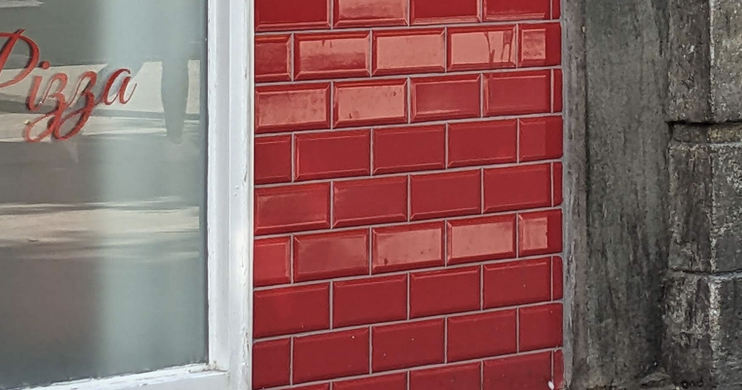
the world is the thing that makes the poem
(If anyone reading this is in Dublin this week: I will be taking part in the really exciting Tsundoku Artists’ Books Fair at the Printworks at Dublin Castle. It runs Thursday 13 through Sunday 16 July, 10-5, and there is a great program of events as well—many of which are free.)
A while back I wrote about what I’ve been thinking of as public speech—the speech that transforms privatized places into public ones, or reminds us that our public spaces are truly ours. (That essay is here.) I habitually collect examples of this kind of speech as I walk through towns, cities, even rural places. Everywhere that people are, I find us marking the walls, streets, windows, even trees, rocks, sand with what we long to or need to say.
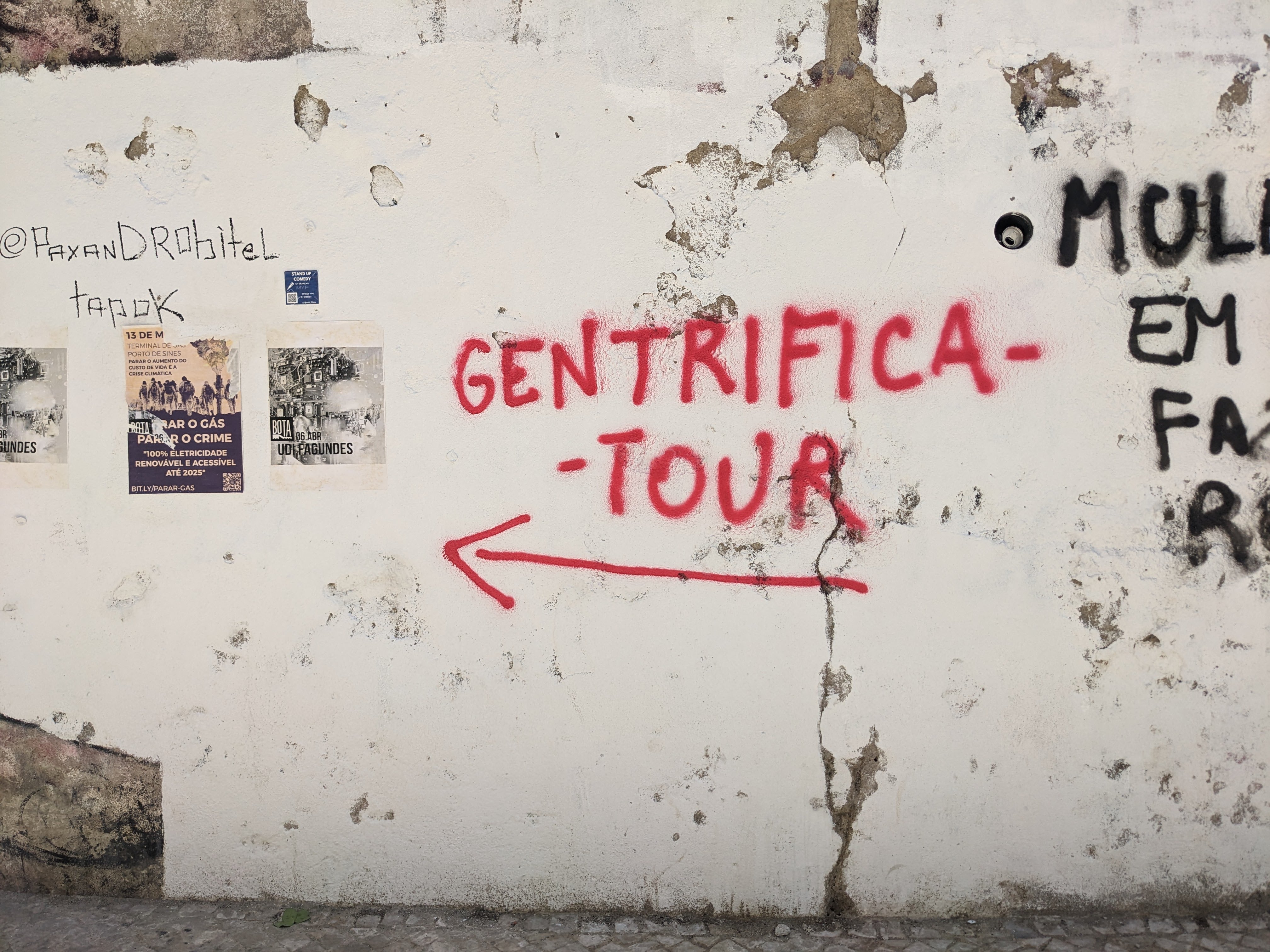
As I walk I also watch out for another kind of ‘public speech’: uses of language that are surprising, that force me to see words and grammar and idiom and cliché in new ways, adding to the fractal or prismatic way that language works. This is fundamental to the making of poems in my experience, the ability to hold multiple facets of meaning in view. Play is invention, not sticking to the rules or habits just because they’re there. And invention leads me to more possibilities for meaning. I like the way much of this kind of publicly presented language says yes in advance to what (else) might be possible in language.
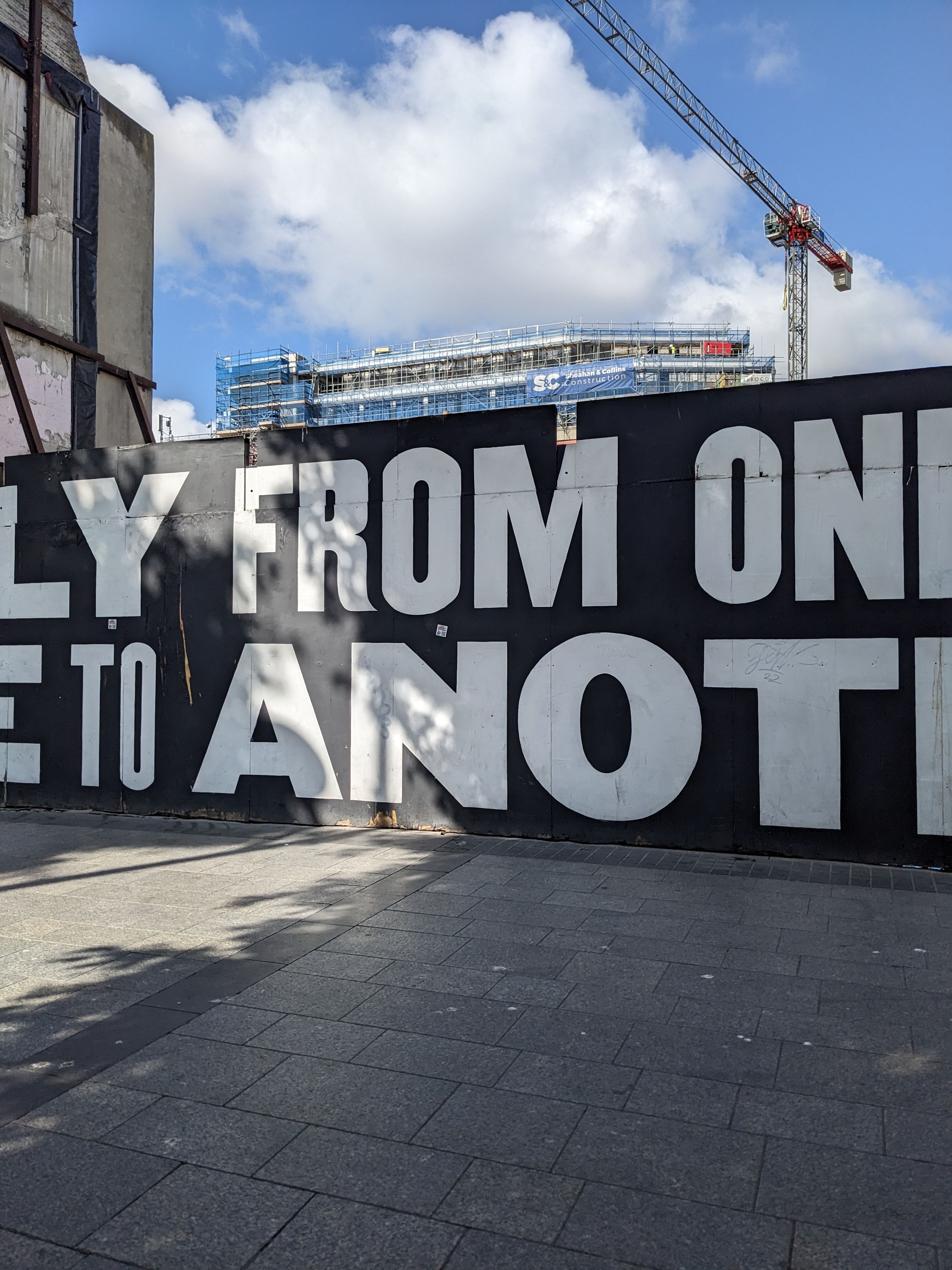
Reading text that appears in public with one eye closed or against the grain of the normal, I am offered new readings and new possibilities for all my writing. “But it doesn’t mean that!”, my most literal interlocutor may cry. Meaning isn’t something that’s just there, though—is it? I think meaning is the something that arises from the way the things that words are interact with one another. Not the imported assumptions that sometimes stick themselves between the reader and the page (or the person and the world), but the friction of the letters arranged into words, words next to other words, punctuation marks, and the deep, moving grammar of both sentence and world. Words are things. Letters are things. Language is material, has being. It’s not a scrim behind which the idea moves, as if idea is the real thing and language its ventriloquist’s doll.
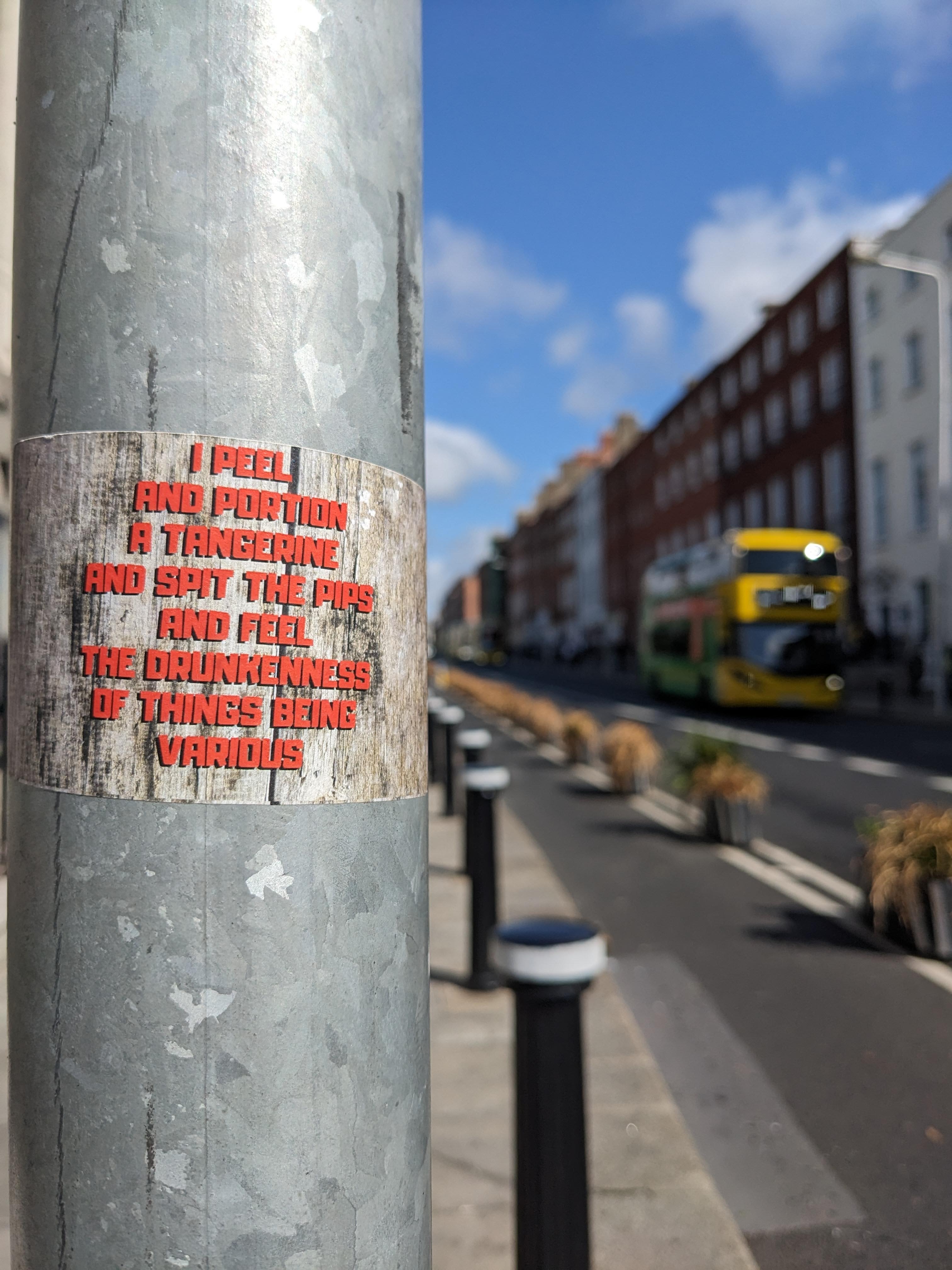
It is a special thrill to find language that is poetry (in this case, part of Louis MacNeice’s poem “Snow,” one of my favorites in the world, on a sign pole in central Dublin) taken from its context and thrown against the world like this. I love that some people will walk past without seeing it; some people may read it and have it enter their bloodstream totally decontextualized (no knowledge of the poem) only to encounter the poem later in life or not at all; some people will know it. It is like a subtle hat-tip to find something like this. Hello. We are here.
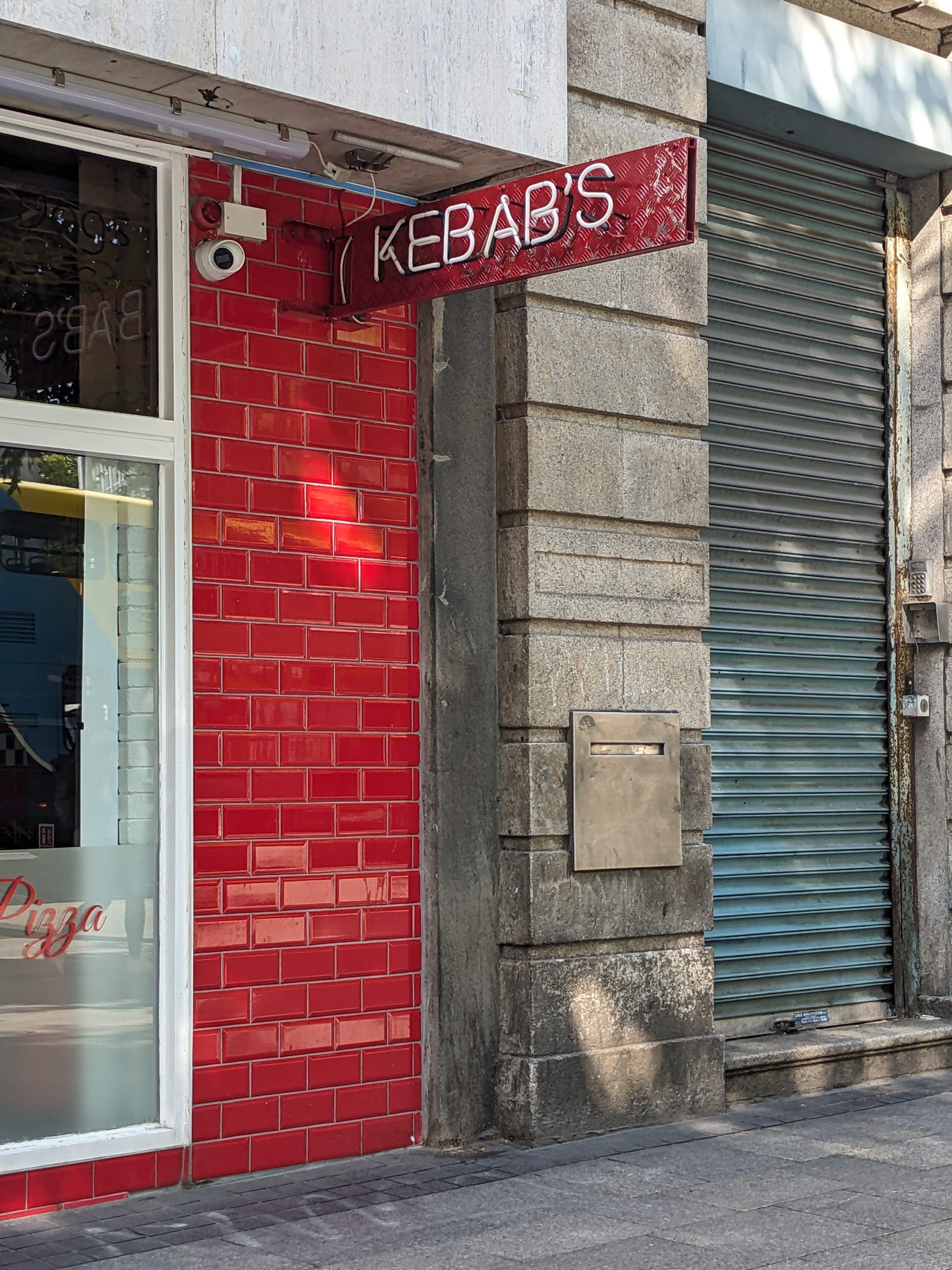
This one is simply beautiful to look at (the red/red, the neon tubing), and so clearly shows me that Word = Thing. I love the apostrophe there. What belongs to the KEBAB? You, probably. Me. All of us. All of us already in the thrall of the word.
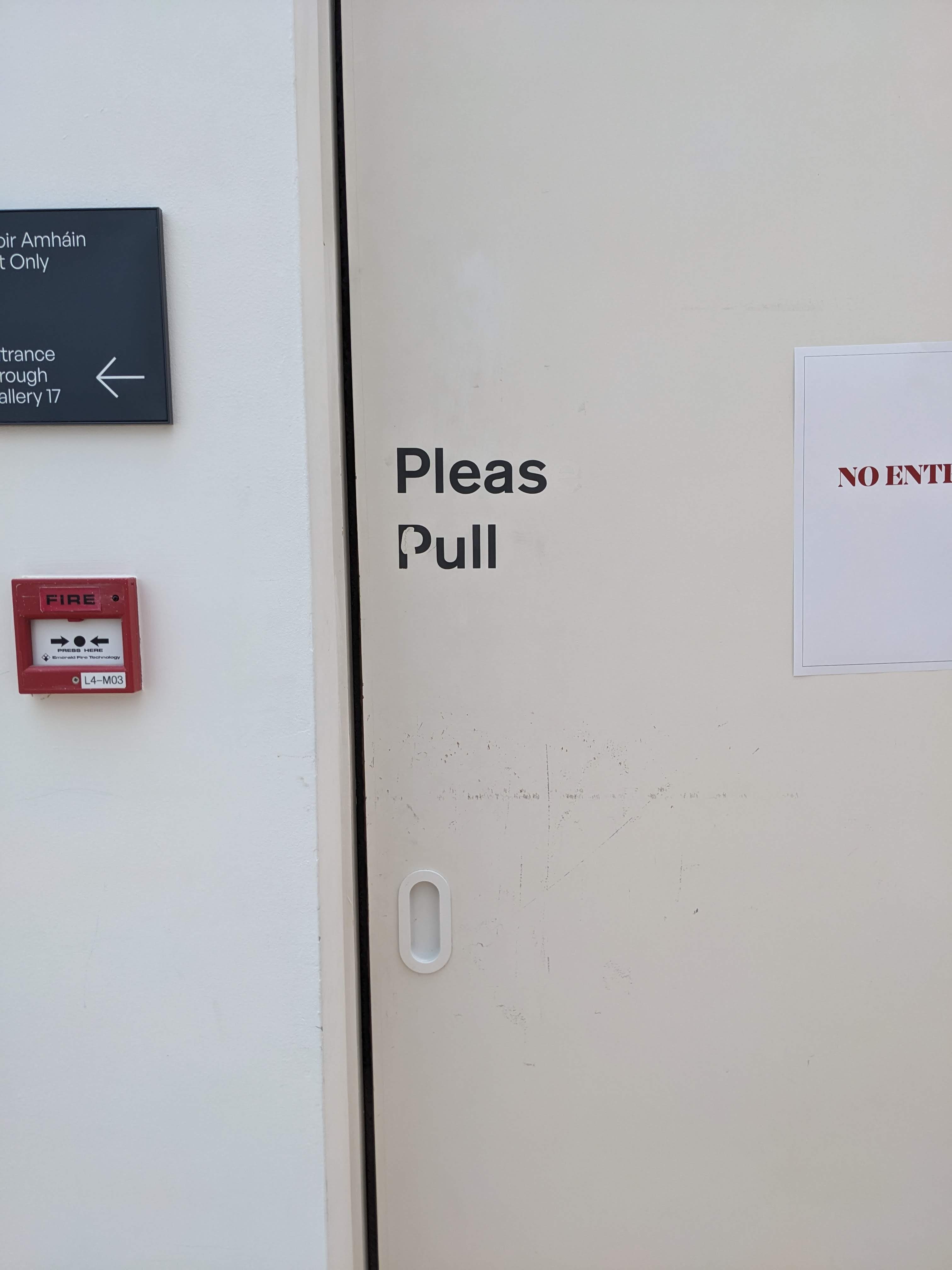
And this one. The longer I’ve written the more I have said to myself, what happens it I don’t see through a corrective lens—one that wants to adhere to some standard I imagine or have learned—but instead try to see what is? What happens if I take the world at face value, the text in front of me as complete, the person in front of me as real and whole just as they are? What if I refuse to gloss over ‘error’ with the corrective fluid of assuming I know where we’re going? Pleas pull. Well. That’s actually kind of what they do.
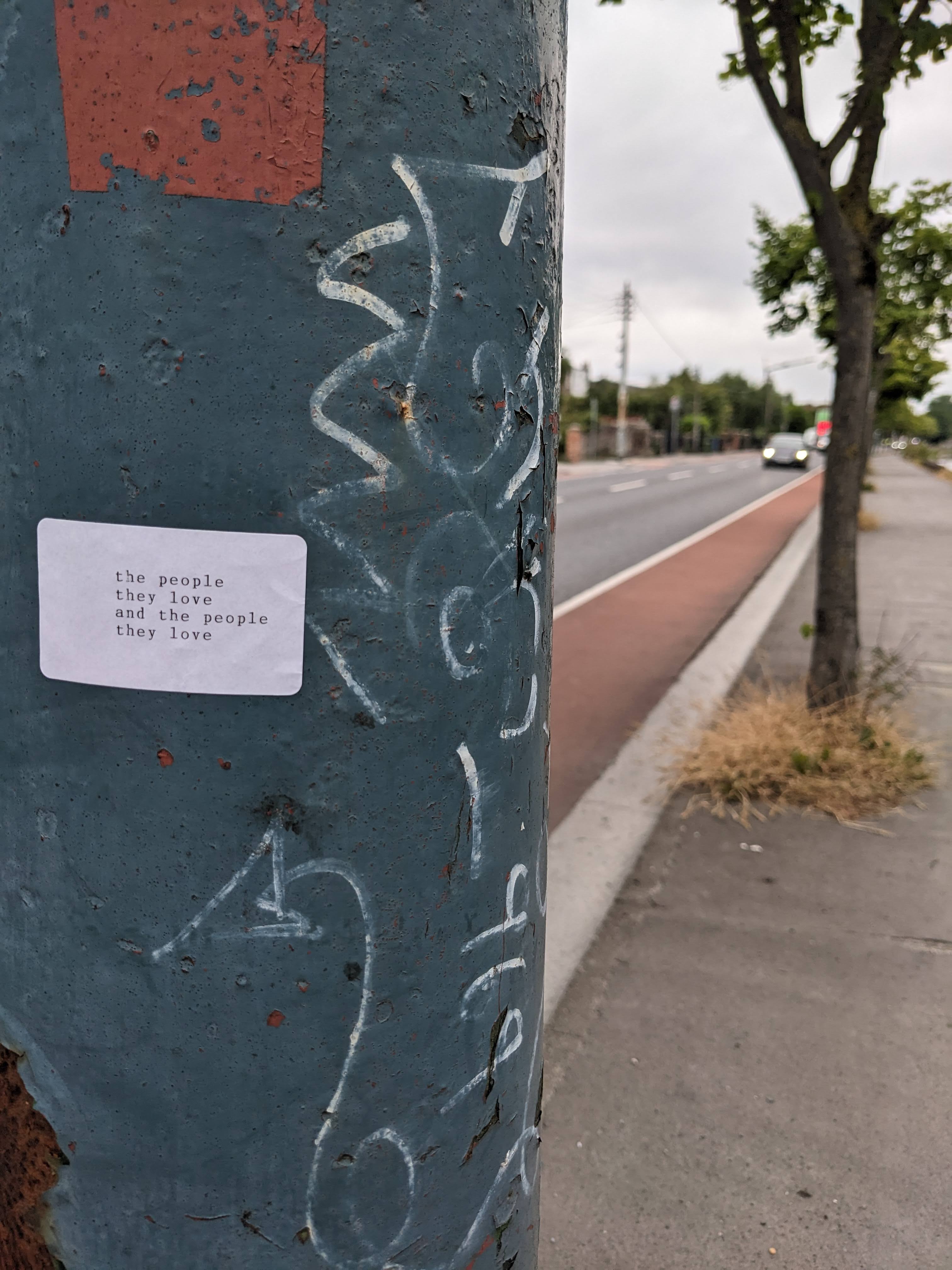
Lots of stickers around that have far-right, fascist, or advertising language on them. I like to type on stickers and paste them over any far-right QR codes I can’t scrape off. I like to change the face of the world a little: remove those fascist and anti-immigrant stickers with my fingernails. Put some other language in their place. And anyone can do this. (I’ve been doing it since high school, when my alter-ego, and early email address, was Sticker Avenger.) In some places through the city I see stickers that other people have written on or had printed, with hopeful or anxious phrases on them. As the seasons pass some parts fall away, and the language is transformed. I love this. The place for the poem is everywhere, and the language of the poem is all of our language—its many kinds, including the most ordinary and the most fragmented—and the poem belongs to all of us, and the where of it is the world.
Thanks for reading.