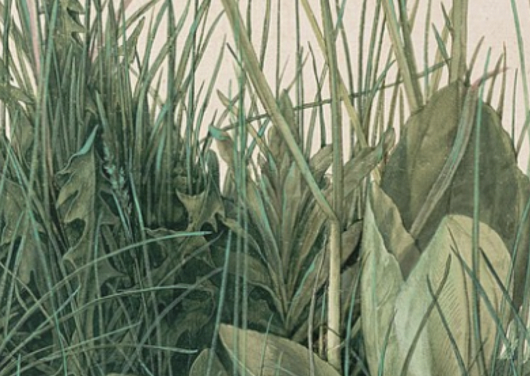
what do I reverence?
Two weeks ago I wrote about Dürer’s drawing/watercolor called The Great Piece of Turf . This is an image I love for how it reminds me that patient, careful observation and description will render evocative, resonant results (including the ‘result’ of a thoughtful life, made of the materials of living). I’m returning to it today to think about what it offers me as a writer—but (and) also as a human, being in the world with others and my own mind. There’s an exercise at the end. Both the essay and the exercise below are adapted and revised from a talk given as part of the Little Grassy Literary Festival at Southern Illinois University in 2022. You’ll need about thirty minutes for the exercise, if you choose to do it.
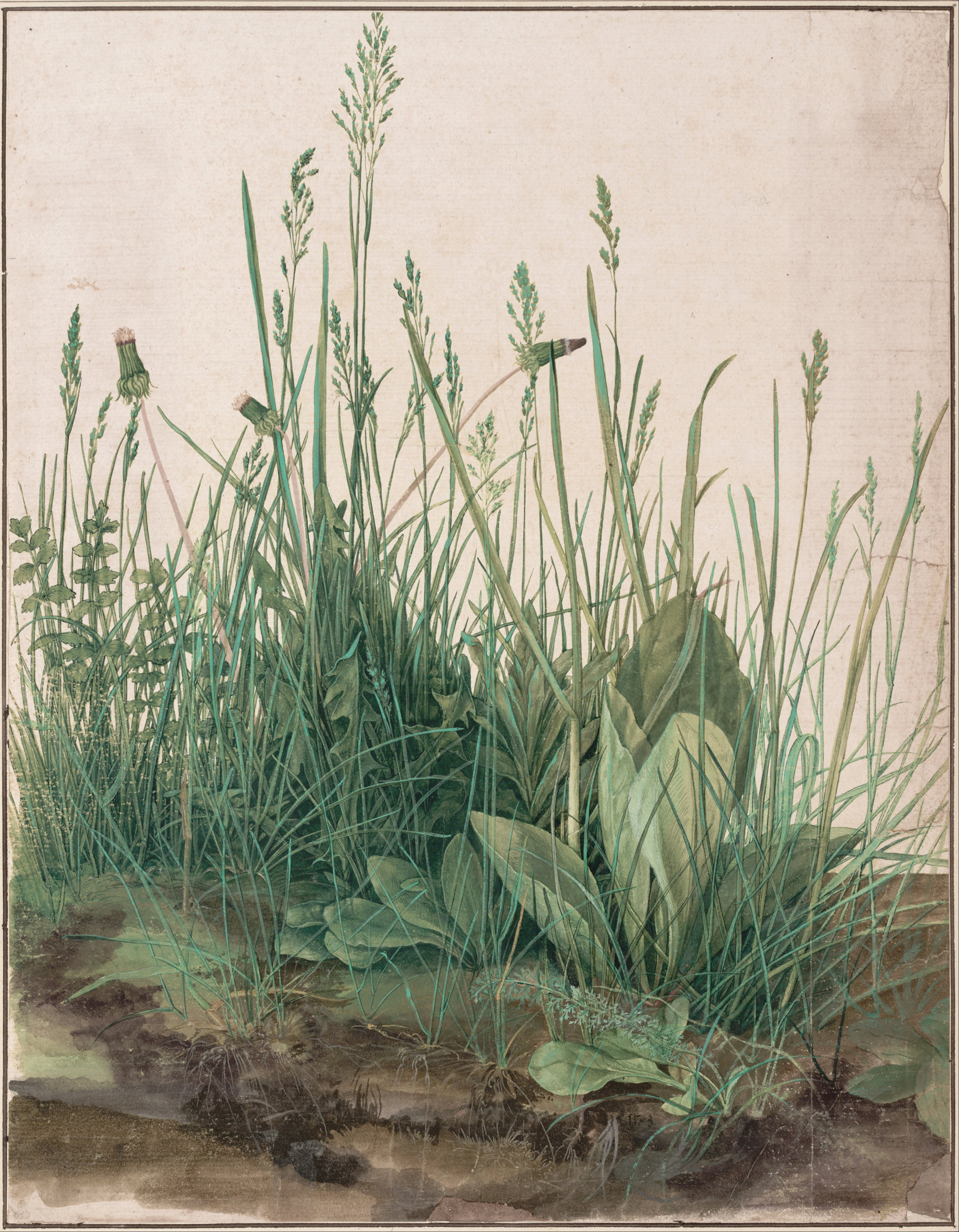
The Great Piece of Turf pushes me toward the world. It insists on the importance of sustained and slow attention to ordinary things that are immediately to hand, and it does this in a medium—watercolor—that takes time and yields a unique object. In some ways this seems to be unlike my everyday life, insofar as my everyday life appears to be made of repetitions: the same walks, the same chores, the ongoing relations with the people around me. In fact, though, the medium in which Dürer renders these ordinary plants reminds me that the dailyness of the life I live, sometimes without looking at it, is in fact the only thing. It is the basis of artmaking. That ordinariness and repetitiveness is what life is.
In my own life, I know that much conspires to turn my gaze inward, or awayward, into rumination or avoidance. I am often tired, as you may also be. I am living through a pandemic and the accelerating death-drive of the past fifteen years. The world is full of grief. The deaths of species, irrevocable changes to ecosystems, murder in slow motion and fast motion committed by the state, depersoning: all of these are painful, grievous. Avoidance is easy in the short term, and there is a lot out there that makes it easier. Some people can make a lot of money from my avoidance of pain, and those people have created many on-ramps to avoidance. The on-ramps are easy to access and addictive.
It takes discipline to turn back to the world and be with it patiently, as it is. I have to do it again and again, reminding myself as I do, in the doing, that there is nothing more important than this, nothing better than this I could be doing. It helps to have accompaniment in that. In The Great Piece of Turf I see the result of an artist’s sustained looking at the most insignificant beings in his environment, and I am reminded to do the same. Go. Look. Look at what’s at your feet or at your fingertips.
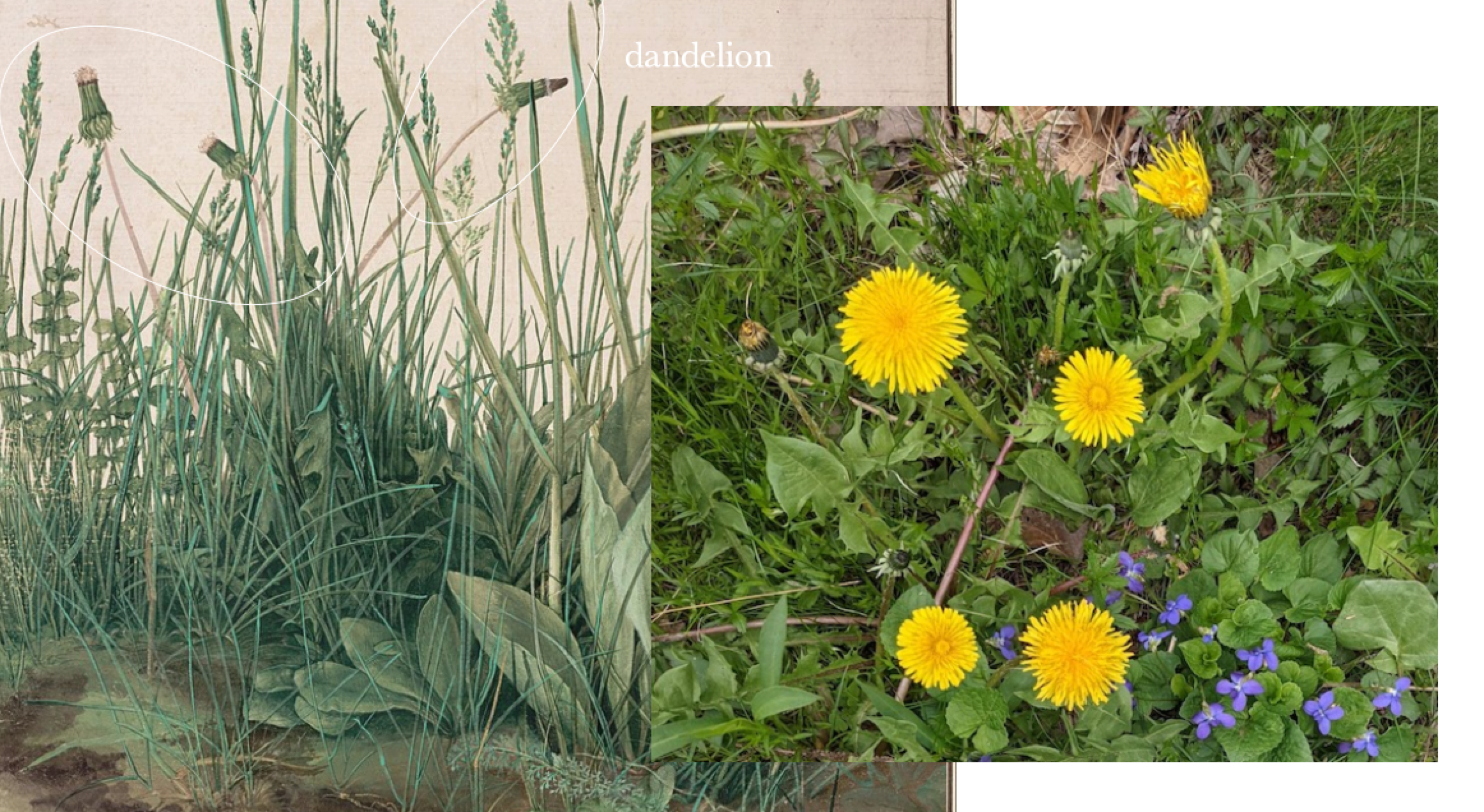
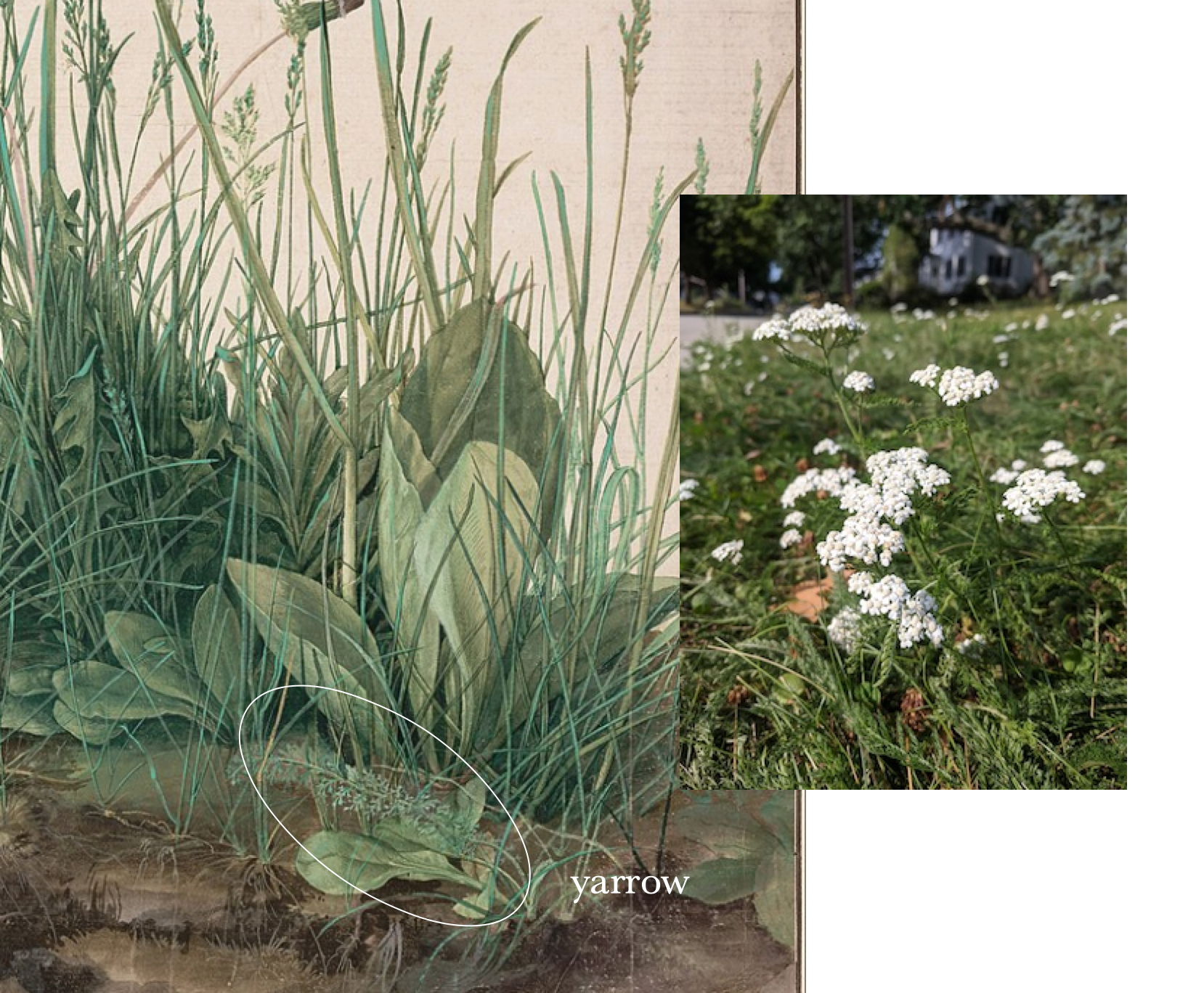
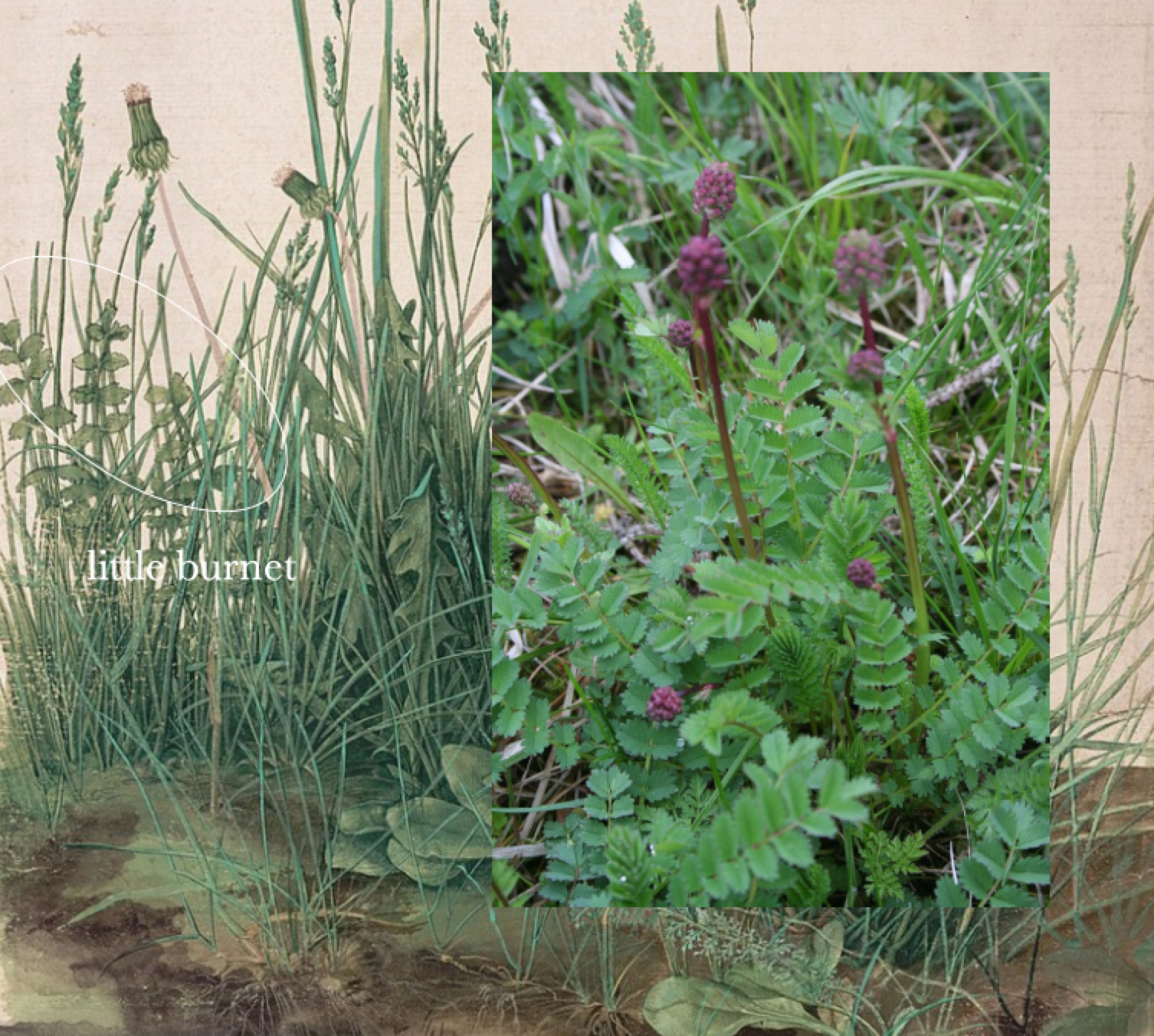
Many of the beings in Dürer’s drawing are known to me: I can identify them by their names. Their names may be so familiar that they may seem almost not to be a kind of meaning: or at least not the kind of meaning that the heavy head of the melancholic angel is. They do not point toward something hidden—accessed through whatever locked gate and with whatever obscure key. They point to themselves, each other, and us. They say, we are here. And you are, too.
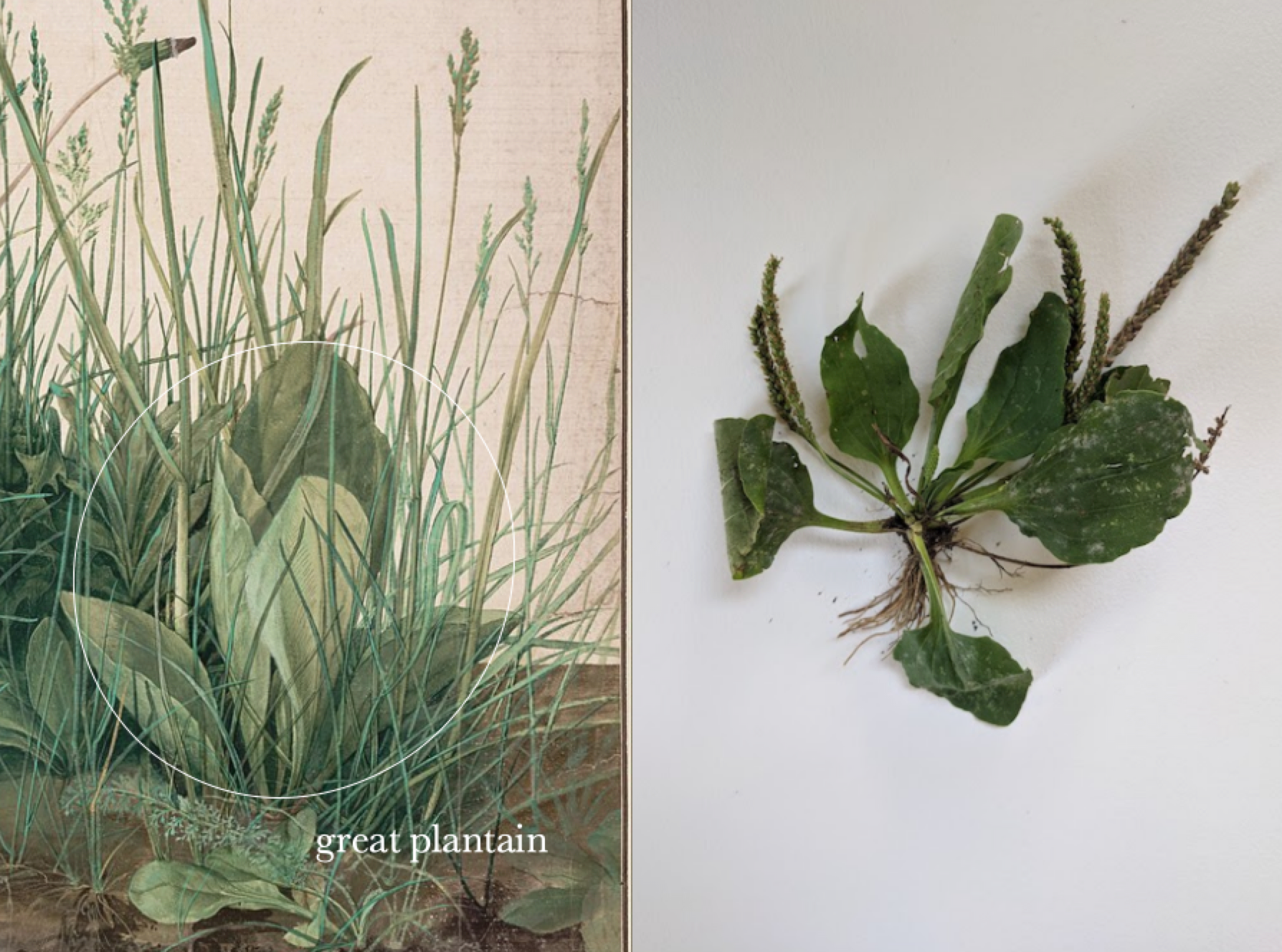
Knowing my weeds is about knowing the ground I stand on even as it shifts: discerning first principles, finding form and sensing what it can do to me, practicing careful attention to what is rather than what I would prefer or project there to be, being grounded in the places where I live. Knowing my weeds is also a commitment to going out—away from the screen—to encounter that world-as-it-is. This kind of knowing is the opposite of the avoidance of pain. It sometimes brings me into contact with cutting losses. But those losses would be there in any case. I want to be alive to them, and to the beauty and ordinariness of my life, and these lives.
Dürer’s weeds—the time they represent (they must have taken so many hours of looking) as well as the living weeds his drawn ones index—offer me a chance to rotate my perspective as well as to rotate the object of my perception. They give me questions rather than pronouncements, and teach me to ask how I know what I know. Often the answer is, I know what I know by hours of looking at and being-with others. So I had better do that with discernment. I had better learn to see my seeing, even of the most everyday things. Especially of those—because the root, in my experience, of being able to dispense with something (of being able not to mourn its loss) is to stop seeing it as what is in fact is: a complex phenomenon, always already involved in my life. Nothing is beneath notice. Everything touches.
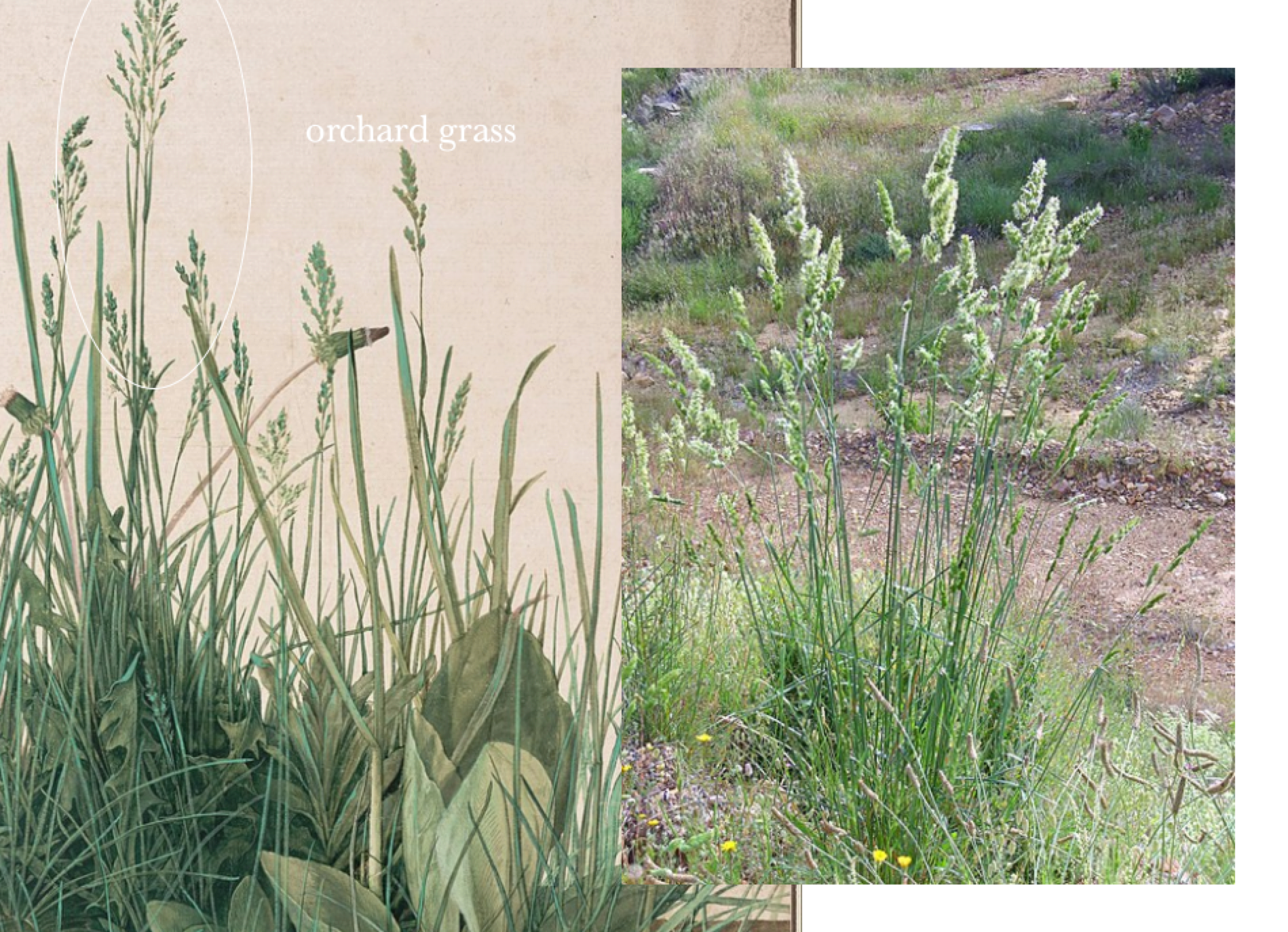
In this transient world, the practice of attending to what is might be a way to spend one’s entire life. (Isn’t that science, music, art, poetry, philosophy?) Sustained, patient, careful attention reveals the complexity of the world—a complexity that is always further unfolding. Dürer’s image of weeds reminds me that what is most ordinary is worth caring about. In fact, the reverence for ordinary life ends up meaning a reverence for all the things I encounter in those repetitive motions of walk, work, housekeeping, (broad) family life. This echoes out into how I use my time, how I (try to) conduct myself with other people, how I act in public and private, how I think about commerce and garbage and use and ownership.
Dürer’s image also reminds me that whatever I reverence will show up in my work. My ideas, beliefs, values show up in my work and through my perceptions (the how and the what). This means that I don’t need to worry about the ‘artful’ subject: I don’t need to try to find something that is worth making art “about”. I don’t need to shift away from the ‘minor’ to find the ‘major’. I need—and this is the hardest work in part because it doesn’t announce itself as important (and much in my world conspires to paint it as unimportant)—to pay attention to what is here, with me, now, to try to see it through my hands, eyes, brain, body. I need to do this, and I need to repeat it over and over, for my whole life.
In his attention to what is small, ordinary, common, and easily passed by, Dürer shows me the value he must have assigned to exactly such ordinary things as weeds and grasses. That he took care to render them with skill and imagination shows me that these plants taught him how to see them; this in turn shows me his willingness to be humble, to be close to the ground, and to learn from beings who were, in the cosmology of his time and place, certainly less than human beings. His care with these everyday plants shows me how the subject of artmaking is always already at hand, and reminds us that our attention to exactly what is at hand—be that an array of plants or the text of a Supreme Court decision—will remind us that here, yes, even here is the place to stop, look, and discern what it is that we are perceiving. We do not have to go far away for meaning. We can look at the world for a long time and try to understand what we are perceiving. We can make art—or lives—from that.
The following is an exercise. You’ll need about thirty minutes for it. In the end, the guidelines are less important than what you do with it; you can’t do it wrong.
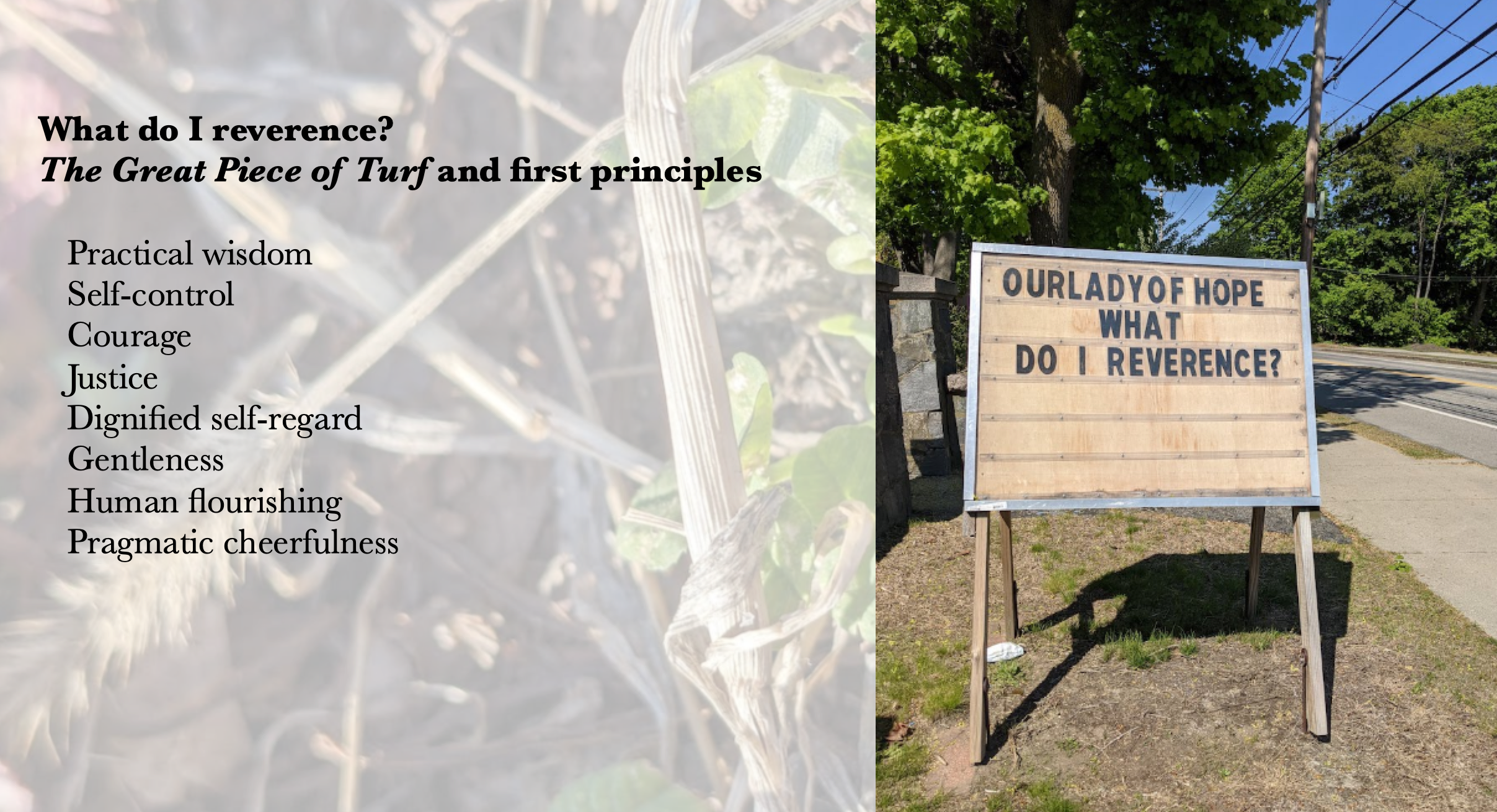
This is an exercise in sustained attention to some value you hold dear and simultaneous sustained attention to a very ordinary, probably not very lofty, fellow being. It is the aim of this exercise to cause an interlapping between the way you feel when you think about an important value and the fact/process of looking at a very familiar plant.
Set a timer for about eight minutes and make a list. Try to be as clear and precise as you can, and once you have your list of values or virtues—this is the hard part—try to discern the difference between what you actually value, in action, and what you aspire to value. When you come across some aspirational values, put those in a separate list. You can revisit them in the future.
Choose one value or virtue that is particularly important to you and note that.
Then, with your virtue/value in mind, take your phone and go outside (you may want to use an app like iNaturalist to identify plants). Set a timer for ten minutes and get close to the ground. Don’t worry if this feels a bit silly. No one will care, no one is looking. Walk around if you can. You need to find those tiniest plants. The weeds and wildflowers. Things that you might pass right by, even on foot. Look in the cracks, near walls, between the curb and the grass…. Take photographs of each plant. When the timer rings, return to where you can write.
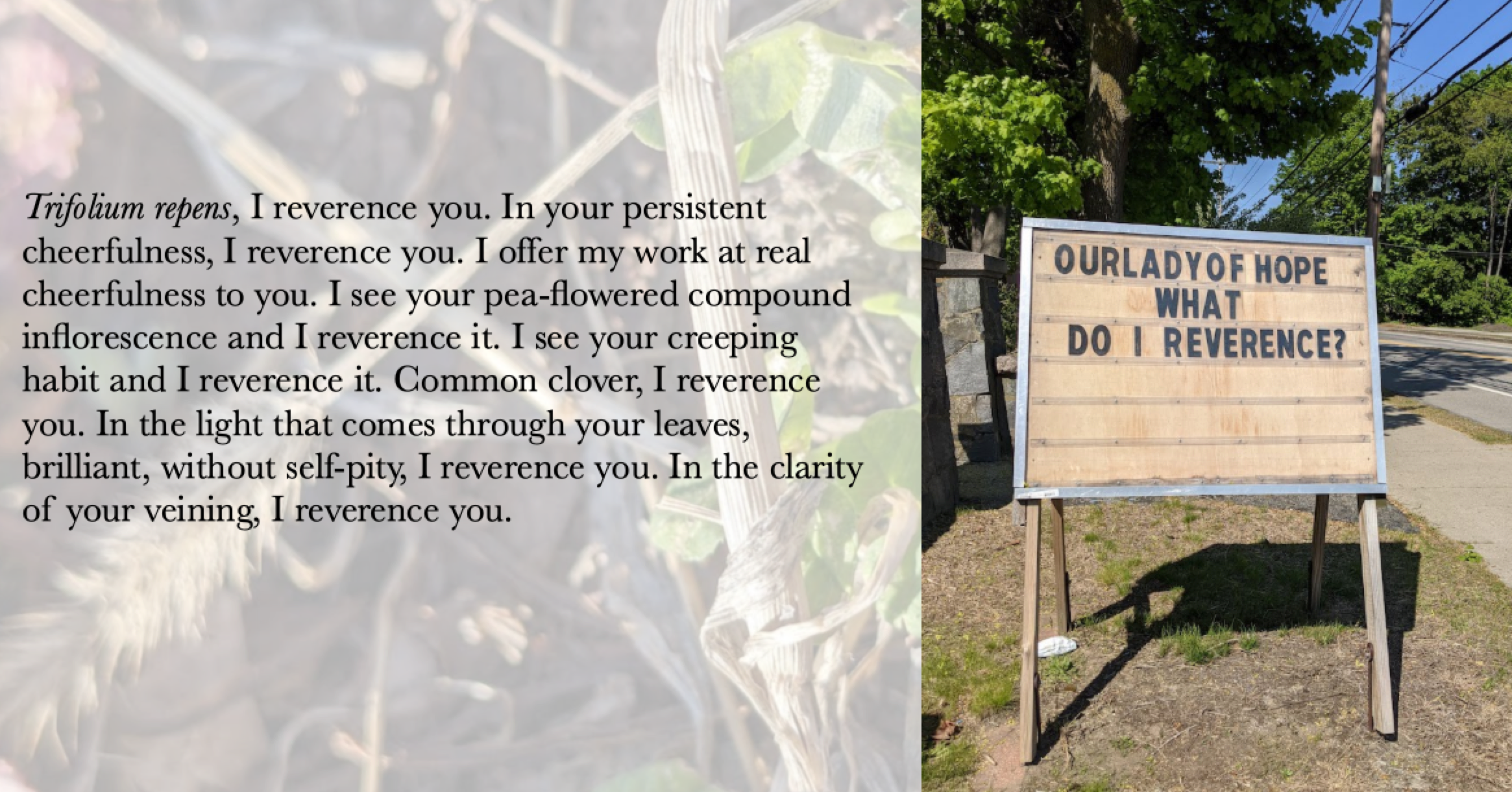
Set a timer for ten minutes. Choose one or two specimens you photographed and identify them by name(s). Beginning with any names you know the plant by, address it; for example, [Plant], I reverence you. I offer you my [value]. Give the plant(s) your observational care. Describe component parts, their relations, their shapes, their colors. Note size, leaf and flower forms. Identify the place where the plant was found and the time of day. At each moment of observation, offer the plant reverence and rededicate your virtue to it. Allow yourself to pay attention to the plant in as many ways as possible, connecting the positive virtue or value you identified with the act of looking at the plant. Continue without stopping, repeating phrases as desired, until the time has ended.
Thank you for reading—thank you for being—here.