a case for being Ebenezer Scrooge
This is the final of three essays about Christmas, more or less. The others are here (with some information about how I’m approaching these) and here. Thank you for reading!
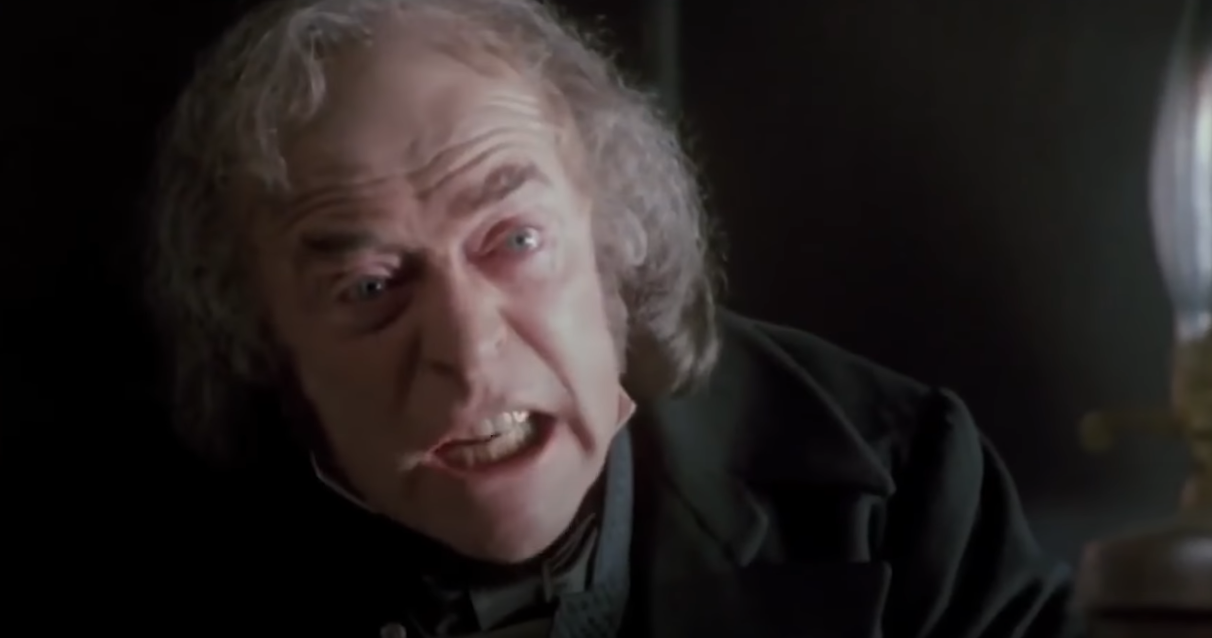
The figure of Ebenezer Scrooge is so familiar that to name him is to call up not only a sense of his recent representations (Jim Carey’s zaniness, Michael Caine’s…caineyness; Muppets, etc.) but a whole, seemingly three-dimensional, almost pre-formed understanding of what he is and what he means. Scrooge: the miser turned morality tale! Scrooge: the Victorian’s Victorian! Scrooge: the humbug hauntee! etc. We already know, when he comes up as an image or an allusion, how to understand him. He’s a lesson in getting more connected, maybe working a little less. Being nicer to our underlings. Buying a big turkey for some poor family, how nice, what a turnaround. He’s Charles Dickens’ Meaning-Of-Christmas-communiqué. And he’s the Bad Guy, for crying out loud, with the requisite change of heart right at the end of things. So in any case, as his cranky visage flashes across the laptop screen, we can think, we have seen the parsimonious mortgage agent, and he ain’t us.
But he is, of course. That’s Dickens’ point.
I find A Christmas Carol surprisingly moving. Surprising: because I kind of hate public displays of affectation around Christmas, hate the bought-and-sold, settled and mystery-neutering symbolism, hate the way a really strange—like messed-up, brain-scramblingly, systems-of-dominance-destroyingly strange—event gets remade by christocapitalism into something palatable and numbing, in part through the distribution of things like this weird little novel from the 19th century that are smoothed and smoothed until they are so familiar that we can forget how weird, how compass-breaking (thanks, Fanny Howe), they are—and then we can go back to sleep to dream about battery-operated toy war machines. But, like the song I wrote about last week, the older I’ve gotten, the more A Christmas Carol speaks to me, even freaks me out a little.
Because it’s not, in the end, (though I love the Muppets version) a heartwarming story about Kermit the Frog-as-Bob Cratchit teaching a grump to love against the odds. It is a story about grief and longing and loneliness and getting old, and how the heart easily calcifies, and how, despite the ease with which we may become brittle and closed up in our private palaces bolstered by our stacks of cash, from time to time we may nevertheless encounter, be confronted by, the world in all its immediacy and transience and preciousness—and be broken open by that world. It is a story about what is still possible. A Christmas Carol is a story about the cracks in a person like Scrooge, which is to say a person like me, and about events that, by their violent strangeness may, if we allow ourselves to see them, if we let ourselves be moved by them, force us toward a life that’s a little less shut-up, a little less afraid, a little less self-centered and a little more committed (thanks, James Baldwin). It’s a story about our ordinary lives inside of racial capitalism (yes, Dickens, too, lived inside this structure—and knew it, too, however imperfect we might find his knowledge now). It’s a story about how to pay attention when we are pierced by the world of living relation.
The point of the story, I think, is to understand in a nonredemptive way—by which I mean a way that is not structured by the (wink, nudge) understanding-in-advance that we are the good ones and that, for all we may be grouchy and unkind and willfully ignorant and mean, our hearts will turn out to be flesh and not stone—that we are Scrooge. Not the Scrooge of the morning after the third ghost has come and gone; not the Scrooge who “knew how to keep Christmas well, if any man alive possessed the knowledge”: no, we have to be, to really know we are, the Scrooge of page one, the “tight-fisted hand at the grindstone, Scrooge! a squeezing, wrenching, grasping, scraping, clutching, covetous, old sinner”. Because, after all—well, I should speak in the first-person singular here—I often am.
What does it profit me to consider myself Ebenezer Scrooge? More than a reflection on my own parsimony (which it provokes) and more than an opportunity for self-flagellation (which, if I were given to this, it might be), if I am Scrooge I am given, again and again, the possibility of change. It’s not a certainty that I will change. I know this every time I try. And there are so many reasons I might not: I have been formed in a culture of resource hoarding, competition, selfishness, and disciplinary and enclosing violence on every scale, from the police to the corporation to the military to the plastics company (thank you for the link, Guérin) and back again. It is easy to ignore my relation with everything, my situation in regimes of technology that are not neutral, that are not limited to my direct perception, and that put me in relation to everything in the world, from rare-earth mineral mines to histories of education.
But nevertheless, the possibility of being moved, being pierced, being changed by the forces that compel me to see just how connected to others I am is there. When Dickens writes that Scrooge was the only mourner at his business partner’s funeral but was nevertheless “an excellent man of business on the very day […] and solemnised [Marley’s funeral] with an undoubted bargain”, he’s writing about the way I, too, walk around half asleep, or more than half; he is talking about the way capitalism makes it so easy to forget that we are living. He’s writing about the way I, too, grow a thick chitinous layer of exhaustion or resentment or loneliness or anger or simple haste, and habitually forget that I am with you, where the you really means everyone. When I see myself in Scrooge, I mostly feel awe at the reminder: that I can be otherwise. That the world is right there, outside the door, and I can join it, or try to, one day at a time.
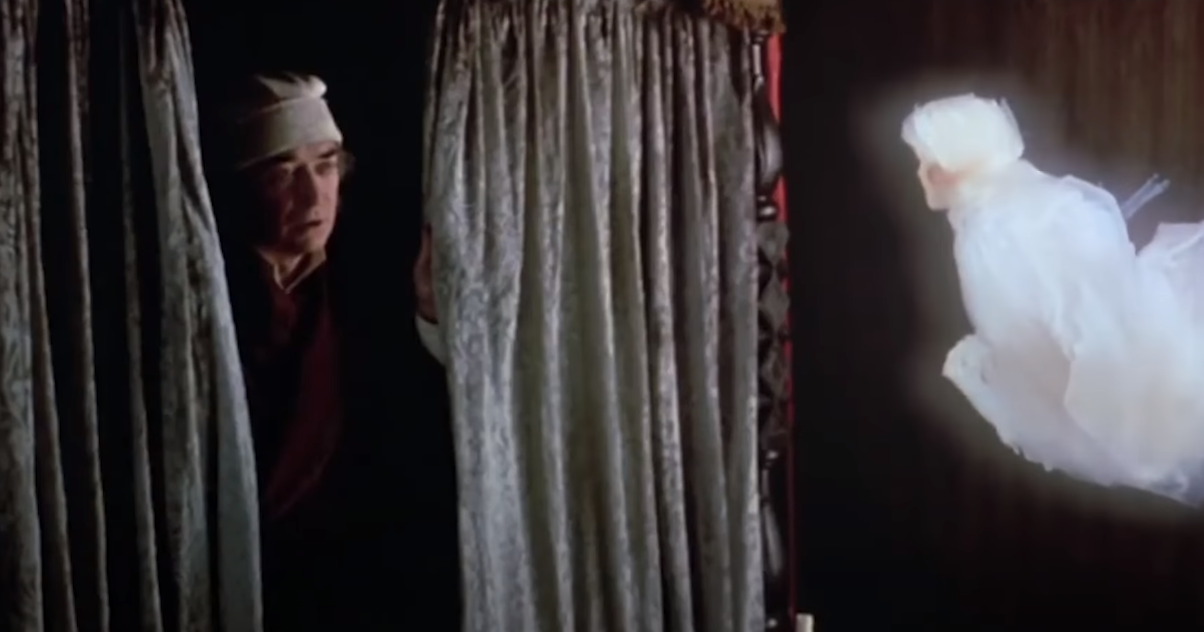
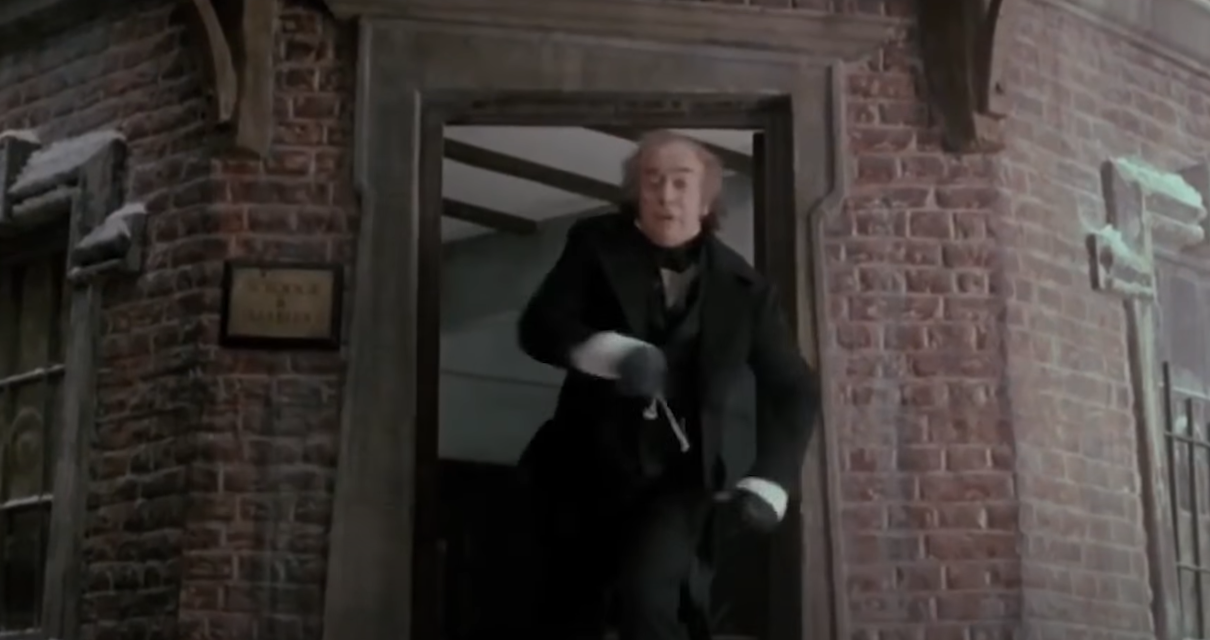
What A Christmas Carol asks is, what if every day I could wake up, throw open the sash and call to the guy selling papers in the street, you there! What day is it? only for him to call back, why, it’s Christmas, sir!? What if, that is, I were able not only to realize but to live the fact that I have woken up and it is not too late: that there is still time: that the people I didn’t yet know how to care for, or didn’t yet think to feed are just there, around the corner or at the table, waiting? What A Christmas Carol suggests to me is that I could, after years of loneliness and cold, years of becoming crabbed around my habits, open the door to find the street filled with the brilliance of snow. Look, it says. Just when you thought the story was ending, you can find out you are so much less alone than you fear (than it feels).
We are not alone—we are intricately together, in this all-living world. Our lives are made for one another. We are made to make them together. “Thank you, Spirits. Thank you fifty times.” Thank you, boy in the street, with all your “might of wonder”. Thank you, world, and your “clear, bright, jovial, stirring, cold; cold, piping for the blood to dance to; Golden sunlight; Heavenly sky; sweet fresh air”. One more day. All of us. Open the door. There it is.
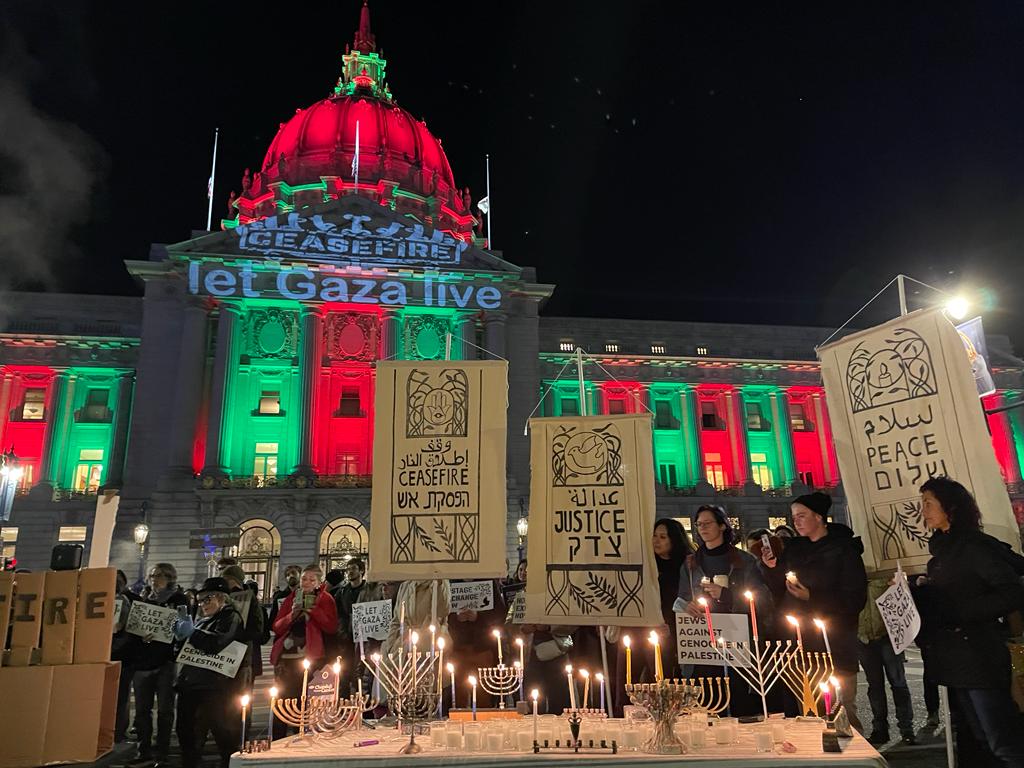
Happy end of this year, happy beginning to the next. I’ll be back next week with a miscellany to see 2023 out. Peace on earth (which is the presence of justice); comfort and joy, comfort and joy. Study war no more, the holiest song of all. And free Palestine.
Comments
2 responses to “you there, boy—what day is it?”
I am equally intrigued by A Christmas Carol and thank you for this piece.
thank you for reading, Beth!