Category: looking

  • to all the Junes I've ever known

    to all the Junes I've ever known

    the utopia of the roses

    First things first: would you like to read a long essay on the poetic line (and other lines, from which poems’ lines cannot so easily be disambiguated)? You would? Here it is. I worked a long time on this and so I am using it to teach myself how to post and repost links to the same piece of work until at least 1% of the people I know have clicked it.

    A little excerpt: “I wanted to think about something I often said in my classes: that form was brought to us by our canons and our peers, but that it also came from the world; that we could go to the world to find it and to think about it, and that describing the forms the world gave us, sometimes by talking about them and sometimes by making poems in them, could teach us about formal meaning. In fact, I realized, what I was trying to say was that formal meaning-making in prosodic terms was not far at all from the kinds of formal meanings we read in the world every day.” Here’s the link one more time. Thanks to all at Annulet for making the lectures and this publication possible, and to Andrea Beltran for the nomination.

    You can subscribe if you like. There are two more essays to come on Bewilderment. Click the green button below if you’d like to receive information about Abundant Number.


    If you are interested in creative writing teaching methods, you might like to come to an online discussion by the winner, runner-up (uh, that’s me), and honorable mention winner of the Bechtel Prize, given yearly for essays that demonstrate innovation in writing pedagogy. July 17, 2 p.m. US Eastern, free. Register here.


    Finally, some other things you may be interested in:

    • Jeff VanderMeer, “Water Lives Here”, a talk given at the Key West Literary Seminar about imagination, fiction, responsibility, landscape, belonging, water. Really, really good.

    • “The Antiquity to Alt-Right Pipeline”.

    • Low-Tech Magazine: “Why the Office Needs a Typewriter Revolution” (In addition to everything else, I find using a typewriter is pleasurable in a way using a laptop is not. I can also understand now why office workers had secretaries. Typing is hard work!).
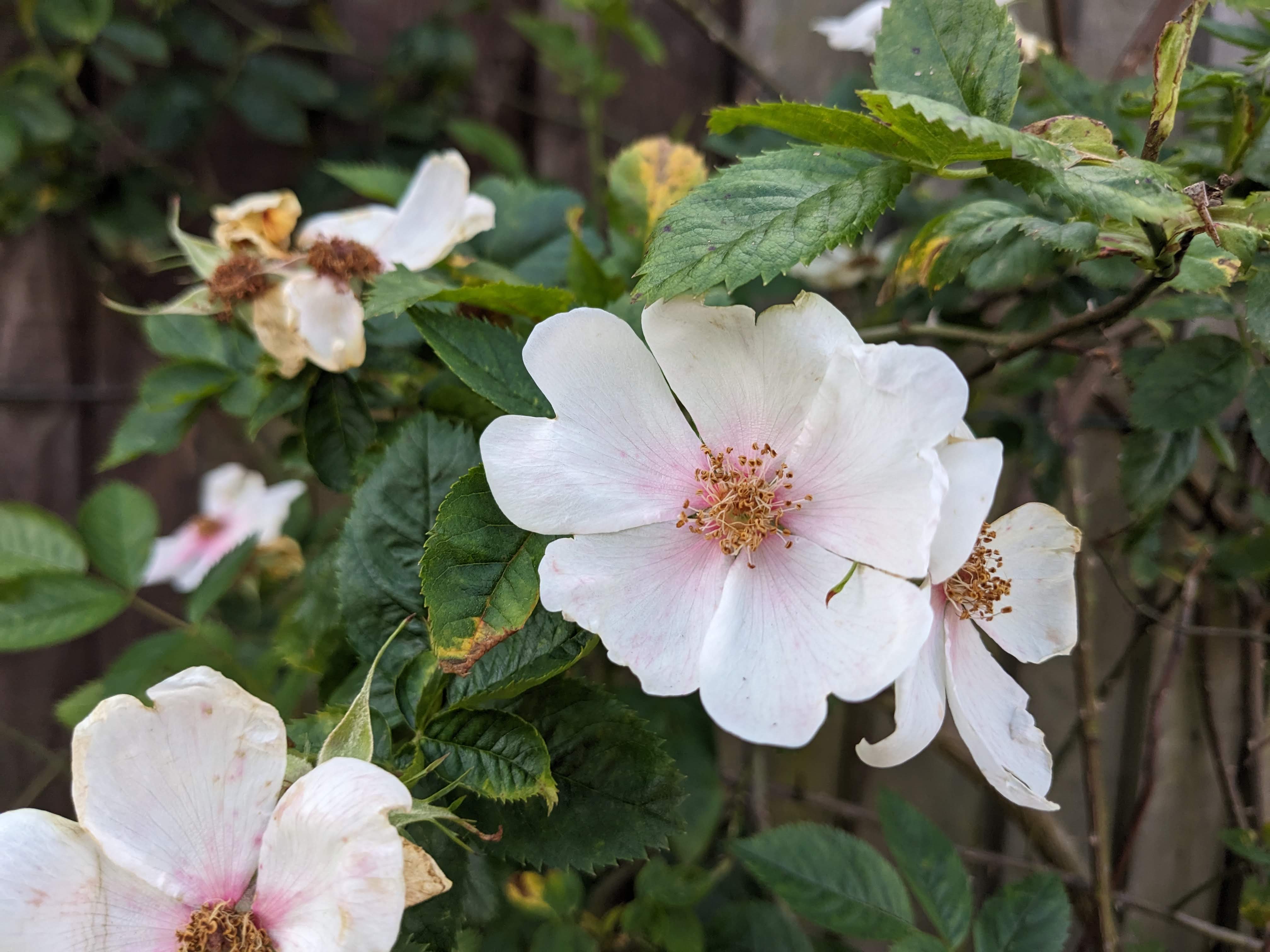

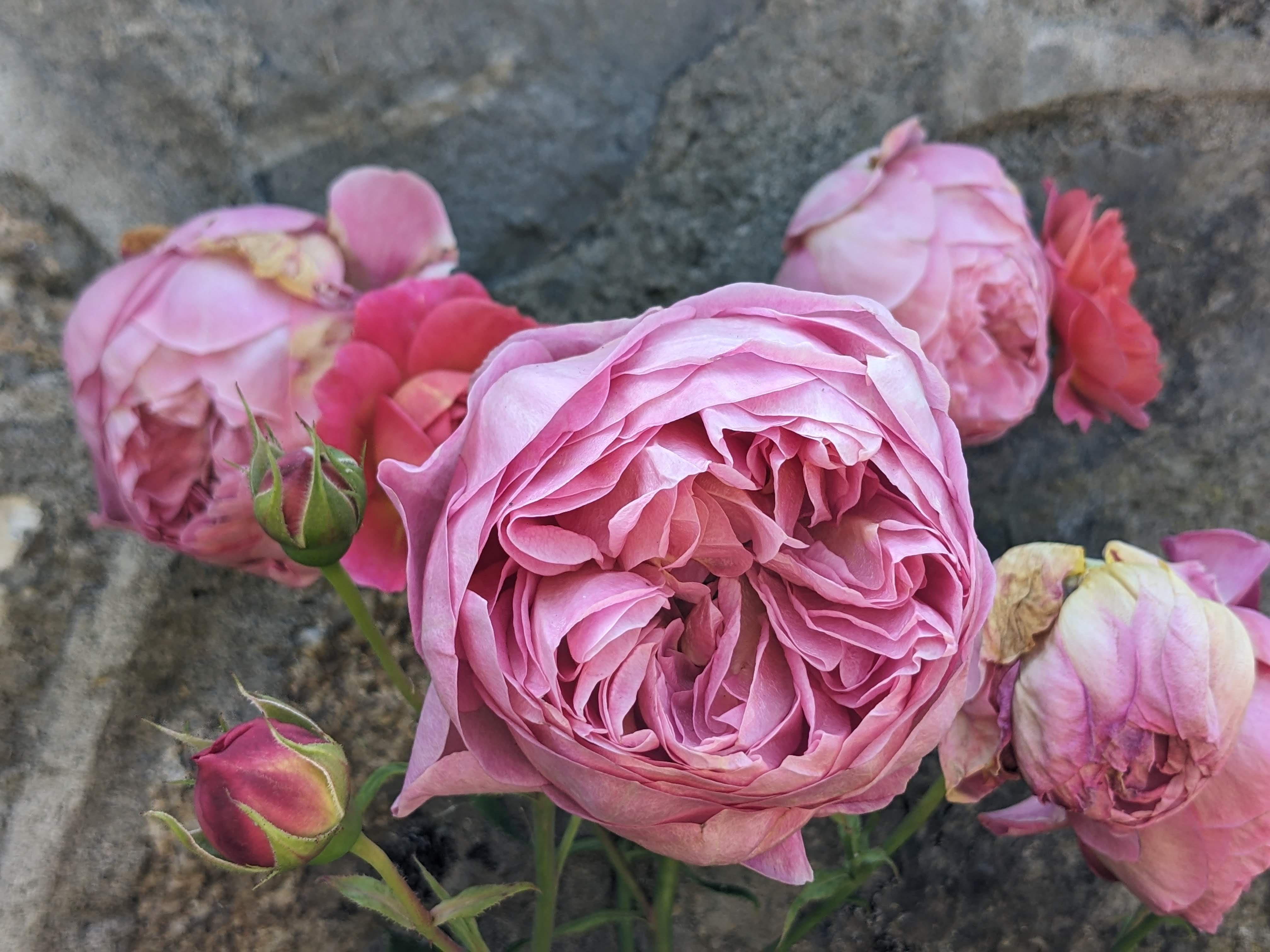
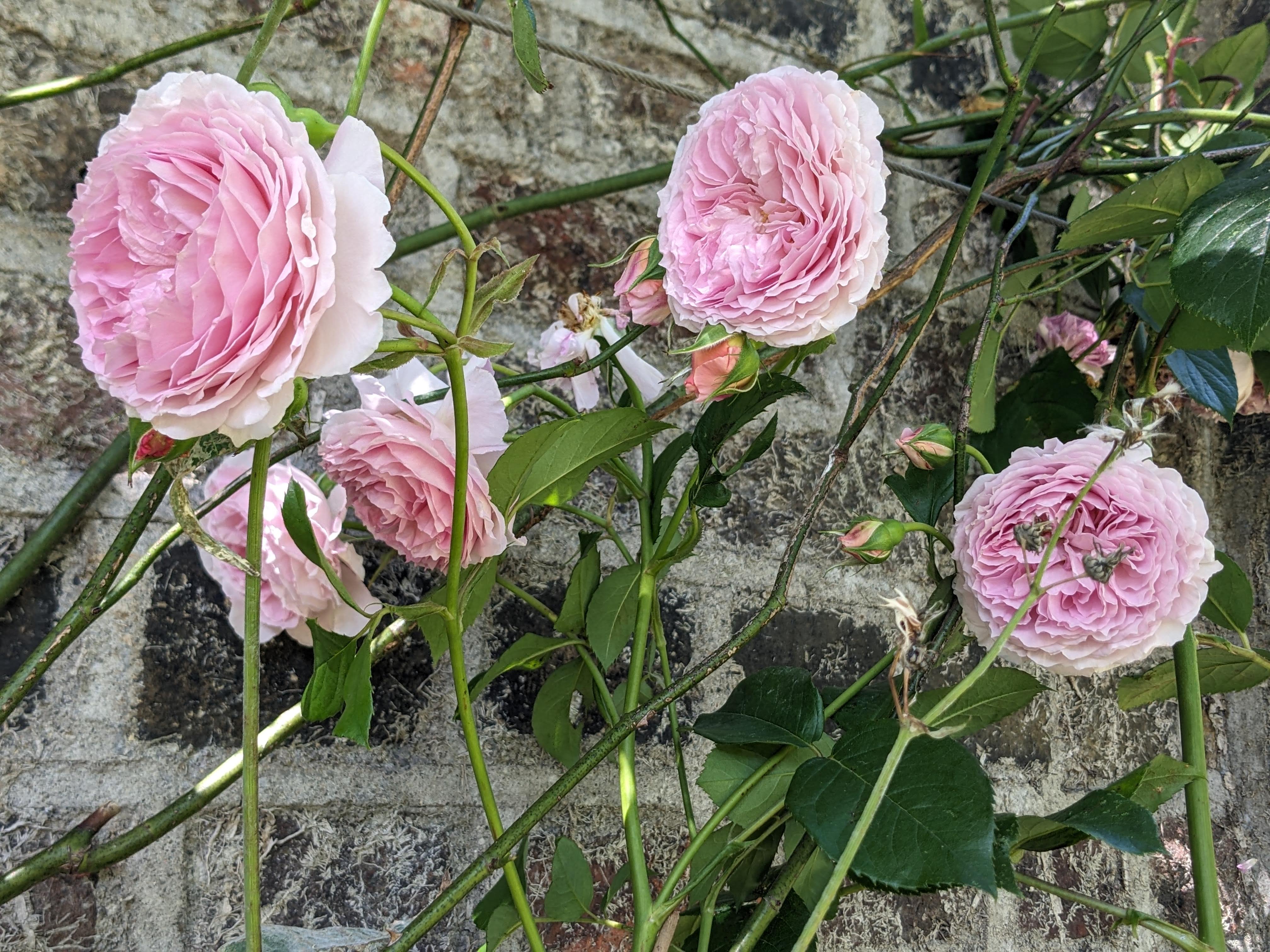
    The utopia of the roses is here.

    I have to firmly brush away the easiest things to write—empty and embroidered and puffed up like dough in boiling oil, no interior. The internet has its genres like anywhere else does, and as a pattern-seeking being (as all humans are), I can perceive them. Easy to fall into the expected. Easy to follow the places thoughts have been before. Easy to do what I know with ease will be easily beautiful. And there is a genre, among internet writings in 2024, of easy beauty, which is to say overblown, breathless, a lot of sound and little significance. Oh. I’m talking about advertising.

    A wren just landed on the rain gutter I can see from my window.

    The thought occurs to me again that even to type these words onto a screen made of light requires more electricity, more mining, more assembly, more logistics, more transport, more infrastructure than my grandparents’ grandparents could probably have imagined. My life touches, my needs thread through, the lives of innumerable other people, and yet the internet produces, often, the sensation in me of sharp and cold isolation.

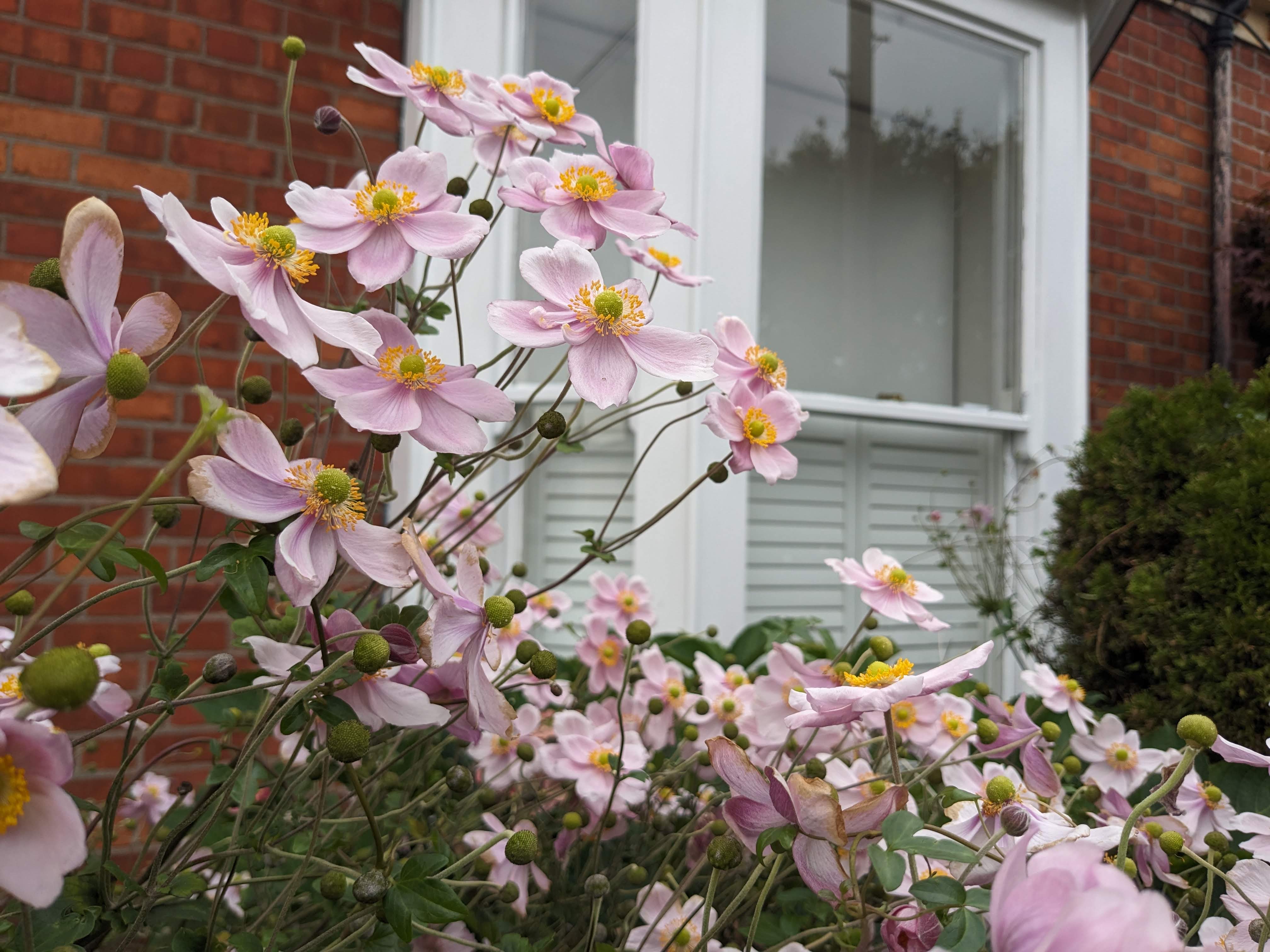
    Out our front door, a riot of calendula. I cut the flowers back and see the buds on the lower branches. Give the bouquet to the downstairs neighbor, who gave us a frangipane cake last week. She tells me that the calendula I took the seeds from, around the corner from our house, grew from seed she sowed on her last walks while pregnant with her daughter. We didn’t even know one another when she sowed those flowers, and now their descendants grow in the front garden of the house we share.

    In the encampment, the student from my poetry class cried as they described what it felt like to win the students’ demands but (and) to lose the encampment. The beauty of being there, together, every day, making decisions about how to be together, every day. Yes, I said, it’s a real loss. You are allowed to grieve it. You all made something with real beauty too. The encampment was dismantled by the students who built it, and around them the hydrangeas filled the air with their massive cloud-shaped flowers in the colors of electric rain.

    That thing where you are reading something, and it moves you, and then you realize you are being sold something, and that the moves you that happened inside of you is the way you’re being sold whatever it is. It happens in the writing, too, subtly: I have to hold the reins of myself with care to feel the pull toward a way of writing that I know could seduce, with nothing behind it, or that would smooth my thinking into the grain of commerce that places like this one (this walled garden app, this tech-bro-warping of the way we wrote to one another by letter and by blogspot!). But actually, my life and yours are not for sale. Thinking is free. Being together is free. Not for sale.

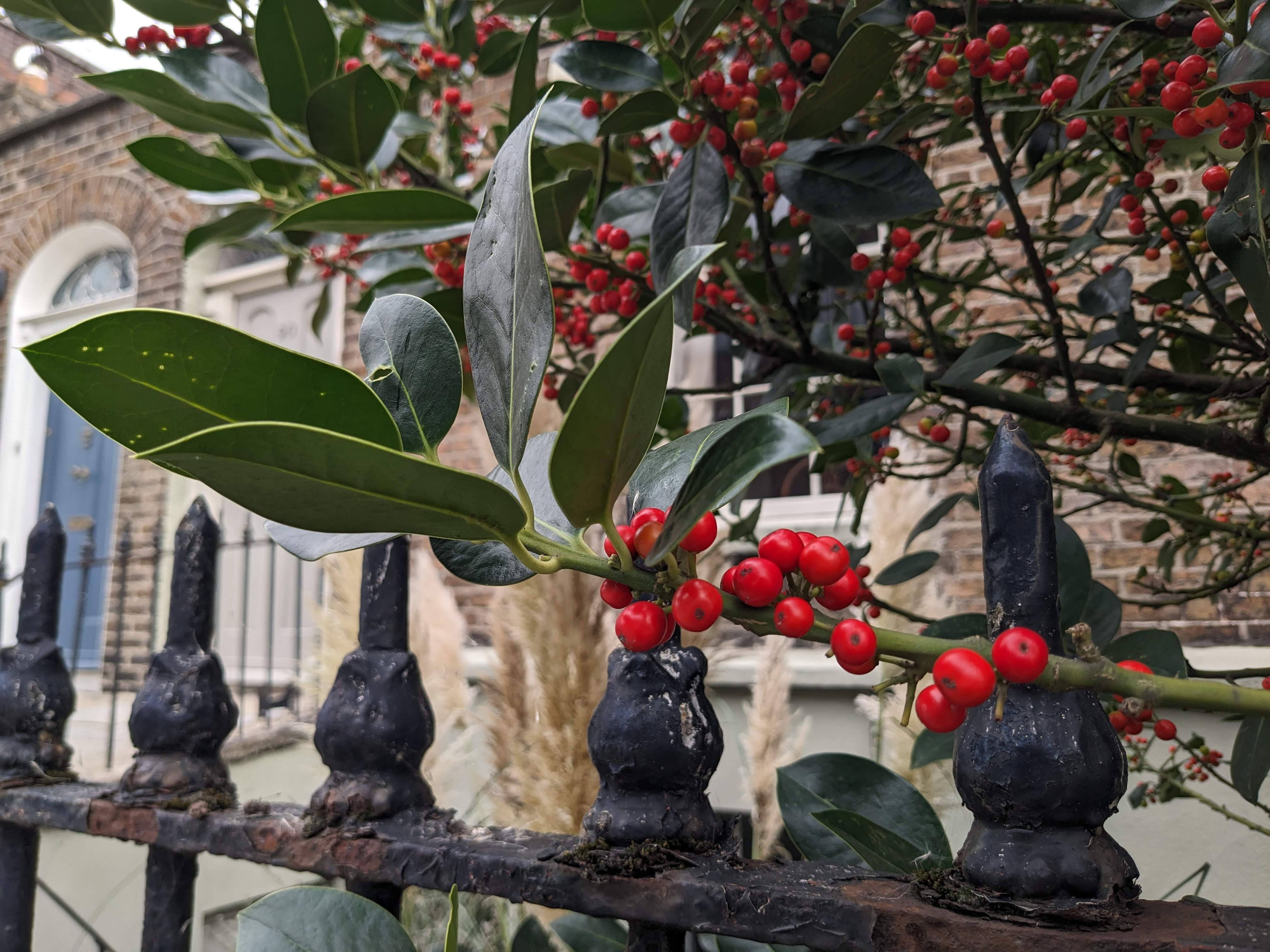
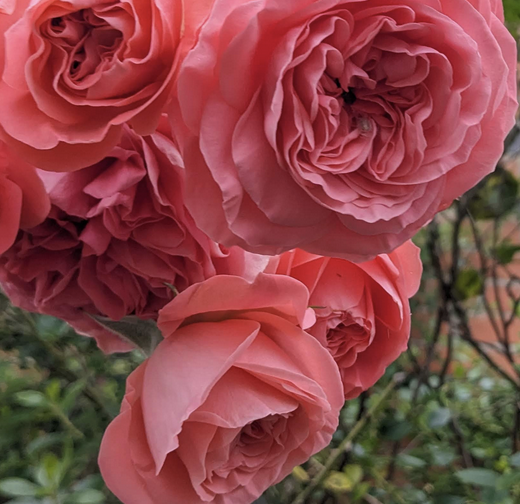
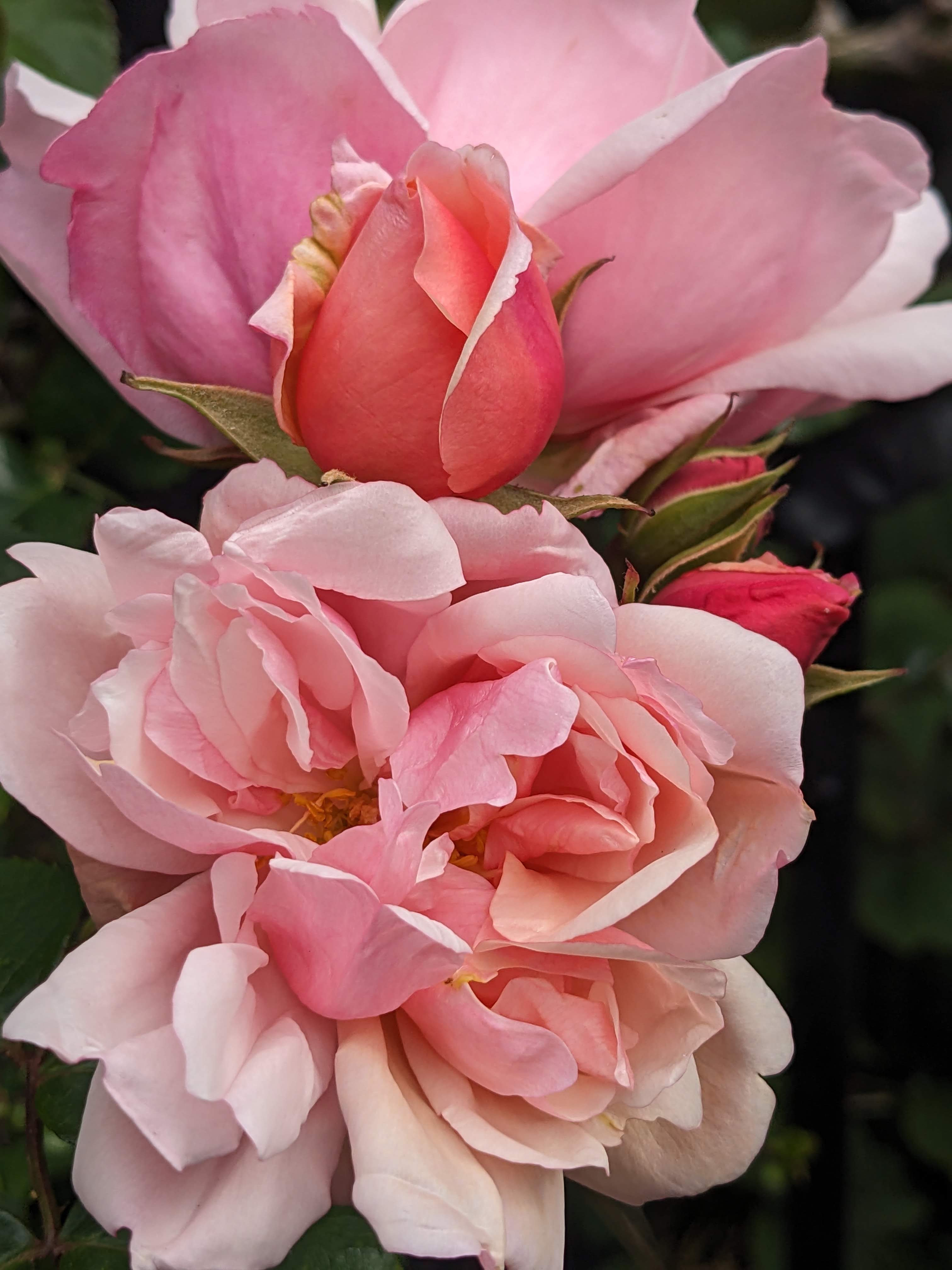
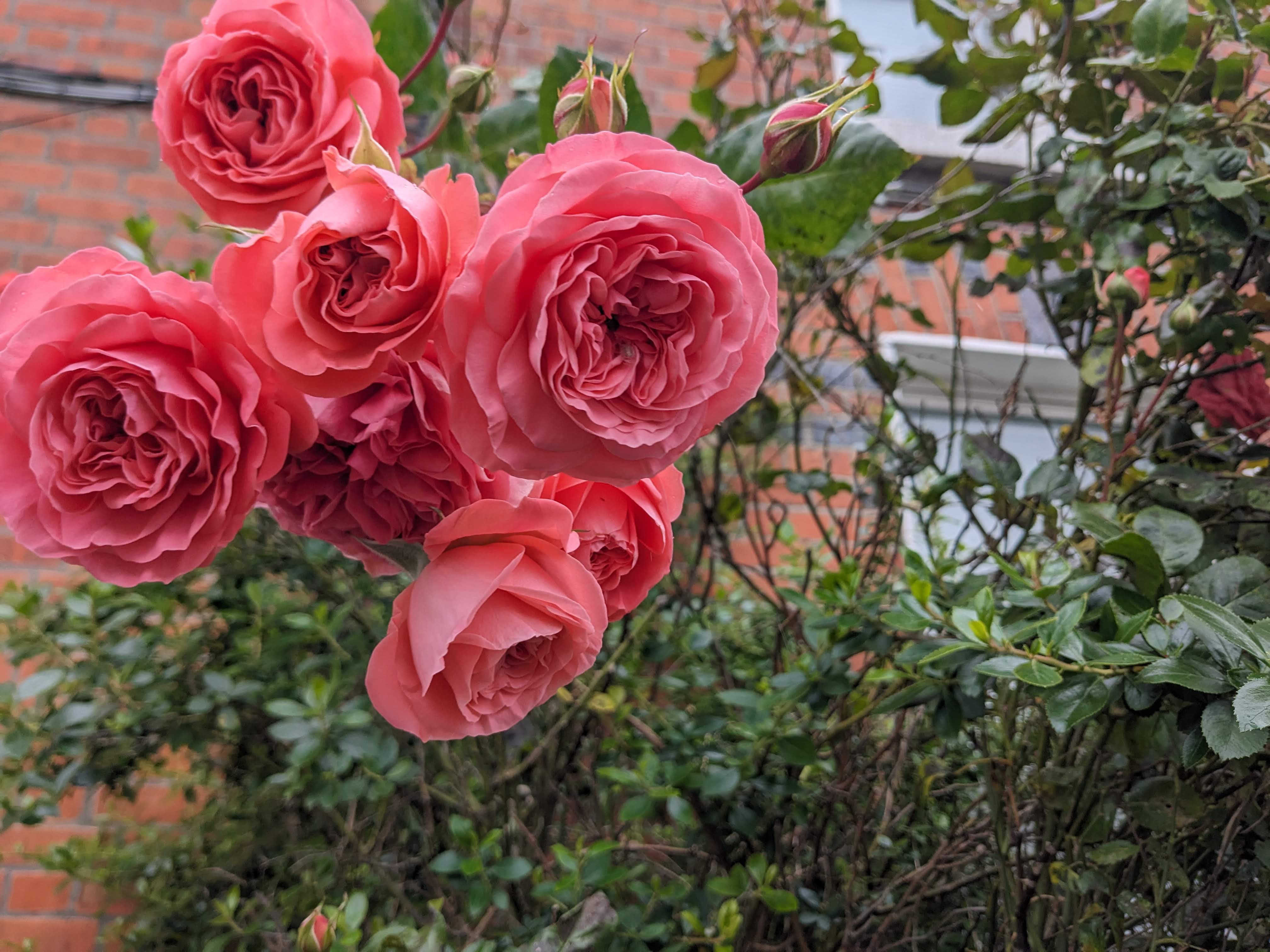
    You know why I like the roses that overhang the iron fence? The roses in the public park? There’s no exchange required to smell them, touch them, see them, except that I give my human living time for the human living time of the ones who planted and tend them, and for the vegetable living time of the roses. A perfect scale.

    This June I saw Yoko Ono’s work installed in a major museum and—as it always does—it moved me. The small typed cards moved me, the film of the scissors at the clothing moved me, the black sack my friend and I entered to walk around part of the gallery in moved me, the photograph of Ono through a window covered in sheets of paper moved me, the nails, the hammer, the film of bottoms, the apple on its pedestal: moved me. And I also thought about the modesty of her early work: its use of paper, trash (Morning Piece—one of my favorite things she made), language, vulnerability, ink, time—these materials that are so ordinary and so common. The museum worked hard to make sure the exhibition felt “worth” the exorbitant price of entry (£25), and I am very glad I saw it. But I did think about the difference between the insistent ordinariness, handmadeness, and smallness of Ono’s early work and those huge galleries it was displayed in that led us toward the newest work, much smoother, much more polished, and much more of a scale for such galleries.

    At the kitchen table, the midsummer sunlight illuminates a bouquet of parsley until almost 11 p.m. now. We drink cold orzo with milk on the warmest days, which are not very warm, all things considered, on this island in the North Atlantic.

    We all belong to the utopia of the roses. Though states may strip us, horribly, grievously, of the rights a state may grant, we know our obligations, which are unending, immense, joyous, and unlimited: we are obliged to one another, in concentric circles, forever: obliged to see levelly, to take responsibility, to share the work, to ensure a life that is more than bare, to prevent suffering, to keep one another safe, to love widely, to open the door of the family beyond the narrow confines of the picket fence, to reject the proposition that our lives, and what makes them liveable, could ever be for sale. Will we gather at the river? We will gather at every river. We will lay down our swords and shields. We will not stop insisting until the utopia of the roses is lasting and real.
    Essays from 2023-24 are beginning to disappear from this space. Some will appear in Abundant Number, a series of booklets full of slow things. Abundant Number will have a first issue this summer. In AN.1, you will find a couple of walks from me as well as an album review by Matthew Houston, chapters from a novel by Steve Himmer, and a few other pieces of writing. There will be a classified section eventually!

    Inside the first volume of Abundant Number, there will be a postcard that is also a text message. You can send it to a friend, a very delayed SMS. You’ll just need a stamp. Images and text by Andrea Blancas Beltran.

    If you’d like to be notified when you can get ahold of a copy of Abundant Number or about subscribing, you can put some information here.


    More news and more to read here in late July. I hope you’re well. I hope you’re safe and happy, that you’re free and able to do what makes you more alive. I hope that the occupation of Palestine, and the ongoing genocide there, will end. I hope there will be no more wars anywhere. I hope that people everywhere will have safety, and comfort, and companionship, and freedom from fear.

    See you in a month. Thanks for reading!

  • [while walking]

    [while walking]

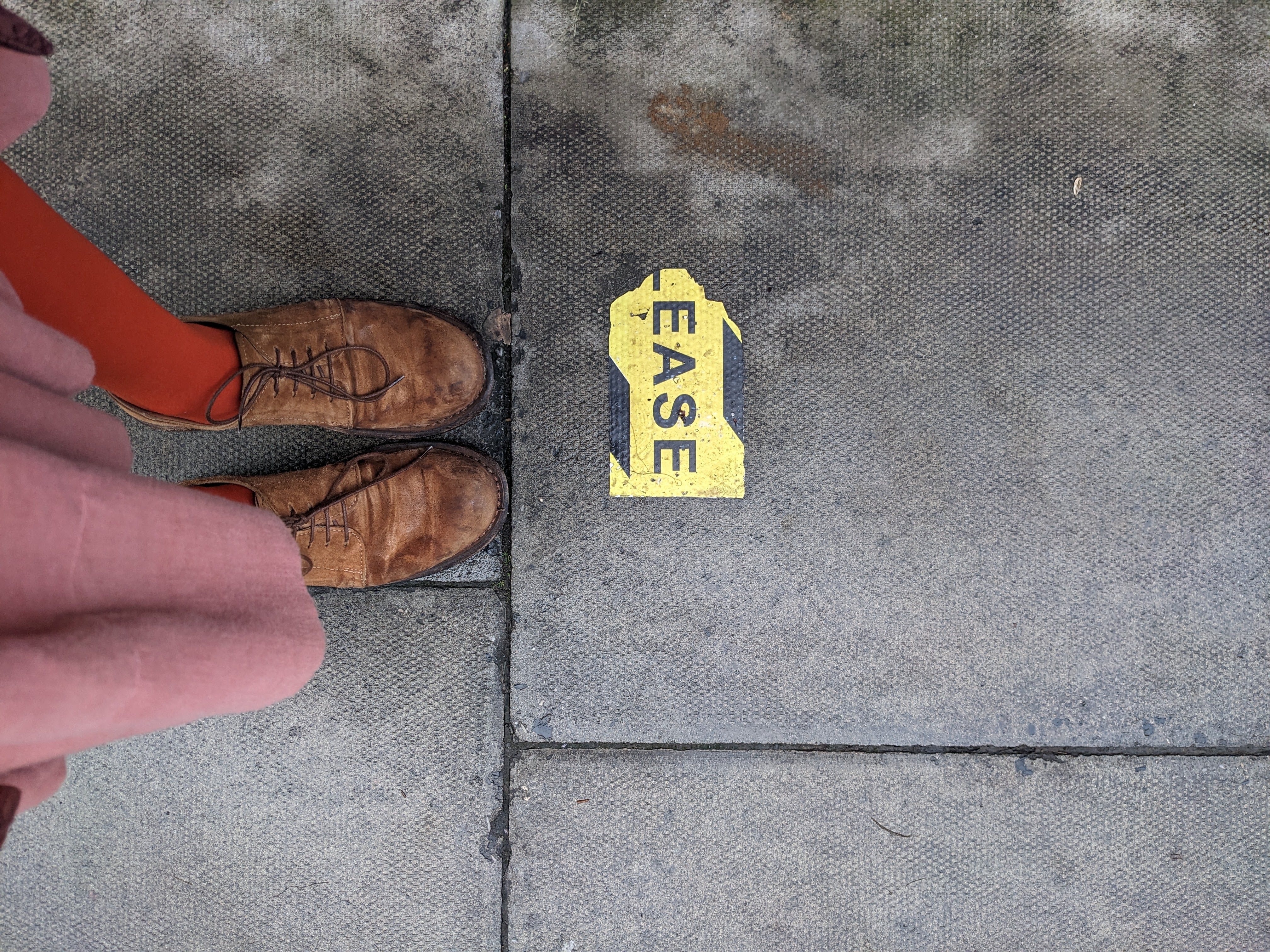
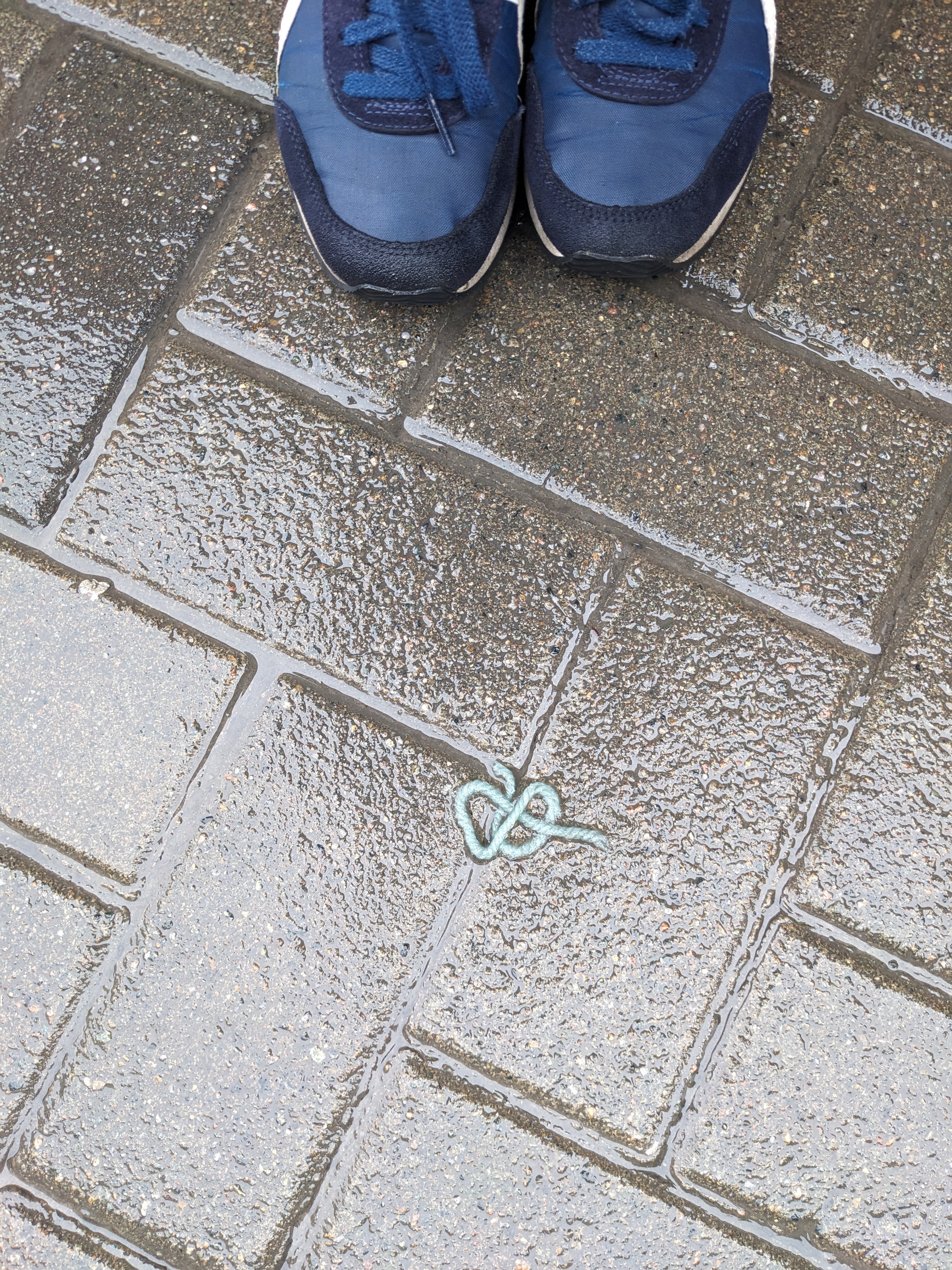
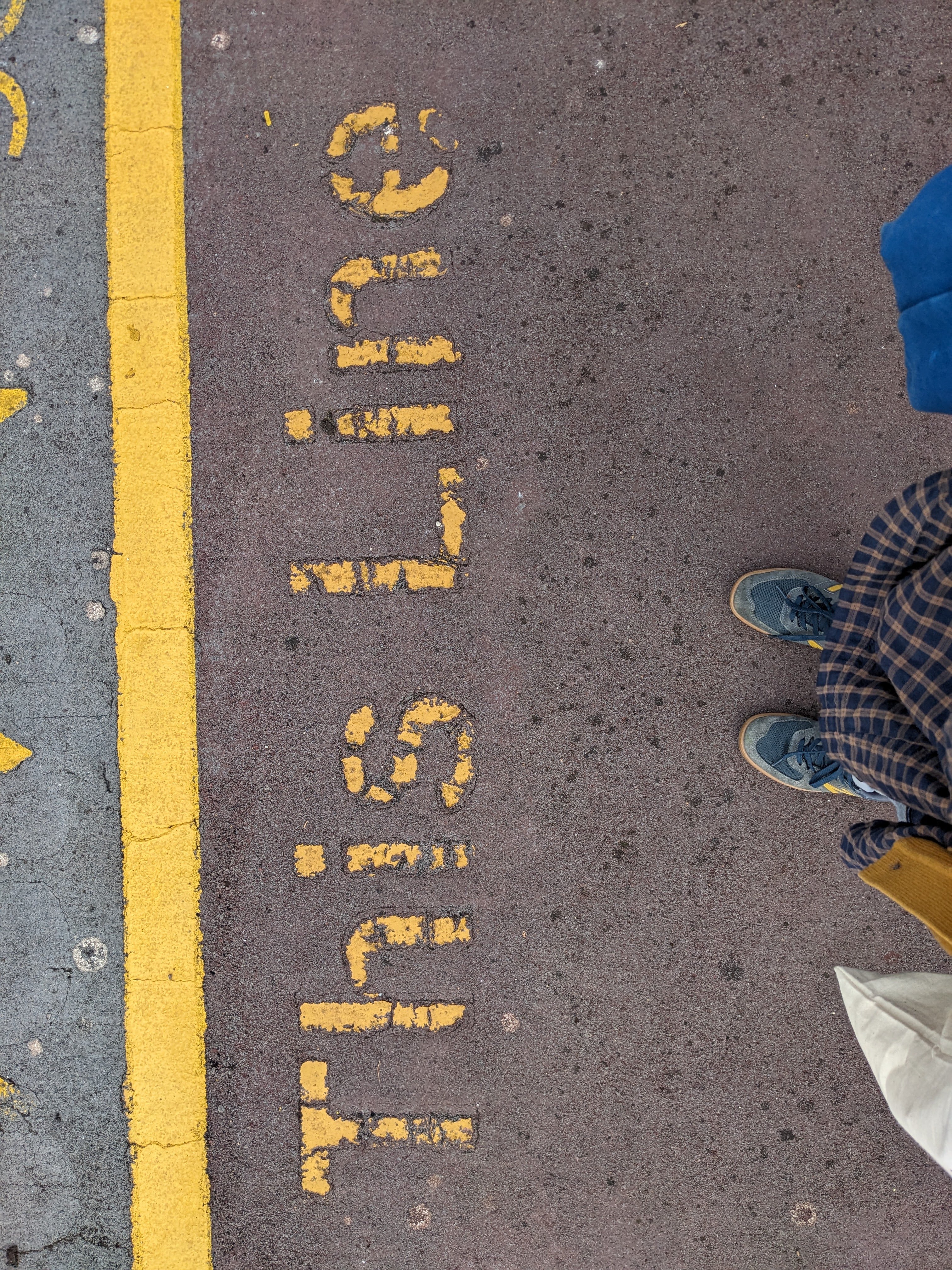
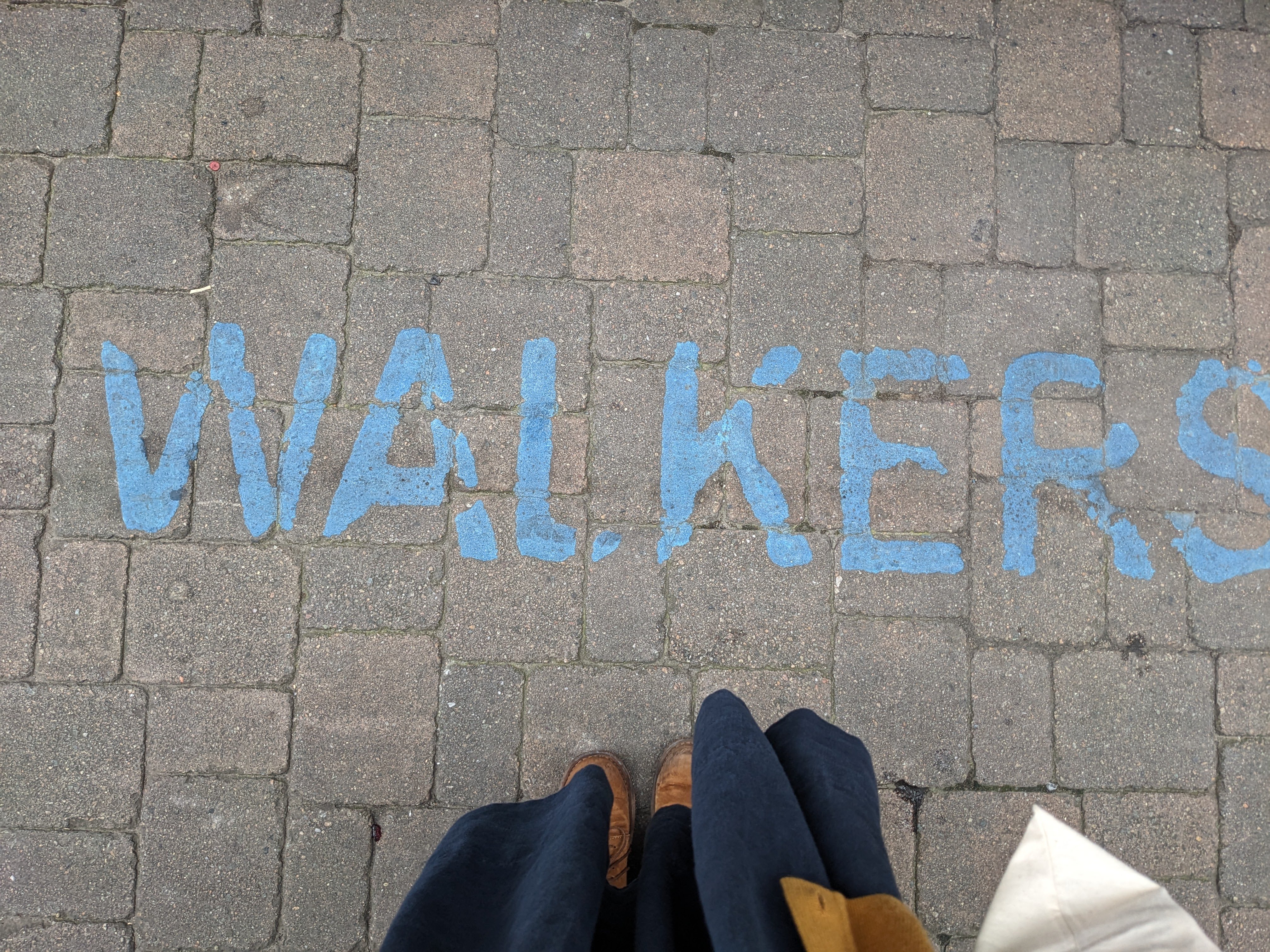
    look down. that’s it.

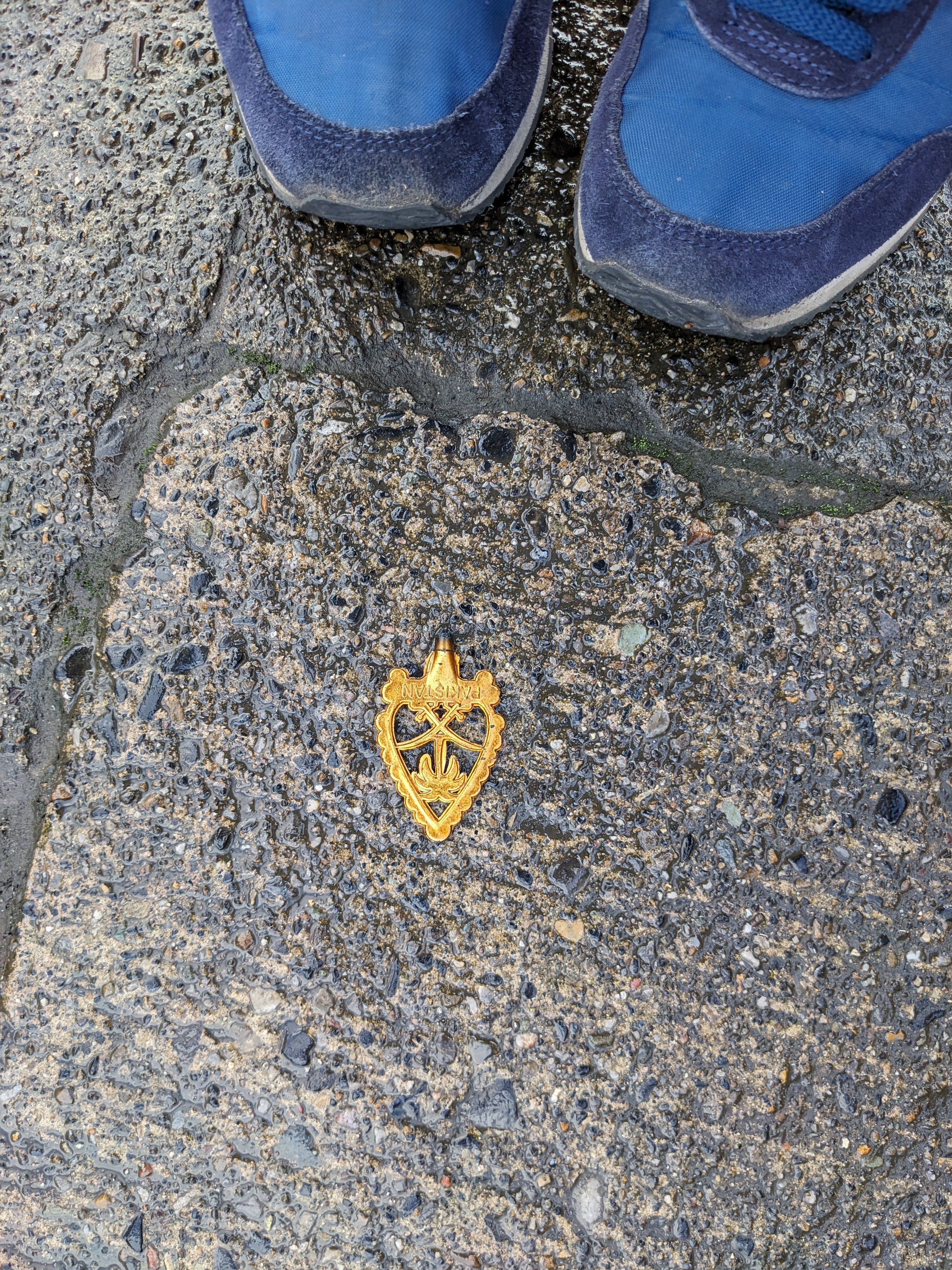
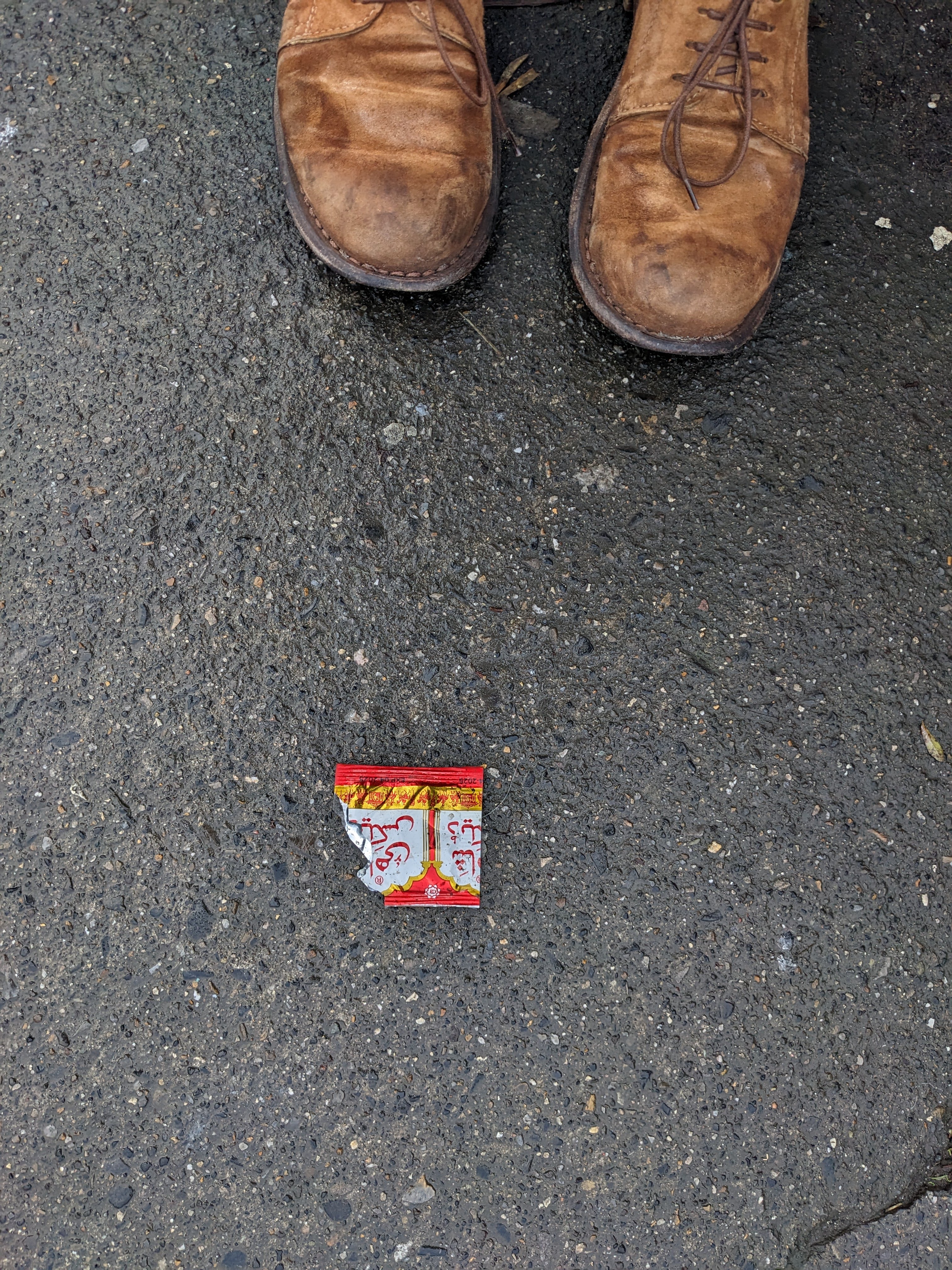
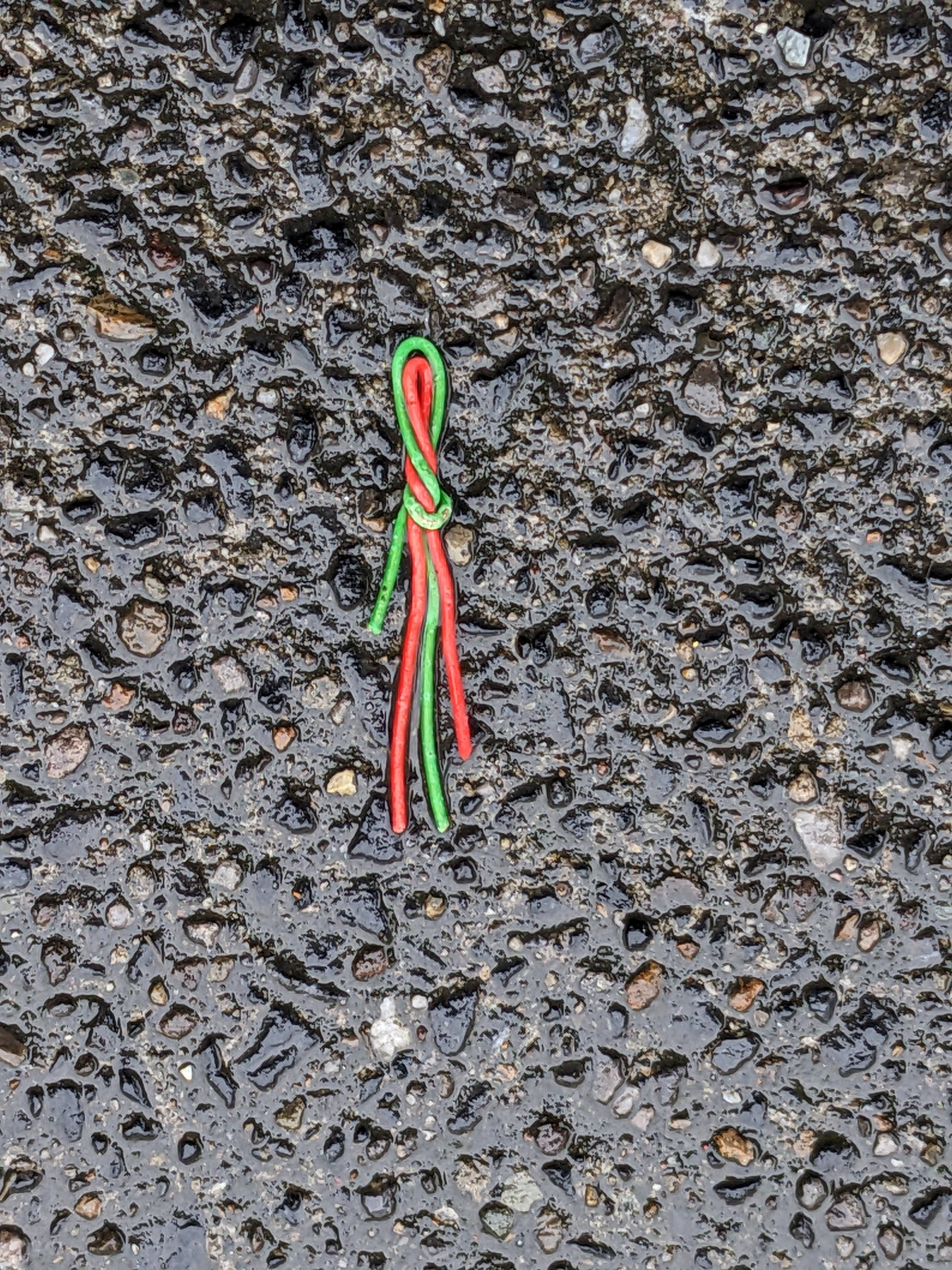
    When my mother visited us in December, I realized (again, again) how much more there was to see than I had been seeing. She walks looking down because of chronic vertigo that is worse if she looks around as she walks. I must have assumed there wasn’t much to see down on the ground because I was worried she “wouldn’t see anything”—but then she started asking me to take pictures of all the different grates, grilles, iron utility and manhole covers, so she could remember her time in Dublin. So yes, once again I was confronted with the fact that there is nothing beneath notice, not to mention that there are as many ways of seeing and experiencing the world as there are people. The past few weeks, I have been trying not only to see but to really look at and record the things at my feet.

    Project take-nothing-for-granted continues to encompass more and more of the world, revealing as it does more and more of the complexity of places I feel I already know, even know past exhaustion. Is there really anything left to see here? To care about? To be surprised by? I realized recently that I am tired of the places I’ve spent the past 18 months walking. They have begun to feel spent. I’m used to them. I can predict the patterns of garbage and the timings of flowers. Wrong again? Oh ho ho ho ho the world says. Look more closely. Have you seen this yet? You might be surprised at what you’ve missed.

    I’m not making it up; it’s true that there is always more to see, care about, be interested in, even if I don’t feel like it (not infrequently the case; feeling like it takes a lot of energy). Also, I didn’t come to this on my own. I’ll cite one source, though there are many (some here): Georges Perec’s An Attempt at Exhausting a Place in Paris, which I read in Mark Lowenthal’s English translation in 2019 (order a copy here with free US shipping; Wikipedia article here; Archive.org copy available to borrow here; on WorldCat at a library near you? find out here). In this book, for a hundred pages or so, a man sits at the same café on the same corner for three days, and the same things happen—pedestrians, shopkeepers, buses, pigeons. I found it absolutely delightful. A model for writing and artmaking, and most of all a model for being alive.

    Paris is Paris, and Dublin is Dublin. Would I get used to Paris? Well I got used to other beautiful places, so I am guessing I would. Work, commuting, the ordinary activities of daily life like groceries and cleaning—they happen, and happen to tire me out, wherever I am. Sometimes I just don’t want to be walking eastward along the Grand Canal on yet another morning. Over time maybe even the Place St-Sulpice might seem worn-in. Then what? Good to sit at a café and watch all the buses pass by. Good to walk through the Liberties, down Meath Street, past the butcher again, take a look at the pork kidneys, take a look at the mackerel, silver in their stainless steel containers in the window. In Leopold Bloom’s city as in Perec’s, a lot of nothing happens and the repetition of all that nothing turns out to be beautiful, weird, funny, interesting. One stitch at a time.

    What else is there to say? Our ordinary lives are all we have.


    Necessary Fiction has a newsletter now and it is like getting a magazine you will actually enjoy, once a week. Timothy Otte reviews Seriously Well by Helge Torvund (translated by the author); I’d read a review like this every week.

    A woman I followed on Twitter since the very earliest days died this week. Her name was Shafiqah Hudson, and she made the hashtag #yourslipisshowing and did so much work around misinformation online. I can’t believe she has died. You can read about her in context here and here. I’m not sure what to do with this kind of loss—someone I didn’t know but whom I read for many years—but her work mattered to me and I know it mattered to many others. And now you know her name too.

    We can send UNRWA some money here for the ordinary lives of people in Gaza.

    Thank you for reading—see you next week.

  • the telescope, the microscope

    the telescope, the microscope

    Ruth Wilson Gilmore: “Where life is precious, life is precious”

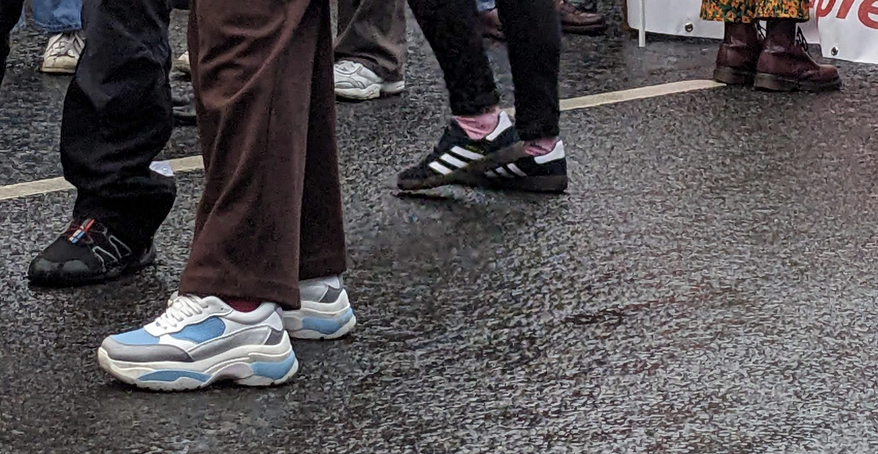
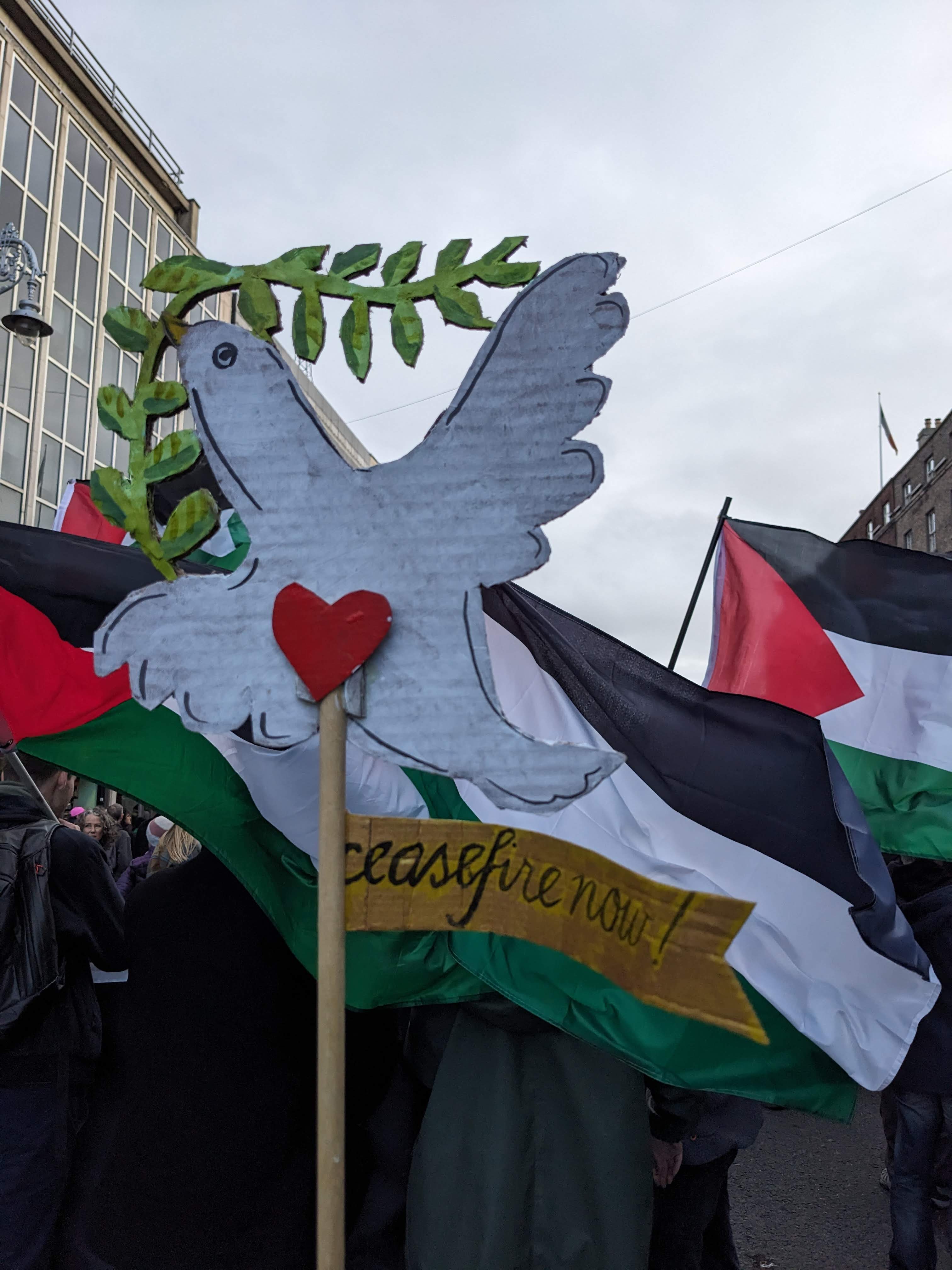
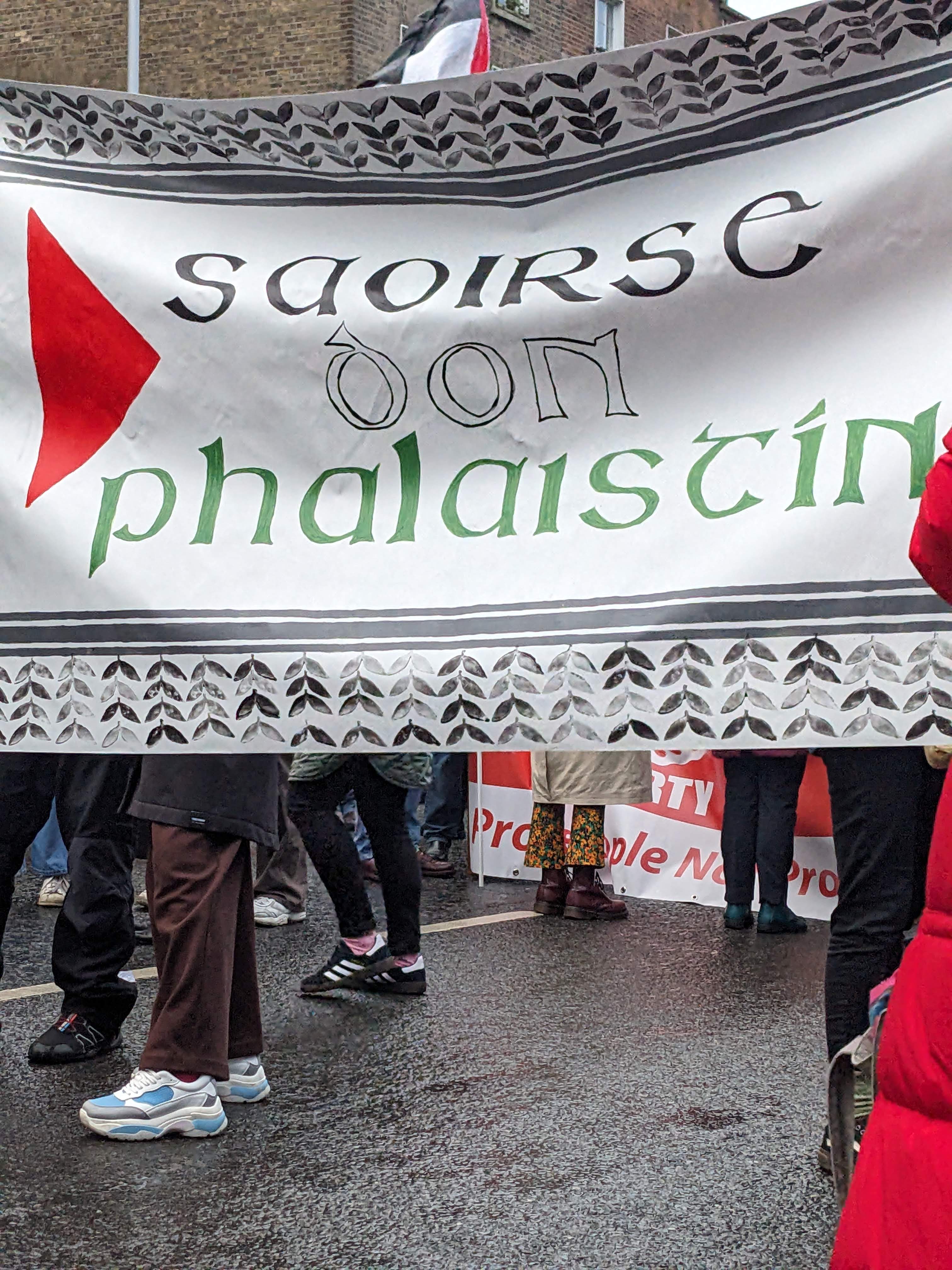
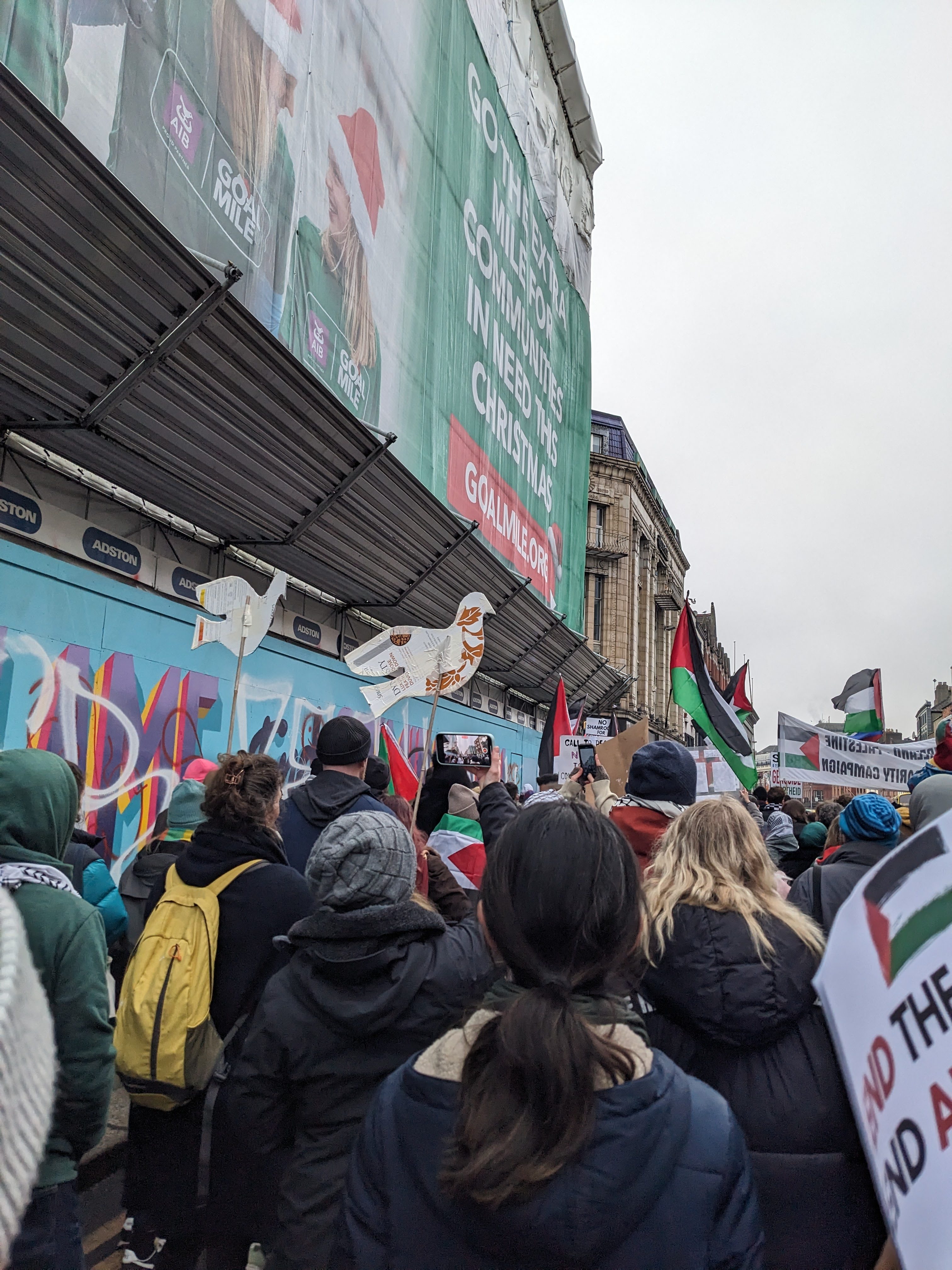
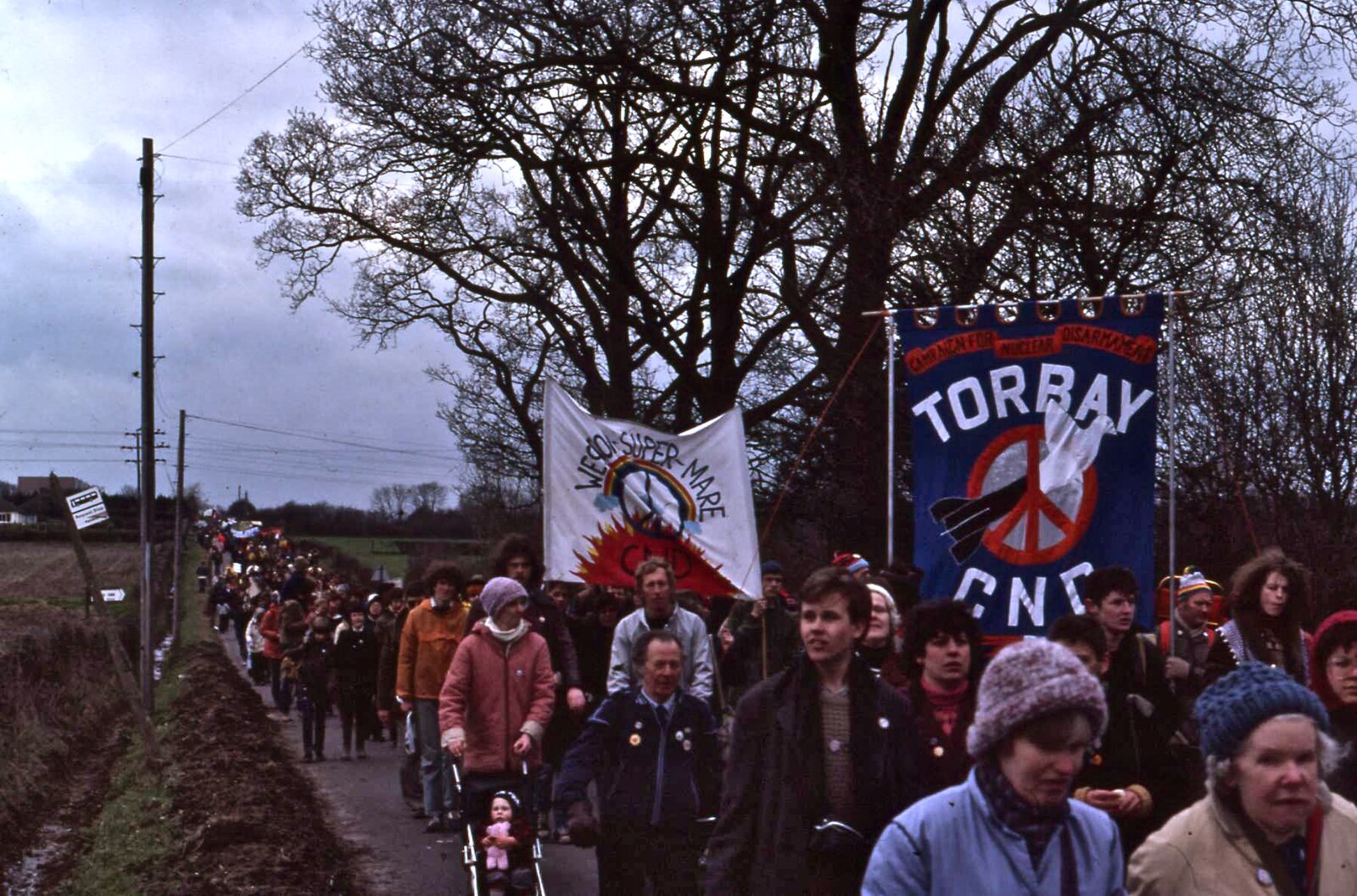
    I have been thinking about the walking protests I have taken part in since October. We have walked together almost every week. I like these walking protests. I like to walk among others, in the same direction, taking up space in public. I realize as we walk how meaningful it is that we are together. It is easier to say what we believe when we are not alone. I also realize that there, together in the comfort of our unbombarded city, it is clear to us that our job is to say that people over there should not be subject to death. I note that this clarity allows us to occupy the position of accusers (of the bringers of death, who do deserve accusation—the world itself deserves that truth. We should call death-bringing death-bringing, and we should oppose it). It feels righteous when we say it: no death. Ceasefire. No armaments manufacturing or transport. These are the right things to say, because they are true: people ‘over there’ should not be subject to death. It is absolutely true that this is the case. Even when there is little we can do ourselves to directly cause those deaths to cease, at a minimum we should say, in public and to one another, that those deaths must end.

    It is also true that, according to the WHO, 8700 people across the world died following/of covid between December 23, 2023 and January 21, 2024. 8700 people in a month! (The Economist, of all places, just published a study on worldwide excess deaths that is deeply sobering and that indicates that counts like the WHO’s are if anything conservative underestimates.) It is further true there are very simple things we can all do to reduce that death, including but not only wearing a good, well-fitting mask in public spaces. And yet I observe that among the many in the antiwar movement right now, most of us do not wear masks in public spaces, despite a massive increase in transmission over the past twelve weeks. When I go to walking protests, where we are shoulder to shoulder with one another, shouting and walking through one another’s shouts, I am generally one of just a handful of people wearing a mask. (A lot of the protests have happened since the JN.1 variant came into circulation—the higher transmissibility of this variant made me reconsider my usual decision not to wear a mask outdoors.)

    This is not an accusation; it is an observation. This is not a ranking; it is a relating. I am curious about what I have observed because on the one hand we are there, together, insisting that life is precious. We insist that colonialization, apartheid, occupation, and bombardment are foul. They are foul. We should insist that they are. And at the same time as we make this insistence, there is the co-present fact of viral transmission, transmission of a pathogen that can hurt and kill anyone, and that disproportionately hurts and kills people who are already vulnerable by way of class, race, disability, and age. And there is the further fact that a very simple intervention that could be taken by most of us is not taken. Which feels to me like tacit obeisance to the forces by which life is made cheap—those forces we refuse together, there in the street.

    Why is this? What makes it easier to march and shout, to oppose death afar, than to wear a mask to the grocery store, on the bus, to work, thereby involving oneself in nearby deaths? Is it that closeness itself? Is it that one feels active and the other passive? Is it the group-belonging of marching, shouting? Is it that the mask reminds us we, too, may visit death upon a seen or unseen other person? Is it that the mask reminds us of our own fears, so recently acute, of mortality? Is it that, because the deaths of others from covid are mostly hidden rather than made spectacular—hidden, in fact, as a kind of social comfort—, we do not think of them when we take to the streets against death? It may, it occurs to me, be to do with all kinds of discomfort: it is not pleasant to wear a mask in public—neither physically comfortable nor socially. It can feel confrontational for others, even in leftist spaces. I see that confrontation; it shows up as avoidance (eye contact, conversational inclusion are so diminished when one is the only person wearing a mask) and it also shows up as aggression, as when, recently, a person huffily and assertively closed windows in an otherwise unventilated room despite five of us wearing masks and one asking her politely to leave a window open. Wearing a mask in public in 2024, one is confronted with evidence that most people around one think that perhaps one is being just the littlest bit hysterical, just the slightest bit puritanical. (Though my feelings are not the point of my enquiry, I will acknowledge that this is, to be frank, exhausting.) So I can understand why people might not wear one. Immediate discomfort is a great disincentive. Perceptions of social norms—the minute behaviors that tell us how best to belong to groups and also tell us about safety and trust—are great incentives.

    Don’t misread me: this is not a “why does issue X get attention, and not issue Y?”; not at all. We should and must actively refuse war, colonialization, apartheid, occupation, torture, killings of press, bombings of civilians and of infrastructure, and all the other spectacular degradations of life, land, and dignity happening in Gaza as well as elsewhere. I am simply pointing out that if we are to make this refusal of death and degradation it seems incongruent not to turn the same refusal on those less spectacular and closer-to-hand points in our daily lives where death and degradation also seep through. Your lungs, my lungs, the lungs of a person far from us—one set of lungs. Your life, my life, the lives far from us that we may never witness—one life.

    So this is not an either/or proposition. It is a proposition that we practice seeing the entire scale, from telescopic to microscopic. It is a question about whether and how we can (ever more) intricately and continuously trace the threads that tie us to one another. Can we see that when we quote Baldwin and say that “the children are always ours”, we should, we must, we cannot but also mean the children who are repeatedly exposed to a virus that can and does often have life-altering effects, and the children who have been orphaned or suffered parental death due to covid, and the children who have died from it? Is the answer, “well, that outcome is relatively rare” sufficient or just? What does such an answer reveal about our commitments to one another? Are there really some deaths we are willing to countenance? Which ones? How many? Whose? In exchange for what? What are we willing to do to hold one another precious at this easily overlooked, inconvenient and personal end of the scale, as well as at the scale of political and social geographies larger than our (permeable, shared) vascular systems?

    It is relatively easy to commit to a cause when I can stand in the place of accusal and point to the wrong happening over there. It is harder to remember that I live inside of systems that normalize the degradation of life, not only on the scale of spectacle (though on that scale, absolutely) but also on the minute scale of the everyday, and to turn a questioning gaze back on my participation in those systems—to try to see how those systems of everyday degradation make possible the spectacle of death that my taxes pay for, for example. This is difficult in part because such systems of degradation often do just feel like normal life, and in part because the refusals they require are subtle. Blatant horror is easier to see; the responses it demands are also more apparent. And our refusals must, when required, be spectacular: to meet the spectacular degradations of occupation, colonialization, war. But I think that these refusals are given strength, that we learn endurance for them, by the discernment required to see the presence of degradation in our daily lives and to refuse it there, too.

    I struggle, personally, with the disjunct between the refusal of spectacular death and the acceptance of everyday death. Poor people, immigrants, Black people, brown people, Native people, workers in factories and slaughterhouses, nurses, teachers—these are the people who have died the most since 2020 because of covid. But anyone can become very ill; anyone can die because of it. Surely these deaths, too, call for our attention. Surely they, too, call us to refuse suffering, even if to do so requires some sacrifice on our parts. Surely covid circulates among the bombed-out buildings and in refugee centers in Palestine. Is it not my affair to reduce the possibility of death or prolonged illness in this way, too? In these places, too? I think it is. Not ‘instead’. Not ‘either’. As well. Don’t my places touch your places, and don’t our places touch those places far away, linked as we are by the circulation of air, of transit, of cargo? Certainly I am connected to the chain of transmission (airplanes, classrooms, public transport, shops) that brings the virus around the world. In any case, I have enough attention, enough heart to break, enough conviction, enough energy, enough willingness for both of these—and more. No island. Your need touches me. Your life obliges me. Even when you are beyond my sight.

    I do wear a mask—in shops, in buses and trains, in the movie theater, in class, in my office. It is uncomfortable in all the ways you already know: headaches, the little cut on the bridge of the nose, humidity, etc. It is also uncomfortable because to take this small action does attract negative attention in public spaces. On the better end of the negative scale it yields invisibility: I have never experienced so much social exclusion as in the past few years, and, talking to other people who wear masks to social events, I know I am not alone. Wearing a mask, people’s eyes skim over you in conversation. We have not all learned to watch or listen for cues that don’t include the mouth. I get asked about my mask weekly, sometimes by the same people—why a mask, what kind of disease do you have, are you sick, what’s wrong with you, are you afraid, are you immunocompromised. (The bizarre experience of having strangers quiz you on your health after the last few years could probably be an essay in its own right.)

    I’m mortal, I want to say, and so are you. I don’t; for that all I am typing this essay (with figuratively shaking fingers, because I worry it may upset you or provoke you, irritate you or offend you, and I really don’t want to do those thing) I am not that brave; I am averse to confrontation. I usually say “I have an autoimmune disease” or that my partner does. This is true but it’s also a feint, because the real reason I wear a mask is that I don’t want to stop remembering that other people may die or suffer for my comfort, and that I am involved in the lives and deaths of others. I don’t want to be a possible link in the chain of transmission of death. I don’t want to forget that I could be. I don’t want to choose my comfort over our connection. I want to remind myself that we are all here together. I don’t want to stop remembering that the cost of less suffering may be merely a little discomfort on my part. I want my refusal of deaths over there to be of a piece with my refusal of deaths right here.

    The microscope shows me what is closer to hand than I could have imagined. The telescope demonstrates the similarities between cells and stars. How do we know when life is really precious? Ruth Wilson Gilmore says that “where life is precious, life is precious”. Is it that simple? I think it could be. We know it is when we make sure it is. Yours. My own. My family members’, my friends’. The cashier at the grocery store. The bus driver. Whoever packs the vegetables I buy at the store into their boxes. Your children’s teacher and their family. The people you love and the ones they love, out in concentric circles forever. Those people, far away, whom we may never know. For all reasons. In every way we can. Against all harm. Precious. At every scale, from what cannot be seen by the naked eye because it is too small, to those things from whose magnitude we cannot bear to look away.


    If you’re in Ireland, Mask Bloc Éire can hook you up with high-quality masks and other information. There are mask blocs and clean-air organizations all over the US, try googling your town/city + “covid safe” or “mask bloc”. Free masks for Canada. Clean Air Club (Chicago) is inspiring (here’s a study on poor air quality and children’s learning). Of course Boston has the punkest ventilation lending library. Here is the People’s CDC for more information.

    Nate Holdren on the weight and sadness of where pandemic social abandonment meets the classroom: “all my outrage on this social situation isn’t one where I personally feel aggrieved over something done to me personally so much as I think this is a super appalling way that other people are being treated. More briefly, my anger on this stuff is more heated out of concern for others than it’s heated [over] what I’m personally subjected to. For myself I mostly just feel sad and tired.”


    A little information about what’s next

    So it’s just about mid-February, unbelievably, and I am two weeks shy of a year of these essays. I wanted to let you know what you can expect after March 1.

    I’m going to take a break from March 4 through June. I’ll post about one essay a month in that time, but the big things I’m going to do are (1) migrate my work and your subscriptions away from Substack; (2) begin to prepare the essays I wrote from March 2023 until March 2024 for print. I don’t have all the information about how they will appear, yet, but I’ll share that when I do.

    As I prepare the essays for print, I’ll be taking them offline. This was always an exercise in ephemerality—expressly time-limited against the internet’s appearance of smooth, infinite eternal availability—and now I find myself at the point where I have to make good on that part of the plan.

    Thank you very much for reading this week and over the year. I hope you’ll stick around for what comes next.

  • the world is charged with this one weird trick

    the world is charged with this one weird trick

    it will flame out, like shining from shook foil

    (Hello. This post is “too long for email”, so you may need to click through and read it in your browser. It’s actually a very short post by word-count. If you’re looking for longer things to read this morning, may I suggest this, about the purpose of arts education; or this, about the US and the culture of remembering some deaths and forgetting others; or this, about how much you can do with a pencil and paper; or this, about looking at weeds?)


    There is no possibility of boredom in this world.

    Not when its things and its beings collaborate to make puns like this.

    Not when at a construction site you may find the entrance to a temple.

    Not when it explains simile so beautifully.

    Not when it looks right back at your curious eyes with its own.

    Not when it speaks itself so perfectly and particularly.

    Not when it offers lessons in form around every corner.

    Not when it teaches color theory with a gentle insistence.

    Not to mention the lessons it offers in comedy, and in sheer pleasure.

    Not when it articulates its understanding of time in neon pink, in January.

    Not when it is always reminding us how our letters are made.

    No, no boredom possible in a world that is always showing me how to make poems (how to think relation, how to notice similarity and difference, how to attend to texture, surface, movement, shape, tone).

    Not in this world, which has given me the instructions for artmaking so plainly.

    No boredom, it says. Open, open.


    A few things in the world recently: The Bar Harbor Webcam lets you see the tides (and, recently, the terrible storms) at Bar Harbor (Maine, US) from anywhere with an internet connection. Our Grief is Not a Cry for War, Jim Costanzo, 2001. “A War Without End”, Ursula Le Guin. This is how you do courage and care. Organizing Power, a zine that costs $5 and explains how to organize in the workplace. The subtitle on this week’s post is from this poem.

    I saw someone articulate online that a ceasefire is called for as an end to an armed conflict, not an end to a genocide, which requires different demands. That makes sense. As the International Court of Justice has concluded that genocide is plausible, the demand must be an end to genocidal activities. Let’s make those demands. In the US. In Ireland. Easy enough to find a way wherever you are. Also if your country has defunded UNRWA as mine has, you can put some lunch money here.

    Thanks for reading. Go look at the world and please report back. See you next week.

  • [while walking]

    [while walking]

    “it is always too early to go home”

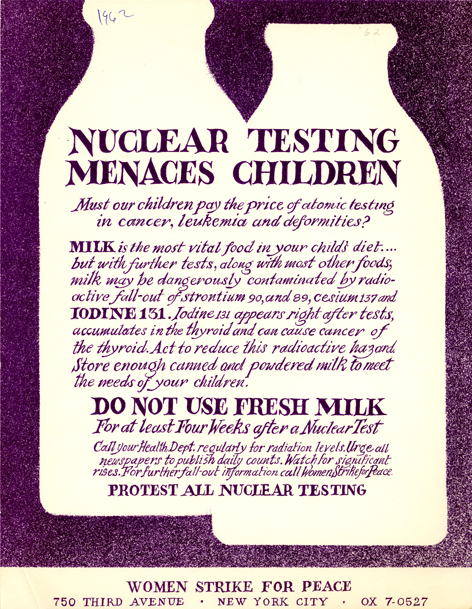
    White milk bottles on a purple ground with purple handlettering: Nuclear testing menaces children. Must our children pay the price of atomic testing in cancer, leukemia, and deformities? Milk is the most vital food in your child's diet....but with further tests, along with most other foods, milk may be dangerously contaminated by radioactive fallout of strontium-90, and 89, cesium 137 and iodine 131. Iodine 131 appears right after tests, accumulates in the thyroir and can cause cancer of the thyroid. Act to reduce this radioactive hazard. Store enough canned and powdered milk to meet the needs of your children. DO NOT USE FRESH MILK for at least four weeks after a nuclear test. Call your health department regularly for radiation levels. Urge all newspapers to publish daily counts. Watch for significant rises. For further fallout information call Women Strike for Peace. Protest all nuclear testing.

    In my earliest memories we are walking together. We are walking together along the sidewalk, wall on one side, street on the other. We are carrying banners. We are carrying signs. We are in strollers or pushing strollers; we are carrying babies. We have mobility aids, we are using wheelchairs, we are helping one another walk, we are striding forward with the people we love and with people we don’t know. We are under the white-gray sky of an upper Midwest January, and it is ten degrees below zero Fahrenheit and it is too cold to snow and here we are: walking. We are walking toward the state capitol building, all of us, together, hundreds of people, sometimes thousands of people. We do this over and over, weekly, monthly, for years. We do it despite the fact that there is no directly attributable change because of it. We show up and we walk together. It is cold, it is uncomfortable, it can be tiresome, there are more immediately pleasurable things to do. But once we get close, once we hear the crowd and see the banners and the signs, we know again: there is no better place to be.

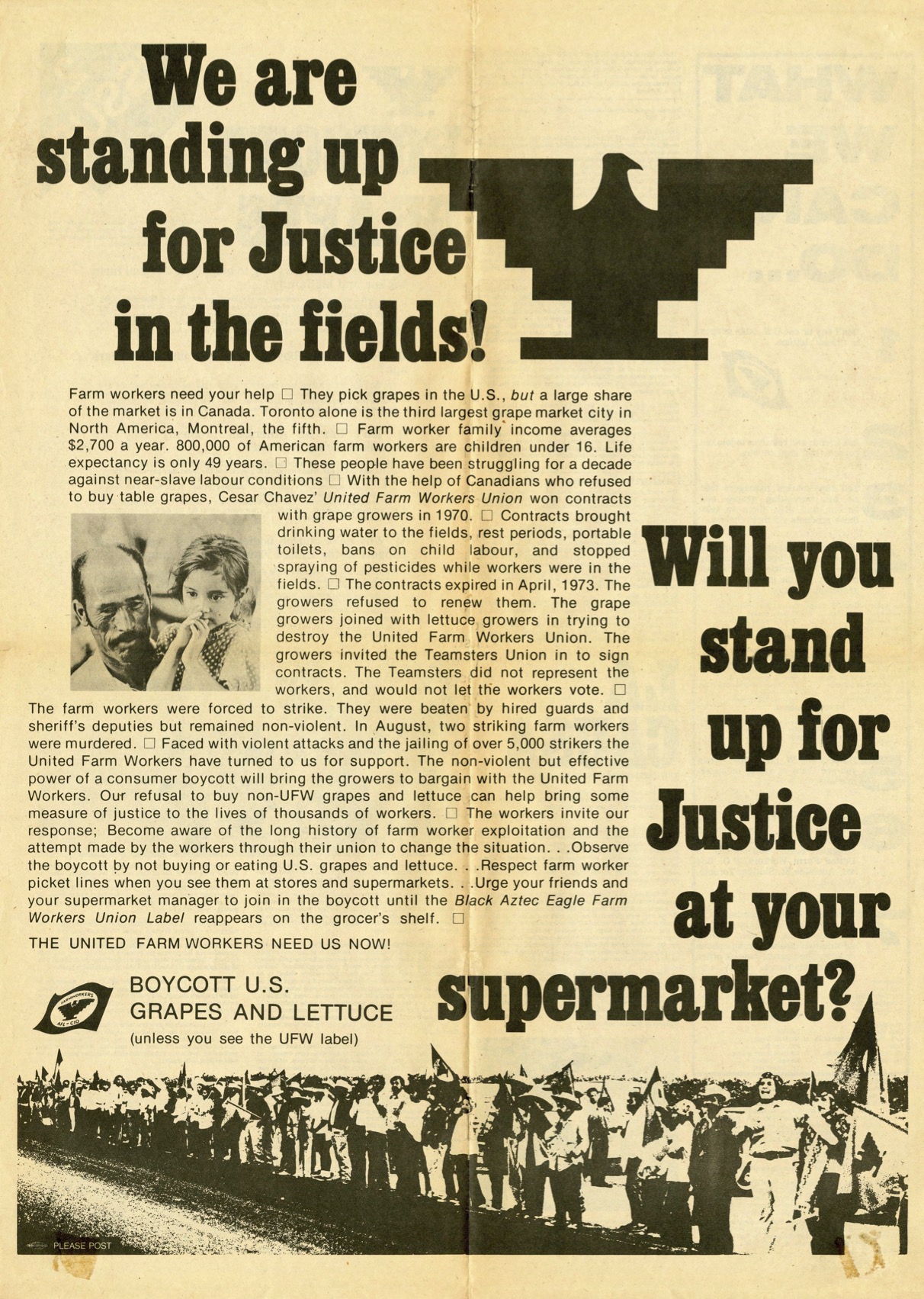
    Nuclear freeze marches and rallies. Grape and lettuce boycotts. Chocolate and formula and cereal boycotts. Women holding anti-war signs every week for decades on a bridge over the Mississippi River. Nuns jailed for protesting torture schools funded and exported by the US government. Teenagers and elderly people blockading the driveways of the arms manufacturer. Teachers’ union strikes and farmworkers’ strikes, anti-apartheid strikes. Anti-war march after anti-war march. Free stores and soup suppers. Folk concerts at the local college and in the public park, in the train station. City buses and bicycle lanes. Student strikes, graduate teaching/research assistant strikes, university staff strikes. Occupy. Sleepouts with unhoused neighbors. Underground abortion networks and abortion funds. Act Up posters made on kitchen tables, zines reproduced at copy machines. Curb cuts at every corner, walk signs that we can hear as well as see.

    If these actions do not appear on the map it is not because they don’t take place, it is because they do, but their accretion over time, the accretion of their effects over time, is minuscule and subversive and those effects weave themselves into the fabric of everyday life, such that it can be taken for granted that some of us now have weekends and the right to unionize, that certain pesticides and herbicides are banned, that some kinds of equitable access to buildings and institutions are available. And there is still time for more of these minute actions, for example because there are still workers whose hands prune apple trees in freezing January temperatures and who breathe in soot in summer fire season, and there are still new weapons being developed and tested. There is still work to do, and we are the ones to do it. And it is, still, “always too soon to go home”, words I take from Rebecca Solnit’s Hope in the Dark, her prismatic collection of essays on the ends and beginnings of the world. Does it sound like a lot of work? It is a lot of work, but we are a lot of people and we have our whole lives, every single minute of them, for it.

    It's always too soon to go home. And it's always too soon to calculate effect. I once read an anecdote by someone in Women Strike for Peace (WSP), the first great antinuclear movement in the United States, the one that did contribute to a major victory: the 1963 Limited Test Ban Treaty, which brought about the end of aboveground testing of nuclear weapons and of much of the radioactive fallout that was showing up in mother's milk and baby teeth. (And WSP contributed to the fall of the House Un-American Activities Committee [HUAC], the Department of Homeland Security of its day. Positioning them- selves as housewives and using humor as their weapon, they made HUAC's anticommunist interrogations ridiculous.) The woman from WSP told of how foolish and futile she felt standing in the rain one morning protesting at the Kennedy White House. Years later she heard Dr. Benjamin Spock-who had become one of the most high-profile activists on the issue-say that the turning point for him was spotting a small group of women standing in the rain, protesting at the White House. If they were so passionately committed, he thought, he should give the issue more consideration himself. (From Rebecca Solnit's HOPE IN THE DARK, p.3)

    On the side of life is every action, no matter how small, that helps to make a rich life, a free life, possible for everyone, in concentric rings of solidarity and care. The rings say: we are involved with each other. You are mine; I am yours. The specifics are specific to our places, relationships, points in time, knowledge, needs and abilities. A general answer or a single strategy is unfit for the specifics of our lives—responses have to be worked out, over and over, in time and space, among and between us; the complex demands of living in this world with others require modesty and humility and patience and attention and ongoing work and a cheerfulness that is not optimism but a willingness to be honest about both history and the present. To me the guide is: does something make a rich life, free life, more possible, for more than only me? There are no heroic acts in this frame, no one-and-done solutions; there are only the tiny, continuous trueings of a compass both personal and social to the north star of no one is free until everyone is free.

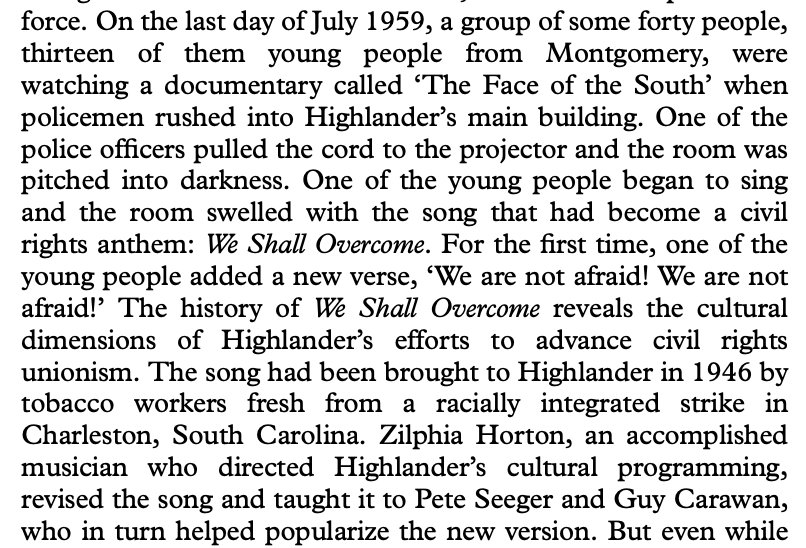
    That is not a burden, that is a pleasure. That is meaningful work, a lifetime’s worth. That is a joy. That is freeing. That is why it makes sense to me that marches beget artwork, and artists appear at marches, why singing together at the protest feels good and dancing at the labor strike creates good feeling that translates into good action. That is why it surprises me when community care in the form of public mask-wearing gets framed as fear or even paranoia. I want to say, don’t you realize? The song has the words right in it! It couldn’t be clearer. We are not afraid.1 We are in love. The world and its people are the ones for us. Your grandmother is my grandmother. Your lungs are my lungs.

    and the crowd seems to be having fun, even the dog joining in, things tumbling. The crowd in this moment. Complicated, but still joyous, transitory, momentary, experiencing this one moment of freedom before what we know is to come because we know history and we know the crowd will not win. Just one day I noticed this, and I should say that I was able to notice this because I had sing-chanted with, from then on, a different sort of art. All art either with the crowd or with the police. All art coming down to that simple divide.

    We are out here together, for one another, with every step in the bracing air, making every tiny refusal, hearing every “why would you do that when it doesn’t even matter”, saying, yes, in fact, it does matter; it does matter to refuse death as best I can—not for myself alone but for my neighbor, including the neighbor I don’t know or can’t see; saying yes, in fact, it does matter to make myself a tiny bit uncomfortable (January freeze march, Minnesota; never having a Nestlé candy bar in childhood; no grapes until adolescence; not crossing a picket line; Black Lives Matter pin bought in 2016 still on my bag despite the hot embarrassment I felt on my face when another white lady in the grocery store line said “isn’t that over?” in 2022; and yes, wearing a mask in public spaces right now—your responses may vary) if it makes someone else a tiny bit more comfortable or our life together a little more possible; saying yes, in fact, we are here together, breathing the same air, drinking the same water, walking on the same streets, waiting for the same bus; saying that the trees you prune become my bone and my blood, that the radioactivity falling from your sky after our missile test becomes the milk I give my children.

    When we say, feed the hungry, we mean ourselves as well: we are the hungry. When we say, make a world where to be sick is not to be closed off from that world, we mean ourselves: we are the ones with bodies that can be ill, can be disabled; we are the ones who age. When we say no police we mean anywhere. There is no other world, there is no other life, no other air, no other water. It is all between us. No time to waste in beginning together the work of worldmaking that is at hand. No work too small to matter, nothing so important it can’t be repeated again tomorrow. No need to wait before discovering the secret of joy.

    Thanks for reading. See you next week.

    1

    To be clear, I’m by no means making an equivalence between the ongoing movement for Black civil rights in the US and the discomfort of being, often, the only person in a room of artists or scholars wearing a mask during an ongoing, airborne pandemic. These are not the same thing. But I have learned this framing—of joy, of solidarity, and of refusal of fear—from this movement among others. I have also learned to be skeptical of the demand to see a difference in focus among movements for a just, free, safe, healthy, and joyful life as indicative of disjunction between movements. And in fact, leaders of that civil rights movement saw clearly how things like nuclear arms were involved with, not separate from, voting, housing, dignified working conditions, access to public space, education, healthcare. This is all about our obligation to provide for one another a rich, free life.

  • study in gray and green

    study in gray and green

    see a lot of paintings, see a lot of poems

    Before getting to the grays and greens, I wanted to direct your gaze toward some people I care about who make art and whose work is available to you. Jon McGregor, whose writerly friendship has been a gift for so long I had to really think to remember how we met, some years ago founded a journal called The Letters Page. It’s out of the university where he works, and it’s directed now by very capable and thoughtful students. A year or two ago, they changed format: each issue is now an aerogram, sent in the mail to all subscribers (and the subscription model is also really nice). The Letters Page only publishes work in epistolary forms, so if you have something letter-shaped, or you have an idea for a letter, send it to them! The most recent aerogram contained scanned leaves and one real dried leaf. Very charming.

    Late Night Copies Press, a collaborative, artist-run photocopier press based in Minneapolis, MN, has just put out a new laundry zine ($6). If you read the post here in November with gift ideas, you will have seen my enthusiastic review of this one. I love what Late Night Copies Press does (including their open copy nights) and you might, too.

    Finally, my brother, who generally makes things you can’t have in your house (institutional kilns, big machines, installations), gave himself the challenge of spending time this year making things that could hang on the wall, and that would be affordable for most people with a salary. (He also gave himself the, to my mind, more daunting challenge of actually putting these things up for sale.) His work is about industry and family, memory and material, in the context of the deindustrialized Upper Midwest/Rust Belt US. If you’re interested or know someone who might be, there are about eight works up in his online shop now.


    One of my students wrote in her final reflection that she now sees poems everywhere. The best possible result of a poetry class. My god. The world is full of the things we call art and poetry, all for free, all moving, all teaching, all around us. Sure, poetry and art are the nomenclature we use when someone puts their hands, the camera, a pen, a viewfinder cut in a piece of paper up to the world and holds it still for us. But it’s all right there.

    In class, at talks, at writers’ conferences, at the end of readings there are often questions about inspiration. How do you, writer at the front of the room (whoever it is) “get inspiration”? Where do your ideas come from? And in class with apprentice writers I often hear someone say “I don’t have any ideas”, or “I only write when I have a lot of inspiration”. Similarly, and not only in the classroom, I have heard: “I don’t want to read too much in case it changes what I think” and “I need to keep my ideas fresh”.

    At what point do we forget or unlearn, culturally, personally, that the ideas aren’t in us at all? That ideas aren’t boundaried like that (and, really, neither are we)—that everything we can think has been given to us or crossed into us, from the highest theory right down to the organizaton of the world into A–B–C? I think children know that ideas aren’t in them—they are always looking, asking, touching. No, ideas aren’t in us. They are in the world. The world has the ideas. We make the frames.

    Practice in the arts (which means learning to see and name the received forms, modes, styles, etc., as well as to learn to improvise and respond to the formal, textural, linguistic, etc. pressures in one’s own thinking) gives us ways to see pattern, see relation, see difference; it gives us the discipline to continue to look—listen—touch—gather sense data of all kinds (including the kinds called ‘reason’ and ‘intellection’) even when we don’t feel inspired. Because inspiration is rare. But the world is always there. Practice in art gives us the muscle memory for arrangement of the things that are. And, later, it allows us to regard what we have arranged with a critical (and self-critical) eye, to try to understand it. It is, after all, now also in the world, part of the world. It has become something that can give us ideas.

    I do not know any way to ‘find inspiration’ or to ‘be inspired’. I recognize the elation of a moment of real epiphany, and I remember from my early 20s the feeling of excitement when I ‘had an idea for a poem’. I now think that these feelings are the celebrated or more visible parts of the ongoing and often less glamorous process of being in the world as a writer and artist. I am convinced that it is that being-in-the-world part, not the tangible results it sometimes leads to, that makes one an artist or a writer. I’m interested in how to see that process-time, the middle time, as the active part of artmaking and writing. What that asks of me is not to write anything off as uninvolved with what I think of as “my art” or “my ideas”, and not to give up. Okay, not always easy—but it’s something I can do tomorrow again even if I failed today.

    What I do know, reliably, because I have based all of my work on this method, is that trying to perceive what is around me will make me think—with my eyes, ears, hands, nervous system, education, etc.—and give me things to think about in new ways (or in repeated ways). I know that boredom is often a sign of something interesting happening that I haven’t yet been able to see. I know that doing the same thing over and over can make interesting work even if the doing doesn’t interest me. And I know also that the reading of books and the viewing of artworks and the listening-to of music (just another kind of trying-to-perceive-the-world-around-me) will have given me forms that I can repeat, borrow, adapt, refuse, etc. In short, I know that I am not the only one responsible for making my work, and I know that the interest there is doesn’t have to be my invention—a walk will work as well as, or better than, a blood-from-a-turnip session at the computer.

    There is no shortcut, but there is also no delay. It’s all right there: all the inspiration in the world.


    Still against the bombing of Gaza, the occupation of Palestine, apartheid, empire, all wars, all dehumanization, all destruction of land, water, air, living things, by the way. Still walking around with this song in my head. How do we do it? Not alone, that’s for sure (there are five links there, O you reader!).

    Thank you for reading! See you in a week. Since you made it so far, here is a utopian vision from Mr. Seeger. And here’s some courage—sing along with him and I think it would be hard not to feel it.

  • twelve walks

    twelve walks

    one glimpse each

    Walking is one thing that shows me how to make images and that teaches me to think. It creates time. It is a distraction from grief, anxiety, boredom, self-doubt. It’s a physical pleasure. It’s the way I learned to pass Sundays when I first left the US to live elsewhere, days there was no work to go to and everyone else was with their family and friends. It is a practical solution to the problem of not having groceries or wanting to go somewhere. It is a way of understanding where I am and what my relation to place can be. It is my primary mode of transit. Walking is a way of looking, and, because I walk in the same places over and over, it is a way of looking that forces me to find interest in things that sometimes feel very interestless. Walking is an experience of in-the-midstness that has come to be the basis for all the things I think and how I think them.

    Walking feels slow but in fact it’s pretty fast. When I’m walking with someone else I can be self-conscious about the fact that I want to stop and look, stop and take photos, stop and write something down, stop and listen or record. But we’re moving fairly quickly even then. Even when I’m on a beeline to the shop for milk, wishing I could go faster, get home faster, I sometimes realize just how much faster walking is than perceiving. I have to remind myself to try to see and not just pass by, even things I think I know.

    Drawing is something else that teaches me to see, distracts me from grief, creates my experience of time, helps me understand where I am, forces me to be interested in my everyday life.

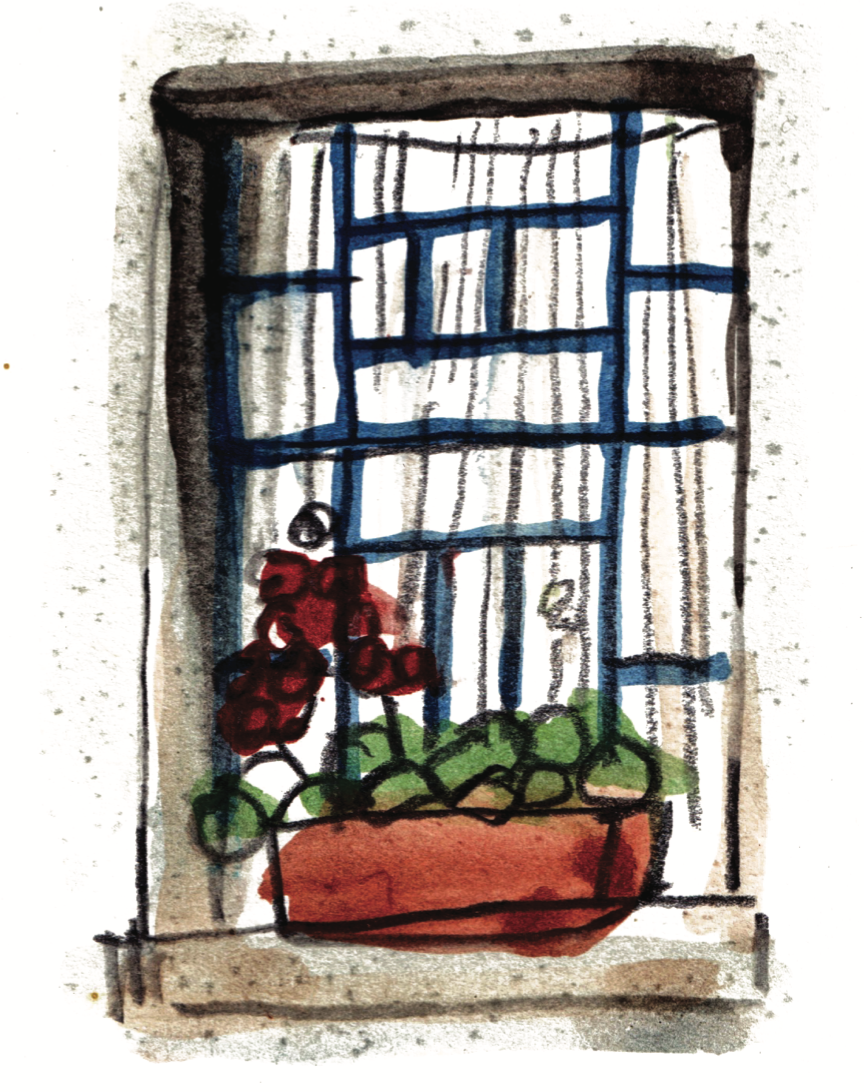
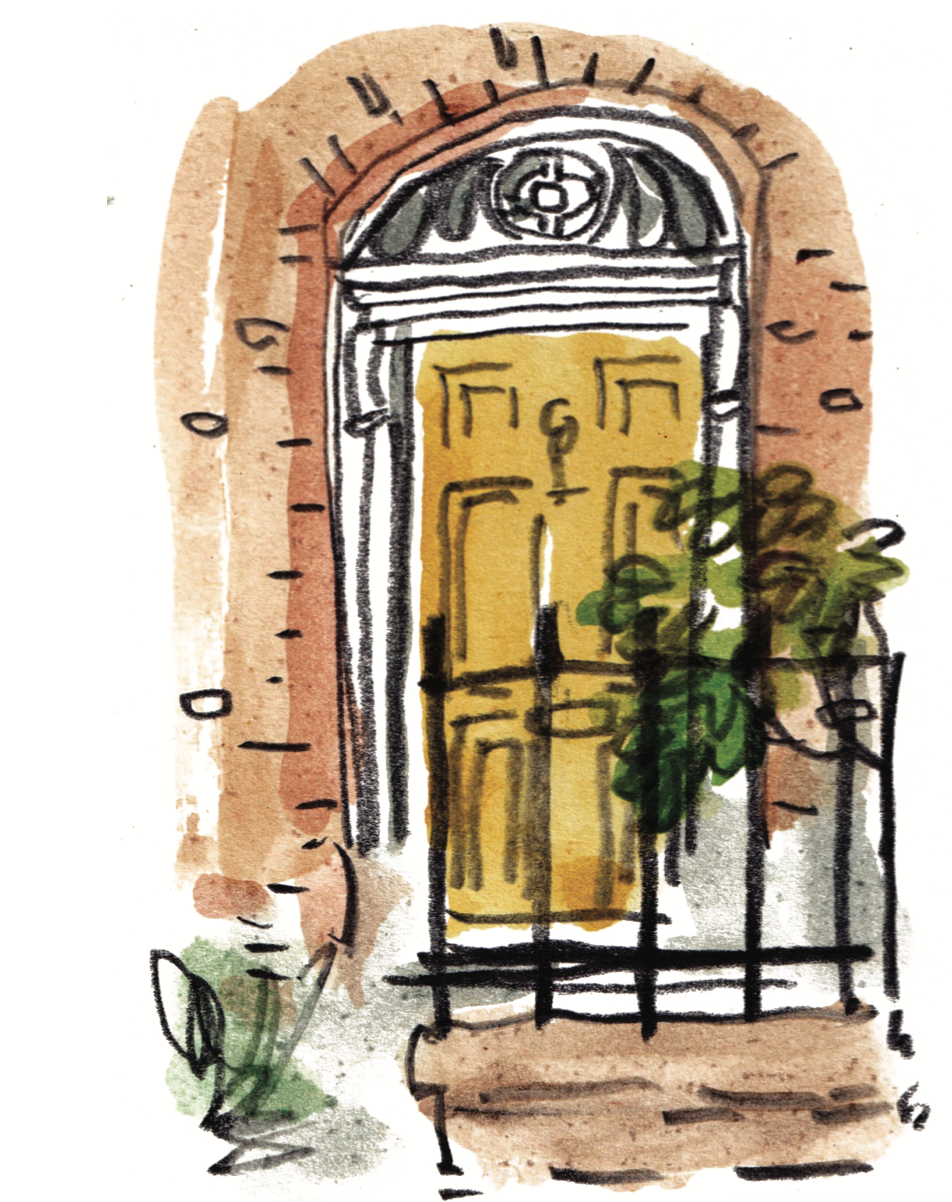
    So I’ve done something to bring them together, the walking and the drawing. Twelve glimpses from my walks here in Dublin, done at the speed of perception, the speed of walking, and the speed of drawing. Ordinary things: doors and flowers, curtains and birds, made with my ordinary watercolors and a heavy pencil.

    From 2010 until 2018 I made a calendar every year and sold copies. In 2021 and 2022, I made calendars that could be downloaded and printed at home for free. In 2023 I didn’t make a calendar. I’ve made these drawings into a calendar for 2024, and from now until Saturday, January 13 at 9 a.m. Irish time (that’s 4 a.m. US Eastern), you can download it for free and print a copy at home or at a copy shop. This calendar is my attempt to translate the quickness of perception at the speed of walking to the page. There is one small drawing each month.

    Some details: the format of the file is A4, but you can scale it to print on letter paper; you could also print two pages per page and trim them down on both or all four sides for a calendar slightly smaller than A5. I think a mid-weight paper, 120gsm to 250gsm, would work best, but you should use what you have. The calendar is published under a Creative Commons BY-NC-ND 4.0 license, so you can print it for your own use but not for sale (full details of the license here).

  • [while walking]

    [while walking]

    and looking, and walking and looking

    Three storms in the north Atlantic have taken most of the leaves off the sycamores and hazels. They lie in piles, some saturated with water and becoming compost quickly as foot commuters trample them. Some are swept up over the day, so I see them in the morning but walk home along a completely cleared path. Out the back window, the little birch tree is totally bare now. Its leaves were bright yellow—not gold as the hazels and sycamores were, but a cadmium yellow. Now the branches are revealed in their creaminess, outlined in peach that darkens to red. Through the big windows of the house across the back courtyard I can see gulls flying. Winter is here—my students tell me this when I remark on the fall weather. They are right: winter in this landscape is so subtle, as subtle as spring was in Maine. It will pass without my seeing it, if I look for temperatures below freezing or the arrival of snow. My friend texts from much farther north and I see the snow on roofs where she is. Here, the sidewalks are perpetually damp and the laundry will only dry if it is set next to the radiator. The boiler breaks and the landlord is in no hurry to fix it, so as the mercury falls below zero Celsius we wrap ourselves in blankets and put hot water bottles under our clothes. The laundry hangs in the cold damp air of the apartment.

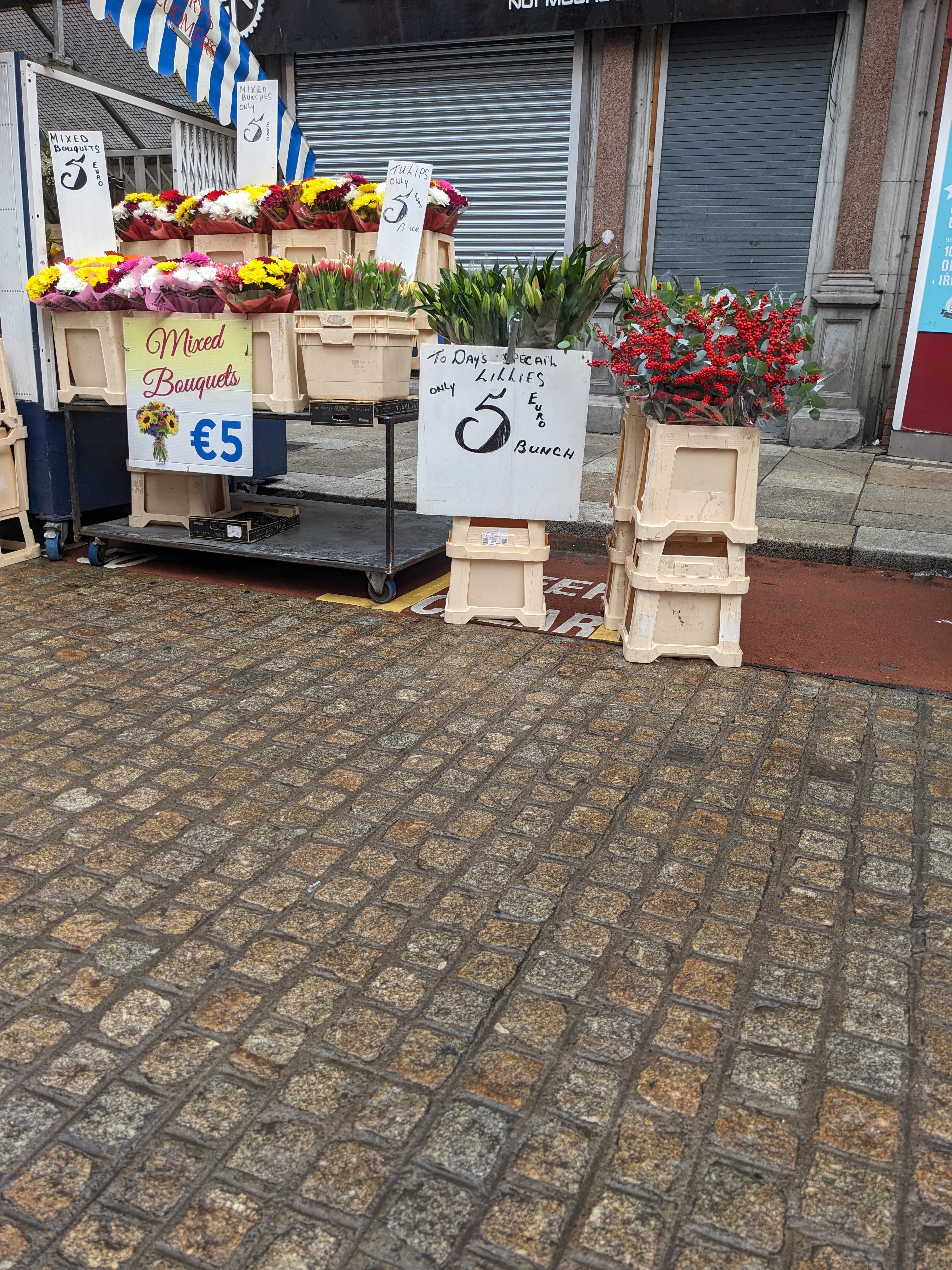
    On the corners of major streets the flower sellers show up every morning, and now there are cut trees and evergreen branches as well as the hydrangeas, chrysanthemums, lilies, freesias, carnations that are the general stock. They never seem to run out of tulips. And on Moore Street, the vendors’ flowers and fruit are priced with signs that someone’s drawn by hand. I like the care with which that number 5 was made. Makes me think of this other instance of the number 5 (I Saw The Figure Five in Gold), which points to this one.

    November was an exceptionally outward-facing month for me, with readings and performances and talks and extra lectures at work. And now that most of that is done (I have one more talk coming up, December 10 at 2 p.m. US Eastern/7 p.m. Irish time; information here) it is very good to have a moment to step back and say, oh, that’s what I’ve made.

    It’s not possible for me to see what a thing is while I’m making it, and that goes for everything. It’s necessary to step back from the place I’m cutting out or sewing together a dress, and from the poem, and from the performance, and from the drawing, and see it apart from me. Then I can make the kinds of decision that are about seeing patterns from outside rather than feeling them from inside. I think this is what Corita Kent (and her students) meant when she wrote that “to create and to analyze are different processes” (rule 8). We need both in artmaking. But we have to be bifocal with them. Go out and come back, be immersed sometimes and up for air at others. It’s good to have a very active period of making. And it’s also good take stock of what you make. It’s good to pause, and it’s good to wait. Breathe in and also out.

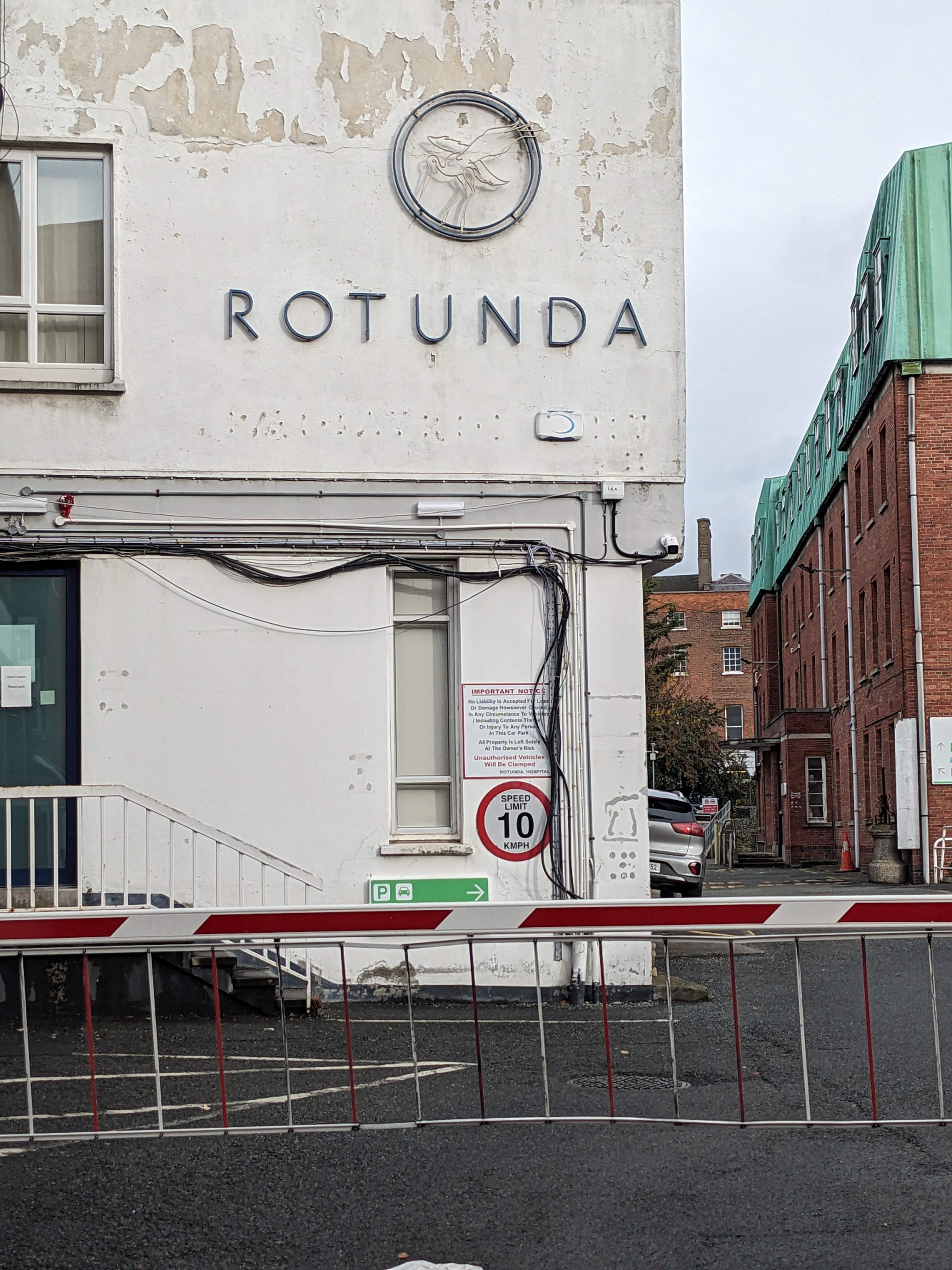
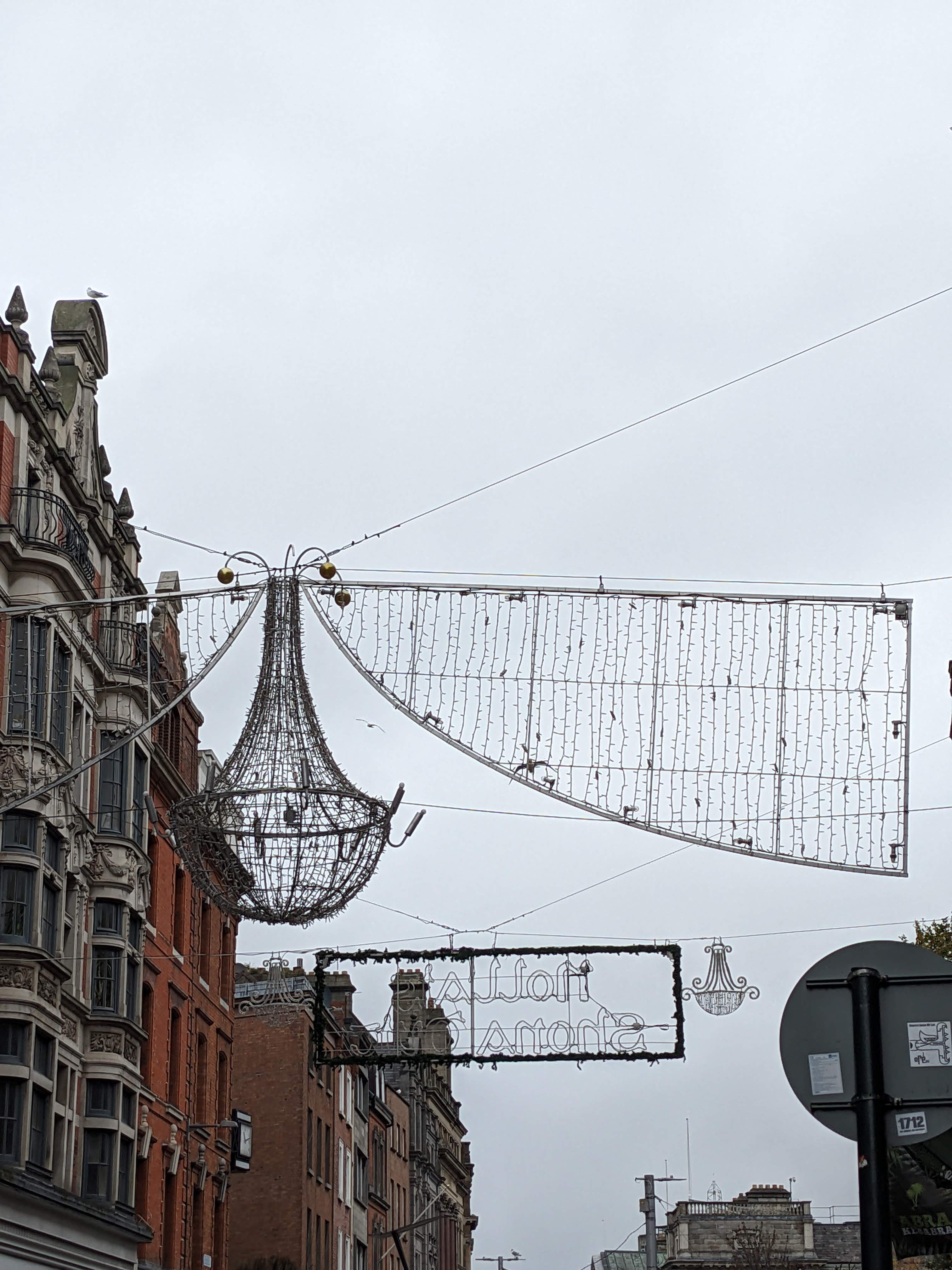
    The work I did this past month meant I spent more time at work than usual but it also brought me to parts of the city I don’t often transverse on foot, as I looked for certain materials (for costume-making) and tracked down certain places (for poem-making). I love the old neon sign on the Rotunda Hospital, just north of the city center, its delicate stork and that great O. I saw the figure O in neon.

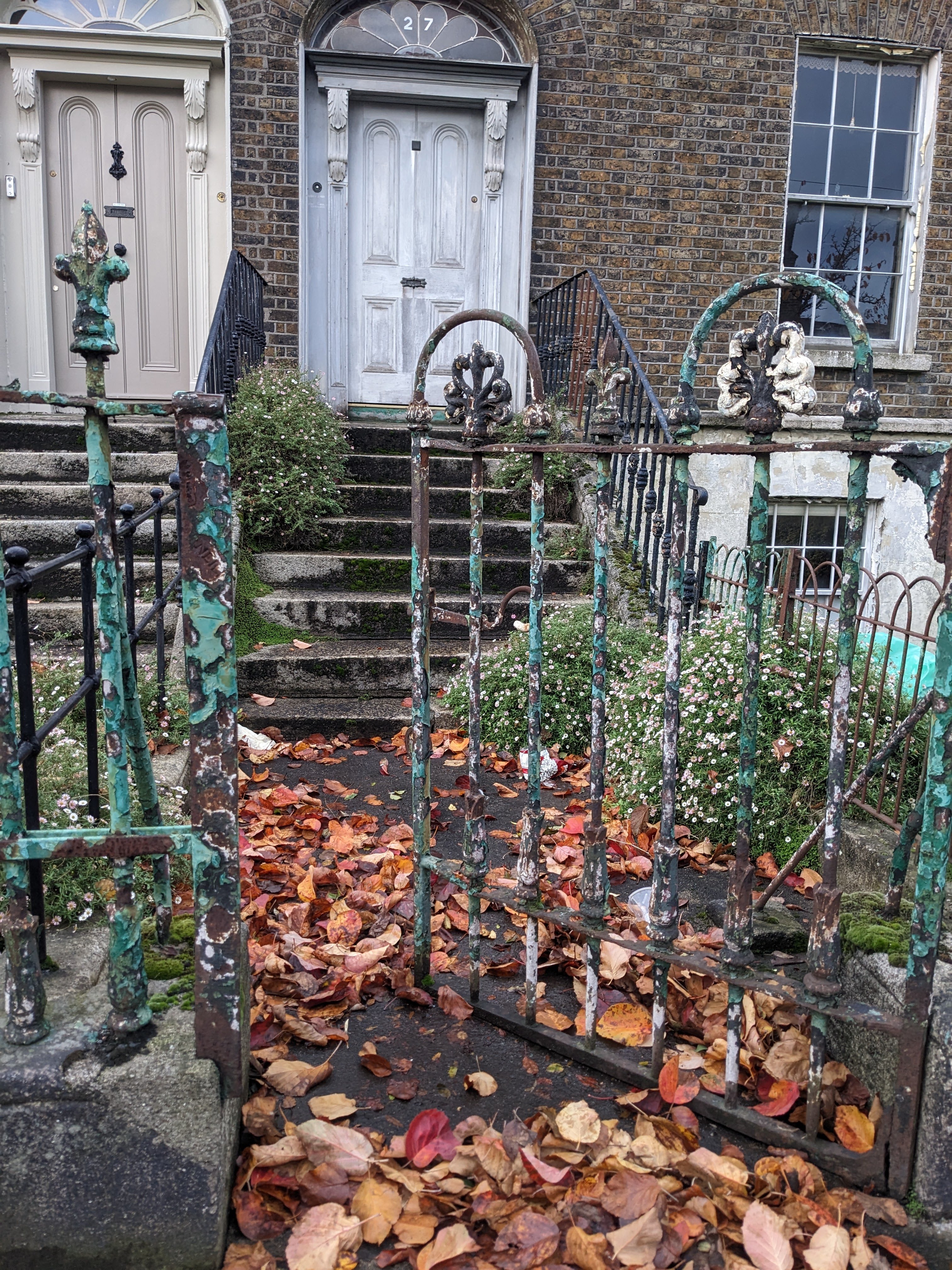
    And this gate, that greenblue color I see in many places in this city, especially gates. Every place is a paintbox. I have been thinking about samples recently—the musical practice of borrowing and the sample as a tester or miniature, and the forms samples take (like paint sample cards). Bits of something else brought into a new situation, they change the situation and are changed.

    I go to the art museum on a very gray morning and find myself surrounded by someone else’s vision of light. I’ve been listening to “Ladies and Gentlemen, We are Floating in Space” by Spiritualized on repeat. I am reading Brian Dillon’s Suppose a Sentence and Kate Beaton’s Ducks. We boil the kettle to make more hot water bottles and also cups of orzo with a tiny bit of sugar and a good bit of milk.

    This time of year it is easy to be bogged down—under the darkness, under the damp, under the fact that the heating is broken, under the cost of living and the made-cheapness of human life, under the very real weight of grief and horror and fear. How to go on? Step by step, little bit by little bit, without anesthetizing myself to the sharpness of the world that is: the indicator of its preciousness and the thing that spurs me to act. But also, without insisting on a hairshirt.

    It’s comfort. That’s what I’m talking about. Not numbness, not a commercialized ‘self-care’ that’s really just care for a corporation’s bottom line. Not a “peace of escapism, this peace that fails to confront the real issues of life, the peace that makes for stagnant complacency” (Rev. Dr. King; source). Comfort of body and of whatever the thing is that used to get called a soul. The dignity and integrity of the person. And that’s what I want to write about this month: the words of a few old songs, comfort and joy.

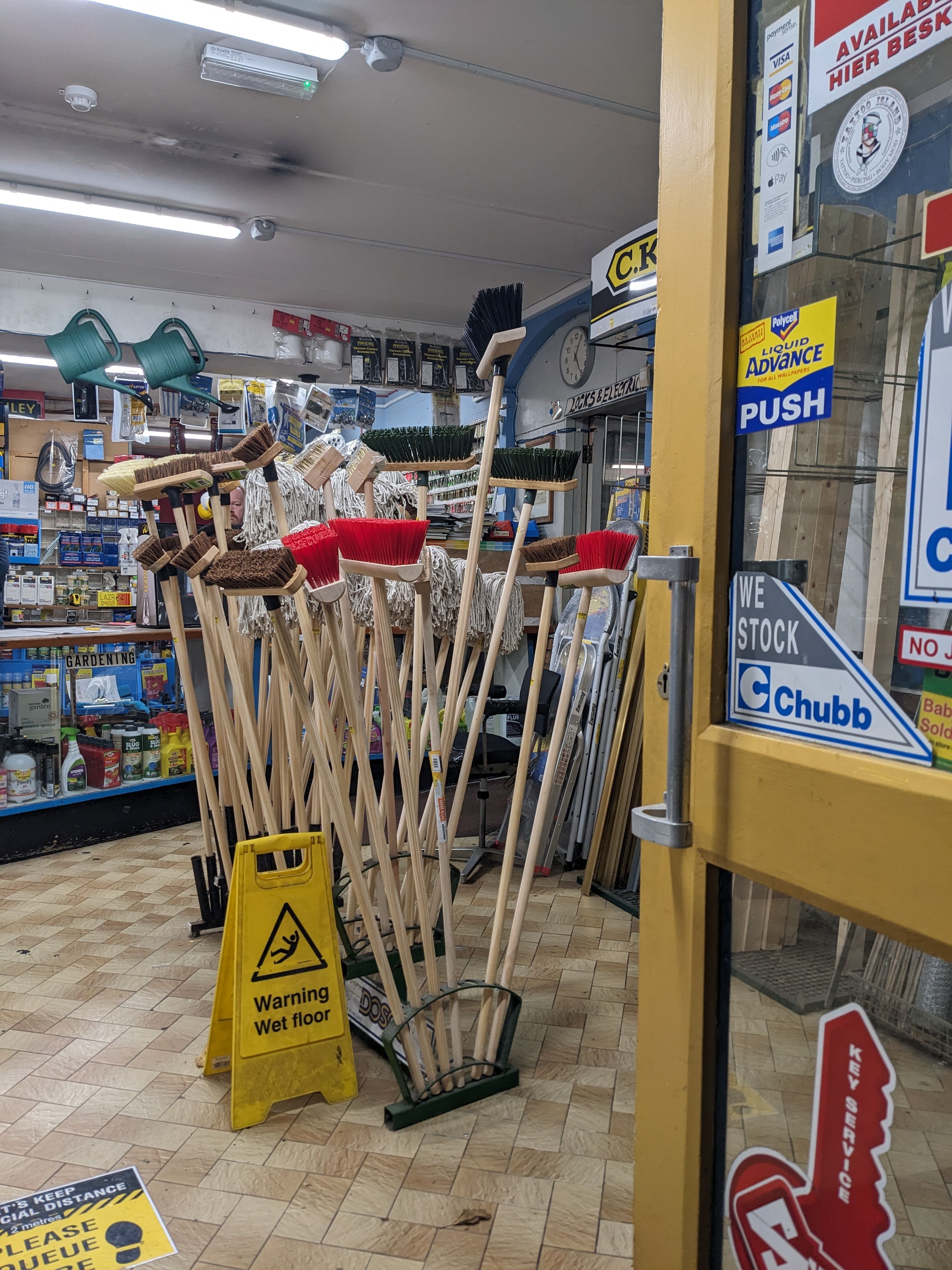
    I’ll try, this month. I’ll do my best. But for now I will leave you with this beautiful display of brooms, snapped (with permission) through the door of a shop on an already-dark Thursday evening at the end of November, as I and everyone rushed through the city, our passage lifting up the leaves among us, waiting for the ones who sweep them up while we’re asleep.

    Comfort for everyone, and safety, and belonging.
    And freedom from occupation, and from fear.
    And shared, active liberation.
    And peace of the positive kind, that is the presence of justice.
    Swords into ploughshares.
    Free Palestine.

    Thanks for reading. See you next week.

  • [while walking]

    [while walking]

    in the thin part of the year

    Good morning—

    On November 19 at 2 p.m. US Eastern I will give the first of two lectures as the Annulet Inaugural Linkages Lecturer. I will give a talk entitled “When you get someplace new, learn to read the landscape like an alphabet”. This talk will be broadcast online, for free. To register, please click here.

    On November 21, I will read and talk with Majed Mujed and Hua Xi as part of the Trinity College Literature & Resistance Series, in the Trinity Long Room Hub. You can book a place here (in-person only).

    On December 10 at 2 p.m. US Eastern I will give the second of the Linkages Lectures. I will give a talk entitled “On the line”. This talk will be broadcast online, for free. To register, please click here.

    Once these are done, I am never doing anything in public again. For at least a month. But I’m sure by the start of the new year I will be full of vim again. If you’d like to have me to read or speak at your university, school, class or organization in 2024, please drop me a line.


    One day, the light changed and it was: late fall. Or early winter. In the mornings the air is damp and cutting. In our apartment, the windows are covered so thickly in condensation that if it is overcast, the condensation stays all day. Even opening the windows doesn’t always get them to dry out, so our apartment is damp and cold, even with the heat on. A student returns a book they borrowed and it is stippled with lavender mold. My room is so damp, they tell me, and I can see they are ashamed to return the book in this condition, but I’m thinking: what about your lungs? What about your bedding? Spray some vinegar on the book and it will be fine, but bronchioles are a little more delicate.

    I look across the back yard to our landlord’s house, and notice that his windows never have condensation on them. Then I take a squeegee and open the window and carefully wipe the water off the window, into the cold outside air.

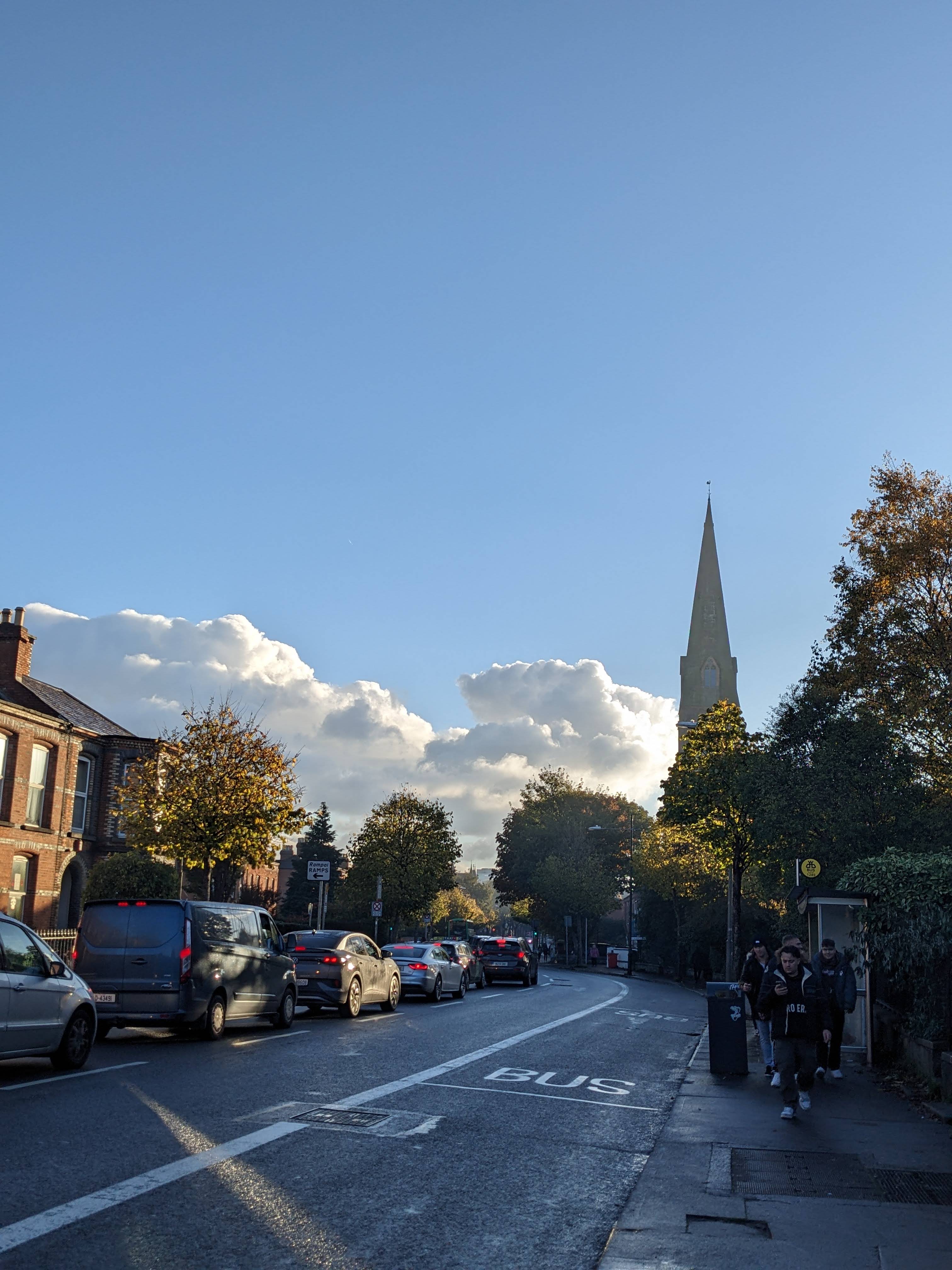
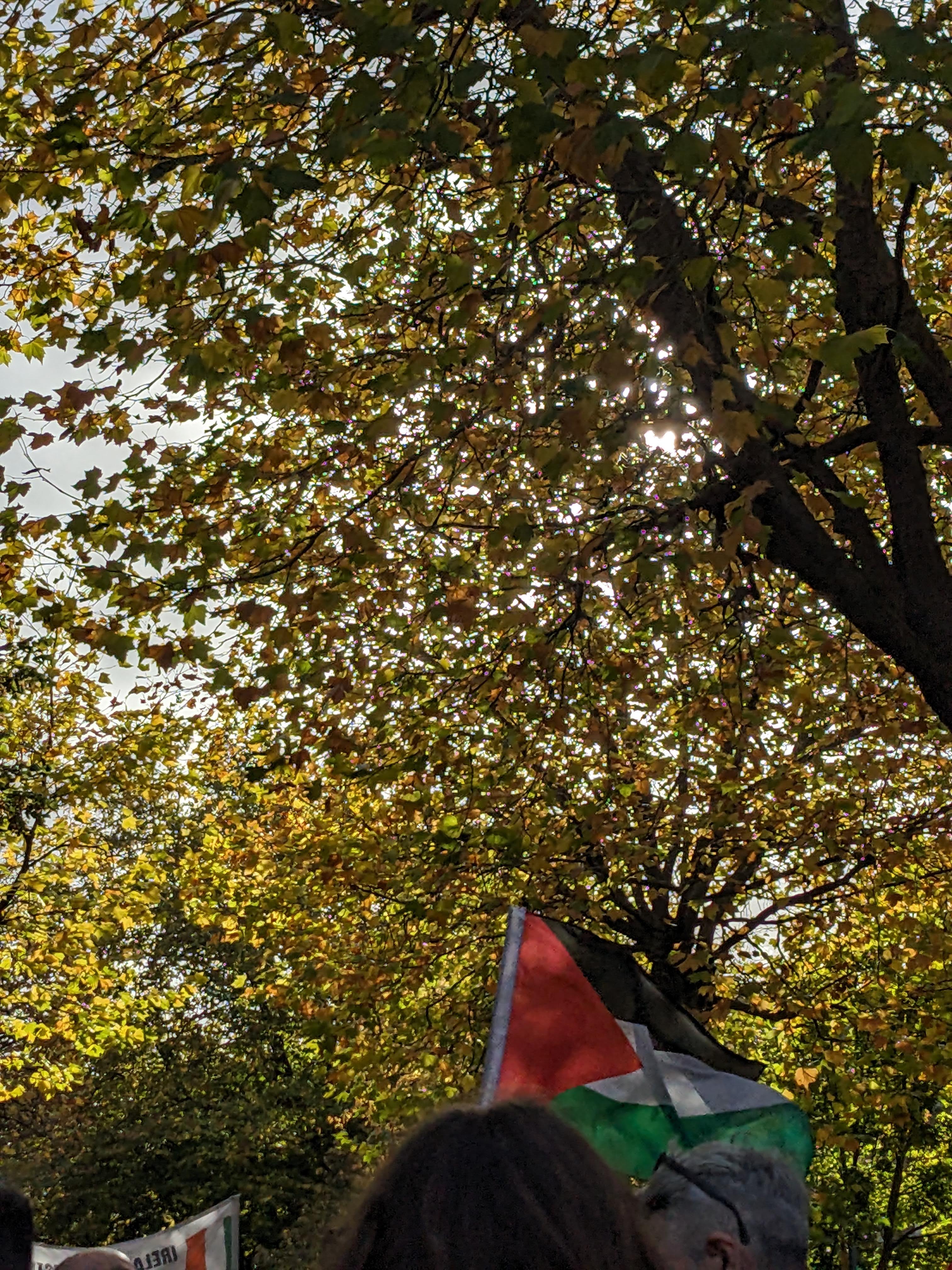
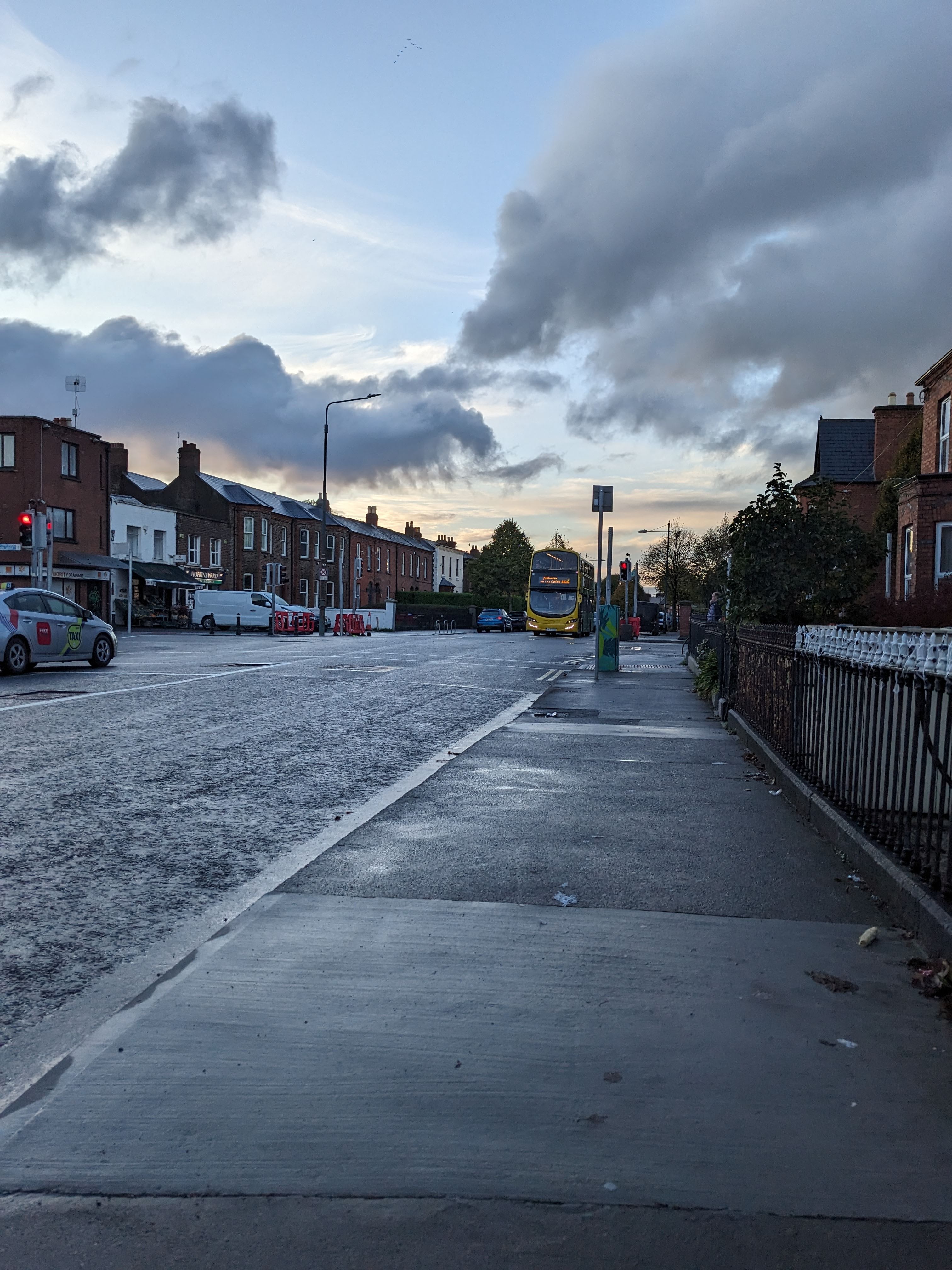
    Despite the sharpness of the damp-cold, on days when the sun is out it’s easy to get overheated. I bike across town to meet hundreds of other people in front of embassies and monuments. When I leave the house I’m wearing two sweaters, long underwear, a jacket, a scarf, a hat, mittens. When I arrive on foot, my bike locked up elsewhere, I have unzipped my jacket, removed my hat and scarf. The sun of early November comes through the golden leaves of sycamores and hazels, and through the mist rising from asphalt in this city of aggressive drivers and tall yellow buses, this city guided along its north and south by straight-edged canals. In cities where the buses are running and the ordinary chores remain to be done—the groceries, the laundry, the dishes—all over the world, there have been people meeting in front of monuments, in front of embassies, in the cool damp air.

    As we walk I hear Sister Rosetta Sharpe playing, singing | hear Mahalia Jackson singing: this is the tempo of this kind of walk, to me. We are here for one another’s liberation; we are here for refusal (a refusal we can only do together). What a joy to be able to refuse together, what a tender obligation. Lay down my sword and shield, down by the embassy, down by the armaments manufacturer, down by the multinational corporation benefiting from indentured labor, down by the university, down by the side of the canal, with you. Under the golden leaves some people are crying, and some are shouting, and some are silent, and all of us are together, warmed by the light in the sky that cannot be owned and belongs to all of us.

    This week I have been listening to The Alchemy Lecture: Five Manifestos for the Beautiful World, organized by Christina Sharpe at York University (CA). (I’m not sure how long this recording will be available. Information about the series is here. Last year’s Alchemy Lecture is published and available here.) The manifestos are given by Joseph M. Pierce, Phoebe Boswell, Cristina Rivera Garza, Saidya Hartman, and Janaína Oliveira.

    One thing I have thought about as I listen is the difference between event-makers who consider the audience a coequal presence with the speakers, and event-makers for whom the audience is an afterthought, or not a thought at all. One way care for audience shows up is in the way event-makers think about architecture. By architecture I mean the shapes of rooms, the way chairs are set up, the ways one can come in and go out of the space, the way eye contact is or is not made (and with whom), how hospitality is broadcast (in body, speech, arrangement, sightlines…), the way that one’s ticket is or is not taken, the organization of space and space-use so as to make it possible to feel one is permitted—or even welcome—to be there (or not), as well as normalization of access (using microphones, having interpreters, asking for masks to be worn, ventilating/filtering air, spaces for all kinds of bodies to sit or be comfortably). These ‘little’ things (they aren’t little—they are worldmaking) are so often neglected because they do not seem glamorous. In fact they are mostly deglamorized, seen as killjoy problems, made to seem a little embarrassing or outrageous, in the way of fun (for whom?).

    But I think this kind of space-making, audience-oriented care, and all the choices that doing it requires, are the entire fabric of our relation. And such care often underpins events that are in their entirety rich, carefully made, thoughtful, exciting—why? Because someone who has stood in the back of a hall and washed dishes knows what it’s like to feel not-in-the-room and moreover knows how to make a room, in all its detail, that doesn’t do that to others; someone who has felt invisible or isolated knows what it’s like to be welcomed, against expectations, and so how to attend to real and deep hospitality. Someone who has done or pays attention to the kind of work that makes an institution run—whether teaching composition on an adjunct contract or cleaning toilets and emptying garbage cans or getting up early to chop onions in an institutional kitchen—knows that that labor’s invisibility or lack of ‘glamor’ is not a picture of its dignity, meaning, or value. There is a moment when, in her introduction, Sharpe speaks directly to the workers who clean, make food for, and maintain the university where this lecture is about to take place. That is the kind of thought and attention that to me is a harbinger of a beautifully made event.

    Showing care for these ‘little’ (not little!) things is almost always, in my experience, a sign that the careful making will be thorough—that everything made by this intelligence will be attentive and aware that to give an event means to ask people to live toward death with you a while. And so it is with these lectures, which are audible (! recordings aren’t, always!) and smart and interesting and given with a rigorous towardness for the audience, whose living presence the organizers and speakers have clearly considered just as much as they have considered their own there in the room. It goes without saying that the ideas and ways of making them that the five speakers offer are worth your time—I hope you’ll give them a listen/watch while you can.

    Another student, in a conference, says they hadn’t wanted to show me their work because it is ‘not poetic’. And then they show it to me and it is so meticulously observant of their everyday life, their everyday language; it is beautiful. Look, I want to say to that student, to myself, to all of us: there isn’t any poetry out there that could be more beautiful than your steadfast attention to how things are, where you are, what they mean, how they work, in the language of your body and house and family, religion, region. There is no received form or received understanding of aesthetic pleasure that could ever be as beautiful as this description of your bus ride. And if you look closely at your bus ride for long enough I think it will also teach you how(s) to think through the questions that might seem far off but are in the end intricately related to it: how to be together. What a life is for. What kinds of things we want to make, with one another, for one another, in this world that is continually ending.

    And finally—
    Let all beings be free, safe, beloved, and well.
    Stop the bombs. Swords into ploughshares. Free Palestine.

    Thank you for reading. See you in a week—

  • [while walking]

    [while walking]

    beauty as an inversion of the order of taste

    [There are a lot of new people here, thanks to my friend Jon in great part, I think. If you want to know what this place is about, this will give you a sense of it. In brief, I am writing an essay each week for the twelve months between March 1, 2023 and March 1, 2024. They all go out on Sunday mornings Irish time. Each month, one essay is titled “[while walking]” and is drawn from my near-daily walks in the place I live, and another is titled “[while washing the dishes]” and is a chance for me to write about—or invite someone else to write about—something that’s entered the frame of my thinking while doing housework. Across all the essays here, I take Fanny Howe’s idea of “bewilderment” as a guiding principle both aesthetic and ethical, and consider Virginia Woolf’s “little arts” of “talk, dress, cookery” alongside other arts. I aim to think about what it might mean when Frank Bidart asserts that “being is making” and when Toni Cade Bambara writes that the role of the artist “is to make revolution irresistible”. Thanks for being here.]


    A note about a few upcoming events in November and December.

    On November 9 at 7 p.m. Irish time in the Classics Museum at UCD, Jeanne Tiehen will direct a staging of my work An Archaeology, for which I’m making costumes. In-person only; tickets are free but very limited. Email sasha.smith@ucd.ie to book.

    On November 19 at 2 p.m. US Eastern I will give the first of two lectures as the Annulet Inaugural Linkages Lecturer. I will give a talk entitled “When you get someplace new, learn to read the landscape like an alphabet”. This talk will be broadcast online, for free. To register, please click here.

    On November 21, along with two other writers to be confirmed, I will read and talk with the others as part of the Trinity College Literature & Resistance Series, in the Trinity Long Room Hub. Event and booking information will be here (in person only).

    On December 10 at 2 p.m. US Eastern I will give the second of my Linkages Lectures. I will give a talk entitled “On the line”. This talk will be broadcast online, for free. To register, please click here.


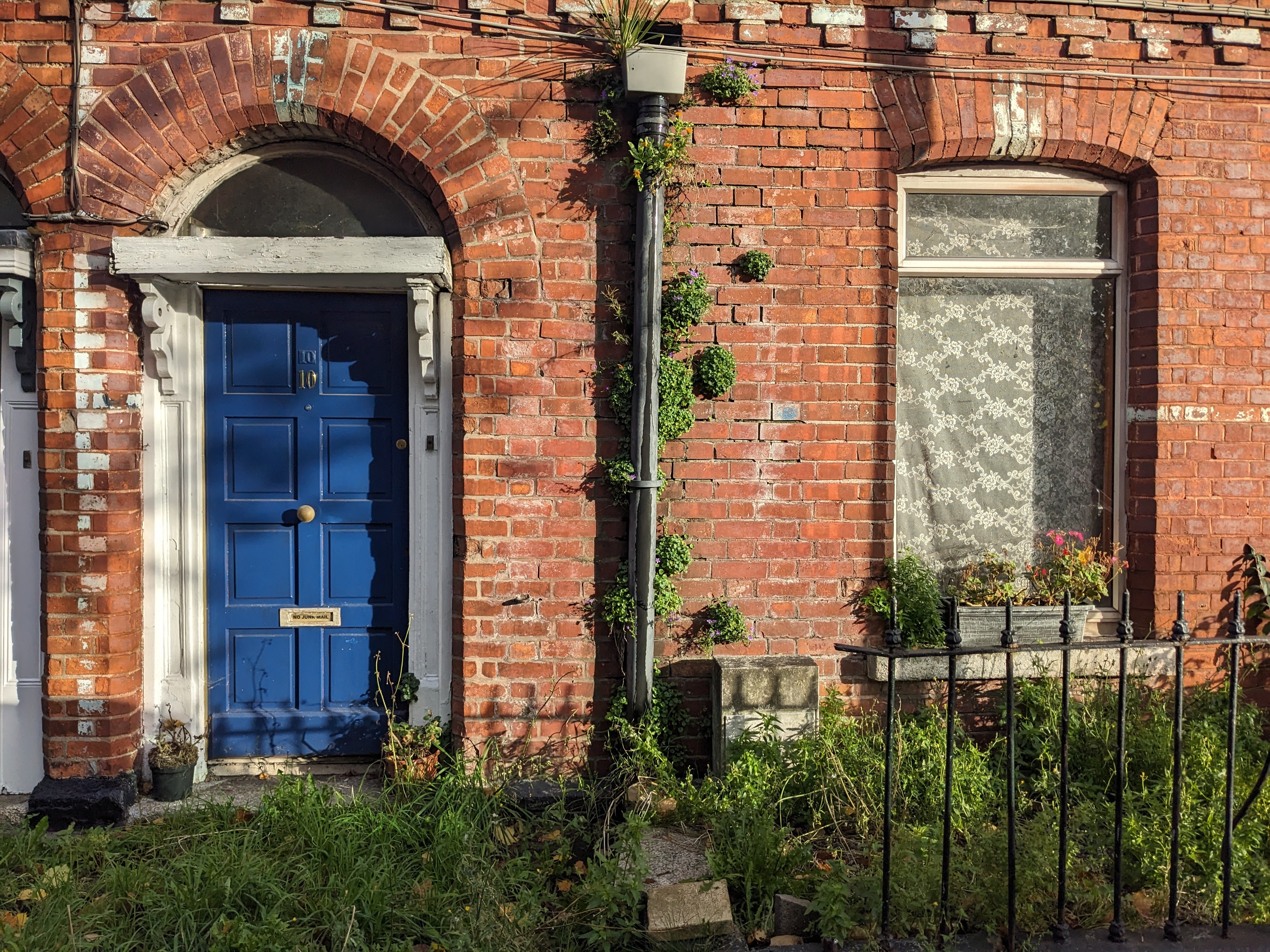
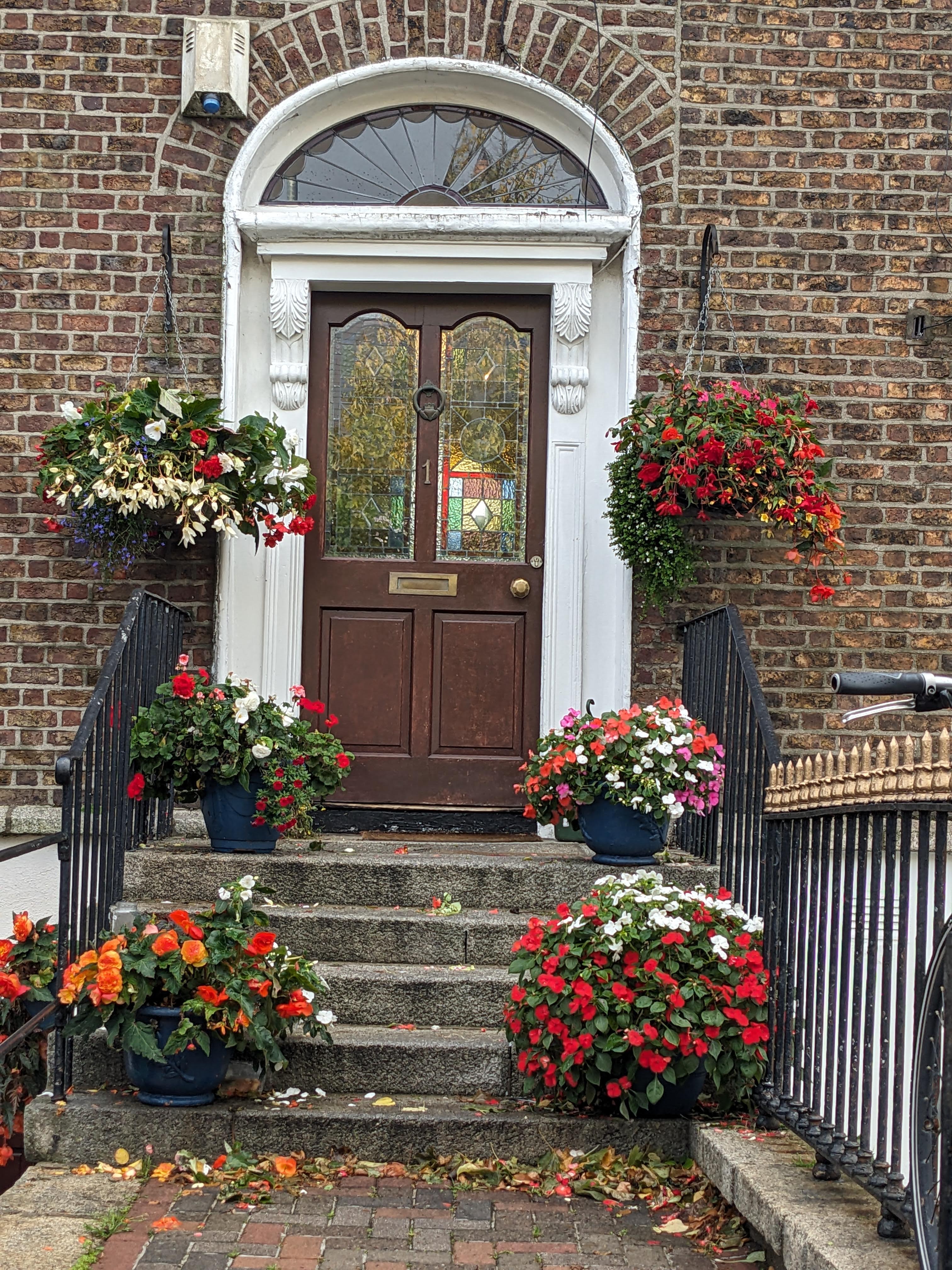
    There is a lot of beauty in this city, like everywhere. You look long enough and you can’t stop seeing it. People want to make their spaces feel right to them, and that yields beauty—not the Home & Garden variety, not the Instagram variety, which are a skin of “beauty” but not beauty. By beauty I mean, among other things, the old man I often greet while walking home: he sits on his chair inside his southwest-facing doorway anytime there is sun in the afternoon. He has built little shelves all up and down the inside of the frame to hold plant pots and has tiled them with orange and yellow and brown tiles. He did it himself, he must have. They are ugly but they are beautiful because they are particular—they show the making and the maker in them.

    There is a lot of “good taste” here, too; a lot of self-conscious correctness, a lot of primness, a lot of what feels to me like Prufrock saying to himself, “Time to turn back and descend the stair, / With a bald spot in the middle of my hair — / (They will say: “How his hair is growing thin!”)”. A lot of what looks like “beauty” and “good taste” here, as elsewhere, is the adoption of the mores of wealth as a sign for beauty. These mores produce desire in me—they signify space, light, not having to move yet again, no landlord, some kinds of ease—but they often, ultimately, feel hollow. I often feel more alive in a room someone has decorated with “too many” patterns and colors than in a “tasteful” gray or white and pale wood room. I love this essay by Anne Enright in a similar vein. In the end, the facts of the world are generally more of a blur than a binary. The surprise of individual seeing and world-creating pokes through and ruptures the skin of “good taste” to make a moment of beauty.

    In any case, let me be clear that when I say “beauty”, I’m not talking about “good taste”. I don’t care about “good taste”. “Good taste” is a set of rules that serve wealth and power by grinding in the values of of wealth and power to the point where they seem normal, unquestionably desirable, almost signs of health (aesthetic as well as bodily/mental), and nearly invisible. “Good taste” is a continual lesson in not-looking-at-the-world. “Good taste” is fitting oneself into a given container and god help you if you overflow. No, thank you. Not “good taste”; I’m talking about the beauty of invention and of lived-inness. The beauty of specificity of attention. The beauty of being-person with other people. That’s what we grieve when anyone dies, I think—the way they made a world, which no one else could have done in just that way. And then also the beauty of the world they were, taste be damned, which no one else will ever be, despite the preservation of matter and energy in other forms.

    There is a lot of vileness in this city of beauty, too. Vileness and the pressure of “good taste” go hand in hand.

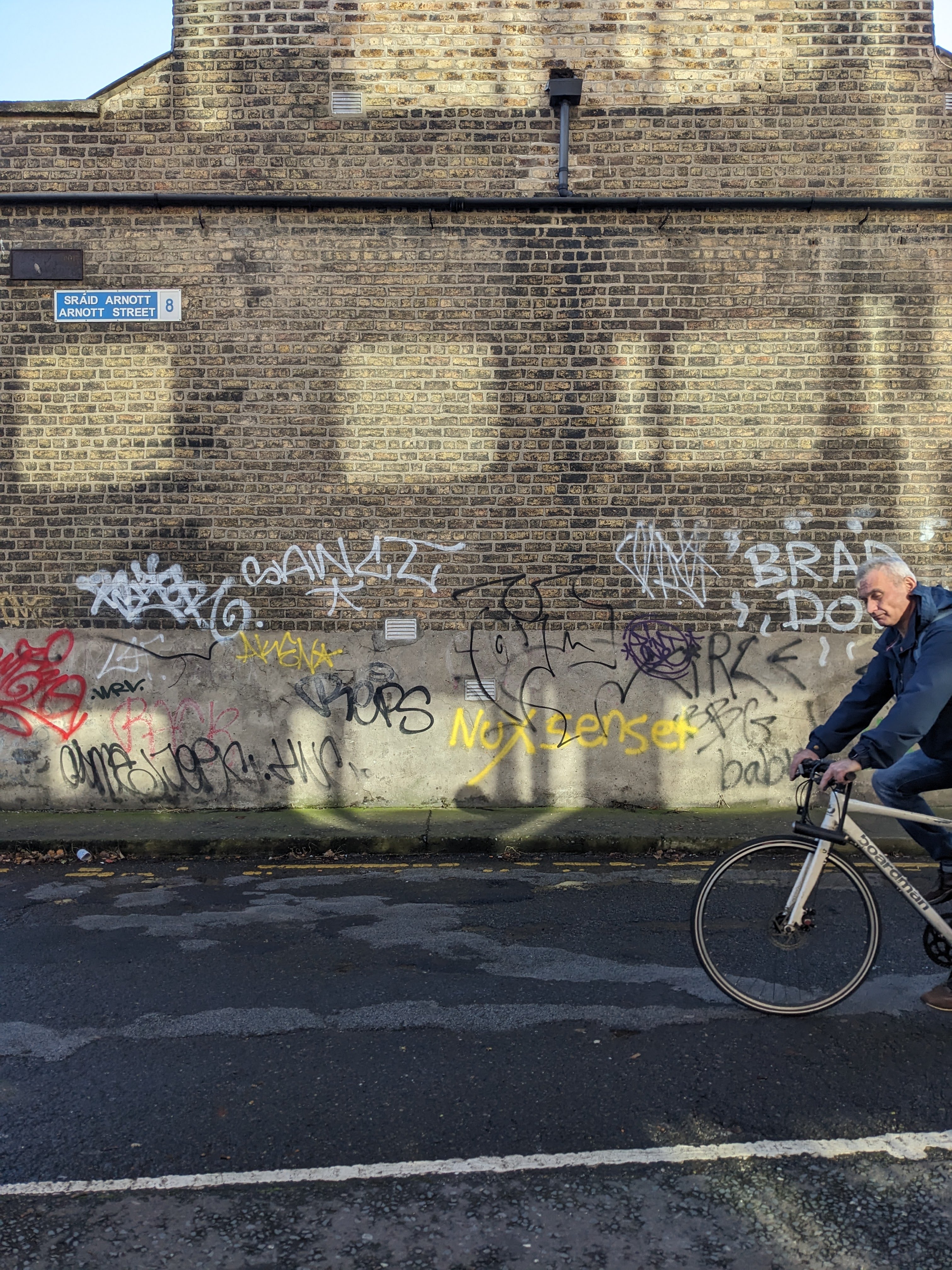
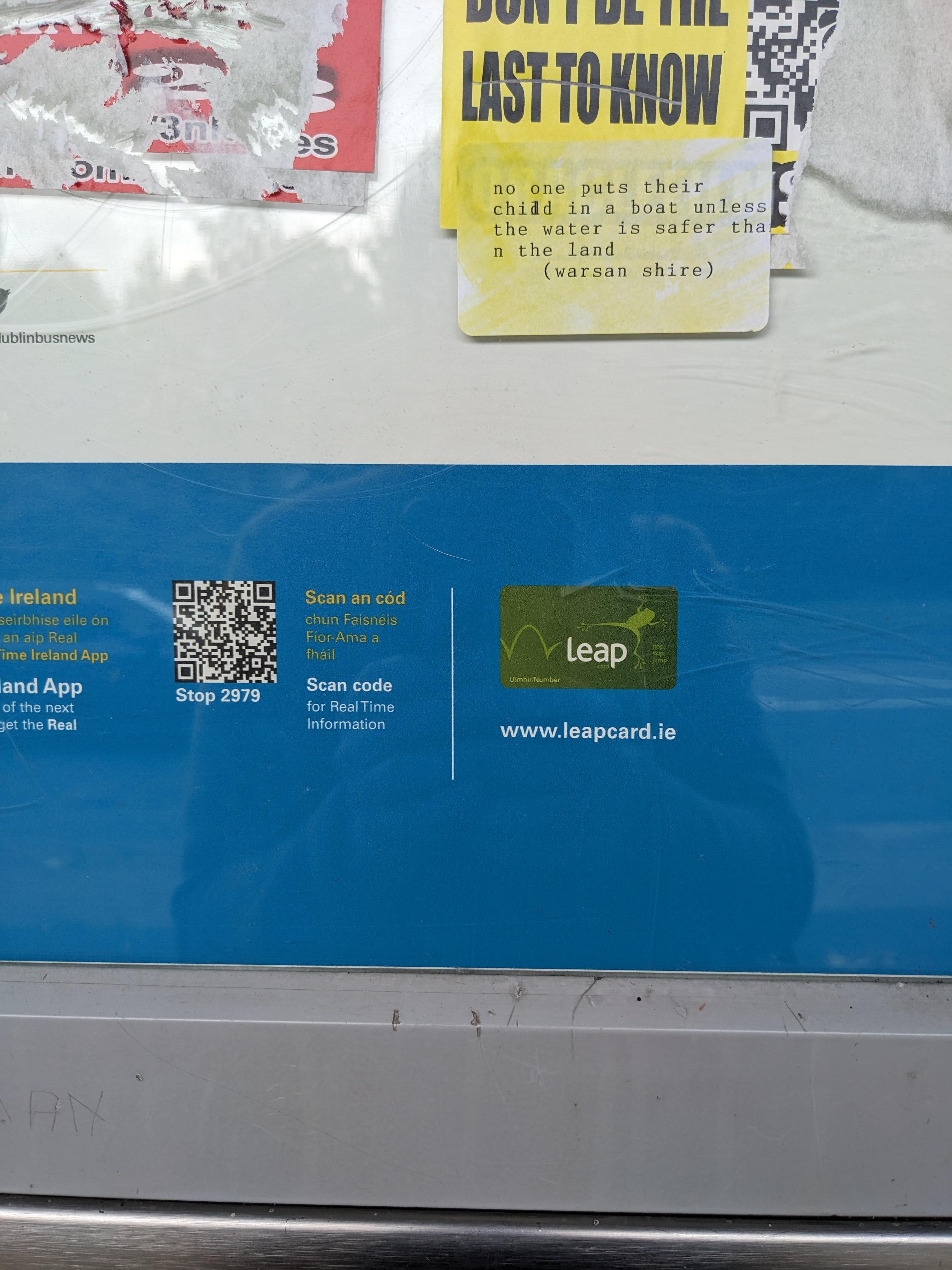
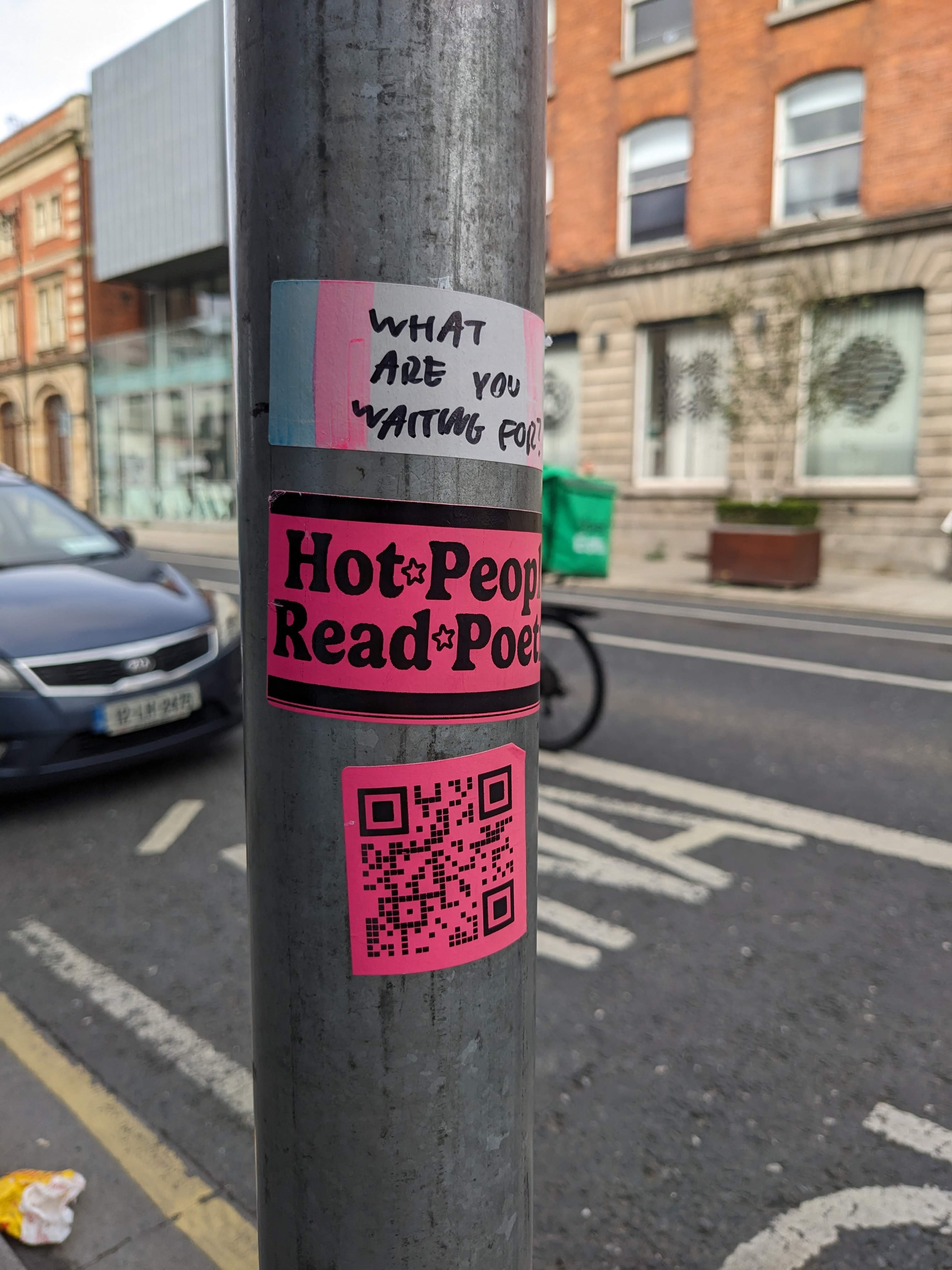
    I peel far-right stickers off postboxes, garbage cans, lightpoles, and signs as I walk. They have visual rhythm: appearing every so often along particular stretches of road, in particular areas in my neighborhood. I have never seen anyone put them up, but they are there every week, sometimes more than once a week. And I rip them down every week, sometimes more than once a week. I imagine no one sees me doing that, either, at least most of the time; most of the time, people don’t look around them as they walk or drive. I know that it is not ‘becoming’ of me, a middle-aged woman, to stand and touch ‘dirty’ things in public spaces. Though I generally feel unseen while I peel the stickers off, when I am seen, I see people’s disgust. It is true that the sides of public trash cans are dirty and I, in my leather shoes and work clothes, am ‘clean’. The meniscus of manners and class and taste ought to keep me well-behaved. But I reach out and peel the sticker off and throw it away.

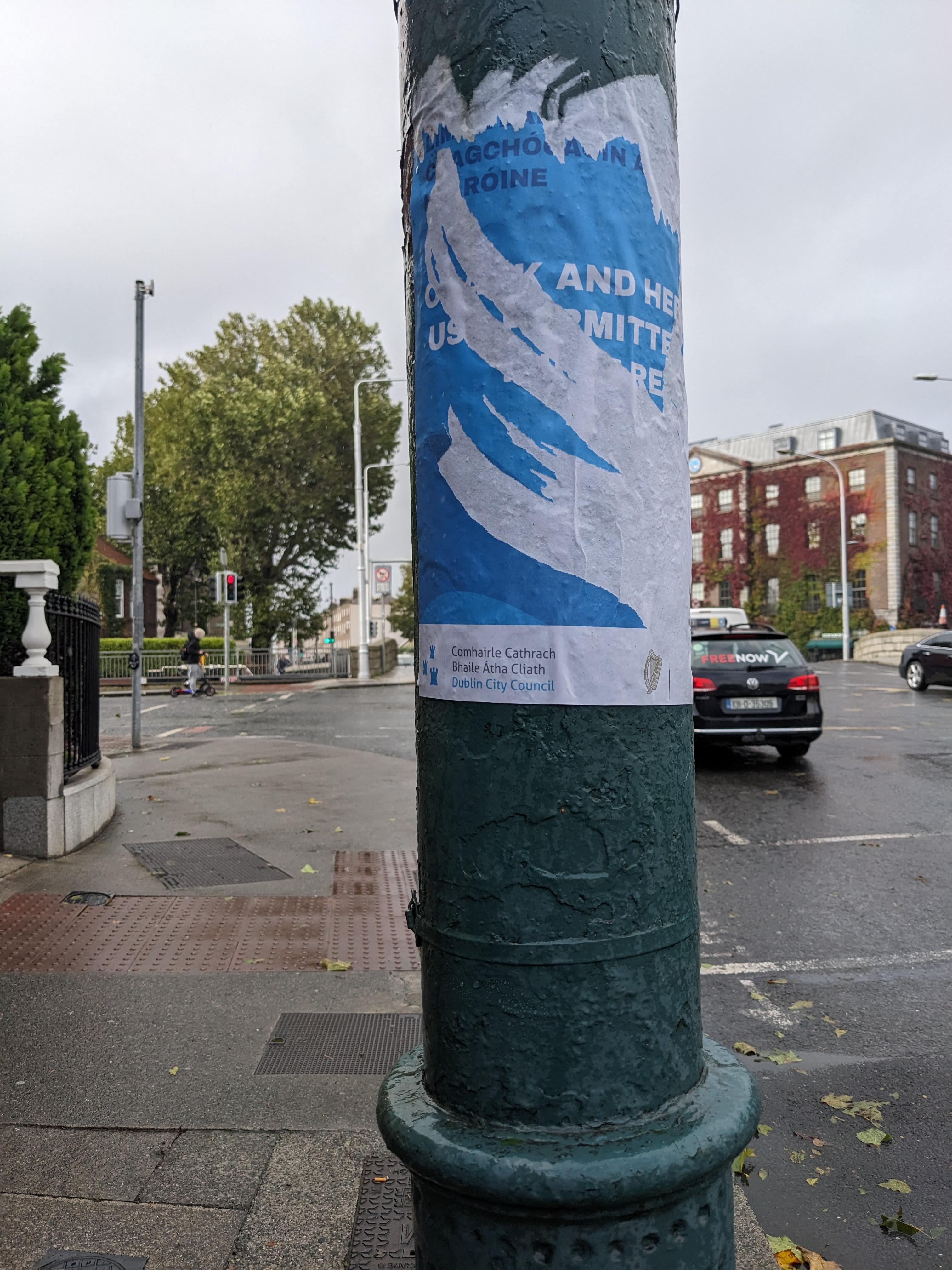
    There are stickers that tell lies about vaccination; there are anti-trans stickers; there are antisemitic memes, both gross and grossly obvious; there are profoundly disgusting Islamophobic stickers that someone keeps putting up by the mosque; there are fascist recruitment stickers with QR codes; there are conspiracy theory stickers; there have been, recently, really vile stickers that use the likeness of George Floyd to stir up white supremacist fear and propagate the white supremacist ‘replacement’ myth. In the past few months I’ve seen large wheatpaste posters as above, that appear to be from the city council but are not, and that dehumanize and demonize drug users and homeless people. I’m reciting the stickers’ content categories not to reproduce their rhetoric but to lay out the the field of their concerns—the people they unpeople, and how—as well as the facts of their persistence, their prevalence. This is the underside of good taste, when good taste means looking away, refusing to name things as they are, the use of euphemism, comfort. When good taste means being able to opt out of confrontations with what dehumanizes us, or to feel that another person’s dehumanization might be ‘deserved’ or somehow have nothing to do with one.

    Often, walking, peeling off these stickers and throwing them away, I feel weighed down by the ugliness of this place, its dense and complex histories of violence woven through with the world-crossing violences of antiblackness, xenophobia, antisemitism, Islamophobia, much of which is exported by the place I’m from. I don’t know what else I can do in the face of this feeling of weight. There is no heroic action. There are only the everyday actions of looking, thinking, asking, refusing, insisting, examining. So I go on walking and peeling the stickers off, walking and peeling and throwing the stickers away. In this I am alongside others who also do this small, daily work. Writing NO and FALSE in big letters on the stickers we can’t tear off. Putting up our own stickers, too. The sticker calls the eye and says, here. One nice thing about my leather shoes and work clothes—the invisibility they lend me—is that I can put up stickers mostly without being seen. Any risk of being seen is diminished by the sensation of changing the world, materially, microscopically, toward what feels vital and alive rather than deathly. And the risk is also diminished by my smallness, my femininity, my whiteness, my work clothes—the signs of my belonging to an order of “good taste”, the signs of my “unthreateningness” and docility.

    Sometimes the stickers have already been defaced or partially removed when I find them, which makes me feel like we are working together, me and whoever else is watching for them and tearing them down. We sticker-removers are termites of the fascists’ world, unmaking some transmitters of violence one tiny chomp at a time, over and over and over. It takes no special tools to be such a termite. Fingernails do most of the work. An ID card peels difficult ones off. And a soft-leaded pencil (its dark marks will not wash away in the rain) permits one to deface any part one can’t remove.

    Living beauty is possible for all of us. We can do it—make minuscule changes to the world we move through that insist that care, justice, liberation, that compounding of acts that add up to beauty, are more important than good behavior. I think beauty is a disturbance in the field of comfort—the comfort often given the names of taste, or propriety, or manners—that confronts me with the irreplaceability of everything (everyone) living. I feel a demand to work and fight, mourn and build for and with others when I am faced with that.

    Beauty forces a reckoning, over and over, on a minute scale, with my own complacency. It makes me see in specific, makes me see pattern and meaning, especially pattern and meaning that’s not my own. I think beauty confronts us with the eachness of each of us, our difference, our irreducible human preciousness, patterned together. Not conformity; finding out. Widening. The way a new parent looks at their baby and realizes, you are absolutely complete and I couldn’t even have imagined your you a month ago. You. Us. Here. Together. For one another. Clear-eyed. That’s what I mean by beauty.

    Thanks for reading. See you in a week!