the direction of time is continue: sumer is icumen in
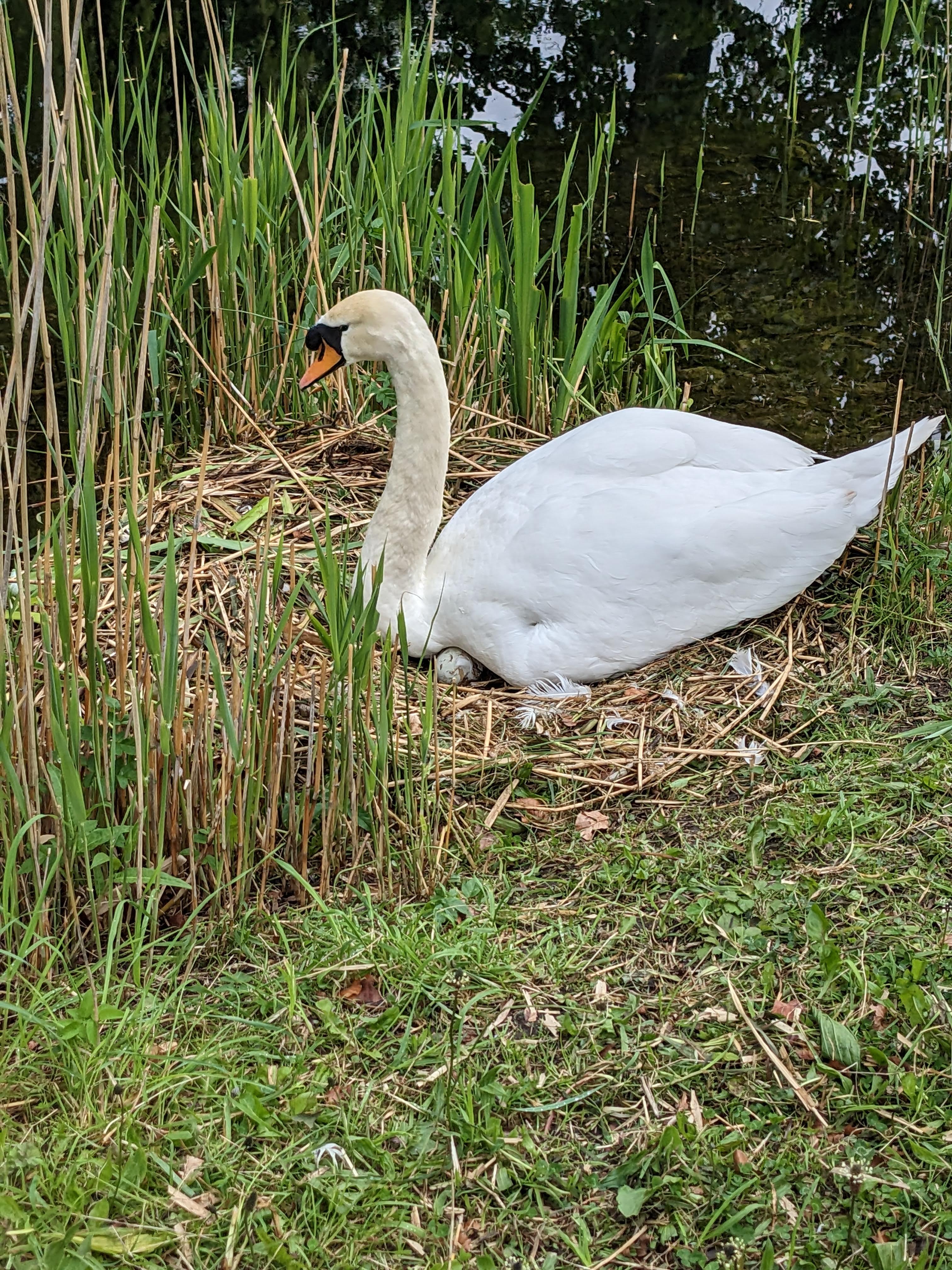
Lhude sing cuccu. A brief catalog of early summer: its speed is instant. It arrived pretty much in whole cloth around the first of May, with bluebells everywhere and the sword-shaped leaves of the irises in the canal. And now the irises are open and the swans are on their eggs. I drop peanuts onto our windowsill in an attempt to coax the magpies to befriend me, and they do come, but are not tame. The humidity drops, the rain comes in sudden heavy bursts, the humidity rises, the uilleann pipers’ school lets out for the long school holiday, and friends text me their travel plans. Teaching ends.
The form of the song “Sumer is icumen in” is a round. A round is a kind of composition where voices sing the same melody but begin at different times, so that the different parts occur at the same time in their different voices. Singing a round tells time both cyclically and overlappingly: it tells time by cycling through it (singing the entire melody from beginning to end, and beginning again) and it tells time when one voice crosses another (here, here, here; here, here, here, says the overlapping melody). Things come back, they cross and recross, and they resonate with one another over time, and they repeat wholesale. Like seeing flowers in one place and another, summer in one place and another.
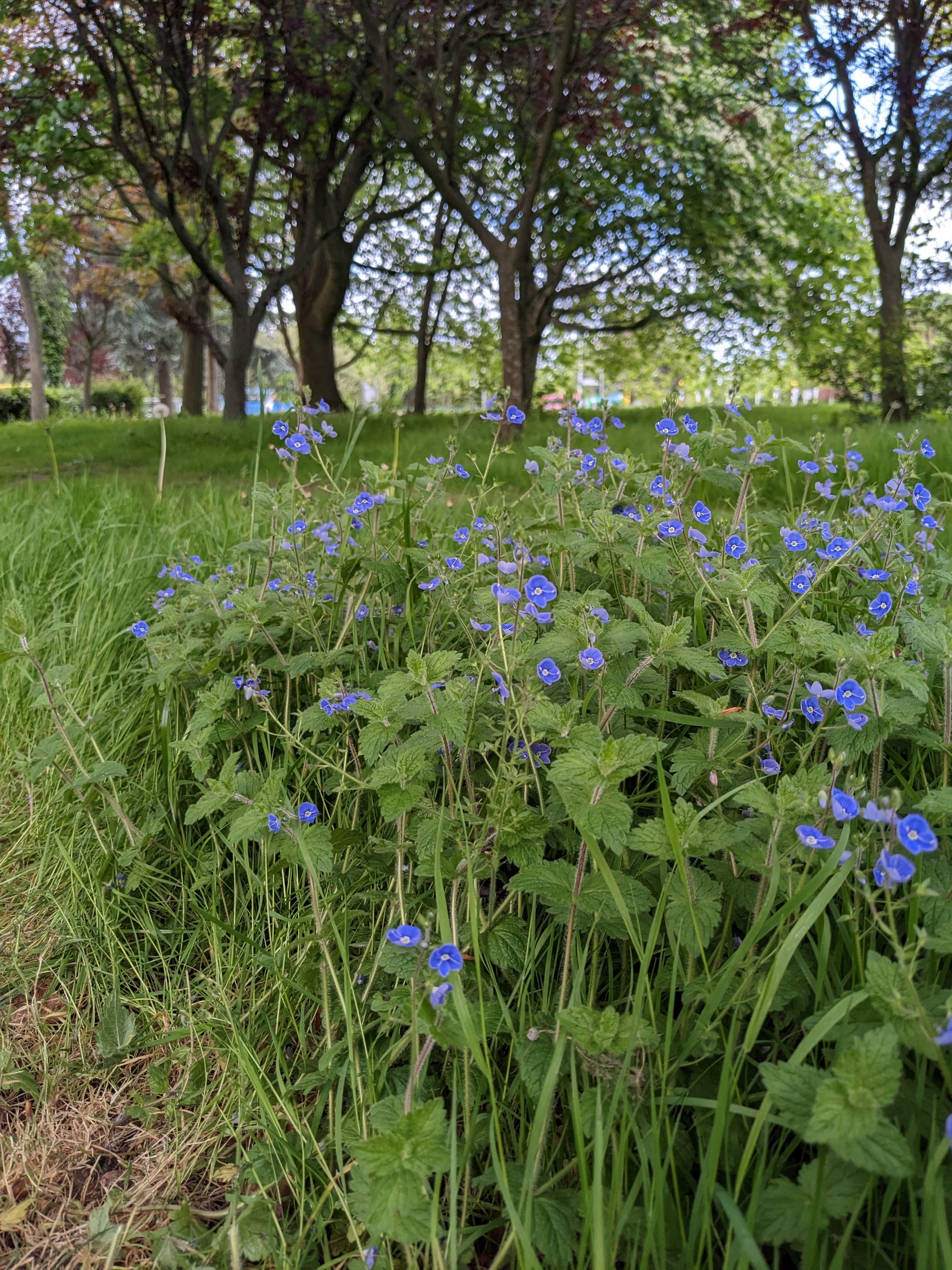
This haze of speedwell catches my eye from a dozen yards off. At the university where I work the groundskeepers mow only part of the grass, which means that all kinds of plants flourish in the uncut sward. We are now in the season of greenness, of expansion, of lengthening, of lightning and thunder.
(In the part of Iowa, where I lived last year, I felt a visual drought when faced with the weedlessness of that place. There were so few plants in general, and almost none “out of place”. There was a lot of grass, cut uniformly short. Along fences, where weeds are hard to control manually, there were swathes of dead plants that it took me a while to realize had been sprayed with weed killer. To be surrounded here by the variousness of the plants here feels restorative.)
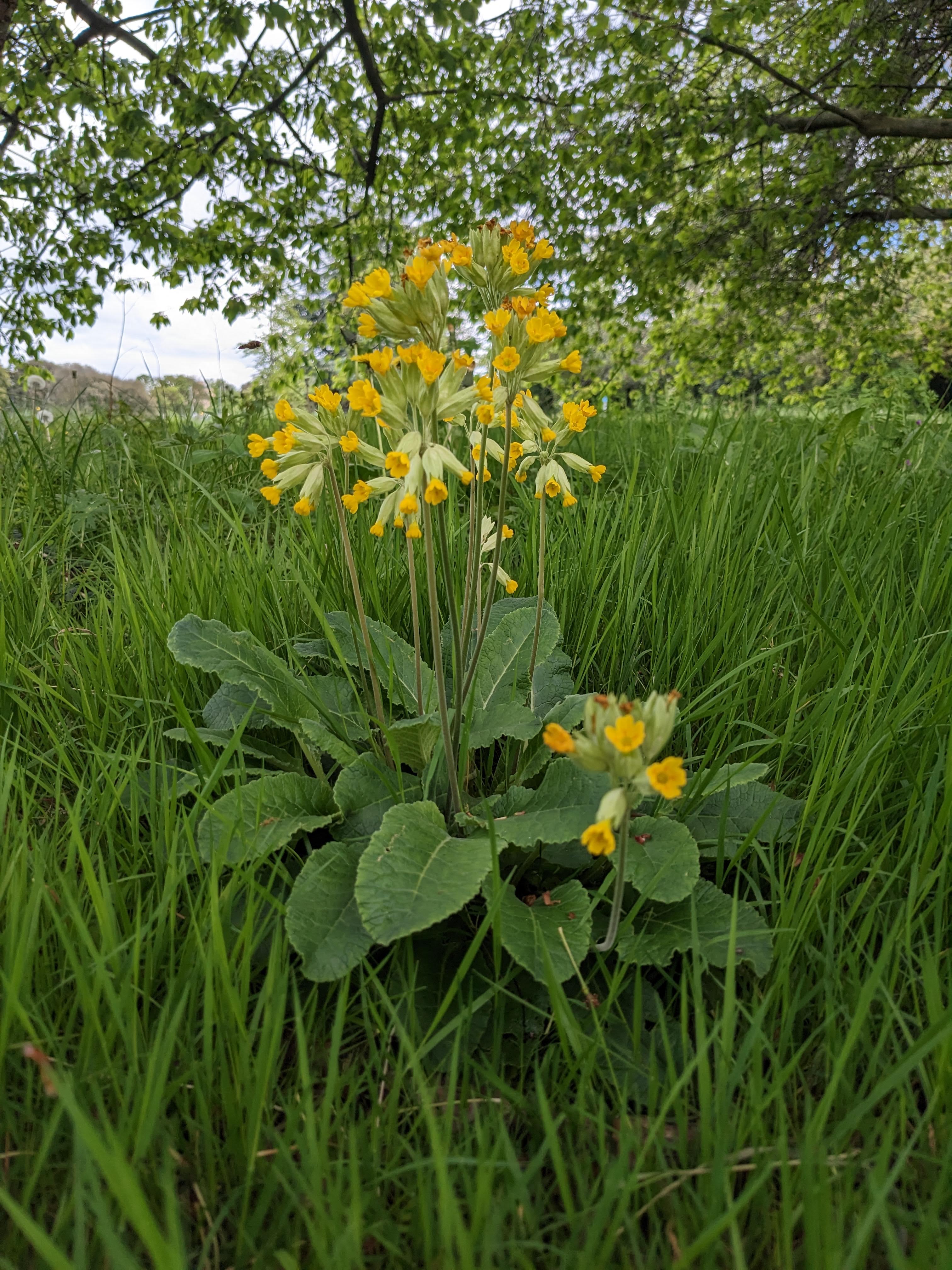
I love the flower shape of the primulas, especially the tall primulas. Traveling in Japan in 2017 I noticed many candelabra primulas in pots outside houses, especially in cities. Cowslips are the closest I’ve come to them on this island. Apparently these flowers are protected in Northern Ireland, but not here, where they still appear in the landscape. The captive primulas in Japan were mostly magenta, pink, orange-pink, and white, and stood upright on slender stems. Some had their flowers arranged in spheres; others (the candelabras) in wheels, one above the last. I do not have a garden—not even a city garden like the Tokyo gardeners who made excellent use of the narrow space at their doorsteps with pots and risers of all kinds—but when I do I would like to grow primulas. So the flower is in three kinds of time for me: the present (where I see the cowslips in the grass); the past (where it sends me to the synonym-formed Primula beesiana); and the future (where I imagine, one day, being able to grow these flowers myself).
Summer in the cowslip and the iris, the brassica escaped from field plantings, and the tiny ball-shaped creeping clover flowers. Everything is going upward and outward as quickly as it can.
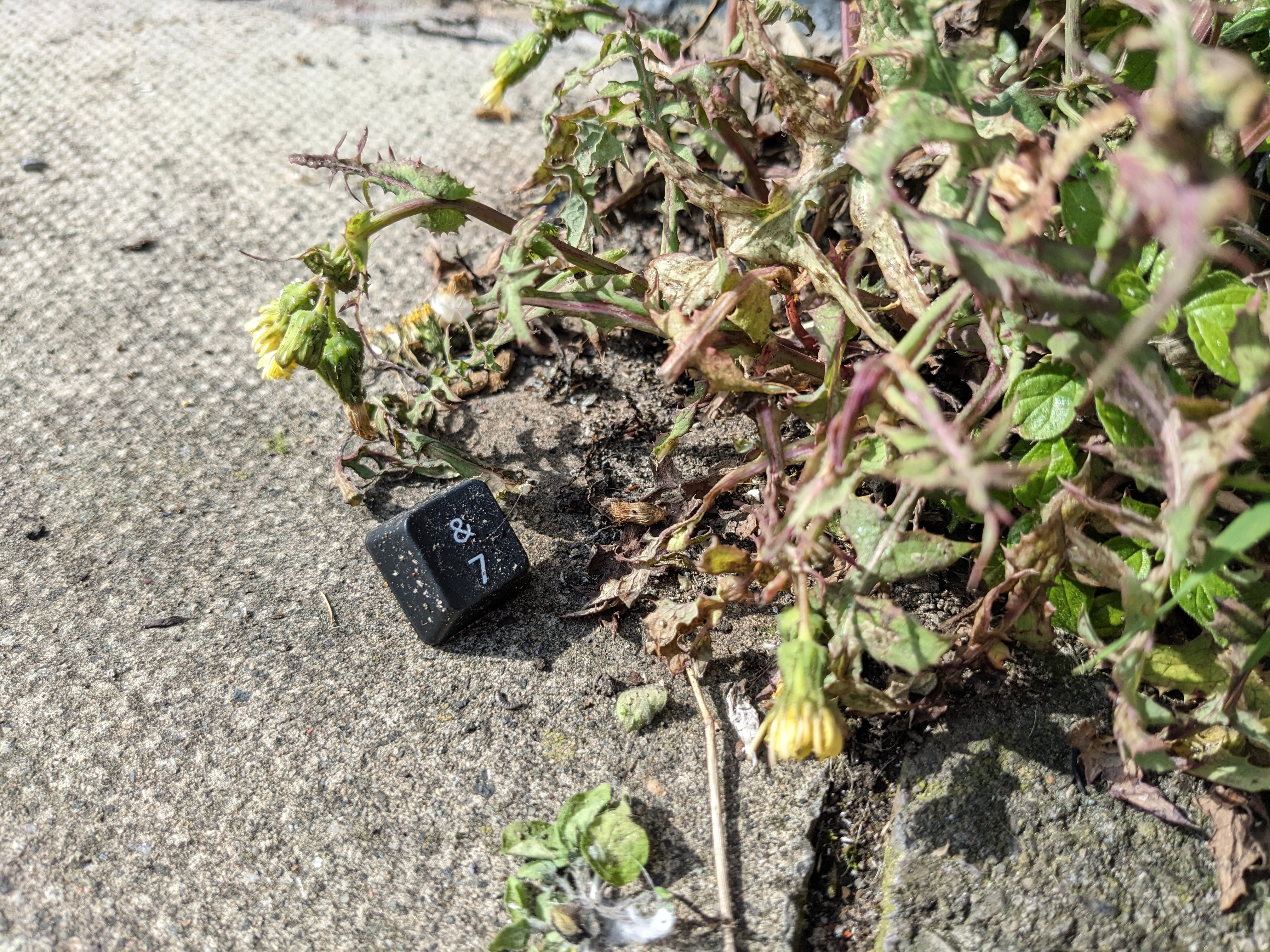
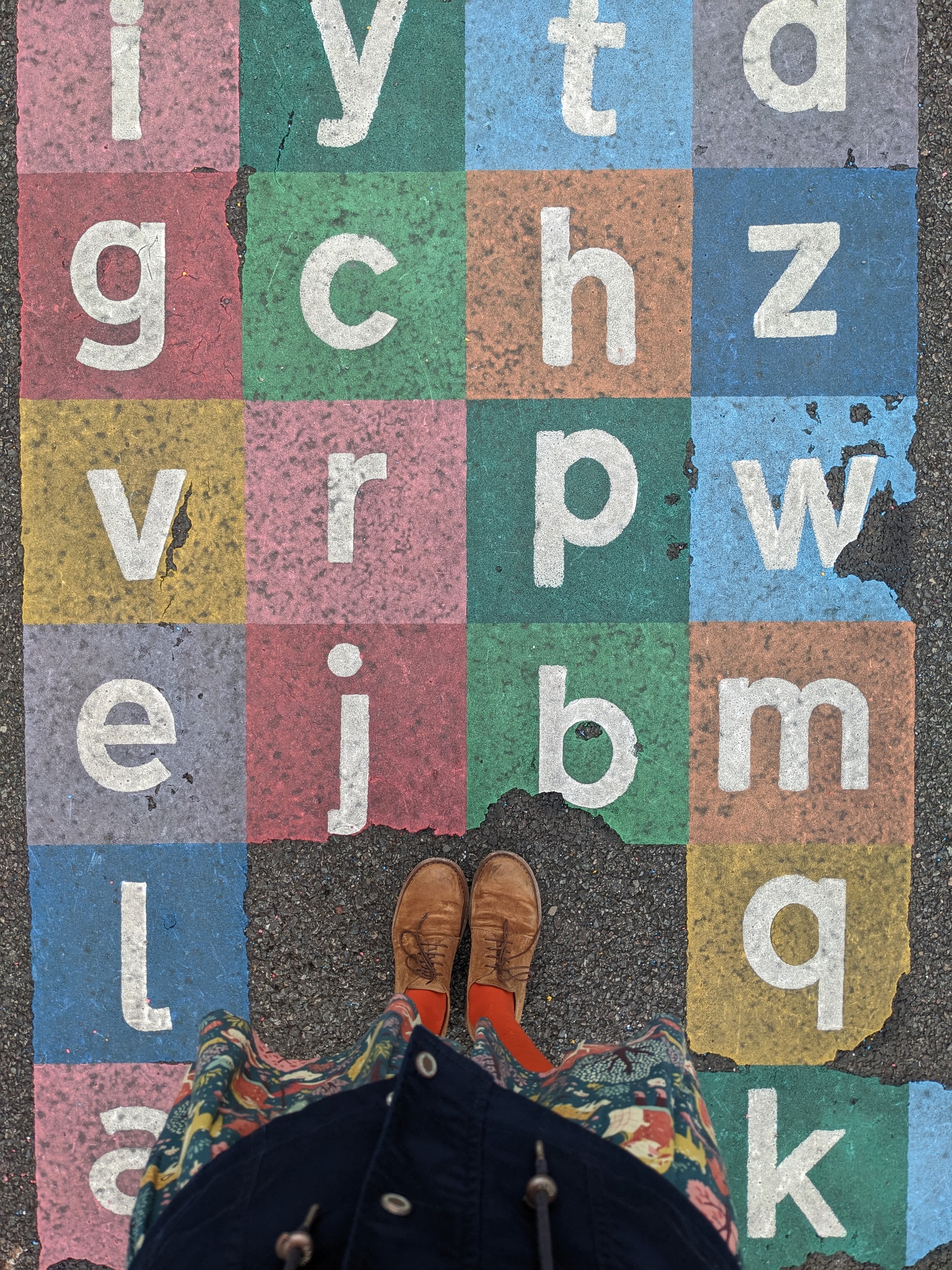
Also seen while walking recently: parts of the world-alphabet. An and and a seven. And a groundsel and an and and a seven.
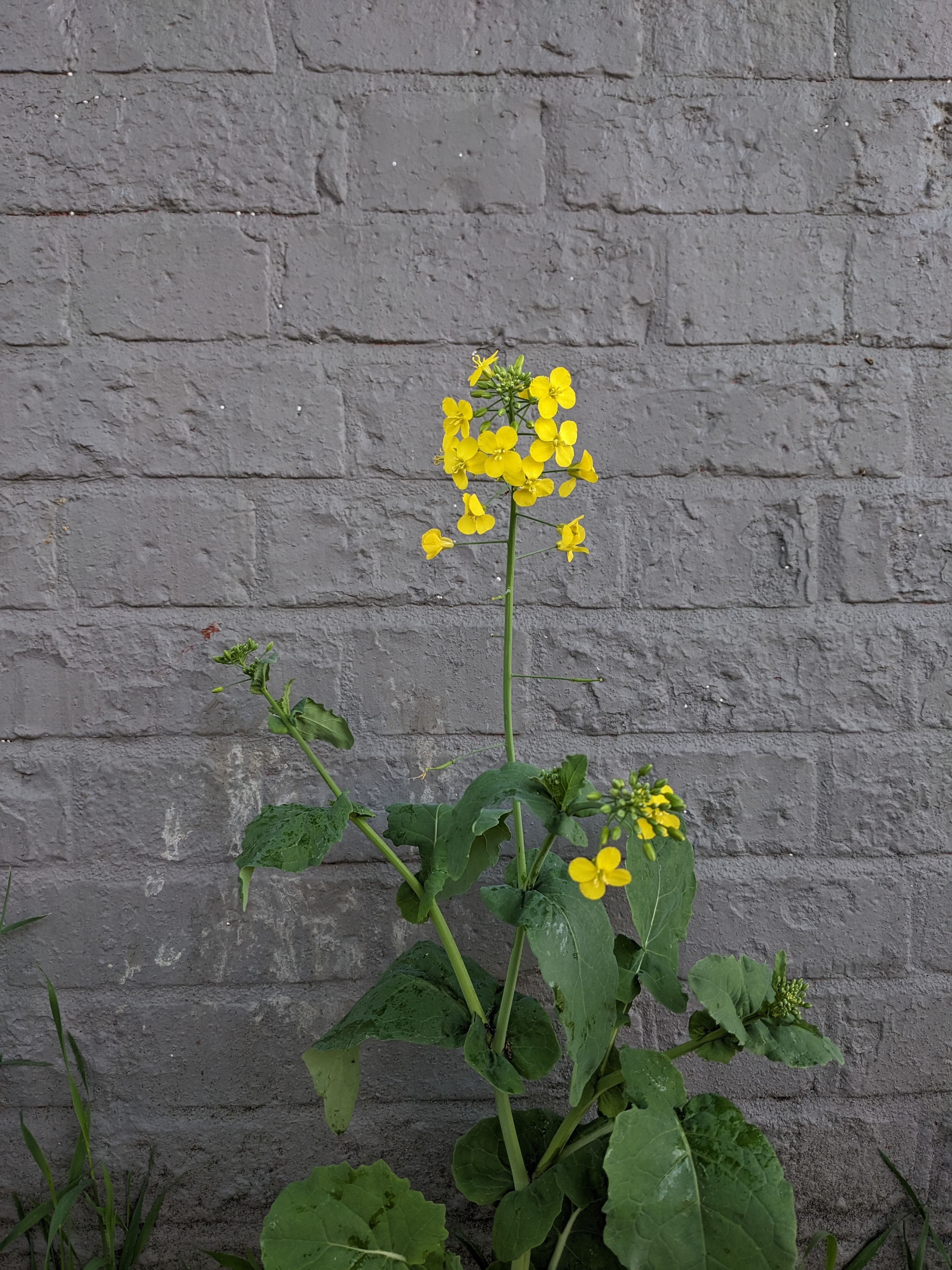
And a glorious brassica against a gray wall—that electric yellow. These are everywhere. I don’t know for sure what they are called because I haven’t bothered to get really close and look at the flower structure. I think it could be Brassica nabus, which would make sense—there are fields of it in flower now.
When I write about the world I walk through, I am conscious that the movement of my thoughts is sometimes “one thing after another”, rather than how I think it ought to be (in order to be ‘real thinking), which is “one thing, and then another, and then a return to clarify the relationship between one thing and the next”. Sometimes I realize this difference from my internal picture of “good writing” or “real thinking” with shame or self-doubt (“am I doing this correctly?” “why can’t I do this correctly?”). But first of all, difference from a norm is the mark of the voice or hand. That’s a characteristic of artmaking. And second of all, there are many shapes for thinking, like there are many kinds of tempo, movement, direction. We step into the arrangement of things and take note.
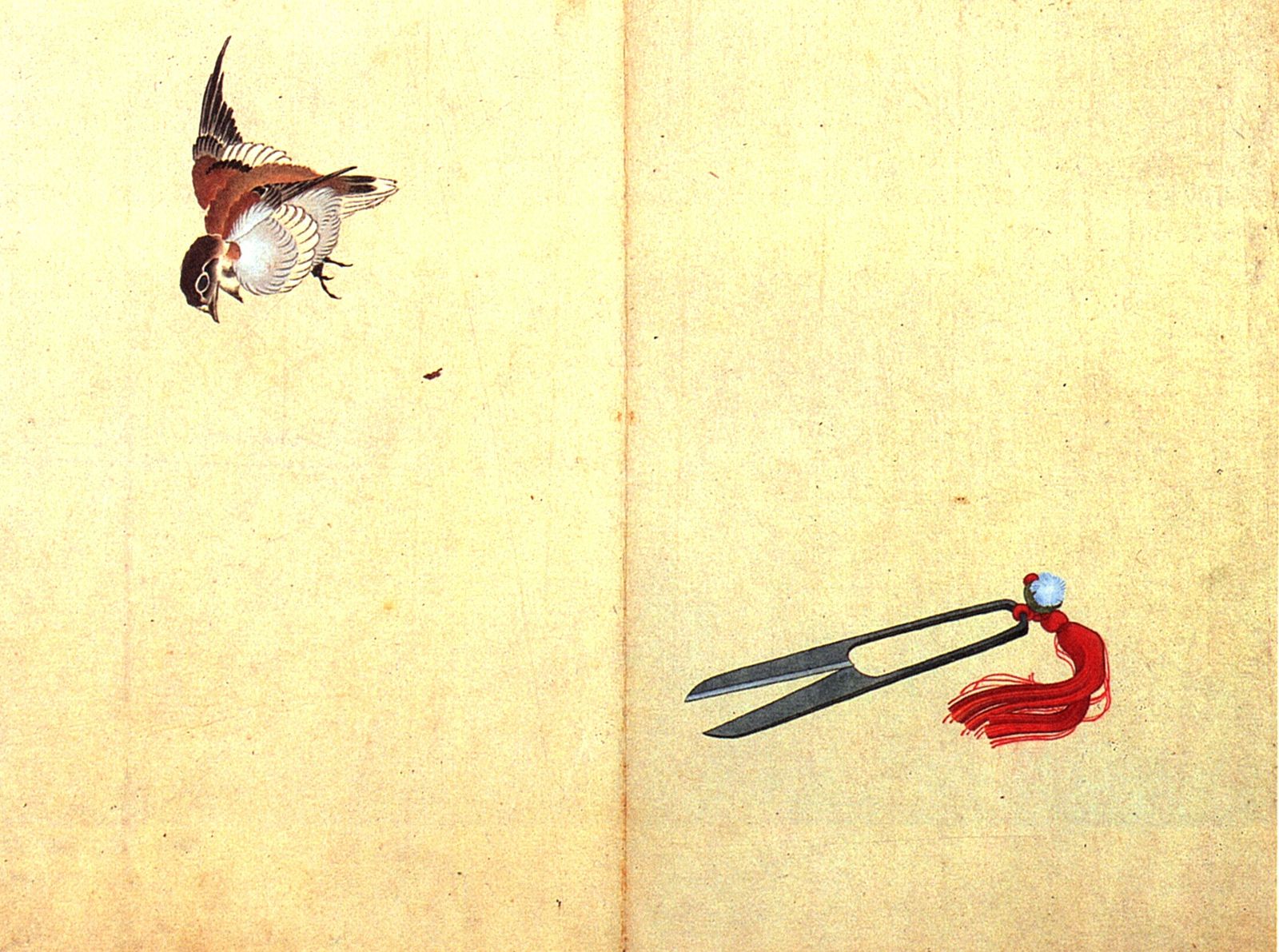
This is a Hokusai woodcut showing a sparrow in flight near a pair of thread scissors. The scissors are decorated with what looks like a bell and a red tassel; the thin threads of the tassel move beautifully on the paper. I love the care in Hokusai’s depiction of the implement. You can see the place the blade was sharpened. The dimensionality of the object is rendered precisely: the darker shadows follow its geometry. How well-made it looks, with its flat-edged handle. The metal scissors (cool and heavy in the palm) make a contrast to the light slipperiness of the tassel’s threads. Such an ordinary tool, used for the smallest of tasks—snipping thread. And an ordinary bird, too, the sparrow: a pest some places, a city bird, certainly easy to overlook as a hundred of them make their noisy cheeping in a hedge. The thick-thin lines that show the observation of how feathers move and how they look in relation to one another. Like Dürer, Hokusai attends to the fineness and particularity of everyday things. This attention is an expert attention in reach of anyone. It takes work, patience, but we, too, can learn to see how things are.
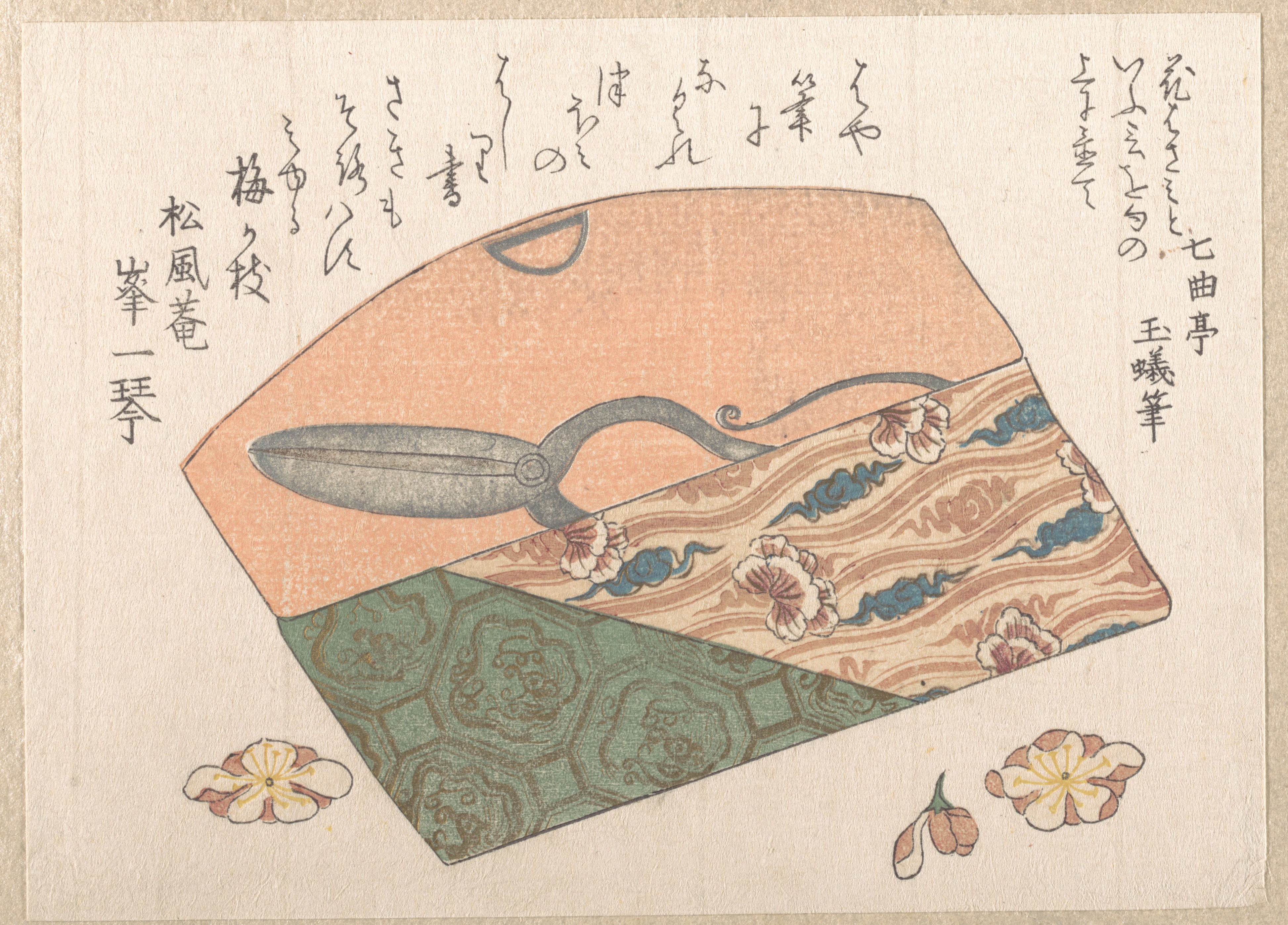
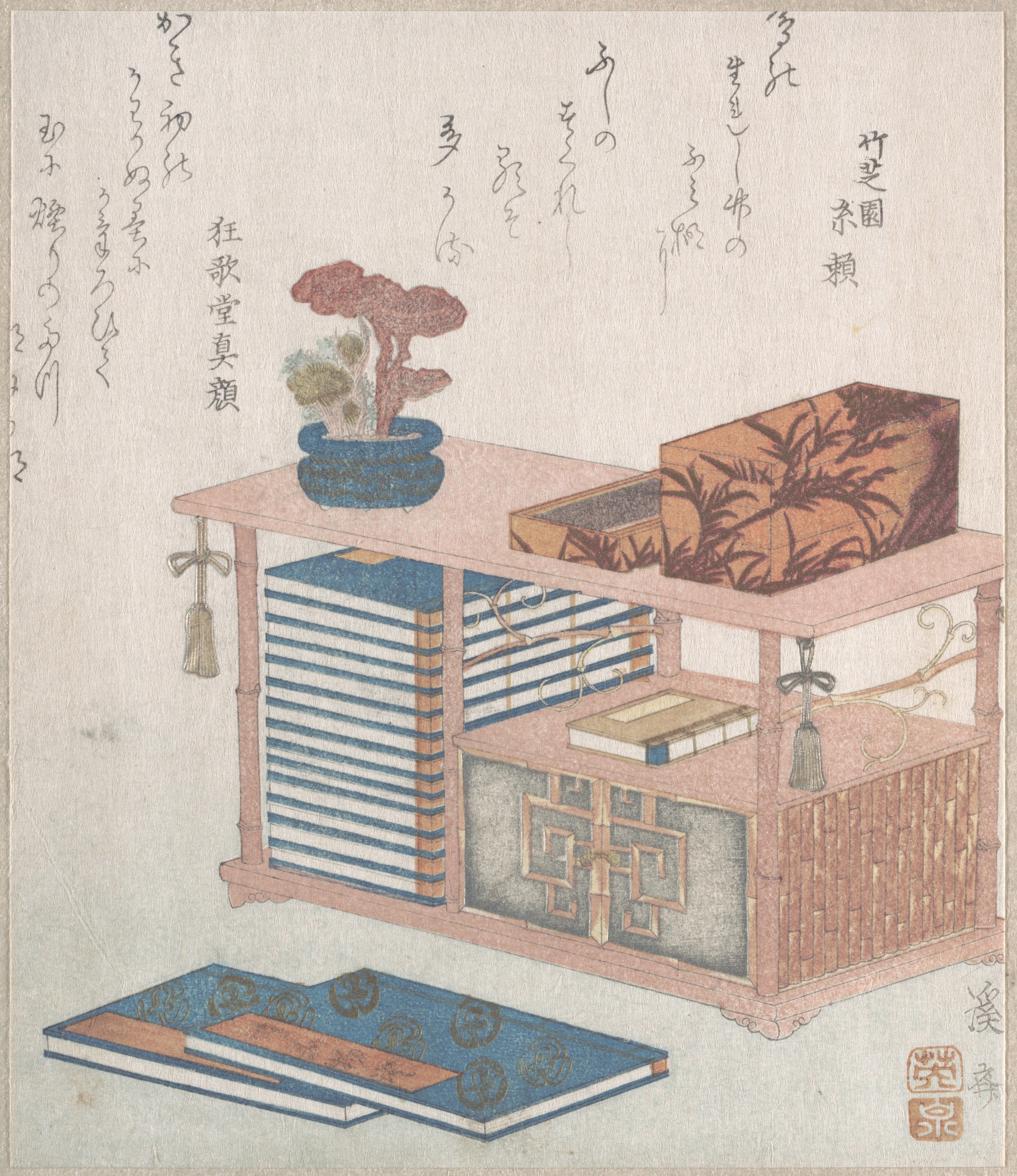
The right tools for the job means taking time to see how, exactly, one thing interacts with another. The Hokusai print leads me to look for other prints with scissors—and there are several available in the museum collections I page through. Here are scissors for flower arranging (another version in this print) held in a patchwork pouch. All of the marks on this print were made in reverse on the block: even those careful characters that spell out the words of the poem. To make a print like this is expert labor, learned through repetition over time. You have to stay with the tools long enough to know what they will do. Expertise can be about a close relation, over a sustained period, with the material and living world; not a terminus, but a path made by walking. And maybe expertise is also the discernment that tells one, at some point in one’s life, that there is not time for everything, but there is time for what matters—and looking, right here, at our lives and their elements: that does matter.
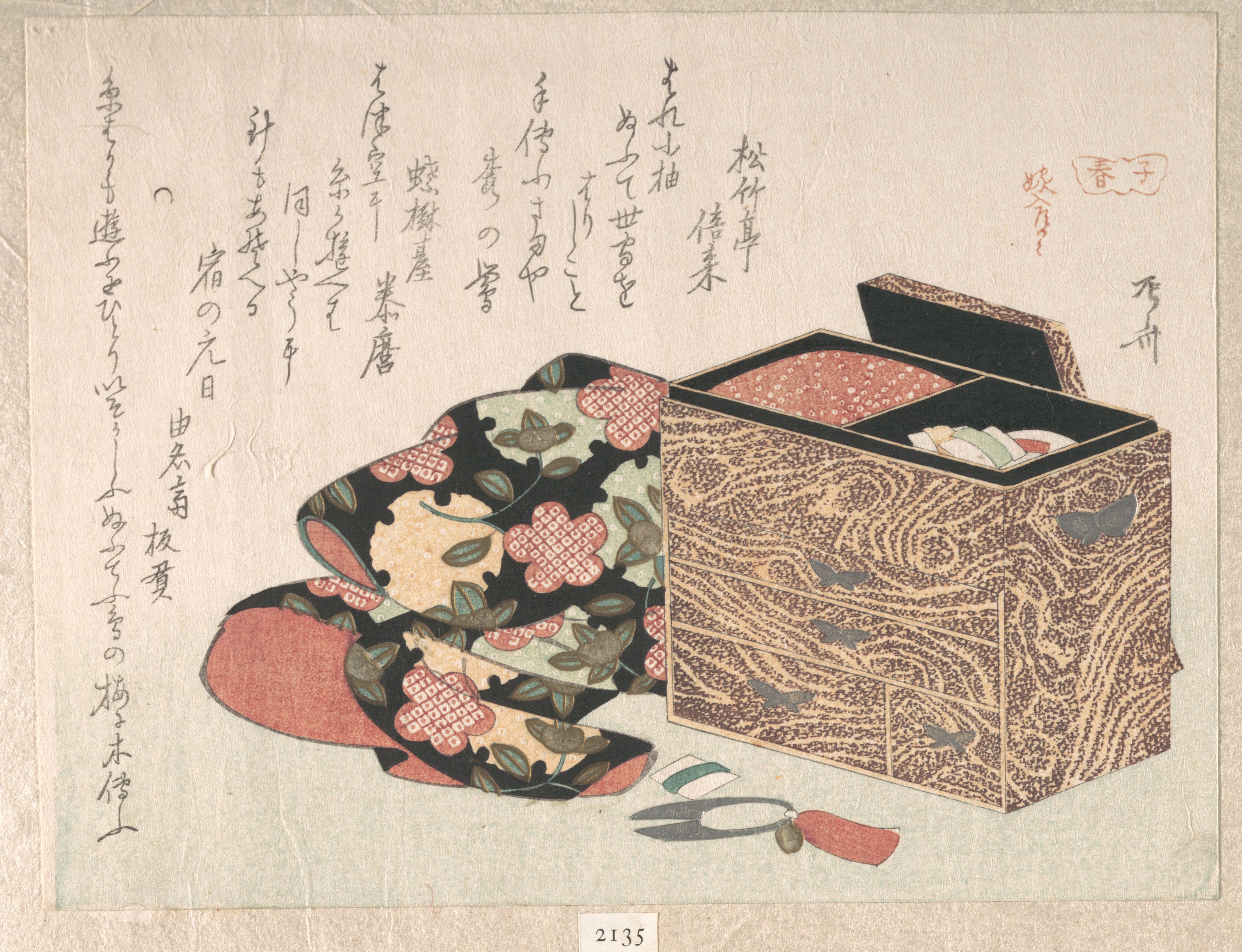
The image of the floral shears and this one, of a sewing box and a piece of clothing—small thread snips and spool of thread in the foreground—belong to a genre of pictures called surimono (more) often commissioned as private publications by groups of poets for poetry contests and to mark other occasions. The poems were printed alongside the images. Like knowing how to use a tool and like making a woodblock, making a poem takes time and attention to exactly what is around you. To see a likeness between unlike things, and to permit that likeness to transform the world—as in the attention the printmaker has paid to the shape of the bird and the shape of the scissors.
As a reader and a viewer, I am rarely moved by a massive vista or an abstracted emotion. I am moved by the sharpness with which the writer or artist has seen, and can portray, the texture and materials of everyday life, down to the most banal (charming, beautiful, irritating) details, and by the way the congruence of that attention shows me what I’ve missed.
In late March I came across a project by rob mclennan (if you don’t know rob’s work, his blog is a treasure trove of decades of small-press poetry, and he recently began posting on Substack as well). Above/ground press is making Festschriften, celebratory and loving books by multiple authors about the work and lives of the poets the press has published. Here is a link to one of the most recent examples. These are being made without the knowledge of the poets—who find out only when the books show up in the mail. What a gift. How many people’s poems have I loved, have you loved? I remember a teacher telling us when I was in university that if we were moved by a poet’s work we should write to them, without waiting. What better use could there be of our time and talents than to make books for one another, of one another’s, loving one another through that work?
In a way these books of mclennan’s—and much small-press production; in a month or two I’ll write about some books recently acquired from essence press—remind me of the prints commissioned by poetry societies in 18th-19th century Japan. They are beautiful objects that help us see one thing very clearly, made by the expert work of people who have spent a long time with the making and the seeing. The making takes the time it takes. And what results doesn’t have to be the biggest, most widely disseminated, most public (like a frog). It can be here, between us, the work of meaning that is the work of literature (or art) that is the work of a shared, human life.
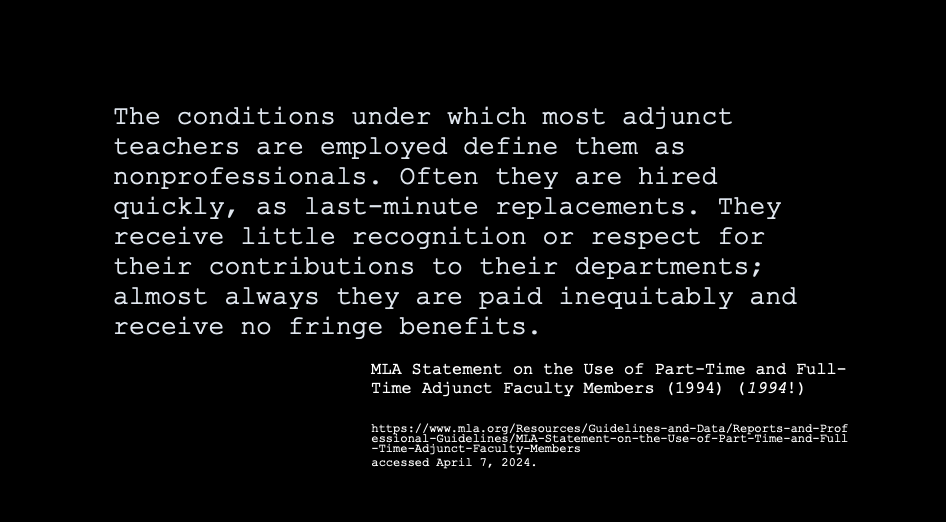
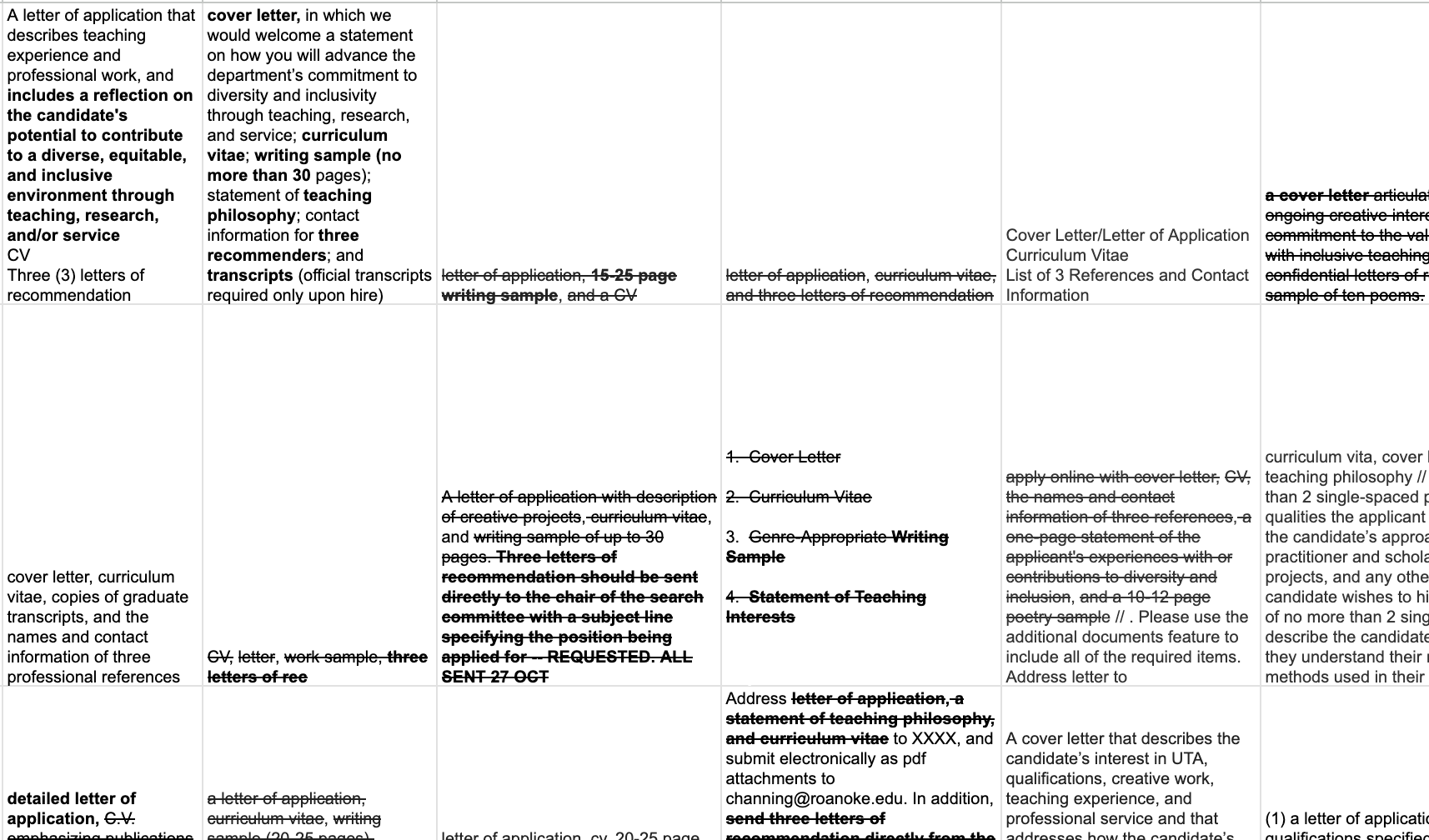
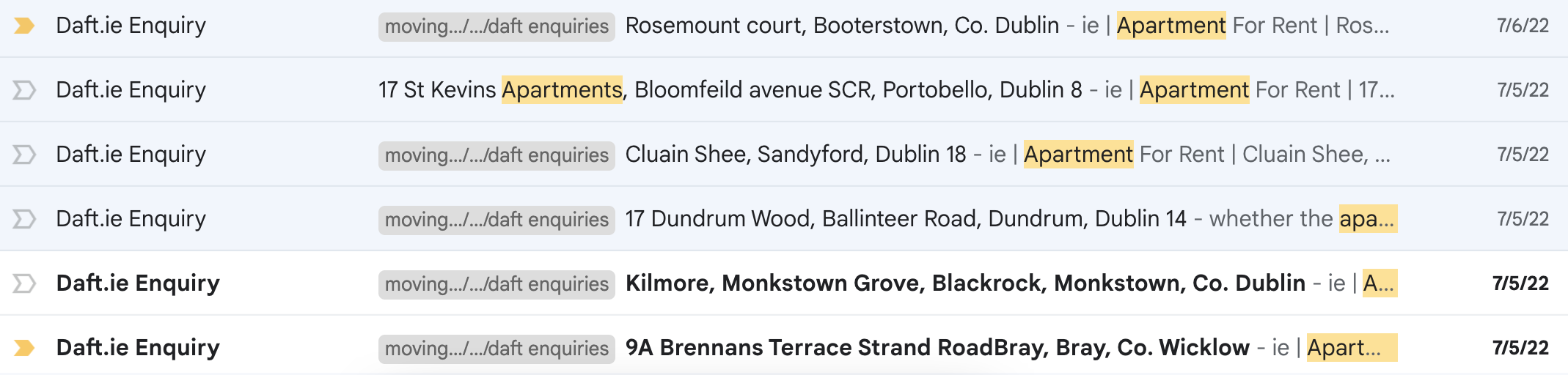
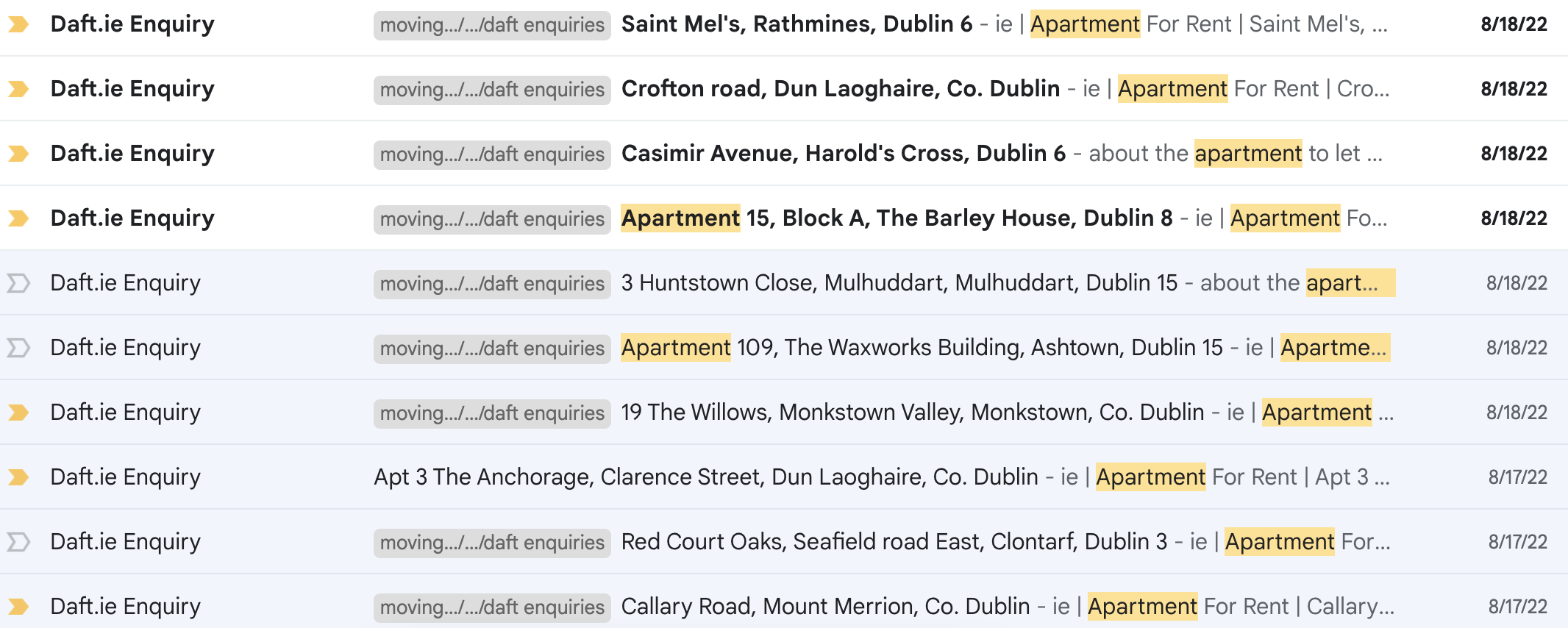
moving, finding housing, finding furniture. giving up furniture you loved. (“the art of losing isn’t hard to master”!) giving away books. driving across the continent, or flying across the ocean. the calculus of how fast your parents and siblings age vs. the chance that this job might turn into something permanent. working on job market materials several hours a day after you do your full day of teaching and grading. learning a new town, again. figuring out public transit, again. first and last month’s rent, again. security deposit, again. being asked the question “why haven’t you been able to buy?” and having to come up with an answer that won’t be a downer, though it is a downer! biting your tongue about the truth of your life in social situations with your new colleagues, again. choosing between the work you’re trained for and staying somewhere. the strange disjunct of being in your 40s and having no permanent place to live. packing up the apartment, again. giving up a garden you made.
the time it takes to find who does what at a new institution, not to mention figure out what the students’ backgrounds are, how the course rotation really works, and what the actual expectations are (as opposed to what you’re sold in a job interview or given to understand by implication by your more secure colleagues). doing that again, in a new institution, the next year. hearing tenured and TT-colleagues say things like, “well you knew what the market was like when you went on it”. hearing them say things like, “you probably would have had a child by now if you were going to, right?”. a dozen interviews, if you’re lucky, each with their own preparations (hours and hours), sometimes on as little as two days’ notice. moving again.
learning the copy code, the door code, the program assistant’s name, the invisible and unstated hierarchies, the map of the building, the map of the campus. switching health insurance again (how many hours per year trying to figure out which plan will not bankrupt you?). trying to find a primary care doctor in your new town. paying for another ‘new patient’ appointment because you moved, again. chasing down 1099s and W2s. looking up your password from two institutions ago so you can log into HR and get said tax paperwork. no you don’t have access to the 403b as a temporary employee. spend an hour on the phone trying to figure out whether you can open a Roth IRA. retirement? what’s that?
dealing with another new landlord.
extra trips to the grocery store every week (your total grocery bill for the month will be higher, not to mention the time it takes to go more than once) because you live in a rented place, in a town where there are few places for rent, and your landlord has decided a dorm-size fridge is sufficient. you want to have a baby? if your contract is one year only, be sure to stress out before the start of the semester trying to get pregnant so you’ll give birth while you still have health insurance. if you have a nine-month contract and forget to ask HR about spreading nine months’ pay over twelve months when you sign, your salary will end when teaching does, in April or early May, and you won’t get paid again until September (or October, even, if you have transferred institutions).
not buying new clothes even if yours have holes because groceries, rent, and emergency fund come first. “I’ll patch them” (count the time it takes to patch a garment). feeling shabby around your colleagues. going to therapy ($185 copay per one-hour session) and spending half the session working out why you have imposter syndrome when you publish and teach and study how to teach better and do service and go to conferences (when you can afford it), just like your colleagues. being told you don’t qualify to join the union because you’re an adjunct. being told you can’t apply for any research funding because you’re on a one-year contract, despite the funding applications having no stated policy against that. teaching for eighteen (!) years in a row, more or less, without a sabbatical.
repeatedly emailing your landlord to make sure you get your deposit back. paying for another year of mail forwarding. sending an email to everyone you can think of who owes you money, a tax form, or something similar to let them know how to reach you this year. less borrowing power when you finally do get a mortgage because you are now “too old”, i.e. too close to death and/or the poverty of “retirement” (!) to be a reliable repayer. “rent payments do not count toward a credit score.” the filing cabinet full of courses you got to teach once. the weeks and weeks of prep for courses you agreed to cover on demand but aren’t a specialist in. call around to find a therapist in your new town who accepts your insurance. wait for an appointment. tell the groundwork story again ($185 copay per hour session, remember?). write an email to your recommenders asking them to update their letters for another year.
Those are some facts. They come, mostly, from my life. I love my life, it should be said. I love to talk about literature with students, and help students come to a rich, beautiful, complex understanding of writing, and life, and art.
Some of these facts come from the lives of friends and former colleagues. They are the often invisible truth of what it means to be a non-tenure-track college teacher. They are more-or-less the case whether we are working in the U.S. or U.K. or elsewhere (though access to things like pension, healthcare, etc., may differ outside of the U.S.). And the facts are shameful, and would be shameful facts for workers in any industry. Indeed these facts are shared across many industries, though the one I know is the college teaching industry.
The facts are shameful and they are destructive of life—the life we all share. Human beings need stability, placedness, dignity in work, belonging.
In the U.S., more than 75% of college teachers are off the tenure track.1 In immediate terms, this means that most of the people who are academic experts in their fields, who love to teach young adults, who represent the future of higher education in the U.S., have no future there at all. Many adjunct, contingent, non-tenure-track, non-permanent, affiliate, or contract faculty (however they’re designated, it means more or less the same thing—lack of stability, lower pay, often no health insurance or other benefits, including pension, access to sabbaticals/research leave/funding) live at or below the poverty line.2 Some college teachers, including graduate students—who are also college teachers without stability, permanency, institutional power, or prestige—are on food stamps.3 Harvard University’s endowment is at least $53 billion4 (with. a. b.) as of 2021. In 2023, the Harvard University Graduate Health Services sent out a flyer explaining how graduate students could sign up for Supplemental Nutrition Assistance Program, which you might know more familiarly as food stamps.5
These are the conditions under which contingent college teachers work. I worked under these conditions until very recently (I now have a job with a four-year contract, so some, though not all, of these conditions are mitigated). Contingent college teachers share these conditions with all kinds of workers: in food service, in grocery stores, in delivery vans and on delivery bicycles, in warehouses, doing gig labor to run errands or retrieve groceries, cleaning houses and offices and university buildings, serving food or preparing it, teaching young children. These are not the conditions of a rich life but of a bare one. They are not the conditions under which we can—and I mean all of us, any of us—really fulfill our human remit, which is to be creatively alive, to make worlds together, to dream, to change with and for each other.
How is this right?
How is this liberating?
How is this good for students?
How is this sustainable?
How does this serve us as humans, on this earth with other humans and non-humans?
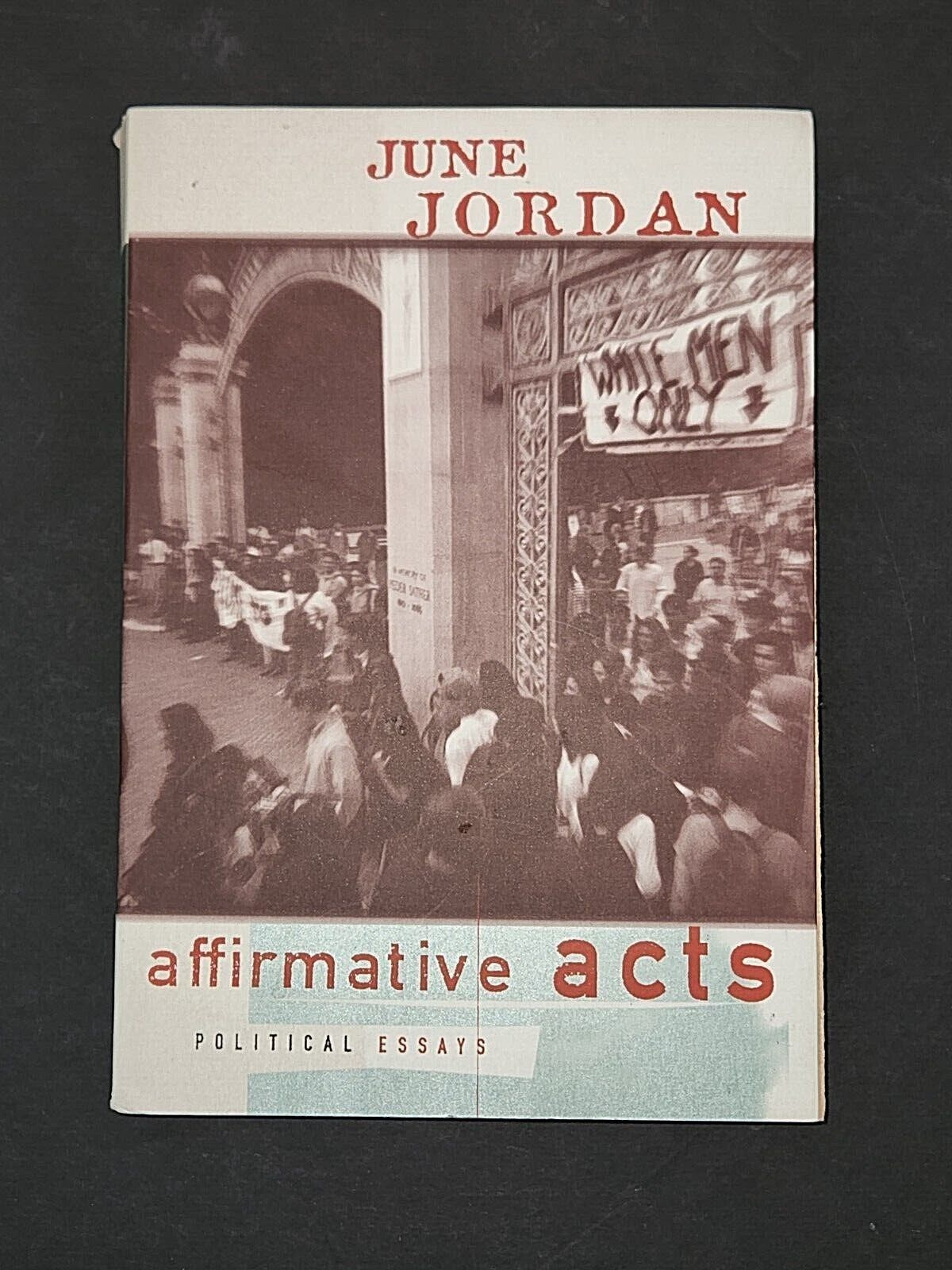
Recently I read June Jordan’s 1998 book Affirmative Acts. Jordan was a poet and teacher who lived and worked in the Bay Area of California in the 20th century. That sentence is insufficient; all I could write would be insufficient. You can read her work and read about her life, but here’s a glimpse: she founded Poetry for the People; she wrote without ceasing against and through the linked horrors of U.S. racism and U.S. militarism; she contributed what are to me two of the richestsources of thought on the U.S. poetic tradition. Her book Some of Us Did Not Die has for a decade been a touchstone for me as a thinker, be-er, writer. Anyway, this is to frame in the texture and tangent of Jordan’s thought for you, so you might understand why, in the context of what precarious work costs, I so needed to read her at this moment.
What Jordan reminded me of, in her essay called “The Revolution Now: Update on the Beloved Community”, is the liberating, motivating, joyful solidarity to be found among others, when we use our bodies together and for one another. It’s palpable in images of the sanitation workers’ strike in Memphis in 1968—the posture of the picketers!—and in images of contemporarystrikes. It’s there in the sound of songs where folk tradition and the radical care of the labor and antiracist movements are zipped together. And it’s there in Jordan’s description of her students’ decision to go on hunger strike in response to the 1996 majority vote on California Proposition 209. Jordan writes that “fasting emerged as the collective tactic of choice” when her students were confronted by the passage of 209. Parsing a student’s suggestion of a fast in the mode of Ghandi, Jordan goes on to say that if “evil surrounds you and abounds, and if you eschew violence, and if you, apparently, cannot persuade a majority of folks to vote against what’s wrong, then, perhaps, fasting to death is one appropriate response” (Jordan, 209).
Pause.
Oh—yes. The use of our bodies, alone and, ideally, together, is also an option when confronted with systems that degrade human life and human solidarity. These precious being-objects we also are.
In the essay, Jordan and her students go on to place themselves in a network of nonviolent, active resistance, a network of people—from Palestine to China to Nicaragua to the U.S. and beyond—who have used their bodies, put their bodies in harm’s way, in power’s way, to resist what defiles human life. To defend our shared existence. To stand, literally, with one’s own (and only) body, for one another. A week after the passage of Proposition 209, making affirmative action illegal in California, Jordan’s students “stopped eating […] stopped everything except the commitment of their bodies and their hearts and their minds to the resurrection of Affirmative Action in America” (211).
What beauty.
What beauty, to be with other people, “keep[ing] faith in what they believe is right” and “to have emerged, exhausted/sick/confused/but to have emerged/as a collective, in fact”(213).
I needed to be reminded, thank you June Jordan, thank you, her students, that our human bodies are real and can be used, together, against great harm. And that even one such body so acting can “embolden and inspire other[s]” (213). I needed to be reminded that knowing we are not the first, and not alone, can make us braver—for and with one another. And that, as Pete Seeger often said, this is work that takes, like singing does, hands and hearts and heads to do it; human beings to do it.
I don’t have a place to go, here at the end of this. Except that it’s easy, in the rushing overwhelm of trying to stay afloat, for me to forget that I’m not alone and that I have a lever—my own body, my own life, my hands and heart and head—against what I hate: casualization and precaritization and vocational awe used against workers, and capitalism and resource hoarding and the cheapening of what is most precious (our lives).
To know how long so many people have been working against this is a preventative treatment for despair. We are not alone. We are with one another: with all of the one-another of the others near us, who though they may be unlike us in some ways are also taxed by the precarity that makes our lives cheaper and a few people (and institutions) very very rich. June Jordan, and her students, remind me that it matters to know that history of people working, with their bodies, together, for liberation. It matters in deep ways, living ways. It, some days, keeps me alive.
So. Against precarity; for one another; with roses cut from our gardens and loaves of bread we made, that always feed one more than we estimate they would.
Happy May Day for tomorrow. Thanks for being here.
I thought about how precious the handwriting of others is
I like all kinds of handwriting—I am not a snob. I like it how it comes, in whatever medium. The irregularities of a pen with a nib and ink can be charming but they can grate, too. Preciousness of any kind irritates me. I like a ballpoint’s marks on ordinary lined paper, where you can tell a glob of ink (glob! that absolutely unsnobbable word) has caught and dragged. I like when the pencil makes a thick heavy graphite mark, almost a smear, and you know the hand that held it had a gloss of that same gray on its blade.
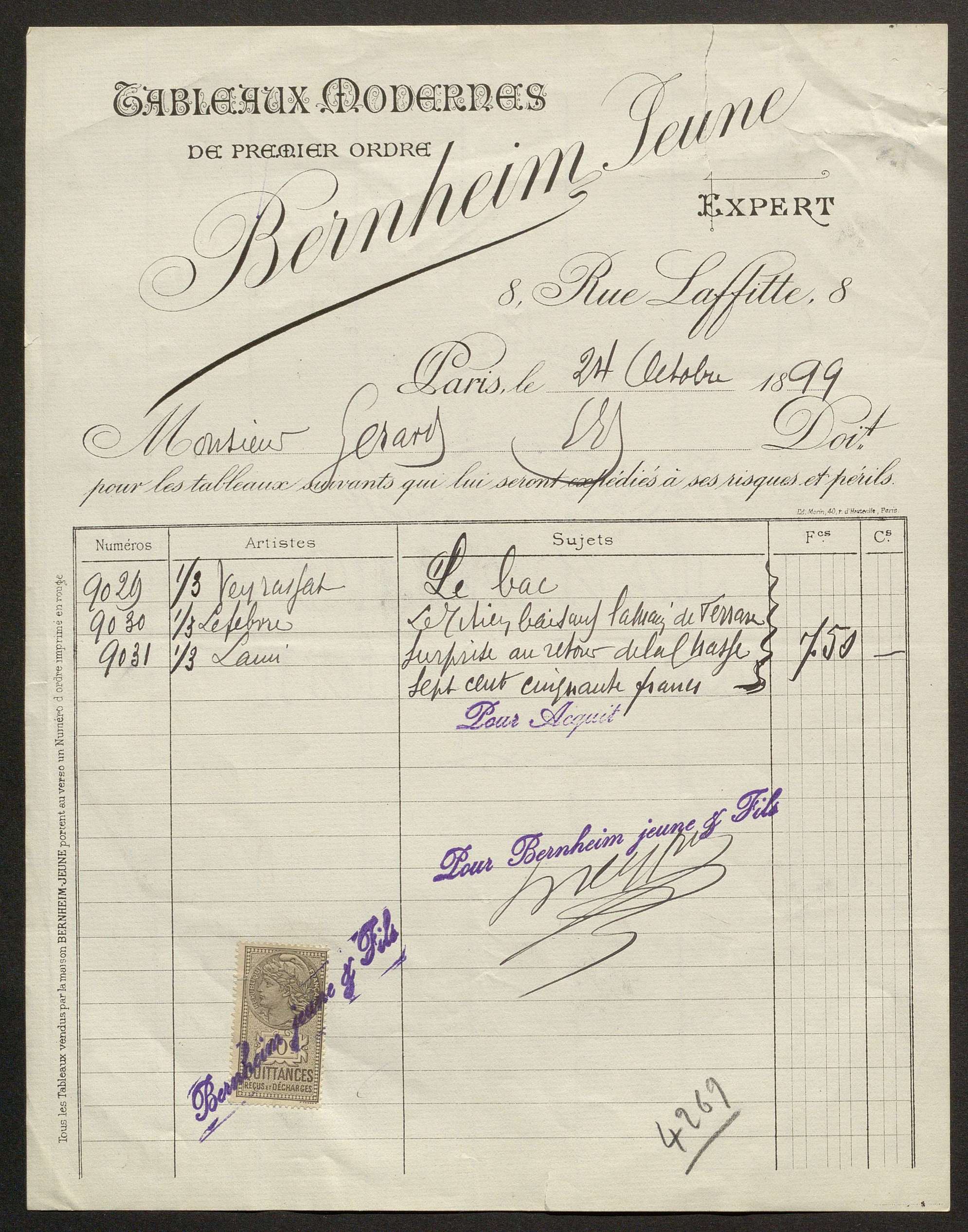
Manuscript-obsession isn’t what I’m talking about when I say I like handwriting, though. I’ve been in archives and flea markets, and I know the feeling of seeing something carefully preserved, or just kept a long time, as a specimen of another time and place. While I admire things like this gallerist’s receipt (and love the way it helps me understand its setting through its materials), I don’t feel for it. Some people do, I think. On the Place du Jeu de Bal in Brussels, I’ve seen the autograph dealers, and the philatelists who collect envelopes with their addresses intact, and the scrapbook-collectors, and the keepers of antique shops on the periphery of the square. There must be people who keep them in business, a business of loving or craving this kind of writing. Maybe the same people are drawn to 19th-century advertising plaques and antique chairs.
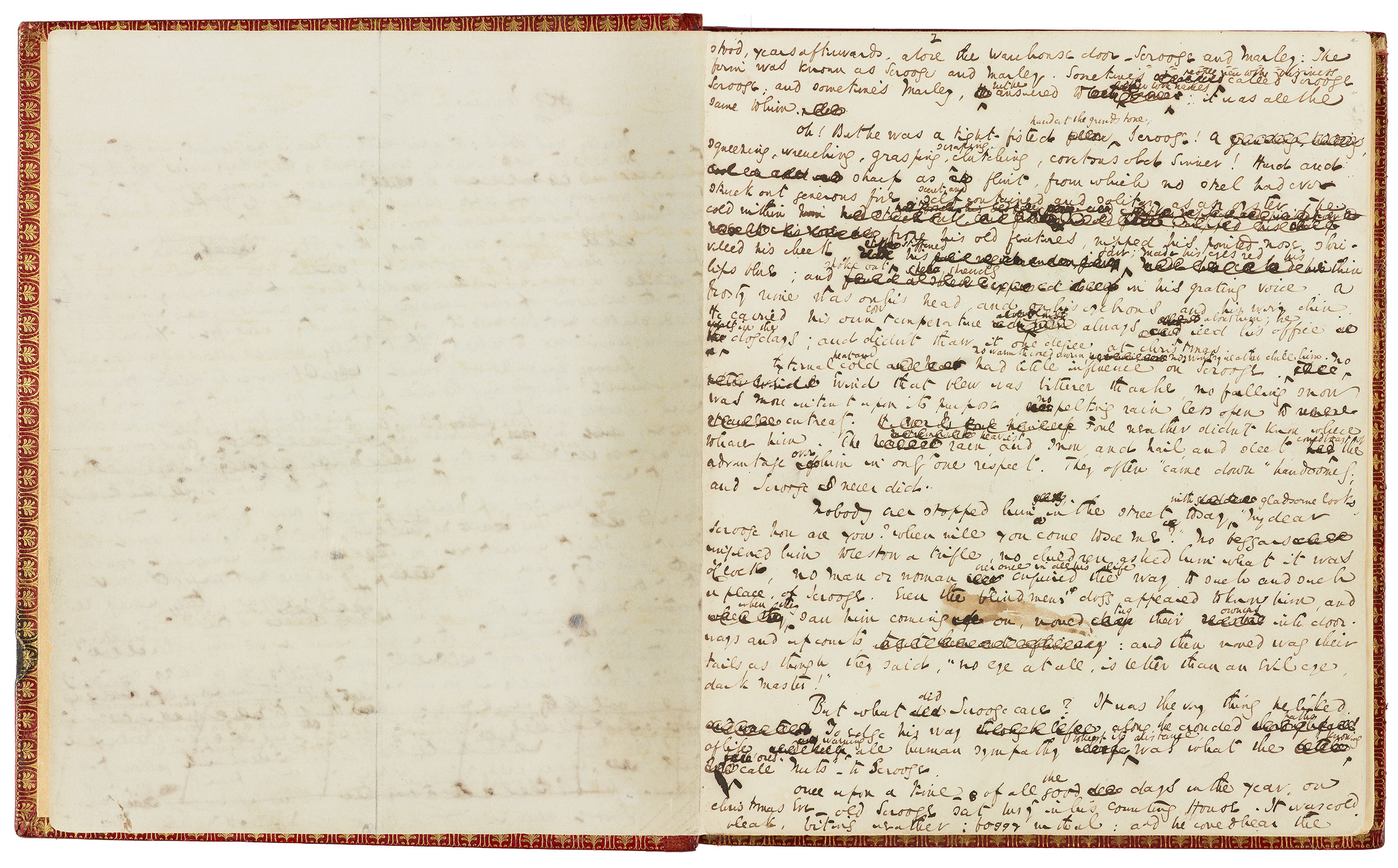
As a college student I could not have imagined anything duller than manuscript studies. Looking at minuscule differences from draft to draft and then arguing about what they mean? Seriously? (Back then, I believed in the single genius model of writing and thinking I’d been offered as a tacit part of my education. I didn’t yet have an understanding of time and process and shared creation that would let me see what manuscripts could teach.) Now I love that manuscripts can tell so much about thinking. I am not a book historian but I am in wonder of what book historians do and how they do it. Nevertheless, these manuscripts and their uses, their meaning in the frame of book history or literary history or the sociology of literature are also not the handwriting I mean when I say I like it.
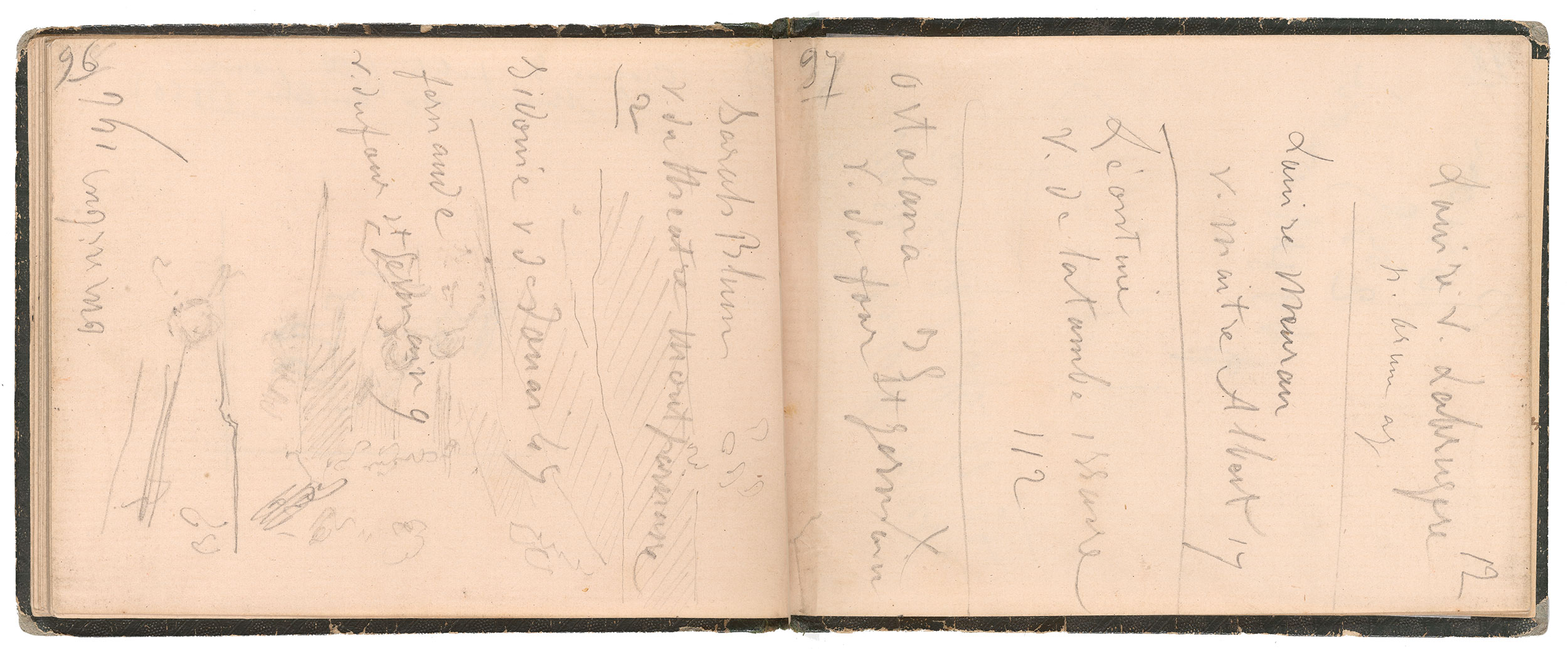
This is closer, in a notebook belonging to Édouard Manet. Handwriting that goes the ‘wrong’ way, that moves as a body moves (privately, idiosyncratically) and includes non-letter marks. Yes, closer. The word and the world almost touch. And made without a reader: not a receipt, not a manuscript. Something more useless and more private than either of those. I love our secret, shorthand ways of annotating the world.
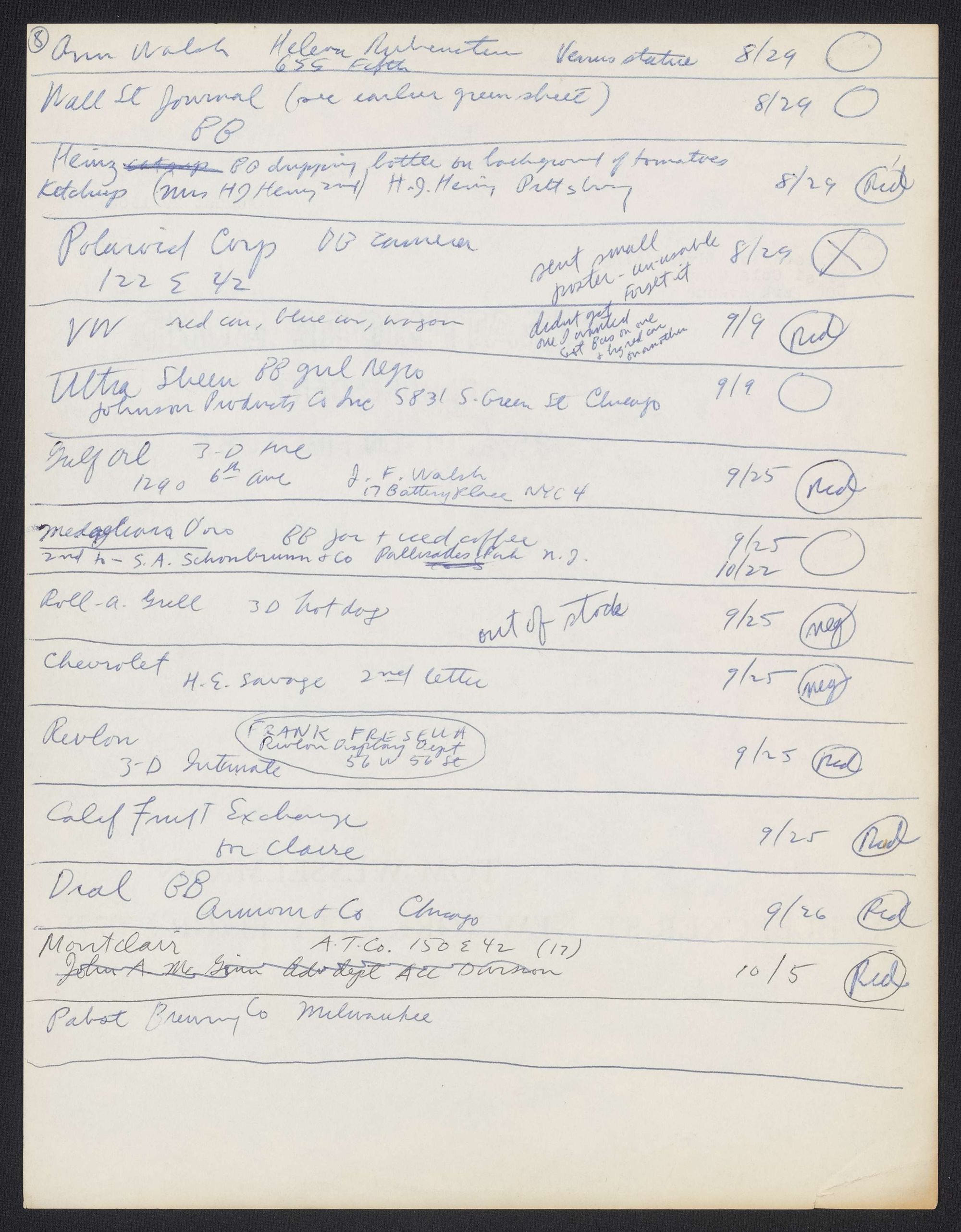
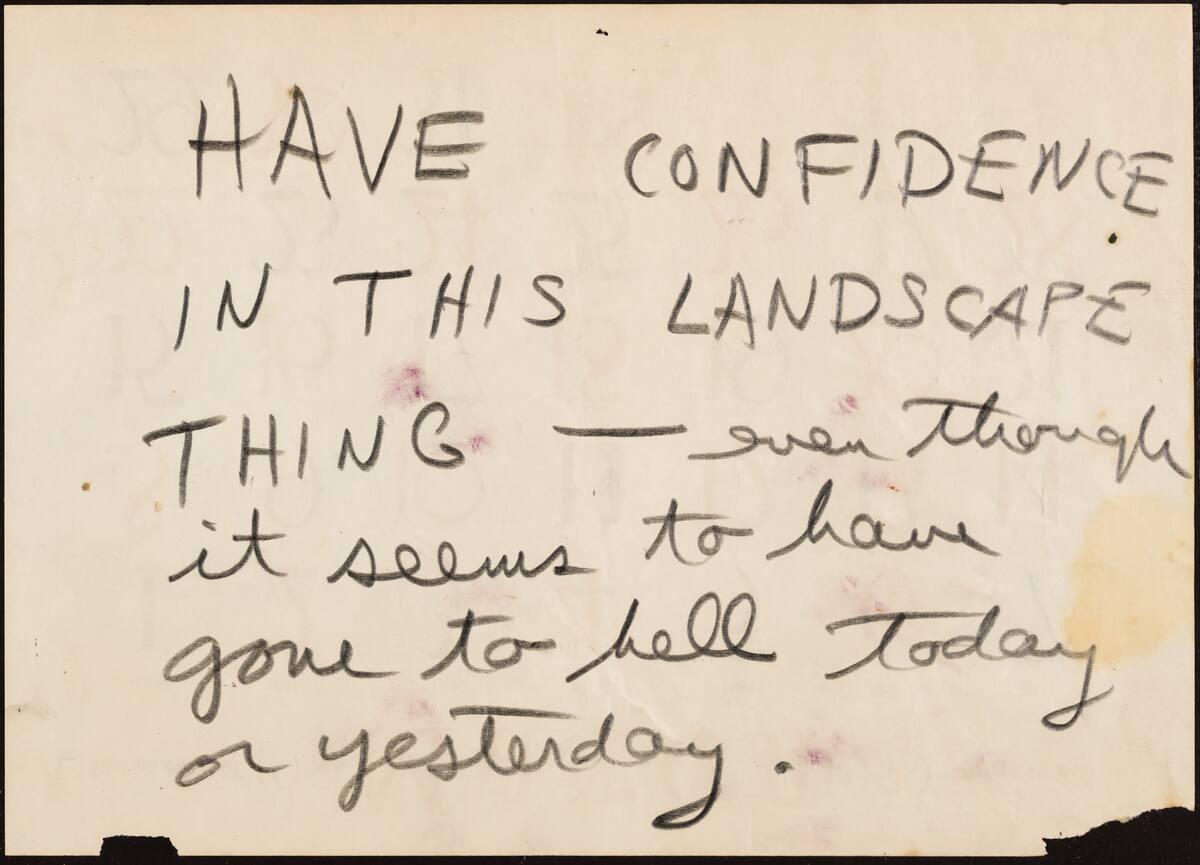
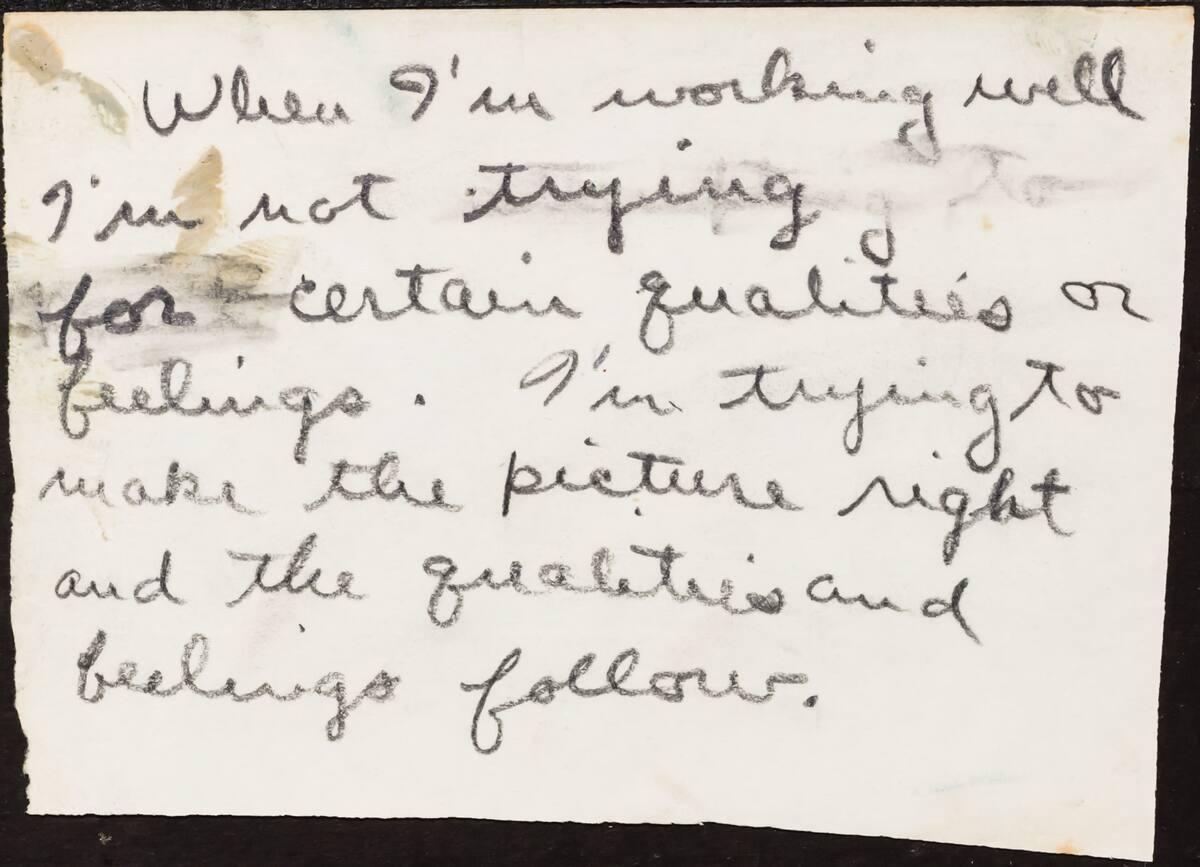
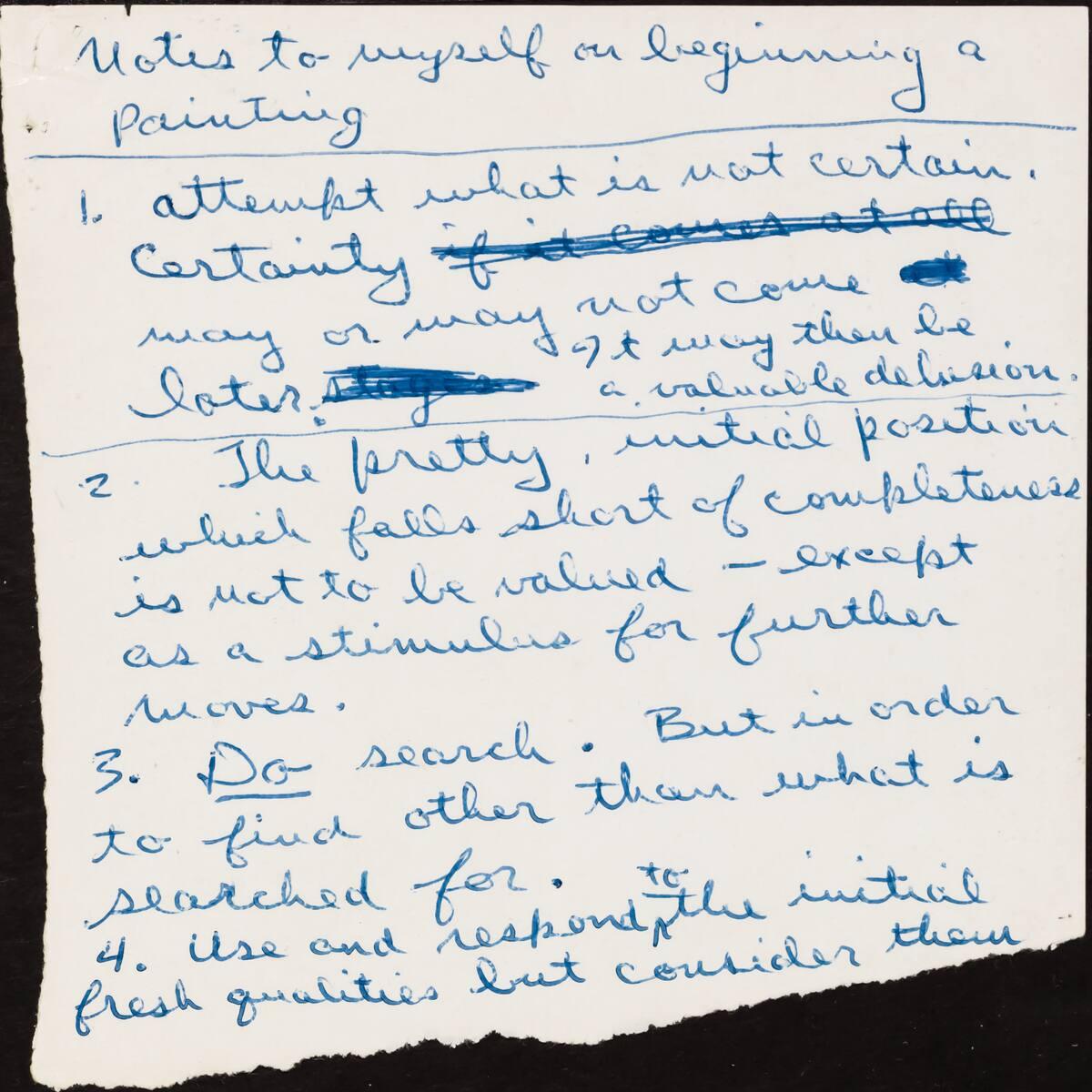
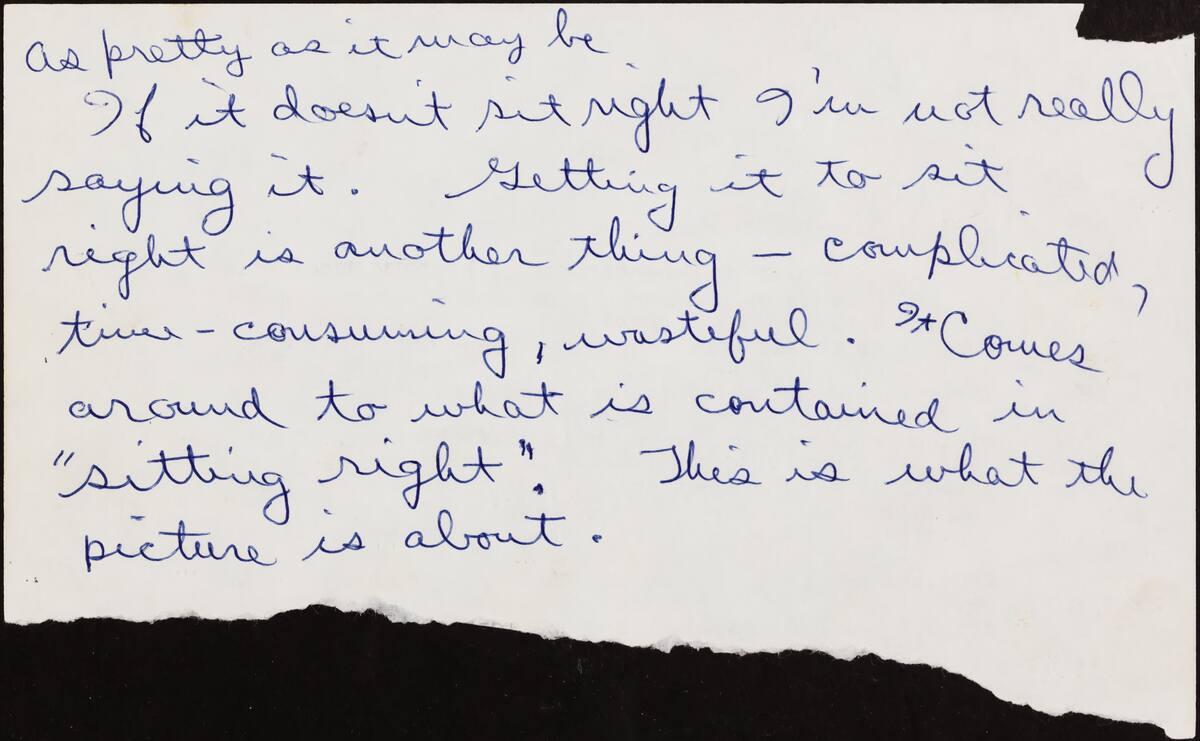
I pick up scraps of paper left behind on the sidewalk. The stranger’s forgotten grocery list, the string of a few words that have lost their context and so their sense. Hints of the real life of every other person, reminding me they are there, whole, beyond my projection or imagination. Less lonely, so. Notes that remind us what we want, where we’re going, what we have to do, what we planned, who we need (to call, to meet). Or, as in the notes below (from the archive of Richard Diebenkorn), notes that are the place we teach ourselves how to live, think, see, be together, be who we are, make what we make, understand what we are experiencing.
I love the handwriting that is for itself, that is figuring the idea out as it goes. Unselfconscious, maybe. Or self-conscious, conscious of the self writing (the fingertips so minutely sensitive; the blade of the hand grazing the paper; the nervous system active through the hand, the arm, the shoulder, the neck; the smell of ink and paper, their textures; the thoughts coming as the hand makes them happen). Conscious of the onliness of the self who writes: satisfied to be as singular as that person is, not needing to be seen, not needing to correct its oddities. Writing that doesn’t perform for anyone. The way it looks, with all its ‘errors’, is the richest and best way for it to look: peculiar, particular, strange, totally everyday.
I like the lists and notes we make to and for ourselves, when it seems no one is looking. Writing that shows its ordinariness and its throwawayness, precious in the end because it is the mark of the finite one who made it.
Thank you for reading—and being—here. See you next week.
The title of this space comes from Fanny Howe’s essay “Bewilderment”, in The Wedding Dress: Meditations on Word and Life. In this essay, Howe writes that bewilderment is “an ethics and an aesthetics”, or “a way of entering the day as much as the work”. Bewilderment has been a guiding question for me since first encountering Howe’s essay almost twenty years ago. A process that interrupts established ways of navigating, bewilderment inverts value systems, breaks our compasses—not only in writing, but in our daily lives (as if we could ever really separate the two). Bewilderment is also an effect: for me, the effect of close attention that can result in a radical subversion of my assumptions about what matters, what can interest me, how I’m connected to what’s around me, and what “around me” even means.
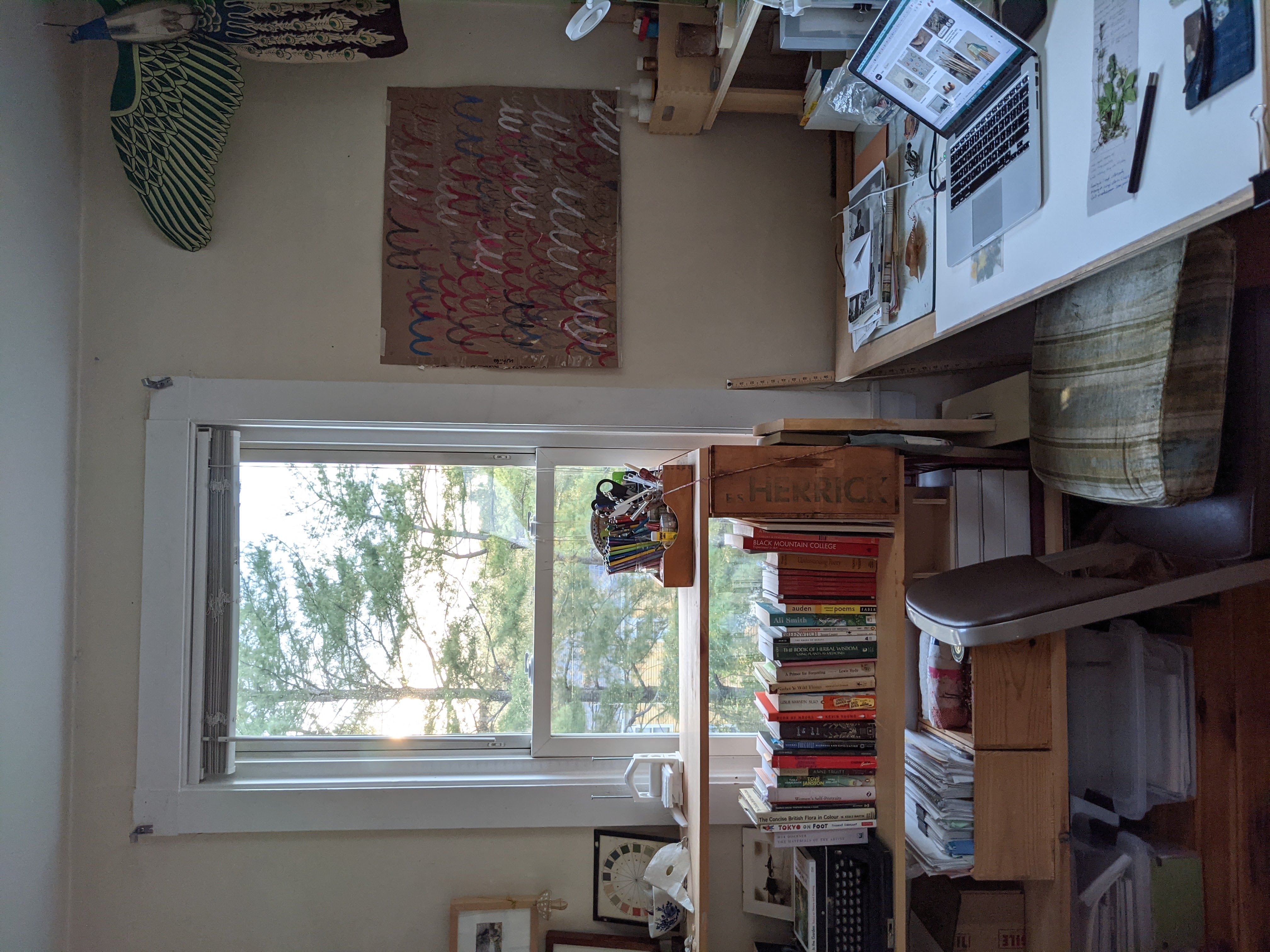
I have always been a person for whom writing is one thing among others: a part of life that goes on, like breathing, during the everything else of my days. Washing dishes, walking to the bus stop, buying groceries, being with others, teaching and other paid work, sewing, doing philosophy, caring for my family—all these are threaded through the part of me that writes, and the writing part is threaded through all of these. Howe’s idea of bewilderment has led me to think about writing and living (making clothes, meals, rooms; working for pay; relating to other beings, to ideas, to objects and texts and images, and to places) as processes where questioning my received understandings—my pictures of a world that “just is”—is primary, the groundwork for both writing and living.
So in this space, I’ll think about—and invite others to think about—what Frank Bidart means when he writes that “being is making: not only large things, a family, a book, a business: but the shape we give this afternoon, a conversation between two friends, a meal”. Our ordinary lives, where the biggest questions of meaning—what justice looks like; what liberation is; how to live together; what art means—show up in patchwork ways. Our work: to live them and to make art of them, to bewilder ourselves in the living of them, to make (in Toni Cade Bambara’s words), “revolution irresistible”.
Posts will go up on Sundays, beginning March 5, 2023. Here’s what you can expect:
Once a month, a new piece of writing from me: thinking about art, writing, ordinary life.
Once a month, an older piece of writing from me, sometimes republished from elsewhere, and sometimes drawn from a stock of drafts.
Once a month, a feature called [while washing the dishes]: notes on things I’ve encountered that you might like—music, images, bits of text, objects, places. Short reviews, possibly.
Once a month, a feature called [while walking], a collection of photos from my transit through Dublin on the way to work and my passage through our neighborhood while doing errands or just walking.
Every so often, an essay from a guest contributor. More on that soon.
Bewilderment (every sense of that word!) is free. Eventually, what’s posted here will be available as a print quarterly, and older essays will be hidden as they appear in print. Information about the print quarterly (cost, subscription details) will be available later this year. If you enjoy what you read, please feel welcome to share it with others.
And finally, a little about me: I’m a writer and an artist working across performance, installation, and social practice, all of which draw on a longstanding practice of observation and drawing. I’m especially interested in time: duration, seasonality, repetition and cycle, and time itself (what it is, how it’s made or measured, how we know, how time and culture cross). My work is attentive to and deeply curious about form—social form, literary form (received and invented), botanical form (plant structures). I link both time and form to place, especially hyperlocal place, and the way patterns of time and form can lead us to knowledge and wonder in our most near-to-hand places. Finally, I’m interested in the human scale: the hand, the foot, the eye, and how this scale can teach us about living with one another and in the world.
![[while walking]](https://bewilderment.ohbara.com/wp-content/uploads/2023/05/Screenshot-2026-03-15-at-09.36.09.png)
![[while washing the dishes]](https://bewilderment.ohbara.com/wp-content/uploads/2023/05/Screenshot-2026-03-15-at-09.38.08.png)

![[while washing the dishes]](https://bewilderment.ohbara.com/wp-content/uploads/2023/03/Screenshot-2026-03-15-at-09.41.34.png)