![[while walking]](https://bewilderment.ohbara.com/wp-content/uploads/2023/05/Screenshot-2026-03-15-at-09.36.09.png)
the direction of time is continue: sumer is icumen in
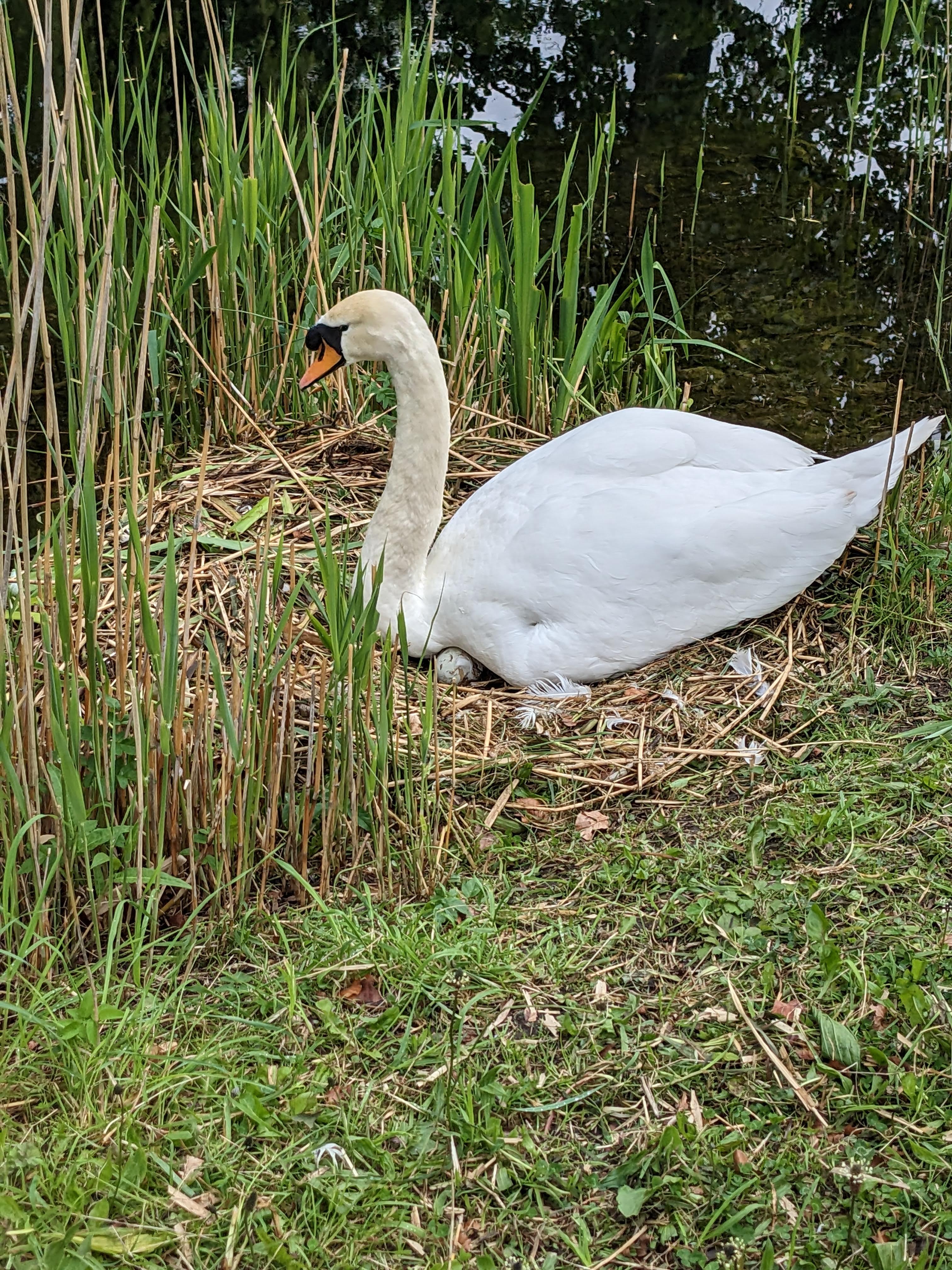
Lhude sing cuccu. A brief catalog of early summer: its speed is instant. It arrived pretty much in whole cloth around the first of May, with bluebells everywhere and the sword-shaped leaves of the irises in the canal. And now the irises are open and the swans are on their eggs. I drop peanuts onto our windowsill in an attempt to coax the magpies to befriend me, and they do come, but are not tame. The humidity drops, the rain comes in sudden heavy bursts, the humidity rises, the uilleann pipers’ school lets out for the long school holiday, and friends text me their travel plans. Teaching ends.
The form of the song “Sumer is icumen in” is a round. A round is a kind of composition where voices sing the same melody but begin at different times, so that the different parts occur at the same time in their different voices. Singing a round tells time both cyclically and overlappingly: it tells time by cycling through it (singing the entire melody from beginning to end, and beginning again) and it tells time when one voice crosses another (here, here, here; here, here, here, says the overlapping melody). Things come back, they cross and recross, and they resonate with one another over time, and they repeat wholesale. Like seeing flowers in one place and another, summer in one place and another.
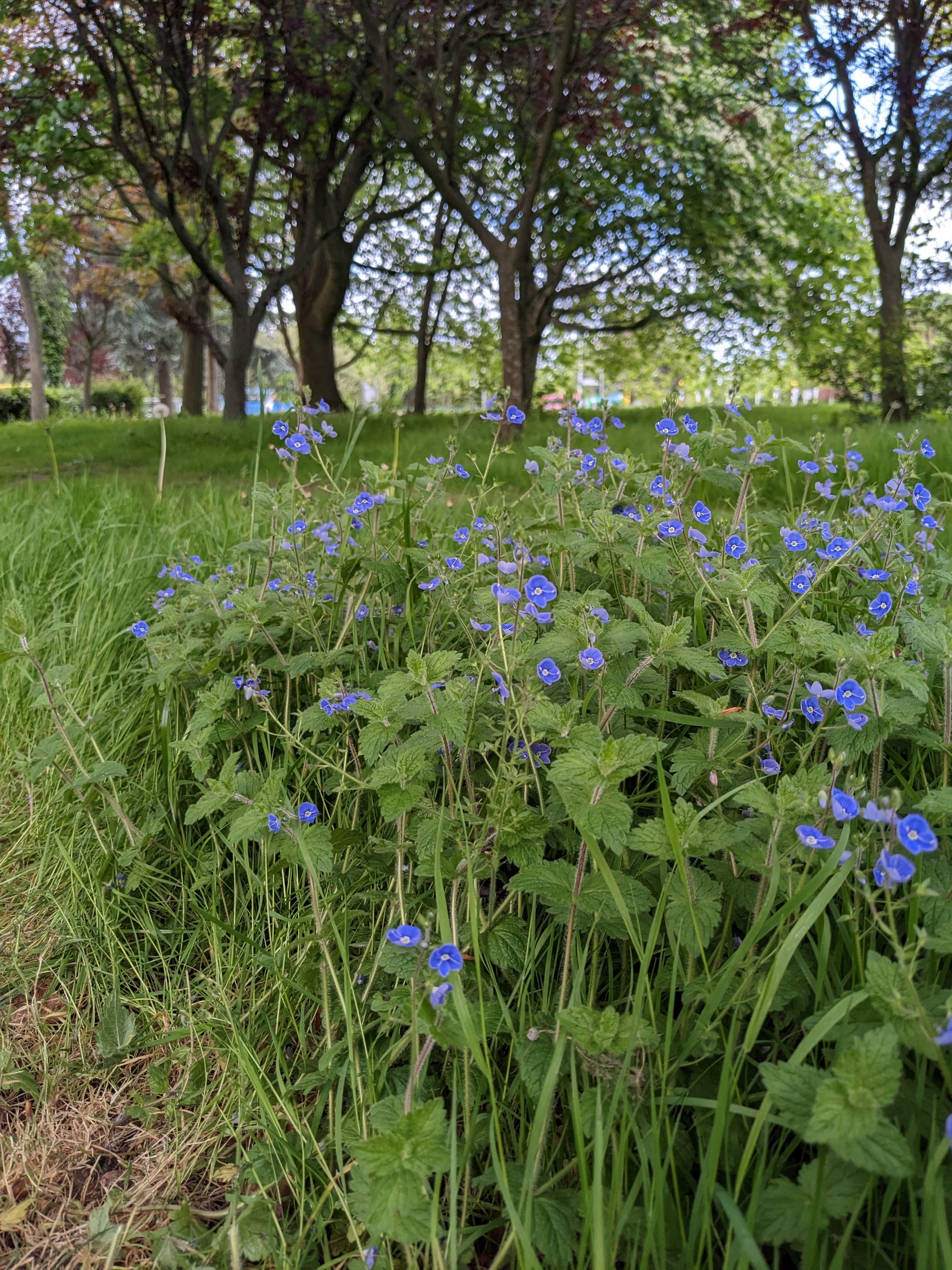
This haze of speedwell catches my eye from a dozen yards off. At the university where I work the groundskeepers mow only part of the grass, which means that all kinds of plants flourish in the uncut sward. We are now in the season of greenness, of expansion, of lengthening, of lightning and thunder.
(In the part of Iowa, where I lived last year, I felt a visual drought when faced with the weedlessness of that place. There were so few plants in general, and almost none “out of place”. There was a lot of grass, cut uniformly short. Along fences, where weeds are hard to control manually, there were swathes of dead plants that it took me a while to realize had been sprayed with weed killer. To be surrounded here by the variousness of the plants here feels restorative.)
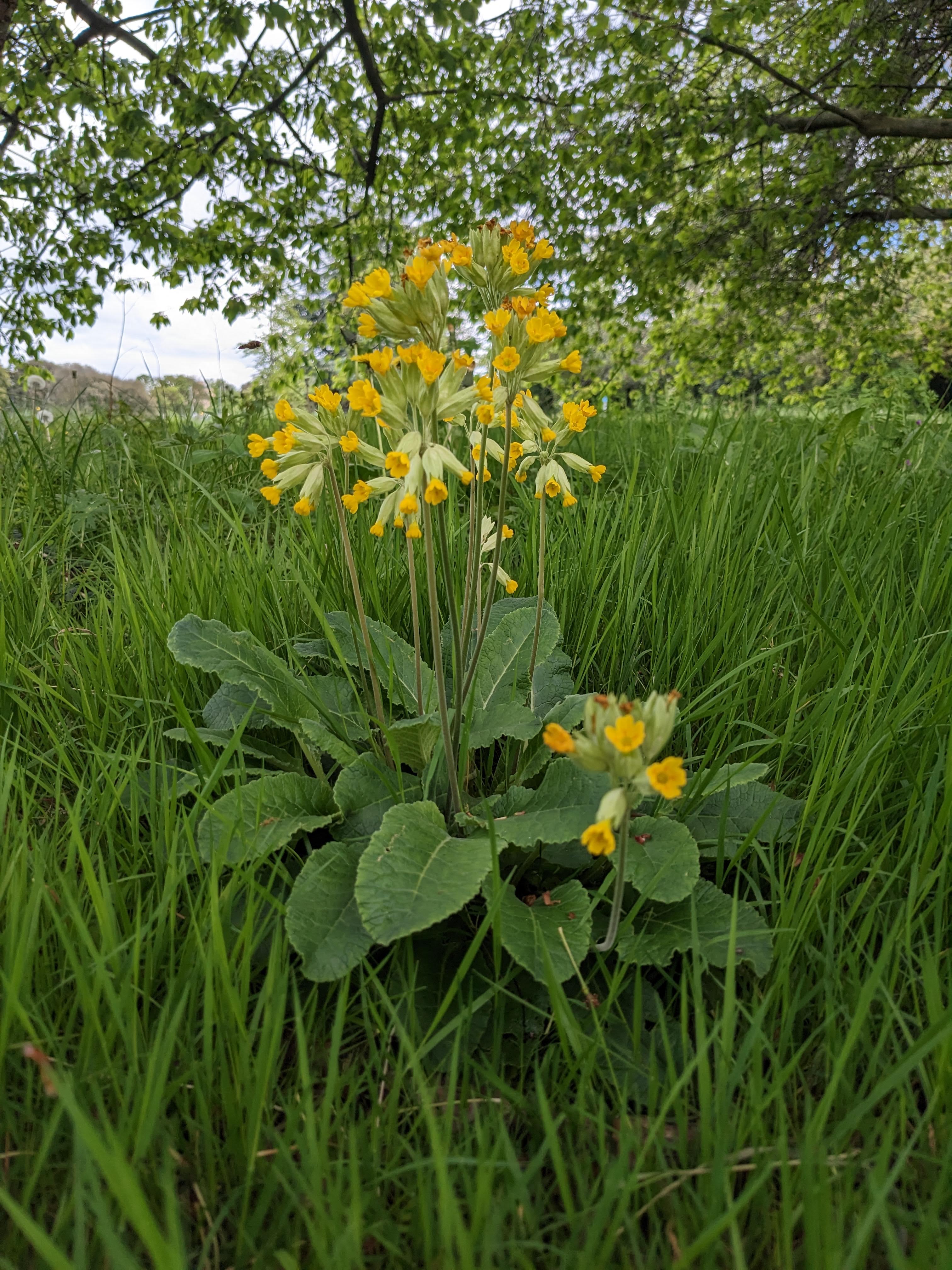
I love the flower shape of the primulas, especially the tall primulas. Traveling in Japan in 2017 I noticed many candelabra primulas in pots outside houses, especially in cities. Cowslips are the closest I’ve come to them on this island. Apparently these flowers are protected in Northern Ireland, but not here, where they still appear in the landscape. The captive primulas in Japan were mostly magenta, pink, orange-pink, and white, and stood upright on slender stems. Some had their flowers arranged in spheres; others (the candelabras) in wheels, one above the last. I do not have a garden—not even a city garden like the Tokyo gardeners who made excellent use of the narrow space at their doorsteps with pots and risers of all kinds—but when I do I would like to grow primulas. So the flower is in three kinds of time for me: the present (where I see the cowslips in the grass); the past (where it sends me to the synonym-formed Primula beesiana); and the future (where I imagine, one day, being able to grow these flowers myself).
Summer in the cowslip and the iris, the brassica escaped from field plantings, and the tiny ball-shaped creeping clover flowers. Everything is going upward and outward as quickly as it can.
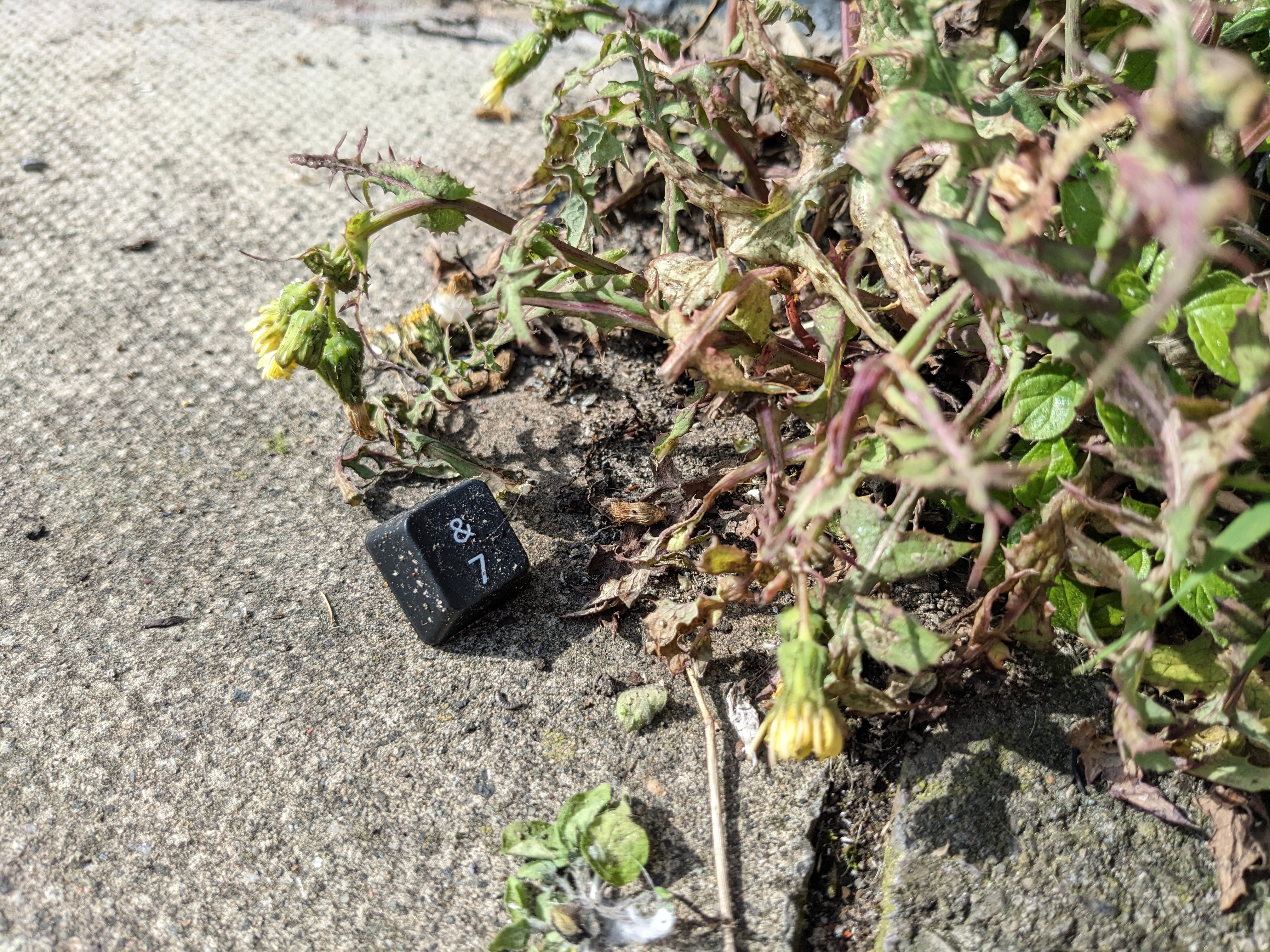
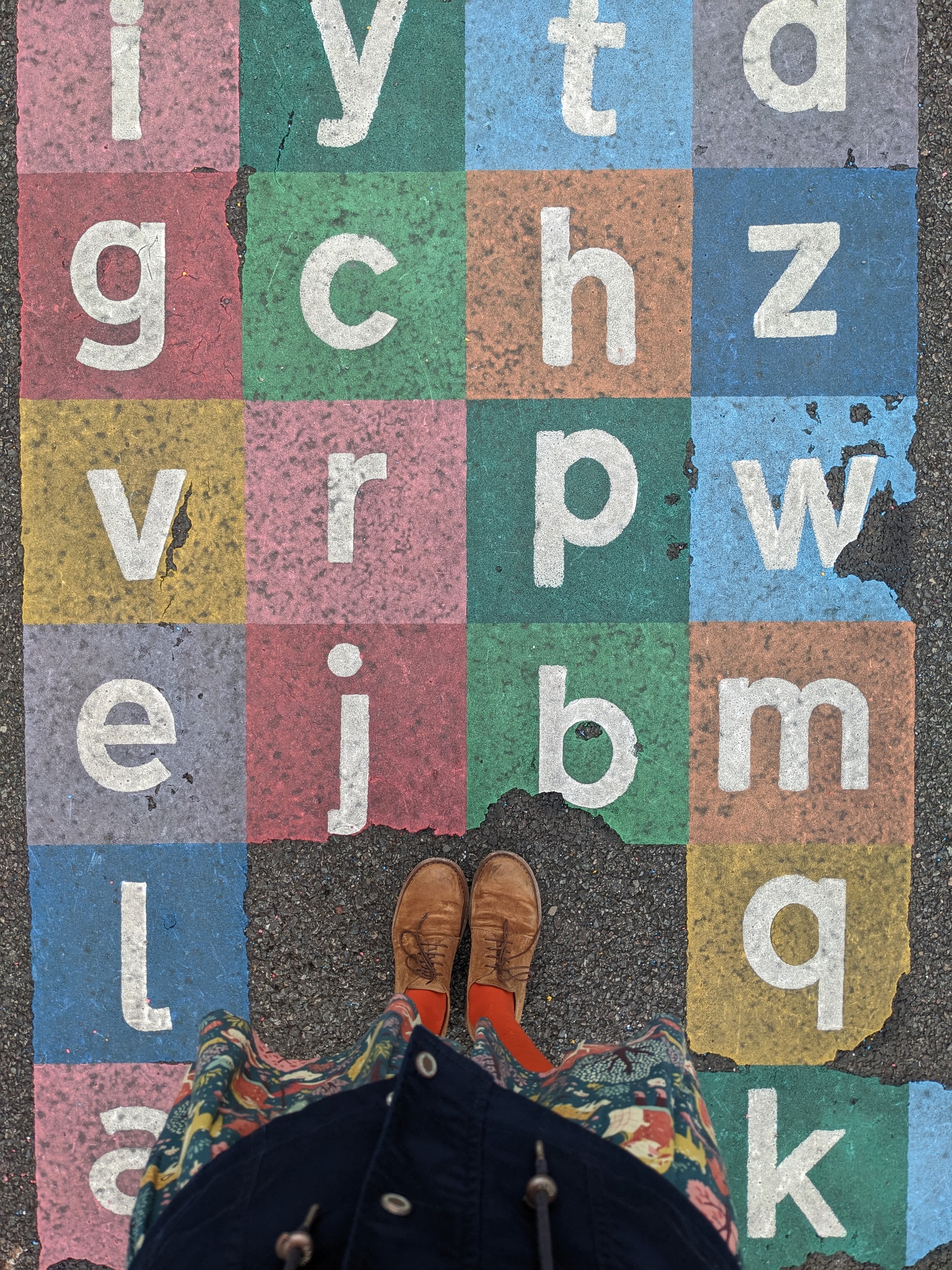
Also seen while walking recently: parts of the world-alphabet. An and and a seven. And a groundsel and an and and a seven.
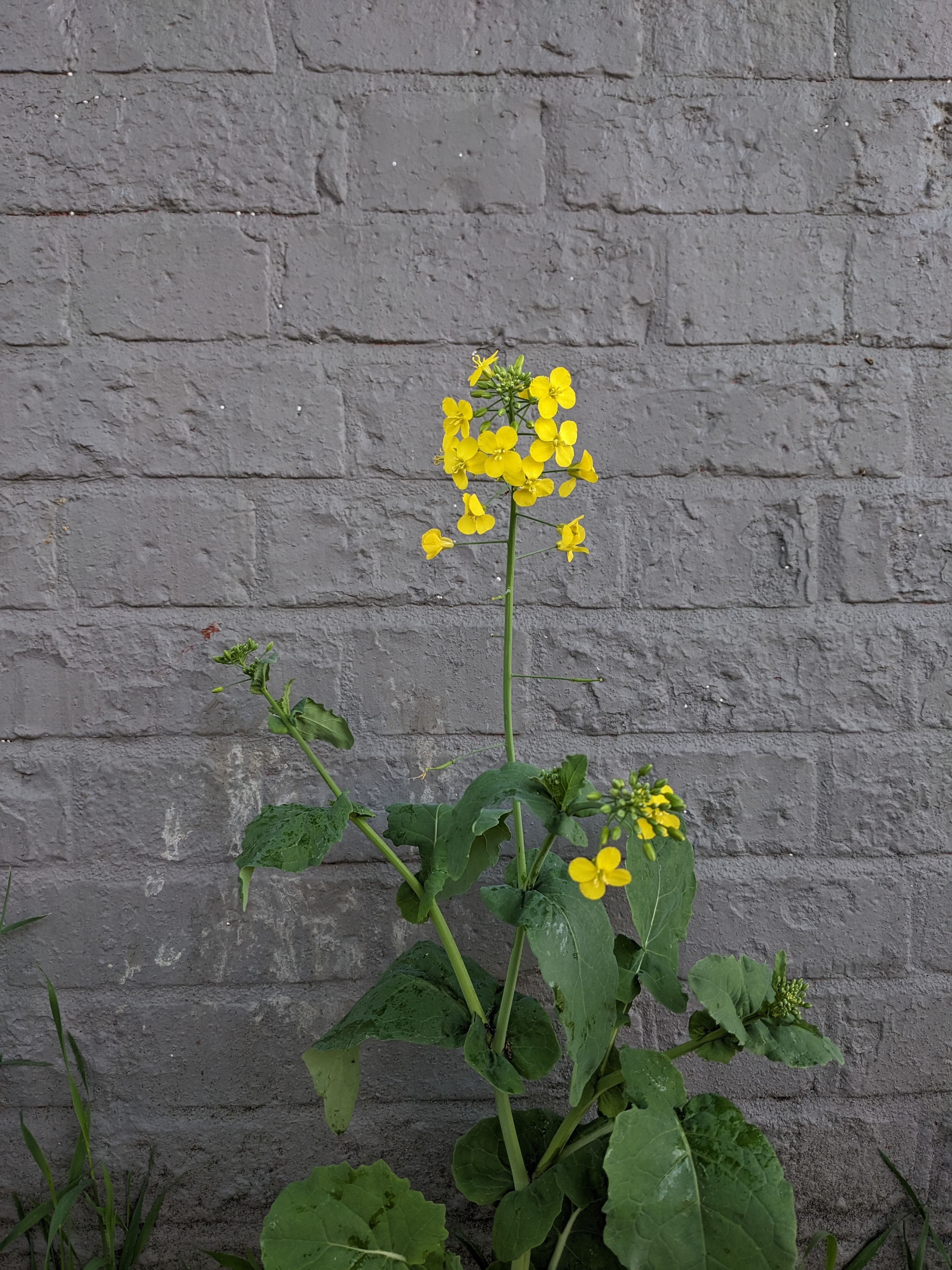
And a glorious brassica against a gray wall—that electric yellow. These are everywhere. I don’t know for sure what they are called because I haven’t bothered to get really close and look at the flower structure. I think it could be Brassica nabus, which would make sense—there are fields of it in flower now.
When I write about the world I walk through, I am conscious that the movement of my thoughts is sometimes “one thing after another”, rather than how I think it ought to be (in order to be ‘real thinking), which is “one thing, and then another, and then a return to clarify the relationship between one thing and the next”. Sometimes I realize this difference from my internal picture of “good writing” or “real thinking” with shame or self-doubt (“am I doing this correctly?” “why can’t I do this correctly?”). But first of all, difference from a norm is the mark of the voice or hand. That’s a characteristic of artmaking. And second of all, there are many shapes for thinking, like there are many kinds of tempo, movement, direction. We step into the arrangement of things and take note.
Here are some things I’ve been enjoying: David Borthwick’s Twitter, bird ringing and plant observing. A collection of fruit stickers to die for, via Steve Himmer. Marianne Boruch, “Water at Night”.
I hope where you are is fragrant, comfortable, slow enough to live in, and full of birds and flowers. Thank you for reading.