Author: bewilderment

  • [while washing the dishes]

    [while washing the dishes]

    I thought about how precious the handwriting of others is

    I like all kinds of handwriting—I am not a snob. I like it how it comes, in whatever medium. The irregularities of a pen with a nib and ink can be charming but they can grate, too. Preciousness of any kind irritates me. I like a ballpoint’s marks on ordinary lined paper, where you can tell a glob of ink (glob! that absolutely unsnobbable word) has caught and dragged. I like when the pencil makes a thick heavy graphite mark, almost a smear, and you know the hand that held it had a gloss of that same gray on its blade.
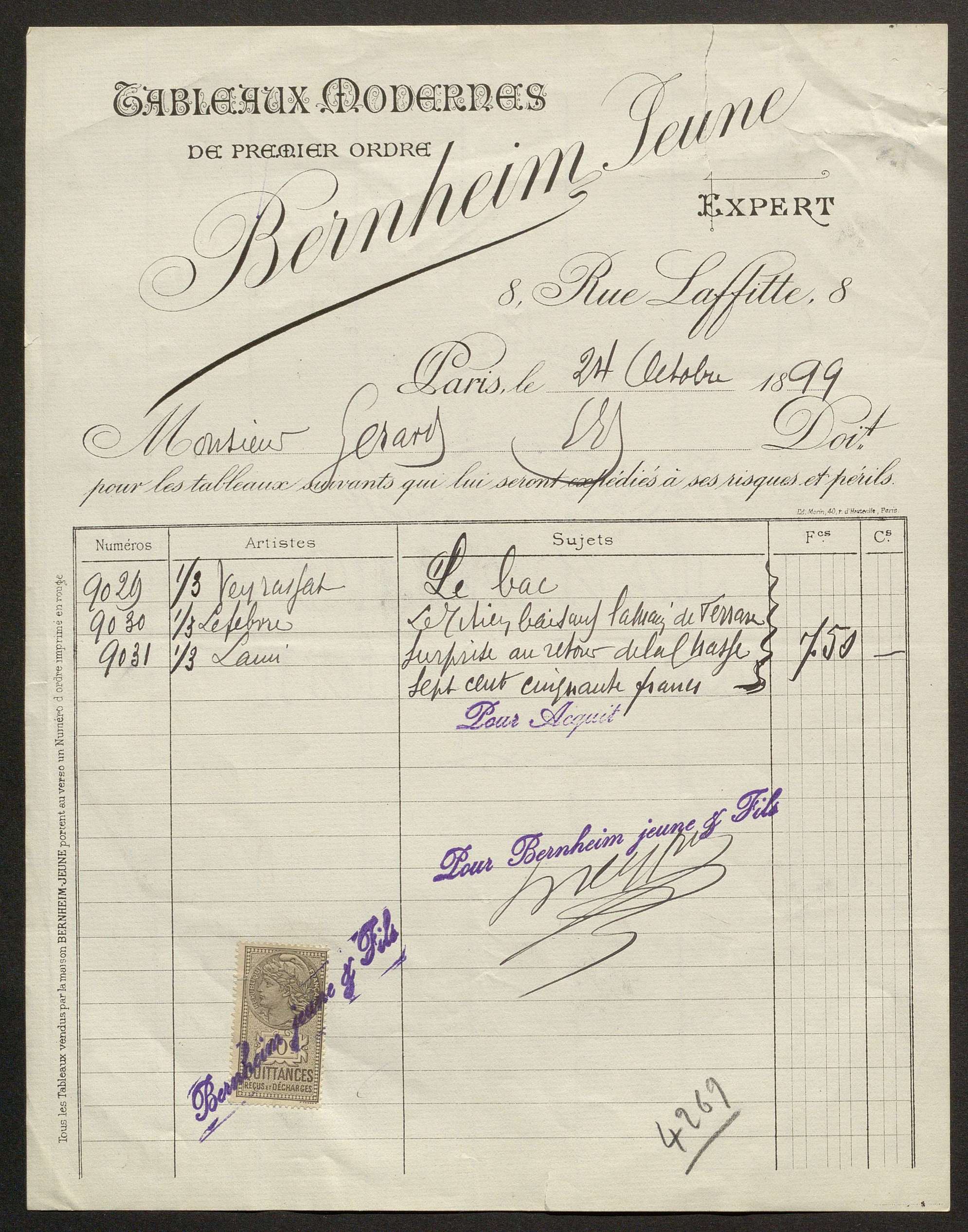
    Manuscript-obsession isn’t what I’m talking about when I say I like handwriting, though. I’ve been in archives and flea markets, and I know the feeling of seeing something carefully preserved, or just kept a long time, as a specimen of another time and place. While I admire things like this gallerist’s receipt (and love the way it helps me understand its setting through its materials), I don’t feel for it. Some people do, I think. On the Place du Jeu de Bal in Brussels, I’ve seen the autograph dealers, and the philatelists who collect envelopes with their addresses intact, and the scrapbook-collectors, and the keepers of antique shops on the periphery of the square. There must be people who keep them in business, a business of loving or craving this kind of writing. Maybe the same people are drawn to 19th-century advertising plaques and antique chairs.
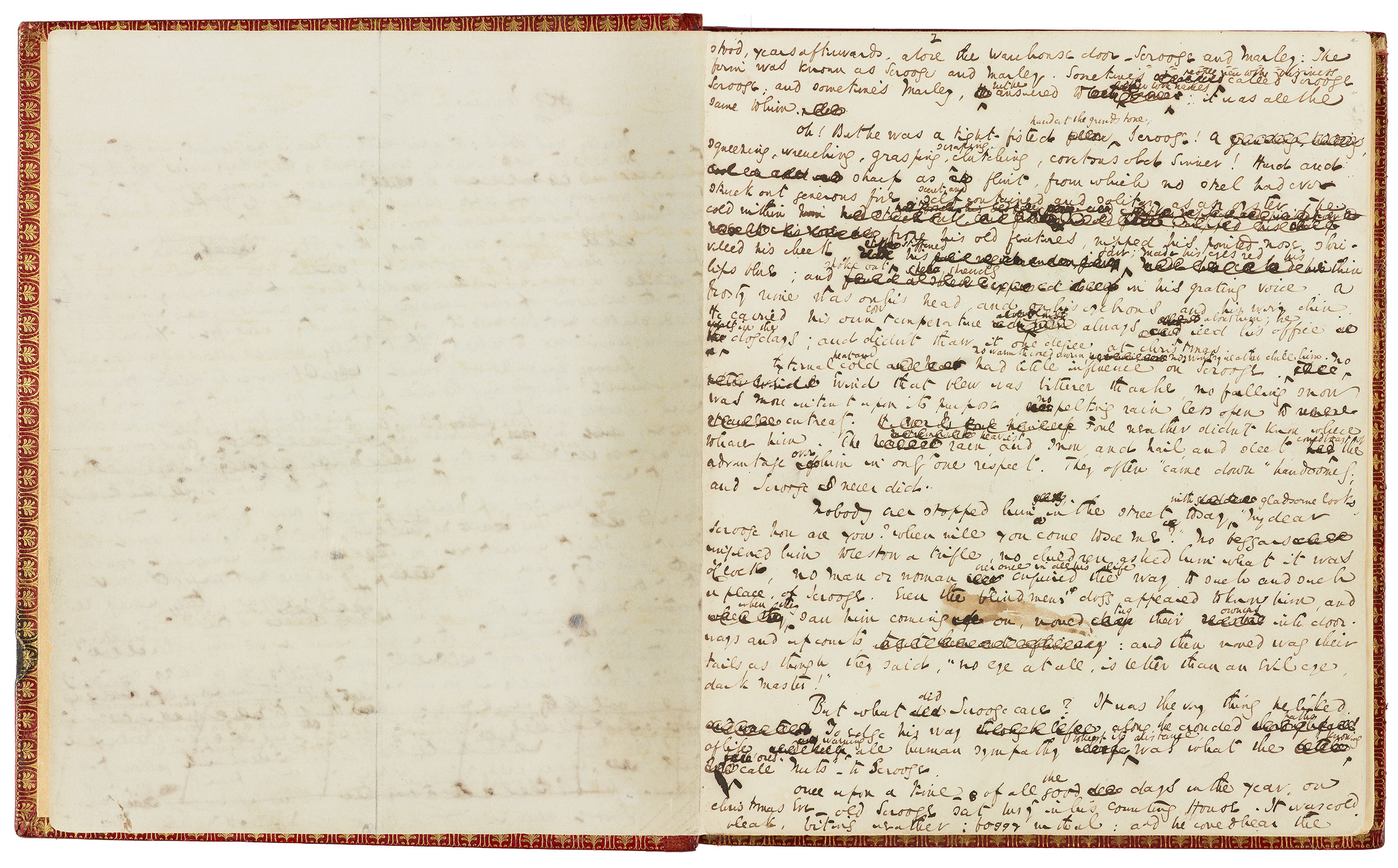
    As a college student I could not have imagined anything duller than manuscript studies. Looking at minuscule differences from draft to draft and then arguing about what they mean? Seriously? (Back then, I believed in the single genius model of writing and thinking I’d been offered as a tacit part of my education. I didn’t yet have an understanding of time and process and shared creation that would let me see what manuscripts could teach.) Now I love that manuscripts can tell so much about thinking. I am not a book historian but I am in wonder of what book historians do and how they do it. Nevertheless, these manuscripts and their uses, their meaning in the frame of book history or literary history or the sociology of literature are also not the handwriting I mean when I say I like it.
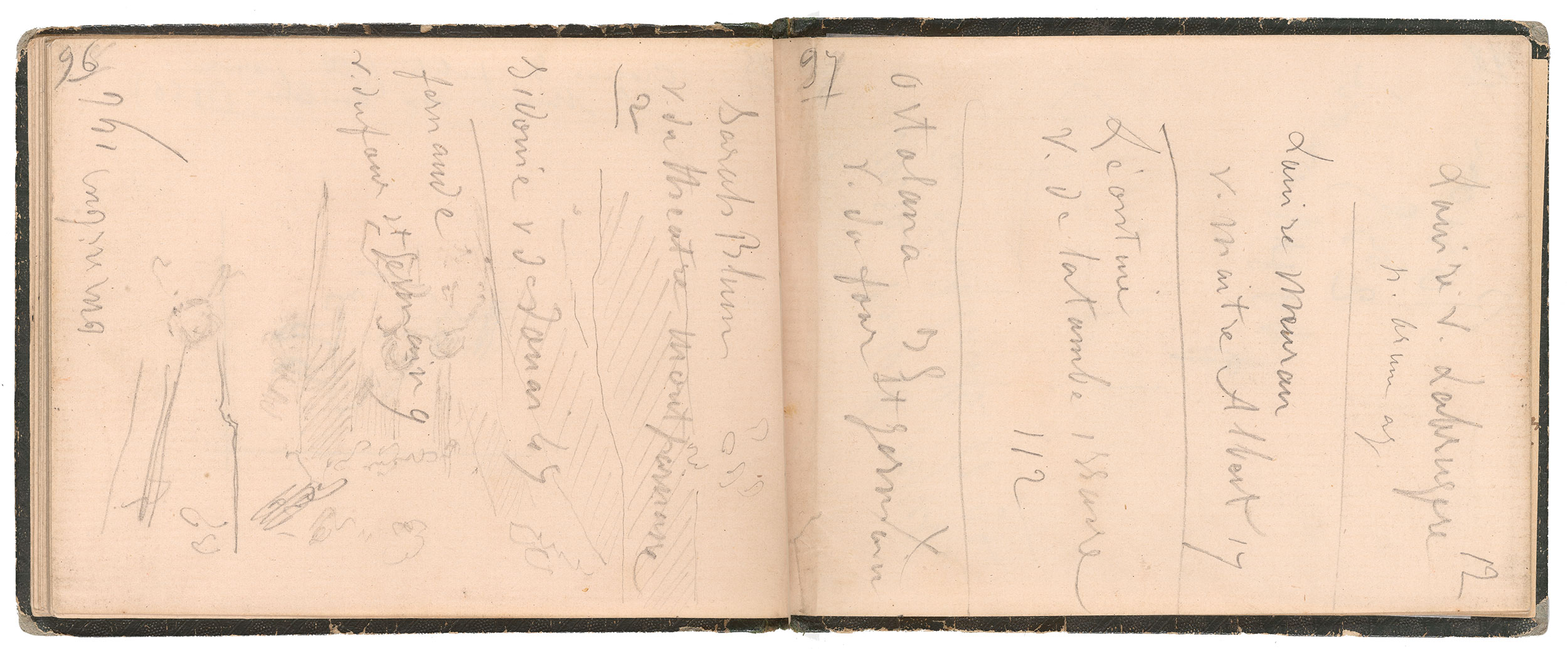
    This is closer, in a notebook belonging to Édouard Manet. Handwriting that goes the ‘wrong’ way, that moves as a body moves (privately, idiosyncratically) and includes non-letter marks. Yes, closer. The word and the world almost touch. And made without a reader: not a receipt, not a manuscript. Something more useless and more private than either of those. I love our secret, shorthand ways of annotating the world.
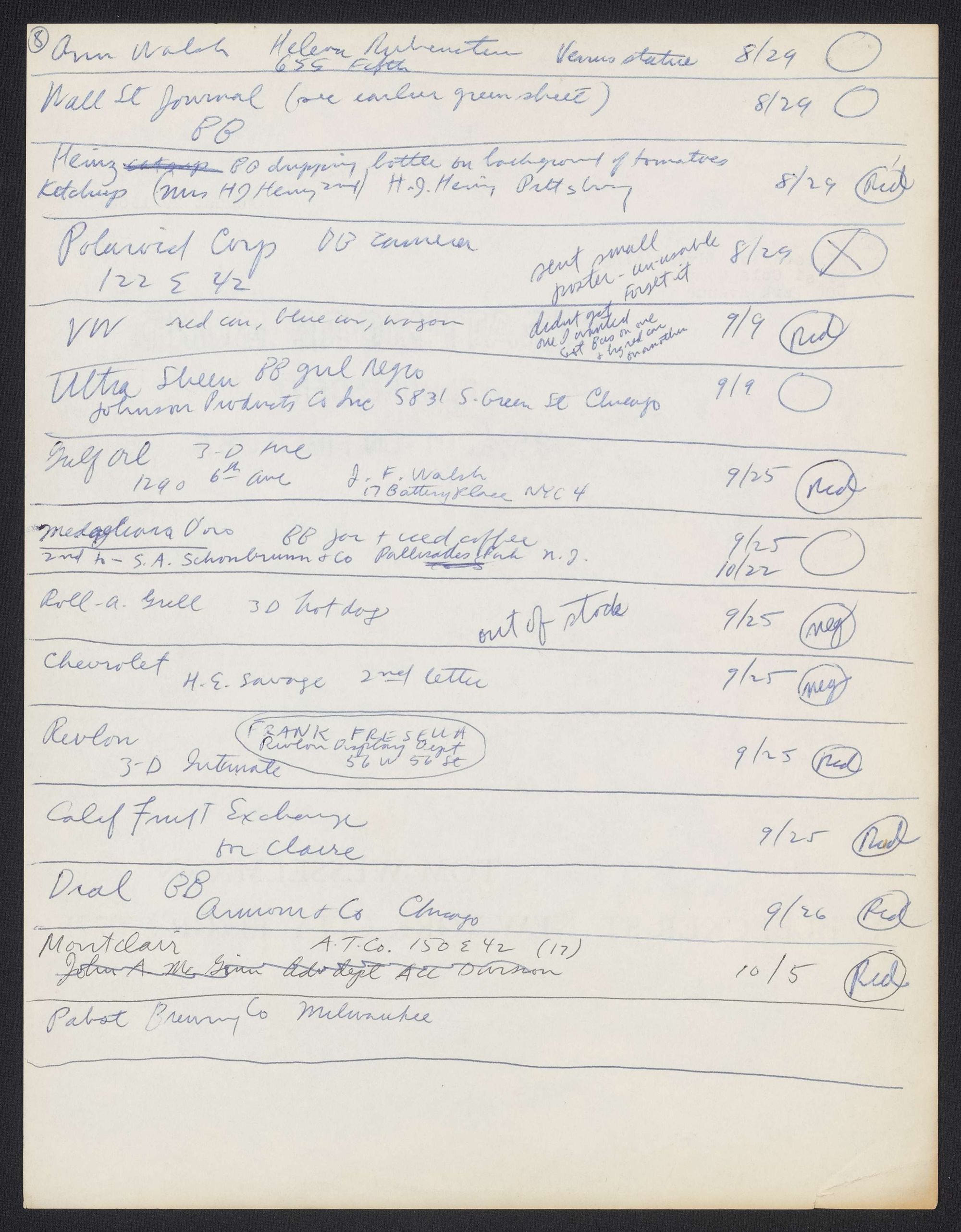
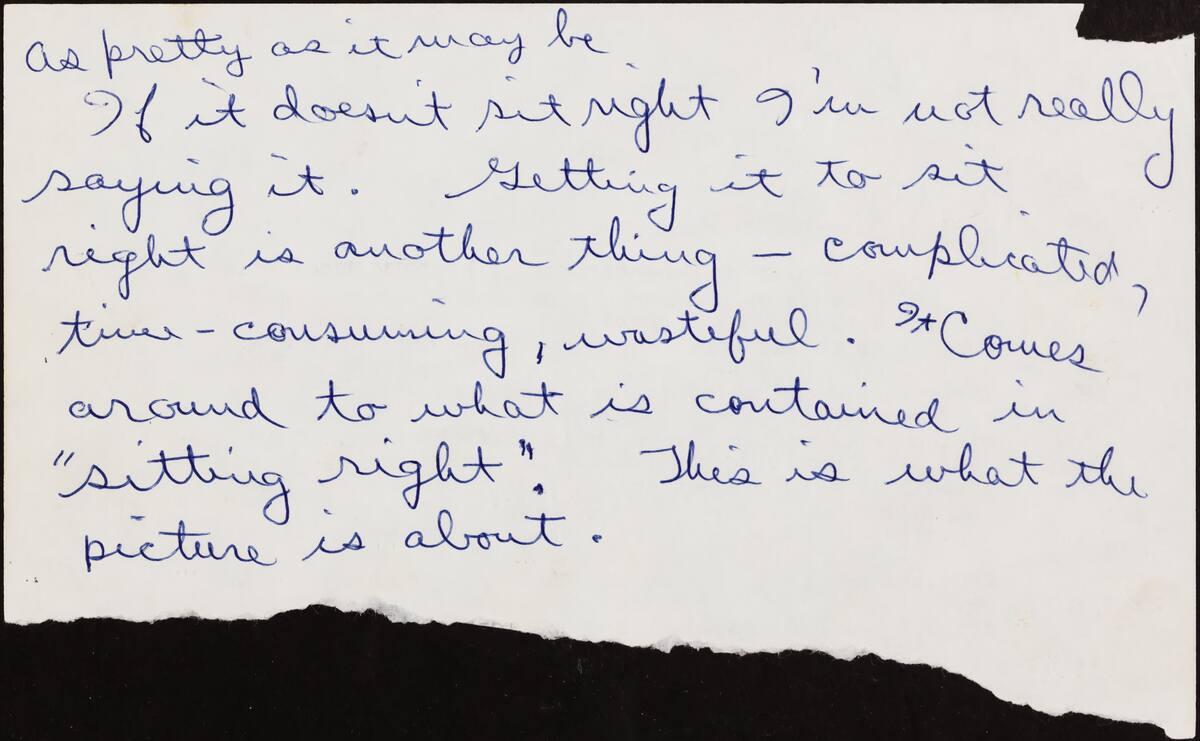
    I pick up scraps of paper left behind on the sidewalk. The stranger’s forgotten grocery list, the string of a few words that have lost their context and so their sense. Hints of the real life of every other person, reminding me they are there, whole, beyond my projection or imagination. Less lonely, so. Notes that remind us what we want, where we’re going, what we have to do, what we planned, who we need (to call, to meet). Or, as in the notes below (from the archive of Richard Diebenkorn), notes that are the place we teach ourselves how to live, think, see, be together, be who we are, make what we make, understand what we are experiencing.
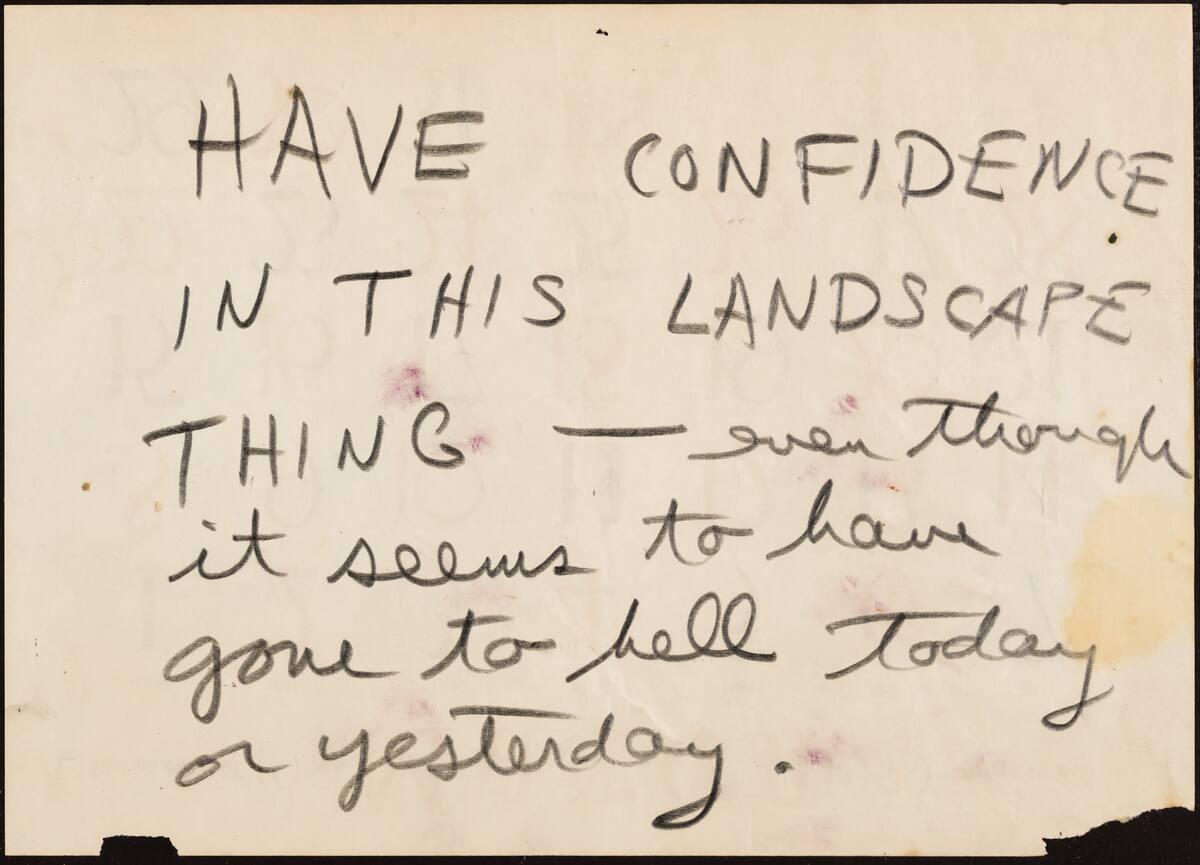
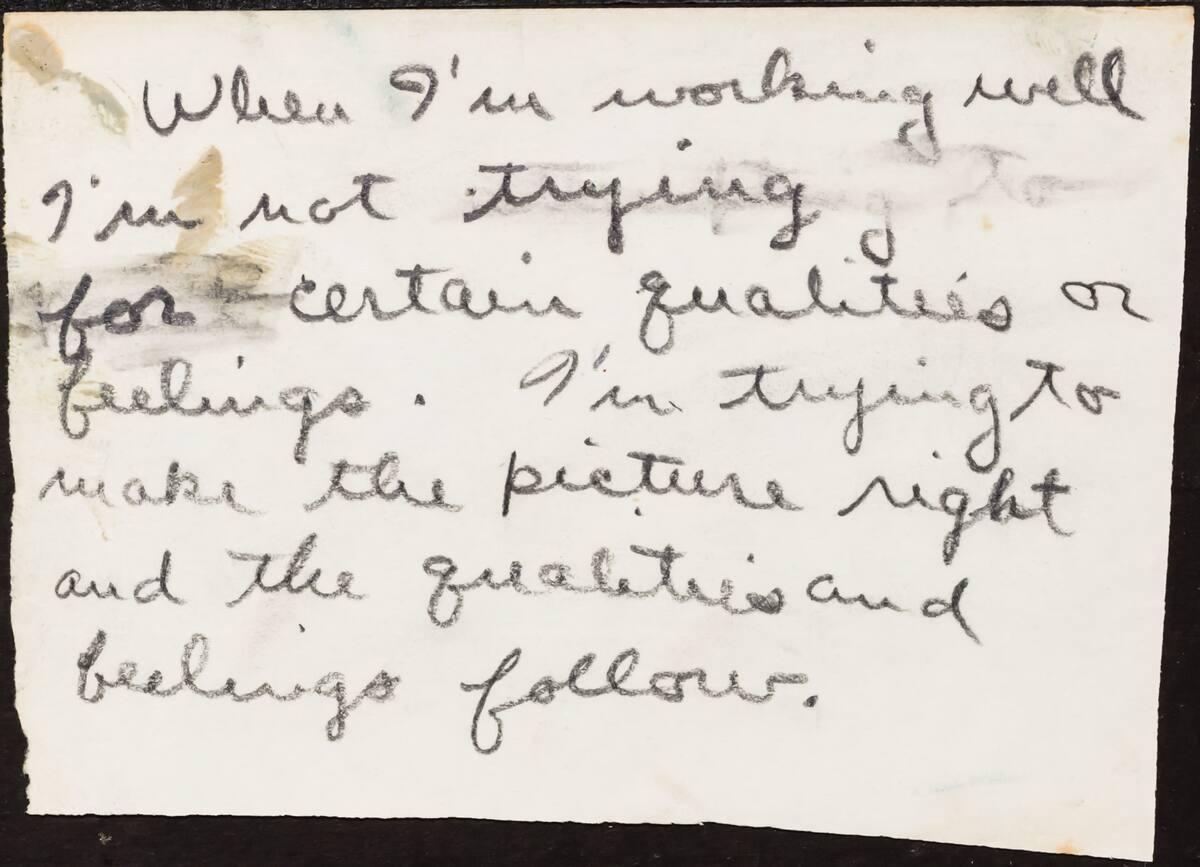
    I love the handwriting that is for itself, that is figuring the idea out as it goes. Unselfconscious, maybe. Or self-conscious, conscious of the self writing (the fingertips so minutely sensitive; the blade of the hand grazing the paper; the nervous system active through the hand, the arm, the shoulder, the neck; the smell of ink and paper, their textures; the thoughts coming as the hand makes them happen). Conscious of the onliness of the self who writes: satisfied to be as singular as that person is, not needing to be seen, not needing to correct its oddities. Writing that doesn’t perform for anyone. The way it looks, with all its ‘errors’, is the richest and best way for it to look: peculiar, particular, strange, totally everyday.
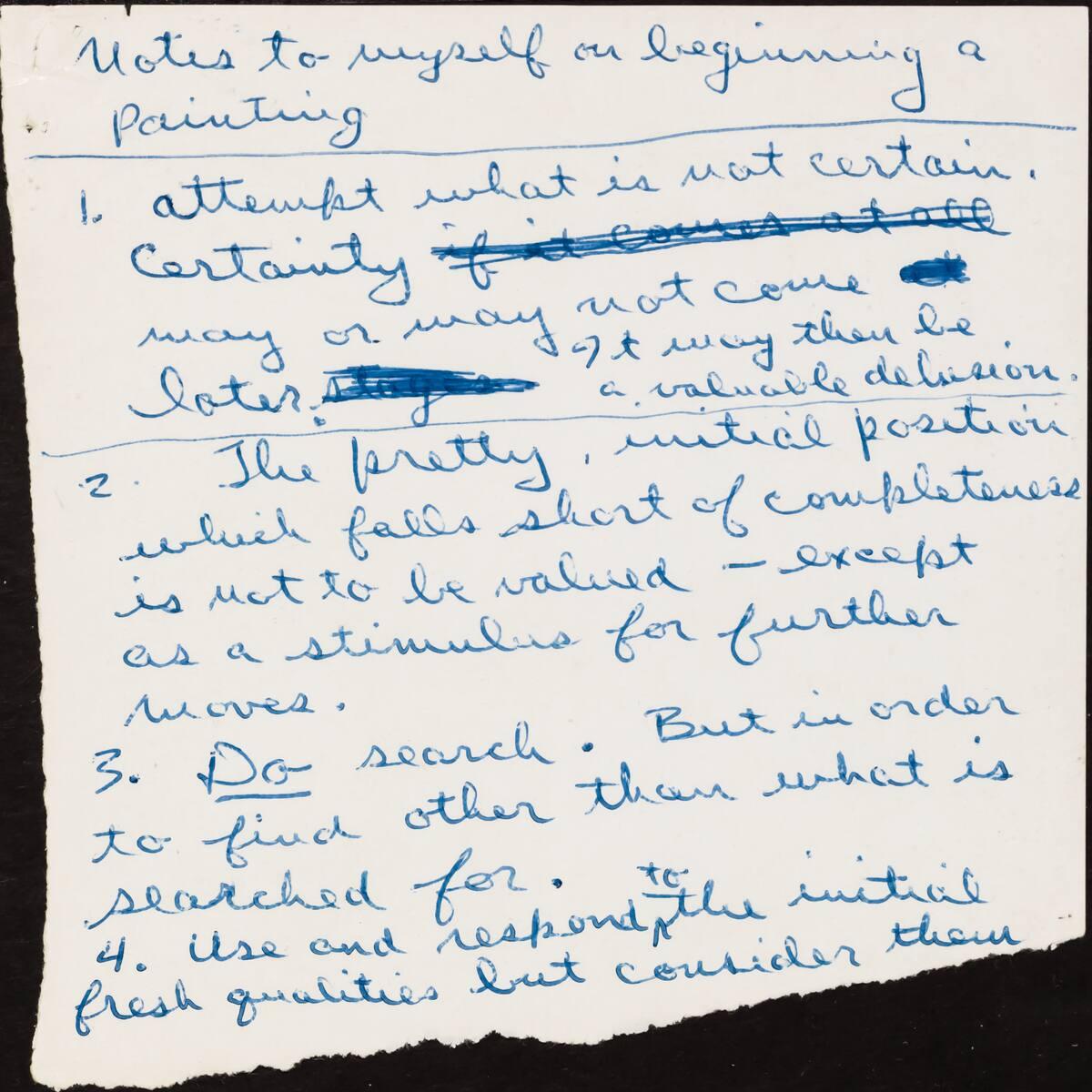
    I like the lists and notes we make to and for ourselves, when it seems no one is looking. Writing that shows its ordinariness and its throwawayness, precious in the end because it is the mark of the finite one who made it.
    Thank you for reading—and being—here. See you next week.

  • Harumi Abe: A Stone, a Universe

    Harumi Abe: A Stone, a Universe

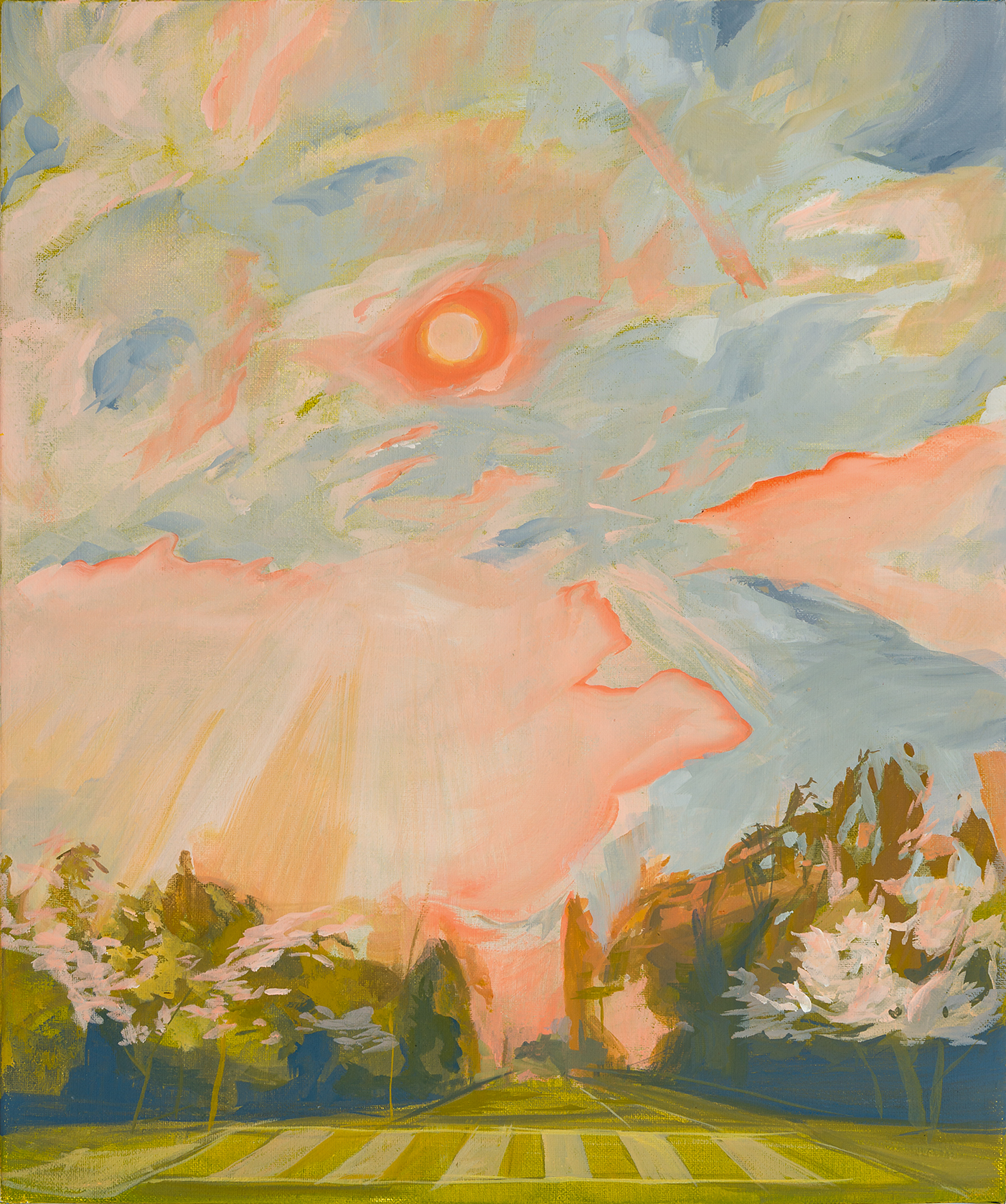
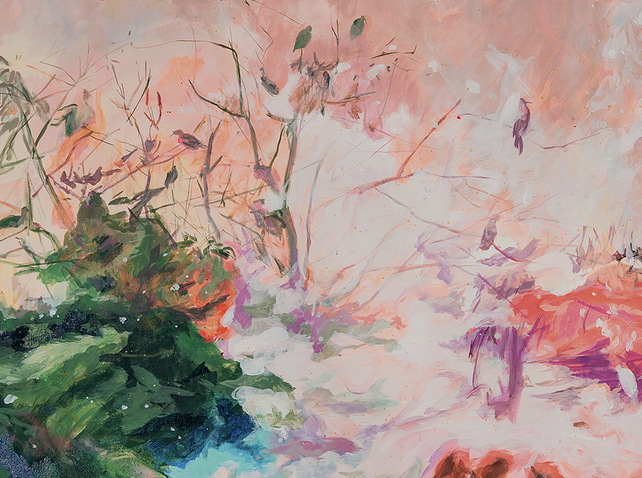
    New paintings by Abe at Washington, D.C.’s Terzo Piano Gallery (until 18 March)


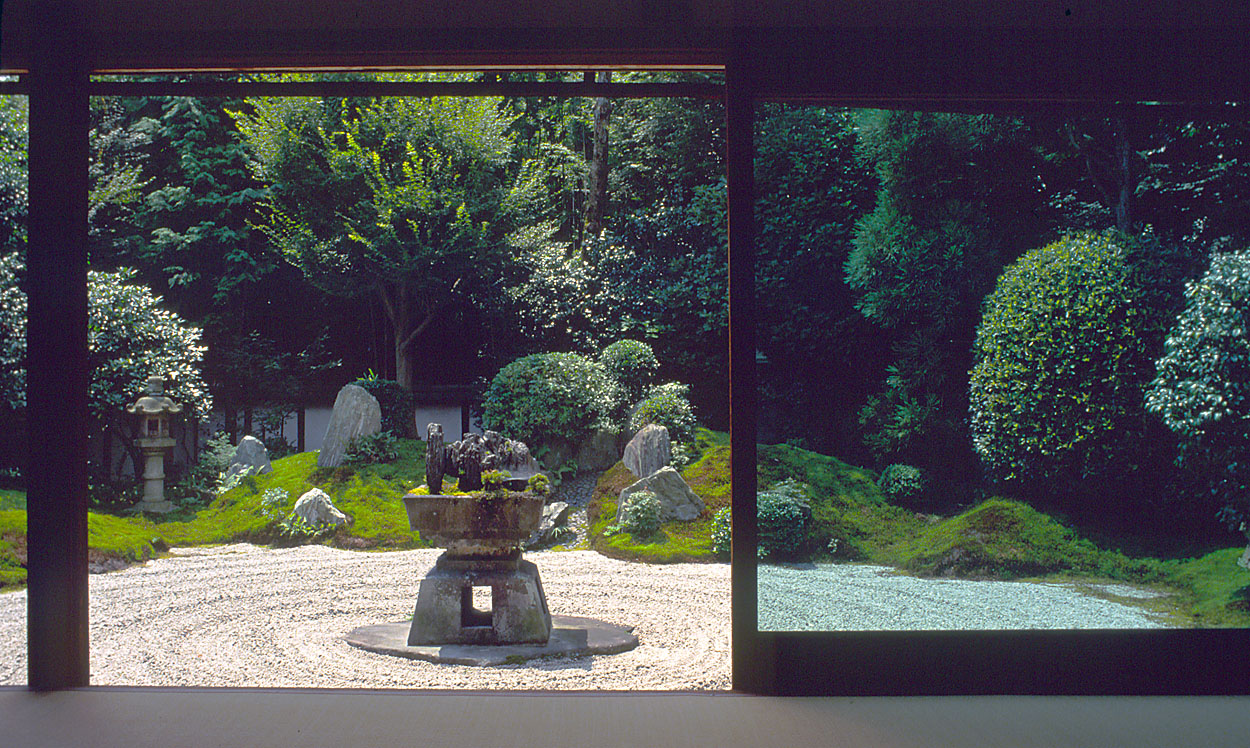
    A garden manual called Sakuteiki, written by the 13th century and still in existence, begins the work of making a garden with an instruction for the setting of stones: to set them correctly, the text goes, you must first have a sense of the whole garden. The world is implicit in each element, the instruction implies; not only in the finished array, but in the siting of the first part. Every finished thing grows from the relations between each of its parts to what is around them.

    The history of gardening is a history of the relation between the large and the small, the uncontrollable and the at-hand, the manageable and the unimaginable. The garden is a universe in miniature, a version of the world that can be surveyed and cared for even as the world outside the garden’s gates unleashes disaster or veers toward human-made catastrophe. In the garden, and likewise in the landscape painting, we have a world that at is at once contained and transcendent. The garden points to the universe; the stone to the entire vista.

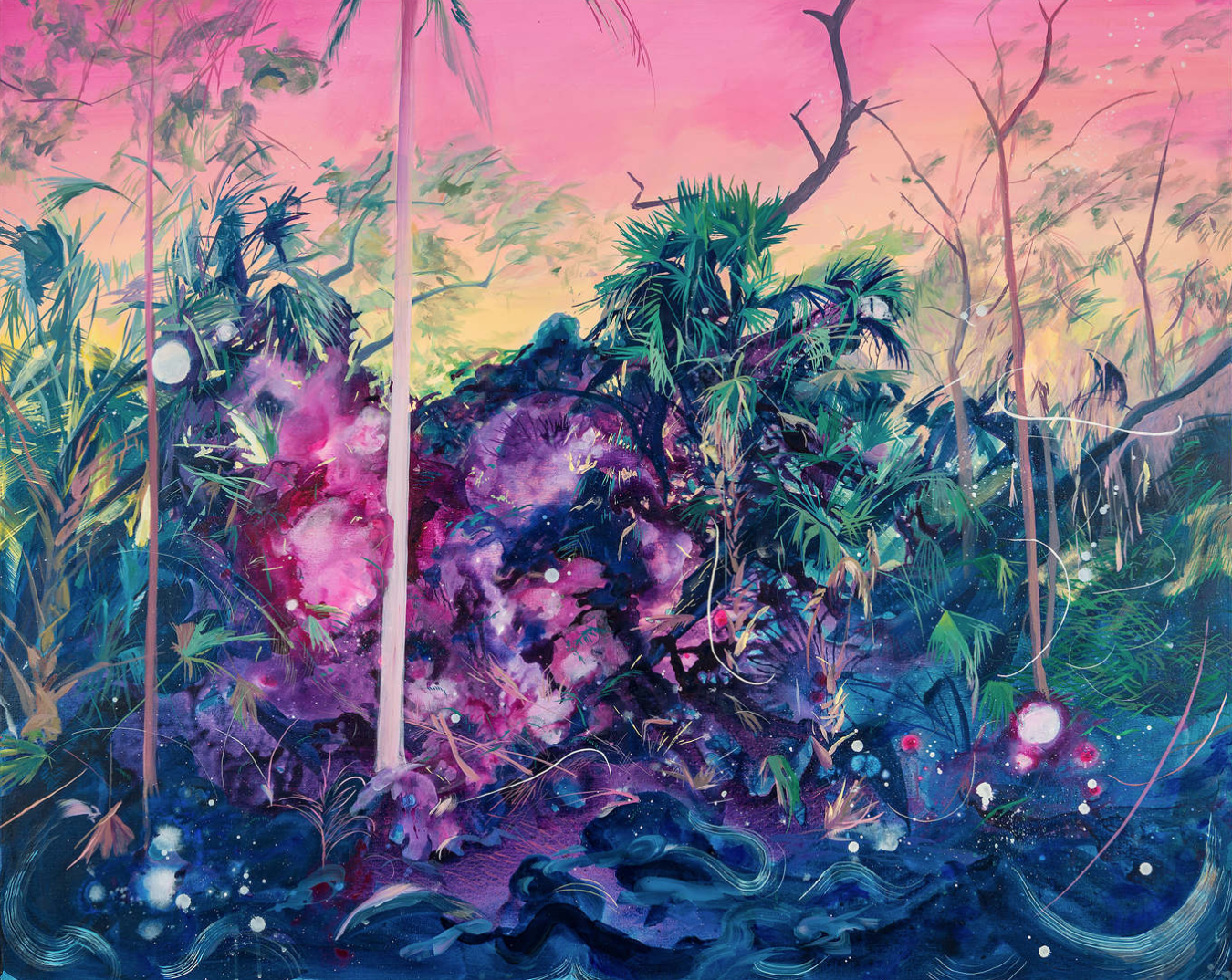
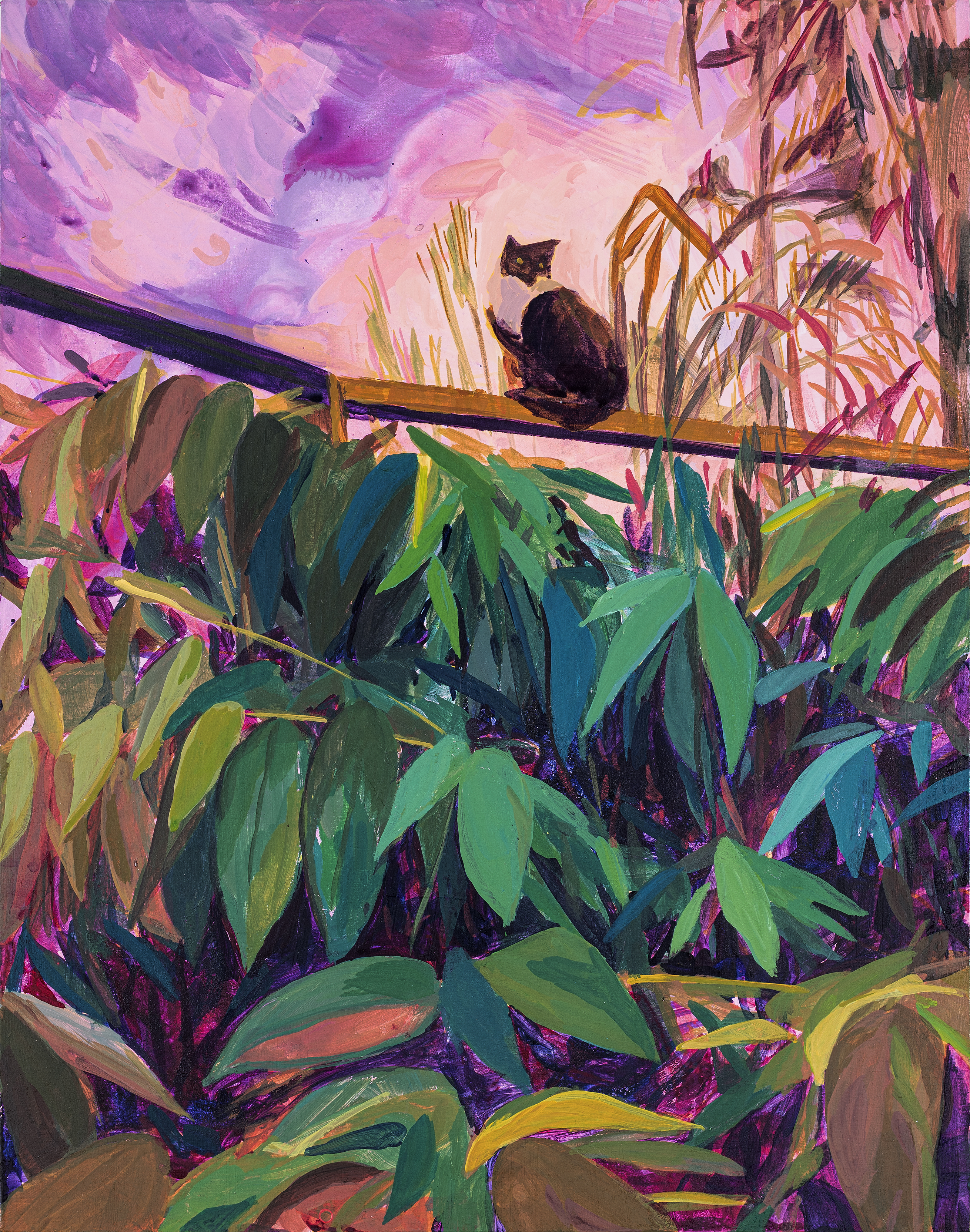
    A large landscape painting in bright pinks, purples, greens, and yellows. Palm trees dominate the plantscape. A nebula blooms from its center. Marks like static or interference seem to zip across its surface.

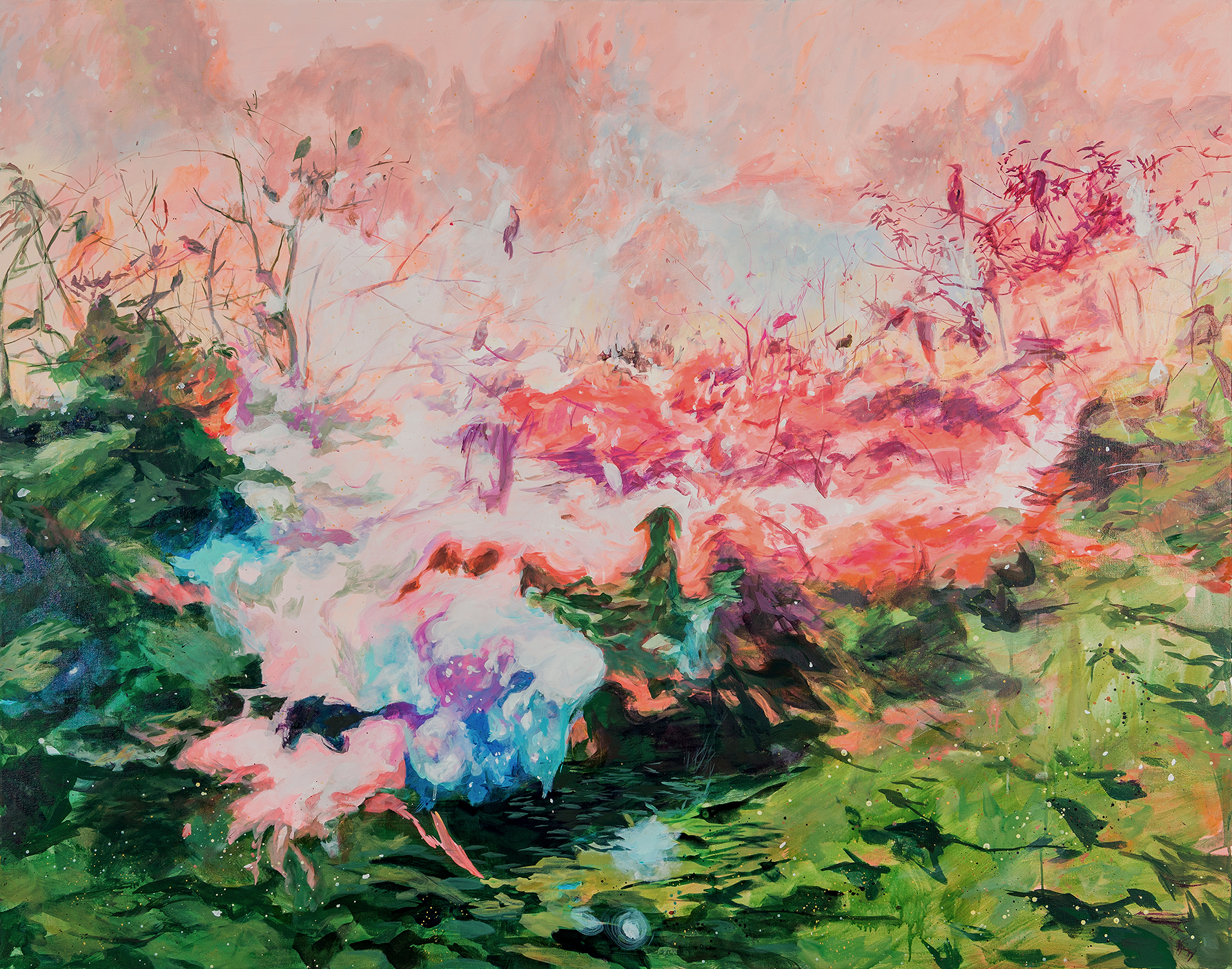
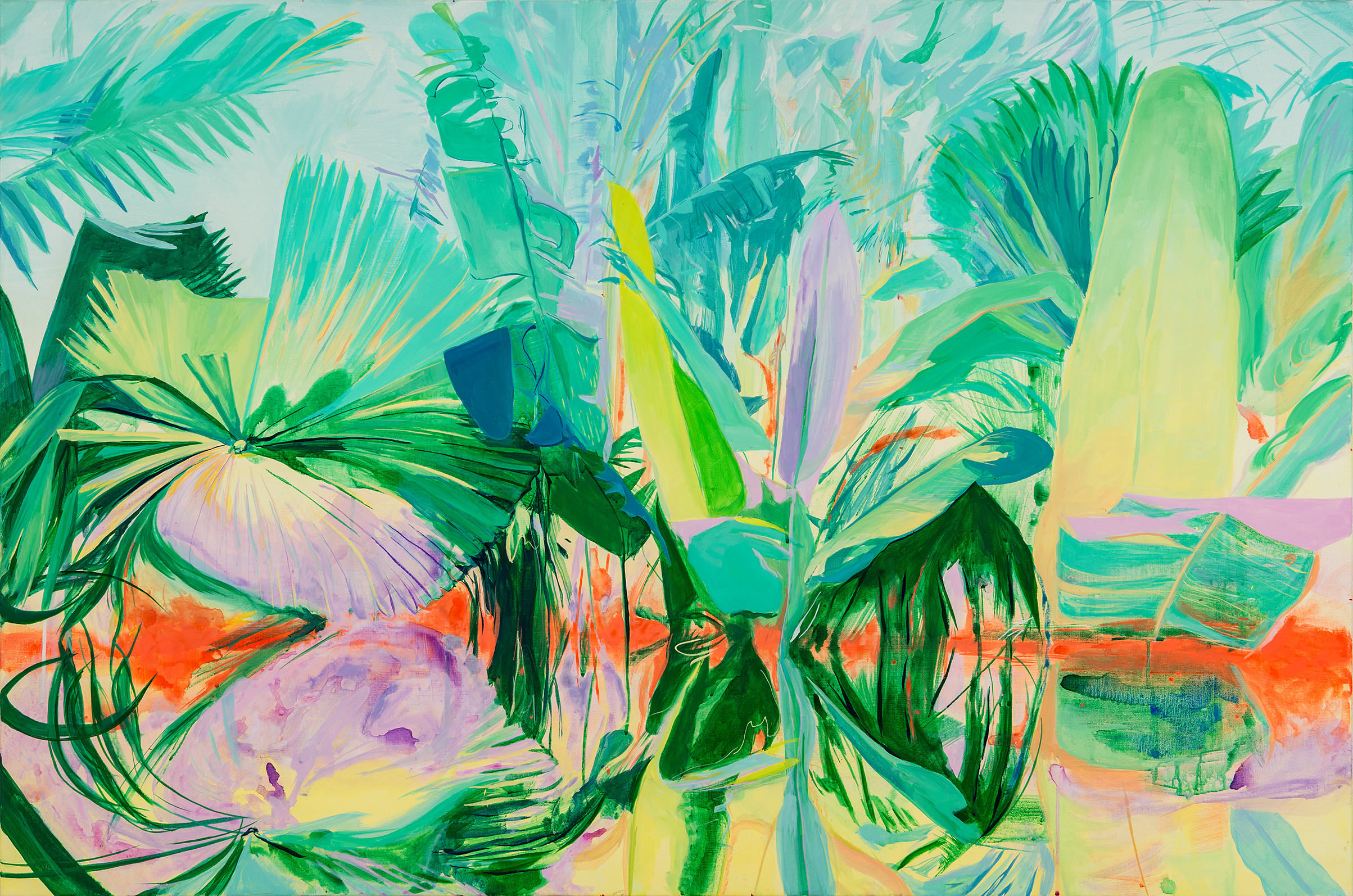
    In Harumi Abe‘s paintings, on view at Terzo Piano Gallery in D.C. until the 18th of March (extended), this principle of relation between small and large is at work. Abe’s fascination with making painted landscapes has been with her since childhood—in conversation, she recalls a landscape painted in elementary school, which remains, in her memory, in conversation with her adult work. Her primary genre over the past ten years has been the landscape, both remembered and observed.

  • entering the day (entering the work)

    entering the day (entering the work)

    welcome to this new place

    The title of this space comes from Fanny Howe’s essay “Bewilderment”, in The Wedding Dress: Meditations on Word and Life. In this essay, Howe writes that bewilderment is “an ethics and an aesthetics”, or “a way of entering the day as much as the work”. Bewilderment has been a guiding question for me since first encountering Howe’s essay almost twenty years ago. A process that interrupts established ways of navigating, bewilderment inverts value systems, breaks our compasses—not only in writing, but in our daily lives (as if we could ever really separate the two). Bewilderment is also an effect: for me, the effect of close attention that can result in a radical subversion of my assumptions about what matters, what can interest me, how I’m connected to what’s around me, and what “around me” even means.

    I have always been a person for whom writing is one thing among others: a part of life that goes on, like breathing, during the everything else of my days. Washing dishes, walking to the bus stop, buying groceries, being with others, teaching and other paid work, sewing, doing philosophy, caring for my family—all these are threaded through the part of me that writes, and the writing part is threaded through all of these. Howe’s idea of bewilderment has led me to think about writing and living (making clothes, meals, rooms; working for pay; relating to other beings, to ideas, to objects and texts and images, and to places) as processes where questioning my received understandings—my pictures of a world that “just is”—is primary, the groundwork for both writing and living.

    So in this space, I’ll think about—and invite others to think about—what Frank Bidart means when he writes that “being is making: not only large things, a family, a book, a business: but the shape we give this afternoon, a conversation between two friends, a meal”. Our ordinary lives, where the biggest questions of meaning—what justice looks like; what liberation is; how to live together; what art means—show up in patchwork ways. Our work: to live them and to make art of them, to bewilder ourselves in the living of them, to make (in Toni Cade Bambara’s words), “revolution irresistible”.

    Posts will go up on Sundays, beginning March 5, 2023. Here’s what you can expect:

    • Once a month, a new piece of writing from me: thinking about art, writing, ordinary life.

    • Once a month, an older piece of writing from me, sometimes republished from elsewhere, and sometimes drawn from a stock of drafts.

    • Once a month, a feature called [while washing the dishes]: notes on things I’ve encountered that you might like—music, images, bits of text, objects, places. Short reviews, possibly.

    • Once a month, a feature called [while walking], a collection of photos from my transit through Dublin on the way to work and my passage through our neighborhood while doing errands or just walking.

    • Every so often, an essay from a guest contributor. More on that soon.

    Bewilderment (every sense of that word!) is free. Eventually, what’s posted here will be available as a print quarterly, and older essays will be hidden as they appear in print. Information about the print quarterly (cost, subscription details) will be available later this year. If you enjoy what you read, please feel welcome to share it with others.

    And finally, a little about me: I’m a writer and an artist working across performance, installation, and social practice, all of which draw on a longstanding practice of observation and drawing. I’m especially interested in time: duration, seasonality, repetition and cycle, and time itself (what it is, how it’s made or measured, how we know, how time and culture cross). My work is attentive to and deeply curious about form—social form, literary form (received and invented), botanical form (plant structures). I link both time and form to place, especially hyperlocal place, and the way patterns of time and form can lead us to knowledge and wonder in our most near-to-hand places. Finally, I’m interested in the human scale: the hand, the foot, the eye, and how this scale can teach us about living with one another and in the world.

    Thank you for reading—thank you for being—here.