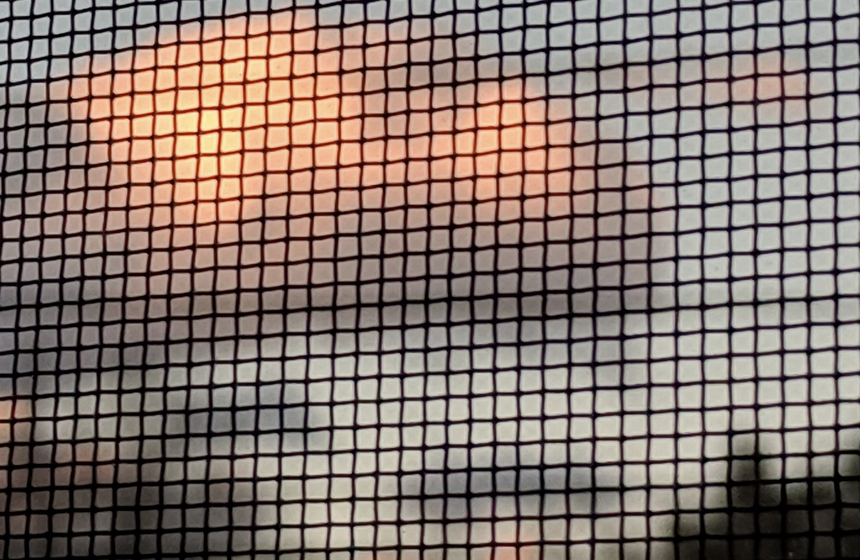
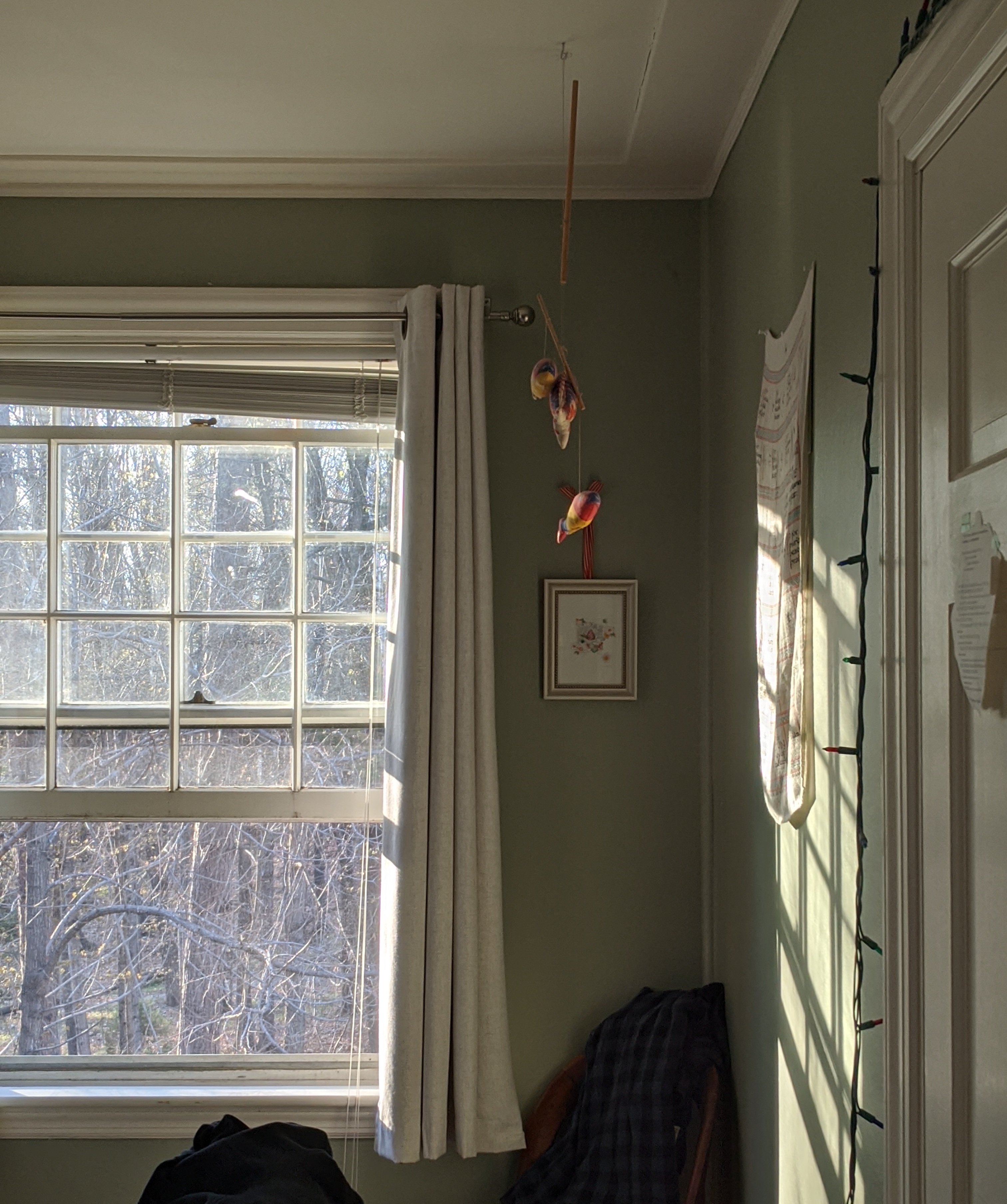
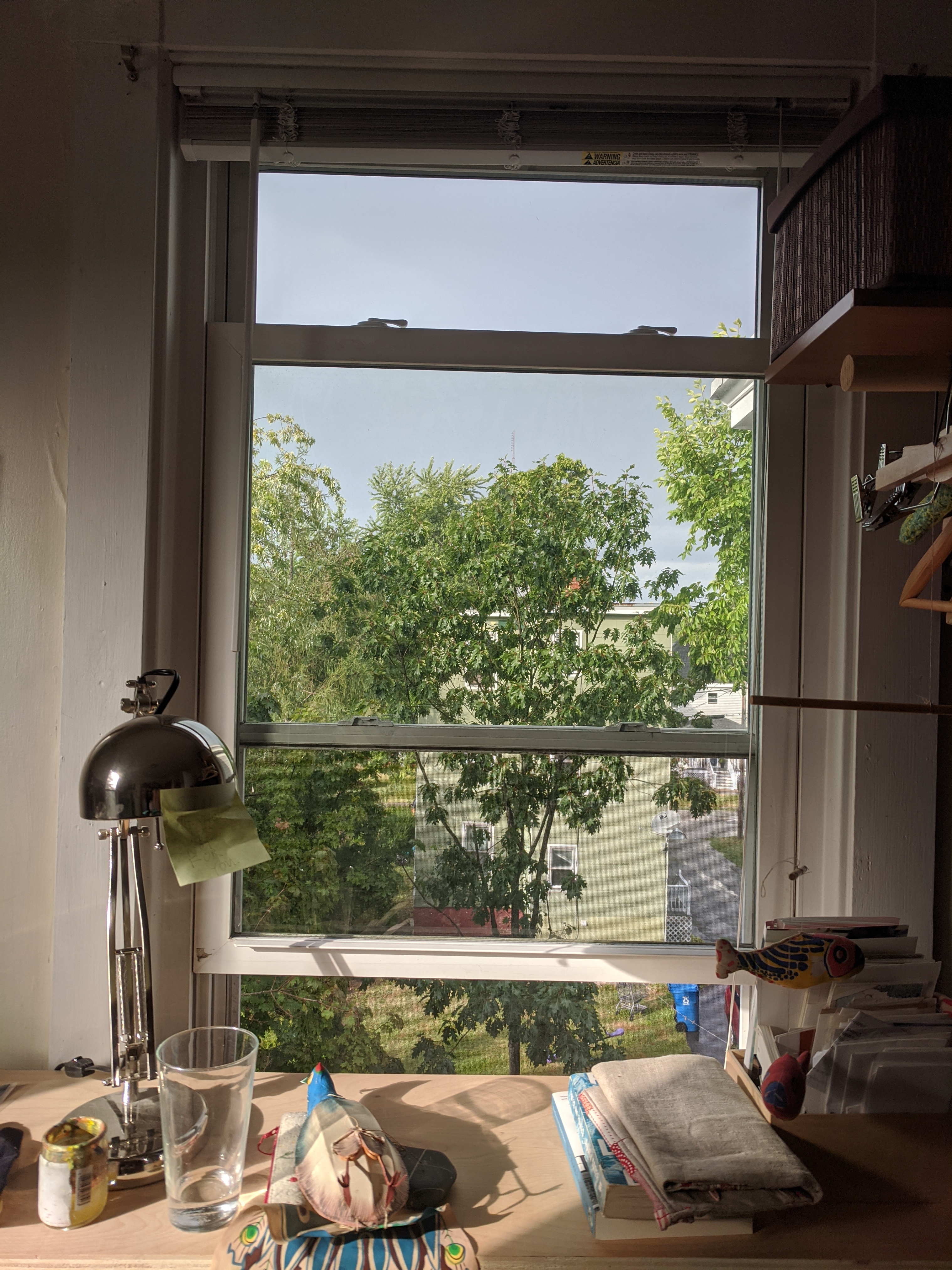
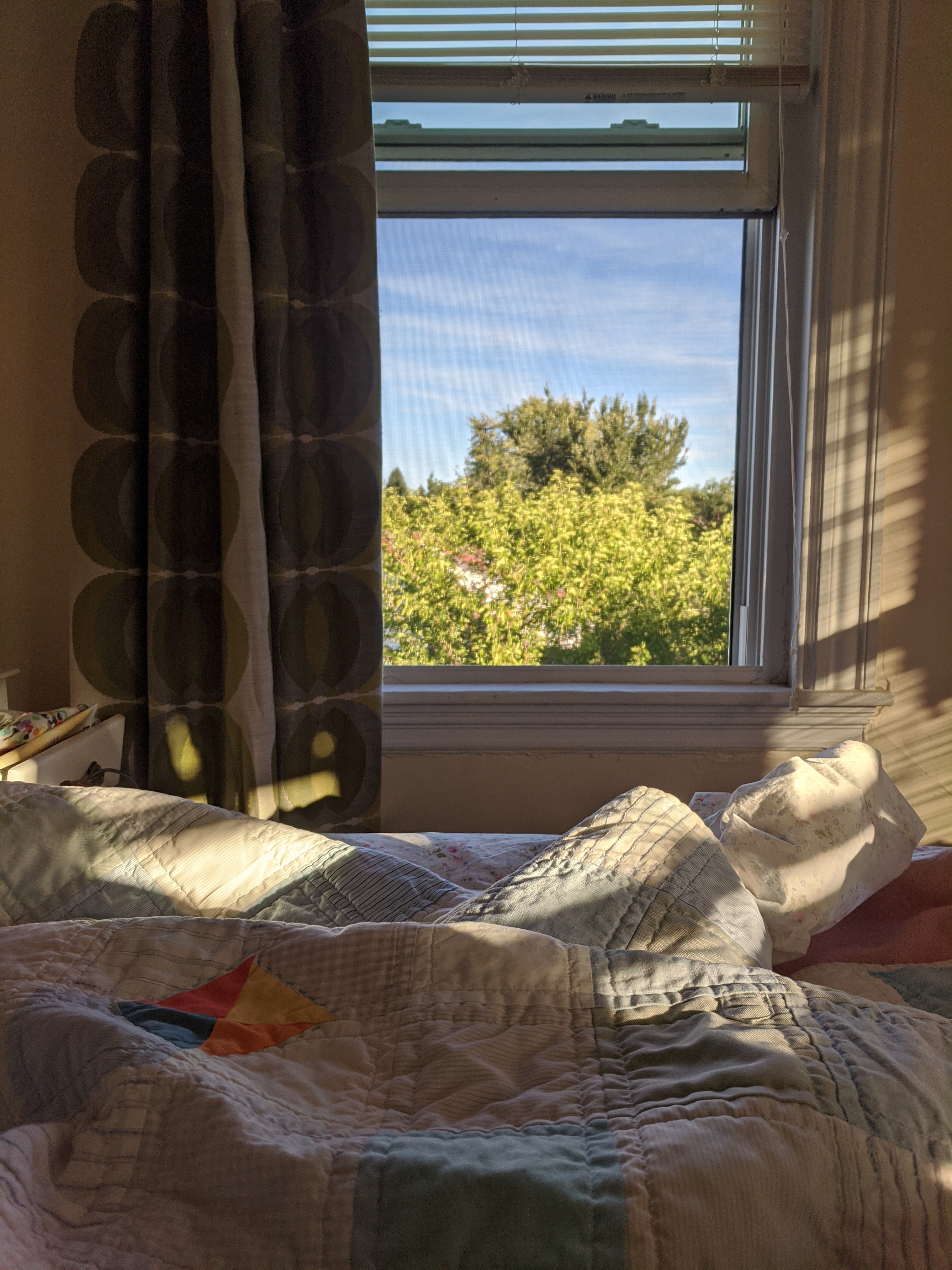
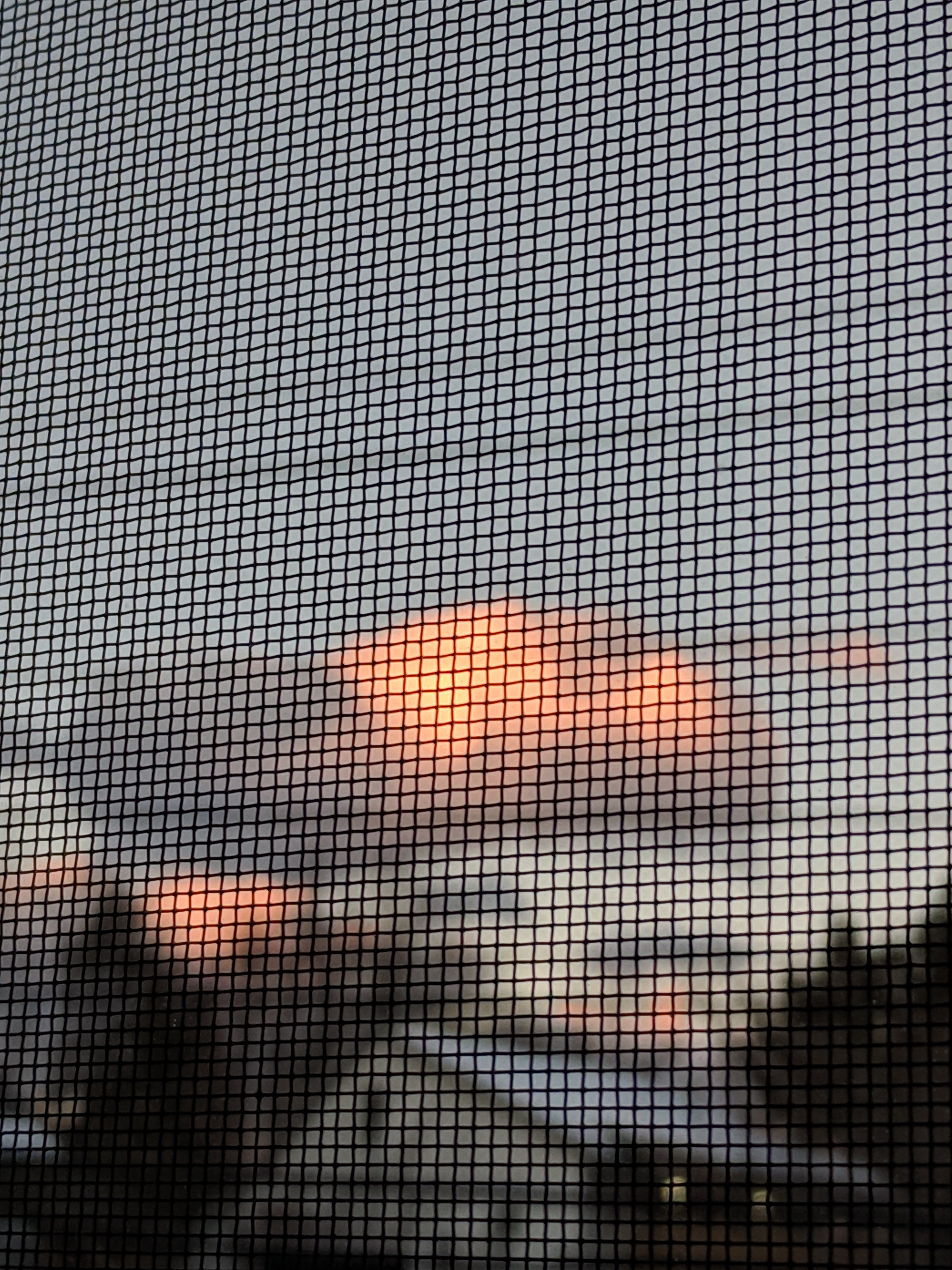
Praise the screen window, through which rain comes while sleepers sleep; praise the dampening sill and the breath breathed out like breath through the light curtain; praise the smell of the rain rising from wet street through warm wet air into sleepers’ dreams, and the sleepers now talking or turning in their sleep.
Praise the window: praise screen and hook and latch, praise the way in spring on first warm days the stile will not ride the jamb at first, but sticks, until, with a leap, it opens andthe air comes in, with scents of melt and mud. Praise the smell of the screen, metal and sour, the tang slipping up your nose as you press your face against it, in memory or in childhood. Praise the way the screen holds indentations like minds hold faces there. That’s where the dog ran through the screen, or remember when you fell asleep in your open window, refusing to be put in bed? Praise these metal screens themselves, against which mosquitos whine and junebugs bonk. Praise fly prevention and the exchange of air. Praise precise feet of katydid bright-greenly going one by one up the ladder of the screen.
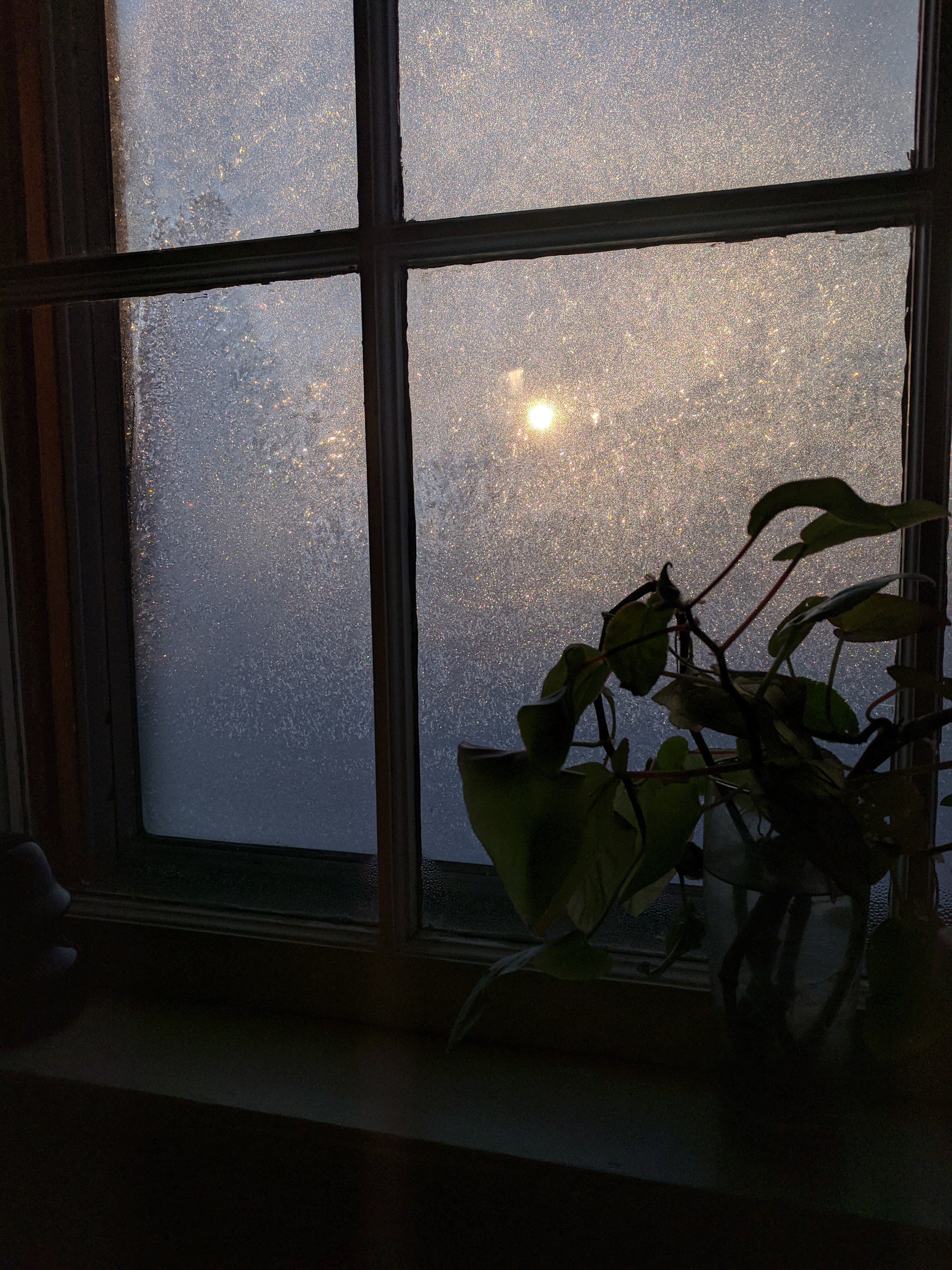
Praise the screen window. Praise it even in winter, filled with frost the first thaw won’t remove. Praise the ice-flowers on it and the rain that catches in each angled cell. Praise the smell of bonfires through it on the last October day you’ll throw the sash, and praise the night in August when, waking halfway through, you know the season’s changed because the room is cold.
Praise the screen window—praise the air that moves from neighbors’ rooms across the side yard into to ours. Praise the smell of cooking, praise the variousness of smells. Praise asafoetida and cumin, chili, oregano, garlic, onions, butter; praise meat-scent flowing past the houses of vegetarians and the smell of beans making its way through the houses of the rich. Praise the sound of someone else’s children; praise the ordinary fight. Praise the way the open window lets us hear a call for help. Praise music; praise piano, drum, and bass; praise even scales repeated without end. Praise someone else’s lovemaking on a morning we slept in.
Praise the screen window; praise the clean air of morning and the worn-out air of afternoon, praise the sunlight, praise the cold. Praise windows open on December mornings to clear the foggy shower out; praise open windows and their holy screens every day of June. Praise the hygienic fact of sunlight—a praise that’s sure there’s nothing there to hide. Praise the anyway: the open window and the fact of sun. Praise all the season’s dust that sits inside the lock.
Praise the screen window, praise the city entering our cells, praise the point at which our space becomes, without our saying so, out there. Praise passersby, and bass from idling cars, and clapping rhymes, and even spit. Praise the sense that we belong to everyone, the refusal to reserve our us for us. Praise the entering in of every other being’s breath to ours. Praise passing cars, passing annoyance, and the passing rain, which, falling now again, will drawn us to the sill. Praise what’s in us that’s most like a child: most curious, unguarded, willing to be surprised, most open to the world of this is what there is: and we are here.
I hope that, if it’s summer where you are, you have the pleasure of screen windows. (I don’t know why, but everywhere I’ve lived in Europe the houses/apartments have not had screens. It’s one thing that would massively improve my quality of life here in Ireland: no moths! No mosquitoes! In the non-renting future, if there is such a time for me, there will be screen windows.)
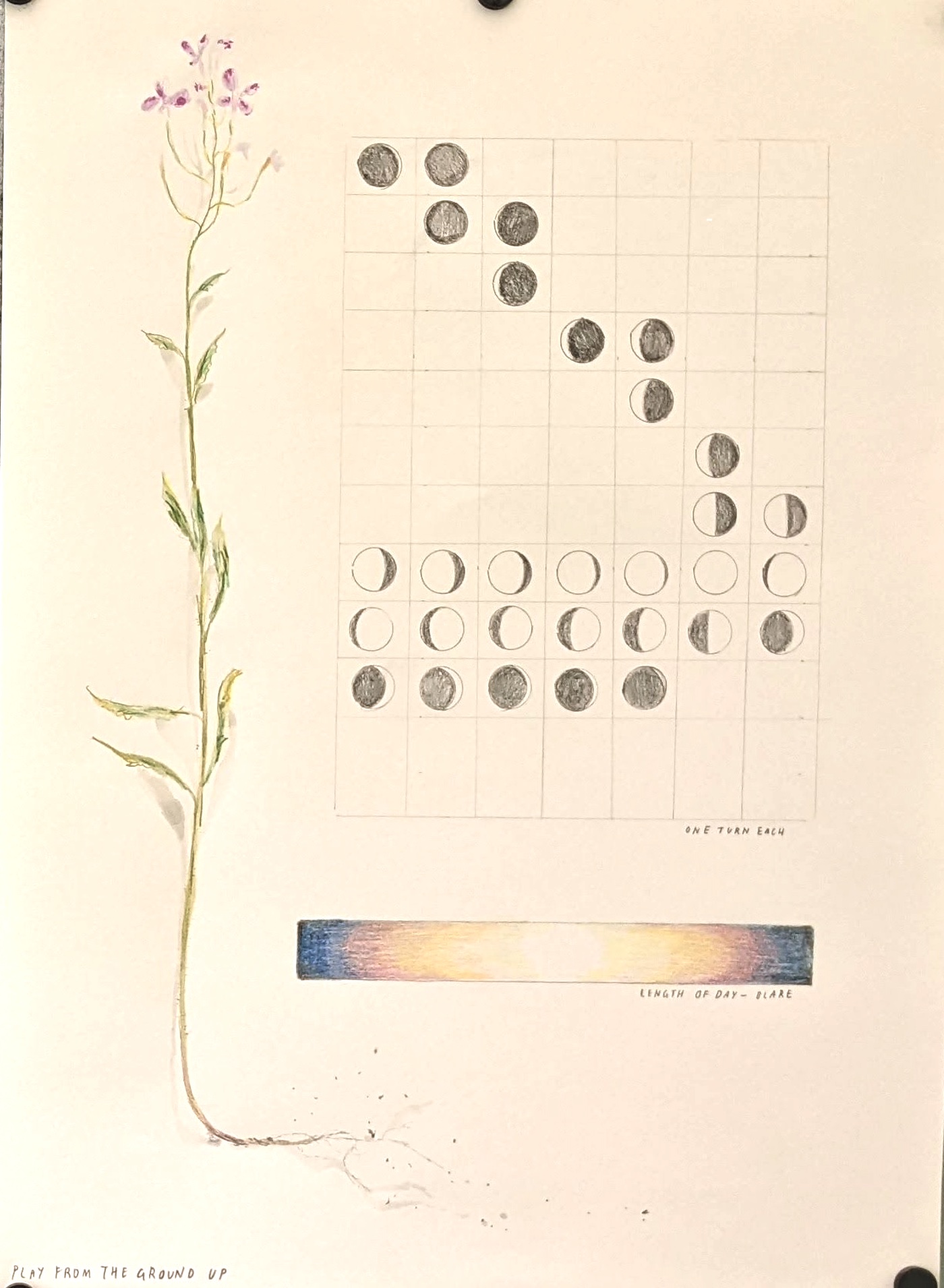
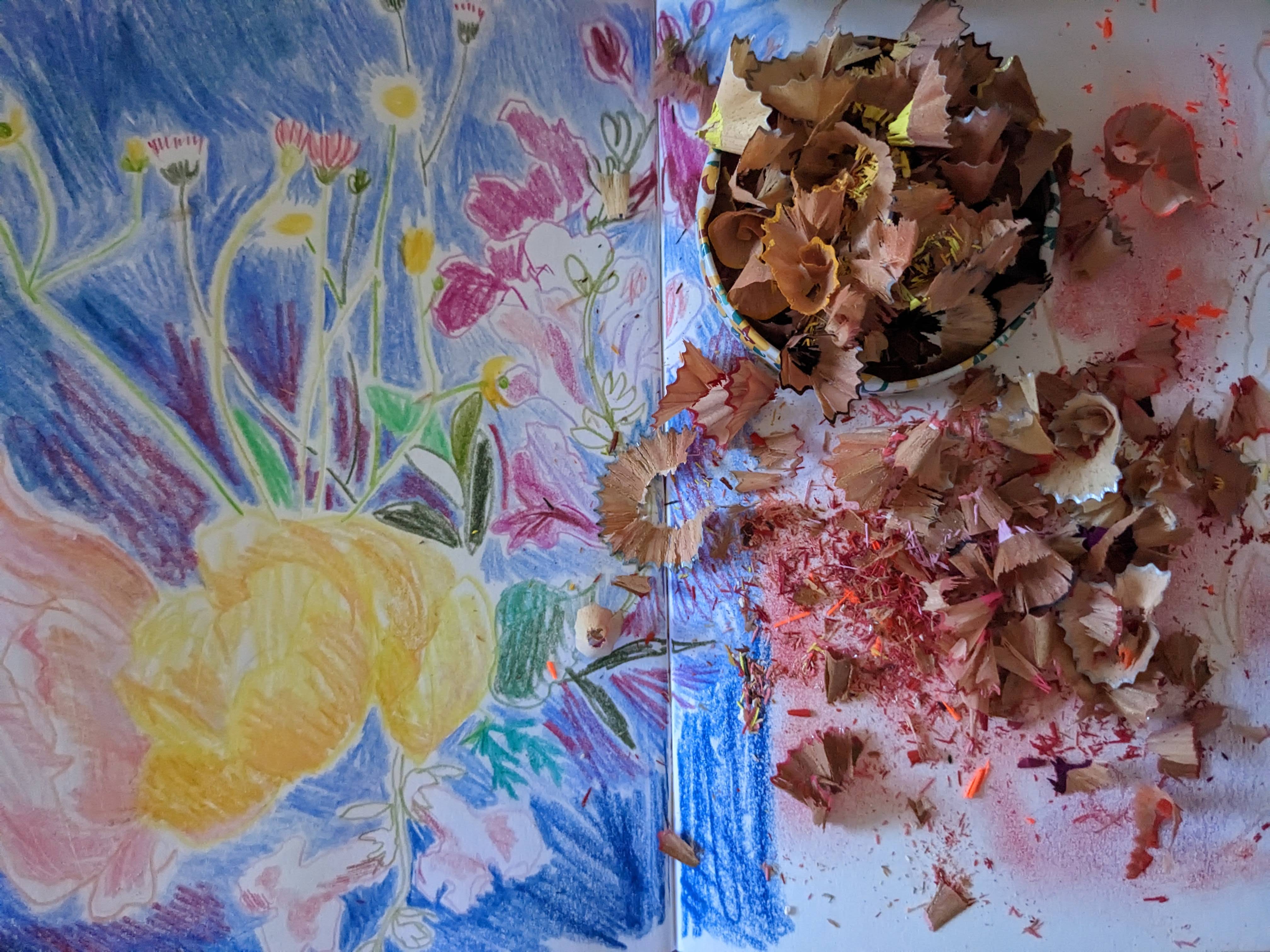
In other news, last summer I spent June 20th with Nina MacLaughlin, Linda Penfield Danilek, Kasey Jueds, and Margaret Funkhouser making graphic scores (mine is below) for the solstice. Twomusicians joined us that evening and played the scores. We were lucky that they also recorded their improvisations and made an album, which is out on Bandcamp this week. There’ll be a listening party on Wednesday (June 21) at 9 p.m. Irish time/4 p.m. US Eastern. You’re welcome to join!
seid umschlungen, Millionen / diesen Kuß der ganzen Welt!*
Refuse not to see it. See it, see it, see it, see it. In the vacant lots, in neighbors’ yards, in the cracks in pavement, in overgrown front gardens, in gutters on abandoned buildings, around the neglected city trees’ bases, at bus stops, in public planters, along the highways: see it, see it, see it.
Beauty is here. Joy is here. Neither may last but: here they are. They’ll be again. Right there. In the most ordinary places. Real. For everyone. For every, every, every, every one of us.
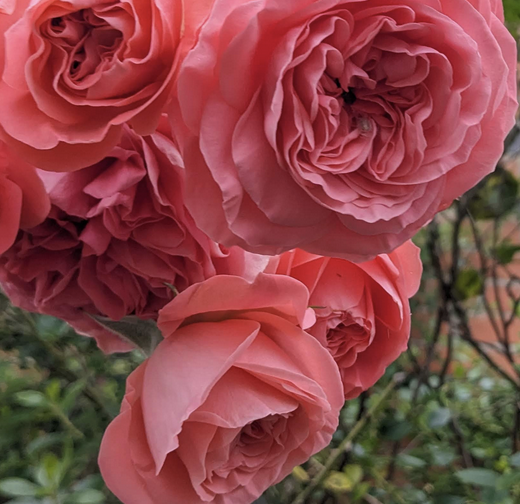
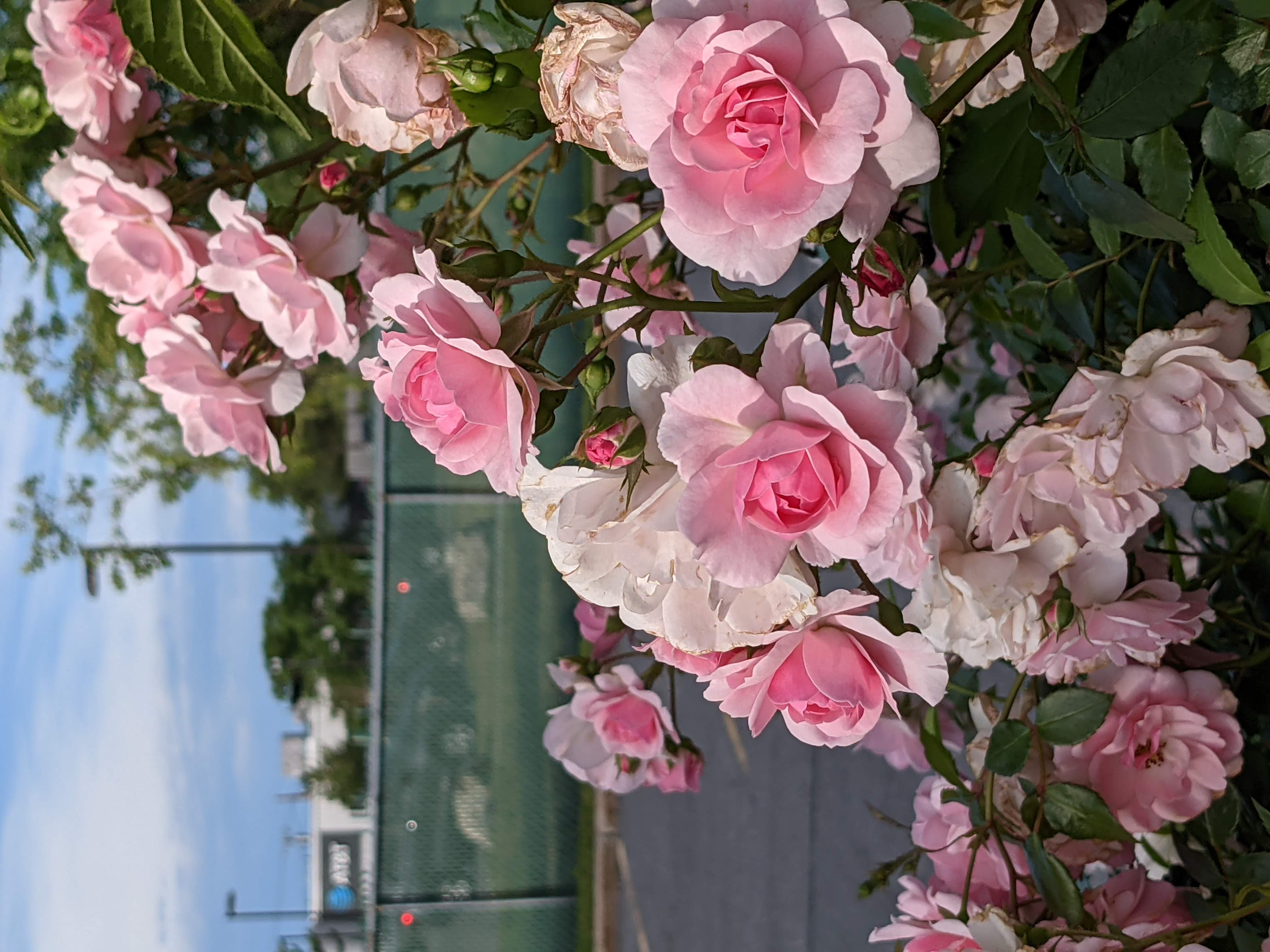
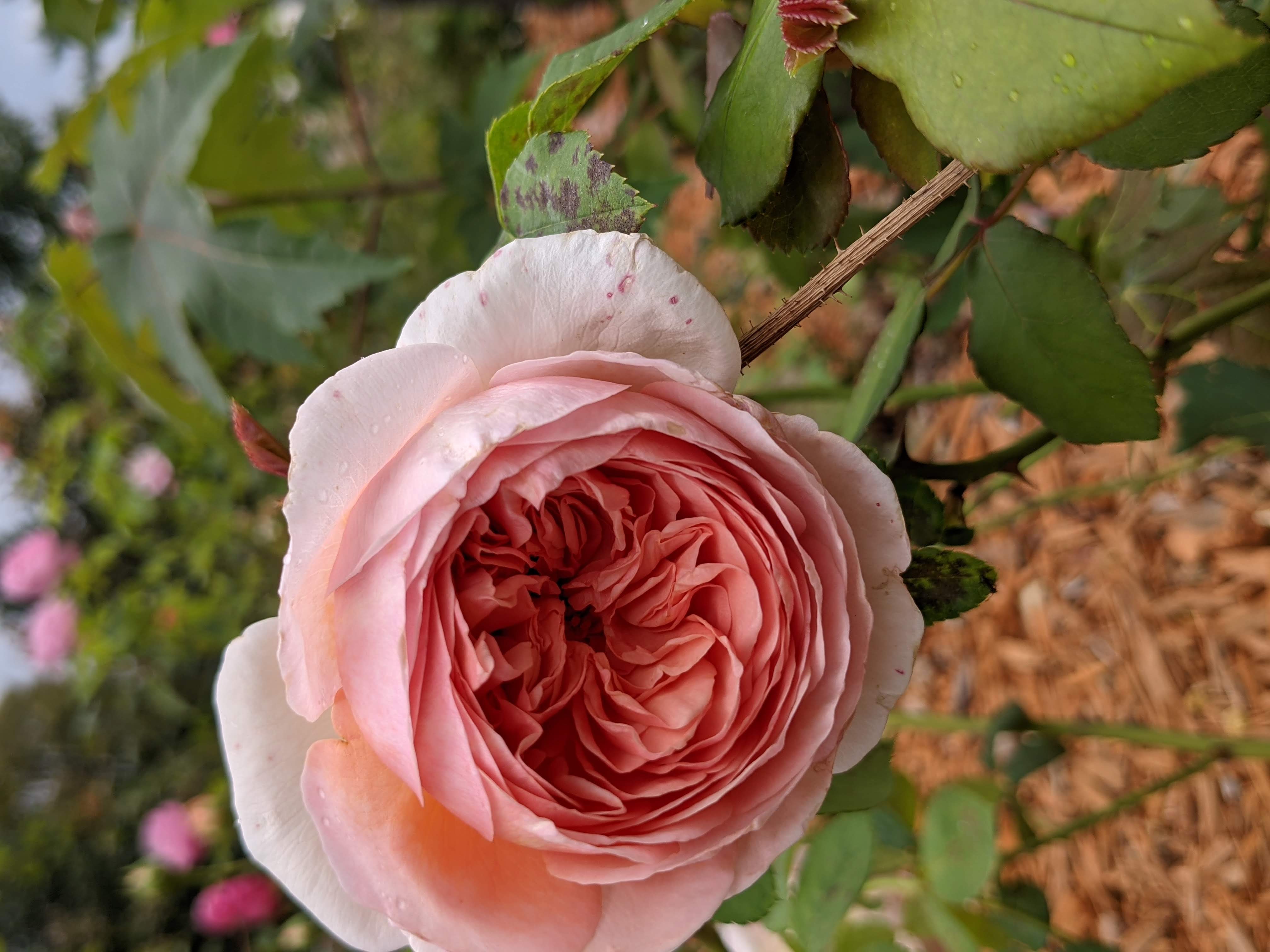
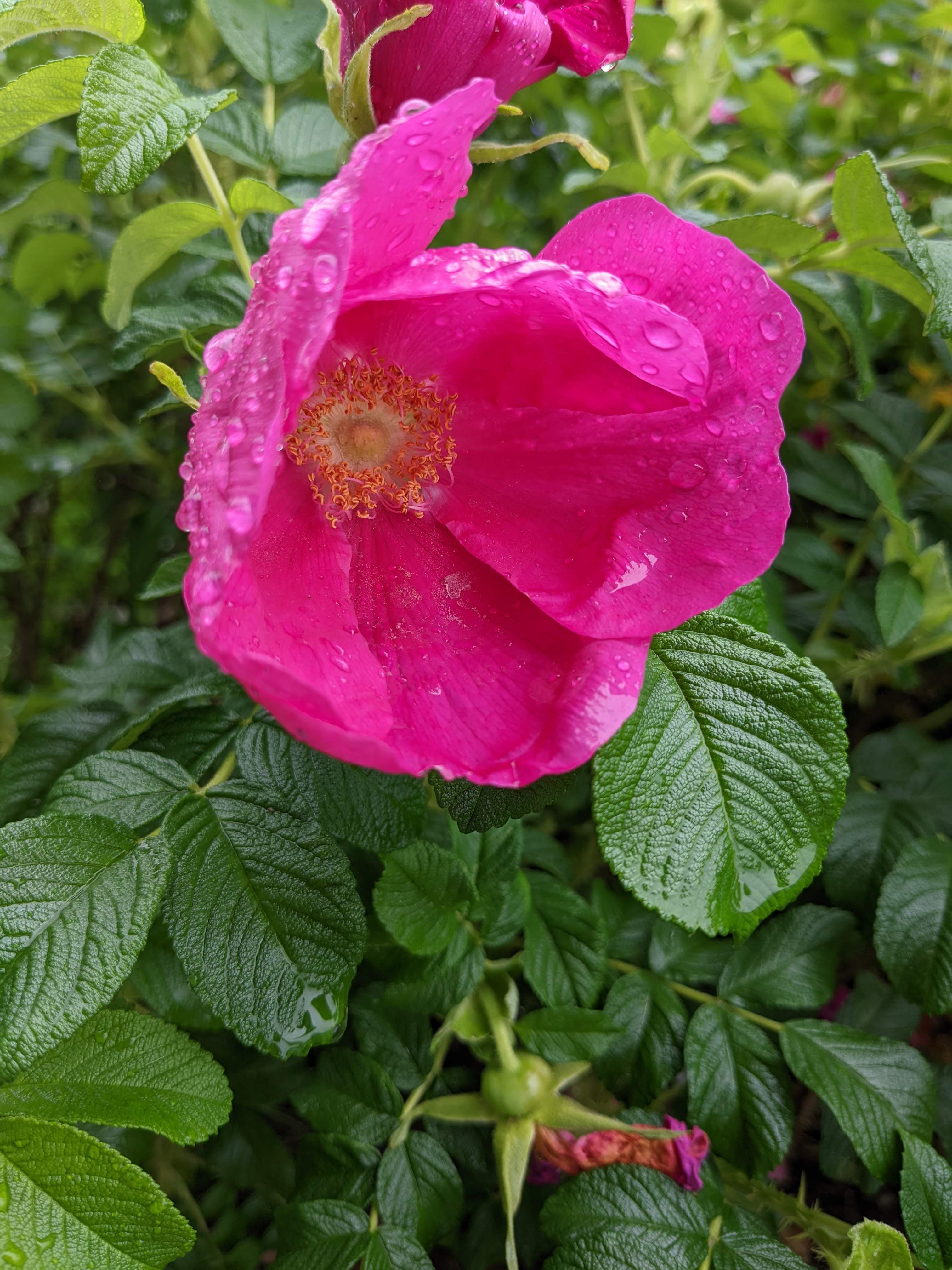
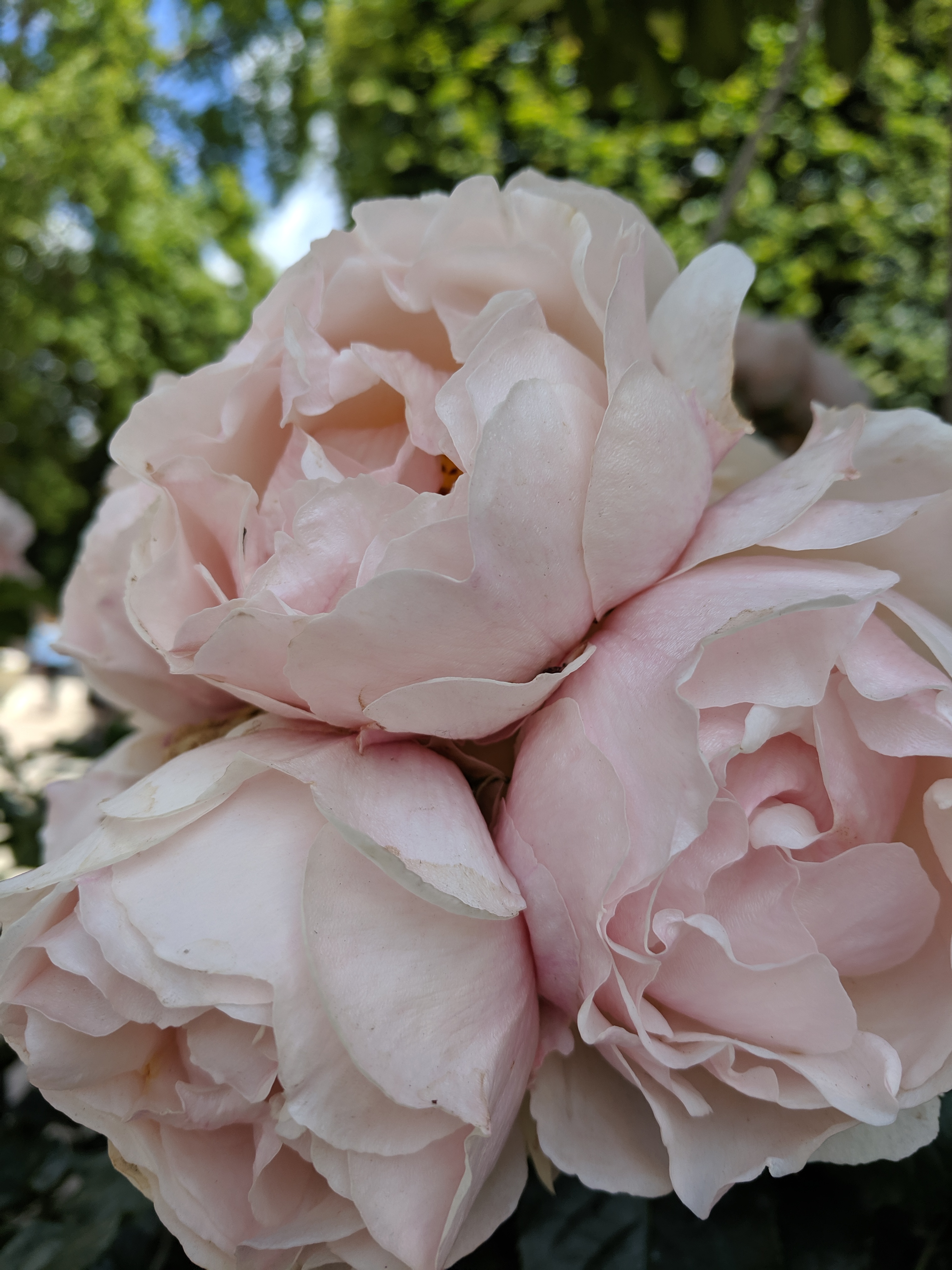
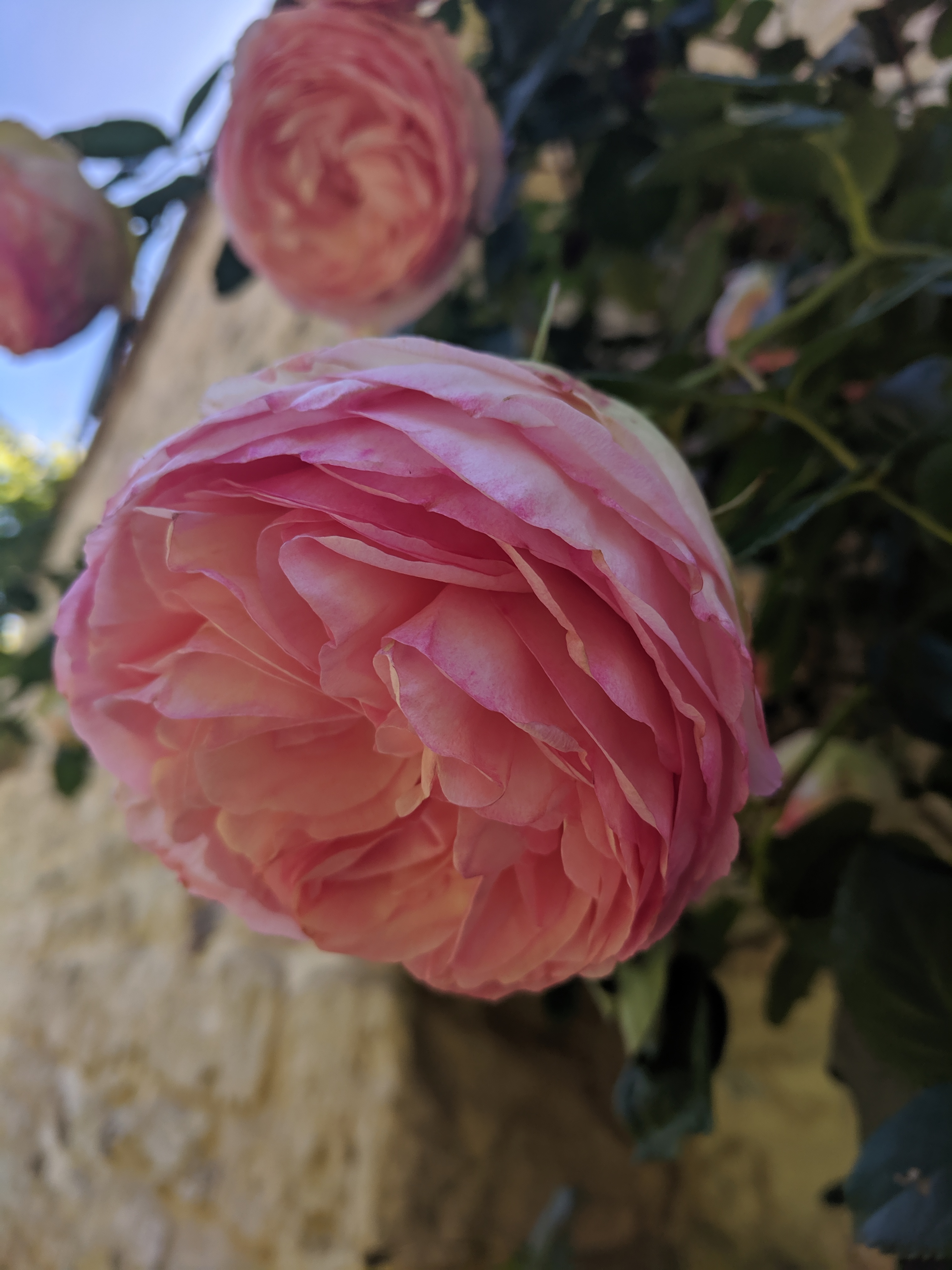
I will take roses however they come: hybrid tea roses on big-thorned stems in shockingly bright orange and yellow; old roses pale pink almost green; wild roses bright fuchsia and making a toothy hedge no one but the rabbits, squirrels, and birds can get through. I’ll take proliferating multiflora roses in New England’s abandoned lots and dog roses in hedgerows here in Ireland. I’ll take roses with a view of strip mall. I like roses leaning through someone else’s fence, or spilling over a wall. I have never really had roses of my own—they need land and a long time spent in one place and I have had neither—and so I follow others’ roses at the distance of the tenant or the visitor.
In the absence of my own garden, I also watch for hydrangeas blooming near a parking garage. I take note of the purslane coming through cracks in the sidewalk, and the American yellowrocket appearing like fireworks along the highway. Feeling myself out of place in the New England landscape, I come to like the way that purple lupines spread throughout Maine, where they, too, “should not be”—they are so part of the landscape that without them it would feel bereft. I like that lupines and other escapees give lie to the neatness of plants belonging or not belonging somewhere.
I like bright pink petunias that drop their seed from the windowboxes of the small-town bank and beget volunteer offspring in the gutter, year after year. I like the orchid growing among the high grass in loess hills. I like the linden trees planted decades ago along public rights-of-way for foot traffic, making late May or June a perfumer’s delight to all passersby for about a week. I like moss on stone walls in humid climates and cherry trees in full bloom in grocery-store parking lots. I like the right of gentle trespass when I cross a vacant lot to look more closely at a flower, and I want it to be available to everyone equally.
But above all I like roses. They are finicky, disease-prone. Probably better fantasy plants and visited-through-the-fence plants than actual garden plants in terms of time commitment. I’m sure they make demands on their keepers; grown for mass distribution, they are managed with pesticides and herbicides that are toxic and persistent (florist education may include how to protect oneself from exposure to pesticides/fungicides from cut roses and other flowers). Rose forums are full of posts about mildew and black spot and aphids and other diseases and pests. Roses make their keepers sick, metaphorically, with worry, and physically via exposure to the toxins that make their industrial production possible.
(Last weekend, after having drafted this, I read Rebecca Solnit’s Orwell’s Roses, which is everything I enjoy in a biography—and it’s more than a biography. It’s a beautiful book and very worth reading, whether at a bookshop or a library. Many of the things I say here are also present in Solnit’s book! While it is nominally a biography of George Orwell, it’s also a meditation on being human, on time, on politics and being a political actor, on writing, on the ways our actions have consequences we can’t imagine in advance, and on active optimism—and on roses. Solnit actually goes into depth on the rose industry, so if you haven’t read about it before and are interested, she will take you there. As you might expect from Solnit, Orwell’s Roses refuses the anesthetic of easy beauty in favor of a dose of attention to complexity—to difficulty and deep pleasure. I don’t always love her writing, but when she’s on, I do. And she is on in this book.)
Roses are a mark of placedness. Long-term commitment and, in the age of almost no winter and of hybrid plants, continual blooms to repay all those years of pruning. I see older women in their gardens here in Dublin pruning hybrid teas into neat vertical structures that keep away some of the mildew and aphids, open the plants to light and air. Their big flowers are peach-orange, yellow with pink edges, neon pink, pale purple.
It’s the old roses (also called garden roses) I really love. Especially the pink-peach ones and those greeny-gray-pink ones. The scented ones that are plush and cup-shaped and full of petals. So plush.
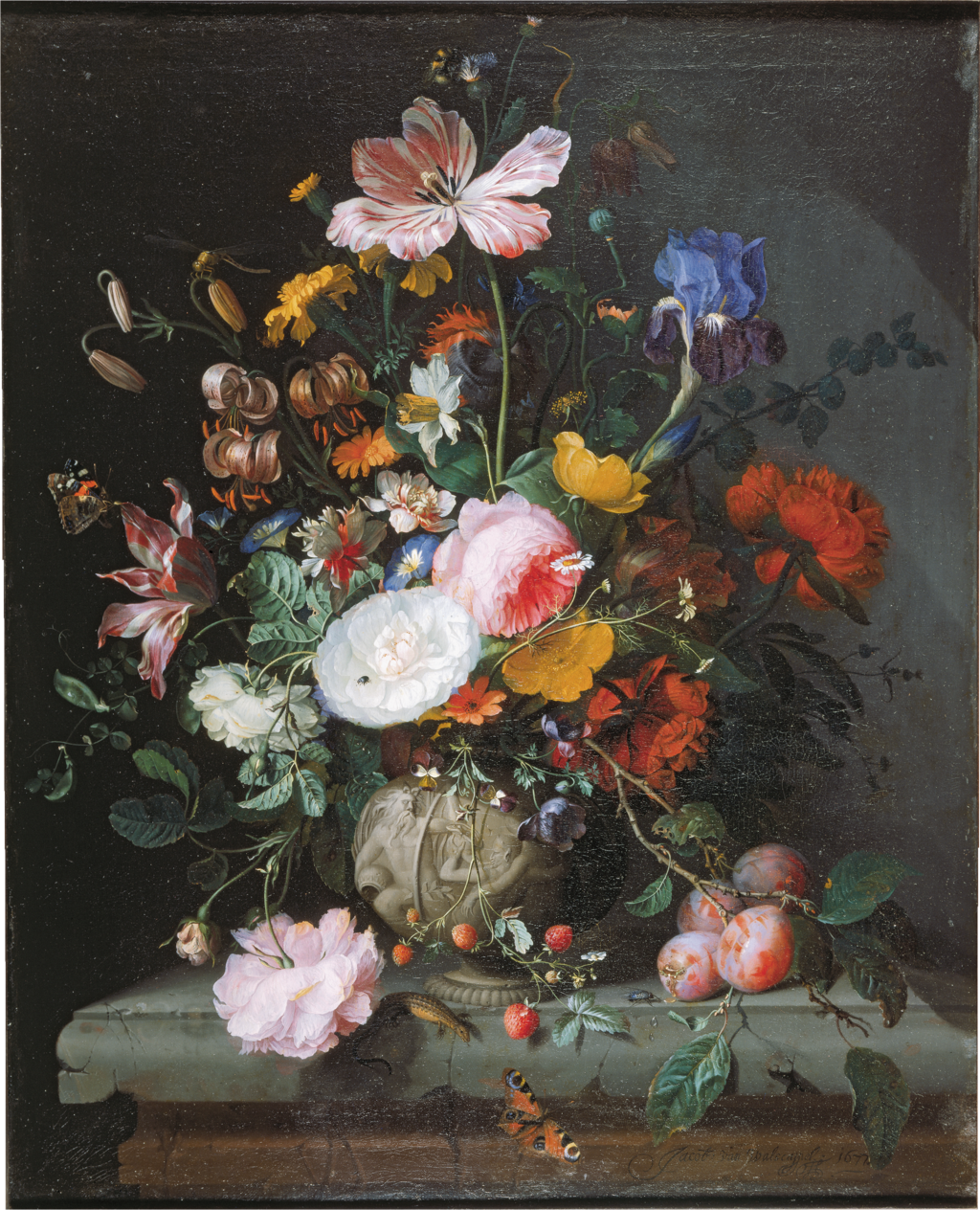
They are difficult to capture. Even in old fruit-and-flowers paintings, where they are beautiful, there is something stiff about them—stiffer than life. A rose is a living thing. Maybe it’s just that they are still once they are caught.
At the end of teaching I set out to make a dress that feels like roses. Ballerina-dress of my childhood imaginings, full, soft, many-layered. In the absence of a piece of land where for decades I can tend to roses, I got my hands on a piece of cloth, cut it, sewed it, have worn it many days already. Part of the ongoing project of learning to bloom, more or less, where I’m planted. Until I have roses where I’m planted.
but all around us are precious living thinking beings
This semester, I had the uncanny experience of listening to a student give a presentation that had been generated by a large language model. (The contribution of the LLM was not acknowledged by the presenter. It was made clear by the kinds of factual and conceptual errors in the presentation.) In the assignment brief, I had asked each student to choose a book of poems, talk about the poet and their work in general, then read a poem closely to teach us some new element of poetry-making, and finally to design a writing exercise that the class could do in order to internalize an element found in/through that poet’s work. Please enjoy this, I said as I went over the assignment. Treat it as something that can teach you how to broaden your own writing. Focus on what moves you—you will do best by allowing yourself to find pleasure even in what’s unfamiliar.
Writers know that words matter. Words make things happen in us and to us. They make things possible, imaginable, and real. They do things to us. They are material objects in a world where we, too, have material being. It isn’t magic, the way words act on us, and doing things with words isn’t magic either. Both are the result of the lifelong, sustained attention that happens in our everyday encounters with language. And really it isn’t the end point of those encounters (the moment where words do things) that matters the most. After all, we talk and write and think and sing and promise and so on over and over through our lives. Using language, we don’t arrive at some point where what we mean is what we Mean, all by itself; instead, we keep on unfolding the what-is-this-doing-to-me and what-do-I-meanness of language in relation to all the past unfolding of it. And that’s how the words we use do things to us: not by jumping out from behind a lamppost, fully formed and perfectly expressive, but by, one after another and one next to the other, constructing the very things it’s possible for us to think.
In the writing classroom in the past few years I have noticed the urgency with which some of the beginning writers I work with want to “be a writer”. Maybe it’s more like “Be A Writer”. “Being A Writer” means to have arrived: to be Someone: to have people pay attention to you: to be affirmed. It’s seemed to me very linked to the way that social media presents page after page of completed objects (craft projects, books, babies, houses, lives). Process is invisible; product is immediate and enchanting. Like like like like like. There is no shortcut, I have to say, gently (to myself, too). And there may never be success, affirmation, attention except from the peers with whom you cultivate long and meaningful relationships, the people who will, like you, say this matters about the confounding, slow, sometimes sad, sometimes tiresome, sometimes exhilarating process of finding out how to do things with words and how words do things with you. The people around you, this place here—the page, the classroom—this is it. We are here. You want to be a writer? Be with us, writing, here.
I think that especially in writing classrooms—and in all kinds of contexts where we are talking about how ideas happen, what kinds of people get to make art, how it is that art gets made, and how long it takes to think and make things well—it matters what kind of language we use to talk about the world around us. It matters that we think about what we mean when we say “thinking” and “creative” and “innovative” and “important” and “freeing”. It matters that we think about what we mean when we say “alive” and when we say “person”. It matters in part because words like that direct our attention.
Really what I’m thinking about here isn’t the student who chose not to do an assignment, or to do it poorly; we all have priorities. My mind has returned over and over since the presentation to the question of why they would use a large language model, instead of just not preparing and half-assing it on the day, or faking it some other way, or even coming to talk to me about why they didn’t want to do it—an option I made available. Why a large language model?
I think it is in part because of the way that in the writing classroom, in the world of social media, and in the imagination of student writers, writing can come to seem like a zero-sum game: the more I’m a writer, the less you can be. The more I’m a prize-winning poet, the less you are. The more I’m published, the less you’ll be. The more favor I curry, the less there is for you. This sense that there just isn’t enough to go around, and that there is a single and identifiable end point to aim for (and beat others to) deadens invention, subordinating the messiness of finding out to familiar routes toward a recognizable object that repeats the features of what we already know as “poem” or “novel” or whatever. It makes it seem like there is some thing out there that “writer” or “writing” is, and we are racing for it.
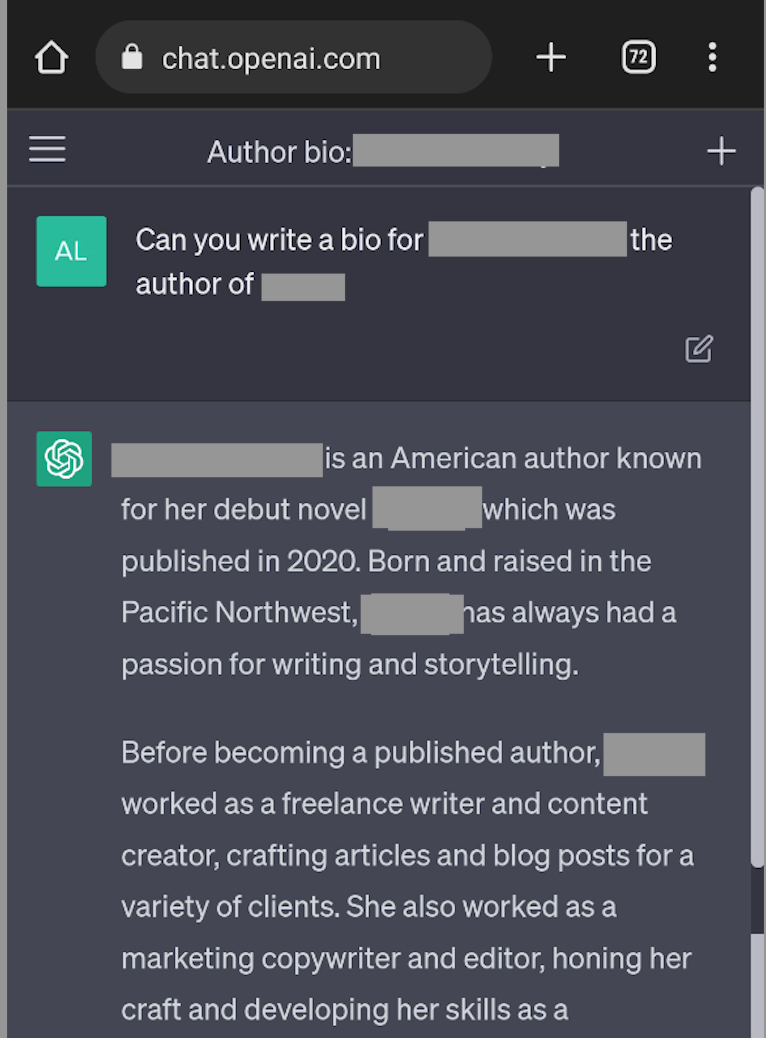
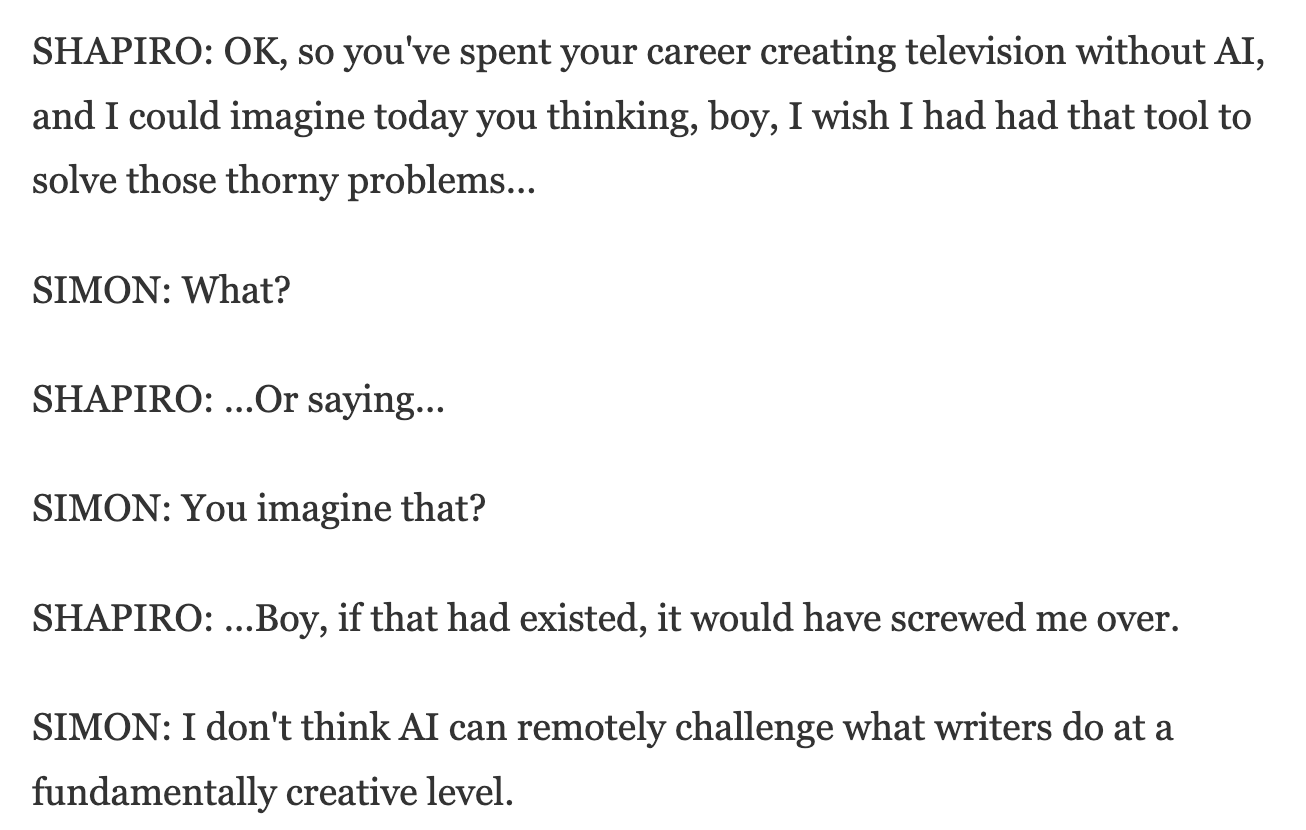
The choice to use a large language model to make work must also be to do with how LLMs are talked about right now, too: “intelligent” and “efficient” and “magical” and “low friction” and “resource-light”. I borrowed login credentials for a popular version and input various parts of the brief, but what came out was not “intelligent” or “efficient” or “magical” or “low friction” or “resource-light”. It was generic and factually incorrect and dull. And it didn’t even have the benefit of the dullest parts of my own writing, which is that I have done them and by the end, ideas have begun to arrive. Furthermore, it was not ‘low friction’; the companies that built it exploited workers in Kenya to filter vile content out. And it was not ‘resource-light’; it cost a liter of fresh water for me to ask it pretty frivolous questions (in the scheme of things), and it took almost 700,000 liters of fresh water to train the large language model. There are places in the U.S. (where I’m from) that have not had reliable clean water for years. Millions of actual, living intelligences (human and not) deprived of that necessary element. This is not a neutral thing, to use fresh water for something other than life.
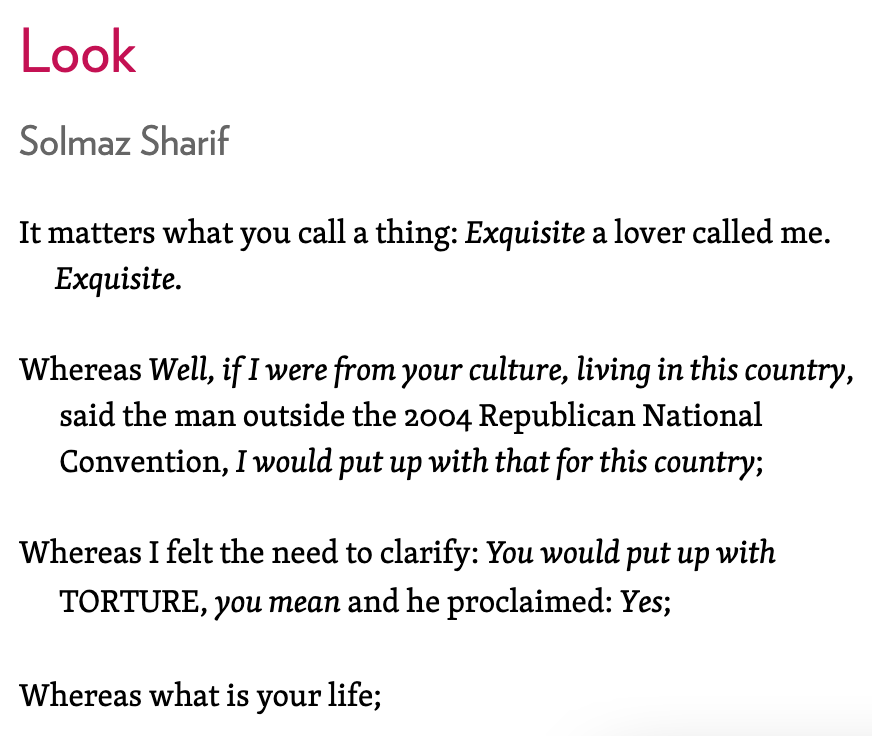
“It matters what we call a thing.” When we use the word ‘intelligence’ for a program that runs statistics, more or less, to come up with combinations of words that occur predictably in such-and-such a genre of text, we allow ourselves to forget that intelligence is a composite of error after error; we forget that error comes from the Latin verb for ‘to stray’ and does not mean bad but wandering. When we use the word ‘creativity’ to mean the instant production of something that has the appearance of a work of art, we efface the fact that creation is a process, one that is responsive to material and to our own associative, sensitive brain-bodies, that reveals itself as we engage in it. We lose out on the learned-by-doing knowledge that, among other things, shows us thinking takes time.
After all, it isn’t just the getting-there that teaches us, or that’s valuable. Writing with our hands matters. Knowing through our bodies matters. Knowing material matters. Knowing via the human processes of making matters, not least because metaphors take their sense from our encounters with real materials and relationships. Time spent using our bodies matters in ways that are rhizomatic and may show up in ways we can’t predict at all. To use the shortcut of a large language model may cause us to miss something fundamental—including that thought is an embodied and emplaced process, not distinct from the outcomes of thought. A carpenter knows how to make a staircase in part through the embodied knowledge of the depth and height of stairs all their life.
The way LLMs and other “time-saving” devices/scams (social media, all kinds of multi-level marketing programs) are presented makes it seem like the end is the point. Produce more.Win more. Make content and get some consumers. Who cares how; it’s the result that counts. Get more done, faster. Get through the “parts that don’t matter” and get on to the good stuff. Better yet, get someone else to do the parts that don’t matter for you. Cheap, easy, quick, and just as good as a human could do, or good enough because no one’s really reading, right? It’s so deeply cynical and so sad to me. I can’t quite tease out the relation among these things but it seems rooted at once in intense anxiety and competitiveness (both often fueled by an approach to teaching or talking about writing that focuses on ‘success’ in worldly terms—publication, recognition—that relies on scarcity) and in a slick, scammy understanding of the (literary) world wherein everyone around one is a mark.
But in any case, the way large language models are talked about in traditional media and on social media sure might make it seem like you could skip to the end of a ‘creative writing education’ and get right to Being A Writer without anyone being the wiser; certainly without hurting anyone. What’s more, you could especially skip the things you’re not used to, the things that seem like they’d bore you or ‘be pointless’, and you’d still have the result, which is (the semblance of) Being A Writer. But the “parts that don’t matter” are the good stuff. They’re all there is. The whole thing—the whole life thing—is finding out that something you thought might bore you didn’t, or finding a way to turn a constraint into an engine, or figuring out that you can do a thing that seemed impossible at first. Over and over. Writing is not only the arrival at meaning but the struggle through meaning toward meaning to understand at some point what one thinks. And then again.
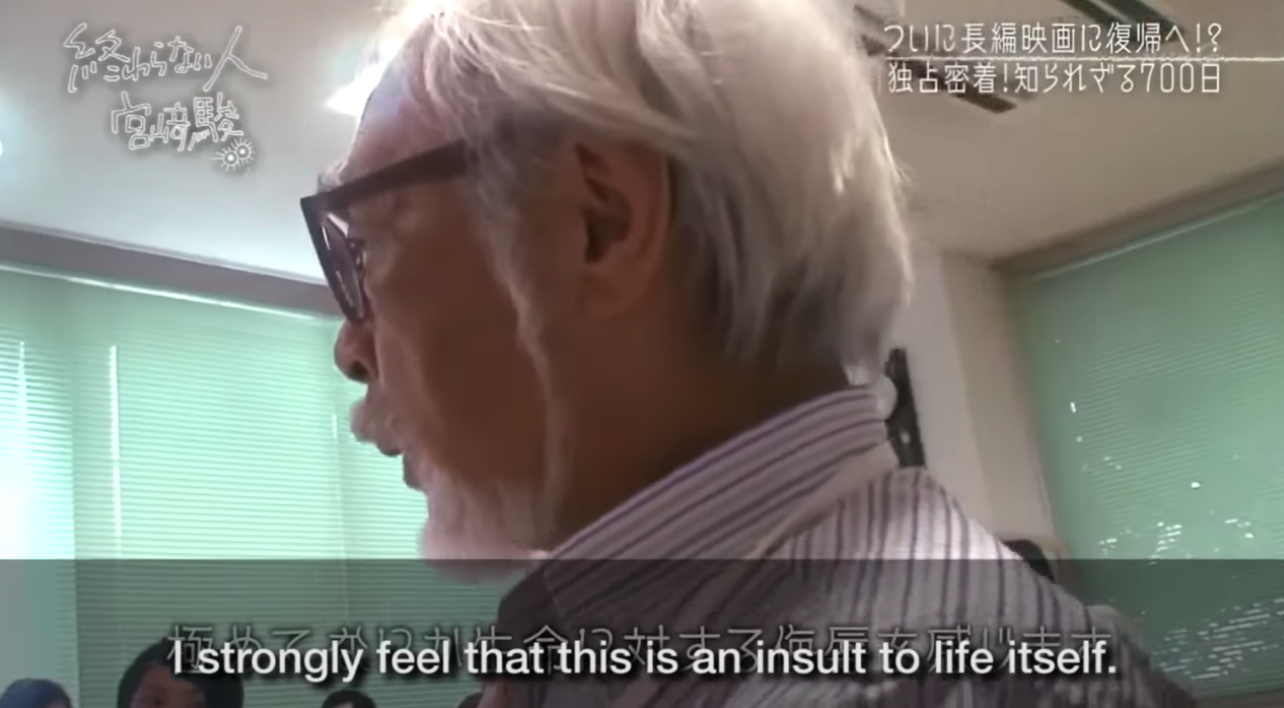
When Hayao Miyazaki says, in response to a team of developers who have shown him an “AI”-generated moving image of a distorted body moving as if in pain, “Whoever creates this stuff has no idea what pain is. […] I strongly feel that this is an insult to life itself”, I think he is responding to exactly the skipping-forward approach that LLM technologies permit. Skip forward over discomfort, unknowing, error; skip forward over encounter with (in Miyazaki’s example) the deep, real, embodied experience of one’s dearest people living with pain. Skip forward over grief—and also love, like Miyazaki’s love for his friend that allows him to notice his pain. Skip forward over the time it takes to think, which lets us think about where we are, and what it means to be there, and who else is with us, and what ‘with us’ means….
To skip forward this way is an insult to life because life is not an arrival at some peak or other. Life is the ongoing, unfolding, responsive act of being one among other finite beings, knowing they are infinitely precious because absolutely finite. And art? Art is the process of taking that knowledge of finitude, which sharpens and becomes more complex all our lives, and trying to make sense of it both alone and with others. The computer that the developers mention near the end of the clip, that could draw pictures as well as a human could—that probably exists now. But to think that technical skill is what makes art “art” or plenitude of ideas is what makes writing “writing” neglects the heart of these meaning-making pursuits: it is not the picture that results that is the thing called “drawing”. Drawing is the lifelongly act of learning to see and to connect the eye and hand. The end is not the point. It’s the long middle that matters.
the direction of time is continue: sumer is icumen in
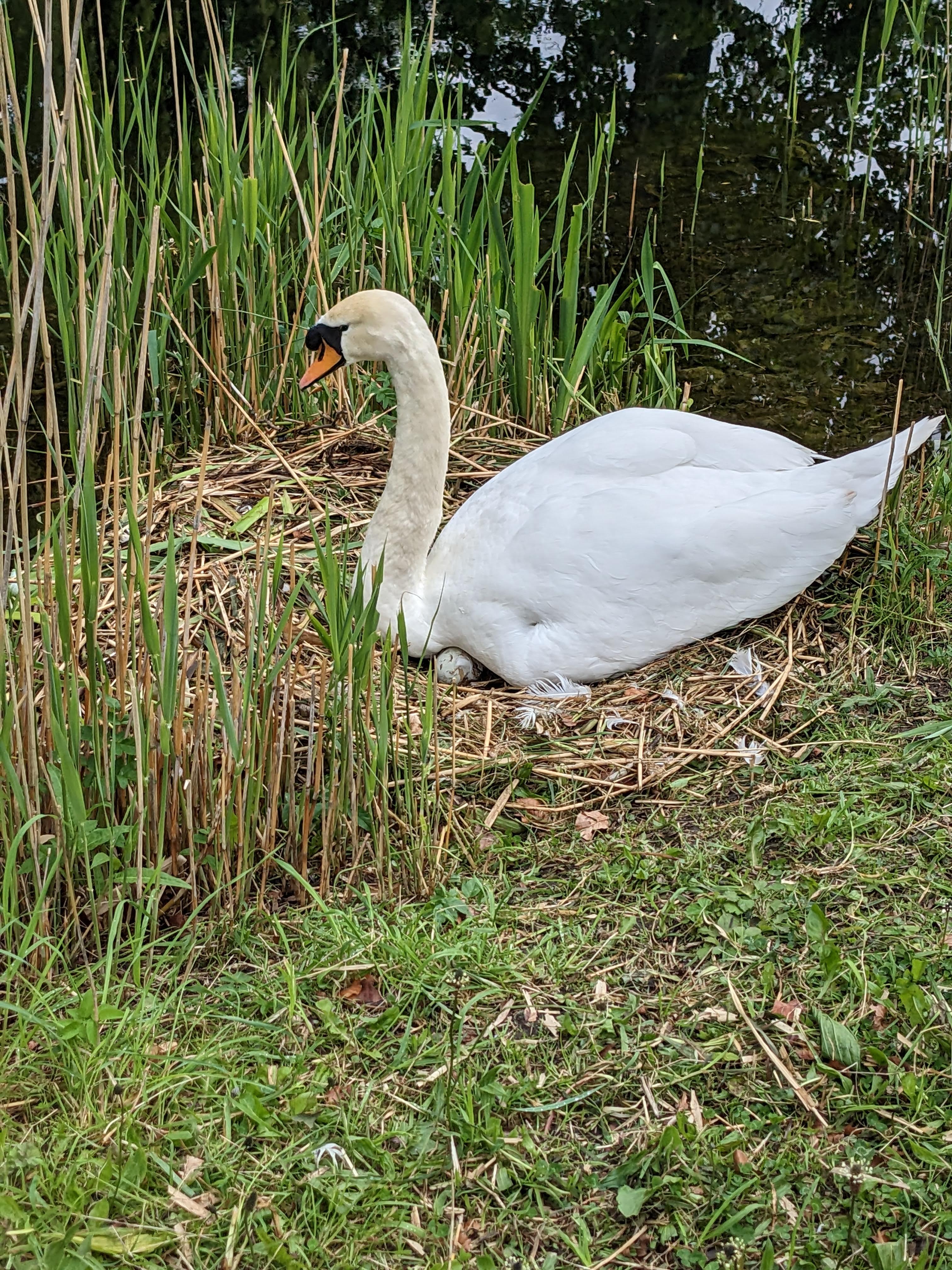
Lhude sing cuccu. A brief catalog of early summer: its speed is instant. It arrived pretty much in whole cloth around the first of May, with bluebells everywhere and the sword-shaped leaves of the irises in the canal. And now the irises are open and the swans are on their eggs. I drop peanuts onto our windowsill in an attempt to coax the magpies to befriend me, and they do come, but are not tame. The humidity drops, the rain comes in sudden heavy bursts, the humidity rises, the uilleann pipers’ school lets out for the long school holiday, and friends text me their travel plans. Teaching ends.
The form of the song “Sumer is icumen in” is a round. A round is a kind of composition where voices sing the same melody but begin at different times, so that the different parts occur at the same time in their different voices. Singing a round tells time both cyclically and overlappingly: it tells time by cycling through it (singing the entire melody from beginning to end, and beginning again) and it tells time when one voice crosses another (here, here, here; here, here, here, says the overlapping melody). Things come back, they cross and recross, and they resonate with one another over time, and they repeat wholesale. Like seeing flowers in one place and another, summer in one place and another.
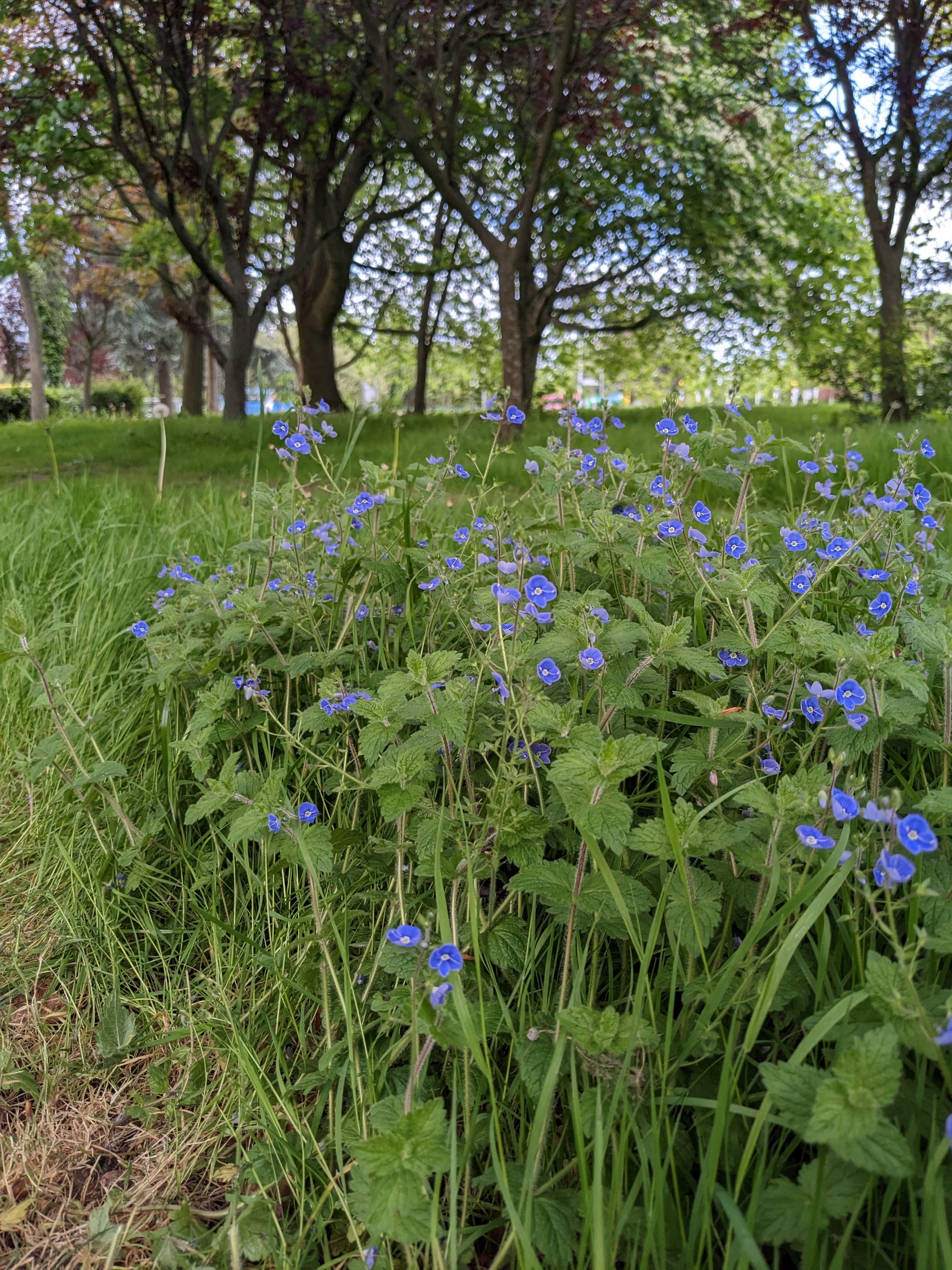
This haze of speedwell catches my eye from a dozen yards off. At the university where I work the groundskeepers mow only part of the grass, which means that all kinds of plants flourish in the uncut sward. We are now in the season of greenness, of expansion, of lengthening, of lightning and thunder.
(In the part of Iowa, where I lived last year, I felt a visual drought when faced with the weedlessness of that place. There were so few plants in general, and almost none “out of place”. There was a lot of grass, cut uniformly short. Along fences, where weeds are hard to control manually, there were swathes of dead plants that it took me a while to realize had been sprayed with weed killer. To be surrounded here by the variousness of the plants here feels restorative.)
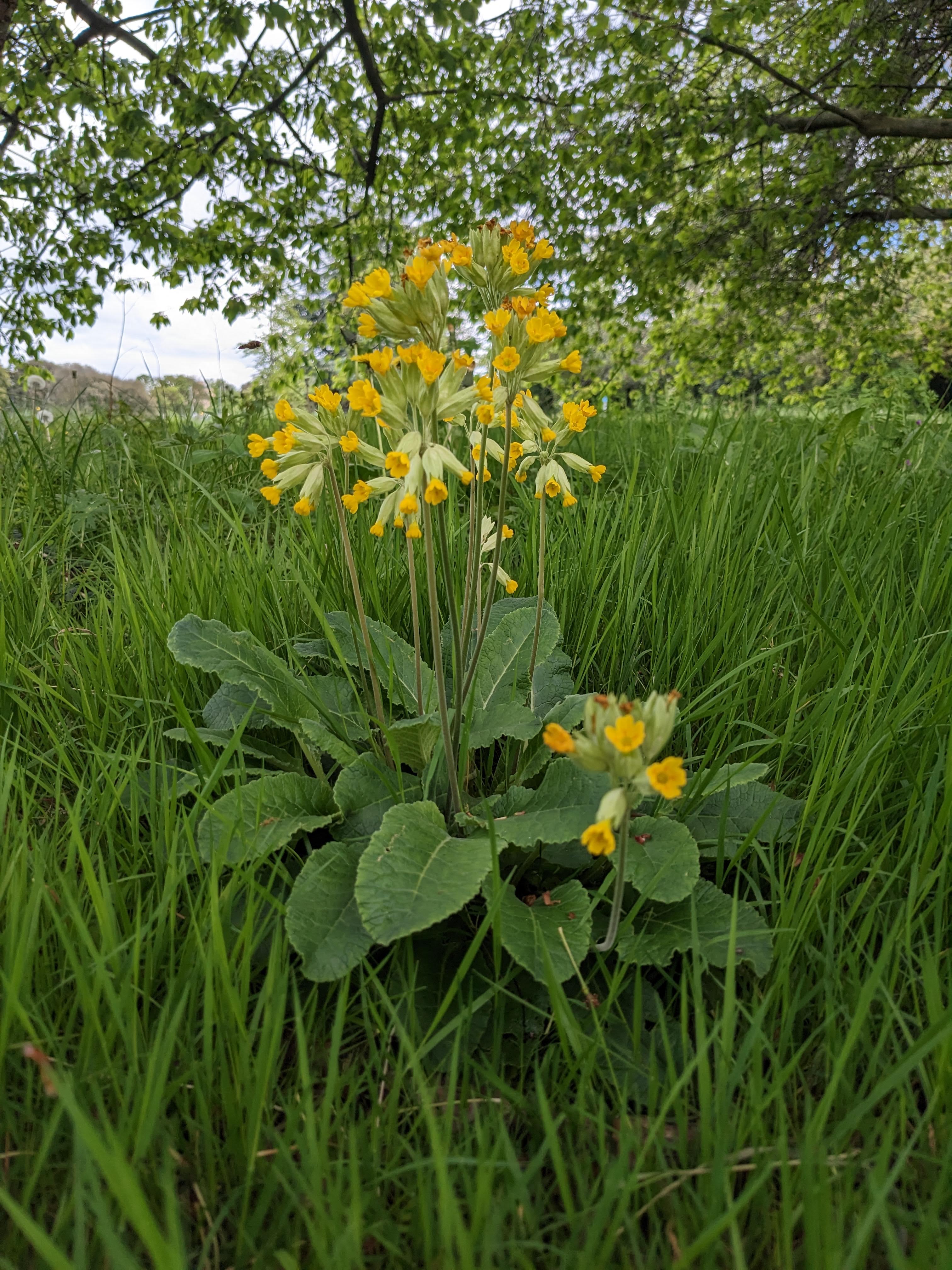
I love the flower shape of the primulas, especially the tall primulas. Traveling in Japan in 2017 I noticed many candelabra primulas in pots outside houses, especially in cities. Cowslips are the closest I’ve come to them on this island. Apparently these flowers are protected in Northern Ireland, but not here, where they still appear in the landscape. The captive primulas in Japan were mostly magenta, pink, orange-pink, and white, and stood upright on slender stems. Some had their flowers arranged in spheres; others (the candelabras) in wheels, one above the last. I do not have a garden—not even a city garden like the Tokyo gardeners who made excellent use of the narrow space at their doorsteps with pots and risers of all kinds—but when I do I would like to grow primulas. So the flower is in three kinds of time for me: the present (where I see the cowslips in the grass); the past (where it sends me to the synonym-formed Primula beesiana); and the future (where I imagine, one day, being able to grow these flowers myself).
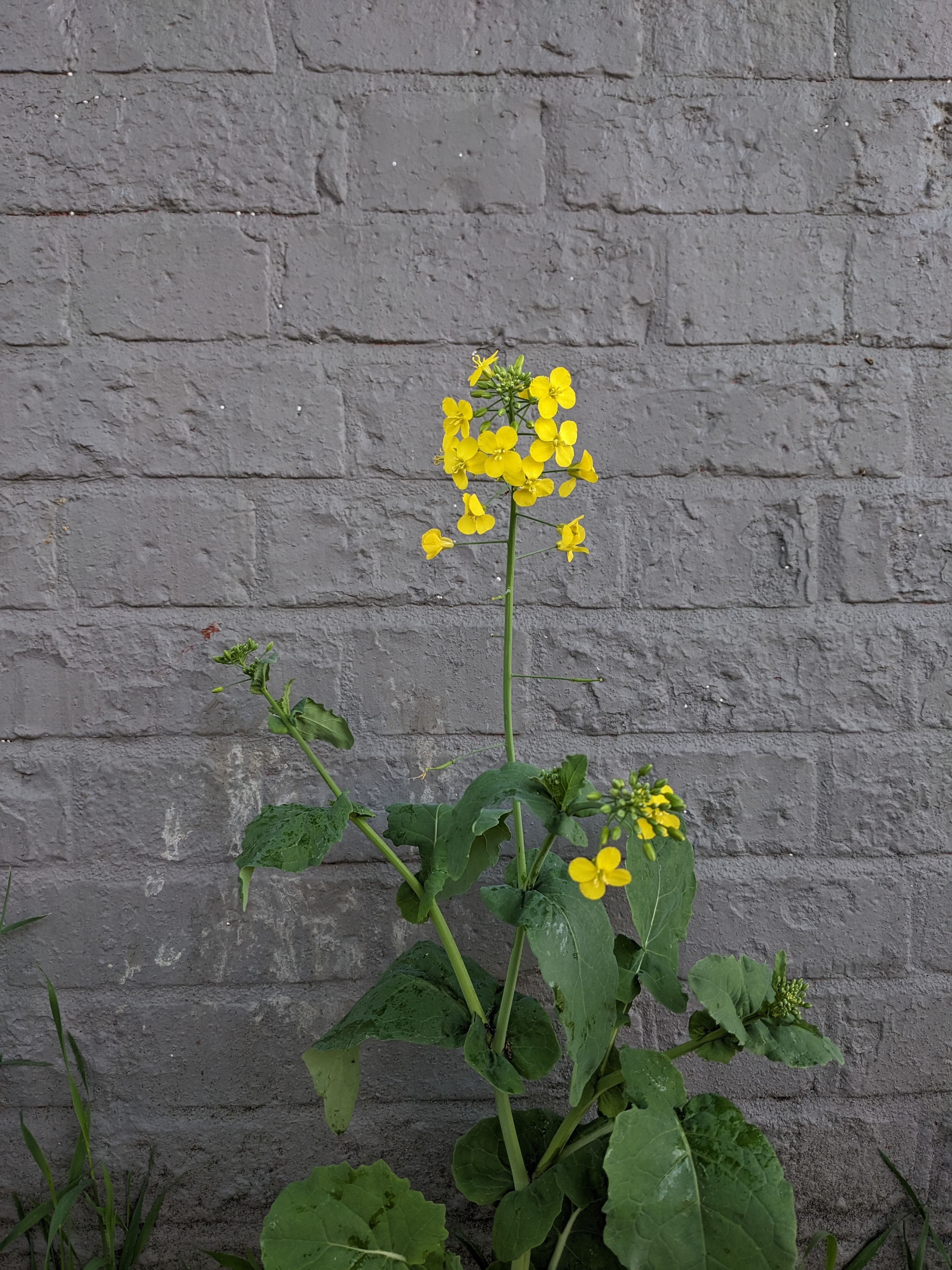
Summer in the cowslip and the iris, the brassica escaped from field plantings, and the tiny ball-shaped creeping clover flowers. Everything is going upward and outward as quickly as it can.
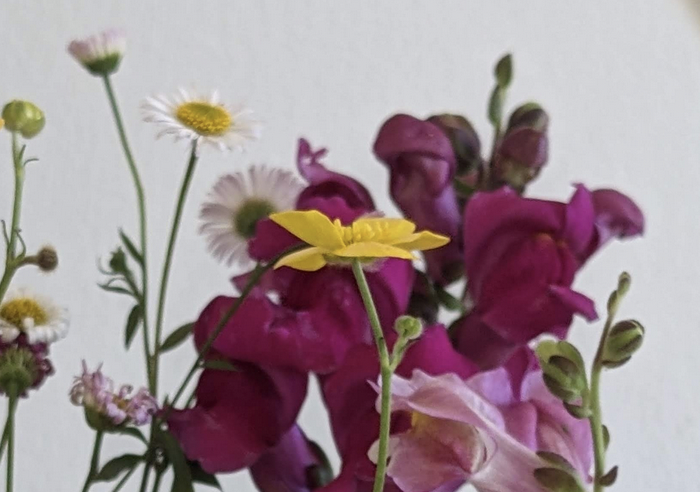
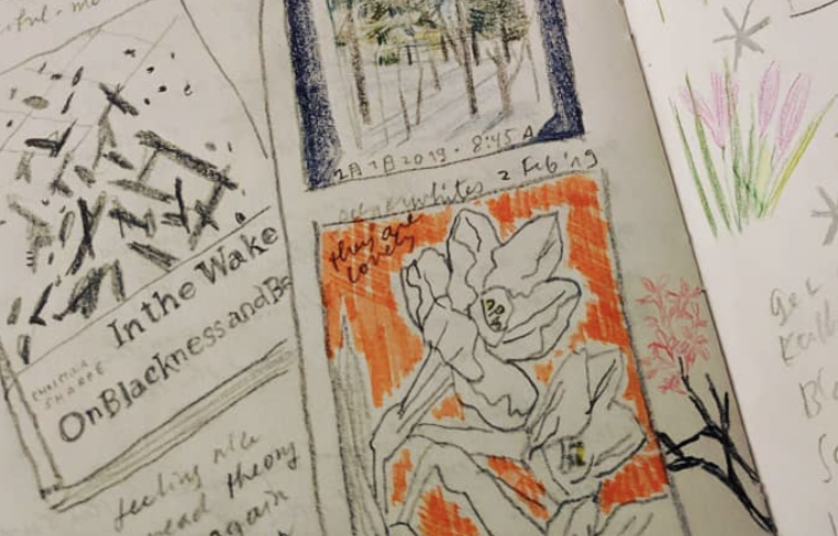
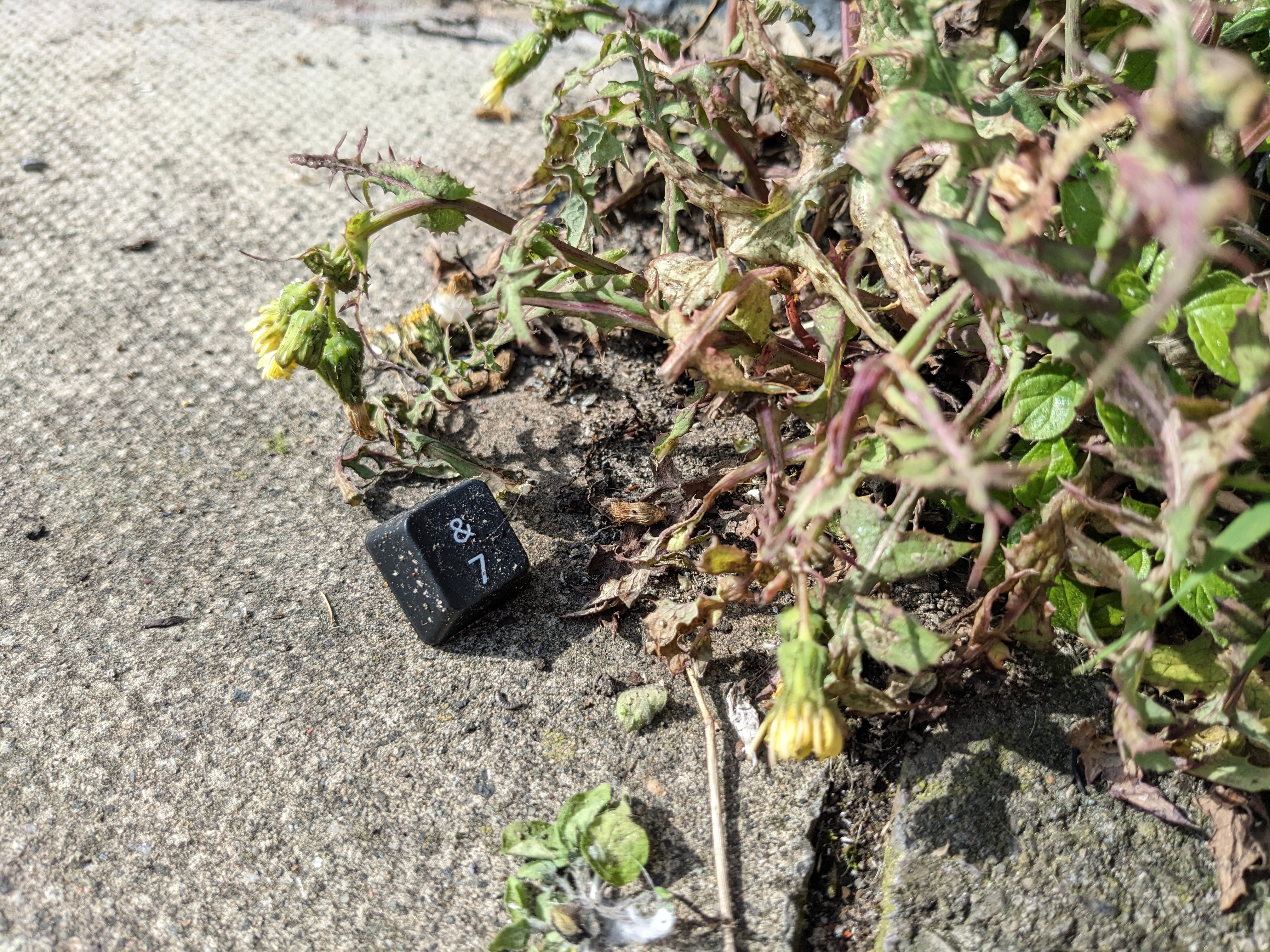
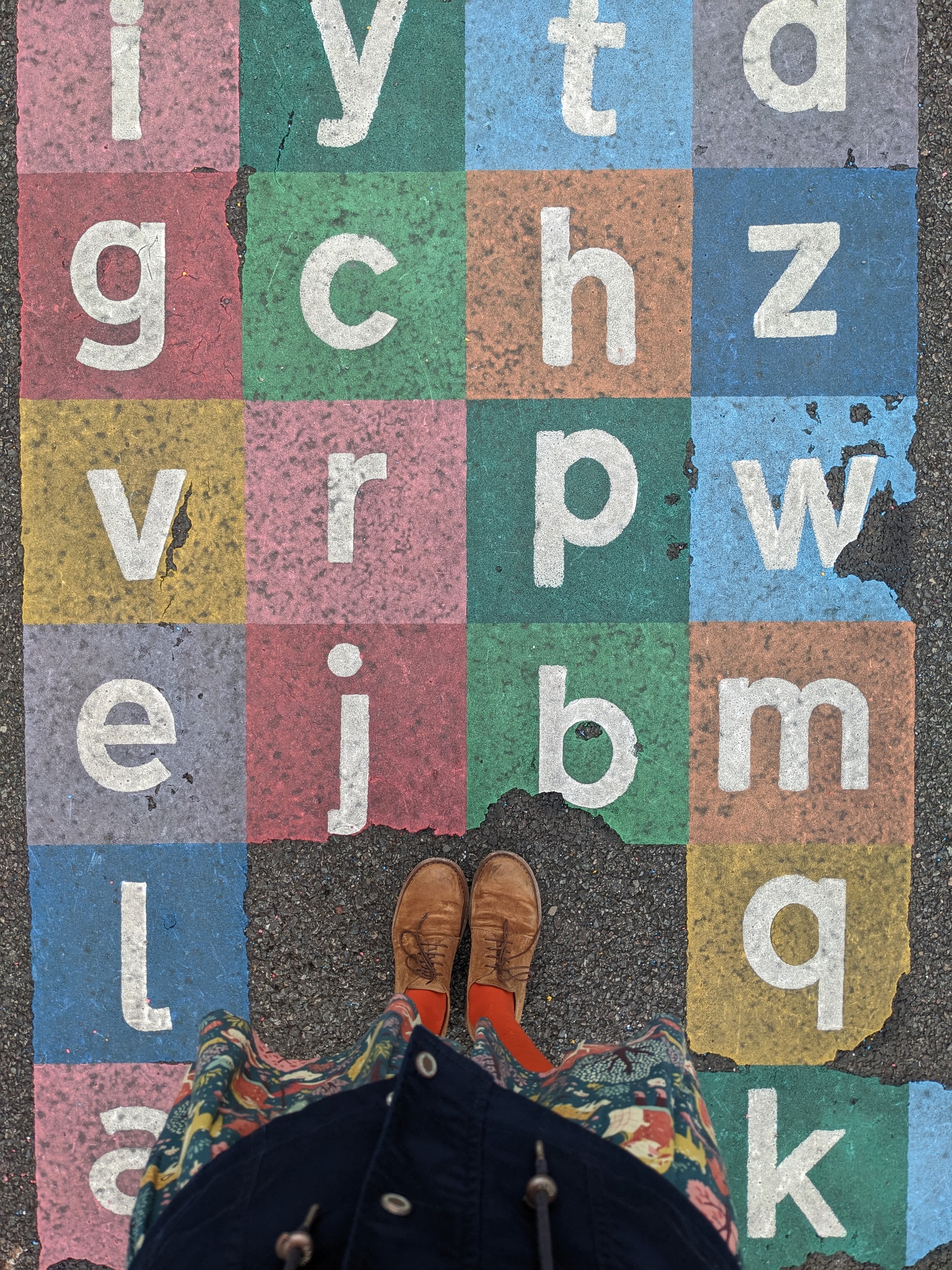
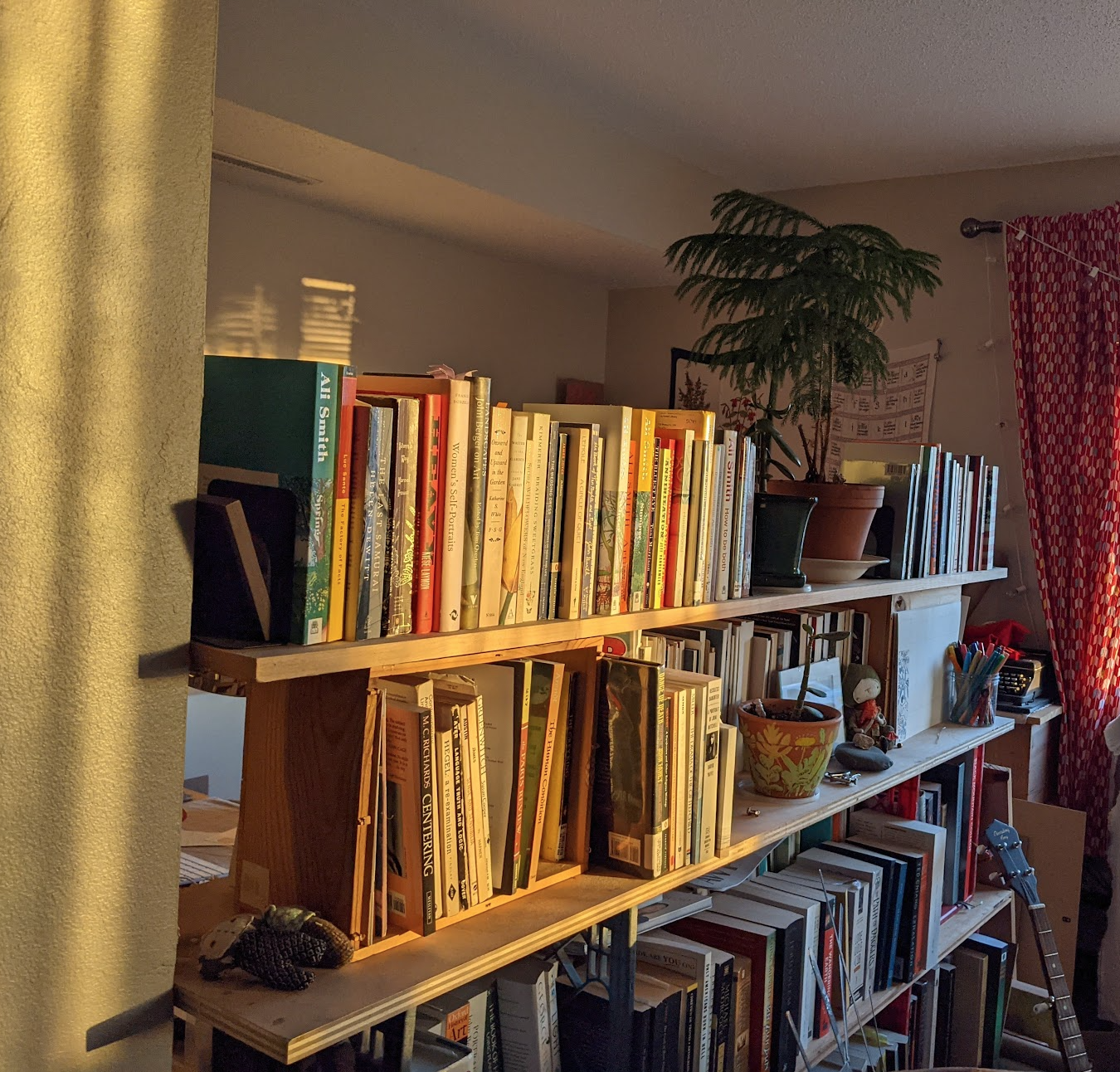
Also seen while walking recently: parts of the world-alphabet. An and and a seven. And a groundsel and an and and a seven.
And a glorious brassica against a gray wall—that electric yellow. These are everywhere. I don’t know for sure what they are called because I haven’t bothered to get really close and look at the flower structure. I think it could be Brassica nabus, which would make sense—there are fields of it in flower now.
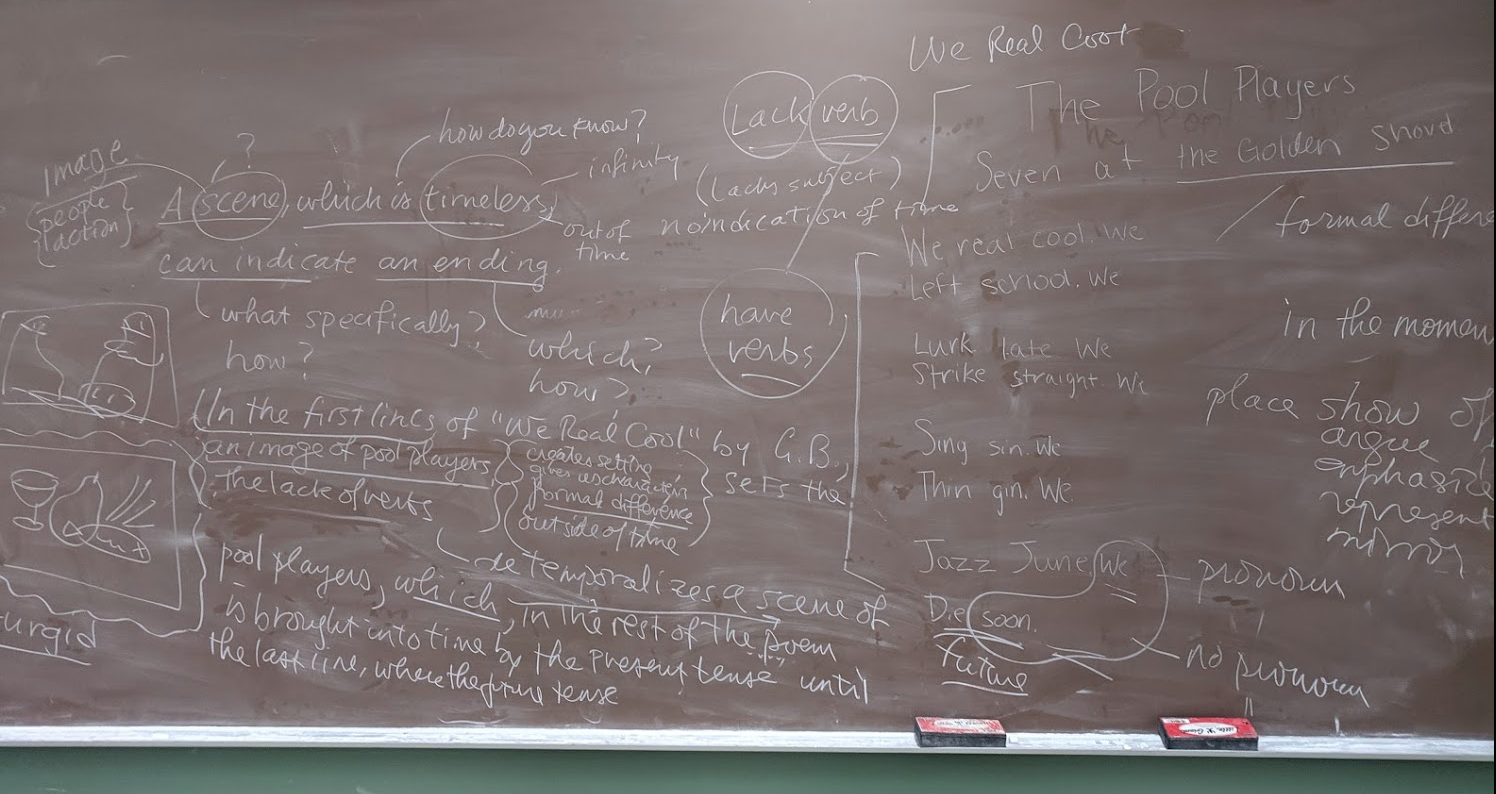
When I write about the world I walk through, I am conscious that the movement of my thoughts is sometimes “one thing after another”, rather than how I think it ought to be (in order to be ‘real thinking), which is “one thing, and then another, and then a return to clarify the relationship between one thing and the next”. Sometimes I realize this difference from my internal picture of “good writing” or “real thinking” with shame or self-doubt (“am I doing this correctly?” “why can’t I do this correctly?”). But first of all, difference from a norm is the mark of the voice or hand. That’s a characteristic of artmaking. And second of all, there are many shapes for thinking, like there are many kinds of tempo, movement, direction. We step into the arrangement of things and take note.
We all know these mall-food-court-bench type places that the billionaire enclosers of the internet have bought and sold us on are not really our common places. We know we need shared, truly public spaces to have ideas no billionaire could ever dream of, because such spaces are worth our lives—and our lives are worth much more than the paltry billions of dollars those restless hoarders dream. We know that the commons we need we make together (every one of us) and that that commons puts to shame the stories about competition and merit, in the light of the truth of the dignity of all our shared lives (humans, animals, plants, water, land, air). But in the meantime, we bend the billionaires’ unpublic spaces to make a shape we can live with.
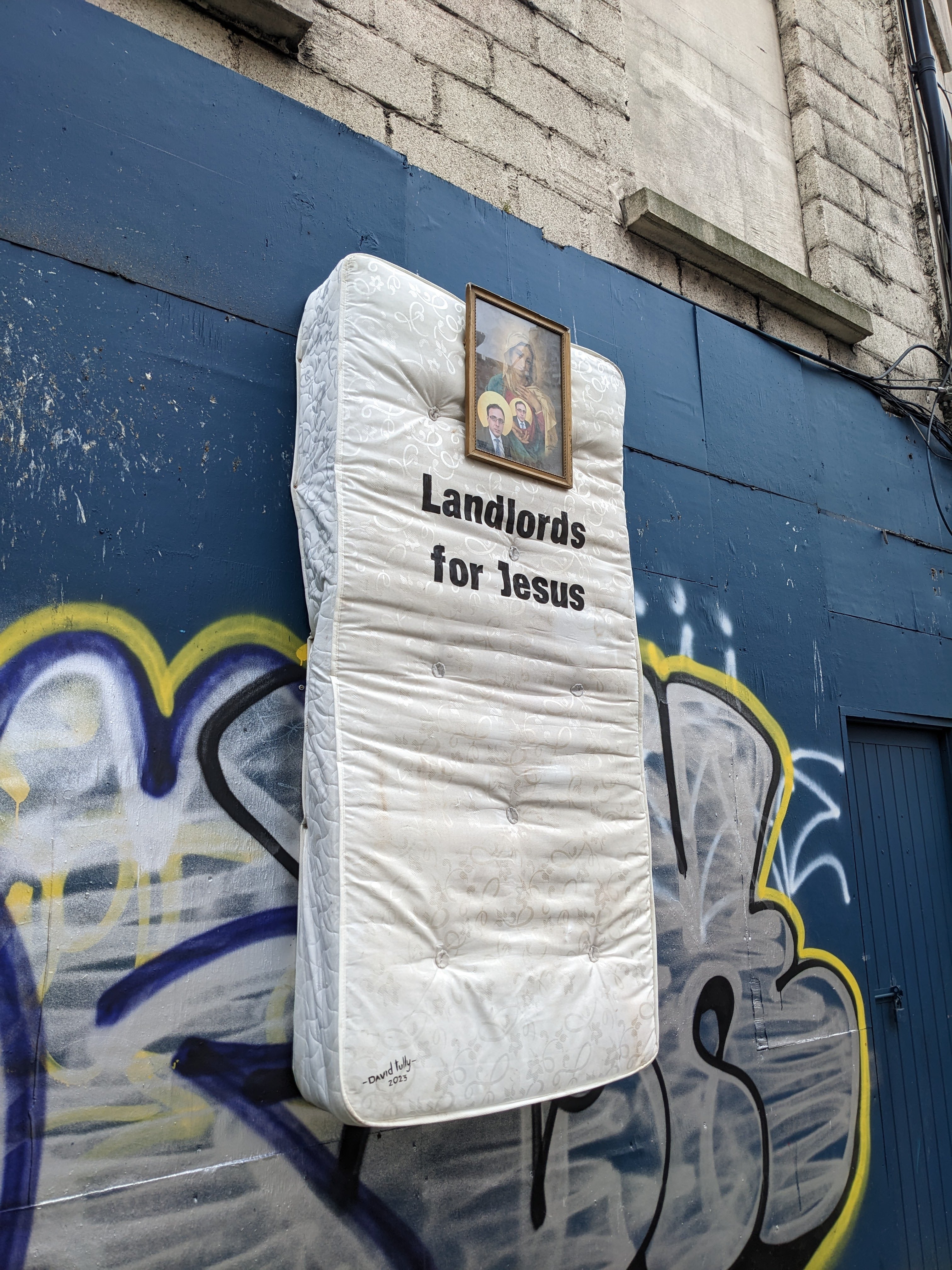
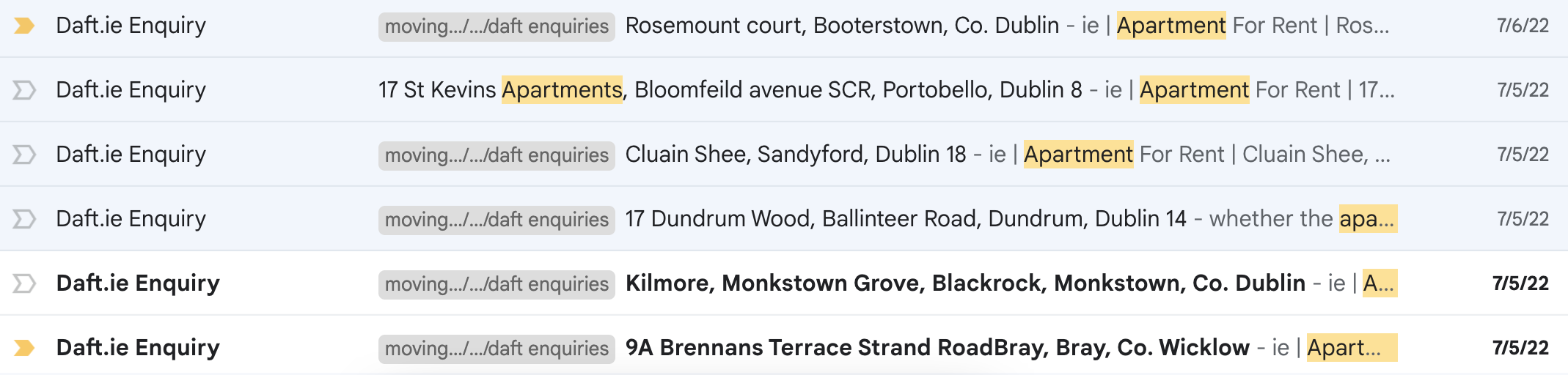
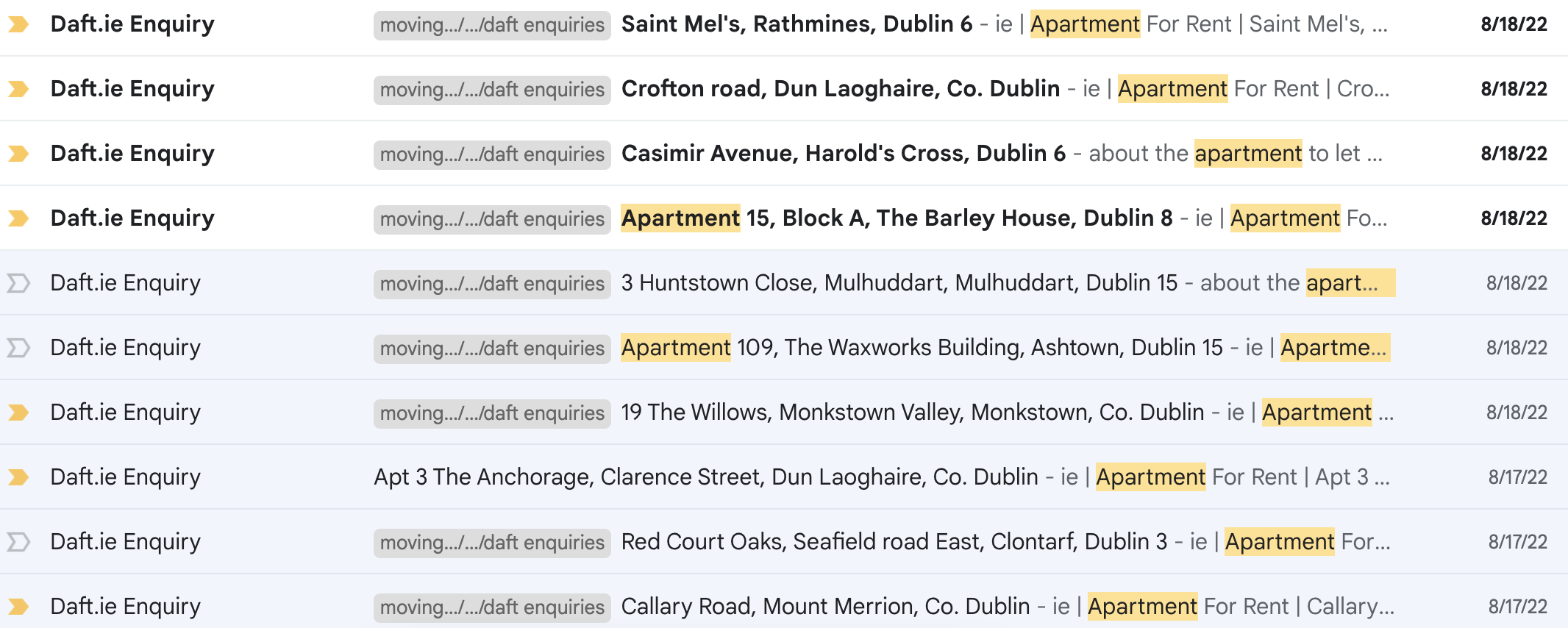
There is a crisis in Ireland: far too many wealthy people and corporations owning property, far too little available for ordinary people to live in. Far too many landlords and aspirational landlords. This is not only a problem here, but here I am. (To give some numbers: there are 26 houses in the entire county I live in that are for sale for less than €225,000. One house I looked at, listed at €285,000, sold for €410,000. Average rent in Dublin County is €1900+/month. Average salary in Dublin is €32,000±/year. When we were looking for a place to rent, we sent out about 175 queries and received five invitations to tour a property. At each tour, there were multiple prospective tenants. At a bus stop recently, a woman with a baby started up a conversation with me and disclosed that between her and her partner they could barely pay rent and would be leaving their current apartment at the end of the month. But to where? They could not find anything they could afford within an hour’s commute of their jobs.)
How do you make art in places where you can’t even live? How do social movements form when you have to work overtime to pay rent? How do you care for others? How do you keep your health?
How do you meet friends, in your new city, if you have to work as many shifts as you can just to pay your landlord? How can you build something, how can you root, if the only future you can see is emigration or sharing a dorm-style room for half of your paycheck every month? Where is there to say this stuff? How do you find your people? (And how can it be that there are houses selling for millions and millions of euro just a half mile from where people are literally sleeping in tents?)
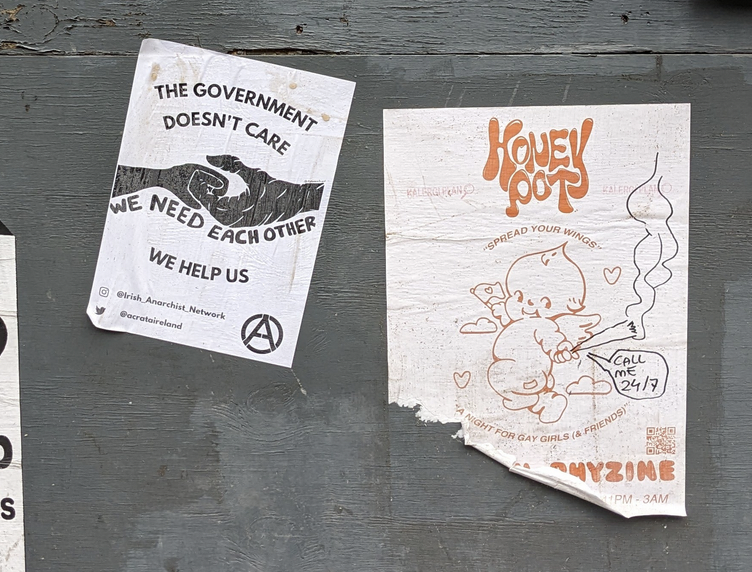
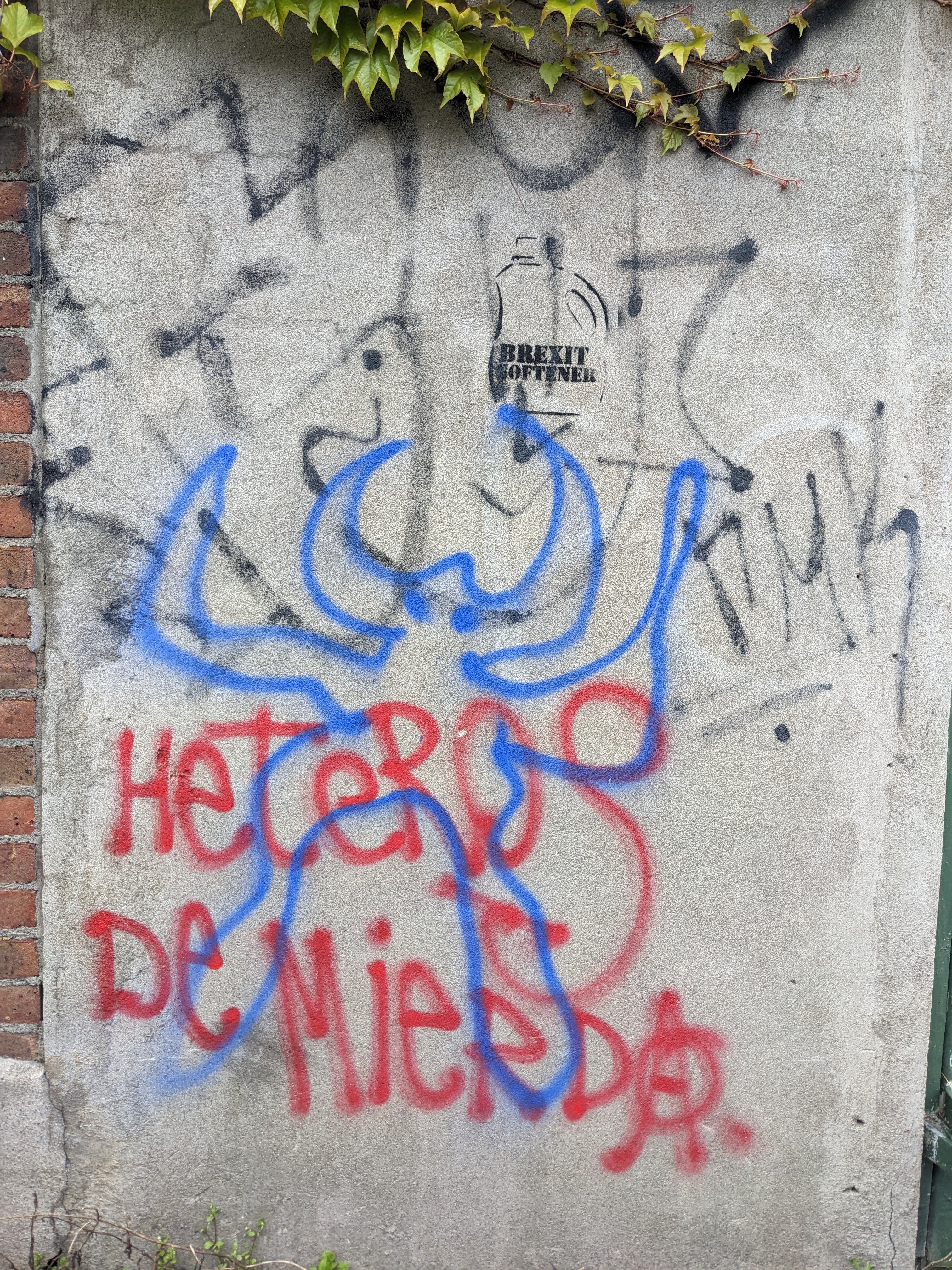
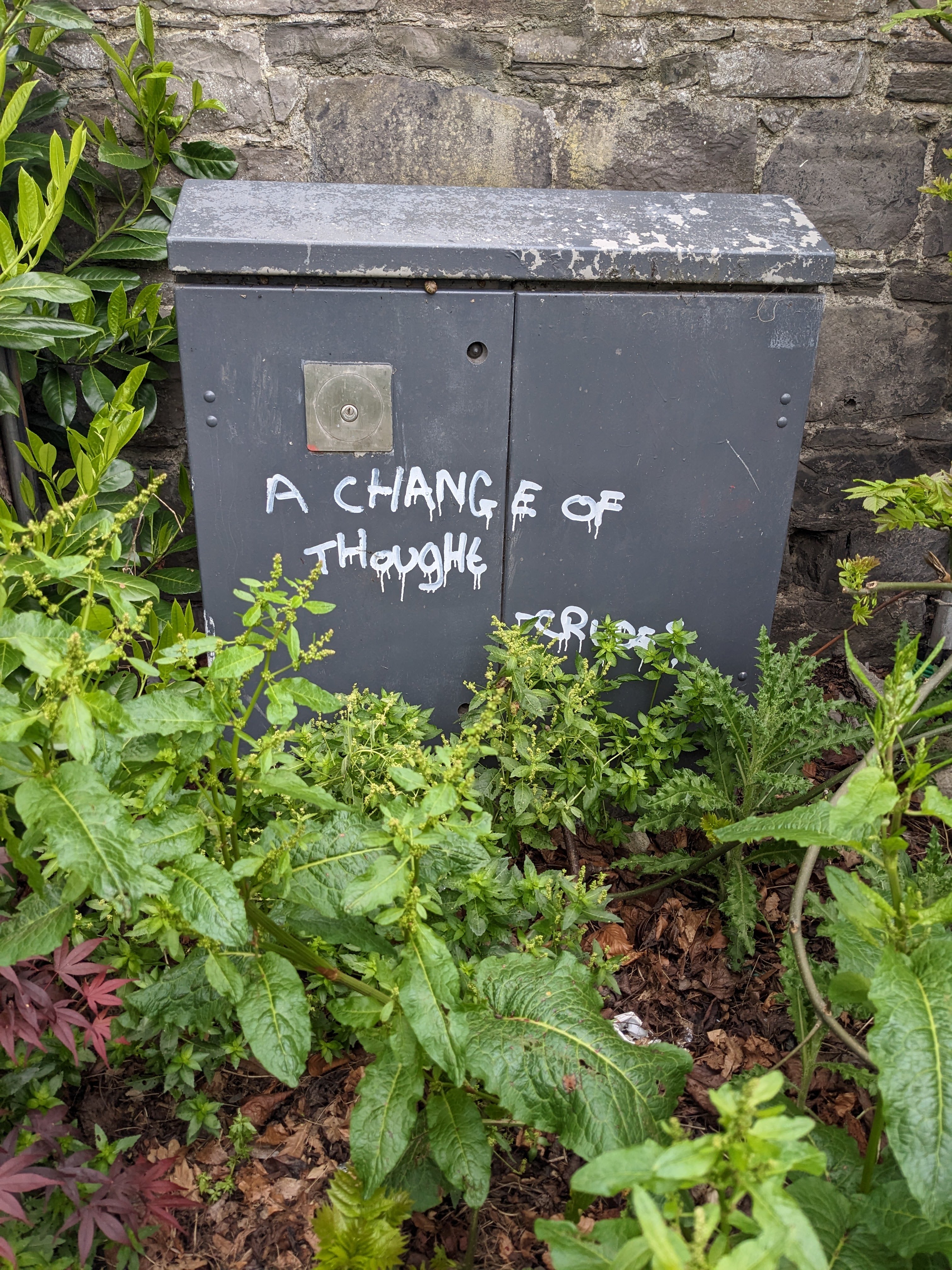
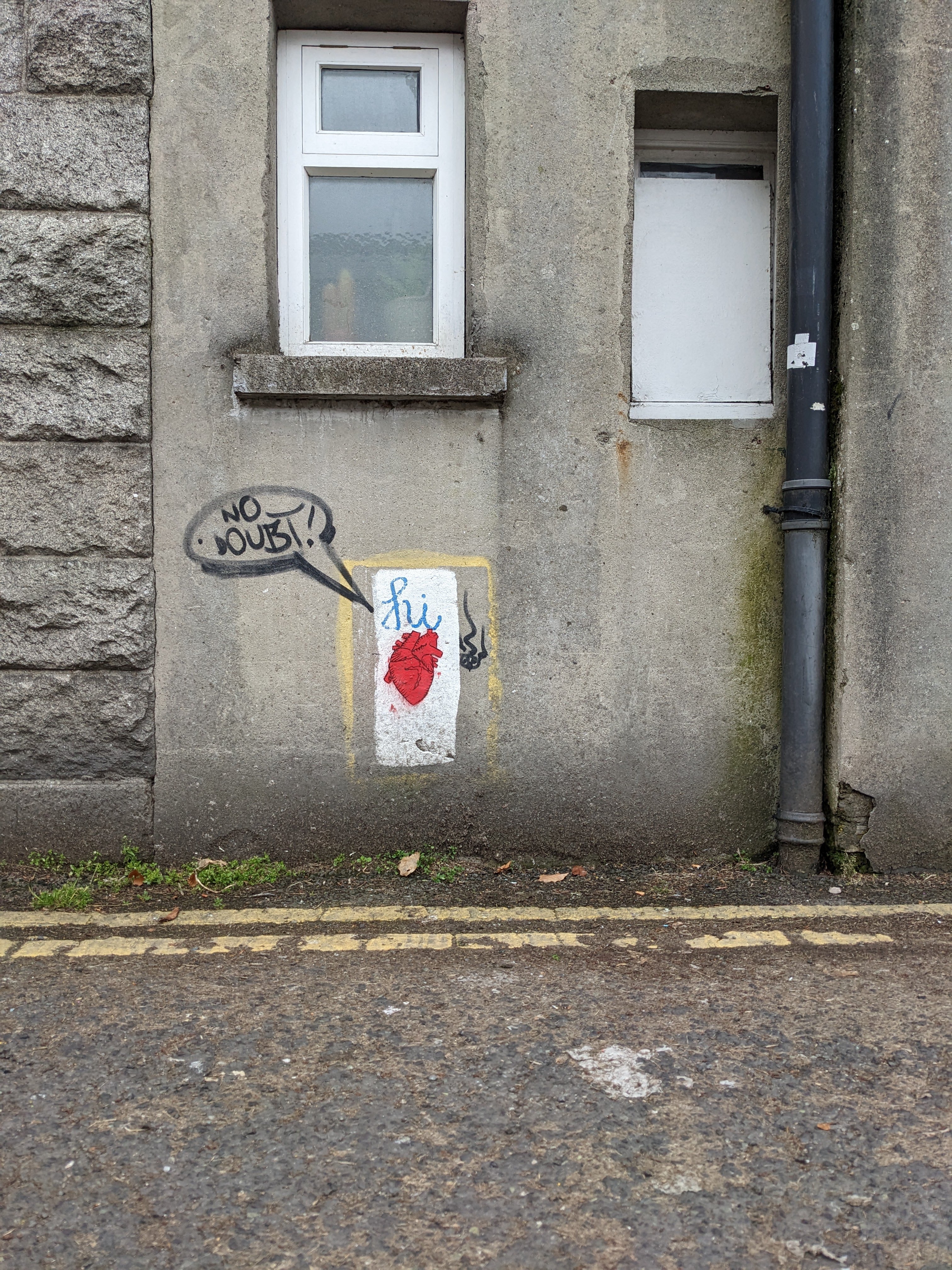
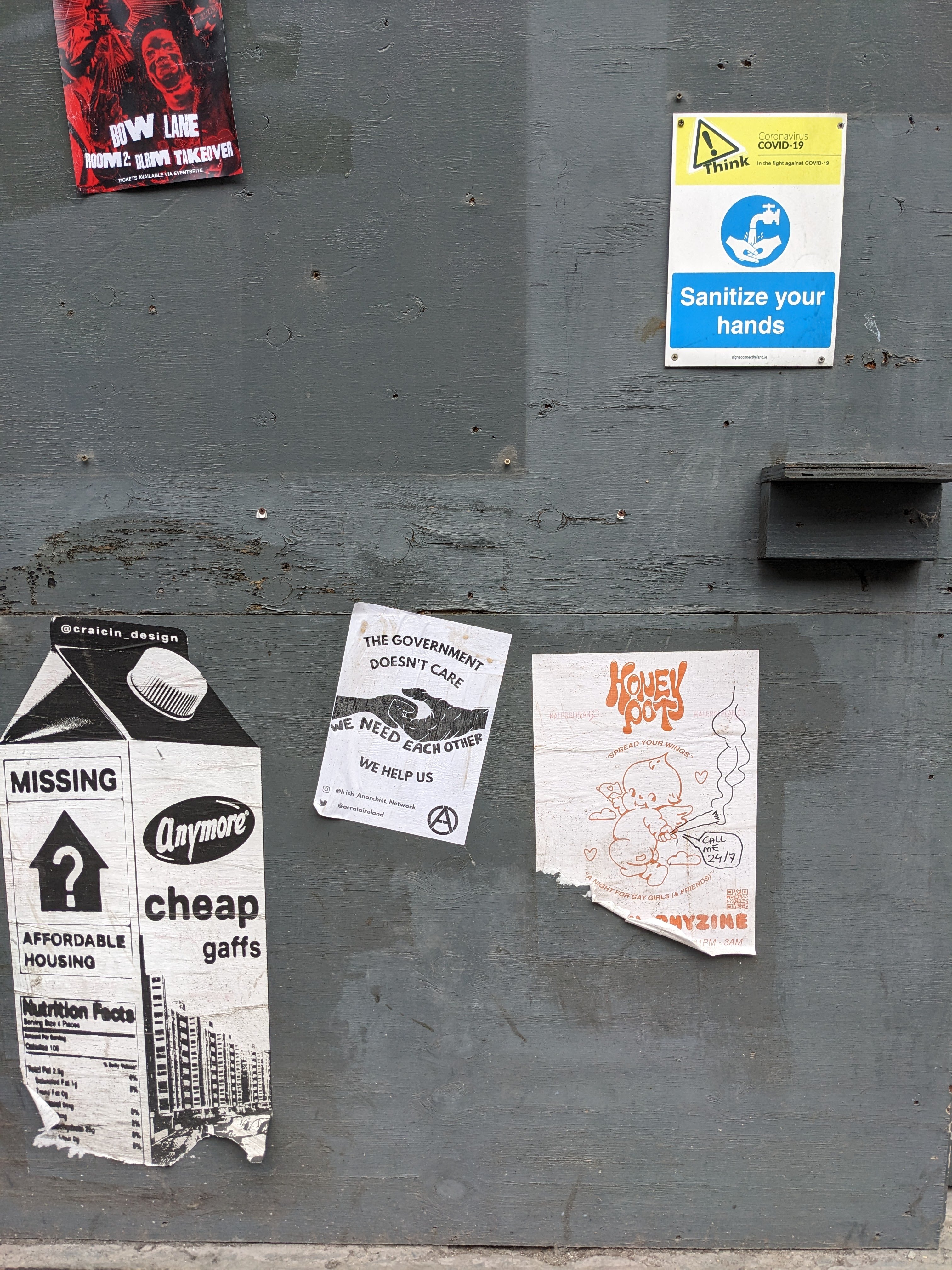
Some public speech feels urgent now: speech that reminds us these are our places. The streets are ours. We pay for them. Many of us built them, many of us maintain them. We do not have to wait to speak to one another—not for a boss to give us a break, or a gallery to offer us a show, or a publisher to accept a book. We do not have to wait. We can say, as these marks do, I’m here, you’re here. We are here. This is wrong, this is right, this is what we need, this is what we dream.
We need each other. We help each other. Get a piece of paper. Write on it in big letters the thing you want to say. Put it in your window. Get a piece of cloth. Embroider what you hold dear there. Go to the copy shop and enlarge your poem-drawing-thought bubble; print a dozen copies. Make some wheatpaste. Find some walls, maybe those plywood walls put around demolition sites, where in a year some shoddy expensive condos will go up. Look. Look. Look. Look. With our own hands (shaking as they may be), with the lines our hands make, with the words of our minds and the company of others: we can remind ourselves what is common to us all. Make it, in a transient way, paper way, a fragile and tenuous way, a flickering way ours. They may have the billions, but we have the dreams.
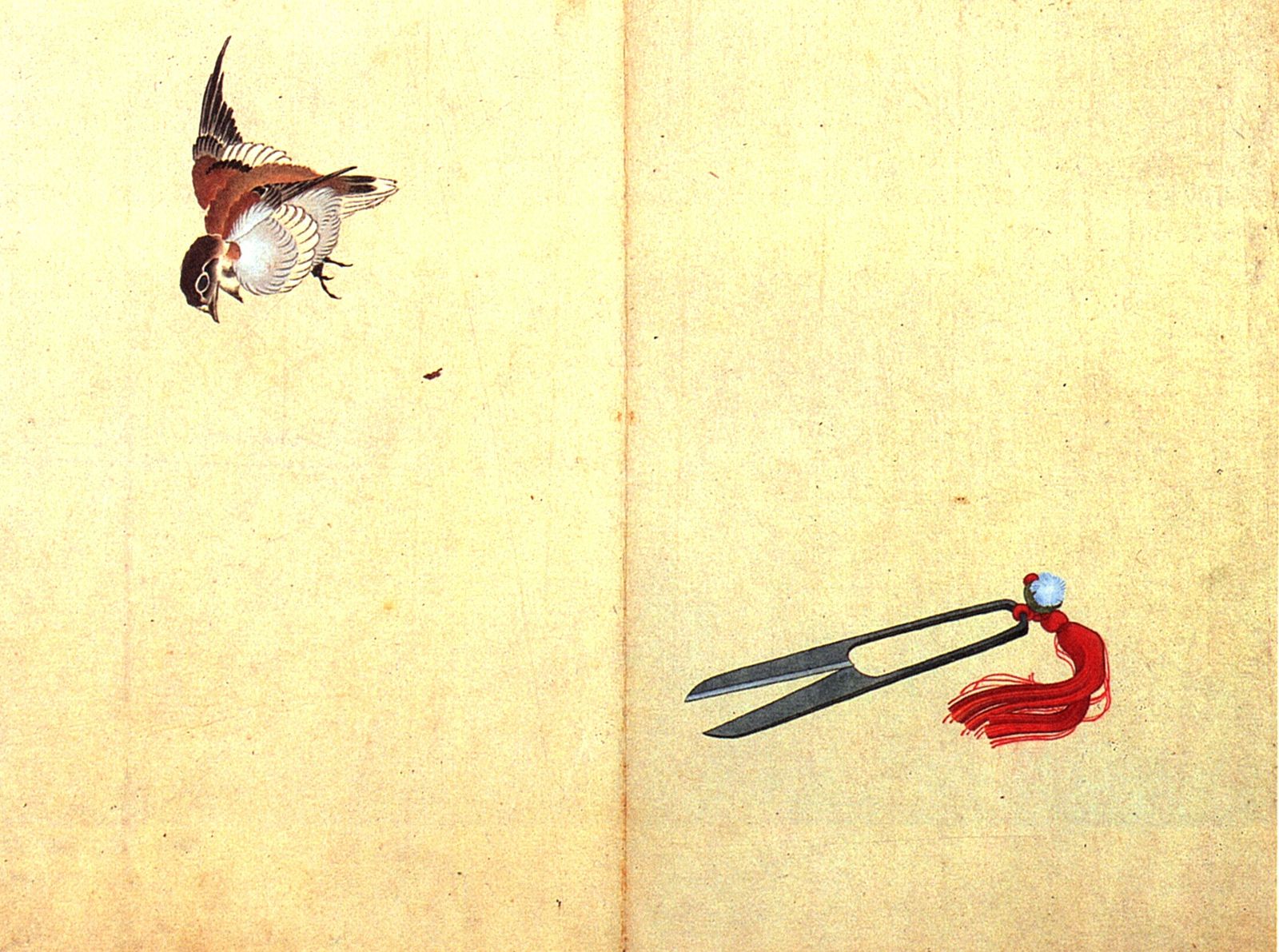
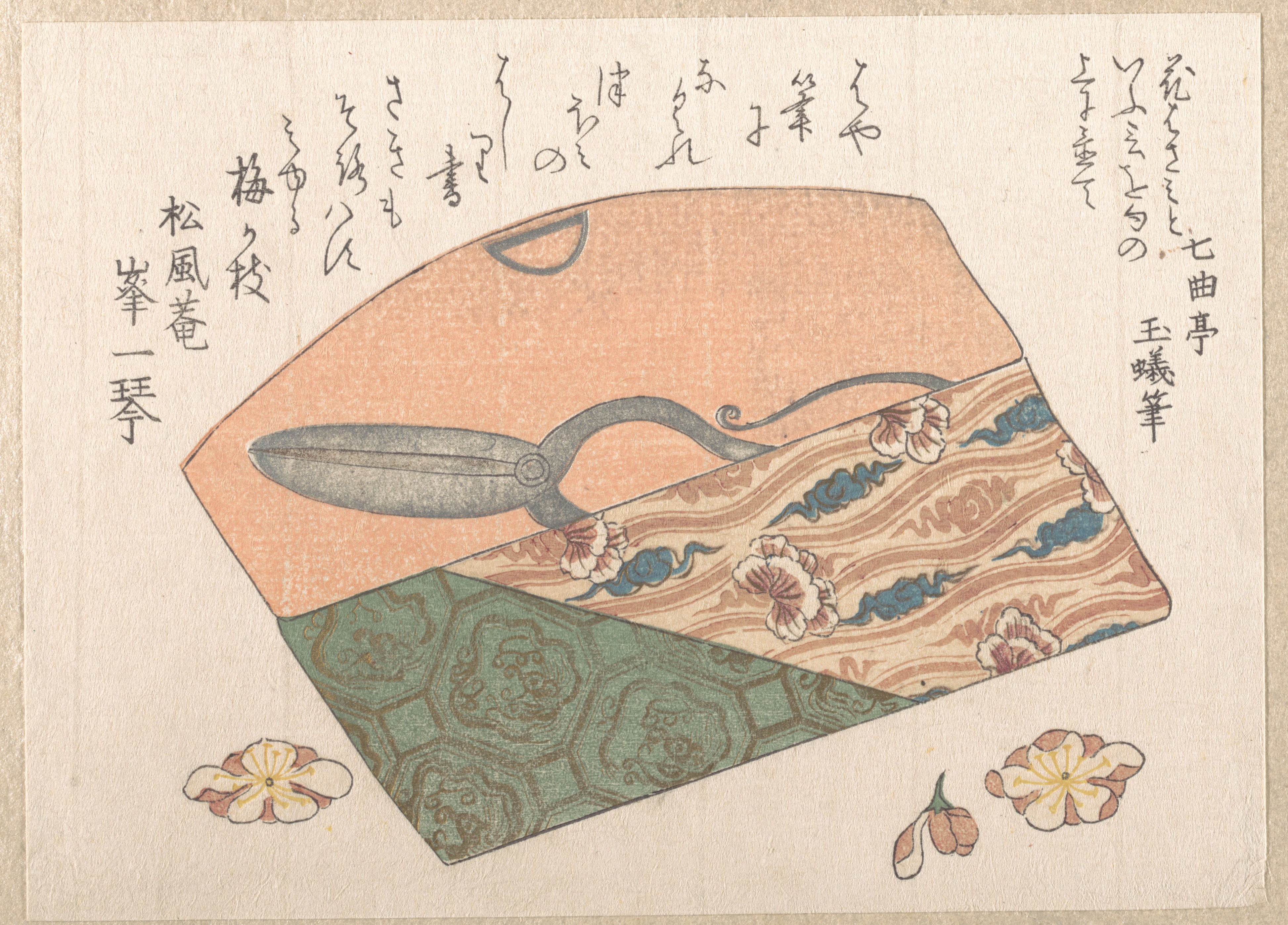
This is a Hokusai woodcut showing a sparrow in flight near a pair of thread scissors. The scissors are decorated with what looks like a bell and a red tassel; the thin threads of the tassel move beautifully on the paper. I love the care in Hokusai’s depiction of the implement. You can see the place the blade was sharpened. The dimensionality of the object is rendered precisely: the darker shadows follow its geometry. How well-made it looks, with its flat-edged handle. The metal scissors (cool and heavy in the palm) make a contrast to the light slipperiness of the tassel’s threads. Such an ordinary tool, used for the smallest of tasks—snipping thread. And an ordinary bird, too, the sparrow: a pest some places, a city bird, certainly easy to overlook as a hundred of them make their noisy cheeping in a hedge. The thick-thin lines that show the observation of how feathers move and how they look in relation to one another. Like Dürer, Hokusai attends to the fineness and particularity of everyday things. This attention is an expert attention in reach of anyone. It takes work, patience, but we, too, can learn to see how things are.
The right tools for the job means taking time to see how, exactly, one thing interacts with another. The Hokusai print leads me to look for other prints with scissors—and there are several available in the museum collections I page through. Here are scissors for flower arranging (another version in this print) held in a patchwork pouch. All of the marks on this print were made in reverse on the block: even those careful characters that spell out the words of the poem. To make a print like this is expert labor, learned through repetition over time. You have to stay with the tools long enough to know what they will do. Expertise can be about a close relation, over a sustained period, with the material and living world; not a terminus, but a path made by walking. And maybe expertise is also the discernment that tells one, at some point in one’s life, that there is not time for everything, but there is time for what matters—and looking, right here, at our lives and their elements: that does matter.
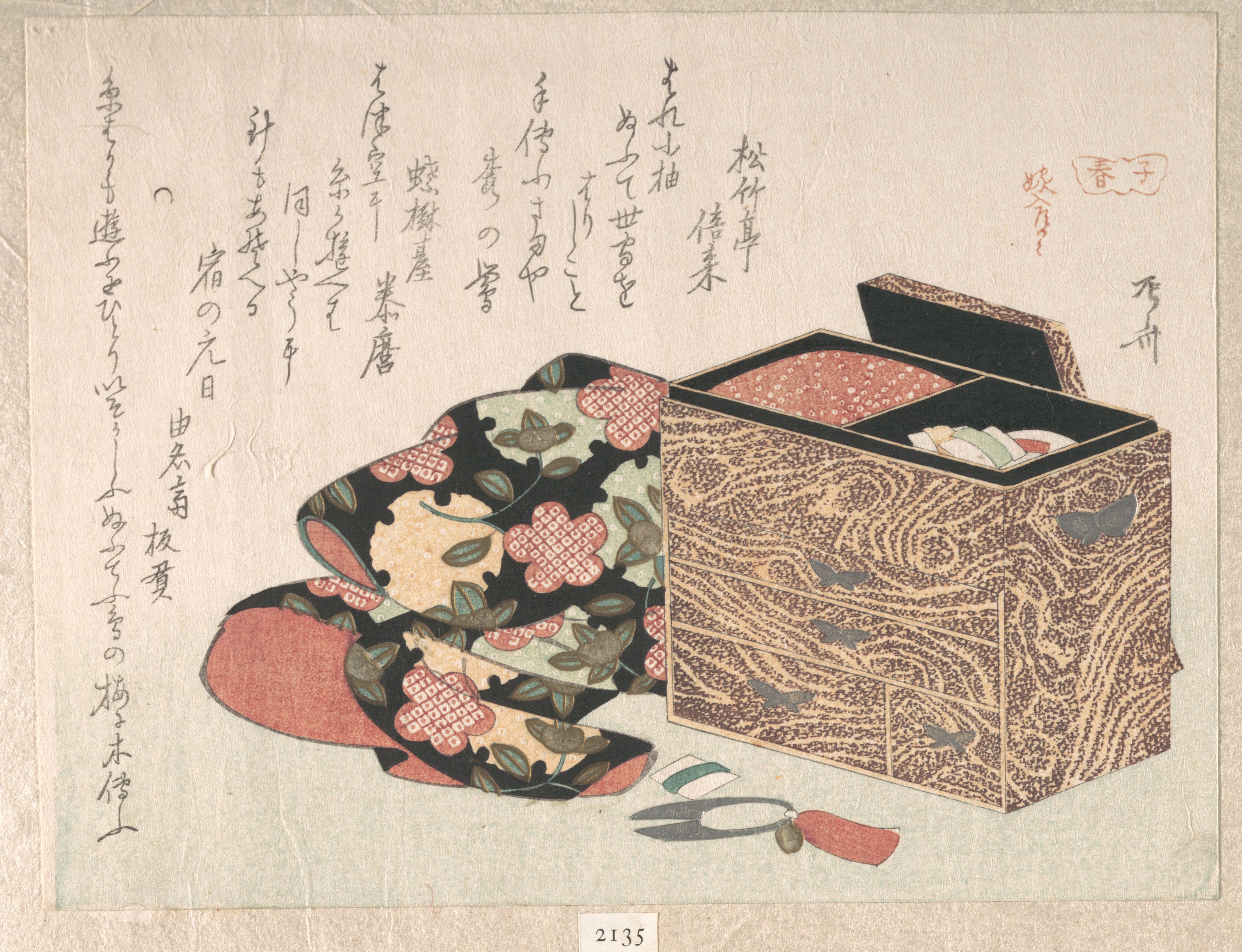
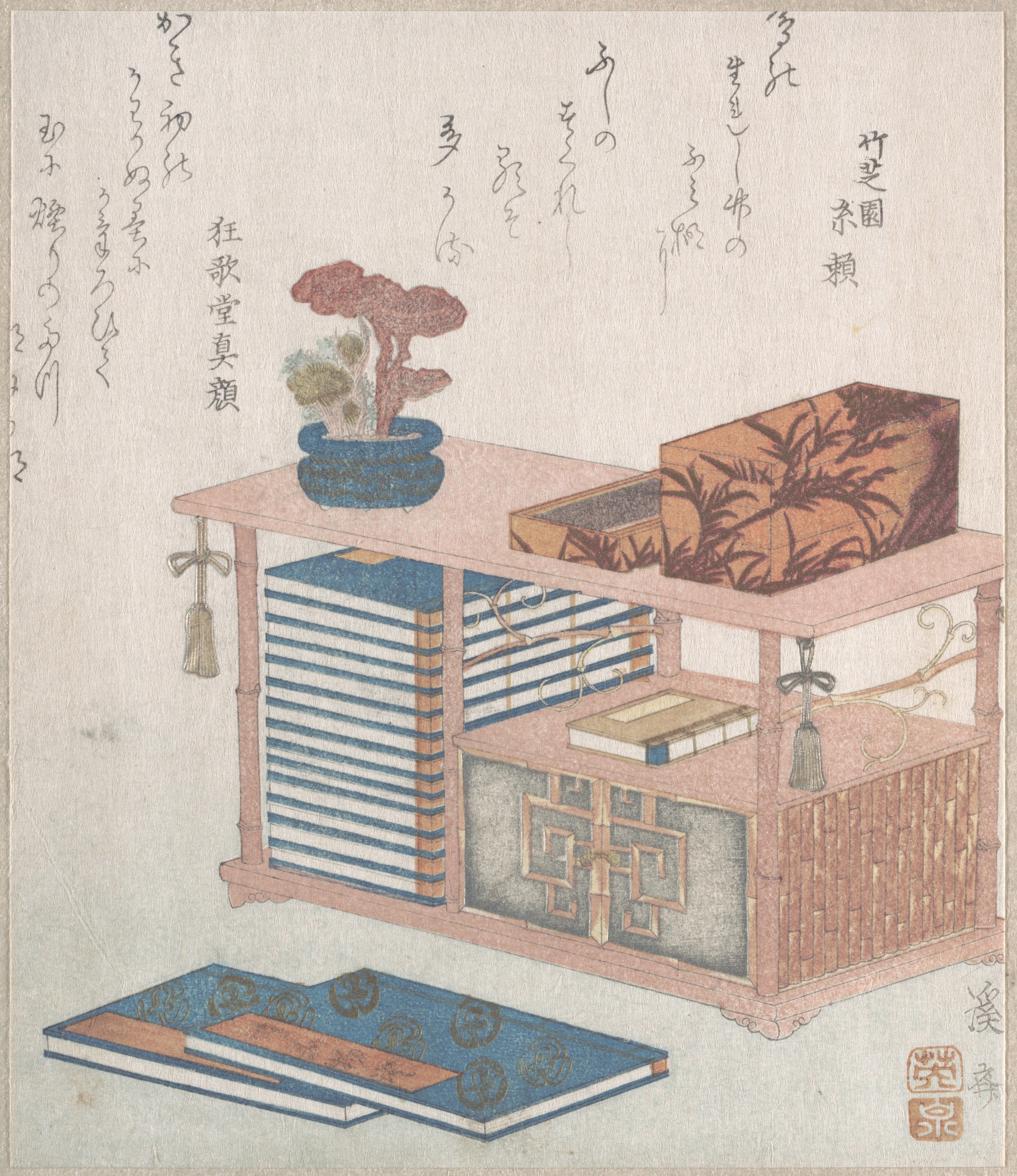
The image of the floral shears and this one, of a sewing box and a piece of clothing—small thread snips and spool of thread in the foreground—belong to a genre of pictures called surimono (more) often commissioned as private publications by groups of poets for poetry contests and to mark other occasions. The poems were printed alongside the images. Like knowing how to use a tool and like making a woodblock, making a poem takes time and attention to exactly what is around you. To see a likeness between unlike things, and to permit that likeness to transform the world—as in the attention the printmaker has paid to the shape of the bird and the shape of the scissors.
As a reader and a viewer, I am rarely moved by a massive vista or an abstracted emotion. I am moved by the sharpness with which the writer or artist has seen, and can portray, the texture and materials of everyday life, down to the most banal (charming, beautiful, irritating) details, and by the way the congruence of that attention shows me what I’ve missed.
In late March I came across a project by rob mclennan (if you don’t know rob’s work, his blog is a treasure trove of decades of small-press poetry, and he recently began posting on Substack as well). Above/ground press is making Festschriften, celebratory and loving books by multiple authors about the work and lives of the poets the press has published. Here is a link to one of the most recent examples. These are being made without the knowledge of the poets—who find out only when the books show up in the mail. What a gift. How many people’s poems have I loved, have you loved? I remember a teacher telling us when I was in university that if we were moved by a poet’s work we should write to them, without waiting. What better use could there be of our time and talents than to make books for one another, of one another’s, loving one another through that work?
In a way these books of mclennan’s—and much small-press production; in a month or two I’ll write about some books recently acquired from essence press—remind me of the prints commissioned by poetry societies in 18th-19th century Japan. They are beautiful objects that help us see one thing very clearly, made by the expert work of people who have spent a long time with the making and the seeing. The making takes the time it takes. And what results doesn’t have to be the biggest, most widely disseminated, most public (like a frog). It can be here, between us, the work of meaning that is the work of literature (or art) that is the work of a shared, human life.
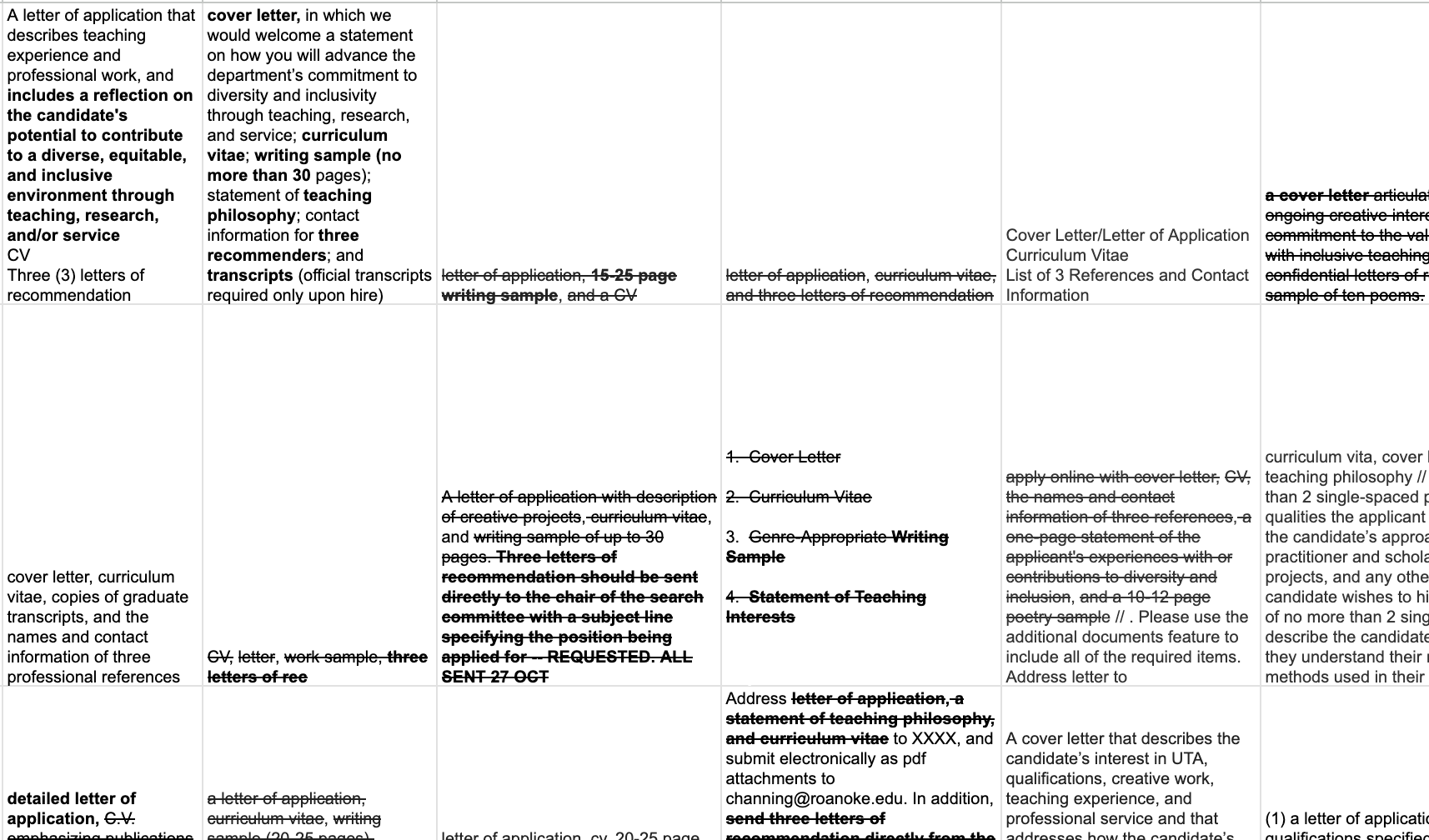
moving, finding housing, finding furniture. giving up furniture you loved. (“the art of losing isn’t hard to master”!) giving away books. driving across the continent, or flying across the ocean. the calculus of how fast your parents and siblings age vs. the chance that this job might turn into something permanent. working on job market materials several hours a day after you do your full day of teaching and grading. learning a new town, again. figuring out public transit, again. first and last month’s rent, again. security deposit, again. being asked the question “why haven’t you been able to buy?” and having to come up with an answer that won’t be a downer, though it is a downer! biting your tongue about the truth of your life in social situations with your new colleagues, again. choosing between the work you’re trained for and staying somewhere. the strange disjunct of being in your 40s and having no permanent place to live. packing up the apartment, again. giving up a garden you made.
the time it takes to find who does what at a new institution, not to mention figure out what the students’ backgrounds are, how the course rotation really works, and what the actual expectations are (as opposed to what you’re sold in a job interview or given to understand by implication by your more secure colleagues). doing that again, in a new institution, the next year. hearing tenured and TT-colleagues say things like, “well you knew what the market was like when you went on it”. hearing them say things like, “you probably would have had a child by now if you were going to, right?”. a dozen interviews, if you’re lucky, each with their own preparations (hours and hours), sometimes on as little as two days’ notice. moving again.
learning the copy code, the door code, the program assistant’s name, the invisible and unstated hierarchies, the map of the building, the map of the campus. switching health insurance again (how many hours per year trying to figure out which plan will not bankrupt you?). trying to find a primary care doctor in your new town. paying for another ‘new patient’ appointment because you moved, again. chasing down 1099s and W2s. looking up your password from two institutions ago so you can log into HR and get said tax paperwork. no you don’t have access to the 403b as a temporary employee. spend an hour on the phone trying to figure out whether you can open a Roth IRA. retirement? what’s that?
dealing with another new landlord.
extra trips to the grocery store every week (your total grocery bill for the month will be higher, not to mention the time it takes to go more than once) because you live in a rented place, in a town where there are few places for rent, and your landlord has decided a dorm-size fridge is sufficient. you want to have a baby? if your contract is one year only, be sure to stress out before the start of the semester trying to get pregnant so you’ll give birth while you still have health insurance. if you have a nine-month contract and forget to ask HR about spreading nine months’ pay over twelve months when you sign, your salary will end when teaching does, in April or early May, and you won’t get paid again until September (or October, even, if you have transferred institutions).
not buying new clothes even if yours have holes because groceries, rent, and emergency fund come first. “I’ll patch them” (count the time it takes to patch a garment). feeling shabby around your colleagues. going to therapy ($185 copay per one-hour session) and spending half the session working out why you have imposter syndrome when you publish and teach and study how to teach better and do service and go to conferences (when you can afford it), just like your colleagues. being told you don’t qualify to join the union because you’re an adjunct. being told you can’t apply for any research funding because you’re on a one-year contract, despite the funding applications having no stated policy against that. teaching for eighteen (!) years in a row, more or less, without a sabbatical.
repeatedly emailing your landlord to make sure you get your deposit back. paying for another year of mail forwarding. sending an email to everyone you can think of who owes you money, a tax form, or something similar to let them know how to reach you this year. less borrowing power when you finally do get a mortgage because you are now “too old”, i.e. too close to death and/or the poverty of “retirement” (!) to be a reliable repayer. “rent payments do not count toward a credit score.” the filing cabinet full of courses you got to teach once. the weeks and weeks of prep for courses you agreed to cover on demand but aren’t a specialist in. call around to find a therapist in your new town who accepts your insurance. wait for an appointment. tell the groundwork story again ($185 copay per hour session, remember?). write an email to your recommenders asking them to update their letters for another year.
Those are some facts. They come, mostly, from my life. I love my life, it should be said. I love to talk about literature with students, and help students come to a rich, beautiful, complex understanding of writing, and life, and art.
Some of these facts come from the lives of friends and former colleagues. They are the often invisible truth of what it means to be a non-tenure-track college teacher. They are more-or-less the case whether we are working in the U.S. or U.K. or elsewhere (though access to things like pension, healthcare, etc., may differ outside of the U.S.). And the facts are shameful, and would be shameful facts for workers in any industry. Indeed these facts are shared across many industries, though the one I know is the college teaching industry.
The facts are shameful and they are destructive of life—the life we all share. Human beings need stability, placedness, dignity in work, belonging.
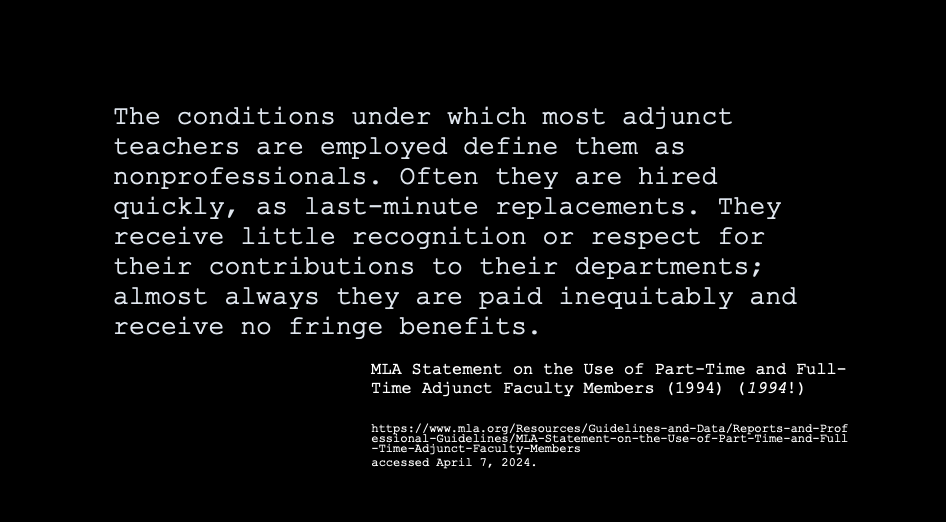
In the U.S., more than 75% of college teachers are off the tenure track.1 In immediate terms, this means that most of the people who are academic experts in their fields, who love to teach young adults, who represent the future of higher education in the U.S., have no future there at all. Many adjunct, contingent, non-tenure-track, non-permanent, affiliate, or contract faculty (however they’re designated, it means more or less the same thing—lack of stability, lower pay, often no health insurance or other benefits, including pension, access to sabbaticals/research leave/funding) live at or below the poverty line.2 Some college teachers, including graduate students—who are also college teachers without stability, permanency, institutional power, or prestige—are on food stamps.3 Harvard University’s endowment is at least $53 billion4 (with. a. b.) as of 2021. In 2023, the Harvard University Graduate Health Services sent out a flyer explaining how graduate students could sign up for Supplemental Nutrition Assistance Program, which you might know more familiarly as food stamps.5
These are the conditions under which contingent college teachers work. I worked under these conditions until very recently (I now have a job with a four-year contract, so some, though not all, of these conditions are mitigated). Contingent college teachers share these conditions with all kinds of workers: in food service, in grocery stores, in delivery vans and on delivery bicycles, in warehouses, doing gig labor to run errands or retrieve groceries, cleaning houses and offices and university buildings, serving food or preparing it, teaching young children. These are not the conditions of a rich life but of a bare one. They are not the conditions under which we can—and I mean all of us, any of us—really fulfill our human remit, which is to be creatively alive, to make worlds together, to dream, to change with and for each other.
How is this right?
How is this liberating?
How is this good for students?
How is this sustainable?
How does this serve us as humans, on this earth with other humans and non-humans?
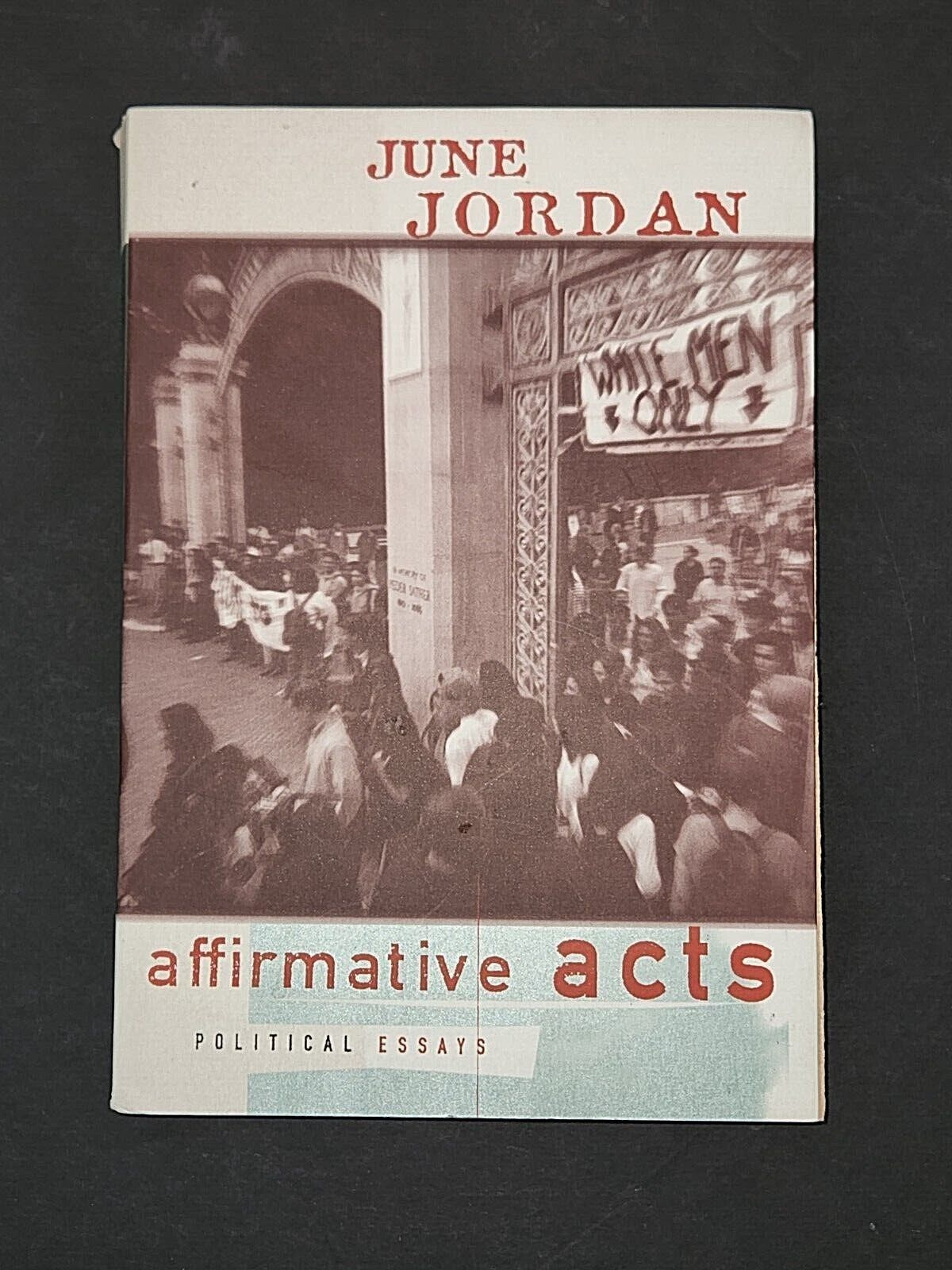
Recently I read June Jordan’s 1998 book Affirmative Acts. Jordan was a poet and teacher who lived and worked in the Bay Area of California in the 20th century. That sentence is insufficient; all I could write would be insufficient. You can read her work and read about her life, but here’s a glimpse: she founded Poetry for the People; she wrote without ceasing against and through the linked horrors of U.S. racism and U.S. militarism; she contributed what are to me two of the richestsources of thought on the U.S. poetic tradition. Her book Some of Us Did Not Die has for a decade been a touchstone for me as a thinker, be-er, writer. Anyway, this is to frame in the texture and tangent of Jordan’s thought for you, so you might understand why, in the context of what precarious work costs, I so needed to read her at this moment.
What Jordan reminded me of, in her essay called “The Revolution Now: Update on the Beloved Community”, is the liberating, motivating, joyful solidarity to be found among others, when we use our bodies together and for one another. It’s palpable in images of the sanitation workers’ strike in Memphis in 1968—the posture of the picketers!—and in images of contemporarystrikes. It’s there in the sound of songs where folk tradition and the radical care of the labor and antiracist movements are zipped together. And it’s there in Jordan’s description of her students’ decision to go on hunger strike in response to the 1996 majority vote on California Proposition 209. Jordan writes that “fasting emerged as the collective tactic of choice” when her students were confronted by the passage of 209. Parsing a student’s suggestion of a fast in the mode of Ghandi, Jordan goes on to say that if “evil surrounds you and abounds, and if you eschew violence, and if you, apparently, cannot persuade a majority of folks to vote against what’s wrong, then, perhaps, fasting to death is one appropriate response” (Jordan, 209).
Pause.
Oh—yes. The use of our bodies, alone and, ideally, together, is also an option when confronted with systems that degrade human life and human solidarity. These precious being-objects we also are.
In the essay, Jordan and her students go on to place themselves in a network of nonviolent, active resistance, a network of people—from Palestine to China to Nicaragua to the U.S. and beyond—who have used their bodies, put their bodies in harm’s way, in power’s way, to resist what defiles human life. To defend our shared existence. To stand, literally, with one’s own (and only) body, for one another. A week after the passage of Proposition 209, making affirmative action illegal in California, Jordan’s students “stopped eating […] stopped everything except the commitment of their bodies and their hearts and their minds to the resurrection of Affirmative Action in America” (211).
What beauty.
What beauty, to be with other people, “keep[ing] faith in what they believe is right” and “to have emerged, exhausted/sick/confused/but to have emerged/as a collective, in fact”(213).
I needed to be reminded, thank you June Jordan, thank you, her students, that our human bodies are real and can be used, together, against great harm. And that even one such body so acting can “embolden and inspire other[s]” (213). I needed to be reminded that knowing we are not the first, and not alone, can make us braver—for and with one another. And that, as Pete Seeger often said, this is work that takes, like singing does, hands and hearts and heads to do it; human beings to do it.
I don’t have a place to go, here at the end of this. Except that it’s easy, in the rushing overwhelm of trying to stay afloat, for me to forget that I’m not alone and that I have a lever—my own body, my own life, my hands and heart and head—against what I hate: casualization and precaritization and vocational awe used against workers, and capitalism and resource hoarding and the cheapening of what is most precious (our lives).
To know how long so many people have been working against this is a preventative treatment for despair. We are not alone. We are with one another: with all of the one-another of the others near us, who though they may be unlike us in some ways are also taxed by the precarity that makes our lives cheaper and a few people (and institutions) very very rich. June Jordan, and her students, remind me that it matters to know that history of people working, with their bodies, together, for liberation. It matters in deep ways, living ways. It, some days, keeps me alive.
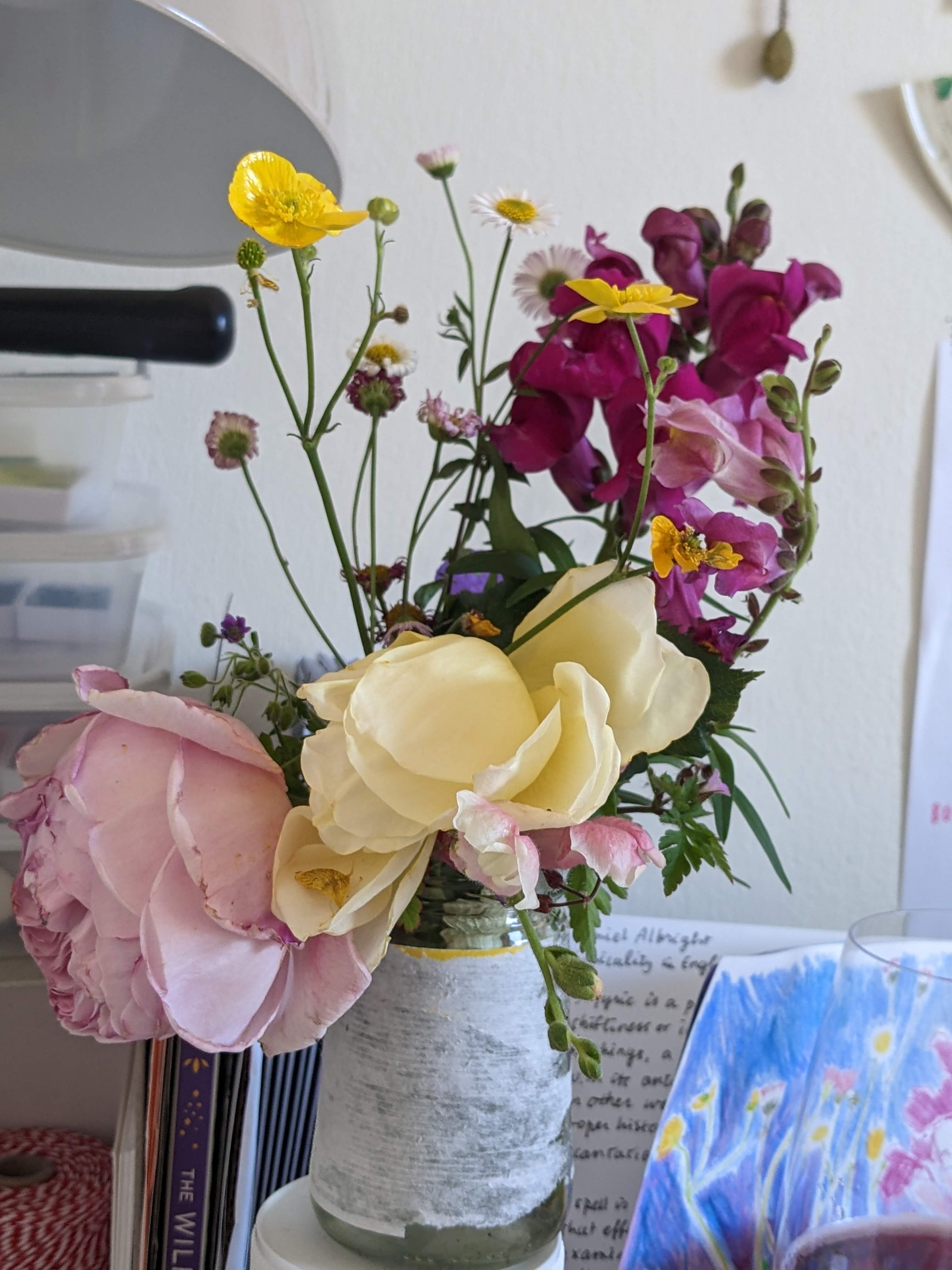
So. Against precarity; for one another; with roses cut from our gardens and loaves of bread we made, that always feed one more than we estimate they would.
Happy May Day for tomorrow. Thanks for being here.
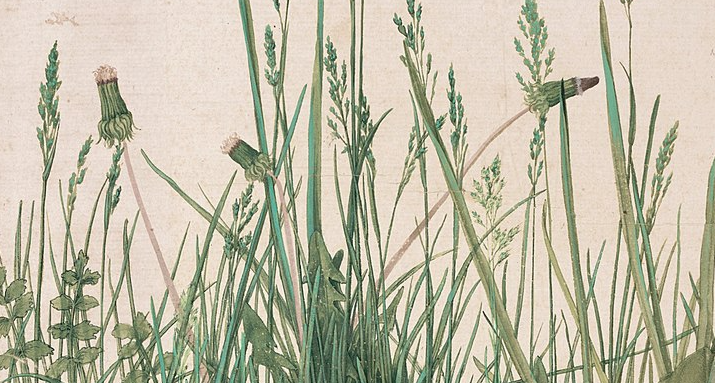
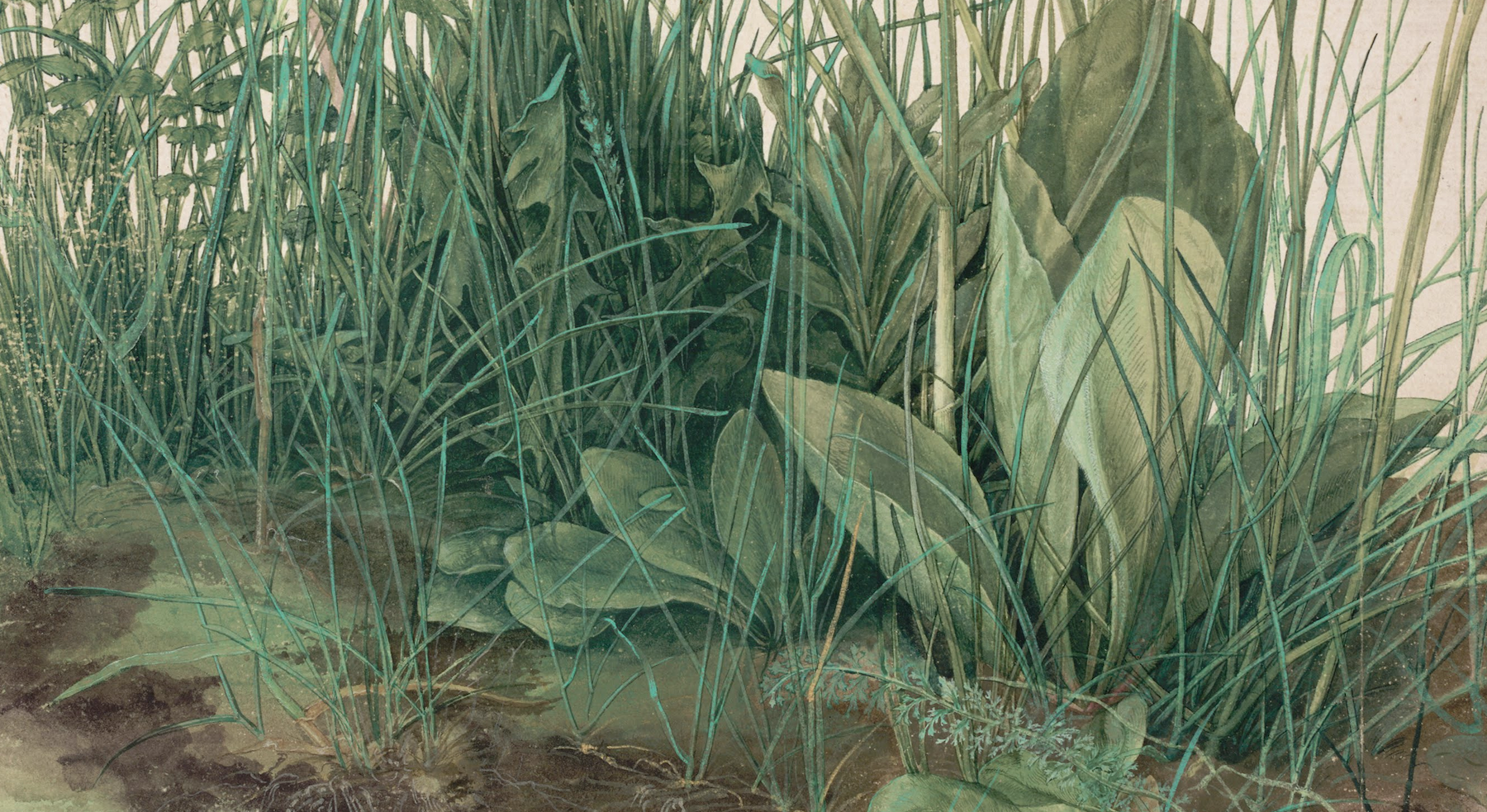
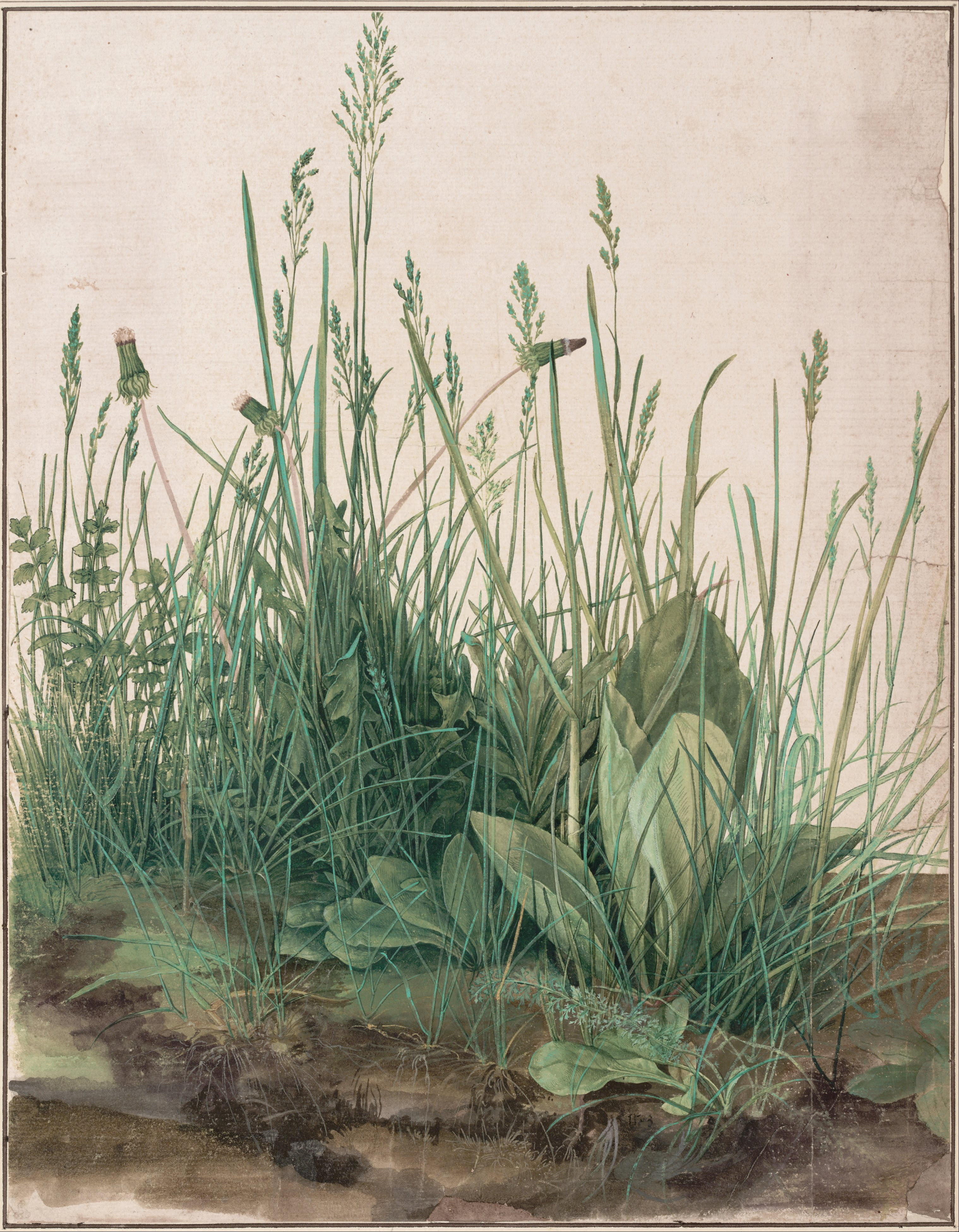
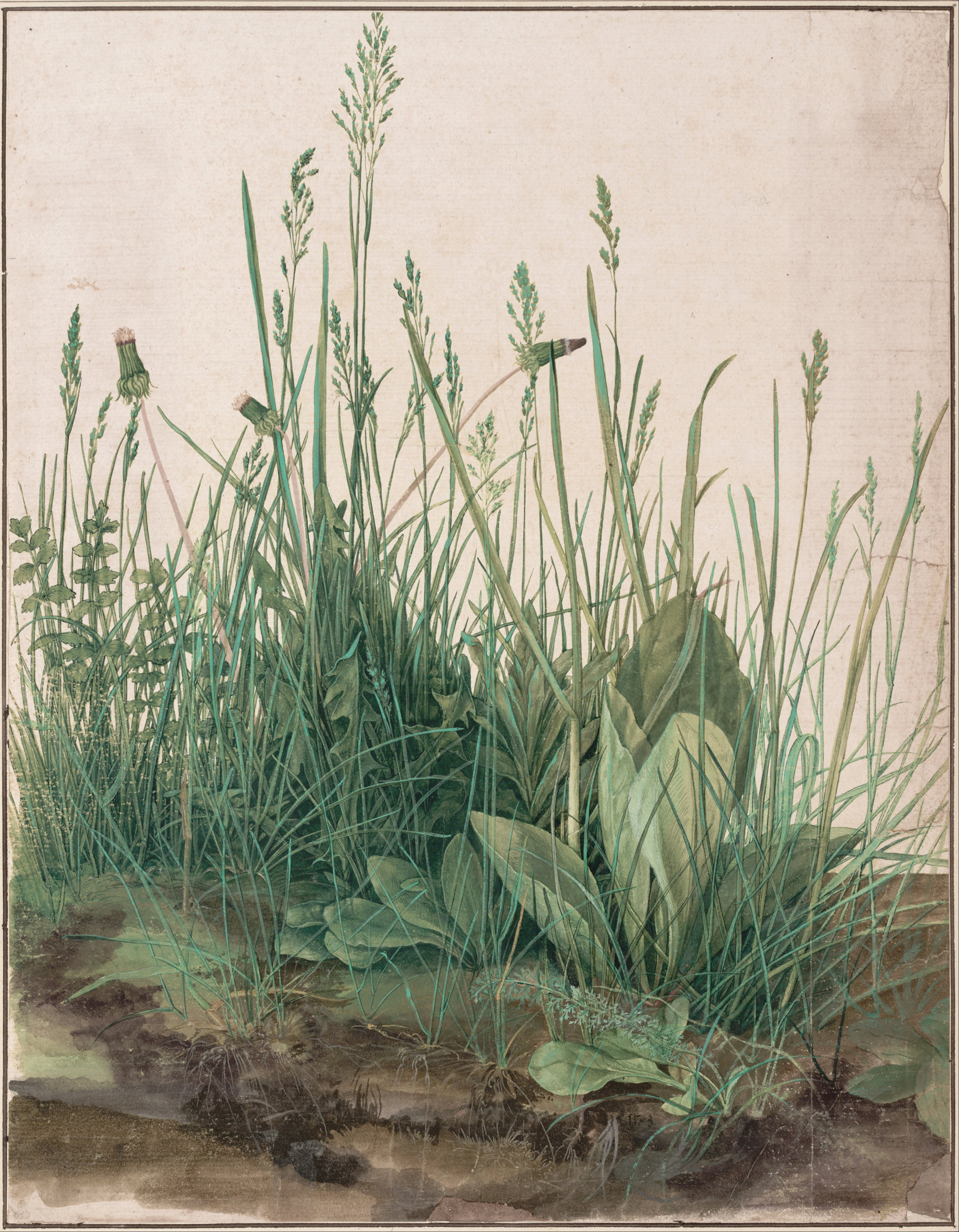
Two weeks ago I wrote about Dürer’s drawing/watercolor called The Great Piece of Turf . This is an image I love for how it reminds me that patient, careful observation and description will render evocative, resonant results (including the ‘result’ of a thoughtful life, made of the materials of living). I’m returning to it today to think about what it offers me as a writer—but (and) also as a human, being in the world with others and my own mind. There’s an exercise at the end. Both the essay and the exercise below are adapted and revised from a talk given as part of the Little Grassy Literary Festival at Southern Illinois University in 2022. You’ll need about thirty minutes for the exercise, if you choose to do it.
The Great Piece of Turf pushes me toward the world. It insists on the importance of sustained and slow attention to ordinary things that are immediately to hand, and it does this in a medium—watercolor—that takes time and yields a unique object. In some ways this seems to be unlike my everyday life, insofar as my everyday life appears to be made of repetitions: the same walks, the same chores, the ongoing relations with the people around me. In fact, though, the medium in which Dürer renders these ordinary plants reminds me that the dailyness of the life I live, sometimes without looking at it, is in fact the only thing. It is the basis of artmaking. That ordinariness and repetitiveness is what life is.
In my own life, I know that much conspires to turn my gaze inward, or awayward, into rumination or avoidance. I am often tired, as you may also be. I am living through a pandemic and the accelerating death-drive of the past fifteen years. The world is full of grief. The deaths of species, irrevocable changes to ecosystems, murder in slow motion and fast motion committed by the state, depersoning: all of these are painful, grievous. Avoidance is easy in the short term, and there is a lot out there that makes it easier. Some people can make a lot of money from my avoidance of pain, and those people have created many on-ramps to avoidance. The on-ramps are easy to access and addictive.
It takes discipline to turn back to the world and be with it patiently, as it is. I have to do it again and again, reminding myself as I do, in the doing, that there is nothing more important than this, nothing better than this I could be doing. It helps to have accompaniment in that. In The Great Piece of Turf I see the result of an artist’s sustained looking at the most insignificant beings in his environment, and I am reminded to do the same. Go. Look. Look at what’s at your feet or at your fingertips.
Many of the beings in Dürer’s drawing are known to me: I can identify them by their names. Their names may be so familiar that they may seem almost not to be a kind of meaning: or at least not the kind of meaning that the heavy head of the melancholic angel is. They do not point toward something hidden—accessed through whatever locked gate and with whatever obscure key. They point to themselves, each other, and us. They say, we are here. And you are, too.
Knowing my weeds is about knowing the ground I stand on even as it shifts: discerning first principles, finding form and sensing what it can do to me, practicing careful attention to what is rather than what I would prefer or project there to be, being grounded in the places where I live. Knowing my weeds is also a commitment to going out—away from the screen—to encounter that world-as-it-is. This kind of knowing is the opposite of the avoidance of pain. It sometimes brings me into contact with cutting losses. But those losses would be there in any case. I want to be alive to them, and to the beauty and ordinariness of my life, and these lives.
Dürer’s weeds—the time they represent (they must have taken so many hours of looking) as well as the living weeds his drawn ones index—offer me a chance to rotate my perspective as well as to rotate the object of my perception. They give me questions rather than pronouncements, and teach me to ask how I know what I know. Often the answer is, I know what I know by hours of looking at and being-with others. So I had better do that with discernment. I had better learn to see my seeing, even of the most everyday things. Especially of those—because the root, in my experience, of being able to dispense with something (of being able not to mourn its loss) is to stop seeing it as what is in fact is: a complex phenomenon, always already involved in my life. Nothing is beneath notice. Everything touches.
In this transient world, the practice of attending to what is might be a way to spend one’s entire life. (Isn’t that science, music, art, poetry, philosophy?) Sustained, patient, careful attention reveals the complexity of the world—a complexity that is always further unfolding. Dürer’s image of weeds reminds me that what is most ordinary is worth caring about. In fact, the reverence for ordinary life ends up meaning a reverence for all the things I encounter in those repetitive motions of walk, work, housekeeping, (broad) family life. This echoes out into how I use my time, how I (try to) conduct myself with other people, how I act in public and private, how I think about commerce and garbage and use and ownership.
Dürer’s image also reminds me that whatever I reverence will show up in my work. My ideas, beliefs, values show up in my work and through my perceptions (the how and the what). This means that I don’t need to worry about the ‘artful’ subject: I don’t need to try to find something that is worth making art “about”. I don’t need to shift away from the ‘minor’ to find the ‘major’. I need—and this is the hardest work in part because it doesn’t announce itself as important (and much in my world conspires to paint it as unimportant)—to pay attention to what is here, with me, now, to try to see it through my hands, eyes, brain, body. I need to do this, and I need to repeat it over and over, for my whole life.
In his attention to what is small, ordinary, common, and easily passed by, Dürer shows me the value he must have assigned to exactly such ordinary things as weeds and grasses. That he took care to render them with skill and imagination shows me that these plants taught him how to see them; this in turn shows me his willingness to be humble, to be close to the ground, and to learn from beings who were, in the cosmology of his time and place, certainly less than human beings. His care with these everyday plants shows me how the subject of artmaking is always already at hand, and reminds us that our attention to exactly what is at hand—be that an array of plants or the text of a Supreme Court decision—will remind us that here, yes, even here is the place to stop, look, and discern what it is that we are perceiving. We do not have to go far away for meaning. We can look at the world for a long time and try to understand what we are perceiving. We can make art—or lives—from that.
The following is an exercise. You’ll need about thirty minutes for it. In the end, the guidelines are less important than what you do with it; you can’t do it wrong.
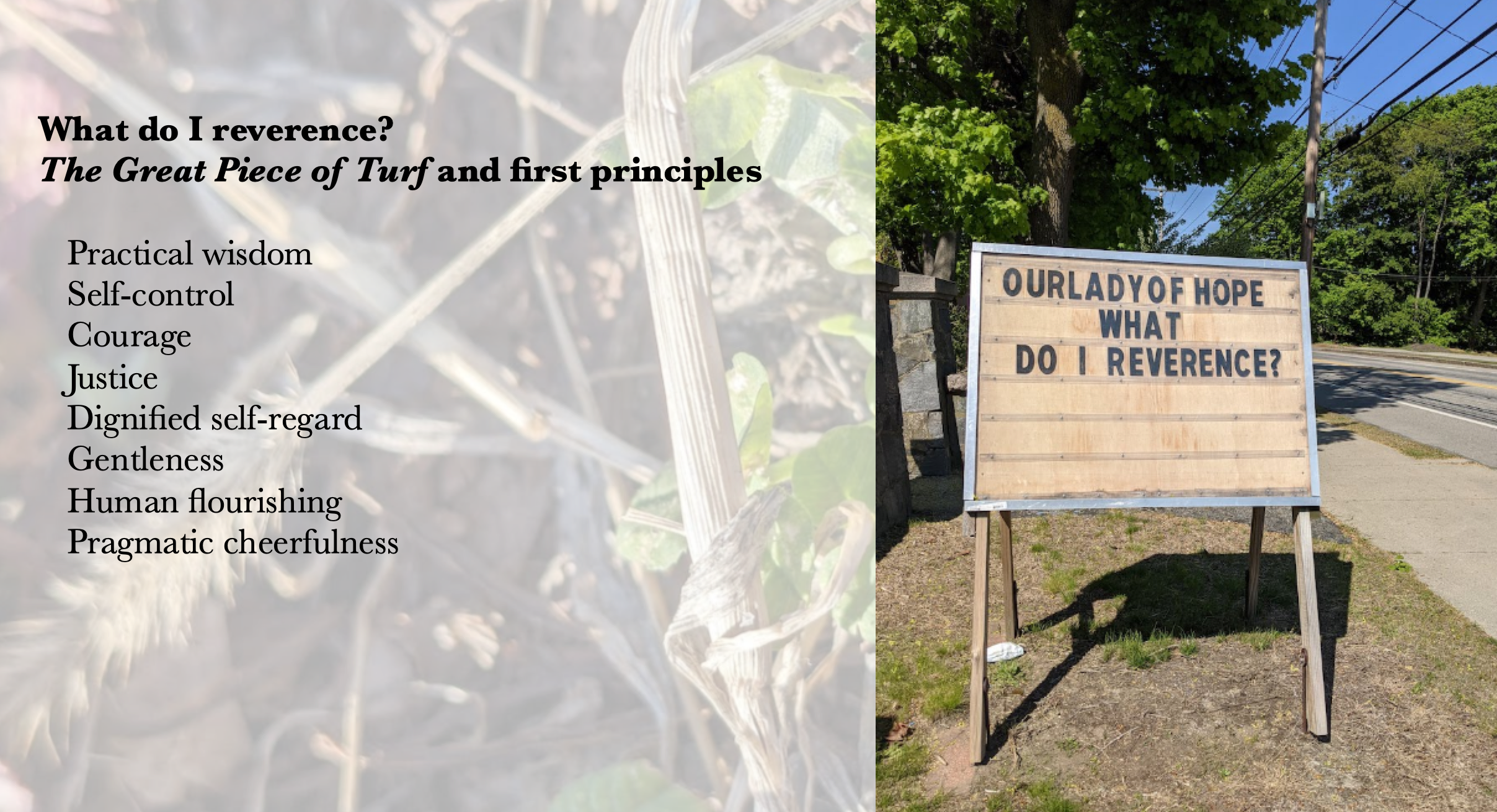
This is an exercise in sustained attention to some value you hold dear and simultaneous sustained attention to a very ordinary, probably not very lofty, fellow being. It is the aim of this exercise to cause an interlapping between the way you feel when you think about an important value and the fact/process of looking at a very familiar plant.
Set a timer for about eight minutes and make a list. Try to be as clear and precise as you can, and once you have your list of values or virtues—this is the hard part—try to discern the difference between what you actually value, in action, and what you aspire to value. When you come across some aspirational values, put those in a separate list. You can revisit them in the future.
Choose one value or virtue that is particularly important to you and note that.
Then, with your virtue/value in mind, take your phone and go outside (you may want to use an app like iNaturalist to identify plants). Set a timer for ten minutes and get close to the ground. Don’t worry if this feels a bit silly. No one will care, no one is looking. Walk around if you can. You need to find those tiniest plants. The weeds and wildflowers. Things that you might pass right by, even on foot. Look in the cracks, near walls, between the curb and the grass…. Take photographs of each plant. When the timer rings, return to where you can write.
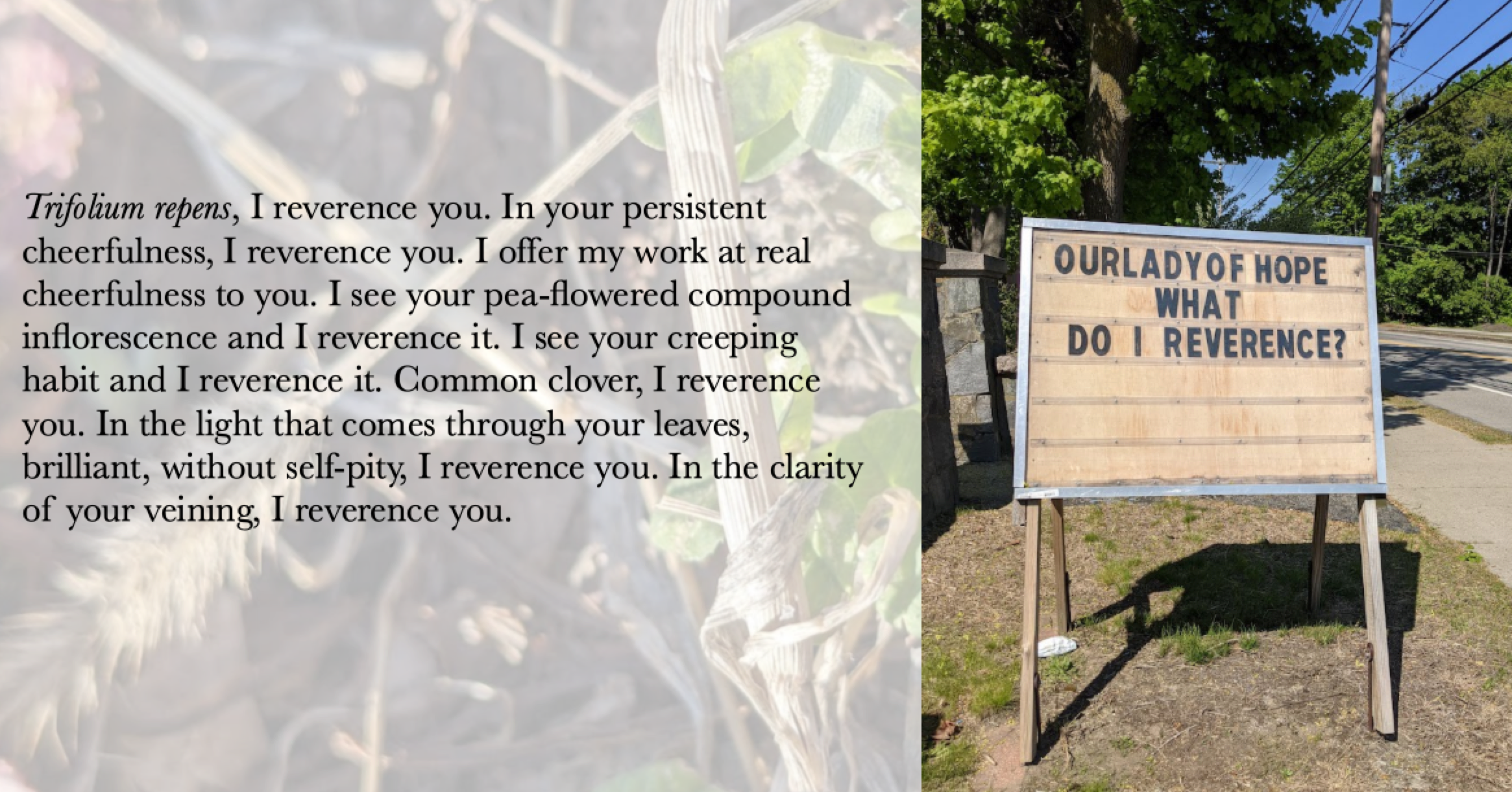
Set a timer for ten minutes. Choose one or two specimens you photographed and identify them by name(s). Beginning with any names you know the plant by, address it; for example, [Plant], I reverence you. I offer you my [value]. Give the plant(s) your observational care. Describe component parts, their relations, their shapes, their colors. Note size, leaf and flower forms. Identify the place where the plant was found and the time of day. At each moment of observation, offer the plant reverence and rededicate your virtue to it. Allow yourself to pay attention to the plant in as many ways as possible, connecting the positive virtue or value you identified with the act of looking at the plant. Continue without stopping, repeating phrases as desired, until the time has ended.
look at the nearbyest thing, and look at it again and again
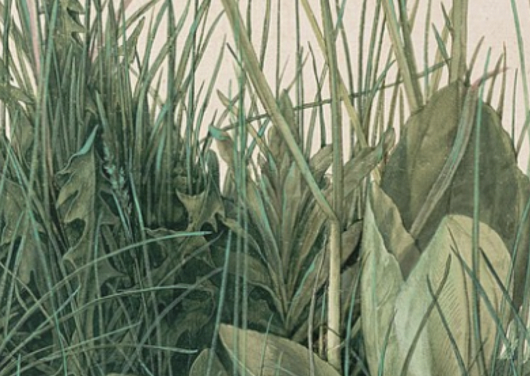
In 1503 a man in Nuremburg, Germany, made a watercolor of a patch of dirt and the ordinary plants growing there. This is The Great Piece of Turf and he was Albrecht Dürer, and the plants are still legible: great plantain, and dandelion, and burnet, and germander speedwell, and yarrow, and smooth meadow-grass, among others. Those plants can be found right there in the front yard or on the strip of median on a busy road. If you’re in the northern hemisphere, you’re probably within a dozen yards of one of them now.
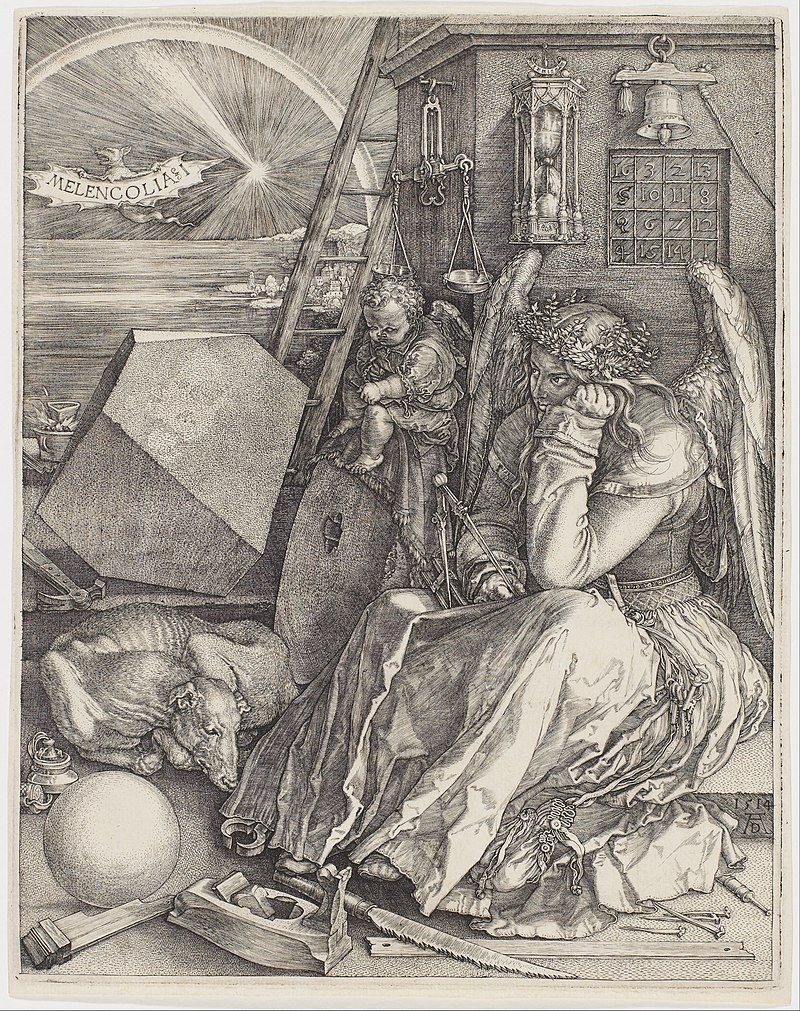
I can’t remember when I first came across this image of weeds and dirt. It was probably around the same time as I was introduced to Dürer’s more famous engraving called Melencolia I, so somewhere between 2004 and 2006. I’m going to loop away from the weeds and the soil in the image above for a while, and I’ll come back to them at the end. But in order to think about The Great Piece of Turf, I find I have to think about this other image, too. And part of what I want to think about is the difference between how Melencolia I was made, and how The Great Piece of Turf was, which will take a little time. So onwards with this looping-out, and eventually we will loop back.
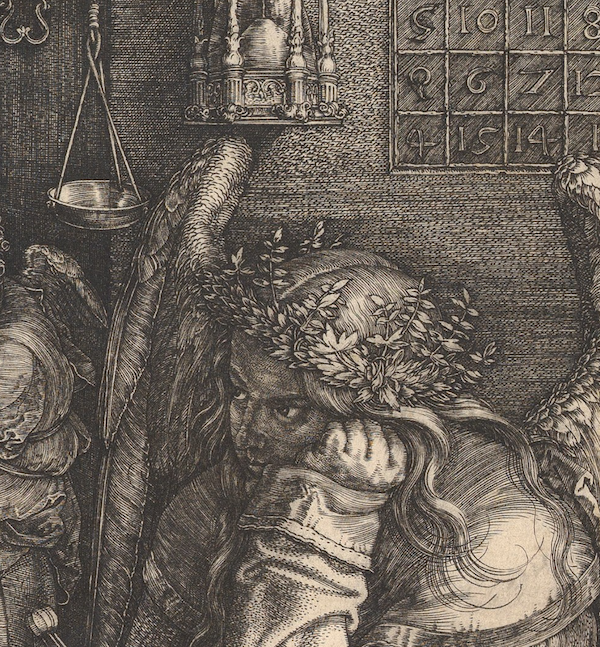
This engraving, in which a more-or-less human being (with wings and a wreath-crown and a grumpy? pensive? expression) is surrounded by a cherub, a sheep, tools, and objects of mysterious meaning and importance, is maybe better known than The Great Piece of Turf. The content of the image suggests its seriousness and importance. Knowledge and power, death and birth, religion and science. It’s allusive, referential. It’s coded—it lends itself to being read as a cipher—and it includes actual codes. Everything about the visual content of this image tells a story of in-group knowledge, exclusivity, control.
Engraving is skilled work. (The Met Museum has a great explanation, with brief video and lots of images, of how engraving works.) In Dürer’s time, it’s one of the ways images are disseminated widely: you can pull hundreds of prints using one plate. This is a revolutionary change in artmaking and also in communication in Europe, and it happens over the same period that books and education and literacy begin to change. Engravings travel. They are inherently multiple; the only ‘original’, the only thing the master-artist’s (or engraver’s, if a technician makes the plate from or after an existing drawing or painting) hand touches, is the copper plate. Made to move, and made to be seen in many situations, the engraving (the print in general) does not have the unique status of the painting.
This is something I love about prints—they refuse association with The Master (even if made by one, the hand that drew touched plate, not paper; often, prints were made by workers in studios rather than The Artist themself). Prints refuse singularity. They double and triple themselves and won’t play the game of pretending to be rare when they—when images, in fact—are not rare but shared, a human thing to make.
An economic consequence of the way prints are made is that they are generally less expensive than other kinds of art objects. I say generally, because I’m sure you could exceptions, but really I mean pretty uniformly. There are more prints than there are unique art objects like paintings; supply up, demand down, prices down. Even without money changing hands, the simple tendency of prints to proliferate (visit any printmaker’s studio to find out what I mean) means they don’t feel as precious. I can have one and you can, too.
Dürer made Melencolia I in a medium that allowed for mass reproduction, at a time when the mass reproduction of images and their distribution was still relatively new in Europe. This image could travel. It brought its strangeness and mystery with it into every room it entered. Its symbols were distributed, no longer closed away in only a few rooms. And now it is here, in your phone or on your laptop, between your hands. Mystery, strangeness—qualities of precious things. But the printed image brings these things out of solitude and offers them to many viewers. They are no longer reserved but shared.
Now I can begin to loop back again, to that watercolor painting of weeds and grasses. Those common plants we hold in common, painted about five hundred years ago and still conserved with care in the cool rooms of a museum.
I like to look at Melencolia I next to the watercolor picture of weeds and grasses. I like the difference between the moody, poetic, cryptic, occult subject of the engraving and the open, direct, immediate, familiar subject of the watercolor, and I like this especially because the difference in subject echoes a difference in medium, and a tension between image subject and the meaning in the media. Subject of Melencolia I: esoteric, lofty, coded. Medium: available, dispersed, mobile, multiple. Subject of The Great Piece of Turf: ordinary, familiar, proliferant. Medium: technically difficult, produces a unique work.
Both images are meaningful to me. Both are masterworks. Both are important in the history of European art. But there is a difference in what these two images do to me as a viewer: When I look at the watercolor of plants and ground, I don’t feel as if I’m looking through the picture toward “real” meaning, a hidden meaning that comes through symbolic or narrative meanings imbuing certain kinds of dress, certain objects. I feel like I’m looking at some plants, in part because I often do look at plants like these. I feel like I’m being asked to realize that I have seen these plants, and to realize that these plants are something that can be looked at.
In our time, we see images of all kinds reproduced and changed and moved and reproduced again. But this watercolor is an object that could not have been reproduced in Dürer’s time (except by making an engraving after it: still not the object, but a representation of it). Even in our time, there is only one original, living in a museum in Vienna. I imagine it is behind glass, if on display, as drawings almost always are when in museums. The glass says precious. The character of painting—to make an image be singular—also says, in the language of the contemporary fine art economy, precious, though the insurance value of this work is not what matters to me. I don’t even think about that kind of precious when I look at this image.
There is only one of this image. It cannot reproduce itself. The original remains original.And yet it is not the image of a mysterious, extraordinary being surrounded by the tools of erudition and skill. It is an image of beings from our daily lives. So—precious what? The character of the medium discloses the dignity and importance and meaning of the subject: these ordinary plants are precious.
Precious weeds, precious grasses, precious dirt. Precious looking and precious record of having looked. Dürer’s Great Piece of Turf is one of my favorite pictures in the world, because it looks so carefully at something so ordinary. This picture reminds me that very little separates artists’ looking from ordinary looking: just time, attention, repetition, and care. And all of those, like plants, only require cultivation to come into flower. The sources of artmaking aren’t far away: they are right here. All we have to do is look, and look again, at what is nearby—often so nearby as to be invisible to us. Look again. And again.
In two weeks I’ll return to this image and think about it again. I’ll also record an exercise for writing-thinking-being that arises from this image. Thank you for reading—and being—here.
![[while walking]](https://bewilderment.ohbara.com/wp-content/uploads/2023/06/Screenshot-2026-03-15-at-09.33.39.png)
!["3.4 What is the extent of water consumption by Chat GPT, and how does it compare to other AI models? Chat GPT, the OpenAI language model, has been making headlines due to its impressive capabilities in natural language processing and machine learning. However, it has also come under scrutiny for its water consumption, and questions have been raised about the extent of its water use compared to other AI models. According to a report, Chat GPT consumes approximately 500 ml of fresh, clean water every twenty to fifty questions. Although it may not appear to be a large[27] volume of water each time, the fact that Chat GPT has over 100 million users monthly and is consistently responding to queries and producing answers accumulates quickly. It is estimated that during its training, Chat GPT consumed about 700,000 liters of water, which is equivalent to the amount[15] of water used by an average American household in about 20 years". Source linked in caption.](https://substack-post-media.s3.amazonaws.com/public/images/60f8ad2e-52d8-44a6-b3c7-849b943cae54_1912x1228.png)
![[while walking]](https://bewilderment.ohbara.com/wp-content/uploads/2023/05/Screenshot-2026-03-15-at-09.36.09.png)
![[while washing the dishes]](https://bewilderment.ohbara.com/wp-content/uploads/2023/05/Screenshot-2026-03-15-at-09.38.08.png)

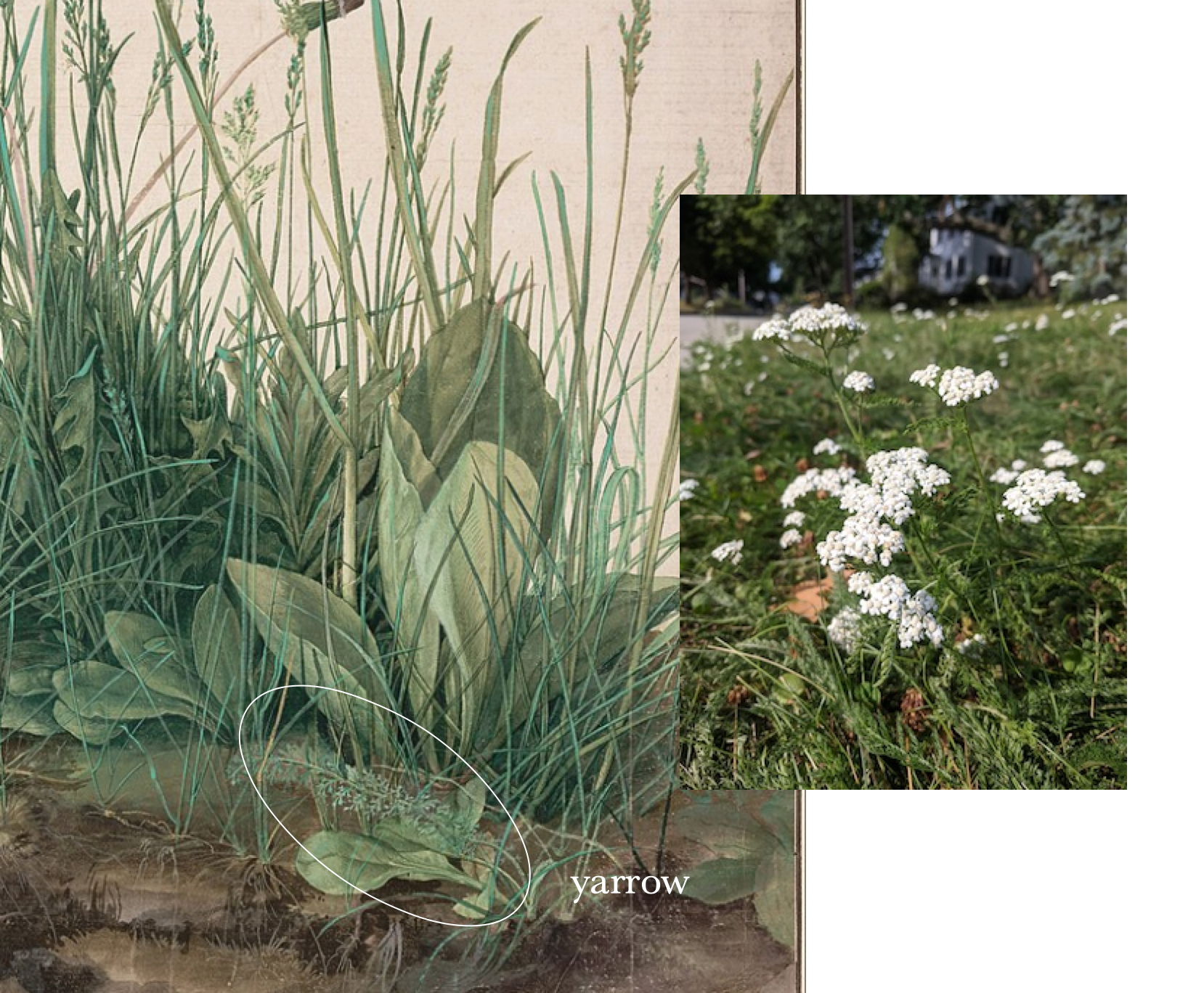
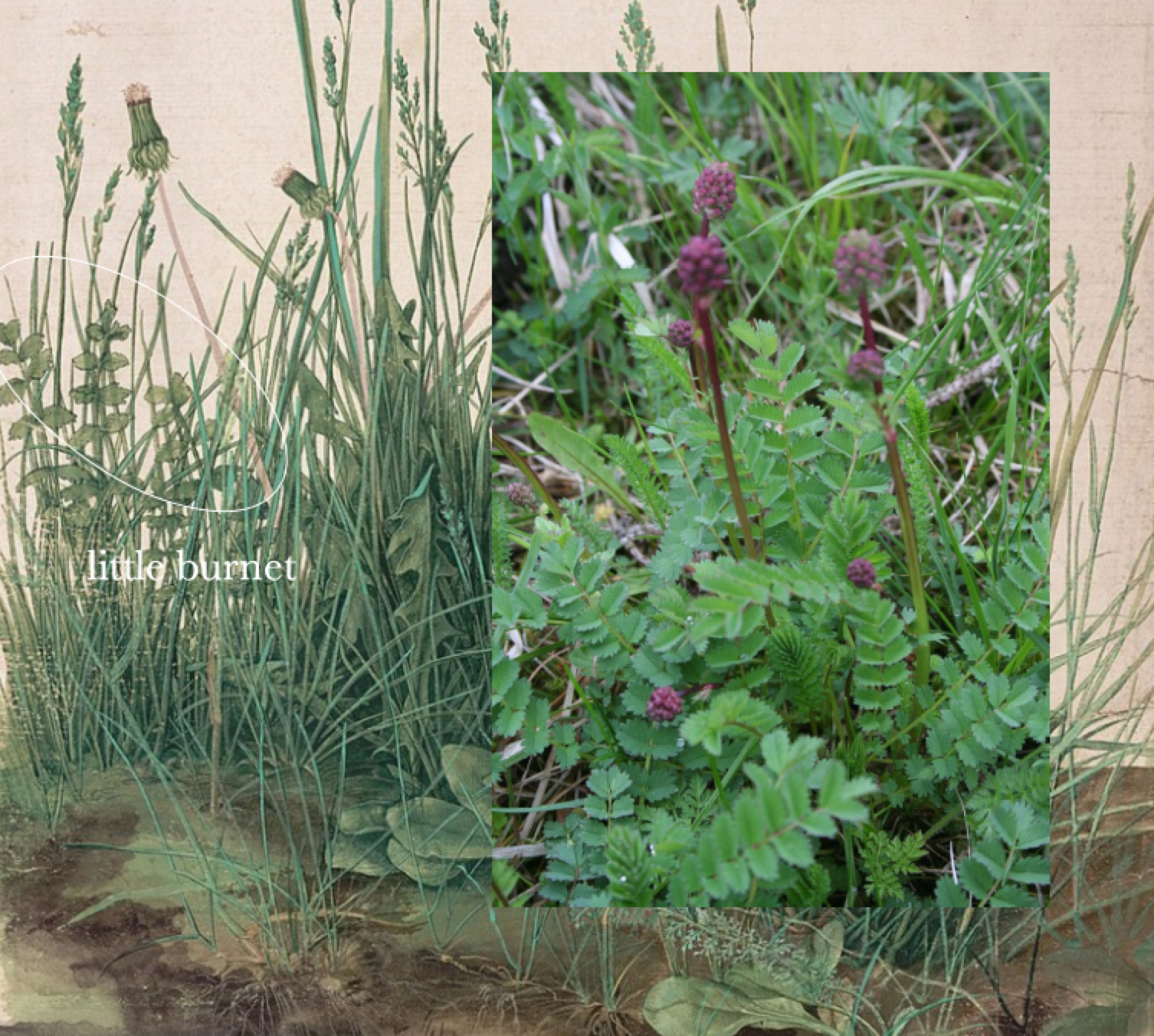
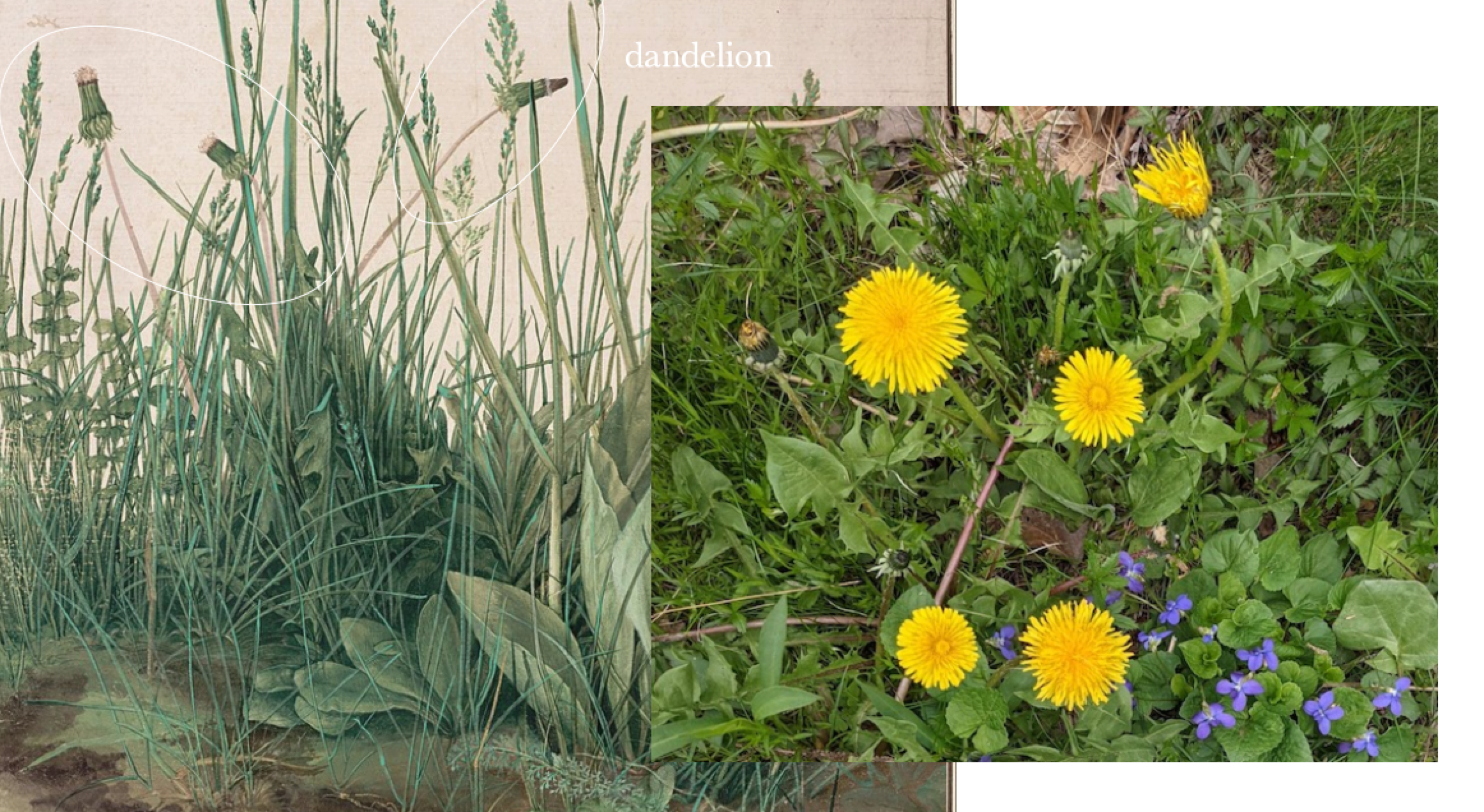
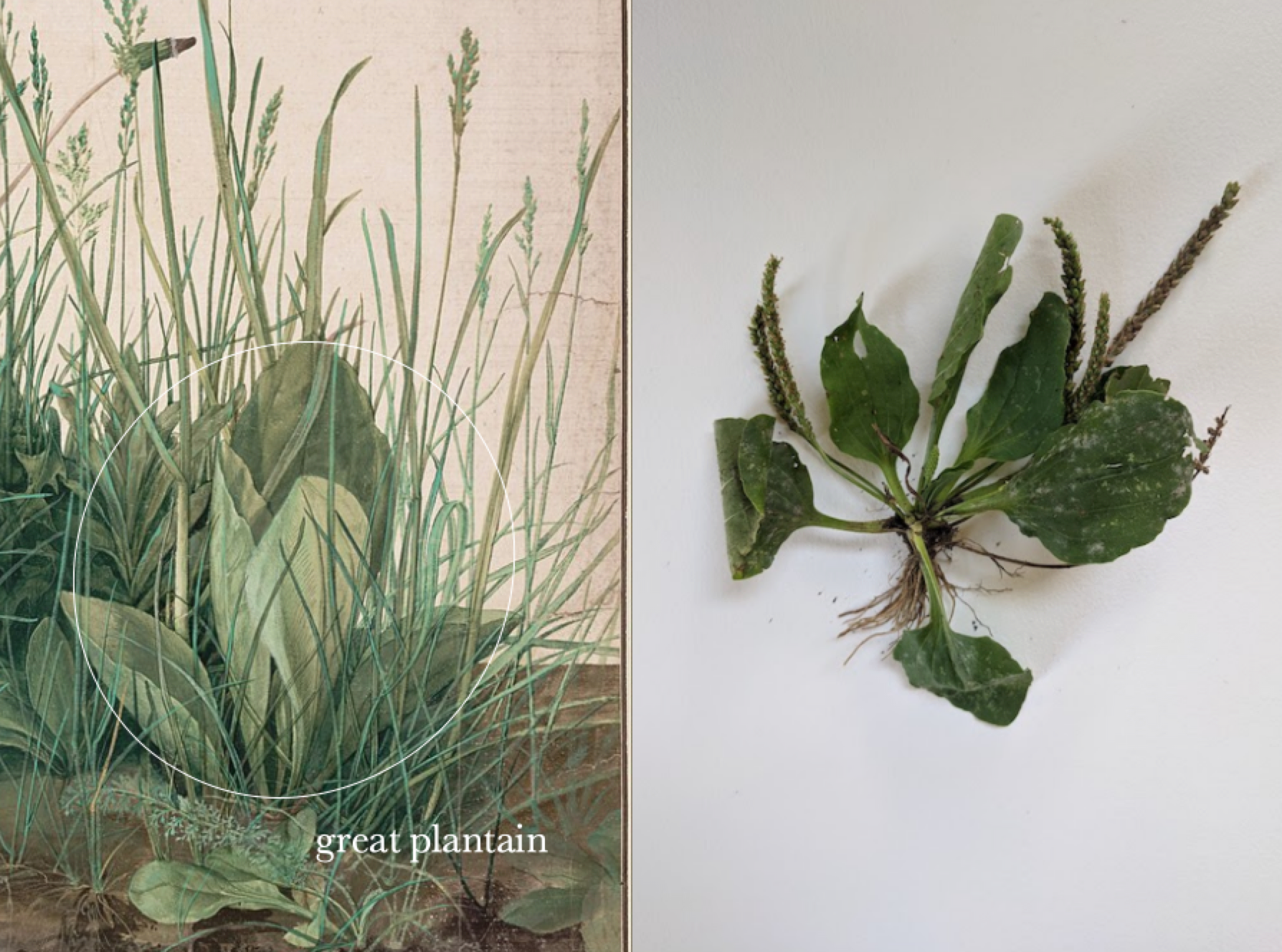
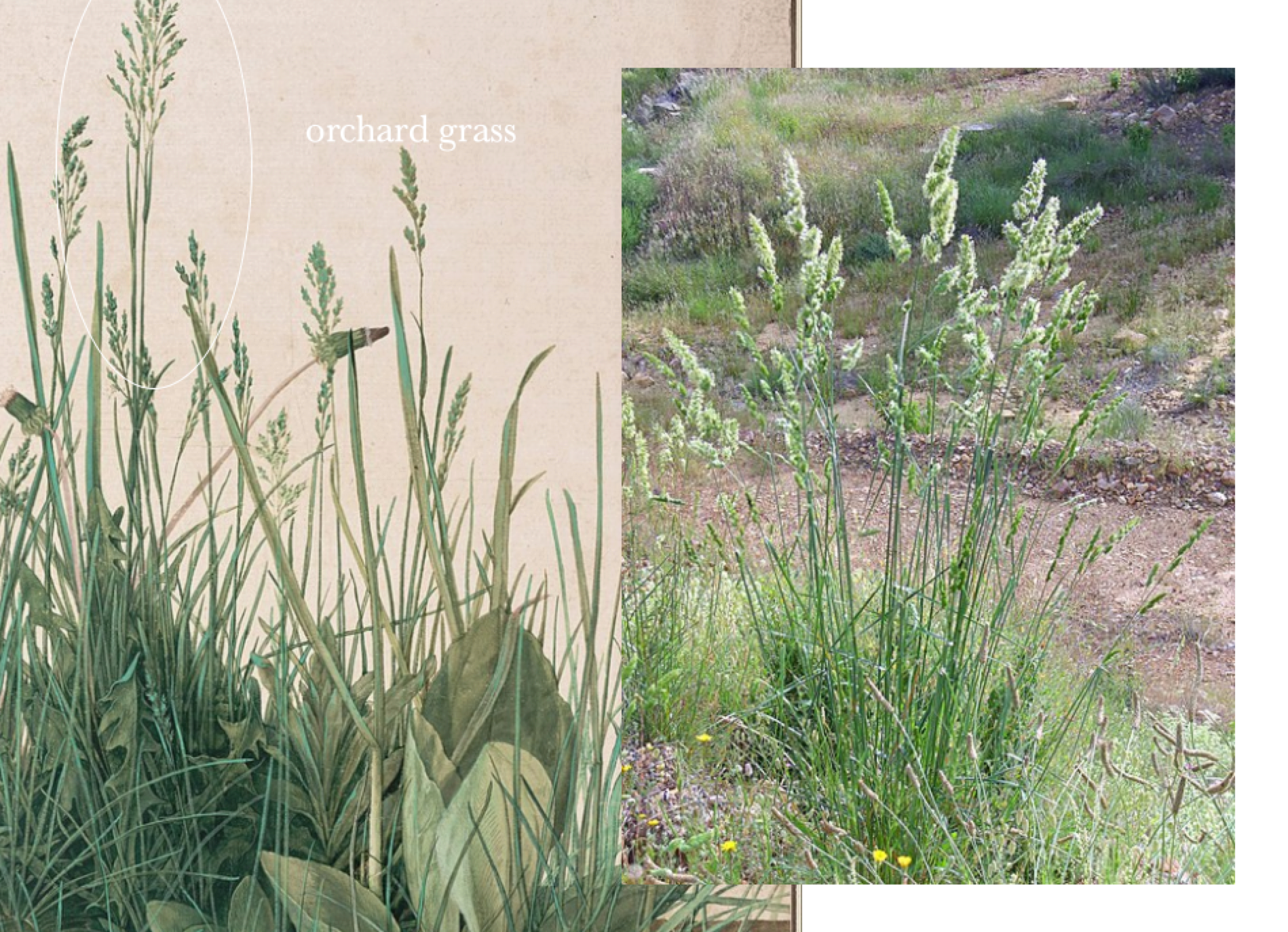
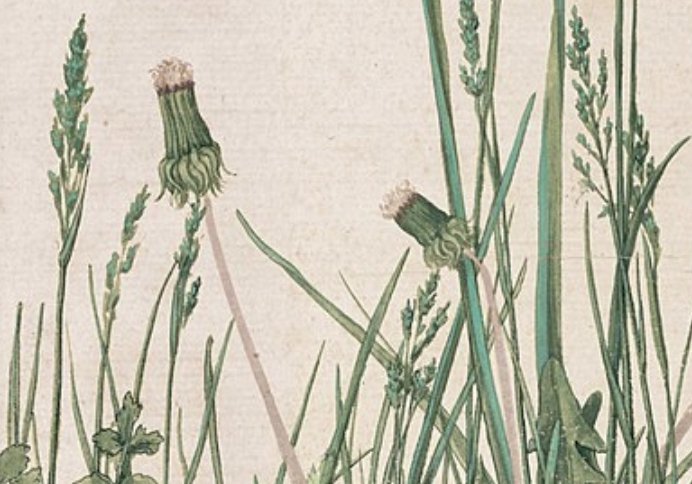
![From the Wikipedia article on this image: "The watercolour shows a large piece of turf and little else. The various plants can be identified as cock's-foot, creeping bent, smooth meadow-grass, daisy, dandelion, germander speedwell, greater plantain, hound's-tongue and yarrow.[5] The painting shows a great level of realism in its portrayal of natural objects.[6] Some of the roots have been stripped of earth to be displayed clearly to the spectator. The depiction of roots is something that can also be found in other of Dürer's works, such as Knight, Death, and the Devil (1513).[7] The vegetation comes to an end on the right side of the panel, while on the left it seems to continue on indefinitely. The background is left blank, and on the right can even be seen a clear line where the vegetation ends."](https://substack-post-media.s3.amazonaws.com/public/images/f087fefc-7892-4dce-a427-a8cb0d5889e8_1024x1315.jpeg)