Author: bewilderment

  • [while walking]

    [while walking]

    in the thin part of the year

    Good morning—

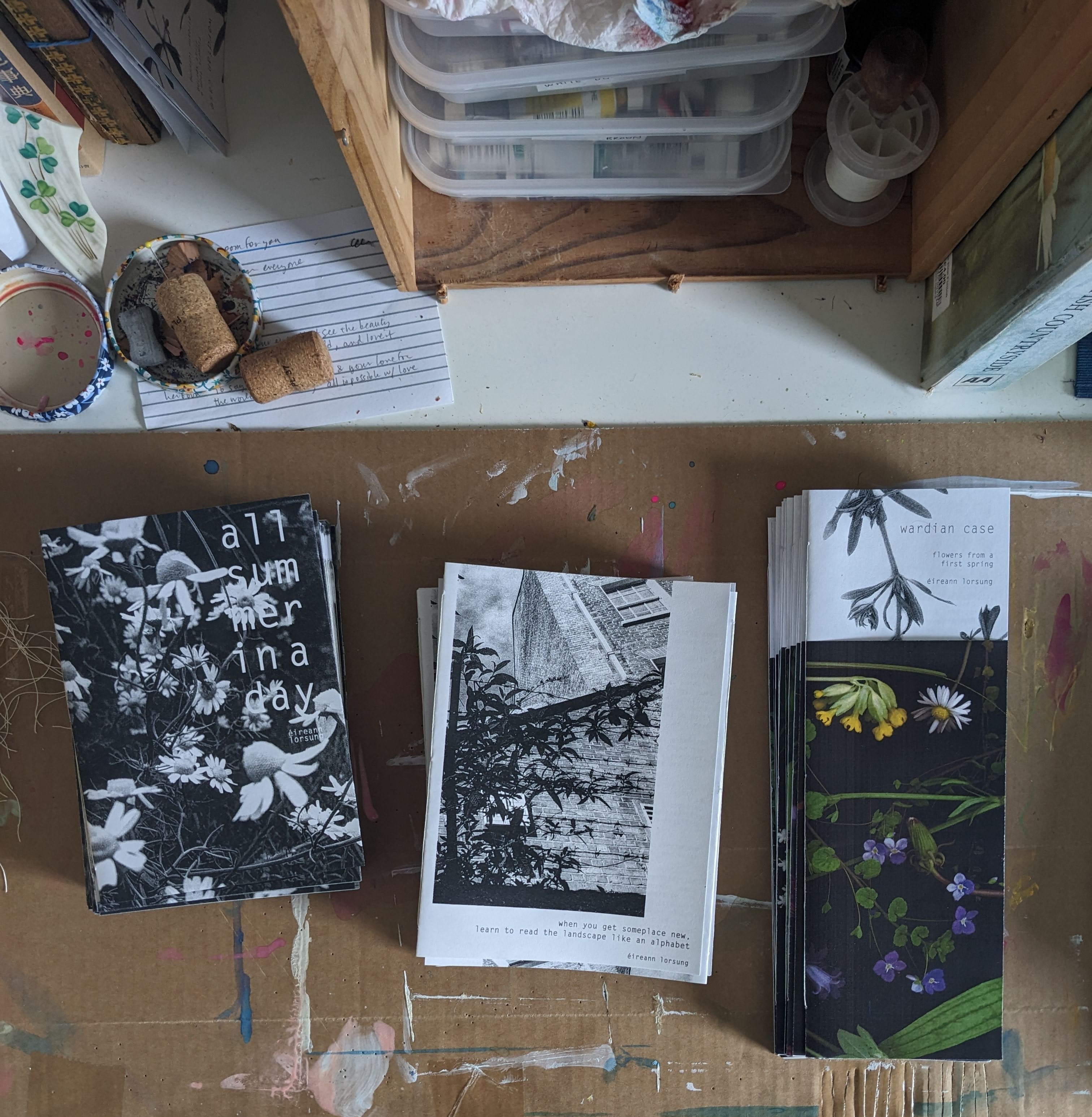
    On November 19 at 2 p.m. US Eastern I will give the first of two lectures as the Annulet Inaugural Linkages Lecturer. I will give a talk entitled “When you get someplace new, learn to read the landscape like an alphabet”. This talk will be broadcast online, for free. To register, please click here.

    On November 21, I will read and talk with Majed Mujed and Hua Xi as part of the Trinity College Literature & Resistance Series, in the Trinity Long Room Hub. You can book a place here (in-person only).

    On December 10 at 2 p.m. US Eastern I will give the second of the Linkages Lectures. I will give a talk entitled “On the line”. This talk will be broadcast online, for free. To register, please click here.

    Once these are done, I am never doing anything in public again. For at least a month. But I’m sure by the start of the new year I will be full of vim again. If you’d like to have me to read or speak at your university, school, class or organization in 2024, please drop me a line.
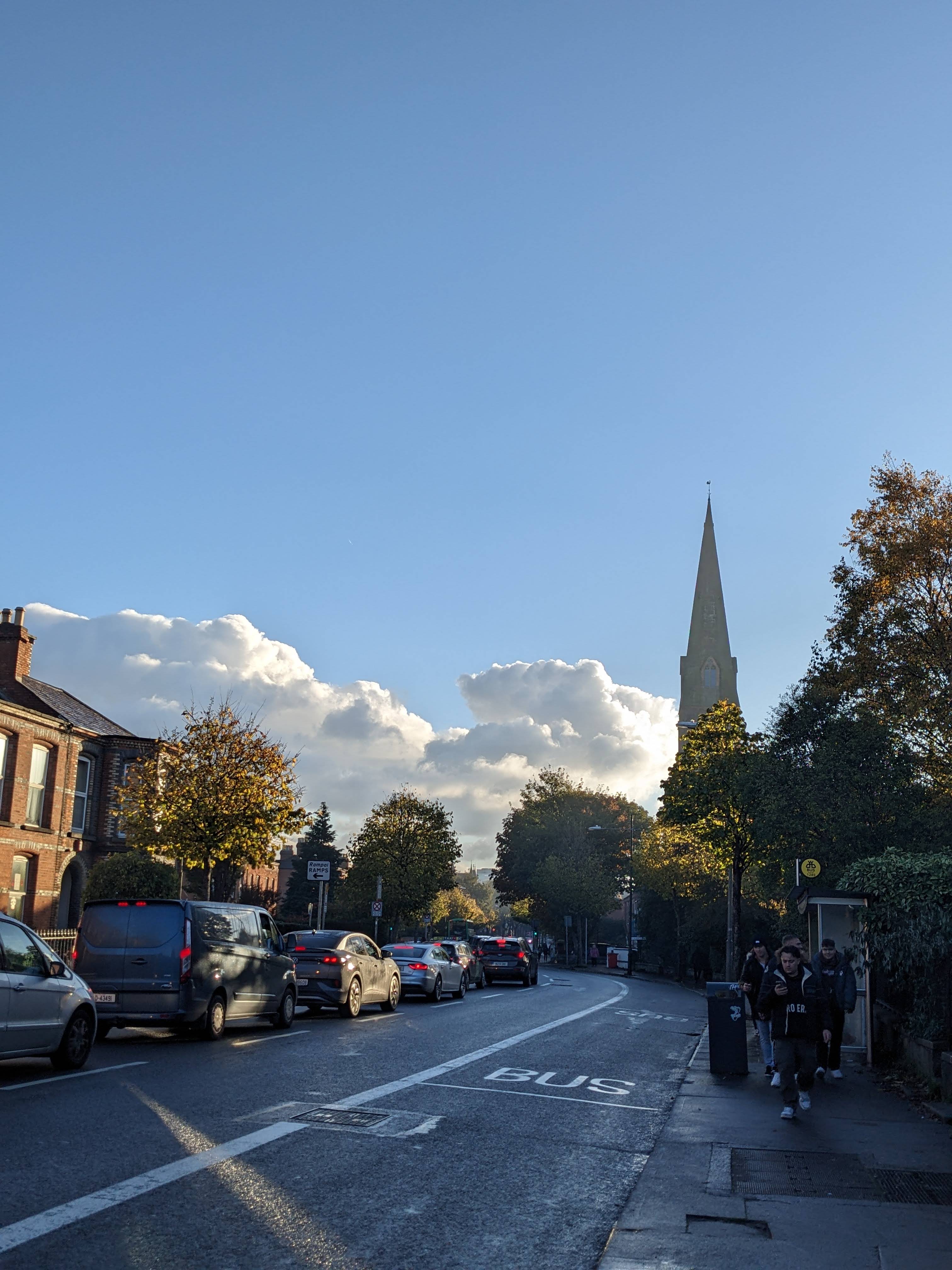

    One day, the light changed and it was: late fall. Or early winter. In the mornings the air is damp and cutting. In our apartment, the windows are covered so thickly in condensation that if it is overcast, the condensation stays all day. Even opening the windows doesn’t always get them to dry out, so our apartment is damp and cold, even with the heat on. A student returns a book they borrowed and it is stippled with lavender mold. My room is so damp, they tell me, and I can see they are ashamed to return the book in this condition, but I’m thinking: what about your lungs? What about your bedding? Spray some vinegar on the book and it will be fine, but bronchioles are a little more delicate.

    I look across the back yard to our landlord’s house, and notice that his windows never have condensation on them. Then I take a squeegee and open the window and carefully wipe the water off the window, into the cold outside air.
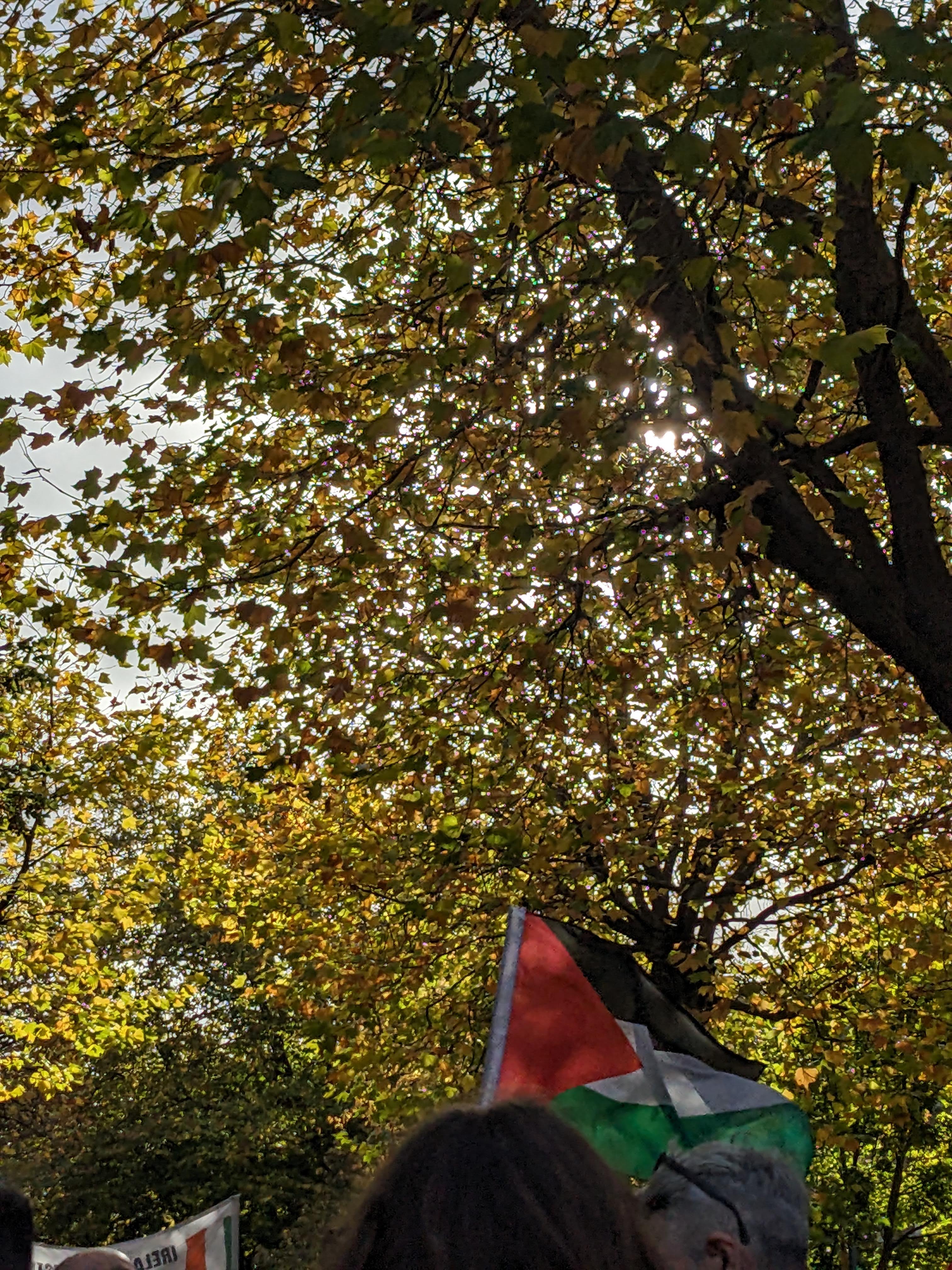
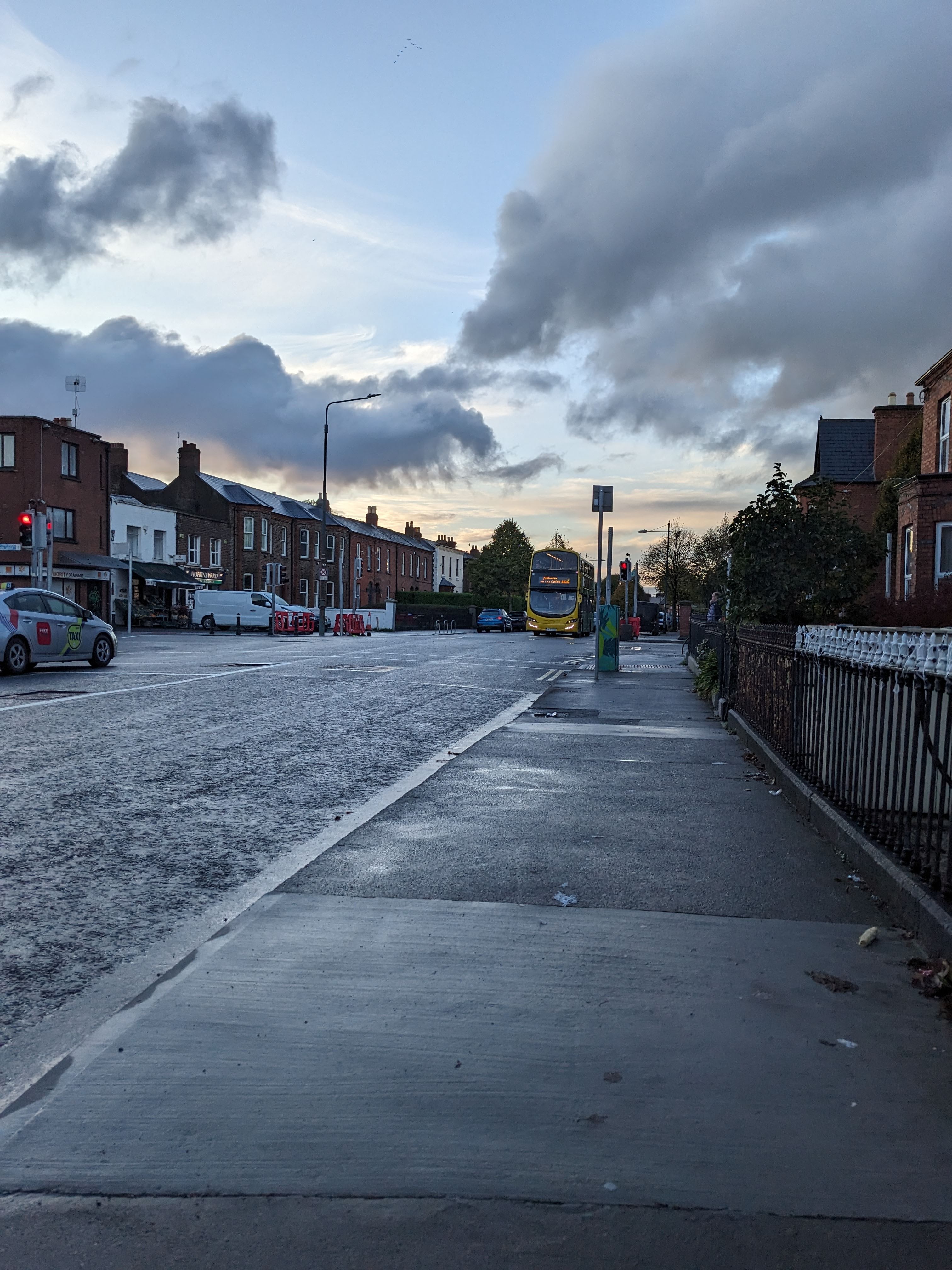
    Despite the sharpness of the damp-cold, on days when the sun is out it’s easy to get overheated. I bike across town to meet hundreds of other people in front of embassies and monuments. When I leave the house I’m wearing two sweaters, long underwear, a jacket, a scarf, a hat, mittens. When I arrive on foot, my bike locked up elsewhere, I have unzipped my jacket, removed my hat and scarf. The sun of early November comes through the golden leaves of sycamores and hazels, and through the mist rising from asphalt in this city of aggressive drivers and tall yellow buses, this city guided along its north and south by straight-edged canals. In cities where the buses are running and the ordinary chores remain to be done—the groceries, the laundry, the dishes—all over the world, there have been people meeting in front of monuments, in front of embassies, in the cool damp air.

    As we walk I hear Sister Rosetta Sharpe playing, singing | hear Mahalia Jackson singing: this is the tempo of this kind of walk, to me. We are here for one another’s liberation; we are here for refusal (a refusal we can only do together). What a joy to be able to refuse together, what a tender obligation. Lay down my sword and shield, down by the embassy, down by the armaments manufacturer, down by the multinational corporation benefiting from indentured labor, down by the university, down by the side of the canal, with you. Under the golden leaves some people are crying, and some are shouting, and some are silent, and all of us are together, warmed by the light in the sky that cannot be owned and belongs to all of us.
    This week I have been listening to The Alchemy Lecture: Five Manifestos for the Beautiful World, organized by Christina Sharpe at York University (CA). (I’m not sure how long this recording will be available. Information about the series is here. Last year’s Alchemy Lecture is published and available here.) The manifestos are given by Joseph M. Pierce, Phoebe Boswell, Cristina Rivera Garza, Saidya Hartman, and Janaína Oliveira.

    One thing I have thought about as I listen is the difference between event-makers who consider the audience a coequal presence with the speakers, and event-makers for whom the audience is an afterthought, or not a thought at all. One way care for audience shows up is in the way event-makers think about architecture. By architecture I mean the shapes of rooms, the way chairs are set up, the ways one can come in and go out of the space, the way eye contact is or is not made (and with whom), how hospitality is broadcast (in body, speech, arrangement, sightlines…), the way that one’s ticket is or is not taken, the organization of space and space-use so as to make it possible to feel one is permitted—or even welcome—to be there (or not), as well as normalization of access (using microphones, having interpreters, asking for masks to be worn, ventilating/filtering air, spaces for all kinds of bodies to sit or be comfortably). These ‘little’ things (they aren’t little—they are worldmaking) are so often neglected because they do not seem glamorous. In fact they are mostly deglamorized, seen as killjoy problems, made to seem a little embarrassing or outrageous, in the way of fun (for whom?).

    But I think this kind of space-making, audience-oriented care, and all the choices that doing it requires, are the entire fabric of our relation. And such care often underpins events that are in their entirety rich, carefully made, thoughtful, exciting—why? Because someone who has stood in the back of a hall and washed dishes knows what it’s like to feel not-in-the-room and moreover knows how to make a room, in all its detail, that doesn’t do that to others; someone who has felt invisible or isolated knows what it’s like to be welcomed, against expectations, and so how to attend to real and deep hospitality. Someone who has done or pays attention to the kind of work that makes an institution run—whether teaching composition on an adjunct contract or cleaning toilets and emptying garbage cans or getting up early to chop onions in an institutional kitchen—knows that that labor’s invisibility or lack of ‘glamor’ is not a picture of its dignity, meaning, or value. There is a moment when, in her introduction, Sharpe speaks directly to the workers who clean, make food for, and maintain the university where this lecture is about to take place. That is the kind of thought and attention that to me is a harbinger of a beautifully made event.

    Showing care for these ‘little’ (not little!) things is almost always, in my experience, a sign that the careful making will be thorough—that everything made by this intelligence will be attentive and aware that to give an event means to ask people to live toward death with you a while. And so it is with these lectures, which are audible (! recordings aren’t, always!) and smart and interesting and given with a rigorous towardness for the audience, whose living presence the organizers and speakers have clearly considered just as much as they have considered their own there in the room. It goes without saying that the ideas and ways of making them that the five speakers offer are worth your time—I hope you’ll give them a listen/watch while you can.
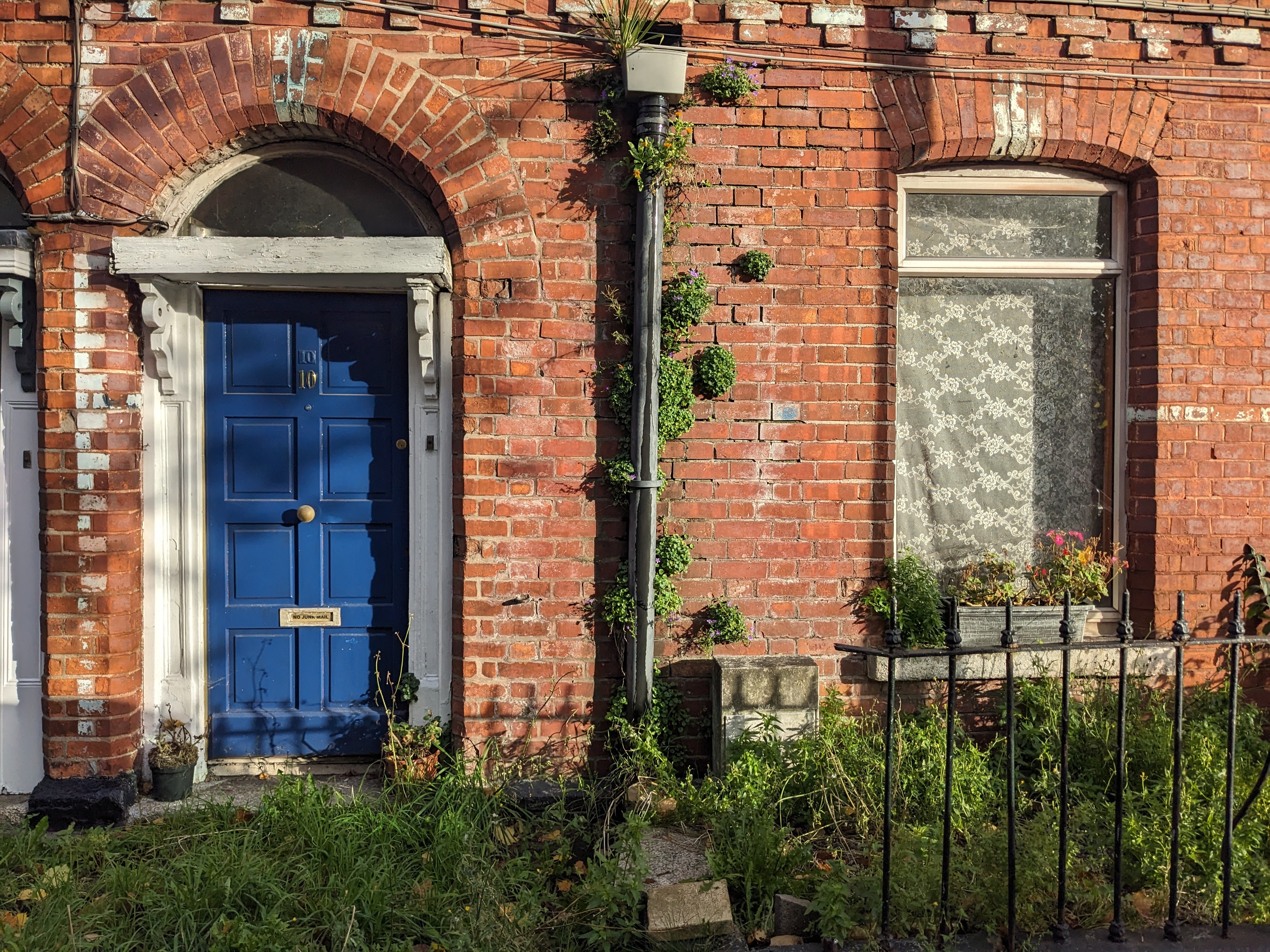
    Another student, in a conference, says they hadn’t wanted to show me their work because it is ‘not poetic’. And then they show it to me and it is so meticulously observant of their everyday life, their everyday language; it is beautiful. Look, I want to say to that student, to myself, to all of us: there isn’t any poetry out there that could be more beautiful than your steadfast attention to how things are, where you are, what they mean, how they work, in the language of your body and house and family, religion, region. There is no received form or received understanding of aesthetic pleasure that could ever be as beautiful as this description of your bus ride. And if you look closely at your bus ride for long enough I think it will also teach you how(s) to think through the questions that might seem far off but are in the end intricately related to it: how to be together. What a life is for. What kinds of things we want to make, with one another, for one another, in this world that is continually ending.
    And finally—
    Let all beings be free, safe, beloved, and well.
    Stop the bombs. Swords into ploughshares. Free Palestine.

    Thank you for reading. See you in a week—
  • my pantheon

    my pantheon

    the writers who made me

    A note about a few upcoming events this month and next:

    First of all, this week (!) on November 9 at 8 p.m. Irish time (note time change; doors at 7:30) in the Classical Museum at UCD, Jeanne Tiehen will direct a staging of my work An Archaeology, for which I’m making costumes and props. In-person only; tickets are free but very limited. Email sasha.smith@ucd.ie to book.

    On November 19 at 2 p.m. US Eastern I will give the first of two lectures as the Annulet Inaugural Linkages Lecturer. I will give a talk entitled “When you get someplace new, learn to read the landscape like an alphabet”. This talk will be broadcast online, for free. To register, please click here.

    On November 21, I will read and talk with Majed Mujed and Hua Xi as part of the Trinity College Literature & Resistance Series, in the Trinity Long Room Hub. You can book a place here (in-person only).

    On December 10 at 2 p.m. US Eastern I will give the second of the Linkages Lectures. I will give a talk entitled “On the line”. This talk will be broadcast online, for free. To register, please click here.

    Once these are done, I am never doing anything in public again. For at least a month. But I’m sure by the start of the new year I will be full of vim again. If you’d like to have me to read or speak at your university, school, class or organization in 2024, please drop me a line.

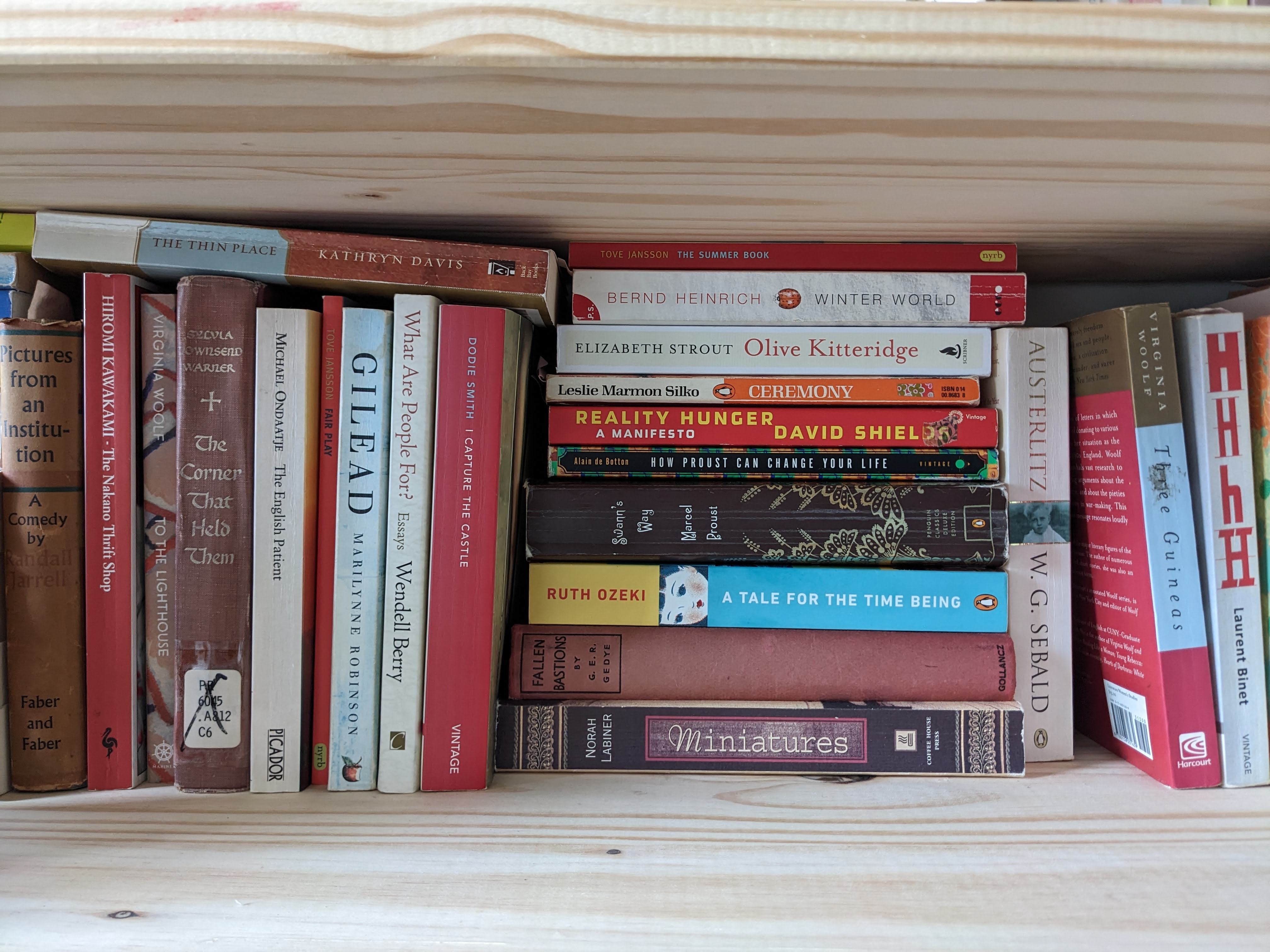
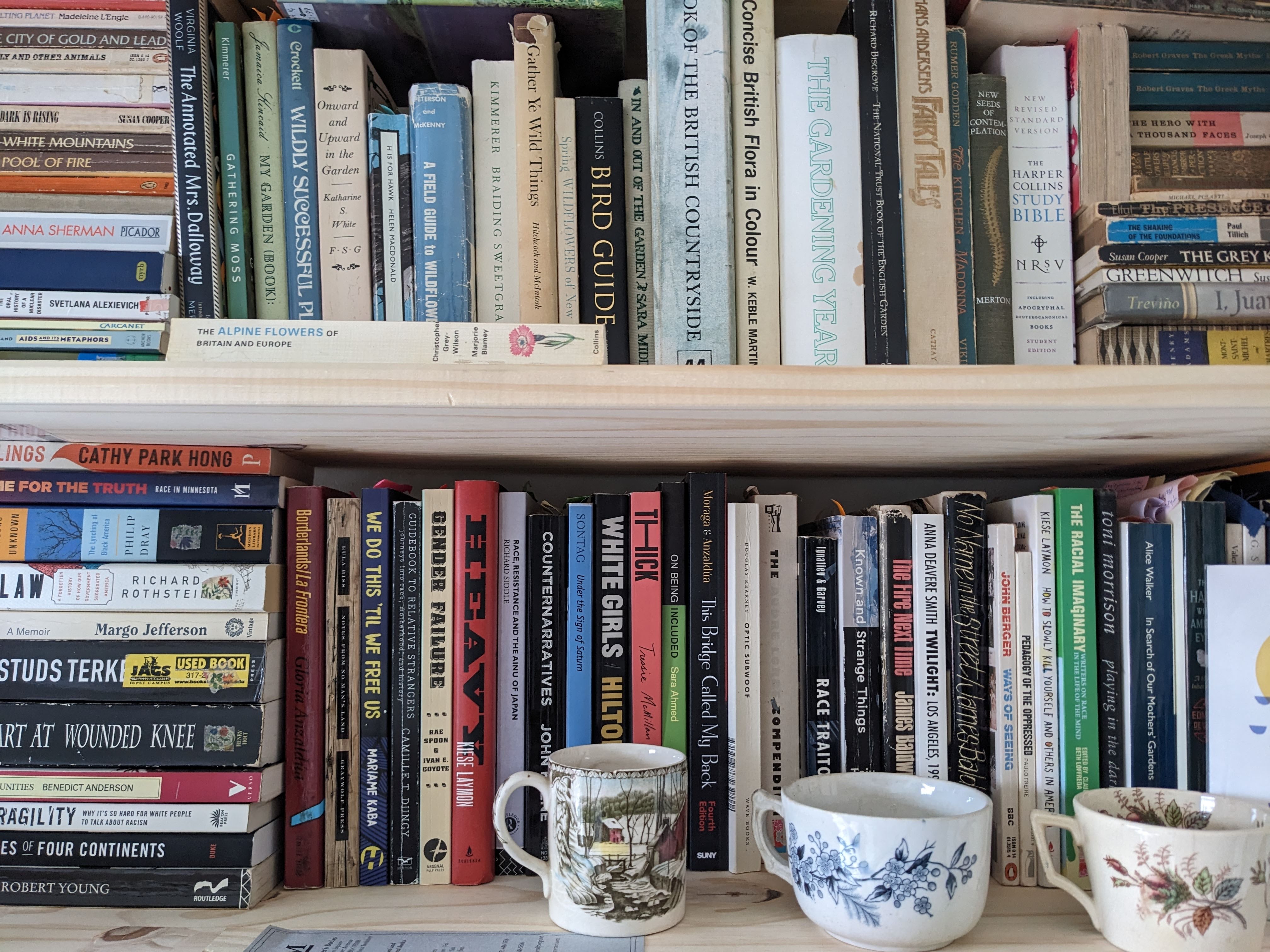
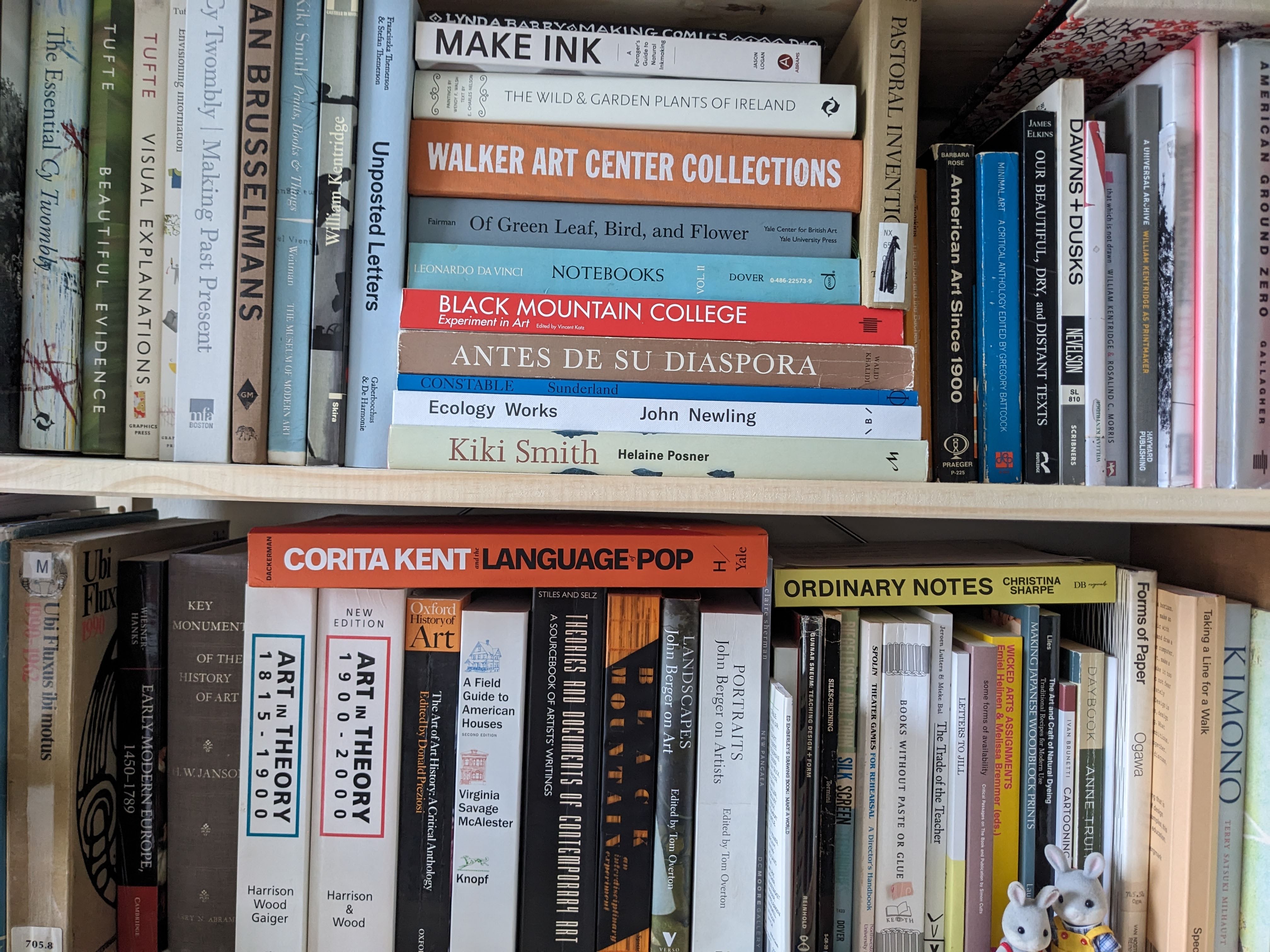
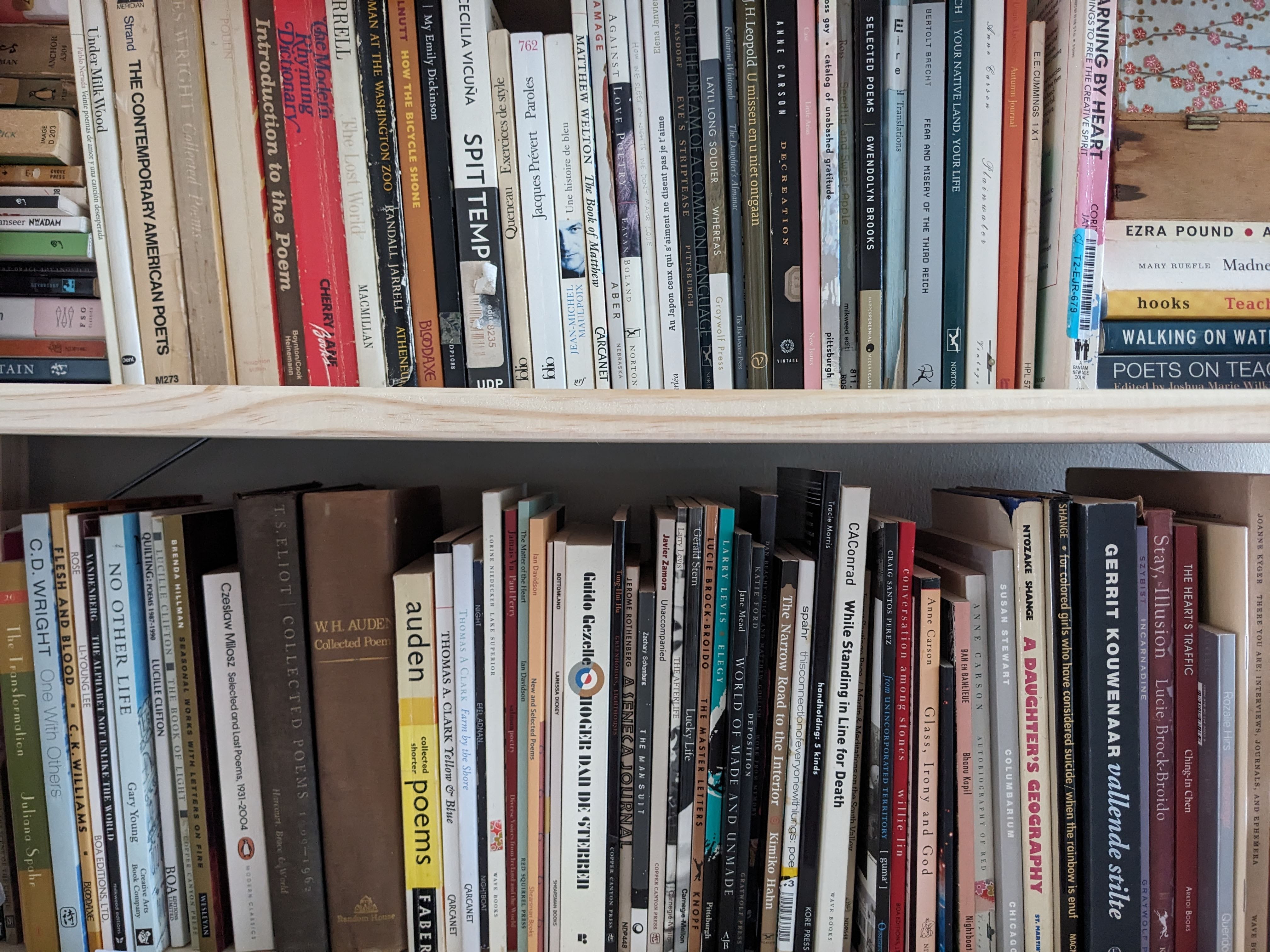
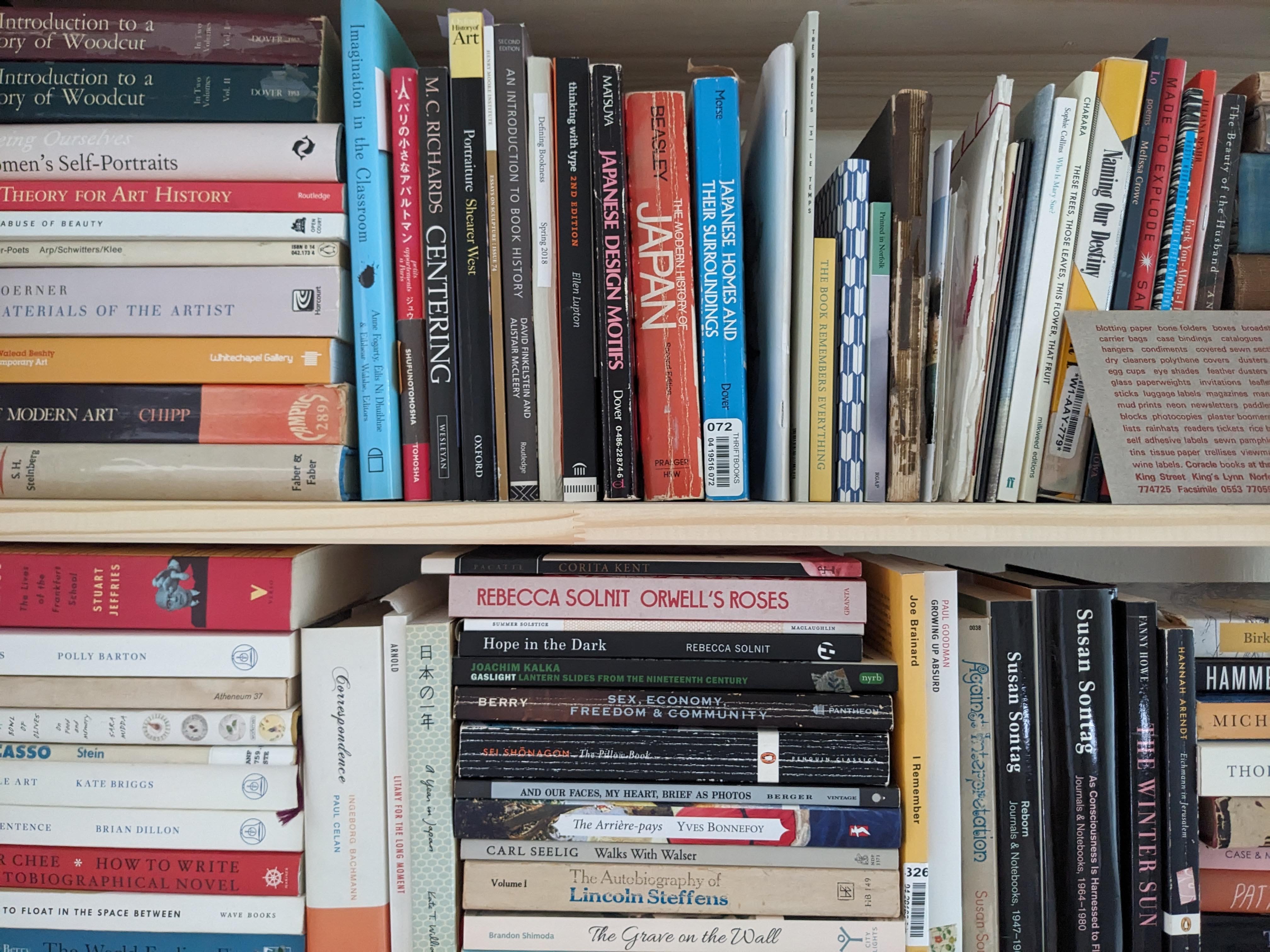
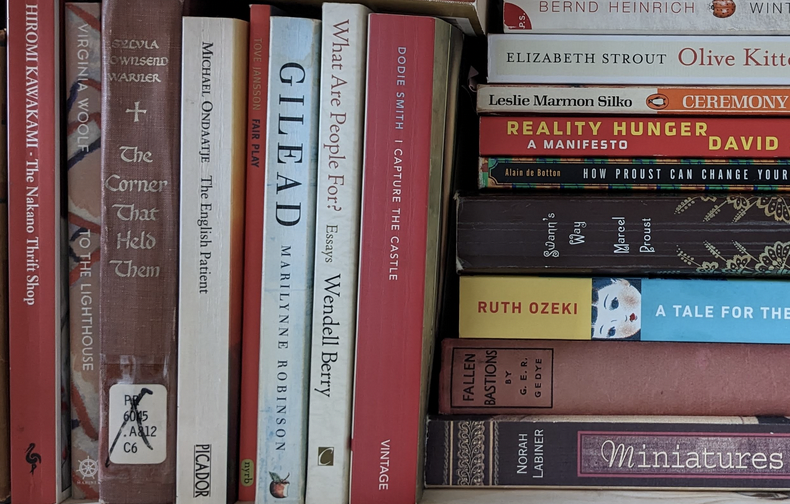
    For the first time in my adult life, I have bookshelves that aren’t made of bricks or crates and boards. And for the first time in almost four years, I also have all my books with me, out of boxes, and on those shelves.

    Looking at my books, I realized how clearly they hold the history of my learning and thinking. I wasn’t able to name that fact until recently. Between 2017 and 2022, I moved house seven times. Two of those moves crossed the Atlantic. A lot of books flowed out of my possession across those years—books I often find myself searching for, only to conclude that I must have thought at one point that I’d never want to read that book again, or that I could easily get ahold of another copy if I did. (These are both fallacies.) In addition to the fact that moving = shedding books, most of the books I held onto across moves stayed in boxes between May of 2020 and August of 2023. When I finally was able to receive and then open those boxes this summer, it was like seeing myself in a mirror for the first time in a long time. Oh—this is why I am the kind of writer I am. This is the frame within which my work makes sense. This is where I get my understanding of the world and of how things fit together. Books are the thinking apparatus we carry outside of ourselves.

    I thought I would make a list: books and poems and essays that have been central to my life as a person-in-the-world as well as to my thinking about writing and art, my teaching, and my ethical/religious formation. (These aren’t exclusive categories—most, probably all, of these texts cross them multiple times.) Some of these texts are recent encounters. Some of them have been with me for decades. Some fall in between. I find them beautiful, moving, stirring, intellectually and humanly rousing. They have given me ideas and given me language, taught me to make art and taught me to make a life.

    As I made the list, I tried to think about categorizing the works on it—how could I make my list and its elements legible to a reader, one who didn’t know a work, or wanted to know what kind of book a given work was? But the categories I came up with didn’t make sense to me because they suggested things like genre (but that’s not why I read or how the books I love teach me) and theme (my least favorite way of categorizing). My books are shelved sometimes roughly by genre (poetry together—but plays and some teaching books are there with the poems—and art books together, because they are the same size) but more often by what I’d call texture and color, a synesthetic experience that underlies much of how I think and learn to think.

    It feels unnatural to use external guides to divide the books and poems and essays I love by type, kind, subject, or ‘lesson’—because so many of these cross my artistic life, my teaching life, my life in the world (which are all one life, after all), and also because the books/poems/essays are whole things, irreducible to one facet, and finally because that latter way of categorizing—the ‘lesson’, or the ‘what-it’s-aboutness’ of a work—feels reductive to me. So I’m presenting them to you as they came to mind, together and in no particular order, and quite certainly with titles left off the list. Some links go to individual essays or poems online. Most go to an independent bookshop in the city where I grew up—if you find yourself on a different landmass, or near a different bookshop, I hope you will be able to find a copy there. WorldCat will also provide in most cases.

    So here is my list of some (definitely not all of the) books, poems, and essays that have taught me to write, think, live, ask questions. If you are looking for something to read over the coming darker months (in the northern hemisphere), I hope it will suggest itself here. And in the comments, I’m more than happy to make recommendations if you’re looking for something specific, and to answer questions about what, why, when, and how these books entered and changed my writing and my life.


    Anne Boyer, Garments Against Women and A Handbook of Disappointed Fate
    Christina Sharpe, Ordinary Notes and In The Wake: On Blackness and Being
    James Baldwin, The Fire Next Time (especially “Letter To My Nephew…”)
    Louis MacNeice, Autumn Journal
    W.H. Auden, “A Summer Night”
    Ntozake Shange, Sassafrass, Cypress and Indigo and For Colored Girls Who Have Considered Suicide When the Rainbow is Enuf
    Virginia Woolf, Three Guineas
    Natsume Soseki, The Three-Cornered World
    Simone White, “Flibbertigibbet in a White Room / Competencies”
    Benjamín Labatut, When We Cease To Understand the World
    Carolyn Forché, Blue Hour
    Sylvia Townsend Warner, The Corner That Held Them
    Leslie Marmon Silko, Ceremony
    Brian Friel, Translations
    Kimiko Hahn, The Narrow Road to the Interior
    Kiese Laymon, Heavy
    Anne Truitt, Daybook
    Sinclair Lewis, It Can’t Happen Here
    Lucille Clifton, The Book of Light
    Li-Young Lee, Rose
    W.G. Sebald, The Rings of Saturn
    Ruth Ozeki, A Tale for the Time Being
    William Kentridge, with Rosalind C. Morris, That Which is Not Drawn
    Helen DeWitt, The Last Samurai
    Corita Kent and Jan Steward, Learning by Heart
    Jeff Vandermeer, Annihilation
    Hilton Als, White Girls
    Susan Sontag, Under the Sign of Saturn
    June Jordan, Some of Us Did Not Die and Affirmative Acts
    Gerard Manley Hopkins, “As Kingfishers Catch Fire” and “Thou Art Indeed Just, Lord, If I Contend” and “Pied Beauty”
    Roland Barthes, The Pleasure of the Text and A Lover’s Discourse: Fragments
    bell hooks, Teaching to Transgress
    Adrienne Rich, What is Found There: Notebooks on Poetry and Politics
    Muriel Rukeyser, The Life of Poetry
    Dorothy Day, The Long Loneliness
    Doireann Ní Ghríofa, A Ghost in the Throat
    Alice Walker, In Search of Our Mothers’ Gardens
    Laressa Dickey, Roam
    James Elkins, Pictures and Tears
    W.J.T. Mitchell, What Do Pictures Want?
    John Berger, Ways of Seeing
    Mary Midgley, Science and Poetry
    Juliana Spahr, The Transformation and This Connection of Everyone with Lungs
    Hiromi Kawakami, The Nakano Thrift Shop
    Thomas A. Clark, Farm by the Shore
    Toni Morrison, Sula, The Bluest Eye, and Beloved
    Gary Young, No Other Life
    Lucy Sante, The Factory of Facts
    Robert Hass, Summer Snow
    Craig Santos Perez, from UNINCORPORATED TERRITORY [guma’]
    E. Ethelbert Miller, How We Sleep on the Nights We Don’t Make Love

    I would also love to know what appears in your pantheon—the poem whose lines are always on your mind, the book you’ve read a dozen times, the text that taught you, the essay you will never come to the end of trying to understand—and why.

    And finally—
    Let all beings be free, safe, beloved, and well.
    Stop the bombs. Swords into ploughshares. Free Palestine.

    See you in a week.


  • [while washing the dishes]

    [while washing the dishes]

    in praise of anthologies: everyone’s library

    I learned to read poetry by reading anthologies and textbooks, sitting on the cement floor of the basement to keep cool in childhood Augusts and on the living-room radiator to keep warm in childhood Decembers. I read Understanding Poetry by Cleanth Brooks and Robert Penn Warren, a yellow clothbound copy that had been annotated by my father’s college English teacher. I read anthologies of twentieth-century poetry that had been up-to-the-minute when my father was in college twenty years before; I read prosody textbooks, books of prompts paired with individual poems. I read ex-library anthologies of children’s literature for teachers, and anthologies of poems selected for children and young people. These books were kept on shelves with books about Egypt and books about Ireland, books about baseball and books about taking and developing photographs, books of art projects to do with children, cookbooks. They were part of the fabric of everyday life.

    As a child I didn’t know there was such a thing as “being a writer” because writing was something that just happened (grocery lists; school papers; stories) and poems were just things that were around, like chairs. Writing in our house was for everyone, just like drawing was: you can make three lines into and A or four lines into an E? Congratulations: it’s poem time. Memorize “Jabberwocky” or “The Lake Isle of Innisfree” or part of “The Raven” or “A Dream Deferred” and get a quarter, the same reward you’d get for immersing yourself in Lake Superior when we went camping over the summer. Poetry was normal; it appeared every few pages in the ancient readers that had been my grandfather’s schoolbooks. It was threaded among short stories in the Norton Anthology of Children’s Literature that had been my father’s. It hung on the wall, both a framed poem by my aunt and clipped-out poems on newsprint. The house I grew up in was like an anthology in all it held—an old-fashioned anthology, eclectic and thematic and revealing of the tastes of those who made it.

    Encountering poetry in anthologies and in the house I grew up in meant that the context I learned poetry in was not the context of one author’s work or the order of a collection, but the context of an editor’s concerns and the context of what my parents found, collected, enjoyed. It meant I read widely but rarely in depth. It also meant I memorized poems just by happenstance, as I encountered them as discrete objects in different books or hanging on the wall, day after day. I could see the poems in a way, because they were just there, one at a time.

    When I went to college I brought with me the ways of reading that the anthologies and old textbooks of my childhood taught me. It didn’t come easily to me to read as some of my peers did—dozens of newly published single-author collections each month. I skipped around, read a collection here and there, went deep in the stacks to find books by their spine thickness and alluring colors. (I still remember one edition of Neruda’s Twenty Love Poems and One Song of Despair, Merwin’s translation, a tiny, pink book I renewed repeatedly until I’d had it out for more than a year. I carried it around everywhere.) I read horticulture and textile history books, histories and linguistics textbooks. And I read anthologies, both for class (thick Nortons) and for pleasure (by subject and by year, from the Best American poetry series to new anthologies of experimental and contemporary poetry). But after I left university, I didn’t read anthologies much: they were too large and heavy to move around.

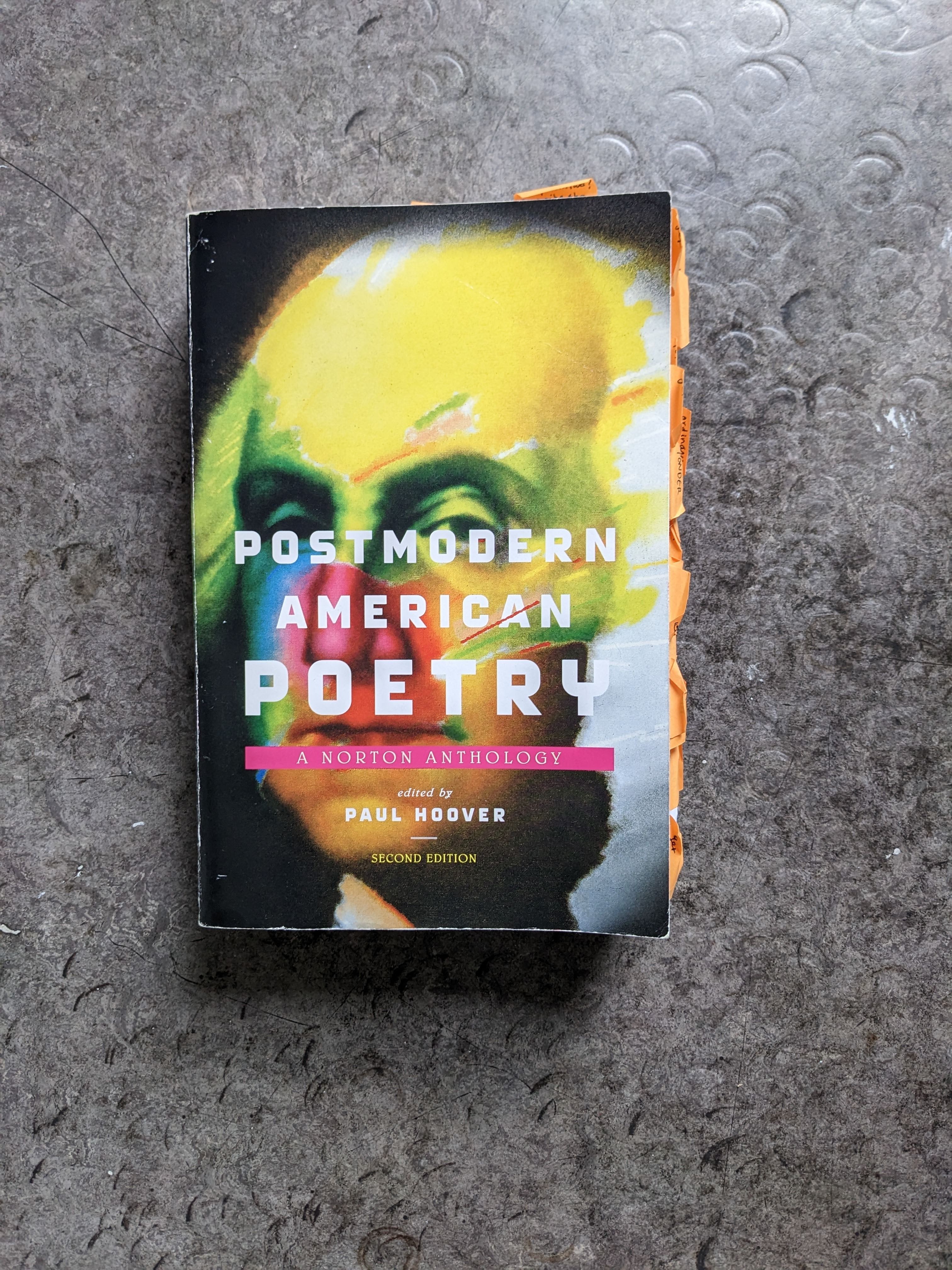
    In December 2022 I found a used copy of the Norton Anthology of Postmodern American Poetry in a bookshop. I like to have a project to start the year with, and I thought, huh. I could read that. In the past few years as I’ve taught both generalist and specialist courses I’ve often come up against places where I can feel the limits of my training. I knew reading this anthology would help me slot some pieces of my poetic history and contexts together. So, between January first and the end of March 2023, I read some of this anthology almost every night. It was one of the most pleasurable reading experiences I’ve had in a long time. Why?

    It was various. So many things to read, so many different things. If one writer’s work wasn’t my favorite, I knew there were just a few pages of it—and I could really pay attention for just those pages. The variety helped me see similarities and transfers of ways of working, thinking, making, as well as branches and new possibilities. It reminded me how many ways there are and have been to poem, and also how long ago some of the habits of ‘new’ ways of making poems appear.

    The chronology of the book was also pleasing. I wanted to read to learn: to understand some histories of influence and confluence in US poetry in the mid- to late 20th century. I wanted to get to know the work of writers whose work perhaps helps to set the perimeter of the field I work in—21st century experiment, or post-language lyric, or the expanded field, or whatever way it might be called. Chronology helped me understand where how I work and what I read came from (in part, of course. No anthology could capture the breadth of sources for the making of poetry). Who taught whom, directly or indirectly? I could map that, and begin to connect the map the anthology made with other maps I had. As often happens with a map, I could understand more about where I was.

    I found pleasure in the book’s sheer size. It felt great to sit with that big volume on a pillow in my lap in bed, with a pen. It felt serious—a kind of study that was a challenge—and I remembered how good working hard to read and write feels. It returned poetry to the center of my vision in a way that hadn’t been possible during years of many moves, many job changes. I felt accomplished each time I worked with the book, even though some nights I could only manage a page or two. But page by page I worked through it entirely. In some way it restored an earlier way of writing and reading to me, one I wouldn’t have known how to set out to find again.

    Reading anthologies helps me see widely, helps me understand pattern. It introduces me to writers whose work I might otherwise not have met, and it helps me understand their relationships. (In this case, I was also reading to understand who taught whom, where poets who are anthologized in this way lived and studied and worked, and to trace the kinds of words that were used to talk about these poets—information I found in the short texts introducing each one’s work.) Reading anthologies makes me a more critical reader, too, teaching me to see the seeing of the organizing force not as neutral but as positioned in taste, influence. I noticed that there were almost no writers from the US midwest in The Norton Anthology of Postmodern American Poetry, for instance, and that many of the writers clustered in two or three geographic locations, having been educated at five or six universities. I also noticed how white it was, and how ‘normal’ that was in the anthology. This edition (the second) was published in 2013. I think a third edition would look very different—or maybe not. It would depend on the organizing force.

    I will leave this week’s dispatch by making an anthology recommendation. One of the most enjoyable anthologies I’ve read is the 1999 Beacon Best Of, edited by Ntozake Shange. I bought it almost ten years ago when I was on a kick of reading everything she’d written (or, in this case, edited). It’s a really good selection of all kinds of writing, and I remember reading it was like finding a shop with all the most beautifully made and presented things for sale.

    And finally—
    Let all beings be free, safe, beloved, and well.
    Stop the bombs. Swords into ploughshares. Free Palestine.

    See you in a week.

  • 'being here'

    'being here'

    they gave me the name of a country

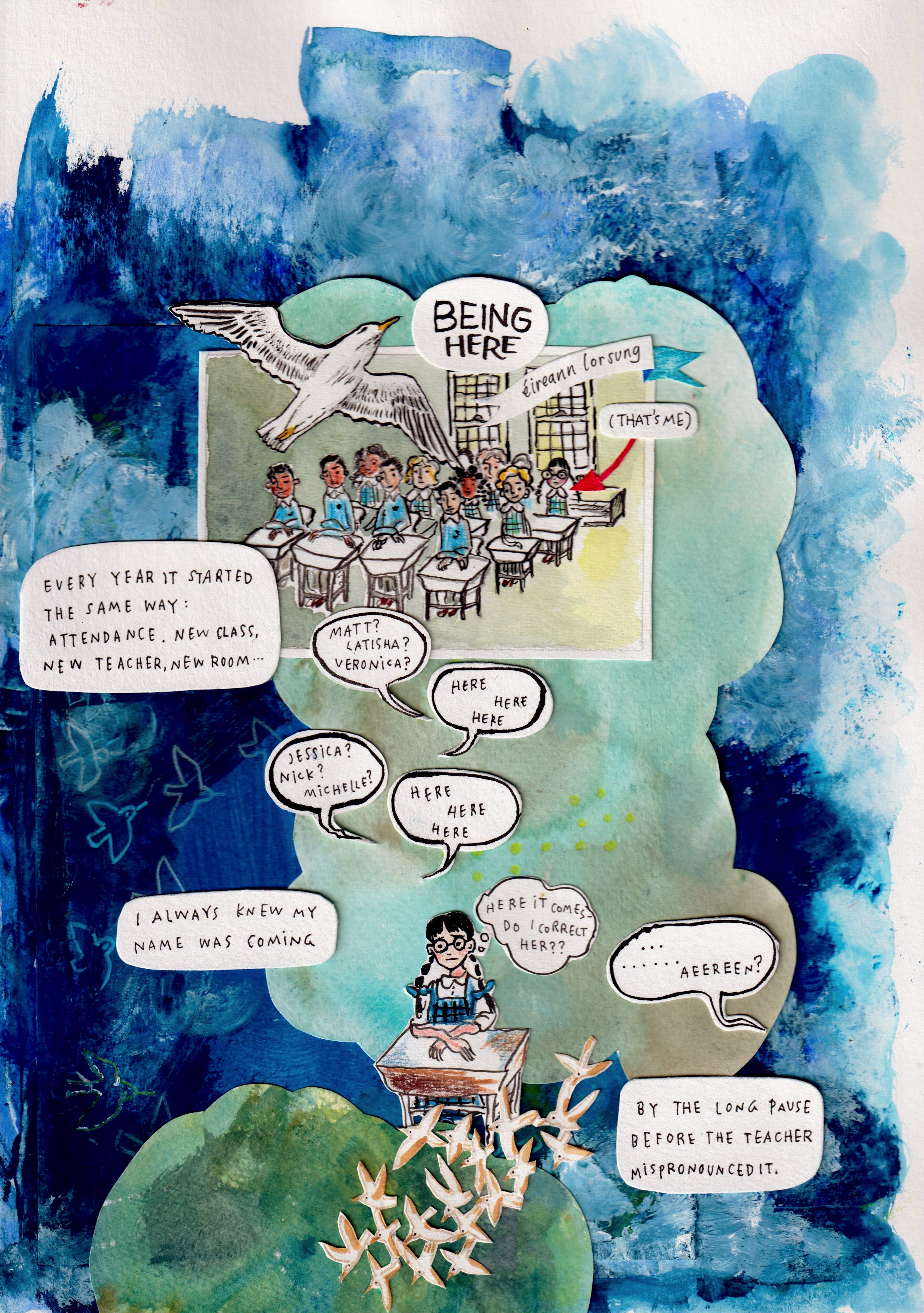
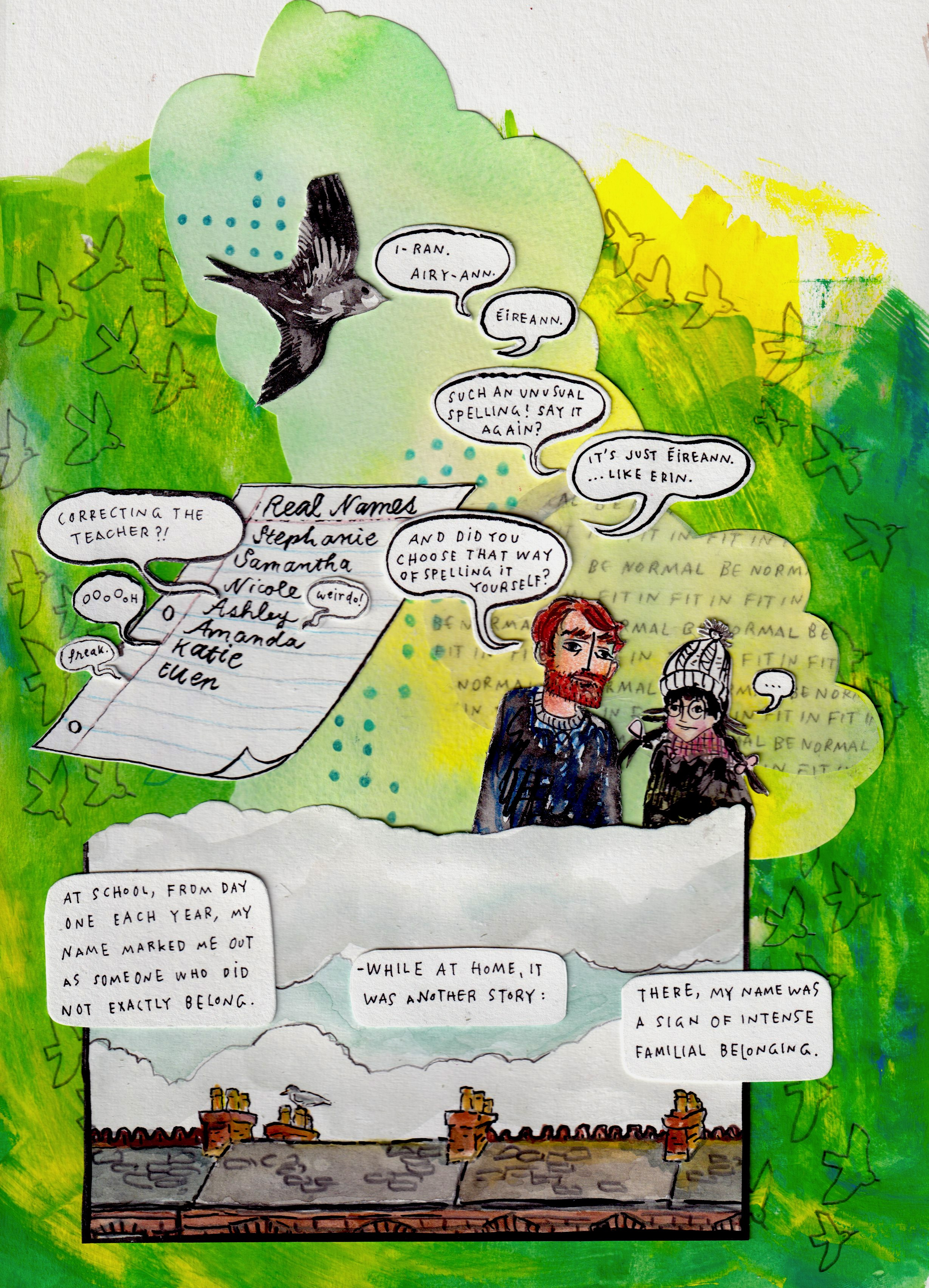
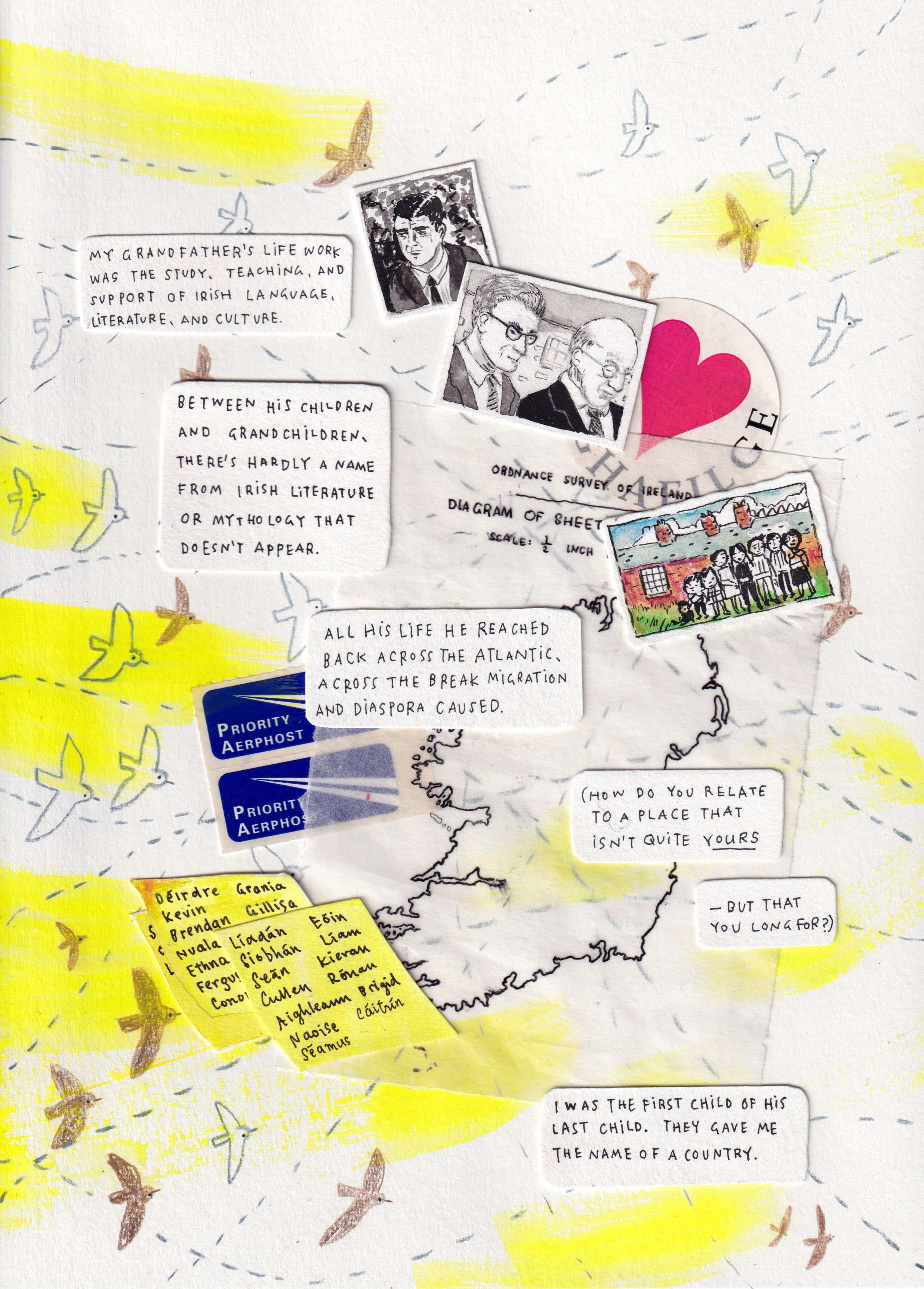
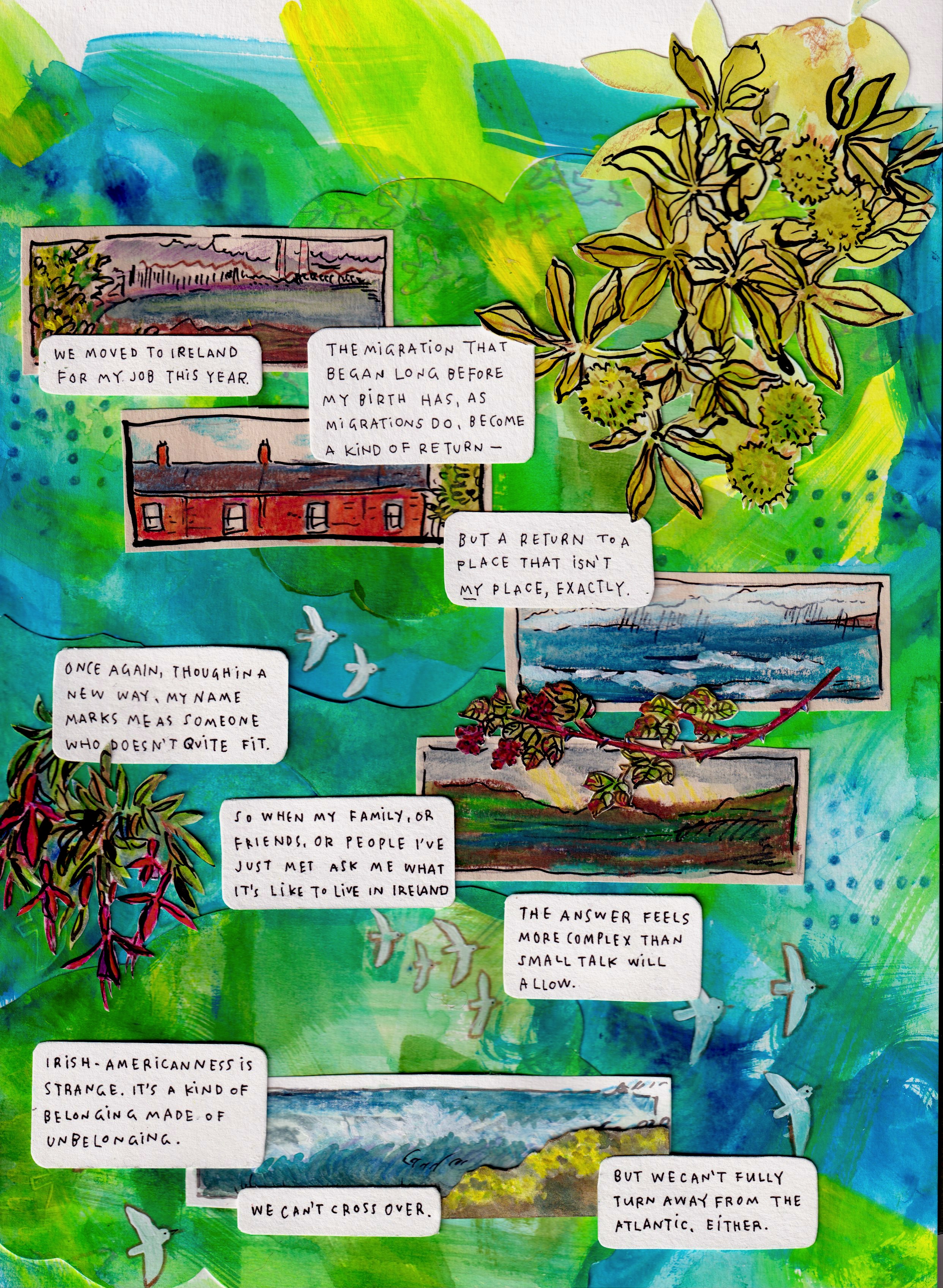
    This week’s Bewilderment is a comic called “Being Here” that I made in fall 2022, when we were newly arrived in Ireland. I made it to be part of the Home anthology put out by Dublin Comic Arts Festival. The call for work asked people to talk about what it’s like to think of Ireland as ‘home’—for immigrants, emigrants, and people with other tenuous or attenuated relationships to this place.

    Before I get to that, though, just a note about a few upcoming events in November and December.

    First of all, on November 9 at 7 p.m. Irish time in the Classics Museum at UCD, Jeanne Tiehen will direct a staging of my work An Archaeology, for which I’m making costumes. In-person only; tickets are free but very limited. Email sasha.smith@ucd.ie to book.

    On November 19 at 2 p.m. US Eastern I will give the first of two lectures as the Annulet Inaugural Linkages Lecturer. I will give a talk entitled “When you get someplace new, learn to read the landscape like an alphabet”. This talk will be broadcast online, for free. To register, please click here.

    On November 21, along with two other writers to be confirmed, I will read and talk with the others as part of the Trinity College Literature & Resistance Series, in the Trinity Long Room Hub. Event and booking information will be here (in-person only).

    On December 10 at 2 p.m. US Eastern I will give the second of my Linkages Lectures. I will give a talk entitled “On the line”. This talk will be broadcast online, for free. To register, please click here.


    So. “Being Here”. It’s useful to look back at this work, made almost exactly a year ago, when we had only been in Ireland a few months. I can see the big questions of my life in it—questions of place, belonging, migration. When I made it, I wasn’t thinking about the big picture; in fact, I felt a little unsure about why I had pitched it. It felt like I was going far afield from my central projects. But now I can see that both the method and the themes are part of the larger cloth of my life and art practice. A good reminder that I don’t always know the pattern when I’m weaving; sometimes I need time and space, need to step back and wait and then, later, return to see the pattern emerge in a larger field.

    As I drafted and gathered notes toward this comic, I thought about my family’s history of emigration and my grandfather as a subject of diaspora, how that break echoed and echoes (in many different ways) in the my life, my siblings’ lives and my cousins’lives, as well as in my mother’s life and her siblings’ lives. I also thought about my name, which is on every official document, sign, placard, and water manhole here—it is one Irish word for this country—and about the way it makes me be here in a magical, linguistic way. I thought the way no one could pronounce my name growing up in the US, and how my name has been something that, in every place I’ve lived, marked me out as “not belonging”.

    How strange it is to end up in a place where my name belongs, but not as a person’s name! And how strange to be in a place where the fact of my name brings all kinds of assumptions about what it means that I was given it, assumptions that make me think about family, and belonging, and place, and home every time I introduce myself.

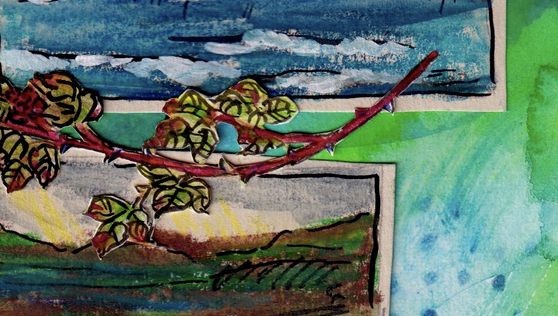
    Huge thanks are due to Kat Foyle (editor) and Debbie Jenkinson (designer) as well as to all the others in the volume, which was nominated for a 2023 Ignatz Award for ‘Outstanding Anthology’. The comic is made of painted, collaged, and cut paper with ink and pencil drawings and ink text.


    Thank you for reading! See you in a week.

  • [while walking]

    [while walking]

    beauty as an inversion of the order of taste

    [There are a lot of new people here, thanks to my friend Jon in great part, I think. If you want to know what this place is about, this will give you a sense of it. In brief, I am writing an essay each week for the twelve months between March 1, 2023 and March 1, 2024. They all go out on Sunday mornings Irish time. Each month, one essay is titled “[while walking]” and is drawn from my near-daily walks in the place I live, and another is titled “[while washing the dishes]” and is a chance for me to write about—or invite someone else to write about—something that’s entered the frame of my thinking while doing housework. Across all the essays here, I take Fanny Howe’s idea of “bewilderment” as a guiding principle both aesthetic and ethical, and consider Virginia Woolf’s “little arts” of “talk, dress, cookery” alongside other arts. I aim to think about what it might mean when Frank Bidart asserts that “being is making” and when Toni Cade Bambara writes that the role of the artist “is to make revolution irresistible”. Thanks for being here.]


    A note about a few upcoming events in November and December.

    On November 9 at 7 p.m. Irish time in the Classics Museum at UCD, Jeanne Tiehen will direct a staging of my work An Archaeology, for which I’m making costumes. In-person only; tickets are free but very limited. Email sasha.smith@ucd.ie to book.

    On November 19 at 2 p.m. US Eastern I will give the first of two lectures as the Annulet Inaugural Linkages Lecturer. I will give a talk entitled “When you get someplace new, learn to read the landscape like an alphabet”. This talk will be broadcast online, for free. To register, please click here.

    On November 21, along with two other writers to be confirmed, I will read and talk with the others as part of the Trinity College Literature & Resistance Series, in the Trinity Long Room Hub. Event and booking information will be here (in person only).

    On December 10 at 2 p.m. US Eastern I will give the second of my Linkages Lectures. I will give a talk entitled “On the line”. This talk will be broadcast online, for free. To register, please click here.


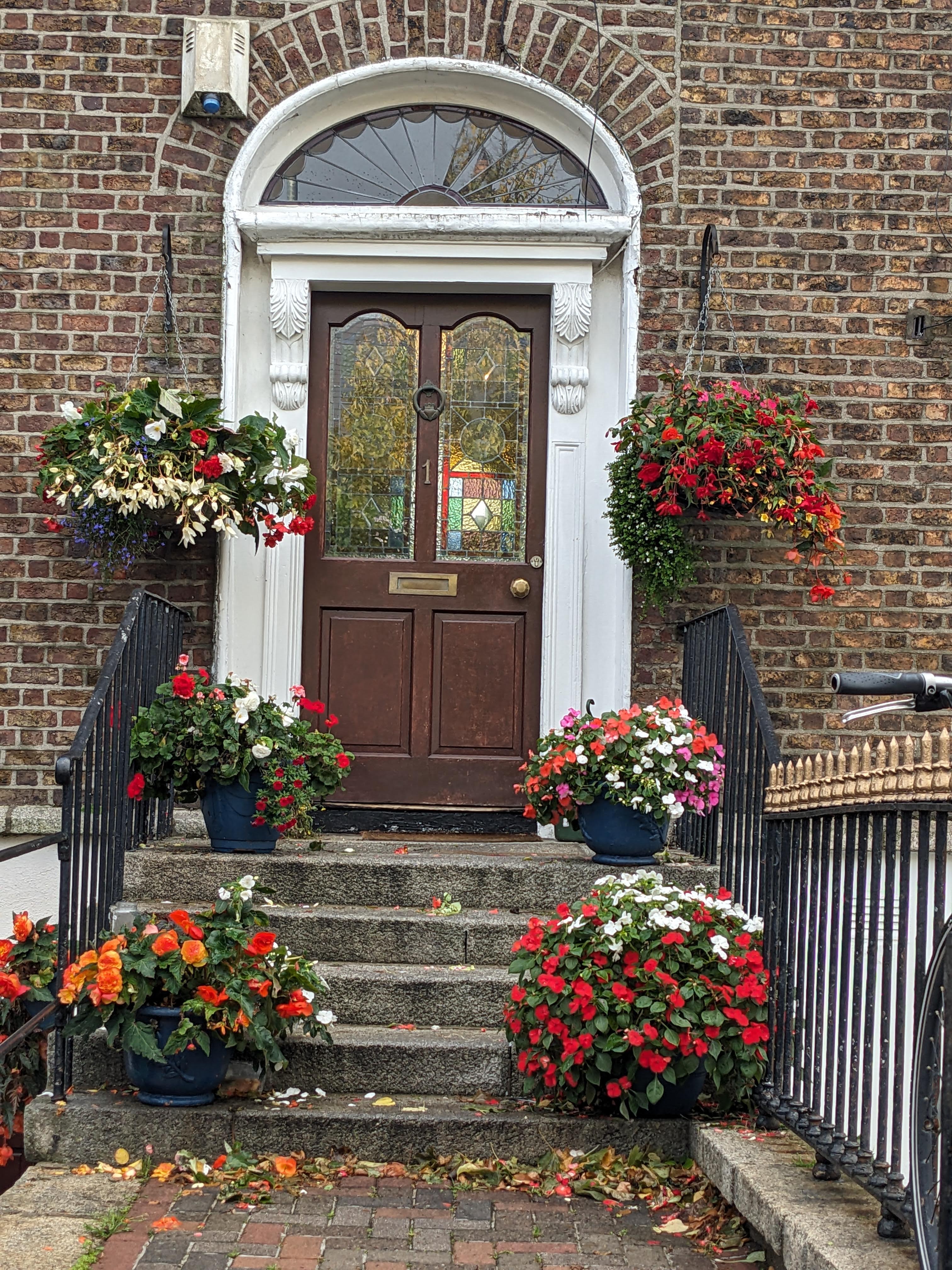
    There is a lot of beauty in this city, like everywhere. You look long enough and you can’t stop seeing it. People want to make their spaces feel right to them, and that yields beauty—not the Home & Garden variety, not the Instagram variety, which are a skin of “beauty” but not beauty. By beauty I mean, among other things, the old man I often greet while walking home: he sits on his chair inside his southwest-facing doorway anytime there is sun in the afternoon. He has built little shelves all up and down the inside of the frame to hold plant pots and has tiled them with orange and yellow and brown tiles. He did it himself, he must have. They are ugly but they are beautiful because they are particular—they show the making and the maker in them.

    There is a lot of “good taste” here, too; a lot of self-conscious correctness, a lot of primness, a lot of what feels to me like Prufrock saying to himself, “Time to turn back and descend the stair, / With a bald spot in the middle of my hair — / (They will say: “How his hair is growing thin!”)”. A lot of what looks like “beauty” and “good taste” here, as elsewhere, is the adoption of the mores of wealth as a sign for beauty. These mores produce desire in me—they signify space, light, not having to move yet again, no landlord, some kinds of ease—but they often, ultimately, feel hollow. I often feel more alive in a room someone has decorated with “too many” patterns and colors than in a “tasteful” gray or white and pale wood room. I love this essay by Anne Enright in a similar vein. In the end, the facts of the world are generally more of a blur than a binary. The surprise of individual seeing and world-creating pokes through and ruptures the skin of “good taste” to make a moment of beauty.

    In any case, let me be clear that when I say “beauty”, I’m not talking about “good taste”. I don’t care about “good taste”. “Good taste” is a set of rules that serve wealth and power by grinding in the values of of wealth and power to the point where they seem normal, unquestionably desirable, almost signs of health (aesthetic as well as bodily/mental), and nearly invisible. “Good taste” is a continual lesson in not-looking-at-the-world. “Good taste” is fitting oneself into a given container and god help you if you overflow. No, thank you. Not “good taste”; I’m talking about the beauty of invention and of lived-inness. The beauty of specificity of attention. The beauty of being-person with other people. That’s what we grieve when anyone dies, I think—the way they made a world, which no one else could have done in just that way. And then also the beauty of the world they were, taste be damned, which no one else will ever be, despite the preservation of matter and energy in other forms.

    There is a lot of vileness in this city of beauty, too. Vileness and the pressure of “good taste” go hand in hand.

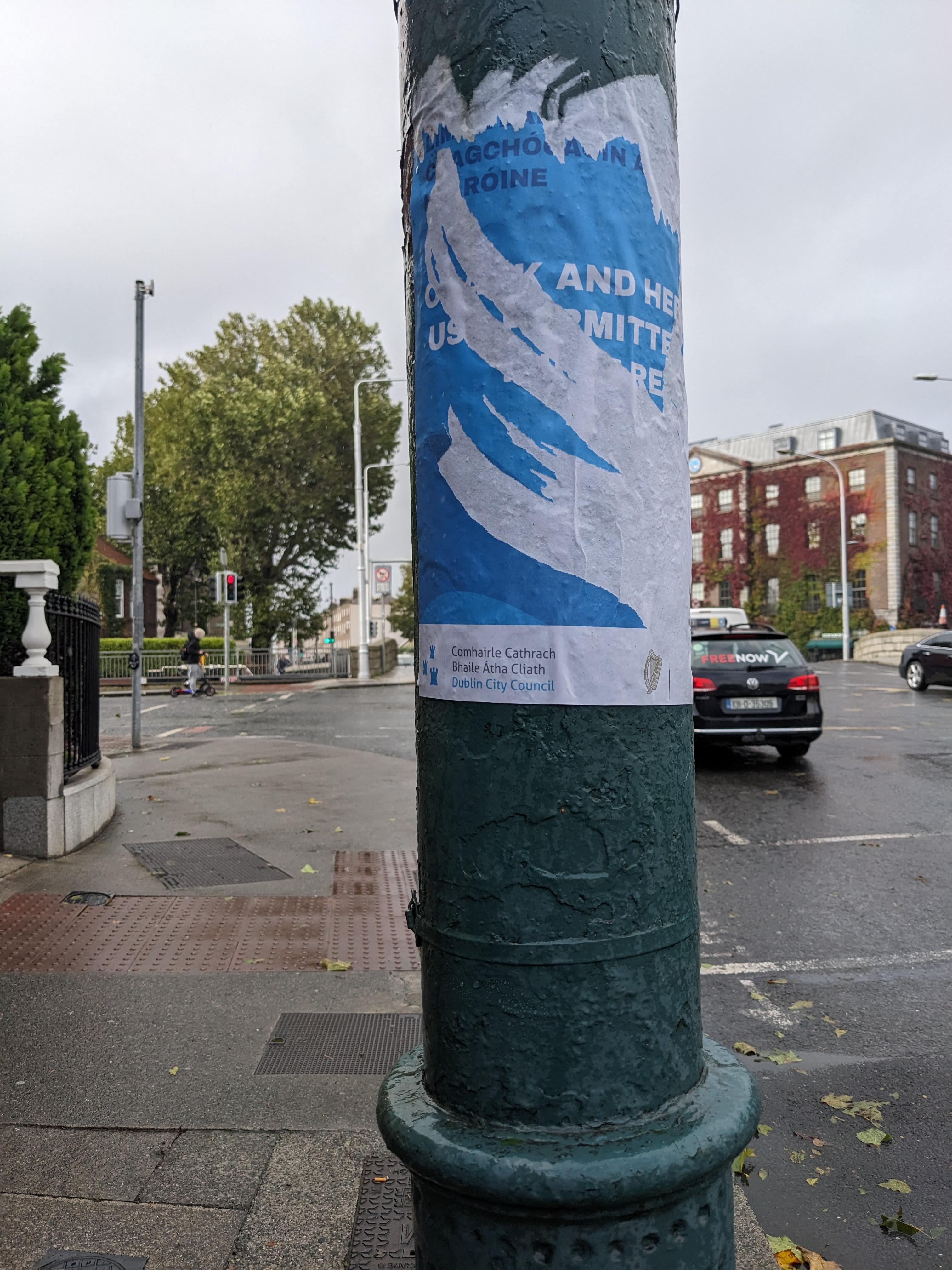
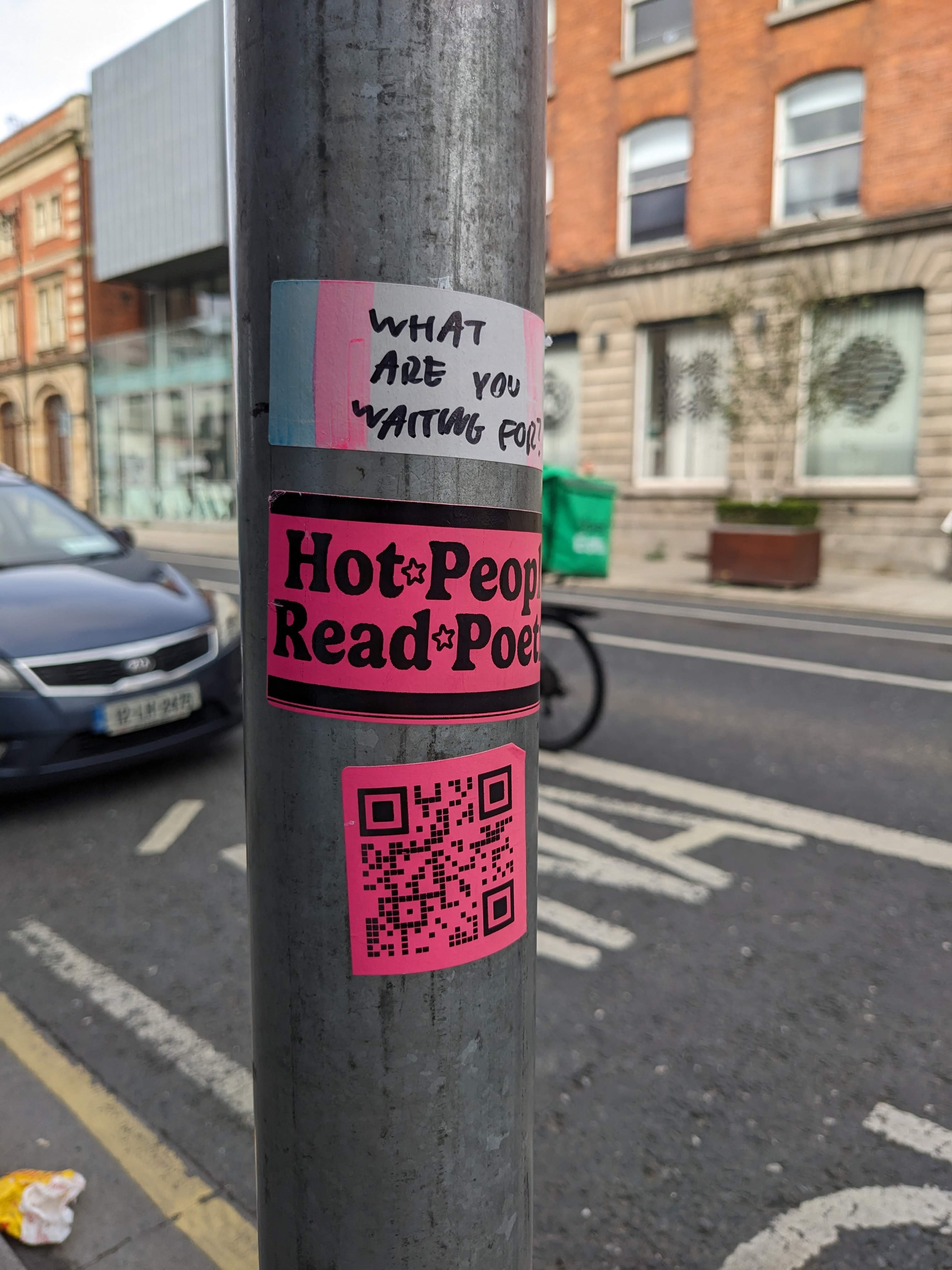
    I peel far-right stickers off postboxes, garbage cans, lightpoles, and signs as I walk. They have visual rhythm: appearing every so often along particular stretches of road, in particular areas in my neighborhood. I have never seen anyone put them up, but they are there every week, sometimes more than once a week. And I rip them down every week, sometimes more than once a week. I imagine no one sees me doing that, either, at least most of the time; most of the time, people don’t look around them as they walk or drive. I know that it is not ‘becoming’ of me, a middle-aged woman, to stand and touch ‘dirty’ things in public spaces. Though I generally feel unseen while I peel the stickers off, when I am seen, I see people’s disgust. It is true that the sides of public trash cans are dirty and I, in my leather shoes and work clothes, am ‘clean’. The meniscus of manners and class and taste ought to keep me well-behaved. But I reach out and peel the sticker off and throw it away.

    There are stickers that tell lies about vaccination; there are anti-trans stickers; there are antisemitic memes, both gross and grossly obvious; there are profoundly disgusting Islamophobic stickers that someone keeps putting up by the mosque; there are fascist recruitment stickers with QR codes; there are conspiracy theory stickers; there have been, recently, really vile stickers that use the likeness of George Floyd to stir up white supremacist fear and propagate the white supremacist ‘replacement’ myth. In the past few months I’ve seen large wheatpaste posters as above, that appear to be from the city council but are not, and that dehumanize and demonize drug users and homeless people. I’m reciting the stickers’ content categories not to reproduce their rhetoric but to lay out the the field of their concerns—the people they unpeople, and how—as well as the facts of their persistence, their prevalence. This is the underside of good taste, when good taste means looking away, refusing to name things as they are, the use of euphemism, comfort. When good taste means being able to opt out of confrontations with what dehumanizes us, or to feel that another person’s dehumanization might be ‘deserved’ or somehow have nothing to do with one.

    Often, walking, peeling off these stickers and throwing them away, I feel weighed down by the ugliness of this place, its dense and complex histories of violence woven through with the world-crossing violences of antiblackness, xenophobia, antisemitism, Islamophobia, much of which is exported by the place I’m from. I don’t know what else I can do in the face of this feeling of weight. There is no heroic action. There are only the everyday actions of looking, thinking, asking, refusing, insisting, examining. So I go on walking and peeling the stickers off, walking and peeling and throwing the stickers away. In this I am alongside others who also do this small, daily work. Writing NO and FALSE in big letters on the stickers we can’t tear off. Putting up our own stickers, too. The sticker calls the eye and says, here. One nice thing about my leather shoes and work clothes—the invisibility they lend me—is that I can put up stickers mostly without being seen. Any risk of being seen is diminished by the sensation of changing the world, materially, microscopically, toward what feels vital and alive rather than deathly. And the risk is also diminished by my smallness, my femininity, my whiteness, my work clothes—the signs of my belonging to an order of “good taste”, the signs of my “unthreateningness” and docility.

    Sometimes the stickers have already been defaced or partially removed when I find them, which makes me feel like we are working together, me and whoever else is watching for them and tearing them down. We sticker-removers are termites of the fascists’ world, unmaking some transmitters of violence one tiny chomp at a time, over and over and over. It takes no special tools to be such a termite. Fingernails do most of the work. An ID card peels difficult ones off. And a soft-leaded pencil (its dark marks will not wash away in the rain) permits one to deface any part one can’t remove.

    Living beauty is possible for all of us. We can do it—make minuscule changes to the world we move through that insist that care, justice, liberation, that compounding of acts that add up to beauty, are more important than good behavior. I think beauty is a disturbance in the field of comfort—the comfort often given the names of taste, or propriety, or manners—that confronts me with the irreplaceability of everything (everyone) living. I feel a demand to work and fight, mourn and build for and with others when I am faced with that.

    Beauty forces a reckoning, over and over, on a minute scale, with my own complacency. It makes me see in specific, makes me see pattern and meaning, especially pattern and meaning that’s not my own. I think beauty confronts us with the eachness of each of us, our difference, our irreducible human preciousness, patterned together. Not conformity; finding out. Widening. The way a new parent looks at their baby and realizes, you are absolutely complete and I couldn’t even have imagined your you a month ago. You. Us. Here. Together. For one another. Clear-eyed. That’s what I mean by beauty.

    Thanks for reading. See you in a week!

  • among white pines, at the foot of them

    among white pines, at the foot of them

    how else could I see where I am?

    Today’s Bewilderment is an essay that was published in fall 2022 in Arnoldia, the quarterly of the Arnold Arboretum at Harvard University. I’m grateful to Matthew Battles and the production team there who made a place for this essay and one of the paintings I made in 2021 that deals with the same questions of seeing and relation with plants.


    I am also very pleased to be able to let you know about a few upcoming events in November and December.

    First of all, on November 9 at 7 p.m. Irish time in the Classics Museum at UCD, Jeanne Tiehen will direct a staging of An Archaeology, for which I’m making costumes. In-person only; tickets are free and I will post more information when I have it.

    On November 19 at 2 p.m. US Eastern I will give the first of two lectures as the Annulet Inaugural Linkages Lecturer. I will give a talk entitled “When you get someplace new, learn to read the landscape like an alphabet”. This talk will be broadcast online, for free. To register, please click here.

    On November 21, along with two other writers to be confirmed, I will read and talk with the others as part of the Trinity College Literature & Resistance Series, in the Trinity Long Room Hub. Event and booking information will be here (in-person only).

    On December 10 at 2 p.m. US Eastern I will give the second of my Linkages Lectures. I will give a talk entitled “On the line”. This talk will be broadcast online, for free. To register, please click here.


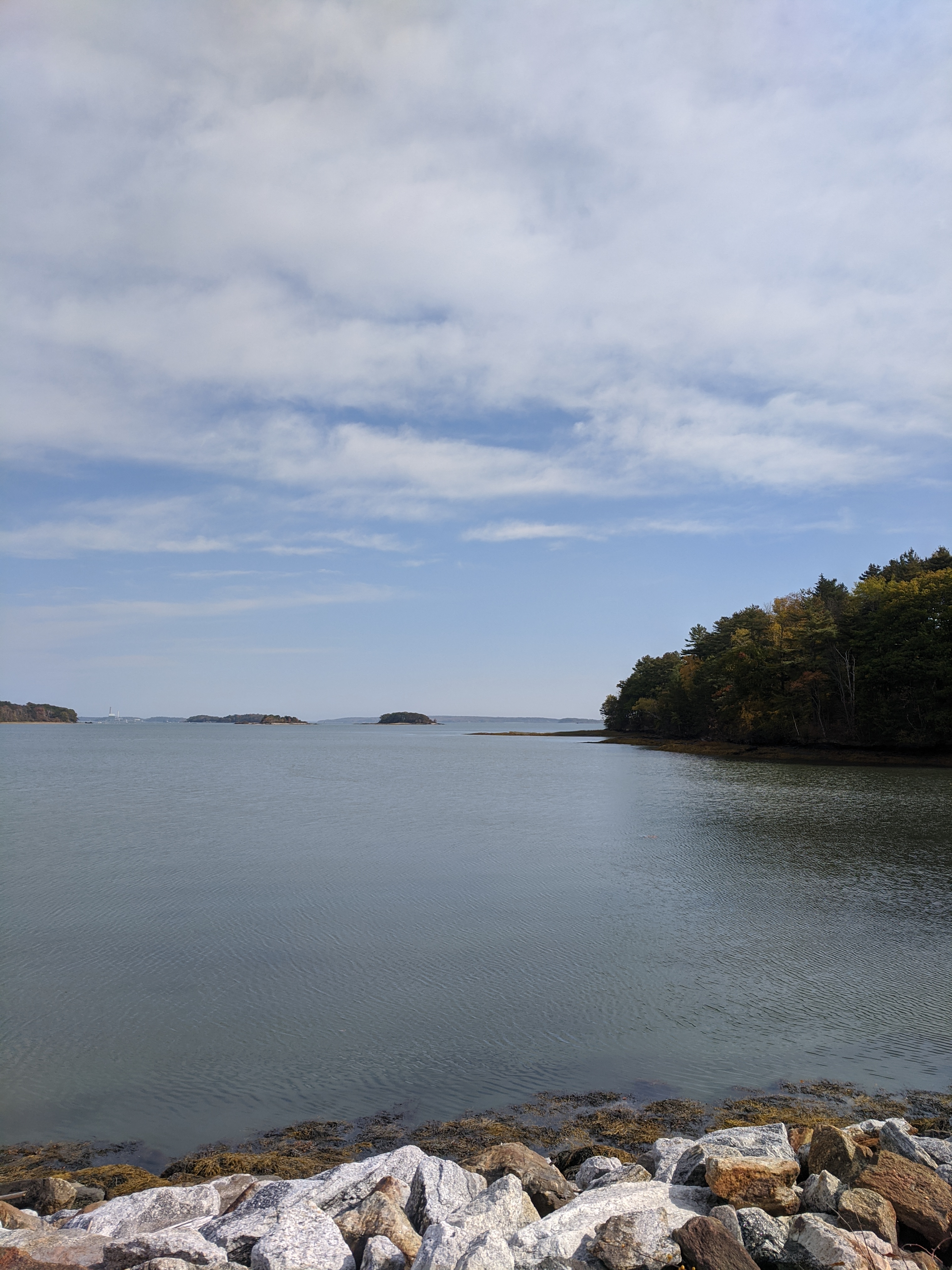
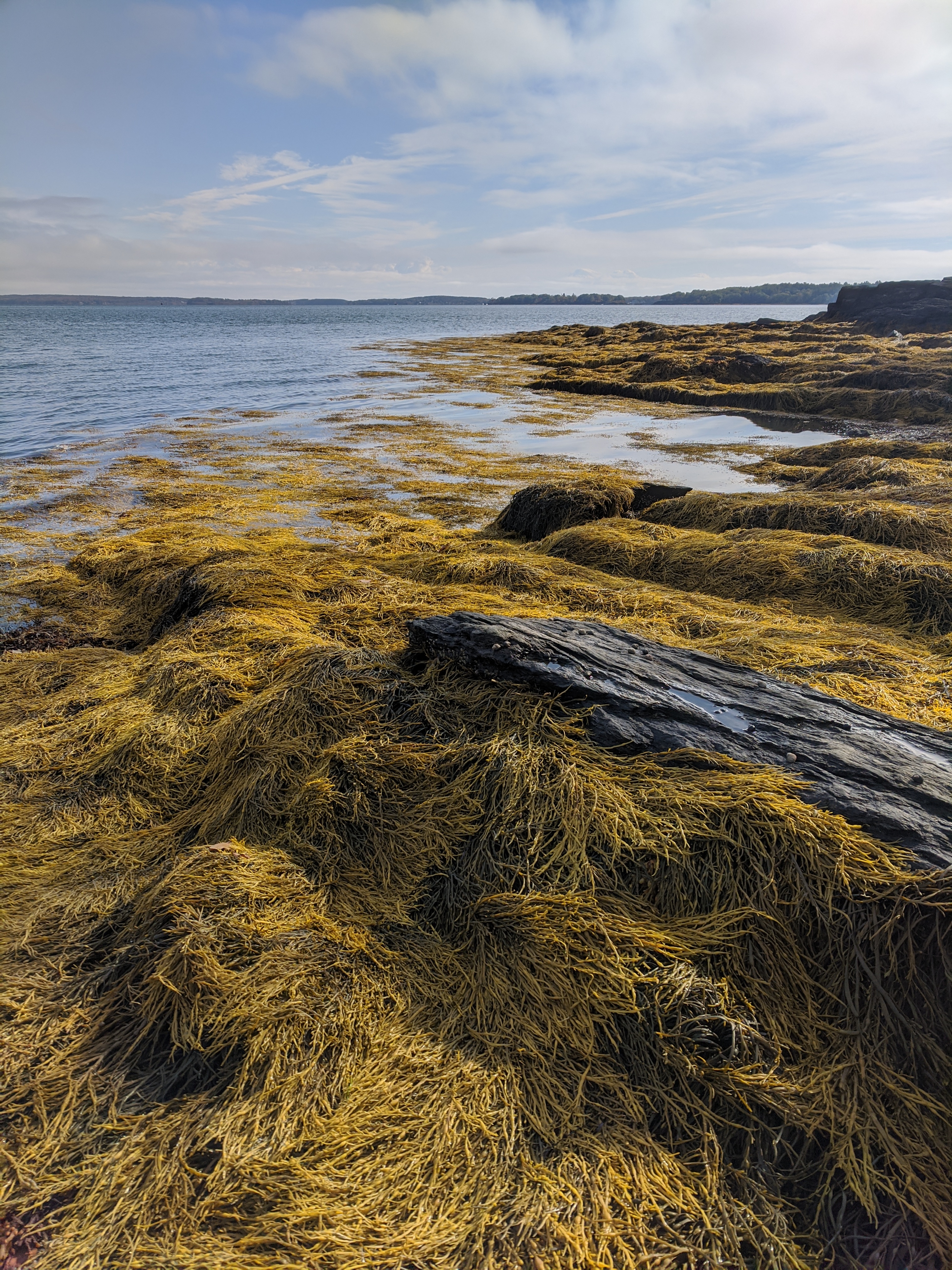
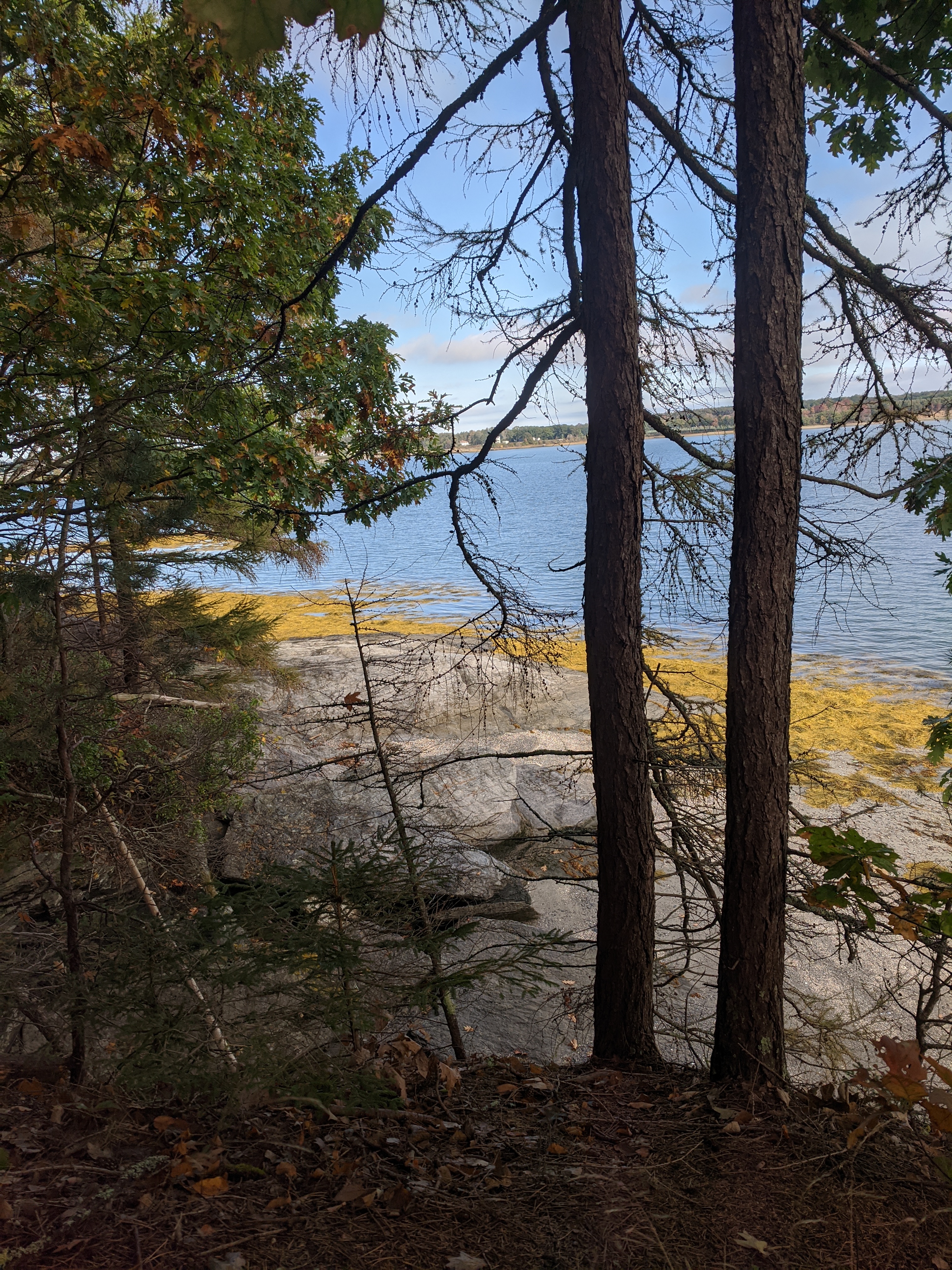
    The largest city in the place I call Maine is called Portland, and it lies along the Atlantic coast in the northeast of the country called the United States. For as long as the city has existed as a city, its industries have been tied to the sea: fishing, lobstering, clamming, oystering, seaweed-picking—though that is changing: wealth clusters along the seafront and the city’s industry turns toward tourism. At low tide the horizon goes even further out than you’d think possible, and between the expensive houses and the drawn-back water, the seaweed pickers go, bent over, along the little strip of land that belongs to everyone. The coastline just north of the city becomes rocky, and small granite islands house wealthy summer residents and year-round island people who know the ferry schedule by heart

    .A map eye and a surveyor’s eye, a deed eye; an insurance company’s eye, a property investor’s eye, a painter’s eye; an art collector’s eye beholding the paintings of the “empty” landscape that hang in the well-appointed houses in the best neighborhoods, in the white cool rooms of the city’s art museum. We perceive the beauty of a map or painting in the manageable space between the object and ourselves, the gaze a place that holds the object still. In the map and the landscape painting—objects I feel such a fondness for—the place that holds me is reduced to a place that I can hold. It becomes property and I am its arranger.

    The world goes on around the museum and the city records office, in infinite overlapping circles. The room and the building, the city and the state, are permeated by economies and public-health statuses and modes of transit and pollution, by taste and custom and the determining structures of US racial and class hierarchies. We work temporary jobs in Portland and pay two-thirds of our income to the landlord. It is a pandemic, so we don’t go anywhere. We couldn’t afford to go out in this city in any case. To occupy my time and thoughts, I take walks and ride my bicycle: watching the light change is free, noting down the seasonal appearance of weeds in the cracks is free. I am moving through a landscape that is unfamiliar to me, and I cannot see it from outside—outside the drafty, unheated apartment, outside the exorbitant rent, outside the virus transmitted by breath. Nor from outside the sea air, the smell of the white pines, the sting of first snow on a stiff breeze. Only from inside, where I am: with you

    .I find my way, in copper October, along a causeway to an island that houses the state school for Deaf and Blind students, a cemetery where the dogs and horses of a former governor have long since turned into soil themselves, and a clearing in which visitors build structures out of twigs, leaves, shells, seaweed, rocks, pinecones, and a winking belief in fairies. (The children who visit to see the fairy village do not wink, and their houses are furnished with bright orange berries, mushrooms, moss carpets, colorful and smooth stones, the best shells.) The name I know for this island is Mackworth.

    Among the trees, the name I know falls away, insubstantial as a piece of Scotch tape. Its granite edges, its carpet of rust-orange pine needles, its non-local roses trimmed back by state park service employees, its sumac, its dulse. I have names for these, and yet the names cannot hold them. They exceed my ability to call them

    .In every season, the island’s white pines establish the architecture of my passage there. I walk the circumference in autumn’s fullness, then in the silence of winter as the wind stirs the ocean into gray slush, and in spring as a bright yellow haze passes through the deciduous trees of the understory. And in the summer, in the rich quick bright unbearable green of living things that know how soon they will be dying. 

    The tall gray bodies of the pines set a rhythm for seeing. Their needles form paths and fields among the trees. The sunlight falling through them, I receive. The sky they orchestrate among their openings. They are an uncapturable color, a green that is not singular green but green-prismatic with all earth colors: chlorophyll, umber, ochre, iron oxide. Light and vision refracting in air. Among the white pines, at the foot of them, I find a distinct understanding of my proper proportion. The placedness that makes me among and with and makes my gaze through and in rather than at. From the edge of the city I see them, objects on a horizon: but among them, my sight is transformed and I am a subject among subjects. I would like to hold them in this withness and throughness

    .”Landscape” is an effect of an exterior position. I am wrestling with my love of landscape painting and my position as an outsider to that tradition, by virtue of gender, training, and class—and I am wrestling with the fact of my being-settler in this place, with the history of ownership-as-land-relation I belong to. From a distance, the painter or surveyor perceives an interplay of light, shadow, form, movement. These are arranged as painting or as map, or, if in the mind rather than in material, as property. But this island is a freely offered immersion in color, perspective, time. Surrounded by white pines, it is impossible to take distance. I cannot stand back and see myself apart from them. They remind me we have always been involved in one another, whether I knew it or not.

    I was formed in a scientific and religious environment where human beings and other beings are unequal. But despite how my imagination or understanding was formed, the white pines’ way of being requires, structurally, that I am among them, beneath them, between them, in their midst. It changes the kind of relationship I can have, and not just to the white pines. The withness they do to me extends limitlessly. They with me, and they with their understory. They with the greyness of the ground, scattered with their rust-orange needles, after long weeks without rain. They with the chipmunks who make holes at their feet. They with and are withed by the non-local roses and the local ferns, the lichen, the sound of the tide arriving, the bladderwrack, the smell of the mud on a hot afternoon coming through the closer sweetness of the needles that carpet the dry ground. They with the conditions of the air—humidity, pollution—and of the water, weather, the salt marshes, the bogs beyond, the fields beyond that. The way the white pines are makes me with, a with that exceeds them and far exceeds me—and exceeds the pronoun “me”.  Here, among the trees, I find myself one among many, even unseen many, moving in a concert it is impossible to know in full.

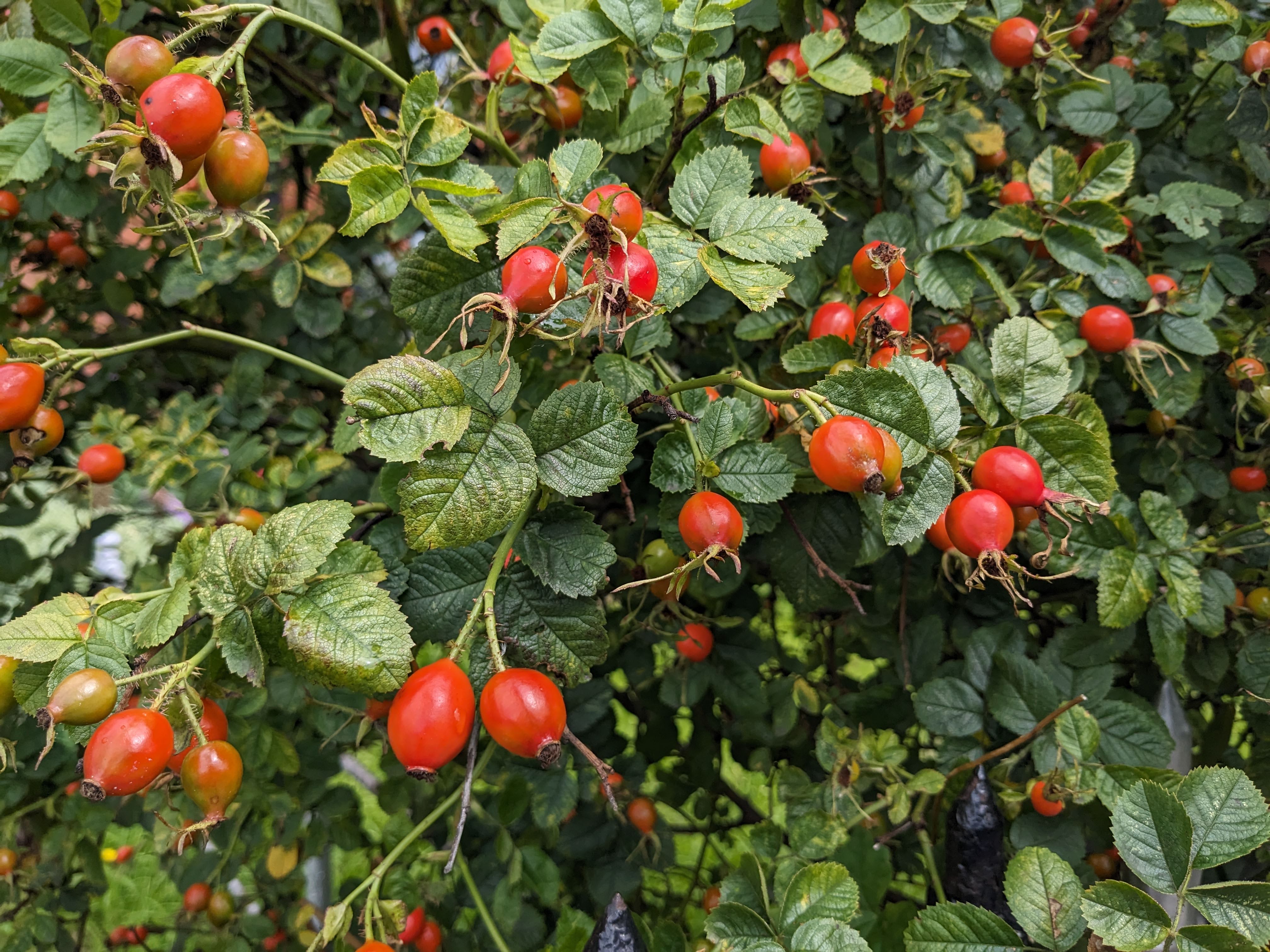
    The island, the ocean, the iron streaks in granite, the yellow seaweed and its scent in the afternoon air, the red hips of the roses spattering September air: I don’t want a painting I can own as soon as I see, that lets me say I know what you are. I want something that can do to me again what has been done here—that amongs me. As color does to me, as scent does: throughs me. Withs me. Bewiths me. This human head and your lowest branches. The light held there, having fallen through you from the nearest brightest star. The air I expel from my lungs and take into my lungs. The words-failness of that light, air, open, up, around space. An experience closer to what I name preposition than noun: more than thing it is movement, direction, location, a totality of space and passage. 

    The pines make this sense as they move through time and space. By the time I arrive where they are, they have ordained an entire way of being, and I enter it. This is true of almost all places I go: the city and its apartments, the museum and its rooms. They have been made in advance and they will outlast me. Among the white pines on this rocky island I am altered to fit the time and space of the pines. What is this alteration? It changes the I that I am, and the eyes that I have. The duringness and withinity of the pines are a grammar that refits me to an accompanied and accompanying multiple subjecthood. No longer the center of the sentence-shaped universe or the distant viewer of a landscape made to hold, I am here: with the pines, with the world they are.

    Thank you for reading! See you in a week.

  • [while walking]

    [while walking]

    welcome to the world of the living

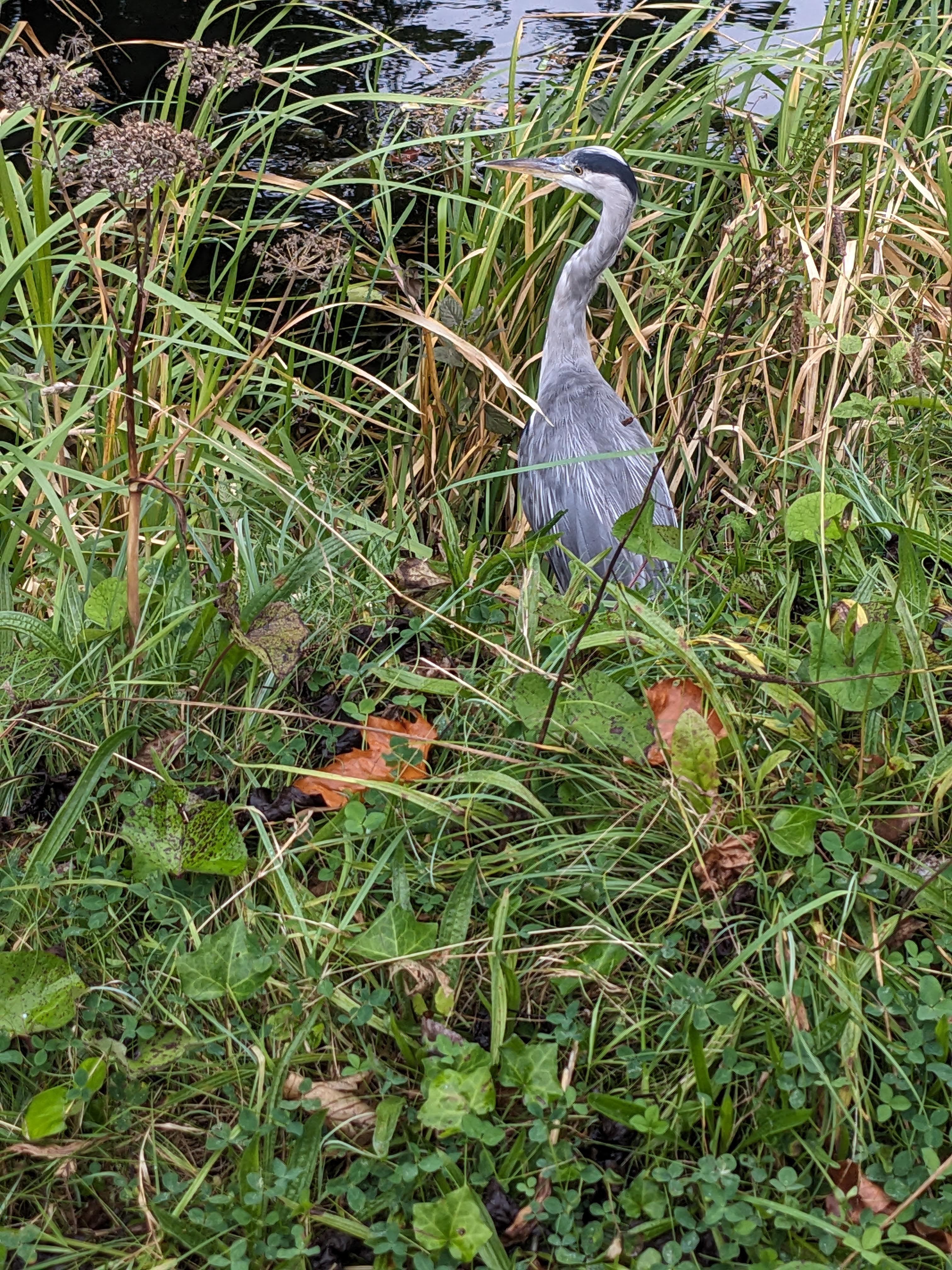
    September is just over. I am back to my commute walk now, a roughly 45-minute walk that takes me long the Grand Canal. To my right is a busy two-way street that is clogged with traffic at peak hours. To my left is the canal, and across it a walking path, two cycle lanes, and a narrow street for one-way car traffic. Not a bucolic place at all. The world of the living is present there, though. I was maybe five yards from this heron. There are always swans. Lots of crows, jackdaws, magpies. Seagulls. Starlings. If I moved more slowly or sat longer I know I’d see smaller birds. The variety of plant life is huge. If I knew better what to look for and how to look I’m sure I would see more insects. I have seen fish in the canal, which surprised and delighted me—I had assumed it was too dirty for fish. And there are all the humans around the canal, too: the ones who drive by, the ones who cycle by, the ones who walk, and the ones who sit by it to smoke or drink or hang out with friends because there is no private space in their houses or just sit on the benches for some quiet in the green shade. And there are the ones of us who live in tents along the canal banks.

    You don’t have to go away, is what I’m saying, to see ‘nature’. It’s right here, and we are in it—we are it. The faraway nature preserve one might voyage to to spend a day in nature feels to me like a way of pretending we aren’t implicated in it, permeated by it, always with it, in fact like a way of pretending we can even say it instead of saying, more properly, we, us. Embedded in the world of the living, we live along with it, as it. When we die we become it thoroughly. When we breathe, it becomes us. But prior to any conception, it is us, we are it. It ises us, the us of all the living.

    When I told some people I’d just met that I’ve walked about 1200 miles this year, nearly all of that in my neighborhood, two questions came up. Did I go out for ‘better’ walks, i.e. did I travel away to See Things, and was I doing anything with the walks. I don’t go away to see things because I am seeing things all the time. I haven’t walked the streets where I live enough to be tired of them and I don’t think I could. When I go a week without checking on the trees, flowers, brambles, gates, paths I feel a pang of regret for all the change I’ve missed. Time is fleeting. What better thing than to be a deep-space telescope of one’s most local surroundings, sending oneself image after image of the same view over time?

    The question of doing something with is such a gound-in question in art life.

    Such a ground-in question in the lives we live inside of capitalism.

    I take these walks because I want to be related to the place I have arrived. I owe it real looking; otherwise my relation to it would be assumption on my part. I am still assuming things despite my walks—because I just can’t see, sense, understand the all of it all. I don’t want to assume, or I want to assume as little as possible. I want to be light on this place. I want to see how things are, be puzzled by them, figure some of them out over time. I want to learn to draw connections in this place. I also want to know where things are, practically: both the best place to get bread in my neighborhood and the places where blackberries are thick hanging over walls in August. My walks, though this isn’t the reason I take them, keep me aware of my nonbelonging by teaching me what it might be to belong here. I value that.

    The pleasure of walking and looking is also sufficient reason for walking and looking.

    We are here, the world of the living says, including us in the we. That’s what pleasure means, I think.

    Walking can be a reply to the speech of the living world, because the scale of walking is on the scale of living things. By walking I mean moving at the pace of a walk. It doesn’t entail the use of one part of one’s body in a particular way. It is about tempo, not anatomy. It’s also about finitude. You can’t walk limitlessly. There has to be an end to it—because your body is tired, or because you need to eat a meal, or to go to the bathroom. Walking reminds us we are alive by insisting on the things living beings need: rest, food, water, an end.

    My walks do something with me—they put me among and in. They change my eyes and my language, my sense of smell, my leg muscles. Alive and not alone. What will you do with this is not the question of the world of the living. The questions are, at least but not only, where are you? and who else is with you?

    Thanks for reading. See you in a week!

  • since falling is first

    since falling is first

    failure is fundamental

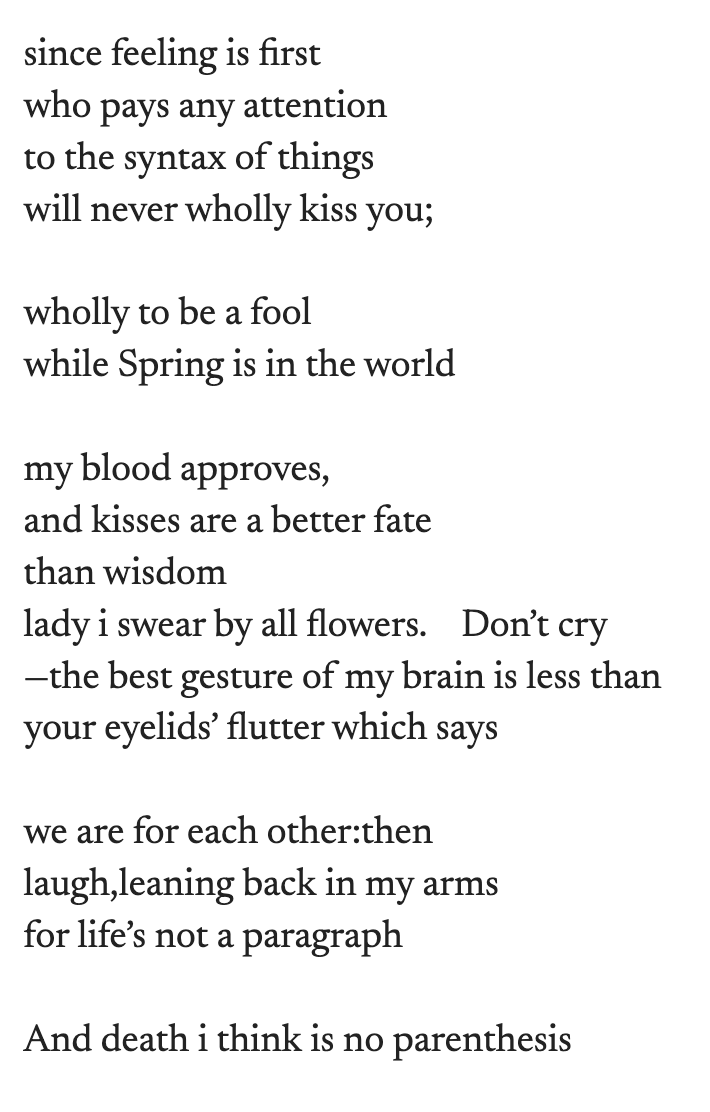
    since feeling is first who pays any attention to the syntax of things will never wholly kiss you; wholly to be a fool while Spring is in the world my blood approves, and kisses are a better fate than wisdom lady i swear by all flowers.  Don’t cry —the best gesture of my brain is less than your eyelids’ flutter which says we are for each other:then laugh,leaning back in my arms for life’s not a paragraph And death i think is no parenthesis

    This poem is one of my favorites. Like many of e.e. cummings’ poems, it seems at first a little opaque. What is going on with the sentences? We have fallen right into the middle of something. And why are there things that look like “mistakes” all over the place here? Did the typesetter mess up? Is the poet ignorant of “correct English”? I think I love it because it makes me learn to read, and that teaches me to write, and I learn to do both here by letting go of the guideropes—my certainty about “how language works”, what is “correct” or “possible” in English and in poetry, “standard” punctuation and grammar, my familiarity with “what poems are”—and by falling into what’s actually on the page. How do I love it? Let me count the ways.

    So: this poem makes an argument, and the argument comes right away. The first line argues (“since”, as in “hey, since after all we both agree that…”) “feeling is first”. First could mean both “primary, privileged”, and “taking place before other things do”. In the poem, whatever else happens, even “wisdom”, is second in all ways to feeling—comes after feeling, and is not as important as feeling.

    If feeling is first (best, primary), it can only be so by comparison. We have to know what isn’t first (best, primary). What is feeling different from here? One thing that seems to be opposed to feeling right away is “the syntax of things”. What is “syntax”? The correct arrangement of things, of words in a sentence or, by metaphorical extension, of the parts of something relative to its norms. The correct or habitual order of things; the order that makes sense in a kind of passive way, the sense we hear and can immediately process and agree or disagree with.

    One thing I love about this poem is that it requires me to feel toward understanding—to follow feeling and believe it: that there is meaning here, despite the poem’s refusal of the “syntax of things” (in this case, the usual ways sentences tend to arrange themselves over lines in English-language poems). And I love what this teaches me about reading and writing poetry: that making art means making something that feels ‘wrong’ or like a failure, because that’s what going outside the bounds of familiar syntax feels like. This poem reminds me that making poems isn’t about being well-behaved according to the history of prosody, but about paying attention to the felt ways of knowing that precede the codes, systems, and names of schools that follow them—even though knowing like that can feel very much like falling.

    When I read the lines “who pays any attention/ to the syntax of things/ will never wholly kiss you” my attention clicks together the poem’s playful refusal of poetic ‘syntax’ and grammatical normalcy with the argument it’s making. It isn’t just telling me how things should be or are: it’s doing those things. So the argument in the first four lines seems to be something like, since, after all, feeling is both fundamental and the first thing to happen, those who operate primarily (first of all, fundamentally) by reference to an existing framework of rules—a grammar of behavior or of ways of being; a rules-based rather than a felt and responsive, bodily approach to the world—will never wholly kiss you. A whole kiss? A kiss totally present and fully experienced? Is not a syntactical, rule-checking kiss but a kiss from feeling. A kiss, it turns out, from fooling.

    The word “wholly” occurs twice (lines 4 and 5) in relation to the verb “kiss” and the phrase “to be a fool/while Spring is in the world”. Completely, entirely being a fool and completely entirely kissing are two things that are unlike the “syntax of things” and also unlike a person “who pays any attention/ to the syntax of things”. Being a fool (in spring! season of emergence and renewal and burgeoning and sex) means being a person who is to some extent outside the rules that govern normal behavior, or a person willfully contravening those rules, or even being someone who is unversed in or unaware of those rules and so appearing foolish to those who know them. A fool may not have a place in the “syntax of things” but, the speaker says, “my blood approves”. What could be more intrinsic than the approval of one’s own blood? This is not a pat on the head from a boss or a look of approbation from a public genius. It comes entirely from inside. And, after all, “kisses are a better fate/ than wisdom”.

    What looks like failure at first, in artmaking, is often just difference from the syntax of things.

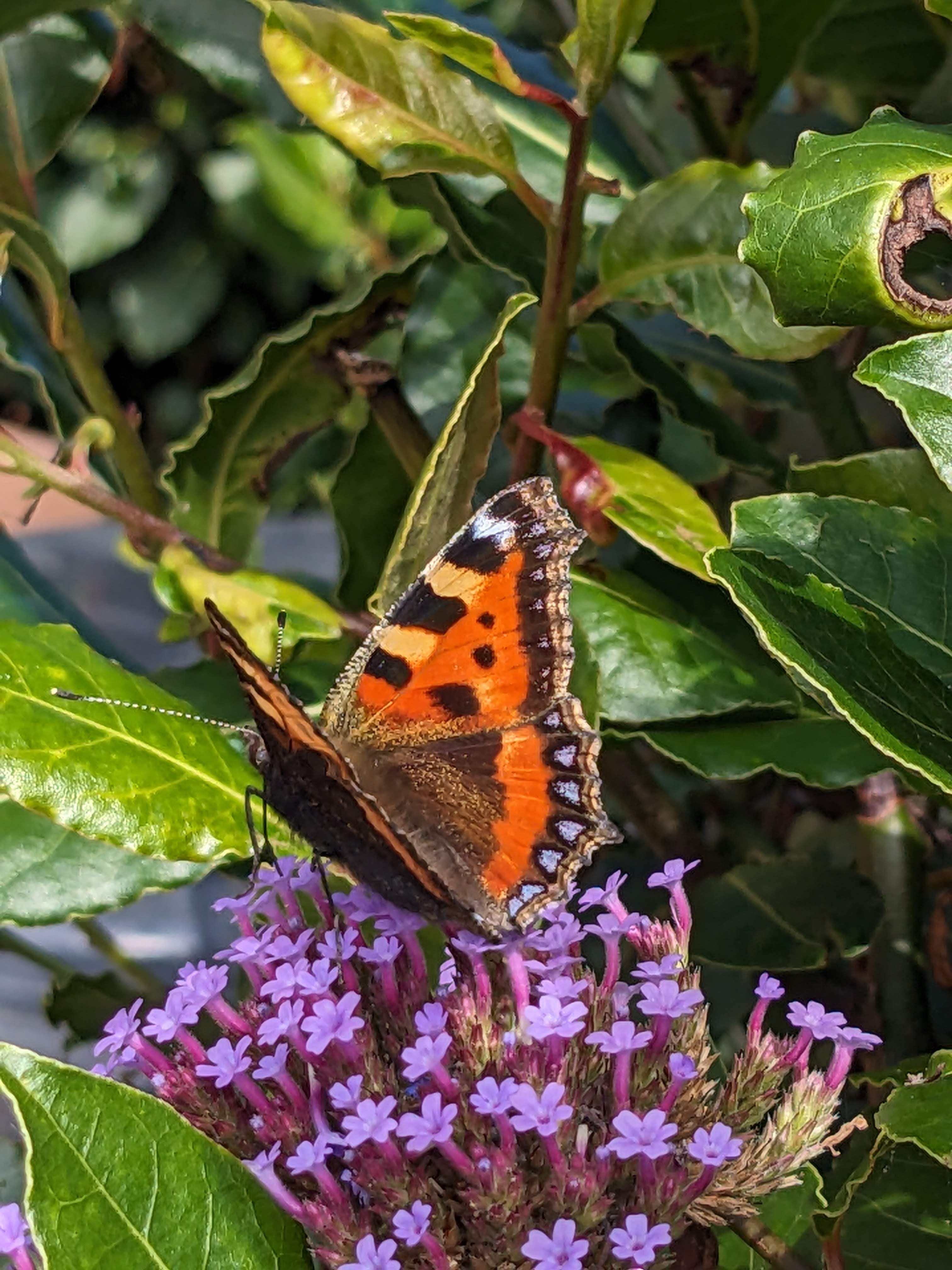
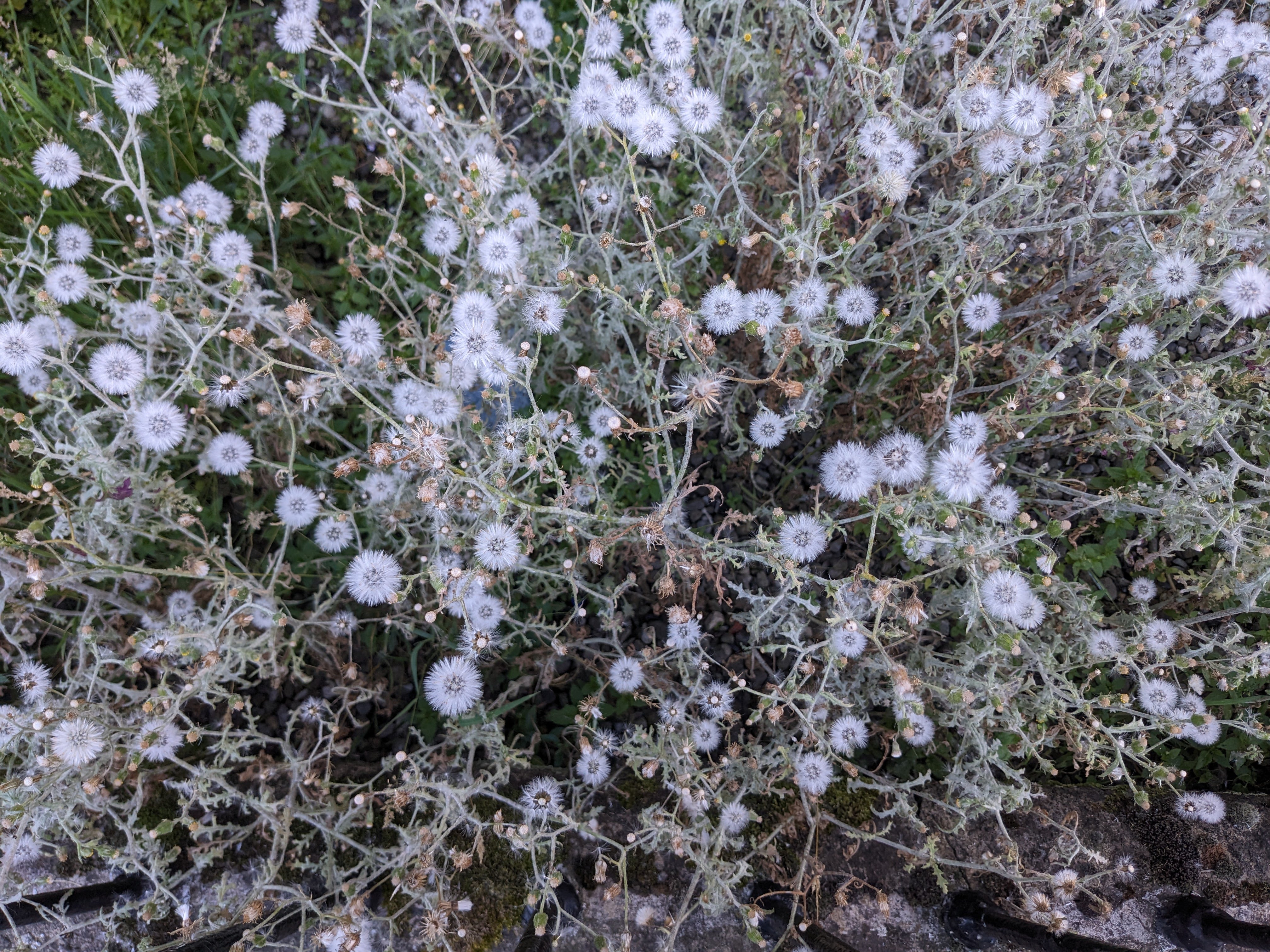
    some kind of hawkbit that's gone to seed. the stems are pale gray and the seed heads are white balls like dandelions in seed. a fog of flowers.

    Recently a writer friend asked me if I feel guilty when I’m not writing and it gave me pause. I don’t, I said, and my mind searched for a metaphor. Then I asked her, does the world feel guilty when the tide goes out? Although I respect my friend’s very different and normal experience of the world, it seems to me that not-writing, or failing at writing, or writing things that fail is a normal, necessary, even living part of writing anything at all. Failure means play, not moral insufficiency (or artistic insufficiency). Failure (looks like pause, looks like does not move me, looks like not quite, looks like too much like someone else and not like me, etc.) means something is happening. The tide is out? —then the tide is out. The land lies fallow for a season: so normal, so necessary. Sometimes you need a winter in order to have a time when “spring is in the world”. But my friend is not the first writer I have heard talk about the feeling that there is a right way to write and a wrong way, and that she is doing it wrong—and ending up feeling bad about it. Not the first writer I’ve talked to for whom failure alternately looms and motivates. I hear echoes of this when I hear students talk about failure as something to avoid, or when I come across writing tips online that more or less come down to how to succeed in business without really trying.

    It’s difficult to disentangle the fact that to make art that means with one’s whole life, attention, and being requires one to be willing to fail and even to fail much of the time from the facts of an education system that experientially equates failure to shame and reduction of status, and a literary world in which success is visible and sensationalized while failures of all kinds, from the ordinary and necessary “failures” (drafts, learning to think, getting it wrong, change over time) that are just another name for process, to the ordinary and common “failures” (rejections, going unnominated or unpublished, anonymity, marginal position) that are the natural outcome of treating the human need to make meaning as grounds for economic and social competition, are mostly hidden from view. I want to be clear that I am using the quotation marks around the word “failure” here because to me these seem less like failures than like part of the pattern of an artmaking life.

    It is a fact that to find out what we mean, like learning to walk, means falling over and over as we try to understand in body and mind what gravity is, how foot can feel (being unshod), and how locomotion among and through other moving beings and static objects works. And then we do that again and again! No less, all our lives, do we learn subtly to change, adapt, grow, adopt new manners, skills, attitudes. None of it easy; we fall down often. And then we change tactic, do it again. Just part of life. Failing, falling, cannot be separated from learning to move, think, be, write.

    Artmaking and writing are responsive processes. They respond to our knowledge (which changes over time) and to our perceptions, to the world around us, and to the processes themselves as we undertake them. These processes of meaning-making may sometimes have recourse to the “syntax of things”, but they are not that. To make a poem is not to replicate the habits and gestures of the thing called “poem” but instead, having carefully examined those things called “poem” and having deeply attended to the ways they make meaning, to ask, then what is “poem”? and to make an object that replies as a flower replies, or an eyelid’s flutter replies, or a kiss replies, in the way only the living thing can.

    We are not made to fit ourselves mechanically into pre-made molds, whether those are received forms or other people’s ways of working. We are made to pay attention to what is in front of, inside of, around and through us, including received forms and others’ ways of working, and to discern the ways meaning can be made, changed, extended, complicated. We use language and form (visual, sonic, conceptual, and other forms), in the case of poetry, to attempt to accomplish some communication of what our attention has given us. And of course we fail—and of course we need fallow time—because this is difficult. It is very, very difficult to make a world. It takes so much imaginative work to make the world a poem is. Even a place as comparatively small as Rome wasn’t built in a day.

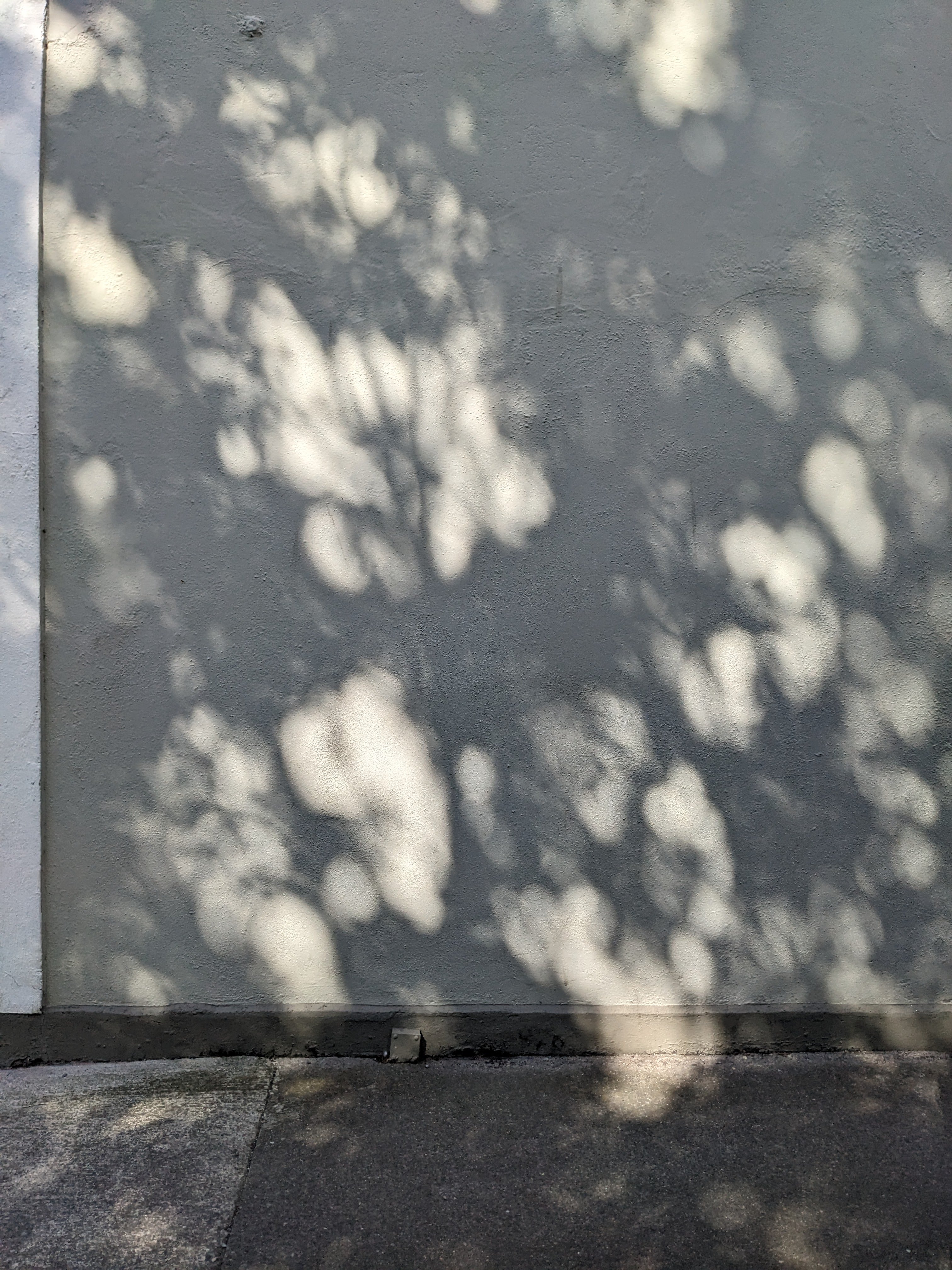
    light and shadow through trees cast on a pale gray plaster wall

    It might seem like following rules and guidebooks and lists of tips on writing websites will get us safely where we have to go. But will it? And would it be so foolish to fail, in any case? In the world of cummings’ poem, those who pay “any attention/ to the syntax of things” are incapable of “wholly” kissing or “wholly” being “a fool”. It’s pretty clear that the poem values both kissing and fooling! There’s a line in the poem that for me connects the two nouns “fool” and “wisdom”, and it’s a line of binary opposition. Which is better? To be a philosopher or a fool?

    In the poem, the speaker says it is “blood”, common substance of all bodies, that “approves” being a fool. Not a government, not a religion, not a grammar. No top-down rule that can approve this, but one’s own vital blood. “Wholly to be a fool” is to invert a hierarchy that might otherwise value “the best gesture of my brain” over “your eyelids’ flutter”, the trappings of syntax (brains, wisdom, paragraphs) over the “best gesture[s]” of the living body (laughter, flutters, flowers). But Cummings does not simply invert the hierarchy of fool/philosopher, because both live together in the complex space of the poem. He inserts an inversion of value (kisses>wisdom, life>paragraph) into a proof that, though broken across lines, obeys syntactic logic. The world in which feeling is first lives in relation to a world of syntax, a both-and world. Where the poem falls or fails it is also held. I think he probably had to fail in the making to find his way to this form.

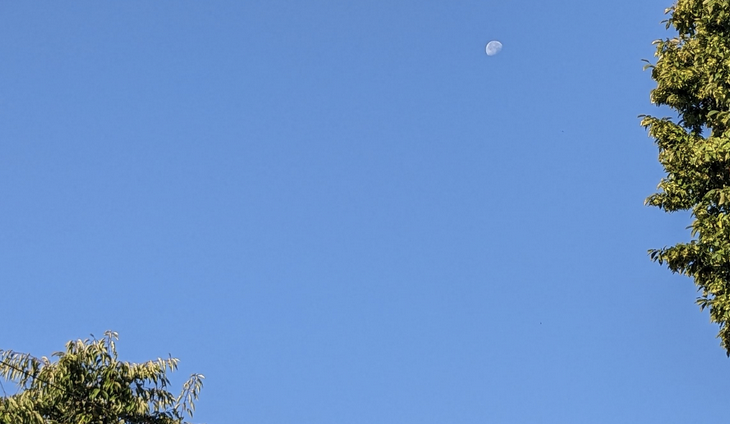
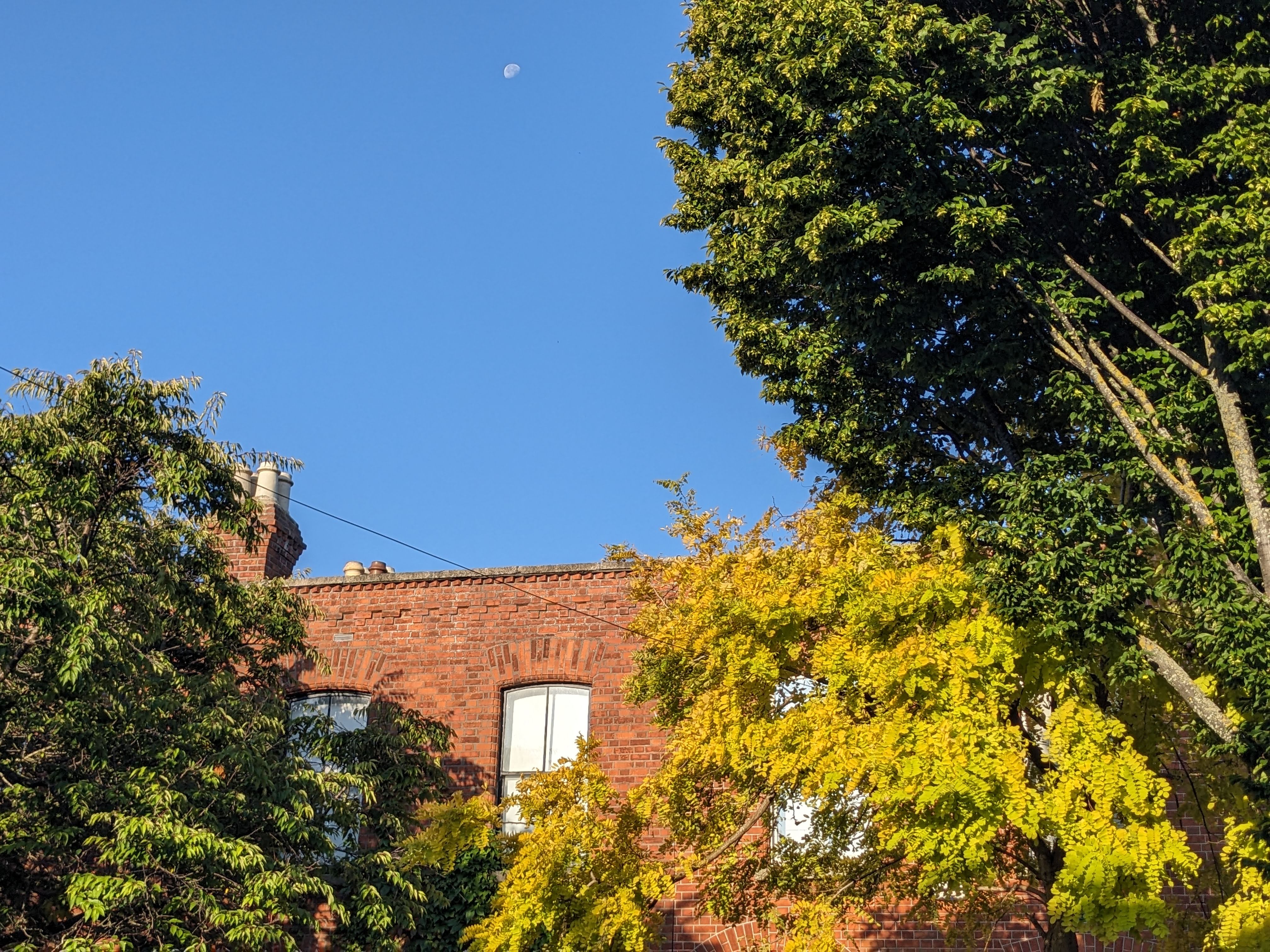
    blue sky and partial moon over a red brick house and bright green and yellow treetops

    This is a poem—there are several of cummings’—that I feel I could spend years talking through. They are tiny, intricate syntax-and-feeling puzzles. I can’t imagine they came fully formed. In fact I know they did not, because, reading through cummings’ collected poems I can see his ability to move and use and play in/with language change over time. We embark on thinking, writing, making, being at the beginning of these processes. To do them well is not a question of arriving at some absolute point of ability but a question of reflective continuation after repeated failures—and also a question of learning to see what might look or feel like a failure as just part of the act of thought.

    Be beginning. Be feeling it out. Be paying attention. Be open to what isn’t yet or “couldn’t possibly be”. Do what shouldn’t or can’t and see what happens. Because we can’t know what we think until we write it. We can’t know in advance what the writing will be until we do it, and then again. We are not here simply to fill in forms, governmental or poetic. We are here to find out what it can be, our art, when we cross for our few brief years of life its immense history, and then pass it on to unknown others, changed. The thing about poetry is, remember, it comes from make. And that’s our job: to make it, to make it new in ways we couldn’t have imagined yesterday and that often require us to feel as if we’re falling from the paths we know to find them.

    This goes for what writing looks like, too, I think. Factory work is harmful for human beings and our world. It does not enliven or delight. So what convinces us to think about writing as a question of productivity? Why is the assembly line the image for a writing life? Writing is not for producing writing; writing is for being in the world. The books come along if we can do that second (first!) part with care, returning to it over and over. We need the parts of writing that look like rest or walking or looking or reading or listening to music or thinking, and the parts that look like not-knowing, and the parts that look like getting it wrong. And we also, I think, need the parts of life, the ‘failures’ at writing, that teach us to discern what the difference is between exhaustion and fear or avoidance or laziness or too much Twitter. We need to fail because it teaches us how to understand what we want and where and how to find that.

    Be gentle, writer. Writing is endless because language does not end: we are in an ongoing process of learning to make what doesn’t yet exist, and learning to suss out what kinds of actions can bring us to make what we need to make. There is enough room and time for all of us. And I think allowing writing to be all it is, including its fallow times and its failures, can help us understand how “to be a fool/ while Spring is in the world”, which is to say, how to write poetry, but also to say, how to be human with other humans, in this living, changing place that only lasts an hour.

    Thanks for reading! See you next week.

  • you can make a world

    you can make a world

    hand + pencil + sense organs + time + paper

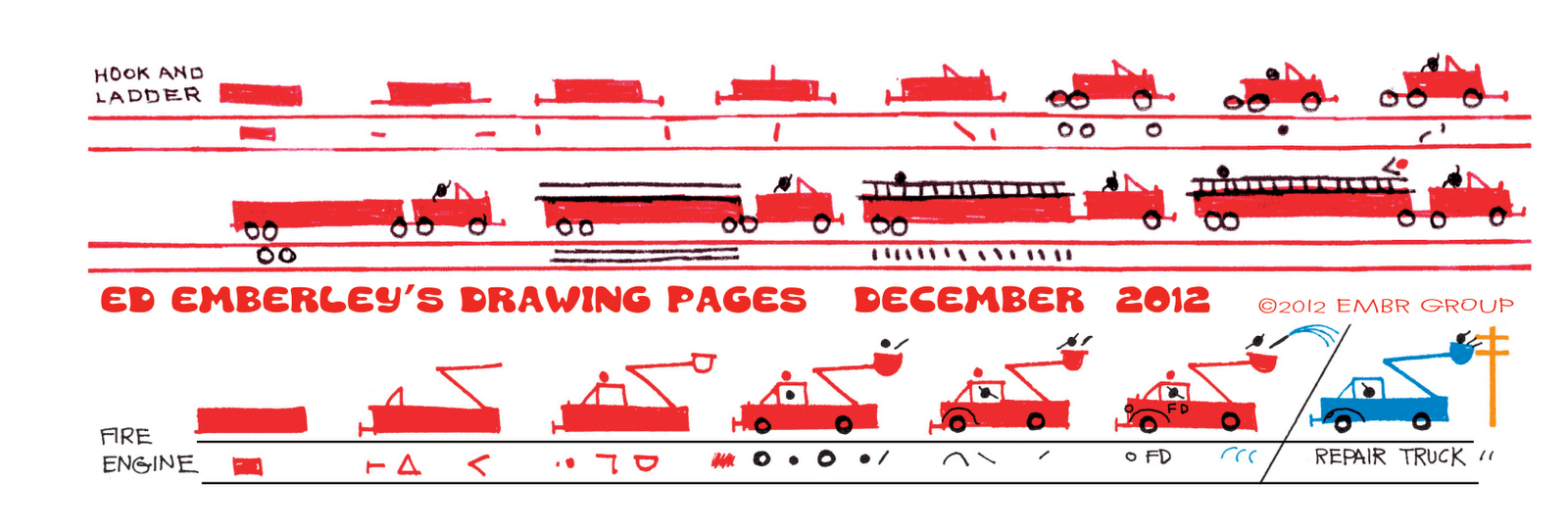
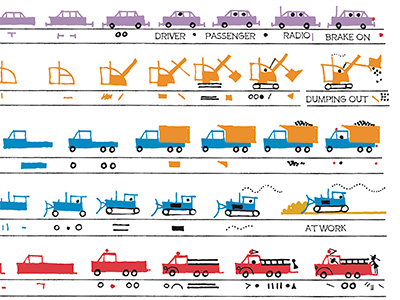
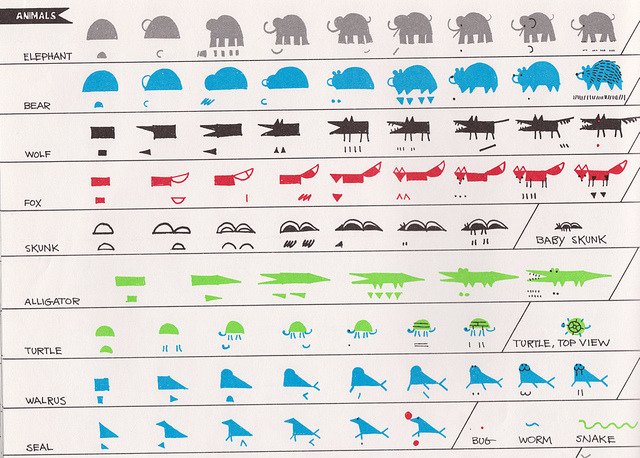
    Did any of you have an Ed Emberley drawing book called Make a World as a child? (You can see someone flip through it on YouTube here.) Emberley broke down hundreds of everyday objects, animals, plants, buildings, and bodies into component parts beginning with the simplest shapes. By paying attention to each part and its relation to the other parts, you could learn to draw all kinds of things. I loved this book. I loved looking at all the orderly grids of shapes becoming animals or castles or furniture. And I loved that I could go to the book with something I didn’t know how to draw and learn to see it as pieces, put those pieces together, and then know how to draw its basic form. Ed Emberley’s book taught me to improvise, and it taught me about seeing, and it also taught me that images are made by people. As a person, that was an important lesson: there is no image made that isn’t made by a person, and so you, too, can make images. It never felt, using Make a World as a reference, that I was intended to make a perfect copy of Emberley’s drawings, although I sometimes tried (because those neat little rectangular deer were so charming). Instead it felt like Emberley was just showing me that it was possible to draw things, that drawing wasn’t something out of my hands and reserved for Real Artists but was instead very much in my hands, in every sense.

    Every page in the Ed Emberley drawing book was covered in dozens, even hundreds of drawings, all of which I could make myself (and make my own), as many times as I wanted. And every other reader could, too: the adult across the table, the sibling to my right. Firetrucks and cows, apple trees and suspension bridges: we drew them all, and multiplied the world at our fingertips across sheet after sheet of mimeograph paper my dad brought home from work.

    On the other side of the table, where the adults sit with their newspaper and their notebook, there is a different kind of accounting, and the world does not present itself as quite so multiple. For example, there is only one set of Pulitzer Prizes given each year. One set of Ruth Lilly Awards. One set of Guggenheims. Getting onto the New York Times bestseller list is both unlikely and byzantine, and the spots are limited each week. The NEA goes to twenty or twenty-five writers each year. The Cullman Center Fellowships, the Whiting Awards, the Stegners; Arts Council awards from your state, region, or nation; the Pushcart Prizes, all go to just a few writers each year. The most competitive MFA programs take five or ten or fifteen people a year and give them two or three funded years to learn to write. In the first quarter of 2020, Publishers Marketplace reported a total of 14 ‘deals’ (sales of manuscripts to publishing houses) over $500,000. The math of that side of the table is a math of slim chances. It’s the math of the lottery ticket, but a lottery ticket costs a dollar and a life as a writer costs a whole life, however you spend it. Those statistics about what success looks like in the commercial world of literary publication are quite a lottery to hitch a writing life—meaning a human life, a life of making things, asking big questions, thinking with others and alone, being in the world—to. But how else?

    It takes a lot of concentration and a lot of attention to what’s in front of us to make what only we can make. It takes a lot of time and patience to take in the world around us—the world of shapes and forms, traditions and norms and habits—and to make something of it that really does what we are; that, in Hopkins’ words, “selves—goes itself”, that “speaks and spells” itself.

    The world of public acclaim and awards, the world of pressure to publish poems and stories and essays and books and and and (wait—can we ask why, first?)—the world of status as a Writer, or as a good writer or as the Best Writer, is like a sun. It is so massive that its gravitational pull acts on us even, maybe especially, when we aren’t aware of it. And, like the sun, sometimes it gets between us and the thing we are doing, the human thing we are meant to do—make art, write—and because it is so large and bright it’s hard to see around it. Publishing and awards are out there at the center of the solar system, and we float around them, drawn by their gravity, until what we produce finds a way toward the center, often along well-established routes of access, privilege, power, and money. And so it can seem like the thing we are meant to do is to publish, or to win awards, or to receive acclaim.

    But wait—that’s not what Ed Emberley’s hand says.

    What Ed Emberley’s hand says is: you can make a world, not you’re going to get a book deal, and what it says is look at what you’re doing—there’s real pleasure there! Maybe it says, Shakespeare said “present mirth hath present laughter” or maybe it says, Robert Herrick said “gather ye rosebuds while ye may” and hey, here’s how you draw a rose. It definitely doesn’t say your life is a game of chance and you should only make bets that look like winners from the start. But okay, it’s a talking hand; you might be disinclined to take its advice.

    Sometimes I forget that at the end of the line of shapes on the page (let’s say these basic drawn shapes can be a metaphor for all the ways we learn about writing—the practice we get with received and organic forms, how we learn about style, what we receive from a tradition in this or that genre, our awareness of the kinds of books that make money or get reviews in the New Yorker) there is a drawing that could only have been made by Ed Emberley. And when I make those shapes, no matter how carefully I look to his model, naturally my hand transforms what I make into something only I could make. And that that is the right outcome: not a replica, a transformation.

    Something else I loved about the pages of Make A World—actually, I still love this—is that they were full. There is no page where there are not a dozen things happening. Often there were little visual jokes, like the moment the seal gets a red ball, or the top view of the turtle, or the baby skunk, or the backhoe dumping out gravel. You can almost see Emberley having an idea in those drawings. Those moments of play seem to me not like invitations to copy but invitations to invent and imagine, and models for how to have ideas that don’t end with a copy that can be checked off but end with me drawings things that aren’t even in the frame. The drawing doesn’t end at the end of the row of shapes; it begins there, because that’s the point where your hand takes over and figures out what comes next. I loved that the pages were so full of possibilities and that the possibilities all seemed to point to more off the page. There is no end to imagination. You just keep going, all your life, and that’s how you make a life, and an art. It’s kind of the opposite world, if you think about it, to the world of waiting for awards and prizes and acclaim and publication with a Big Five house (or with Faber, or with Graywolf, or whoever is your ideal publisher).

    The world of Ed Emberley’s Make a World is open. You take a running jump off the end of the page, and there you go, making your own world. You start by learning to draw a seal, and then you imagine the rocks, the ocean water, the seaweed, the barnacles, a sea kayaker, their helmet, gannets or oystercatchers or puffins, weather blowing in from the west….

    Now what could a writing world like that look like? Starting with the things you learn to make by reading but that, in making, is so transformed it could only be your own, and growing from the word toward the world—not the publishing world, grateful as we may be for its existence, but the world of our invention and our shared relation with everything that lives? What would a writing world look like where we could see writing (a poem, a book) not as the end of our imaginative work but as the start, a point from which to begin making everything that touches a poem or a book?

    I think such a writing world would be full and busy, not scarce or scanty. It would have to feel endless in the way the drawings made as a child felt endless—more always possible. It would occupy our time and hands and minds as well, and in doing so I think the very doing would make us happy, the kind of happiness one gets when one is making something with thought and care. It would probably have to be close to home, in full or in part, and be of a scale that could involve us directly. It would have to be relatively small—not in idea or in scope or in imagination but in terms of production and material, because things need space. It would have to be made of materials we could get our hands on, with equipment we could use ourselves.

    There are very real pressures to take part in the public side of the literary world (by which I mean the system of prizes, fellowships, awards, and publication that is for the most part driven by an economics of scarcity, made precious by how few make it to the center). And even those of us who have been published or won awards still experience the discomfort that comes about when those awards or publications enact their gravitational pull on us: wondering what the point is of writing, or why we do this work when finding readers is so hard and the odds are so slim. In my line of work it’s basically de rigeur to publish, and I wouldn’t have gotten my job if I hadn’t published books with a major literary nonprofit press in the US. I’m very grateful to a professor in the final year of my MFA program who took me at my word that my “publishing strategy”, which we had to outline for a class project, was to print a dozen copies of my MFA thesis and leave them on buses around the city; that professor sent my manuscript to Milkweed, and that resulted in the publication of my first book. Without that professor and that kindness and that book, I would not be where I am.

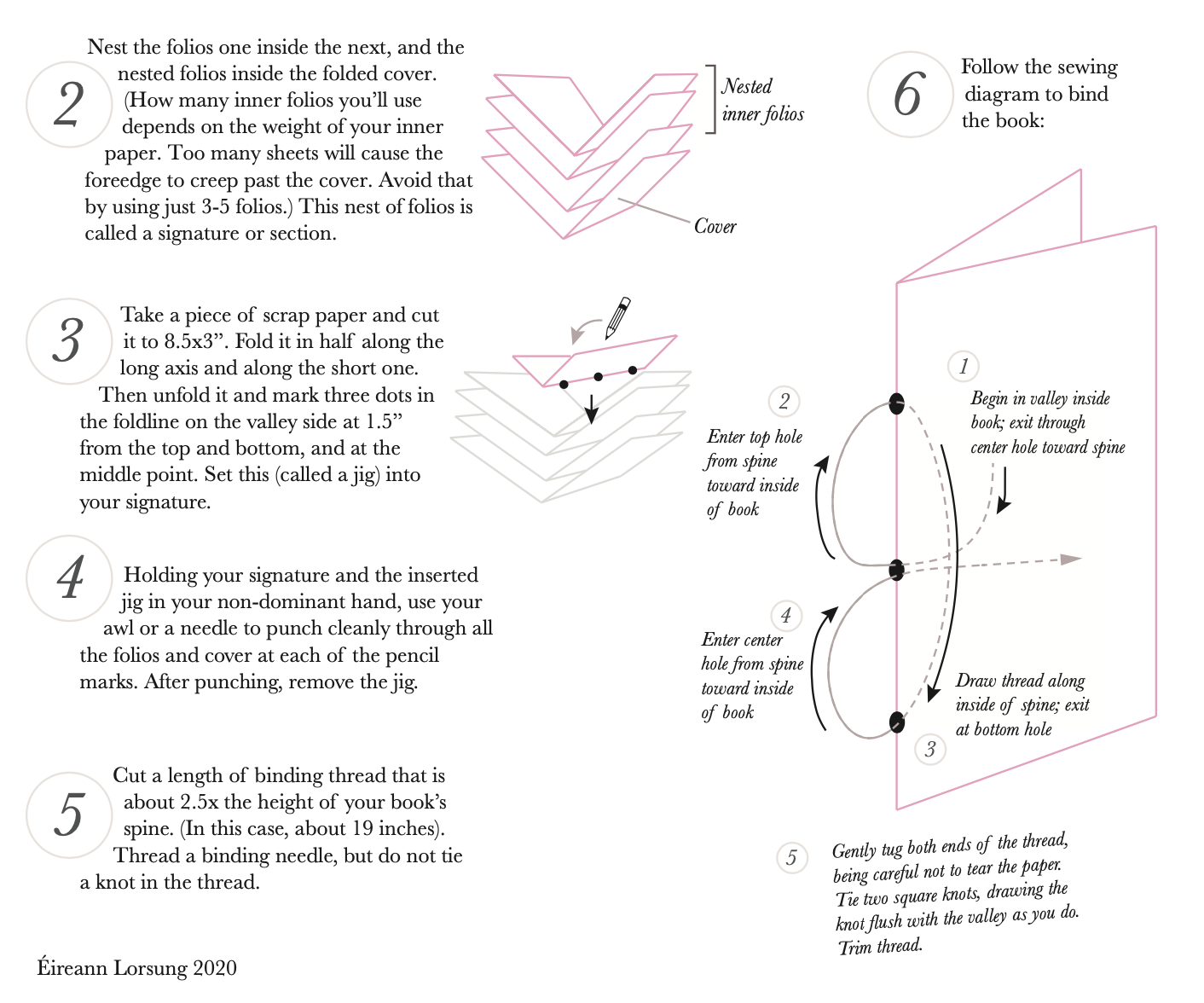
    But I would still, I am absolutely sure of it, be writing. And I would definitely be making books, because making books is something I’ve done since I was a very little person, looking at Ed Emberley’s drawings and making my own. Making books is something we can all do, right here at the table between us, and it’s a first step toward a second, third, millionth world made by hand to live alongside the world of commercial publishing and to remind us that writing is not the end but the beginning—that writing teaches us, step by step, to make a whole world.

    To me bookmaking is also one of the most immediate ways to remember that we can refuse to compete; we can treat the logic of the competitive system we live within as optional. We can divert, invent something else. After all, aren’t we ‘creative’ writers? Doesn’t that mean, to make something up? If we can make a poem, we can make a book; if we can make a book, we can make a room for that book and others’ books; we can make a reading or an event series. We can begin to see and name the structures and norms we live inside, and we can follow that other ordinary writer in saying, sometimes, that we would “prefer not to”. Making the text is just the first shape on the page, and then our imagination can say—go!

    Publishing is a joy; it’s a pleasure and a real honor to join with others who think and have thought about writing and who write or wrote; with those who read and those talk about ideas. It’s a pleasure and an honor to be read. It is so, so special and it is also so, so normal—it is so human to want to make things, including language-things, and to share them with other people. The trick, to me, is remembering that the people whose work is made visible within mainstream publishing and prizegiving’s economy of scarcity are not the only people who write, talk about ideas, think about books. We all can. And the people who can make publishing possible are not only in the well-known houses in New York or London; they are also right here, sitting across the table from us. Pass the scissors. Pass the thread.

    If we want to see one another, let’s see one another. If we want to be seen, ourselves, let’s make a space in which—it doesn’t matter if it is small or humble; that seems very natural and neutral to start and also to go on—we can be seen by one another, and in which to see others’ work.

    Redirect. To your fingertips. My fingertips.

    If scarcity is the engine that orients our imaginations toward structures that mostly leave most of us out, then muchness must be part of the reply. Availability. Right-here-ness. The images above are a right-here technique I often use, that I’ve been using since 2007 or so and that has alleviated much of my worry and also much of my loneliness in writing. Make a book of your own. Right now. With whatever is to hand, about nothing much at all. Then make one of your friend’s work. Then make a dozen copies of your friend’s book: now you have a press. Now there’s one more place that can publish other people.

    You want to be published? You want your friends to be published? Make the world in which that’s possible. Use the copy machine after hours. Save up and buy a printer. Get friendly with your local offset and digital shop (they probably do a lot of ad printing and will enjoy taking your jobs on). Get a few friends in on it if you don’t want to or don’t have the skills to do it all alone. You don’t have to wait for Hachette or The Song Cave or anything in between to see you, though they may well and how wonderful if they do: in the meantime, which is your life, you can see you. You can see the ones you love. You can make the books to hold the things you’re thinking and seeing. You can make them now, with your own hands: as pamphlets, or as posters wheatpasted to the sidings of construction sites, or as postcards mailed to anyone who’ll pay for a stamp, and, doing so, you’ll be in a rich tradition, still ongoing, of people who’ve looked at a book and thought, well, I can do that. And it’s not one or the other, if you make a book of your own: who knows what else is possible for that writing? But right now, if you have the choice between longing to be published by someone else and making a book of your own or a friend’s yourself, I’d say make that book.

    You can make a world.

    About as often as a nonfiction teacher reminds their students that “essay” comes from the French verb “essayer”, which means “to try, to attempt”, a poetry teacher reminds their students that the word “poem” comes from the Greek verb for “to make”. And that’s the point, isn’t it? In the end? Not to win, but to make; to be part of the made and making world, to make things? To refuse, even, the terms by which some of us might be ‘winners’ and the others—not? The point of writing poetry is that the poem leads us, as Ed Emberley’s drawings do, not to a single end but to the edge of the page which we are meant to leap off of, toward the whole world, also ours to make alongside everyone else. Make poems, yes. Make books, make magazines, make newspapers; make postcards and posters, make classrooms and residency spaces, make kitchen table conversations and make walks where anyone can join. A world. The poem doesn’t end at the end of the line; the ‘aim’ of writing is not the bestseller list. It’s here: your hand holding the pencil as your mind suggests the horse’s mane not hanging but flowing, and the legs, then, not standing but running. And the grasses, then, and the wind bowing the grasses down so that they resemble the mane of the horse; and the flowers among the grasses, and the pollen invisibly flying from them, and the wide open sky under which everything is possible.

    Thanks for reading. See you in a week!

  • poetry is not a zero-sum game

    poetry is not a zero-sum game

    there is room for you (and you are not alone)

    Hello readers—thanks for being here. It’s been six months of this experiment now: six months of weekly essays here. Kind of hard to believe. I have benefitted from your presences and am grateful to be read by you. Thanks for your comments and thank you for sharing what I’ve written with others.

    Just a note to say that if you are receiving these essays in your email but email stresses you out, you can always read them in-browser, or, if you use an RSS reader, you can add them using the address https://bewilderment.substack.com/feed. Once a week is a fast pace for writing and a very fast one for reading, especially when your inbox probably already has a lot of other interesting (?) things in it.

    This month, a back-to-school month, I’m going to try to write four pieces loosely about writing—about teaching it and studying it, making it and doing it. For any and all who are re-entering the beautiful and difficult space of the classroom, happy new year!


    I teach writing in universities as well as outside of universities. Right now I am employed by a university to teach writing. At many universities there is the writing everyone does, and then there is this other kind of writing: “creative” writing. That’s what the writing I teach is called, though I prefer to call it “writing” so as not to differentiate it too much from the process and activity that happens in biology labs and in literature classrooms. The adjective “creative” changes the ordinary activity called “writing”: in some circumstances it can make the writing seem suspect: is this ‘actual thought’? ‘real work’? just flights of fancy? therapy? What is this writing-with-the-adjective-creative-in-front-of-it? In other circumstances, I have seen the word “creative” make writing and the writing classroom feel impossibly out of reach, painful, or rarified. In this case, “’creative writing” becomes a place where one may be ranked (a “good” writer, a “bad” writer) or even a place where one cannot enter (because one senses or has been told that one is “not a writer”). So I think a lot about these two words, “creative” and “writing”, and how they are deployed together and apart in the places I work, and where those deployments come from, and what effects I observe and extrapolate from them.

    The way I learned to write, to think about writing, and to think about “creative writing” means I can only imagine writing as something that’s done in the company of other people. This is the foundational truth about writing: we don’t do it alone. I mean it literally, too: I learned to write at the kitchen table and grew up doing my thinking and writing there, with at least one but up to five other people around me. Given this, how could I untangle some parts of my thinking and call them purely ‘mine’? As far back as I remember, thinking and writing have been things to which incidental noise, speech, music, and others’ ideas have contributed. And, of course, as most people do where I come from, I went to school, and there I learned to think and to write (and to draw and to sing and to run) in the company of peers and teachers.

    Now I am the teacher, and the other people in the room when I think about and practice writing are students. In the writing classroom, in the best cases, there is the incredible sensation of—a student once called it ‘flying’—thinking together. Not me telling you, not us competing to be heard, but us, together, working something bigger than any of us out. It’s an incredible gift, that feeling of thinking-flight. And it has never happened to me when I’m working alone, but it’s happened many times when I’ve been thinking with others.

    When I say ‘we don’t write alone’, I mean this in a permeating way, even outside the rooms where we are physically together. We don’t invent the alphabet, we don’t design private grammars, we don’t learn to speak or think in isolation. Our ideas come from our contexts, contexts of thought and of body. We read and are read books, we hear songs, we attend services in our religious traditions, we eavesdrop on strangers on the bus, and we sit in class where dozens or even hundreds of other language-users immerse us in the complexities of language. We learn about the world from others, in formal and informal education—even the hot pot that, touched, teaches me it is hot is an other whose company made it possible for me to know.

    And writing itself is only possible because of other people’s labor, now and in the past. Not only my ideas and the technology of alphabet and grammar book, but the material possibility of writing is given to me by others. Everything that my writing uses to make itself is shared or inherited, from the design of the ballpoint mechanism in a pen, to the circuitry of my laptop keyboard, to the format of the A4/Letter paper the printer is built for, to the syntax of English, to our literary traditions that will, often before I realize it, make it possible for me to sort a given piece of text into the categories “poem” or “not-poem”.

    All that said, I was educated in the way most people of my age and place were, which is to say in a system of education that was more or less openly competitive, in which one wanted—I wanted—to be a “good” writer, to be the “best” writer, even. After all, the writers we read were the best. They were the models, implicitly and explicitly, and so the frame of bestness was the model as well. To be a writer, I mean a Writer, to be read, seemed to mean to follow a path toward writing that came to me along a line of white, landed, nominally or actually Christian, English-speaking men (and some women). I didn’t think much about that as a young person; I didn’t have the language or the framing to do much thinking about that beyond noting it. I didn’t yet think about the way the literature I was given, in the education I was given, was shaped by a place and time where competition—in economics and also in a distorted understanding of science—was imagined as the natural state of things, and in which competition it was also ‘natural’ that those writers (people who looked, more or less, like me) should come out on top, so smoothly as not even to seem to have competed (much less made or broken the rules).

    But now I think a lot about the way that frame was made, and what it means—that it is not a neutral or natural frame, that the aesthetic priorities given to me by my education are not historically neutral or neutral now. And I think it’s not a coincidence that in light of that education, I often thought that the point of learning to write was learning to be good at writing—by which I meant, good at (re)producing things that would be recognizable as poems in the tradition of the best writers, the ones I had been given to read.

    “We call this opportunity hoarding, and it looks something like this: white parents use their economic privilege to purchase homes in communities that have benefited from generations of wealth privilege. That wealth privilege generates investment in streets, sidewalks, greenspace, traffic lights, clean air, proper waste treatment, and safe drinking water. When white families purchase in these neighborhoods they are also purchasing access to the local public school”

    I’ll come back to that idea of writing as “making recognizable things” later this month, but for now I’m going to turn back to competition and poetry. I had the real privilege of attending a big university in the US where there was an MFA program in writing housed in the same department where I was doing my undergraduate degree in English. And, perhaps to keep the numbers up for the MFA classes, once undergraduates entered their third year of the English degree, if they had taken all of the undergraduate workshops, they could petition to join MFA workshops. So I did this, and I was permitted to enter these workshops in poetry. I took an MFA workshop as part of my undergraduate degree for at least three semesters. (I now look back with some awe and a lot of gratitude on the kindness and tolerance of the more mature and much more worldly students in the MFA program who were my peers in those classes.)

    In those workshops there was one poet whose work I felt especially thrilled by. That this poet was withdrawn and private added to the aura around her work for me. She seemed absolutely at a remove, mysterious. And poetry—the poetry of bestness, since her poems seemed best to me—therefore was also mysterious. How did she do what she did? I could not write like her, I found. How, in a world where poets like her existed, would I ever be able to write anything? I spent many months trying to write poems like that poet, trying to capture the ways she used words and images, trying to imitate her tone. I loved her work so much, and in ways I couldn’t articulate, that it came to seem to me that she was the “best” poet, and that in order to be a poet at all I would need to imitate her. There are still images from her poems that I think of, twenty years later!

    Then I graduated from the university with my BA, and I was accepted into that very MFA program—a great gift on the part of my teachers to me, it is safe to say that that admission shaped the course of my life. (Thank you, Ray and MDB, Maria and Maria, David, Jan, Jeff and Karl, thank you, my fate, I’m unworthy, how beautiful my life.) As I prepared to begin the MFA, I thought about my feelings for this poet’s work, and I thought about what those feelings did to me: I felt wonder at and joy in her poems’ beauty, and I also felt jealousy, and I felt competitive, and then I felt incapable and small. My awe at her work often left me bereft of a sense of my own. In trying to make poems that seemed “successful” to me—which meant, poems that only hollowly recalled hers—I had lost some of the joy and richness that drew me to poetry in the first place. That joy and richness was the play of poetry, the multiplicity of it, the maximalism of it, how there was always more of it to be had, and all so different. (My college education had by that point complemented my high school reading with a broad awareness of contemporary US poetry, some contemporary poetry from Ireland and the UK, and a fair amount of 20th-century poetry translated from Spanish and Japanese.)

    Poetry, I was coming to learn, meant making things, not just falling in line behind someone else’s made things. I knew that the three years of the MFA program were a gift. I wanted to spend them open to as much as possible, not anxious about whether or not my poems were good by comparison to poets I admired. I wanted to be a learner, not an expert. How can I change my approach, I thought. At that point, I came to a conclusion and made a decision that in hindsight were some of the most important parts of my writerly education.

    I decided that for the duration of the MFA program, all three years, I would not send any work out or try to have anything published. I would only write, read, go to class, work, see friends, and try to learn everything I could about everything. I would try to understand what I was doing and could do. I would not worry about publication. I would try to find other things to hook my reasons to. I don’t think I put it this way then—I don’t think I had the language or the self-awareness—but I knew that changing my focus from ‘success’ in terms of publication or recognition to the ongoing practice of learning to write and read and think would keep me from feeling competitive. And, corollary to this, I realized—and this is verbatim; I recall the realization happening, in the third-floor corridor of Lind Hall—that there simply was room for both the poet I revered and for me to be good writers.


    In the years since, that understanding—that art is a category and a way of life capacious enough for all art, that no one person’s artistic or intellectual life is a threat to any other’s, that writing is not a zero-sum game—has been at the center of my writing and teaching life. How I think about it has gotten more intricate, but that’s the basic fact and it’s still there, at the ground level of what I do and how I do it. I’ve learned what it means to say that art/writing has space for all of us by editing and publishing others, by reading and thinking, by being published myself, by hearing students and other writers talk about their complex feelings and longings around publication (and not publishing, too).

    We don’t have to compete. We don’t have to accept a system built on scarcity, whether that’s a publishing and awards system or a grades and rankings system. (Later this month, I will write about what I mean by not accepting such a system.) There is room for all of us to be careful, thoughtful, serious, intent writers and makers of texts. In fact, that’s what’s most needed in the writing classroom, and in the world, I think. We need one another’s company. More thinkers, more makers. Less sense of others’ beauty or ability or even success on the world’s terms as something that diminishes anyone else’s. Less walking into the writing classroom or even into the book with a sense of “what good writing looks like” in advance (the thing I struggle with most in the writing classroom is the desire to ‘fix’ writing rather than describe it. You may have been there, too? In a workshop where everyone wants to tell the writer how to make the work better, but the work is sitting there just begging to be read? ‘Fixing’ a poem almost always means making it conform to established ways of being rather than taking the time to see how it might contravene or expand those ways of being, i.e. seeing what it does).

    It’s transformative to understand that more art simply = more art, and one thing this realization transforms is our loneliness. So many of us feel deeply alone. Competition increases that feeling. Maybe remembering that writing is first of all shared—your kindergarten teacher guiding your hand along the lines of the letters, your parent reading to you—is a way toward an art in which there is room for all of us to make things that are worth the lives we spend on them, an art that is for everyone, for ordinary life, and not only for sale to the highest bidder. Writing is for everyone, and it is one of the most fundamental things we do. We make letters, we use language, and language moves through us. No one is excluded. You’re already home. What if we start there, in the writing classroom or at the writing desk—with the sense that there is room for all of us? How much deeper might we go into our investigations of the living world and the world of our literary pasts? How much more freely might we invent if we did not feel that somewhere in the work of writing was lodged the work of winning?

    What might that look like, the world that comes out of writing with seriousness and intention, accompanied by rather than in competition with one another and the whole history and present of human thought and art? Let’s go find out.

    Thanks for reading.