Author: bewilderment

  • [while walking]

    [while walking]

    “it is always too early to go home”

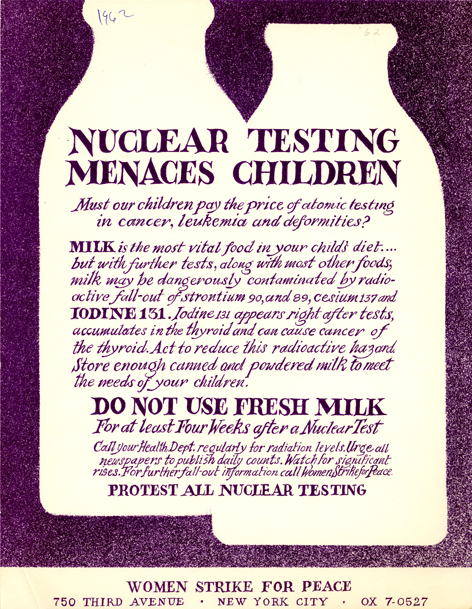
    White milk bottles on a purple ground with purple handlettering: Nuclear testing menaces children. Must our children pay the price of atomic testing in cancer, leukemia, and deformities? Milk is the most vital food in your child's diet....but with further tests, along with most other foods, milk may be dangerously contaminated by radioactive fallout of strontium-90, and 89, cesium 137 and iodine 131. Iodine 131 appears right after tests, accumulates in the thyroir and can cause cancer of the thyroid. Act to reduce this radioactive hazard. Store enough canned and powdered milk to meet the needs of your children. DO NOT USE FRESH MILK for at least four weeks after a nuclear test. Call your health department regularly for radiation levels. Urge all newspapers to publish daily counts. Watch for significant rises. For further fallout information call Women Strike for Peace. Protest all nuclear testing.

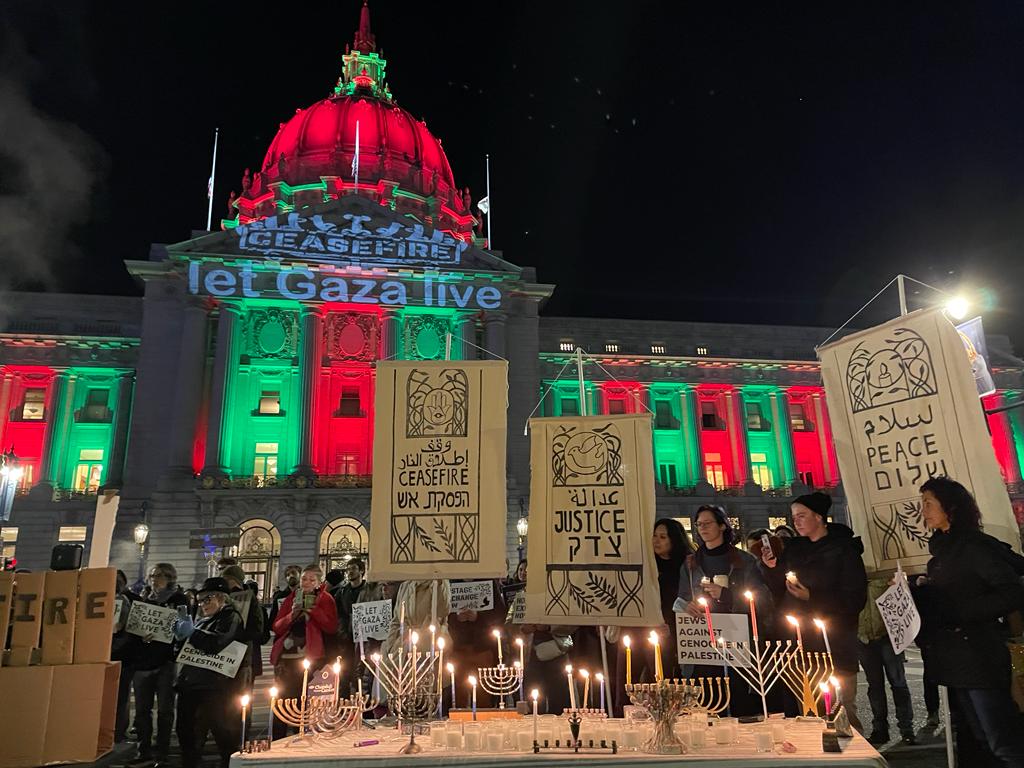
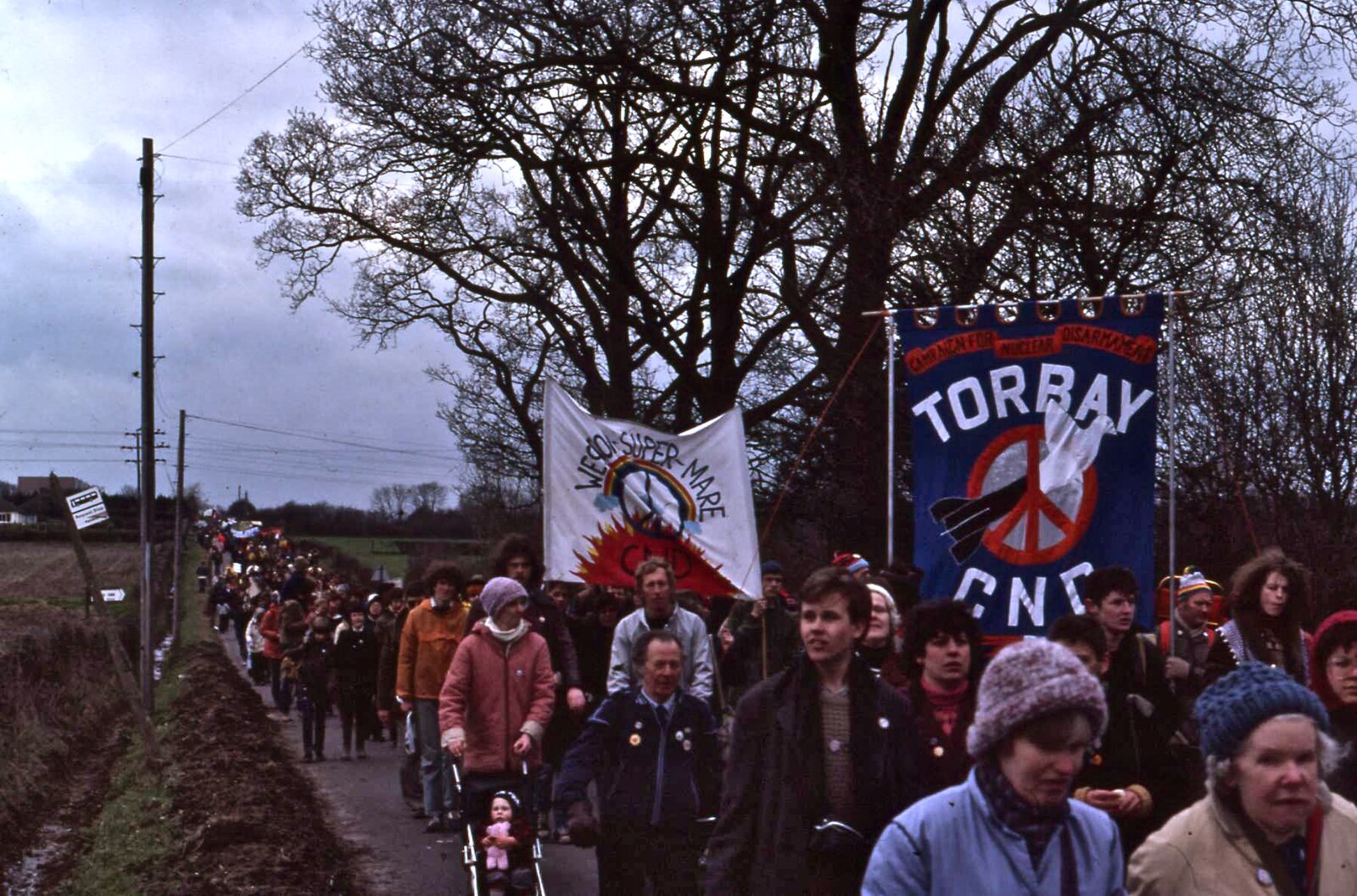
    In my earliest memories we are walking together. We are walking together along the sidewalk, wall on one side, street on the other. We are carrying banners. We are carrying signs. We are in strollers or pushing strollers; we are carrying babies. We have mobility aids, we are using wheelchairs, we are helping one another walk, we are striding forward with the people we love and with people we don’t know. We are under the white-gray sky of an upper Midwest January, and it is ten degrees below zero Fahrenheit and it is too cold to snow and here we are: walking. We are walking toward the state capitol building, all of us, together, hundreds of people, sometimes thousands of people. We do this over and over, weekly, monthly, for years. We do it despite the fact that there is no directly attributable change because of it. We show up and we walk together. It is cold, it is uncomfortable, it can be tiresome, there are more immediately pleasurable things to do. But once we get close, once we hear the crowd and see the banners and the signs, we know again: there is no better place to be.
    Nuclear freeze marches and rallies. Grape and lettuce boycotts. Chocolate and formula and cereal boycotts. Women holding anti-war signs every week for decades on a bridge over the Mississippi River. Nuns jailed for protesting torture schools funded and exported by the US government. Teenagers and elderly people blockading the driveways of the arms manufacturer. Teachers’ union strikes and farmworkers’ strikes, anti-apartheid strikes. Anti-war march after anti-war march. Free stores and soup suppers. Folk concerts at the local college and in the public park, in the train station. City buses and bicycle lanes. Student strikes, graduate teaching/research assistant strikes, university staff strikes. Occupy. Sleepouts with unhoused neighbors. Underground abortion networks and abortion funds. Act Up posters made on kitchen tables, zines reproduced at copy machines. Curb cuts at every corner, walk signs that we can hear as well as see.
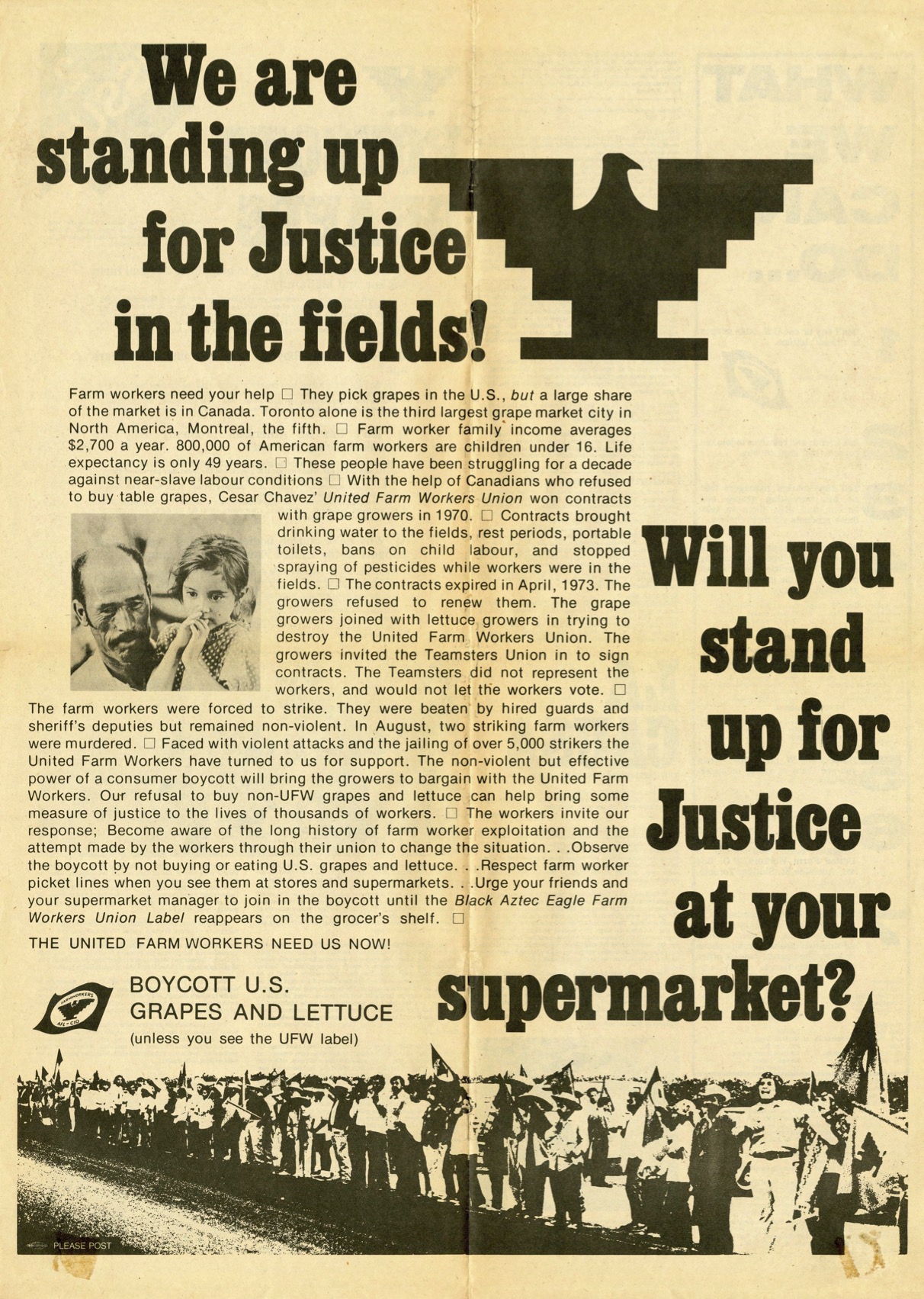
    If these actions do not appear on the map it is not because they don’t take place, it is because they do, but their accretion over time, the accretion of their effects over time, is minuscule and subversive and those effects weave themselves into the fabric of everyday life, such that it can be taken for granted that some of us now have weekends and the right to unionize, that certain pesticides and herbicides are banned, that some kinds of equitable access to buildings and institutions are available. And there is still time for more of these minute actions, for example because there are still workers whose hands prune apple trees in freezing January temperatures and who breathe in soot in summer fire season, and there are still new weapons being developed and tested. There is still work to do, and we are the ones to do it. And it is, still, “always too soon to go home”, words I take from Rebecca Solnit’s Hope in the Dark, her prismatic collection of essays on the ends and beginnings of the world. Does it sound like a lot of work? It is a lot of work, but we are a lot of people and we have our whole lives, every single minute of them, for it.

    It's always too soon to go home. And it's always too soon to calculate effect. I once read an anecdote by someone in Women Strike for Peace (WSP), the first great antinuclear movement in the United States, the one that did contribute to a major victory: the 1963 Limited Test Ban Treaty, which brought about the end of aboveground testing of nuclear weapons and of much of the radioactive fallout that was showing up in mother's milk and baby teeth. (And WSP contributed to the fall of the House Un-American Activities Committee [HUAC], the Department of Homeland Security of its day. Positioning them- selves as housewives and using humor as their weapon, they made HUAC's anticommunist interrogations ridiculous.) The woman from WSP told of how foolish and futile she felt standing in the rain one morning protesting at the Kennedy White House. Years later she heard Dr. Benjamin Spock-who had become one of the most high-profile activists on the issue-say that the turning point for him was spotting a small group of women standing in the rain, protesting at the White House. If they were so passionately committed, he thought, he should give the issue more consideration himself. (From Rebecca Solnit's HOPE IN THE DARK, p.3)

    On the side of life is every action, no matter how small, that helps to make a rich life, a free life, possible for everyone, in concentric rings of solidarity and care. The rings say: we are involved with each other. You are mine; I am yours. The specifics are specific to our places, relationships, points in time, knowledge, needs and abilities. A general answer or a single strategy is unfit for the specifics of our lives—responses have to be worked out, over and over, in time and space, among and between us; the complex demands of living in this world with others require modesty and humility and patience and attention and ongoing work and a cheerfulness that is not optimism but a willingness to be honest about both history and the present. To me the guide is: does something make a rich life, free life, more possible, for more than only me? There are no heroic acts in this frame, no one-and-done solutions; there are only the tiny, continuous trueings of a compass both personal and social to the north star of no one is free until everyone is free.
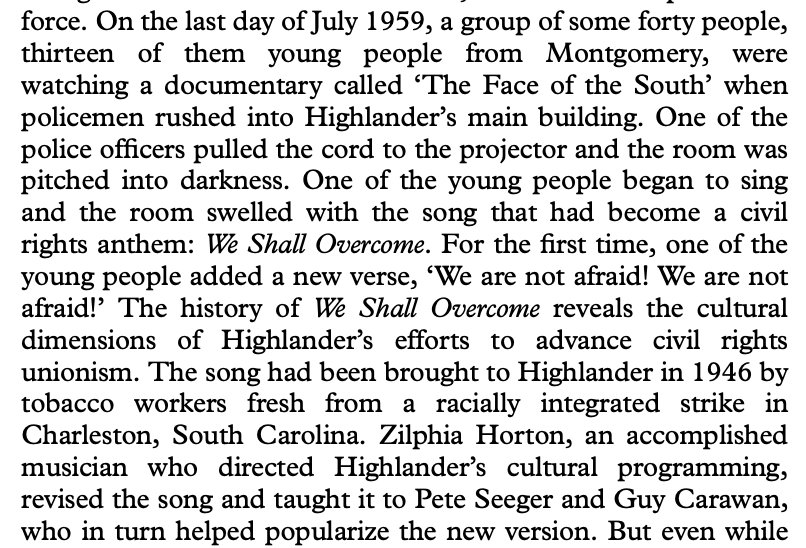
    That is not a burden, that is a pleasure. That is meaningful work, a lifetime’s worth. That is a joy. That is freeing. That is why it makes sense to me that marches beget artwork, and artists appear at marches, why singing together at the protest feels good and dancing at the labor strike creates good feeling that translates into good action. That is why it surprises me when community care in the form of public mask-wearing gets framed as fear or even paranoia. I want to say, don’t you realize? The song has the words right in it! It couldn’t be clearer. We are not afraid.1 We are in love. The world and its people are the ones for us. Your grandmother is my grandmother. Your lungs are my lungs.
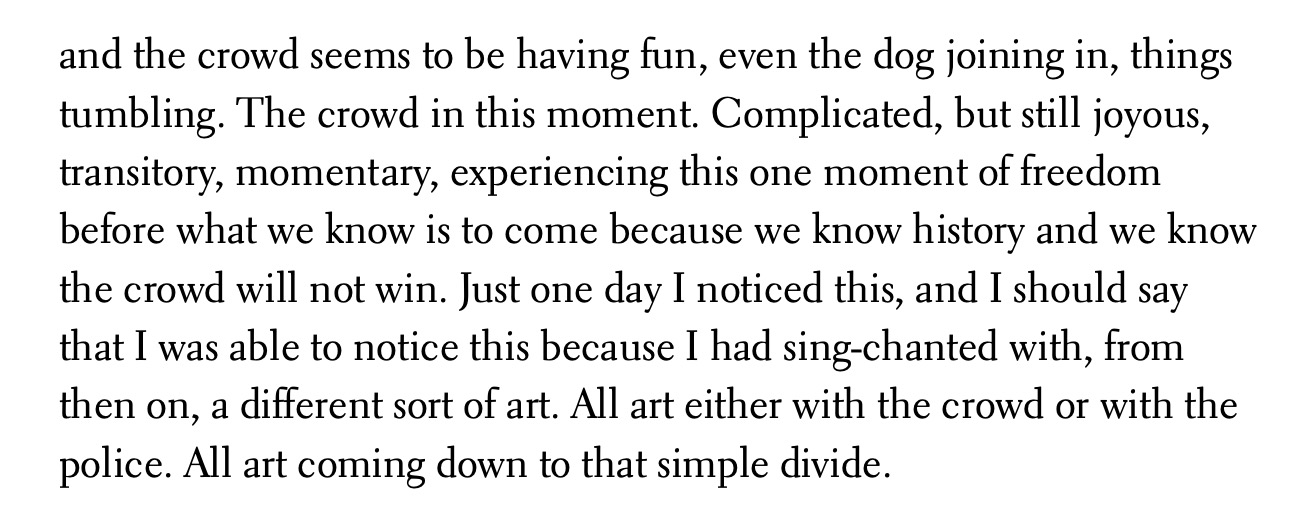
    and the crowd seems to be having fun, even the dog joining in, things tumbling. The crowd in this moment. Complicated, but still joyous, transitory, momentary, experiencing this one moment of freedom before what we know is to come because we know history and we know the crowd will not win. Just one day I noticed this, and I should say that I was able to notice this because I had sing-chanted with, from then on, a different sort of art. All art either with the crowd or with the police. All art coming down to that simple divide.

    We are out here together, for one another, with every step in the bracing air, making every tiny refusal, hearing every “why would you do that when it doesn’t even matter”, saying, yes, in fact, it does matter; it does matter to refuse death as best I can—not for myself alone but for my neighbor, including the neighbor I don’t know or can’t see; saying yes, in fact, it does matter to make myself a tiny bit uncomfortable (January freeze march, Minnesota; never having a Nestlé candy bar in childhood; no grapes until adolescence; not crossing a picket line; Black Lives Matter pin bought in 2016 still on my bag despite the hot embarrassment I felt on my face when another white lady in the grocery store line said “isn’t that over?” in 2022; and yes, wearing a mask in public spaces right now—your responses may vary) if it makes someone else a tiny bit more comfortable or our life together a little more possible; saying yes, in fact, we are here together, breathing the same air, drinking the same water, walking on the same streets, waiting for the same bus; saying that the trees you prune become my bone and my blood, that the radioactivity falling from your sky after our missile test becomes the milk I give my children.

    When we say, feed the hungry, we mean ourselves as well: we are the hungry. When we say, make a world where to be sick is not to be closed off from that world, we mean ourselves: we are the ones with bodies that can be ill, can be disabled; we are the ones who age. When we say no police we mean anywhere. There is no other world, there is no other life, no other air, no other water. It is all between us. No time to waste in beginning together the work of worldmaking that is at hand. No work too small to matter, nothing so important it can’t be repeated again tomorrow. No need to wait before discovering the secret of joy.

    Thanks for reading. See you next week.

    1

    To be clear, I’m by no means making an equivalence between the ongoing movement for Black civil rights in the US and the discomfort of being, often, the only person in a room of artists or scholars wearing a mask during an ongoing, airborne pandemic. These are not the same thing. But I have learned this framing—of joy, of solidarity, and of refusal of fear—from this movement among others. I have also learned to be skeptical of the demand to see a difference in focus among movements for a just, free, safe, healthy, and joyful life as indicative of disjunction between movements. And in fact, leaders of that civil rights movement saw clearly how things like nuclear arms were involved with, not separate from, voting, housing, dignified working conditions, access to public space, education, healthcare. This is all about our obligation to provide for one another a rich, free life.
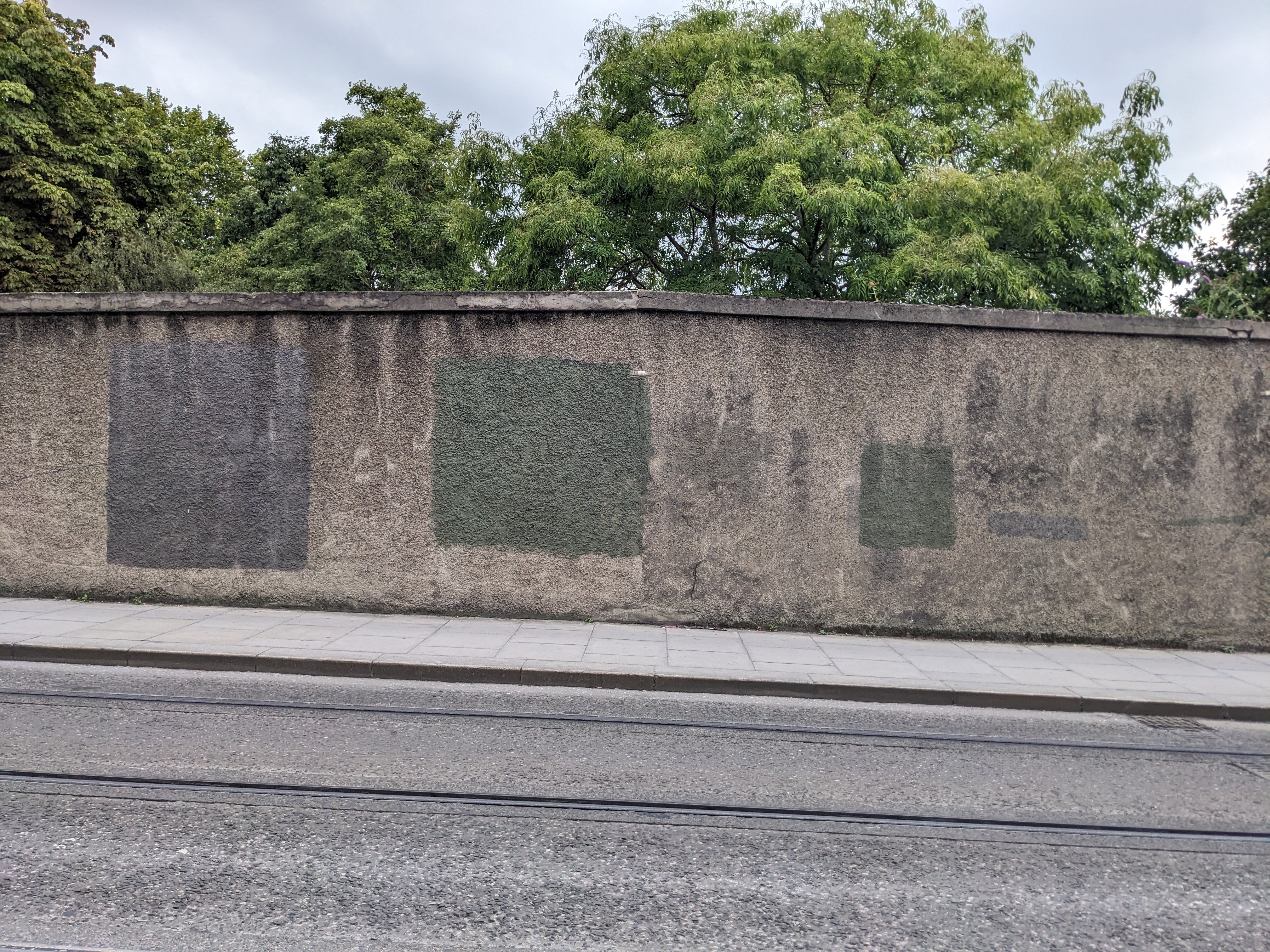
  • study in gray and green

    study in gray and green

    see a lot of paintings, see a lot of poems

    Before getting to the grays and greens, I wanted to direct your gaze toward some people I care about who make art and whose work is available to you. Jon McGregor, whose writerly friendship has been a gift for so long I had to really think to remember how we met, some years ago founded a journal called The Letters Page. It’s out of the university where he works, and it’s directed now by very capable and thoughtful students. A year or two ago, they changed format: each issue is now an aerogram, sent in the mail to all subscribers (and the subscription model is also really nice). The Letters Page only publishes work in epistolary forms, so if you have something letter-shaped, or you have an idea for a letter, send it to them! The most recent aerogram contained scanned leaves and one real dried leaf. Very charming.

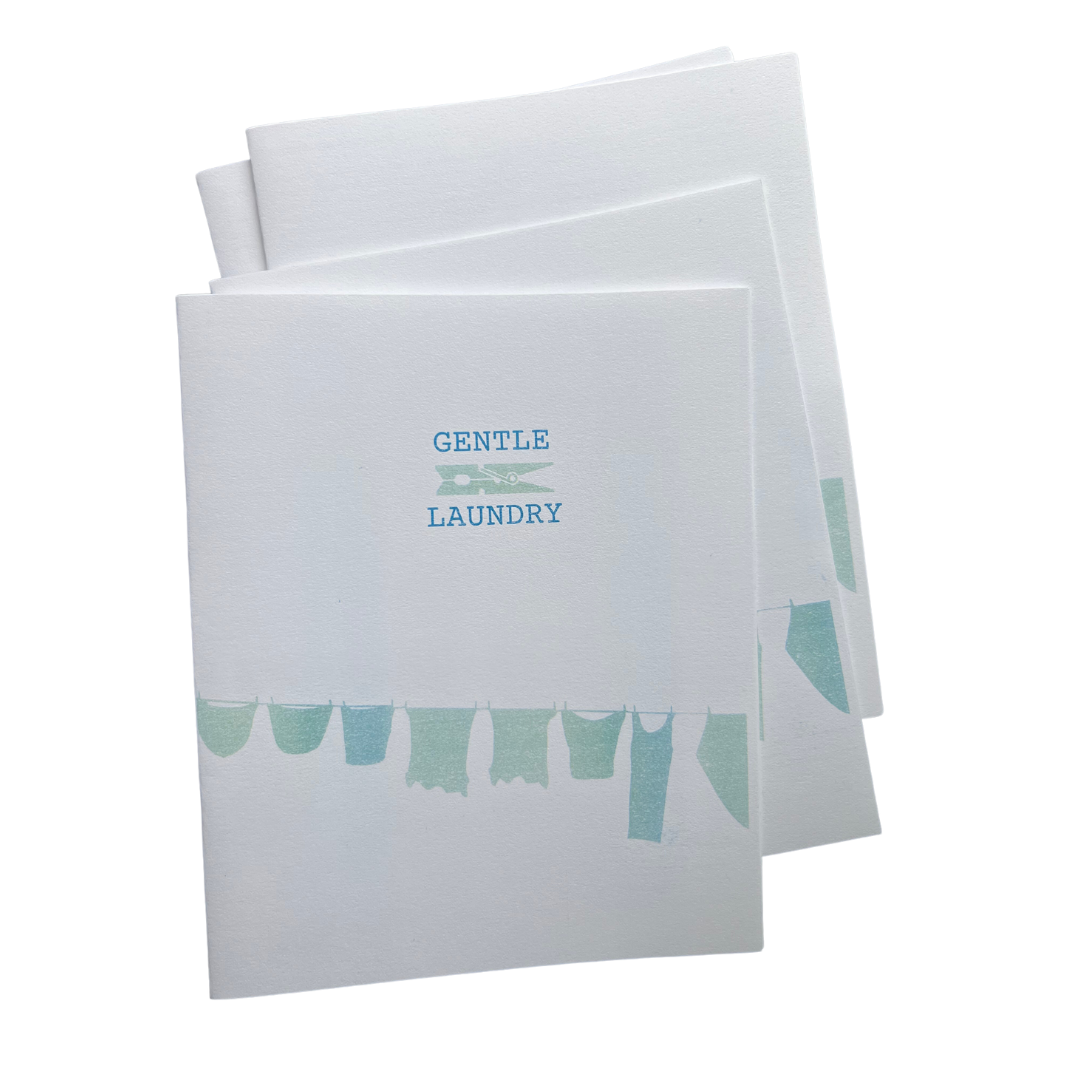
    Late Night Copies Press, a collaborative, artist-run photocopier press based in Minneapolis, MN, has just put out a new laundry zine ($6). If you read the post here in November with gift ideas, you will have seen my enthusiastic review of this one. I love what Late Night Copies Press does (including their open copy nights) and you might, too.

    Finally, my brother, who generally makes things you can’t have in your house (institutional kilns, big machines, installations), gave himself the challenge of spending time this year making things that could hang on the wall, and that would be affordable for most people with a salary. (He also gave himself the, to my mind, more daunting challenge of actually putting these things up for sale.) His work is about industry and family, memory and material, in the context of the deindustrialized Upper Midwest/Rust Belt US. If you’re interested or know someone who might be, there are about eight works up in his online shop now.


    One of my students wrote in her final reflection that she now sees poems everywhere. The best possible result of a poetry class. My god. The world is full of the things we call art and poetry, all for free, all moving, all teaching, all around us. Sure, poetry and art are the nomenclature we use when someone puts their hands, the camera, a pen, a viewfinder cut in a piece of paper up to the world and holds it still for us. But it’s all right there.

    In class, at talks, at writers’ conferences, at the end of readings there are often questions about inspiration. How do you, writer at the front of the room (whoever it is) “get inspiration”? Where do your ideas come from? And in class with apprentice writers I often hear someone say “I don’t have any ideas”, or “I only write when I have a lot of inspiration”. Similarly, and not only in the classroom, I have heard: “I don’t want to read too much in case it changes what I think” and “I need to keep my ideas fresh”.

    At what point do we forget or unlearn, culturally, personally, that the ideas aren’t in us at all? That ideas aren’t boundaried like that (and, really, neither are we)—that everything we can think has been given to us or crossed into us, from the highest theory right down to the organizaton of the world into A–B–C? I think children know that ideas aren’t in them—they are always looking, asking, touching. No, ideas aren’t in us. They are in the world. The world has the ideas. We make the frames.

    Practice in the arts (which means learning to see and name the received forms, modes, styles, etc., as well as to learn to improvise and respond to the formal, textural, linguistic, etc. pressures in one’s own thinking) gives us ways to see pattern, see relation, see difference; it gives us the discipline to continue to look—listen—touch—gather sense data of all kinds (including the kinds called ‘reason’ and ‘intellection’) even when we don’t feel inspired. Because inspiration is rare. But the world is always there. Practice in art gives us the muscle memory for arrangement of the things that are. And, later, it allows us to regard what we have arranged with a critical (and self-critical) eye, to try to understand it. It is, after all, now also in the world, part of the world. It has become something that can give us ideas.

    I do not know any way to ‘find inspiration’ or to ‘be inspired’. I recognize the elation of a moment of real epiphany, and I remember from my early 20s the feeling of excitement when I ‘had an idea for a poem’. I now think that these feelings are the celebrated or more visible parts of the ongoing and often less glamorous process of being in the world as a writer and artist. I am convinced that it is that being-in-the-world part, not the tangible results it sometimes leads to, that makes one an artist or a writer. I’m interested in how to see that process-time, the middle time, as the active part of artmaking and writing. What that asks of me is not to write anything off as uninvolved with what I think of as “my art” or “my ideas”, and not to give up. Okay, not always easy—but it’s something I can do tomorrow again even if I failed today.

    What I do know, reliably, because I have based all of my work on this method, is that trying to perceive what is around me will make me think—with my eyes, ears, hands, nervous system, education, etc.—and give me things to think about in new ways (or in repeated ways). I know that boredom is often a sign of something interesting happening that I haven’t yet been able to see. I know that doing the same thing over and over can make interesting work even if the doing doesn’t interest me. And I know also that the reading of books and the viewing of artworks and the listening-to of music (just another kind of trying-to-perceive-the-world-around-me) will have given me forms that I can repeat, borrow, adapt, refuse, etc. In short, I know that I am not the only one responsible for making my work, and I know that the interest there is doesn’t have to be my invention—a walk will work as well as, or better than, a blood-from-a-turnip session at the computer.

    There is no shortcut, but there is also no delay. It’s all right there: all the inspiration in the world.


    Still against the bombing of Gaza, the occupation of Palestine, apartheid, empire, all wars, all dehumanization, all destruction of land, water, air, living things, by the way. Still walking around with this song in my head. How do we do it? Not alone, that’s for sure (there are five links there, O you reader!).

    Thank you for reading! See you in a week. Since you made it so far, here is a utopian vision from Mr. Seeger. And here’s some courage—sing along with him and I think it would be hard not to feel it.

  • twelve walks

    twelve walks

    one glimpse each

    Walking is one thing that shows me how to make images and that teaches me to think. It creates time. It is a distraction from grief, anxiety, boredom, self-doubt. It’s a physical pleasure. It’s the way I learned to pass Sundays when I first left the US to live elsewhere, days there was no work to go to and everyone else was with their family and friends. It is a practical solution to the problem of not having groceries or wanting to go somewhere. It is a way of understanding where I am and what my relation to place can be. It is my primary mode of transit. Walking is a way of looking, and, because I walk in the same places over and over, it is a way of looking that forces me to find interest in things that sometimes feel very interestless. Walking is an experience of in-the-midstness that has come to be the basis for all the things I think and how I think them.

    Walking feels slow but in fact it’s pretty fast. When I’m walking with someone else I can be self-conscious about the fact that I want to stop and look, stop and take photos, stop and write something down, stop and listen or record. But we’re moving fairly quickly even then. Even when I’m on a beeline to the shop for milk, wishing I could go faster, get home faster, I sometimes realize just how much faster walking is than perceiving. I have to remind myself to try to see and not just pass by, even things I think I know.

    Drawing is something else that teaches me to see, distracts me from grief, creates my experience of time, helps me understand where I am, forces me to be interested in my everyday life.

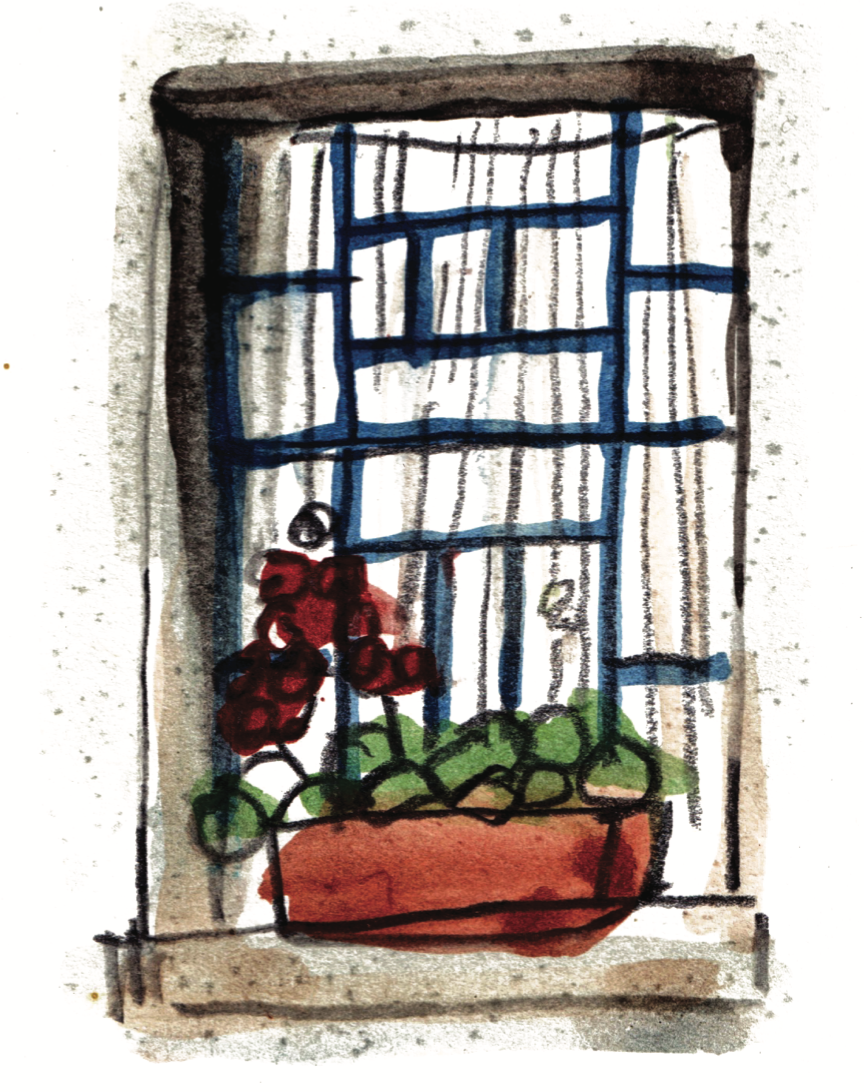
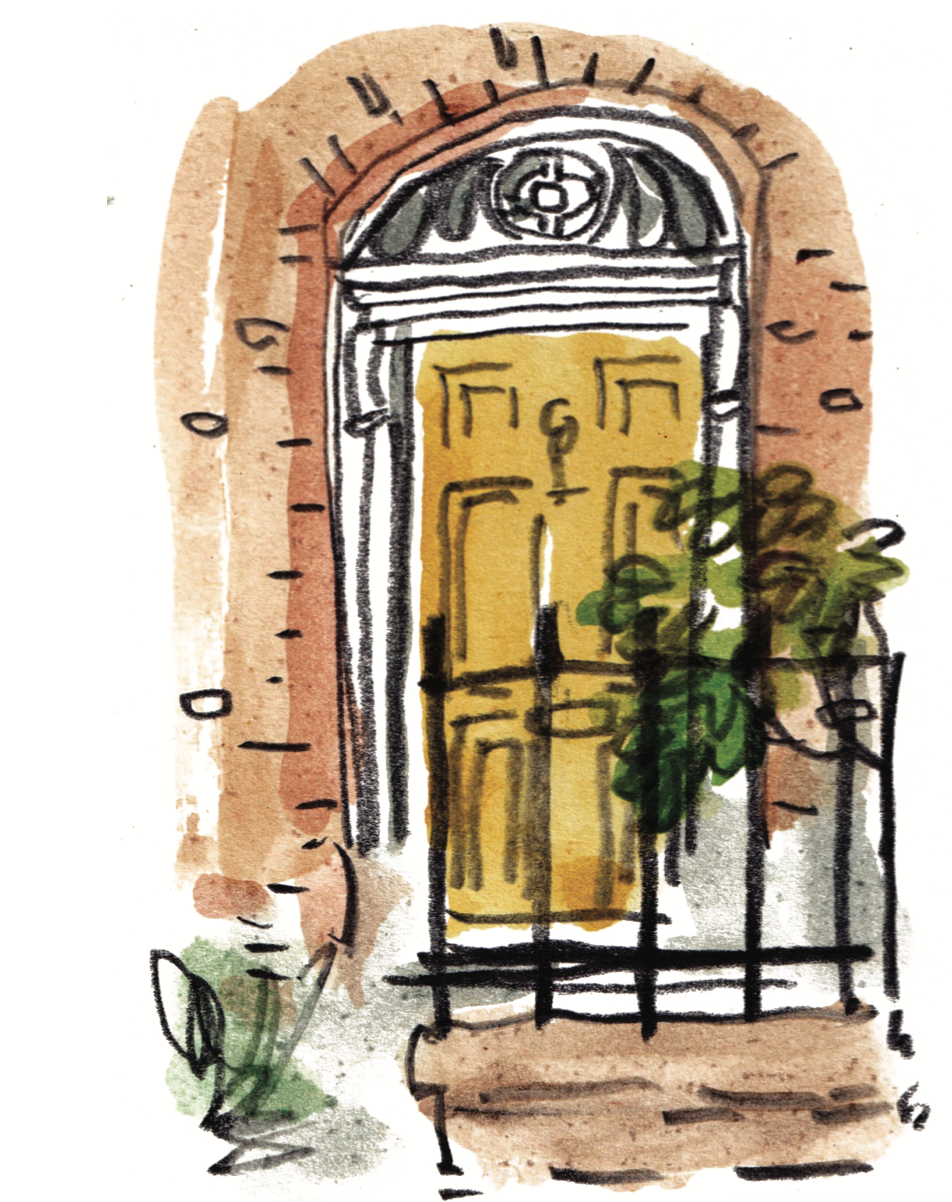
    So I’ve done something to bring them together, the walking and the drawing. Twelve glimpses from my walks here in Dublin, done at the speed of perception, the speed of walking, and the speed of drawing. Ordinary things: doors and flowers, curtains and birds, made with my ordinary watercolors and a heavy pencil.

    From 2010 until 2018 I made a calendar every year and sold copies. In 2021 and 2022, I made calendars that could be downloaded and printed at home for free. In 2023 I didn’t make a calendar. I’ve made these drawings into a calendar for 2024, and from now until Saturday, January 13 at 9 a.m. Irish time (that’s 4 a.m. US Eastern), you can download it for free and print a copy at home or at a copy shop. This calendar is my attempt to translate the quickness of perception at the speed of walking to the page. There is one small drawing each month.

    Some details: the format of the file is A4, but you can scale it to print on letter paper; you could also print two pages per page and trim them down on both or all four sides for a calendar slightly smaller than A5. I think a mid-weight paper, 120gsm to 250gsm, would work best, but you should use what you have. The calendar is published under a Creative Commons BY-NC-ND 4.0 license, so you can print it for your own use but not for sale (full details of the license here).

  • [while washing the dishes]

    [while washing the dishes]

    the old year goes to its bed and the new one is waiting to be born

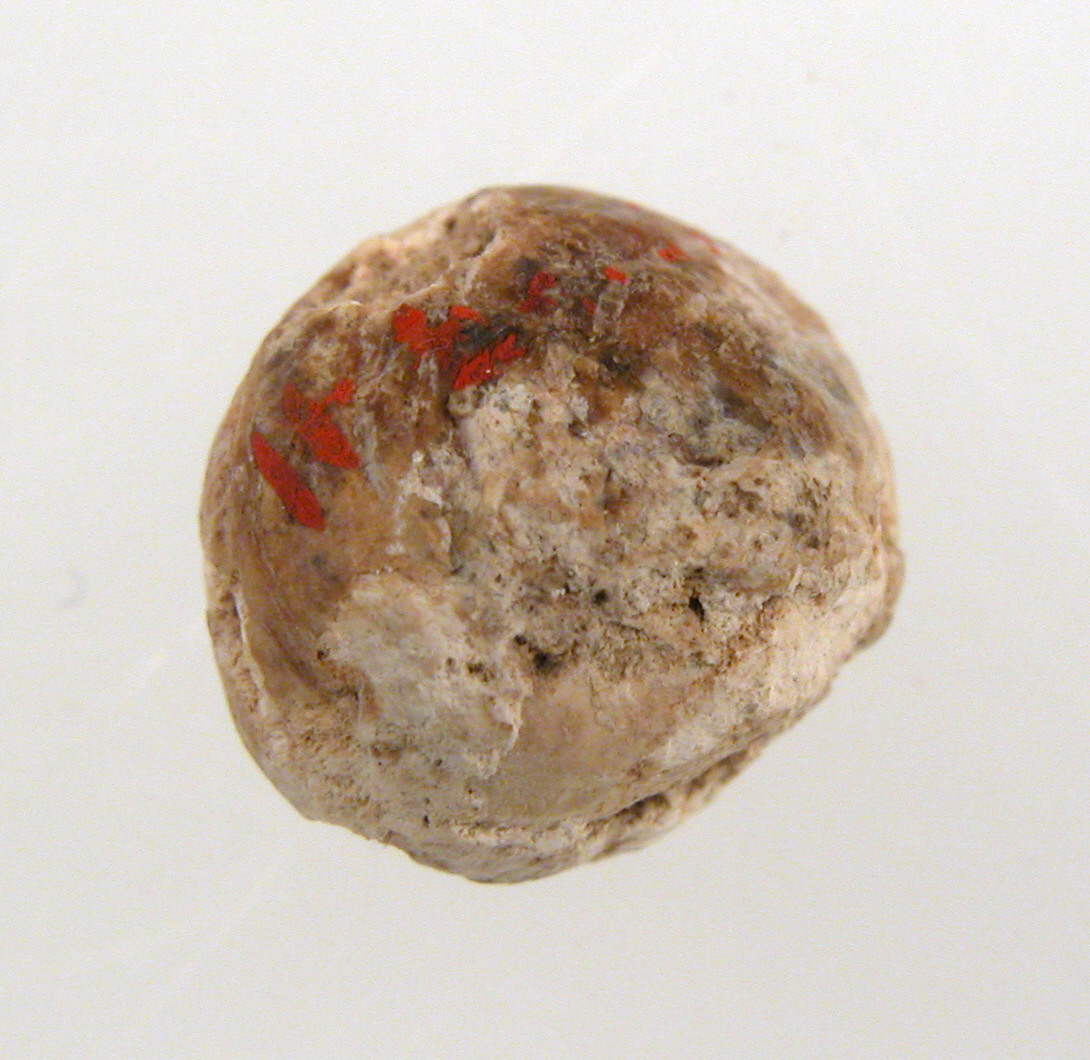
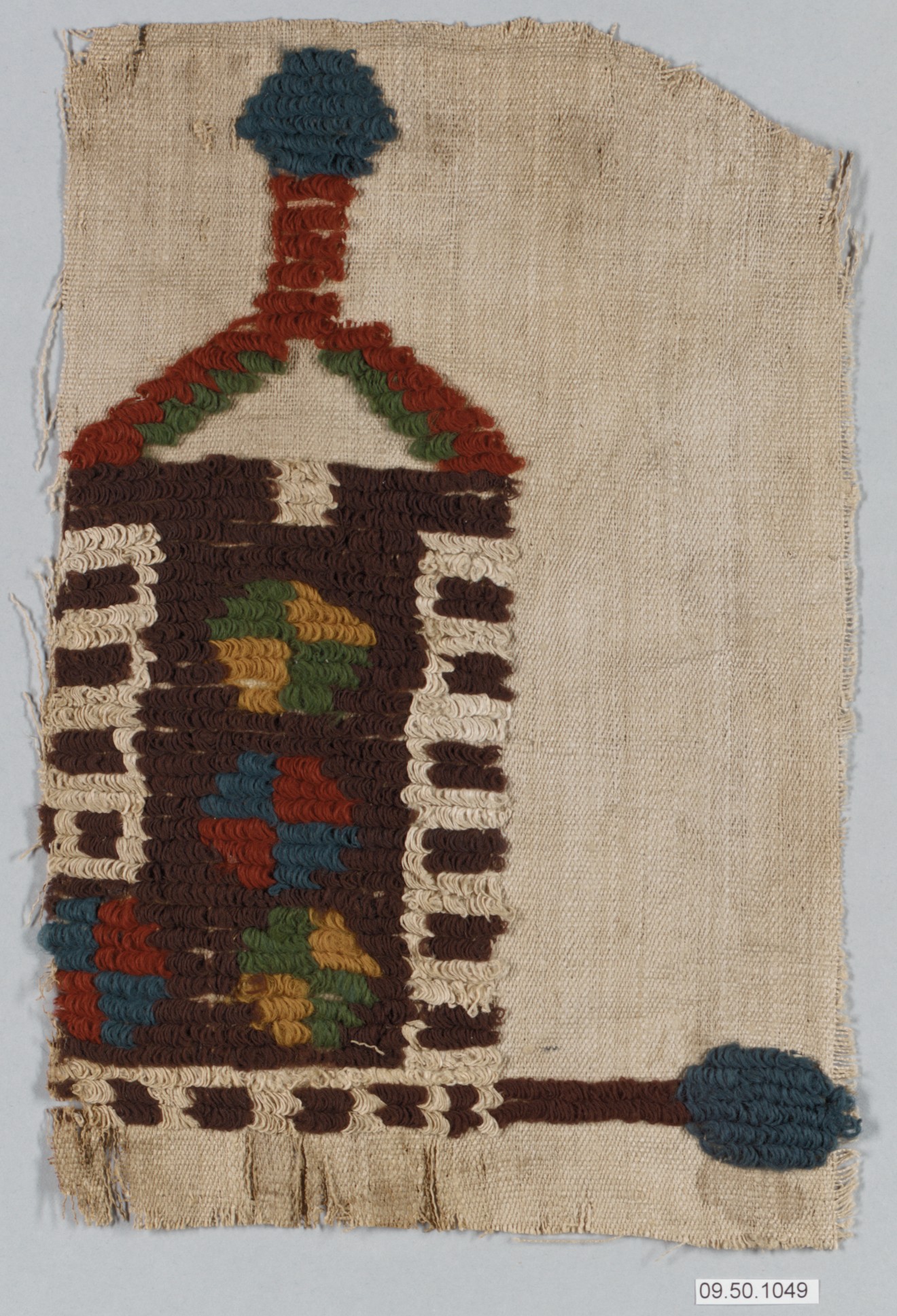
    Here is a cherry stone, buried in a Frankish grave between the years 500 and 600 of the common era, so a cherry stone that is about 1800 years old as I write this. A cherry stone! Little nothing! I love the nothings we save and carry with us, that tell our stories in their embroidered details. When you look closely at an embroidered cloth you stop seeing the picture and begin to see the tiny thread marks on the textile’s perpendicular ground. Looking closely at the nothings of the world changes what it is possible for me to think a world can be. So I’ll look at this bit of vegetable matter a while as the old year puts itself to bed and the new one waits in the dark to come out with the stars.

    A 19th-century financier from the US state of Connecticut gave the Frankish cherry stone to New York’s Metropolitan Museum of Art in his will, and now it appears on their website, its image in the public domain. The cherry stone leaves the grave in the hand of the grave robber or archaeologist or scholar or tourist and travels—how? In the collecting box, in the wallet. It sits on the mahogany desk. Cherry stone, buried in a mouth perhaps, or in the intestine, or in a little bag of other fruit pits, or in a hand: food for the journey and a seed for planting trees in the afterlife. Assurance of orchards, or accident, or habit of ingestion.

    Someone warps a loom with linen thread and weaves with linen thread, and someone—the same person? I can’t know—takes the woven cloth and wool thread dyed in five colors, and embroiders a motif. Clothing, altar cloth, shroud, or bed cover, I don’t know. The fragment of cloth makes its way from Egypt to Germany: the practice of removing things from Africa and taking them to Europe is not a secret. In the late 19th century we can attach a name to the cloth, though an owner’s rather than a maker’s. The cloth comes into the possession of Friedrich Fischbach, teacher of ornament and design and compiler of historic patterns. And when he dies, his books of crochet patterns and ornamental embroidery and templates for whitework go out into the world, and part of his textile collection goes to the Textile Museum at St Gall, and part to the Metropolitan Museum in New York.

    Sometimes I think about the billions of books, objects, furnishings, pieces of clothing that have belonged to and been made by the world’s dead over the past centuries and I wonder that there are factories at all. Why would I need anything new when there are sets of silverware in secondhand shops and hand-me-down sweaters my mother saved for me? Who was it who said if you have two cloaks, give one away? In the museum’s glass cases, there is a reflection of a rubber raft, tiny and vulnerable on the Mediterranean, and then the guard calls out into the cool dim room don’t touch, please and I am returned to the here and now, where the cherry stone and the fragment of cloth are protected by alarms and doors and locks and laser security systems. How many hundreds of years ago was the cherry tree planted or grown or grafted onto rootstock, carried from the place now called Iran into places we now call Europe? In a delta spring 2500 years ago, the flax plants grow as high as a child’s head, and the ibises fly along a northbound river. A hand and an eye chose the colors and a hand and an eye made the pattern, and hands and eyes laid the cloth into the grave. All the wonders of the world.

    How we care for the dead: we provision them. How we care for the living: we keep in mind how soon we are all the dead. The living know the needs of the body and the soul—warmth and quiet, safety and shelter, clean water and dignified work, worldmaking and housekeeping, questions and answers, letters and numbers, good food and companions to love us. The dead know that the cherry stone is carried under the tongue across dark water. There is no escape from that water or the stone in the mouth, no matter whether the little pouch sewn into your clothing is full of gold or full of seeds. The living and the dead huddle in the little stone, pull the cloth of the world around us. Little fruit-bead. Little woven fragment. Where you have been and where you came from, even the endowment-havers, even the gala-goers, even the private plane-takers, even the robber barons cannot pry from the silent mouth of that river.


    A little year-end housekeeping:

    Thank you for reading these essays over the past nine months. I have learned a lot and gained a lot by the practice of writing all 40 of them (!! —five were pieces that I had previously written). I’m looking forward to the next couple of months of weekly essays before this project ends at the beginning of March.

    I appreciate your readership. It makes me get things written and put them out instead of holding my cards close to my chest, as is my inclination. I am especially pleased that having to write means that I have written things I’d long had in mind, in some cases for years—like this essay, about imagination and art and the vapidity of chat-gpt; and this essay, about what a ‘creative writing’ education is for; and this one, about blackberries and labor unions and August; and this one, about my dad and Claes Oldenburg; and this one, about the real and living costs of precarious employment in academia.

    So thank you for being out there, and for sharing my work, and for writing to me with your thoughts. It’s meaningful to me, and I take it very seriously that you spend your time with my writing here.

    You may already have heard that Substack’s administration has taken a Nazis-are-okay stance. Well, that’s shitty, if not entirely surprising. Substack makes no money from what I write, and I will never charge you to read it here. But I am thinking about how and whether to move off of Substack, and I hope that when I figure that out, you’ll find or follow me. Are we heading back to the internet of circa 2007? Will HTML Giant, poetry listservs, and Typepad craft blogs make a comeback? Is the real ever circling toward the ideal? We will find out.

    In 2024 I’ll take a break from weekly writing for March, April, and May, and write just one piece each month. Beginning in June 2024 I hope to begin a new project (wherever I am at that point) that will again take a weekly form. I’m planning to turn some of the 2023 essays into small, beautifully made print objects. Information about that will come, if all goes to plan, during my March-May break.

    Here are a couple of beautiful things for you.

    I hope you and everyone you love and everyone they love are safe and well. I hope for an end to the bombardment of the people of Gaza. I hope for ease in your grief. I hope for peace on earth, in the sense that both hope and peace are active. For all of us, made by all of us. Happy, healthy, free, and just 2024.

  • you there, boy—what day is it?

    you there, boy—what day is it?

    a case for being Ebenezer Scrooge

    This is the final of three essays about Christmas, more or less. The others are here (with some information about how I’m approaching these) and here. Thank you for reading!


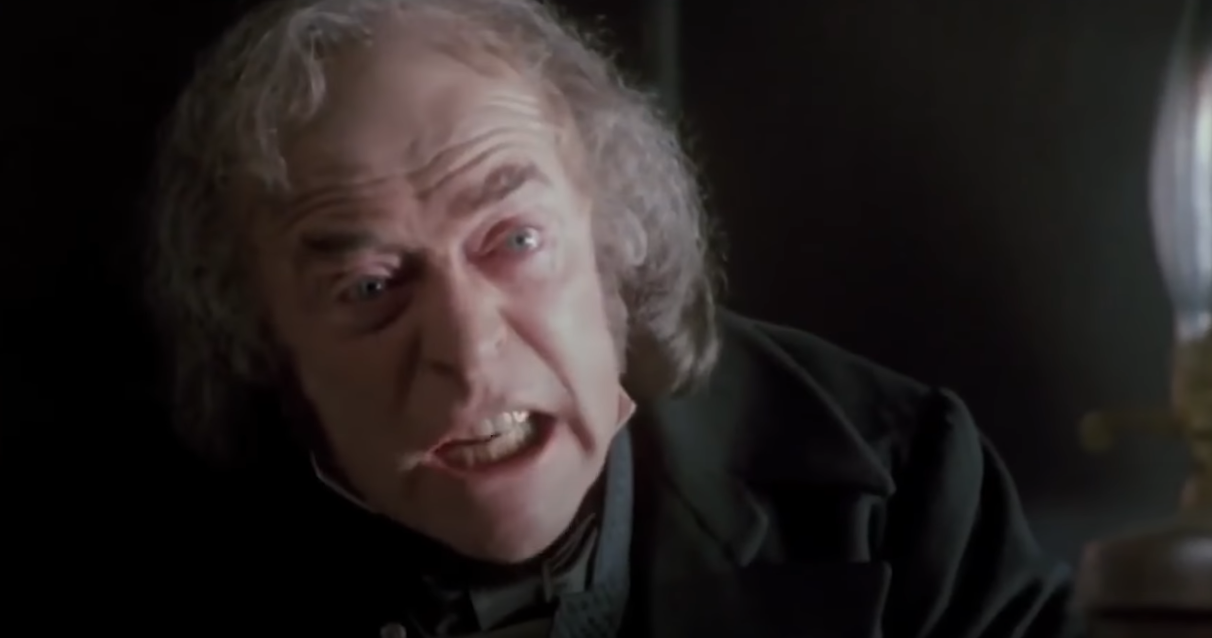
    Michael Caine as Scrooge, shouting into the camera

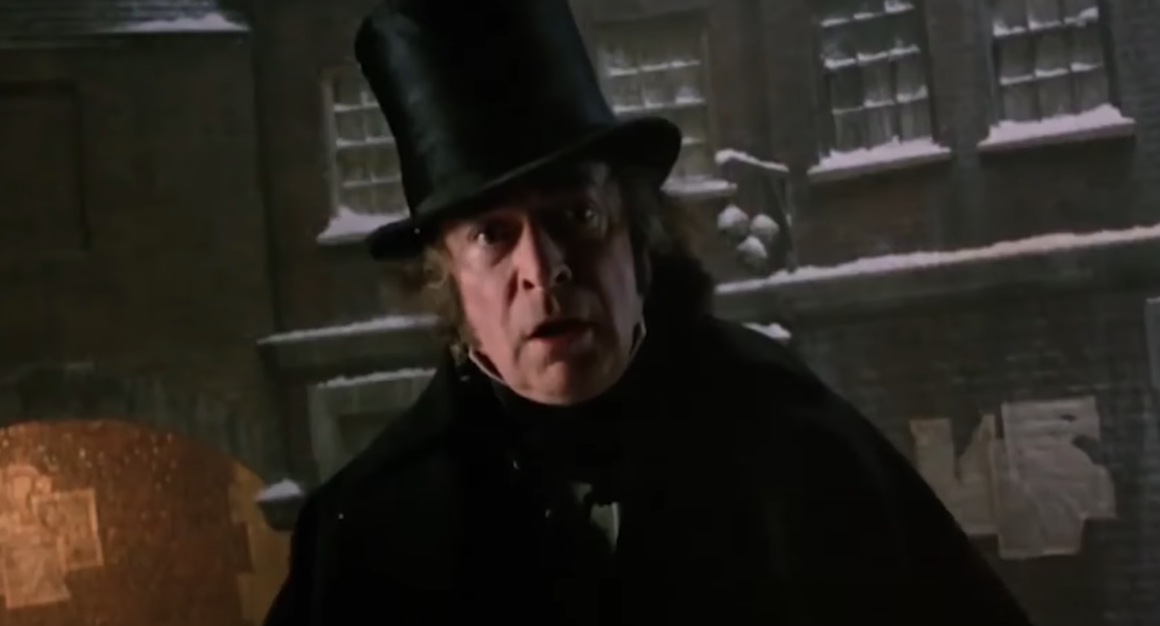
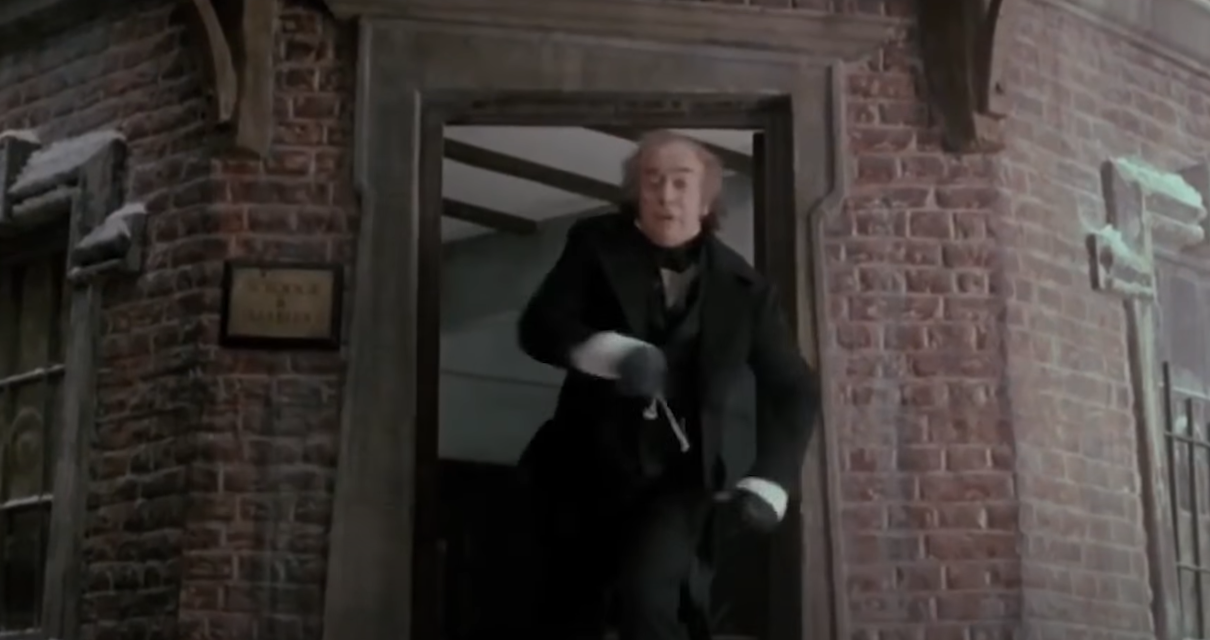
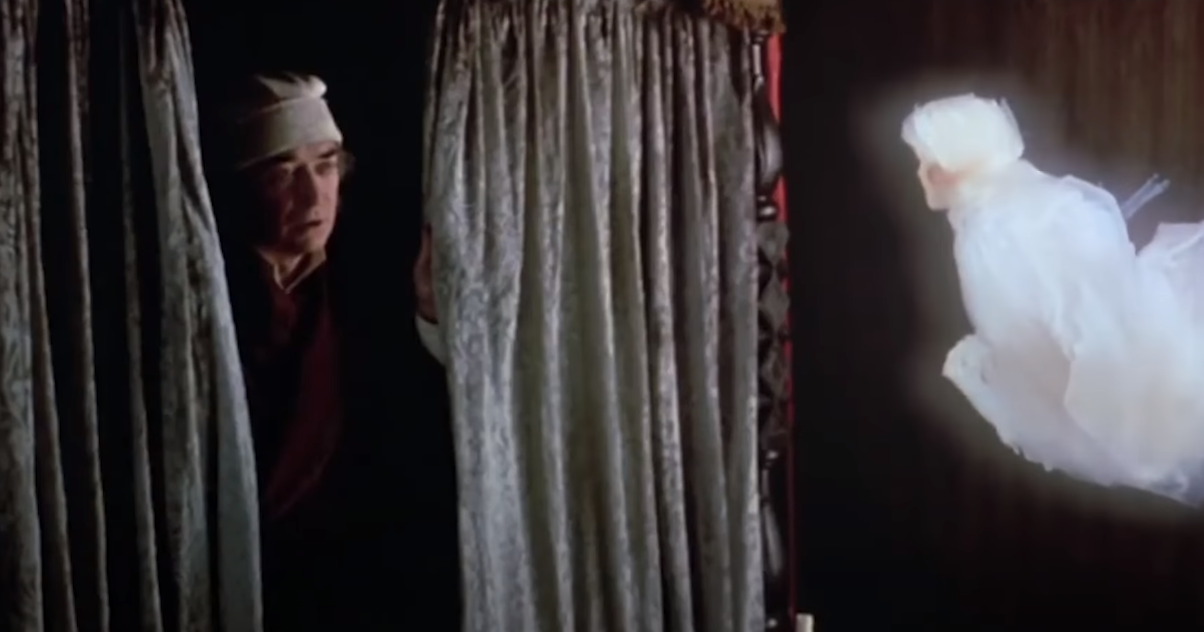
    The figure of Ebenezer Scrooge is so familiar that to name him is to call up not only a sense of his recent representations (Jim Carey’s zaniness, Michael Caine’s…caineyness; Muppets, etc.) but a whole, seemingly three-dimensional, almost pre-formed understanding of what he is and what he means. Scrooge: the miser turned morality tale! Scrooge: the Victorian’s Victorian! Scrooge: the humbug hauntee! etc. We already know, when he comes up as an image or an allusion, how to understand him. He’s a lesson in getting more connected, maybe working a little less. Being nicer to our underlings. Buying a big turkey for some poor family, how nice, what a turnaround. He’s Charles Dickens’ Meaning-Of-Christmas-communiqué. And he’s the Bad Guy, for crying out loud, with the requisite change of heart right at the end of things. So in any case, as his cranky visage flashes across the laptop screen, we can think, we have seen the parsimonious mortgage agent, and he ain’t us.

    But he is, of course. That’s Dickens’ point.

    I find A Christmas Carol surprisingly moving. Surprising: because I kind of hate public displays of affectation around Christmas, hate the bought-and-sold, settled and mystery-neutering symbolism, hate the way a really strange—like messed-up, brain-scramblingly, systems-of-dominance-destroyingly strange—event gets remade by christocapitalism into something palatable and numbing, in part through the distribution of things like this weird little novel from the 19th century that are smoothed and smoothed until they are so familiar that we can forget how weird, how compass-breaking (thanks, Fanny Howe), they are—and then we can go back to sleep to dream about battery-operated toy war machines. But, like the song I wrote about last week, the older I’ve gotten, the more A Christmas Carol speaks to me, even freaks me out a little.

    Because it’s not, in the end, (though I love the Muppets version) a heartwarming story about Kermit the Frog-as-Bob Cratchit teaching a grump to love against the odds. It is a story about grief and longing and loneliness and getting old, and how the heart easily calcifies, and how, despite the ease with which we may become brittle and closed up in our private palaces bolstered by our stacks of cash, from time to time we may nevertheless encounter, be confronted by, the world in all its immediacy and transience and preciousness—and be broken open by that world. It is a story about what is still possible. A Christmas Carol is a story about the cracks in a person like Scrooge, which is to say a person like me, and about events that, by their violent strangeness may, if we allow ourselves to see them, if we let ourselves be moved by them, force us toward a life that’s a little less shut-up, a little less afraid, a little less self-centered and a little more committed (thanks, James Baldwin). It’s a story about our ordinary lives inside of racial capitalism (yes, Dickens, too, lived inside this structure—and knew it, too, however imperfect we might find his knowledge now). It’s a story about how to pay attention when we are pierced by the world of living relation.

    The point of the story, I think, is to understand in a nonredemptive way—by which I mean a way that is not structured by the (wink, nudge) understanding-in-advance that we are the good ones and that, for all we may be grouchy and unkind and willfully ignorant and mean, our hearts will turn out to be flesh and not stone—that we are Scrooge. Not the Scrooge of the morning after the third ghost has come and gone; not the Scrooge who “knew how to keep Christmas well, if any man alive possessed the knowledge”: no, we have to be, to really know we are, the Scrooge of page one, the “tight-fisted hand at the grindstone, Scrooge! a squeezing, wrenching, grasping, scraping, clutching, covetous, old sinner”. Because, after all—well, I should speak in the first-person singular here—I often am.

    What does it profit me to consider myself Ebenezer Scrooge? More than a reflection on my own parsimony (which it provokes) and more than an opportunity for self-flagellation (which, if I were given to this, it might be), if I am Scrooge I am given, again and again, the possibility of change. It’s not a certainty that I will change. I know this every time I try. And there are so many reasons I might not: I have been formed in a culture of resource hoarding, competition, selfishness, and disciplinary and enclosing violence on every scale, from the police to the corporation to the military to the plastics company (thank you for the link, Guérin) and back again. It is easy to ignore my relation with everything, my situation in regimes of technology that are not neutral, that are not limited to my direct perception, and that put me in relation to everything in the world, from rare-earth mineral mines to histories of education.

    But nevertheless, the possibility of being moved, being pierced, being changed by the forces that compel me to see just how connected to others I am is there. When Dickens writes that Scrooge was the only mourner at his business partner’s funeral but was nevertheless “an excellent man of business on the very day […] and solemnised [Marley’s funeral] with an undoubted bargain”, he’s writing about the way I, too, walk around half asleep, or more than half; he is talking about the way capitalism makes it so easy to forget that we are living. He’s writing about the way I, too, grow a thick chitinous layer of exhaustion or resentment or loneliness or anger or simple haste, and habitually forget that I am with you, where the you really means everyone. When I see myself in Scrooge, I mostly feel awe at the reminder: that I can be otherwise. That the world is right there, outside the door, and I can join it, or try to, one day at a time.

    What A Christmas Carol asks is, what if every day I could wake up, throw open the sash and call to the guy selling papers in the street, you there! What day is it? only for him to call back, why, it’s Christmas, sir!? What if, that is, I were able not only to realize but to live the fact that I have woken up and it is not too late: that there is still time: that the people I didn’t yet know how to care for, or didn’t yet think to feed are just there, around the corner or at the table, waiting? What A Christmas Carol suggests to me is that I could, after years of loneliness and cold, years of becoming crabbed around my habits, open the door to find the street filled with the brilliance of snow. Look, it says. Just when you thought the story was ending, you can find out you are so much less alone than you fear (than it feels).

    We are not alone—we are intricately together, in this all-living world. Our lives are made for one another. We are made to make them together. “Thank you, Spirits. Thank you fifty times.” Thank you, boy in the street, with all your “might of wonder”. Thank you, world, and your “clear, bright, jovial, stirring, cold; cold, piping for the blood to dance to; Golden sunlight; Heavenly sky; sweet fresh air”. One more day. All of us. Open the door. There it is.

    Happy end of this year, happy beginning to the next. I’ll be back next week with a miscellany to see 2023 out. Peace on earth (which is the presence of justice); comfort and joy, comfort and joy. Study war no more, the holiest song of all. And free Palestine.

  • joy to the world

    joy to the world

    why I am an anarchist

    This is dedicated to Nina, who said, about one year ago exactly, that I should write the “essay about ‘Joy to the World’ [I had] been thinking about”. So now I am.

    This week and next I’ll be writing about Christmas, after a fashion. (You can read the first essay in this series, and about the background that leads to and shapes my thinking, here.) This week is the Sunday of rejoicing (‘gaudete!’) even as the nights grow longest. It is a night of pink candles for joy. To me, pink is the color of anarchism, opening, liberation, possibility, togetherness—the everything of Advent. Despite the subtitle of this essay, my answer is both indirect and incomplete. But a person’s reach should exceed their grasp, or what’s a sobstarch for?

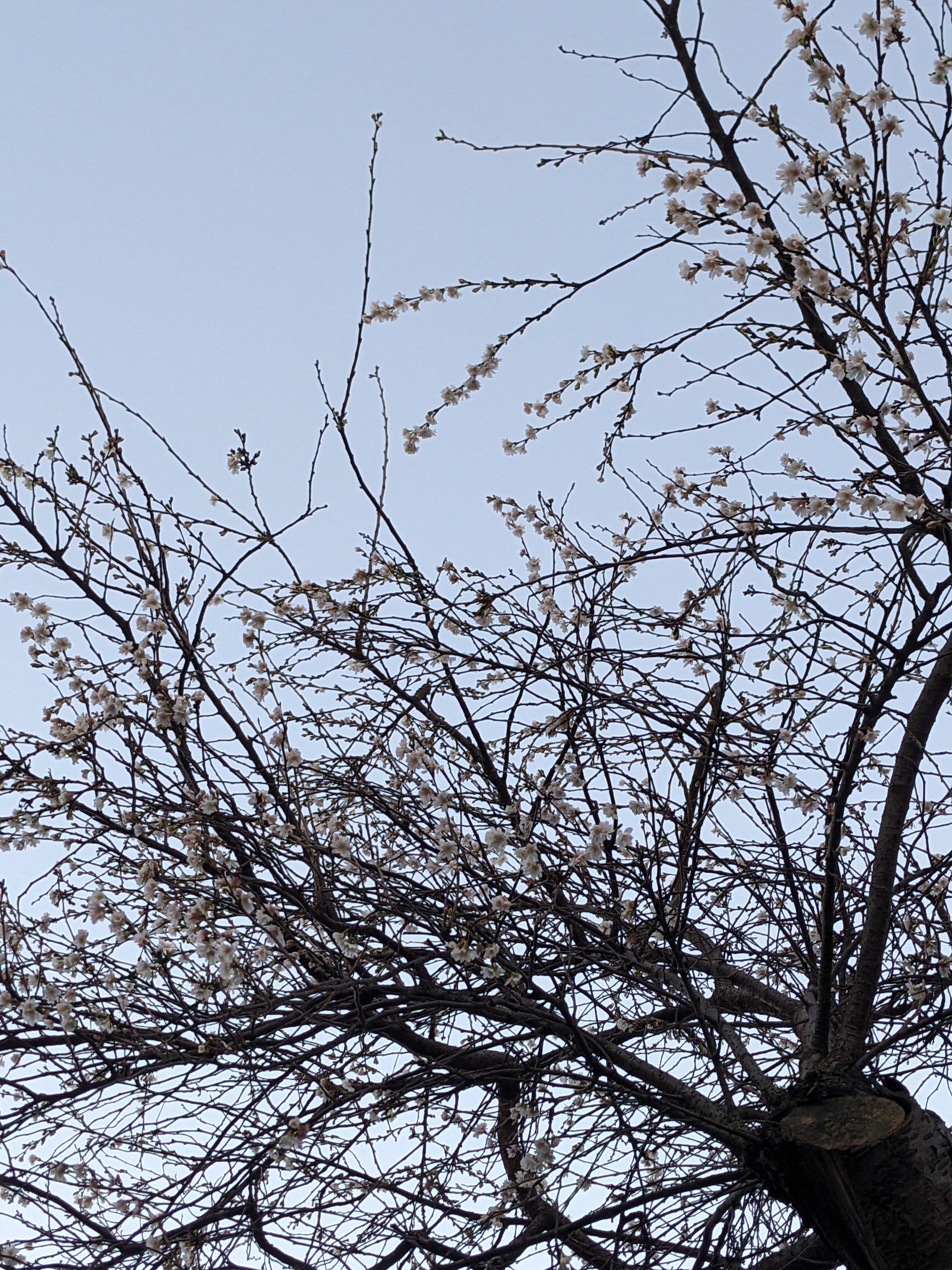
    A tree in pale blossom against a blue-gray sky

    “Anarchism meant [‘release and freedom from conventions and prejudice; freedom, the right to self-expression, everybody’s right to beautiful, radiant things’] to me, and I would live it in spite of the whole world—prisons, persecution, everything. […] I would live my beautiful ideal.” – Emma Goldman, Living My Life 


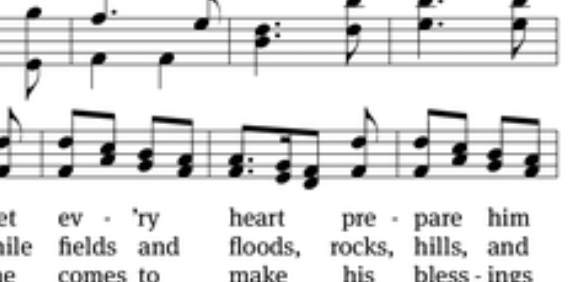
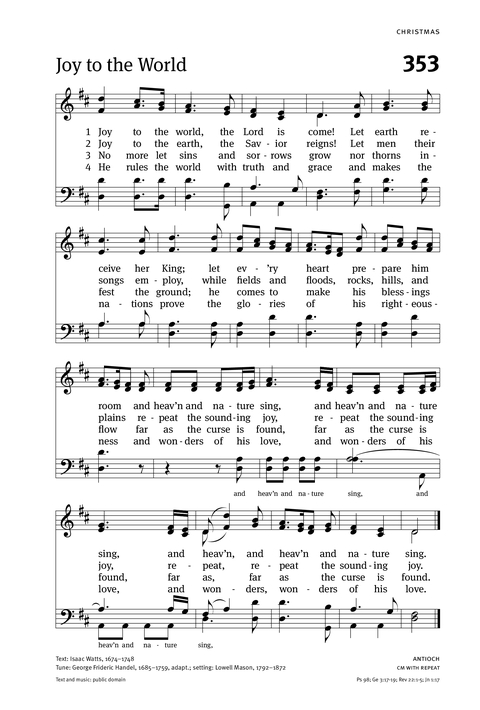
    There is a song I have known from childhood—if you speak English and celebrate Christmas, or grew up doing so, you likely know it, too. It is an old and very popular song for that holiday, written in 1719 by a nonconforming minister, and mostly sung now to a tune composed in 1848. For some years now I have been thinking about this song, in the way you sometimes do with things familiar from childhood. Having taken it for granted a long time, you begin later in life to sense a thing’s strangeness and complexity. What had seemed straightforward, even obvious, is revealed not to be.

    Here is the song. It is is in great part a celebration of power. Written in the 18th century, in England—an England both monarchical and imperial—it brings assumptions from that time along with it like one brings the cold in on one’s coat in a northern, midcontinental December. The song talks about “ruling”, “reigning”. The people of earth are “men”, God is a “Lord” and a “King” (definitely also a man). The earth (figured in the feminine) is there to “receive” and to “prepare him room”. Okay. So far, so limited in imagination. Those parts, the obvious parts, the song’s opening in particular, are all brass, shined to a high polish by the assumption that empire is the way to go, that status necessarily and even rightly seduces, that power looks like power as kings and wannabe kings (the wannabe kings of political, social, cultural, familial power and access) conceive it. These polished surfaces that reflect worldly power and assume it’s the nature of divine being are the reason that for so long I resisted the song’s pull.

    But I can’t keep resisting, not entirely, because something in me insists that the song has a subversive thread to it, as when, in a shopping mall, someone has stickered the benches to insist on public space and public speech inside the privatized spaces that pass so often now for public ones. Or as when, in a massive expensive grocery store, the employees all turn a blind eye to the person putting in the code for bananas in place of bulk nuts. The edifice crumbles only after ants begin, over years, to displace one grain, then another. As so often is the case, I’m looking for tiny indices that describe the failings of systems that seem both total and natural, and that point to liberation.

    What draws me to think about this song, and what keeps me thinking there, are the parts of the song where everything in the universe sings. The parts I am interested in are not made of shiny stuff—they are made, and made much more strangely and much closer to home, of human hearts that can expand and of “wonders” of “love”. They are made from what the hymnist calls “joy”. In fact the whole song is about joy—it is called “Joy to the World”, after all—which makes me ask, as I think about it, what it is that thing called “joy” might be.

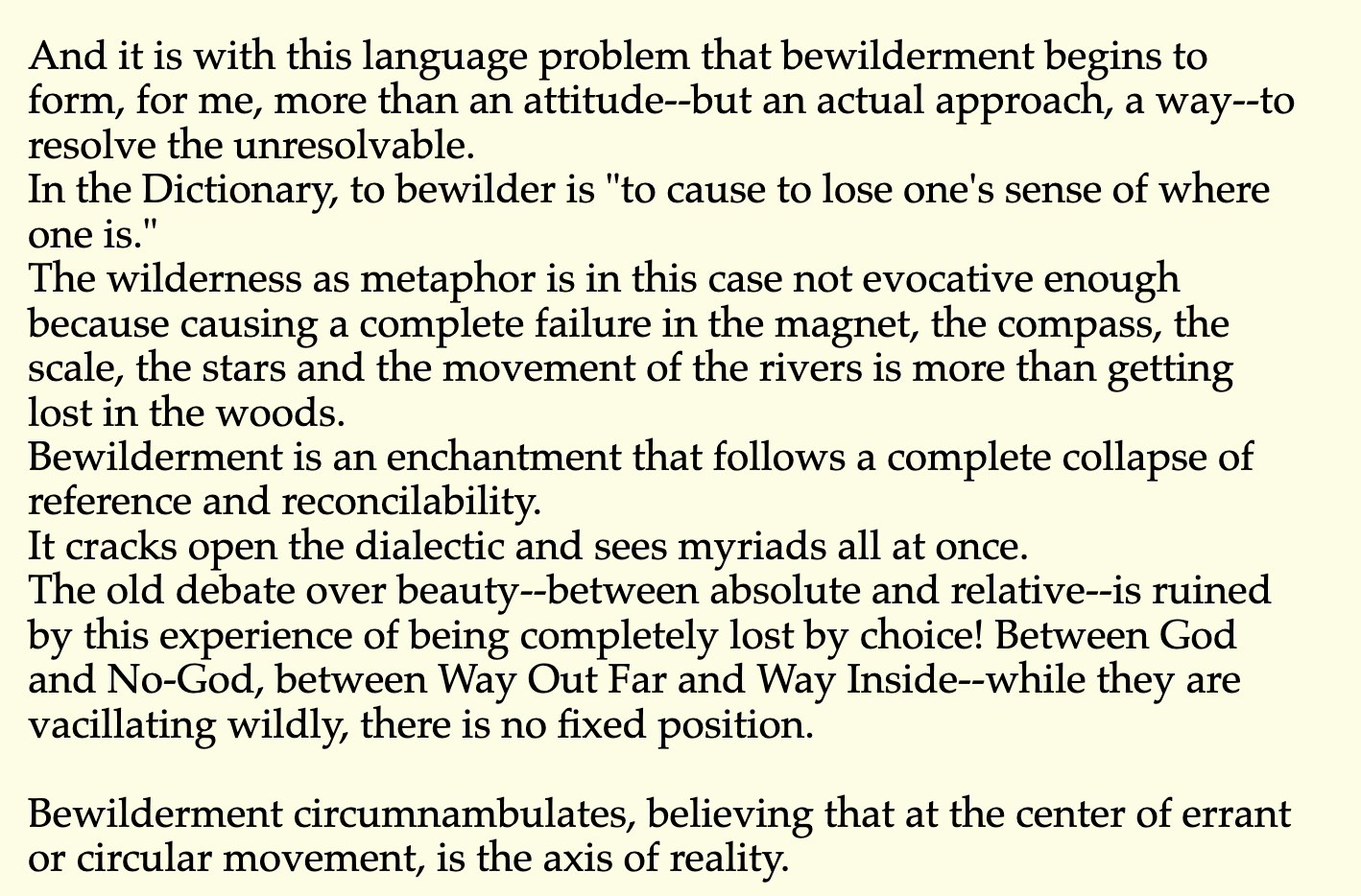
    And it is with this language problem that bewilderment begins to form, for me, more than an attitude--but an actual approach, a way--to resolve the unresolvable. In the Dictionary, to bewilder is "to cause to lose one's sense of where one is." The wilderness as metaphor is in this case not evocative enough because causing a complete failure in the magnet, the compass, the scale, the stars and the movement of the rivers is more than getting lost in the woods. Bewilderment is an enchantment that follows a complete collapse of reference and reconcilability. It cracks open the dialectic and sees myriads all at once. The old debate over beauty--between absolute and relative--is ruined by this experience of being completely lost by choice! Between God and No-God, between Way Out Far and Way Inside--while they are vacillating wildly, there is no fixed position.  Bewilderment circumnambulates, believing that at the center of errant or circular movement, is the axis of reality.

    I think joy is not happiness. It is not even elation, or the ecstatic and momentary feelings of triumph or delight or pleasure. I think joy is more like the sublime than like these words that are used as its synonyms—I think that joy has some of the sublime’s knife-edged terror to it. I think joy is what Fanny Howe calls “a complete failure in the magnet, the compass, the scale, the stars”. Joy is a reordering of the world, a reordering that feels like total disorder—thus the edge it shares with terror. In Howe’s words, bewilderment is “an enchantment that follows a complete collapse of reference and reconcilability” that ruins not only our navigational tools but the systems of placing ourselves that they relied on in the first place. Like Howe’s bewilderment, joy is something that forces us to circumnambulate rather than to know where we are and how to move. It does not permit us the straight highway or self-assured knowledge. It makes us move in (seeming) error—Howe reminds me that the root of the word “error” is wandering, not mistake—and the gestures of of this ‘erring’ reveal the “axis of reality”.

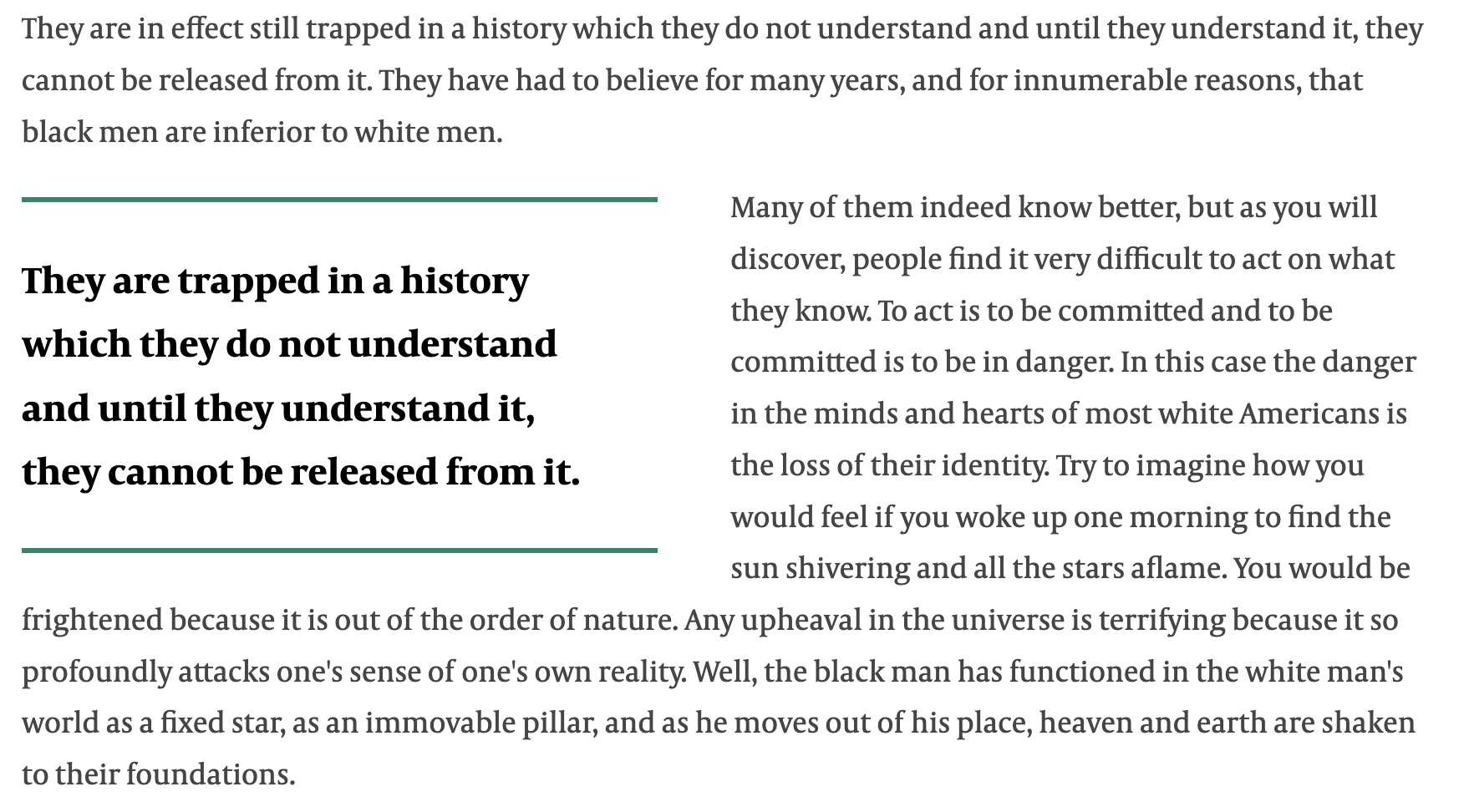
    When I think about Fanny Howe and her poetic-ethical idea of bewilderment, I have to think about James Baldwin, too, because there is a moment in his essay “A Letter to My Nephew on the One-Hundredth Anniversary of Emancipation” (in The Fire Next Time) that Howe’s failing compass reminds me of every time I read “Bewilderment”. There’s an explicit link that takes me from Howe Baldwin, and it’s a writerly one—it’s a metaphor. When Baldwin talks about the white experience of Black liberation (which is universal liberation in the end), he compares it to waking up “to find the sun shivering and all the stars aflame”. This sounds like “a complete collapse of reference and reconcilability” (Howe) to me. And Baldwin writes that “Any upheaval in the universe is terrifying because it so profoundly attacks one’s sense of one’s own reality. Well, the black man has functioned in the white man’s world as a fixed star, as an immovable pillar, and as he moves out of his place, heaven and earth are shaken to their foundations”. There’s the same kind of image as Howe’s compass, magnet, scales, stars: the fixed star, the navigational device that allows some of us to move freely through a universe we are allowed to feel we both make and ordain.

    Let me slowly bring us through Howe’s bewilderment and Baldwin’s letter, and back to joy. I will. But give me time.

    Howe writes that the bewilderment that results from the compass failing is not a ‘merely’ artistic question (as if art could ever be separated from life). She explicitly names bewilderment an “ethics” as well as a “poetics”, a “way to enter the day”—our ordinary lives. And she also writes that “A big error comes when you believe that a form, name or position in which the subject is viewed is the only way that the subject can be viewed. That is called ‘binding’ and it leads directly to painful contradiction and clashes”. What Howe calls ‘binding’, this thing that is both in error and painful, sounds like all kinds of assumptions about value that are structured by the networks of power and relation we live inside.

    The belief that one knows how things are and that that is the only possible way for them to be sounds like Baldwin’s “fixed star” to me. I know that Howe is thinking about whiteness elsewhere in the book that contains “Bewilderment”, and so I can’t help reading whiteness as one such ‘binding’, because whiteness is about ordaining, sorting, and control. And that brings me again to Baldwin, who writes that “people find it very difficult to act on what they know. To act is to be committed and to be committed is to be in danger. In this case the danger in the minds and hearts of most white Americans is the loss of their identity”, an identity, Baldwin writes, that is established in relation to the “fixed star” of Blackness figured, imagined, and situated (socially, culturally, economically, historically) as lesser other. When Howe writes that bewilderment requires us to “circumnambulate”, she is insisting that a reordering of the universe will require us to take paths we may not have even known existed, paths that may seem nonsensical or impossible or nonexistent. To circumnambulate is to be committed?

    What if I place Baldwin’s idea of commitment and Howe’s of circumnambulation together? Both writers seem to suggest that to rely on the systems of knowing, being, moving, having, and relating that we already know will merely replicate those systems’ painful, unjust, and unfree hierarchies and binaries. Bewilderment, on the one hand, and commitment, on the other, “crack open the dialectic” to show us “myriads all at once” (Howe); they put us “in danger” because they require us “to act” . And that is the knife-edge I find in the song I’m trying to write about here—the knife-edge of the world that changes, or cracks open (with all the violence that verb implies), along the lines of repressive and oppressive habits of being both social/cultural and personal.

    I live in a culture (not the only culture on earth, but a dominant one) where it is commonly held that there are speaking kinds of beings and thinking kinds of beings, and there are beings who do not speak, and beings who do not think. (The rubric of “non-thinking/non-speaking” is and has been variously applied to humans as well as to non-human beings.) I live in a culture where there are more and less valued ways of being a thinking-speaking being, all of which are almost always more valued than being a non-speaking-non-thinking being, and than being a ‘non-being’. I live in a culture that has a sense that these are settled questions, “fixed star[s]”, “the only way the subject can be viewed”. I live, in other words, in a culture that has at its heart a sense of ranking and a sense of sorting, and a belief, often untroubled, that ranking and sorting are so natural as to come from the ground itself, like elements. A lot of the song I’ve been talking about is preoccupied with the trappings of this culture, its reigns and its kings and its nations and its proving and its rules.

    But then there are the non-speaking-non-thinking beings and non-beings in the song, the fields and floods; the rocks, hills, and plains. And what do these do? —They disturb the universe of order and of “sense”. They shake “the heavens and the earth to their foundations” (Baldwin). How? Joy. It says so right there in the song. What does joy do? It makes it possible not only for “fields and floods, rocks, hills, and plains” to sing, but for us to hear them. That is not a description of “happiness”, but a deep disturbance of order. A breakdown of the rules that seemed to be effects of a natural order, revealing them to be contingent. A rearranging of the cosmos. The failure of a compass that I had trued to stars I thought fixed—stars of an order that arranges things so that what I know is what there is to know.

    Singing rocks, singing land, singing water: an inversion of my habitual assumption—my knowing, my unerring knowing—of who speaks, who listens, who it’s possible to be here with, and how we can be together. When I read Howe, I learn to look not for the earthquake but the wobbling compass needle as an indicator of a necessary collapse of meaning. When I read Baldwin I am reminded that what feels like the end of the world may be a door opening to a completely new one, one the fixity of my gaze had occluded, and one inviting my commitment—that is to say, my action. The fields and floods, rocks, hills, and plains are not passive (the land we live with, through, in is not subordinate to humans). They sing and repeat the song (their own song), a song that calls for a total “upheaval in the universe” (Baldwin).

    It is not for a crown-wearing, oilfield-owning, prizewinning, property-hoarding king that the hills and fields, the rocks and the water are singing, but for the joy that is the disorder of all systems of dominance, all systems of unequal being, all systems depending on the oppression of one sorted and categorized kind of being for the seeming, though not actual, freedom of other kinds of being. It is a song for the child of poor people, soon to become refugees, born without even a bed, if you need that image to get the inversion I’m talking about, although I don’t think that image is necessary. I think it’s enough to think about those singing hills, singing rocks, singing springs of water and take that song literally, to experience the upheaval and inversion of our given modes of understanding. After all, here we are in the world so many of us were—I was—mostly given to understand as non-speaking-non-thinking. And here it is. All around us. Singing.

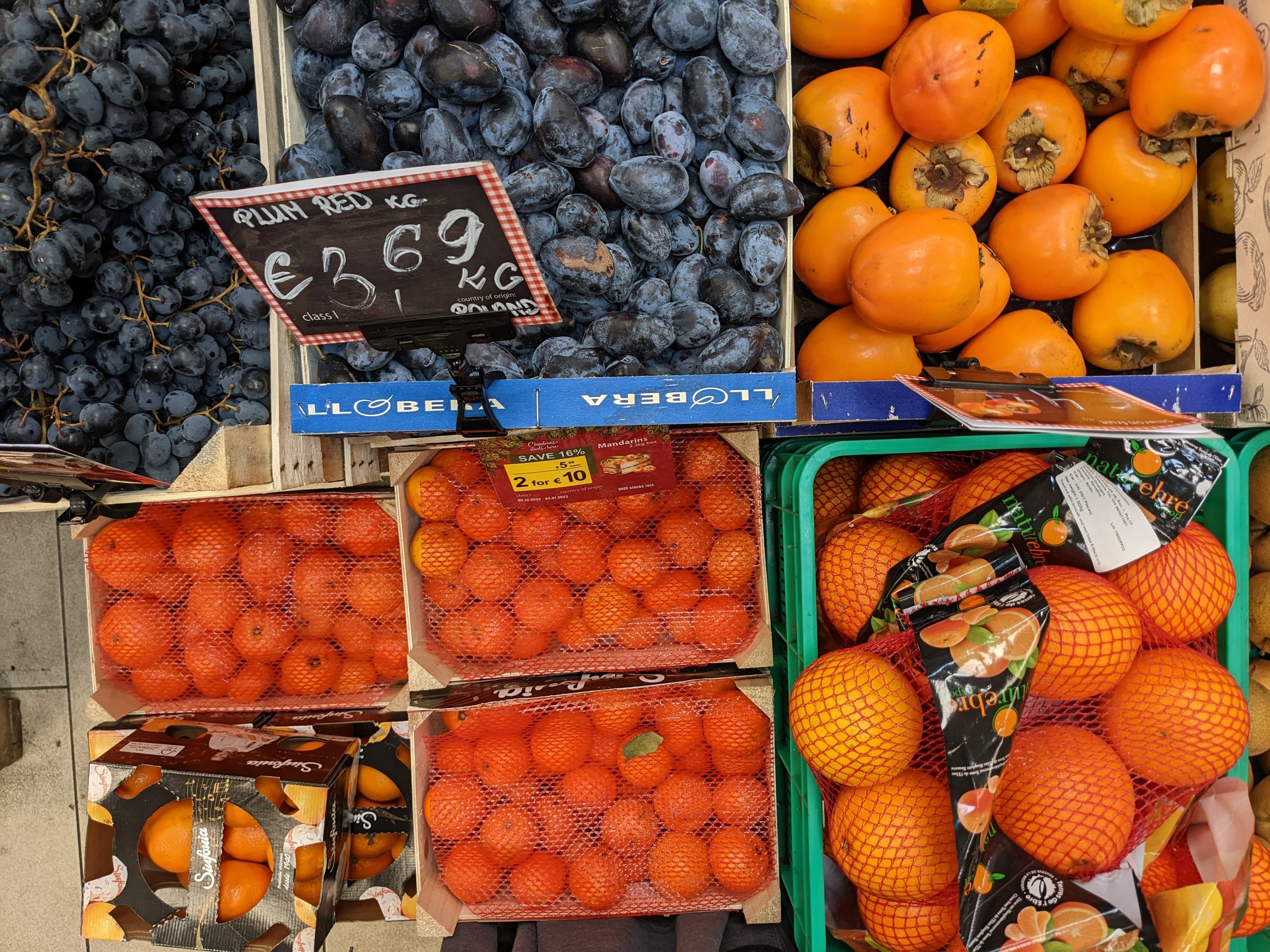
    plums, oranges, and persimmons in crates

    The human being is holy, the land and water are holy, the animals and plants, fish and birds and insects are holy. End all wars forever. Free Palestine.

    Thank you for reading—I will be here next week with one more piece in this series about Christmas.

  • it came a flower bright

    it came a flower bright

    amid the cold of winter

    Two notes—

    1. This week and the following two weeks I’ll be writing about Christmas, after a fashion. I was raised in a Catholic parish renewed by radical nuns after Vatican II, and dedicated to liberation theology, the priesthood of the people, and the preferential option for the poor. I want to think and write through that lens about this time of year. So if that’s not your thing, or you’re simply saturated, this might be a good time to ignore the weekly essays. (Maybe I should note that I’m not interested in a theological debate. I have no stakes in anyone else’s belief or nonbelief in my [unsettled, sometimes contradictory, still-in-progress] theology, and no interest in converting anyone.) As always, I’m trying to write through, with, into, and toward bewilderment in Howe’s sense.

    2. Tonight at 7 Irish time/this afternoon at 2 US Eastern time, I’ll give the second Annulet Linkages Lecture. It’s called “On the line” and you are very welcome if you’re interested. Sign up via this link.


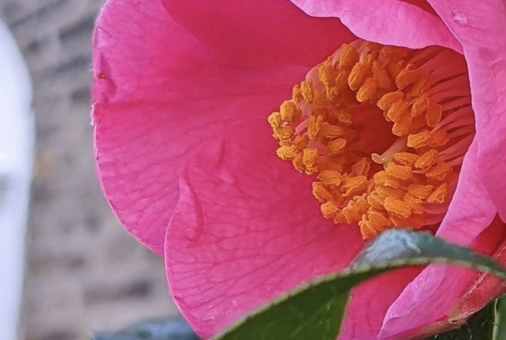
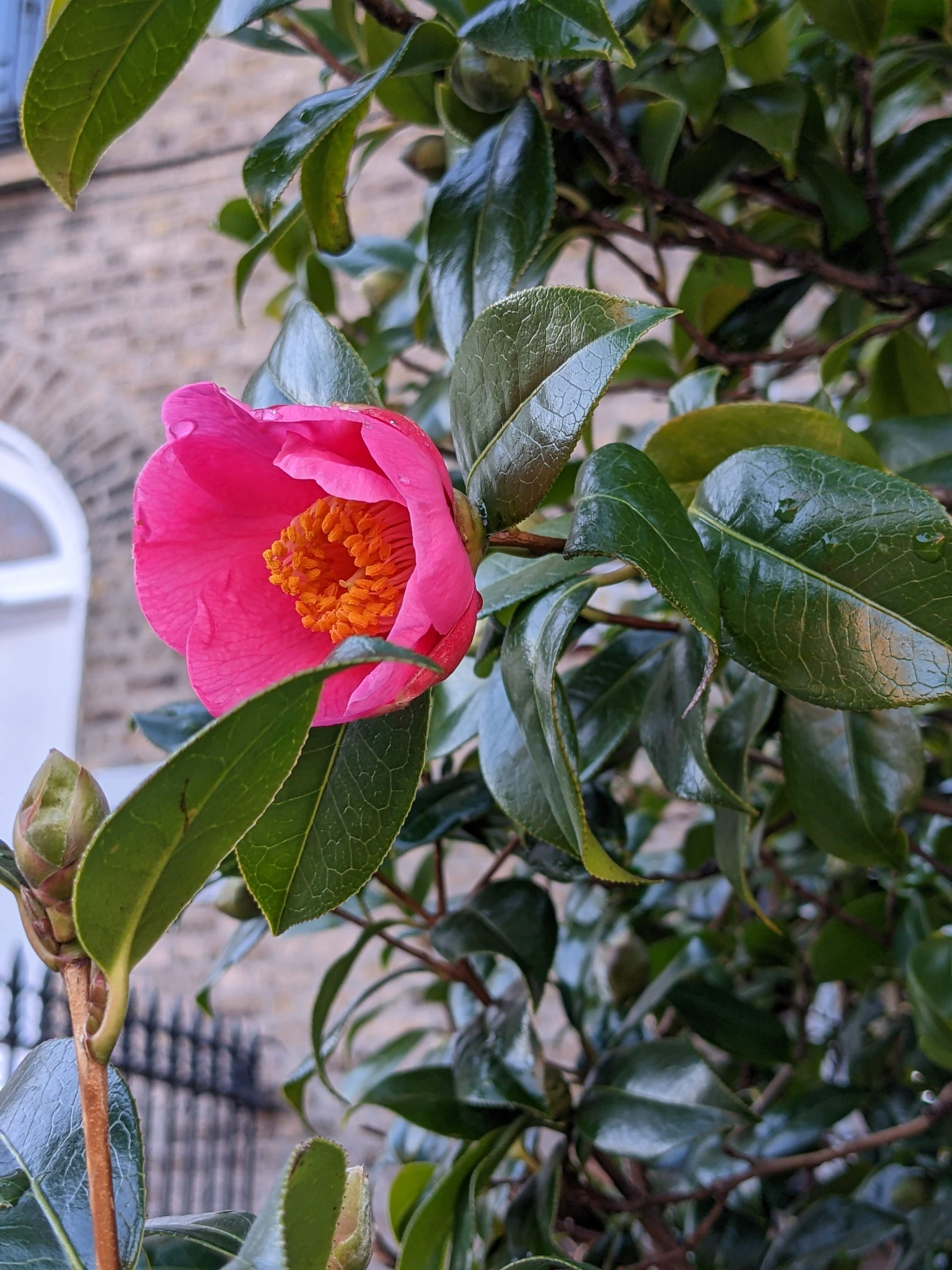
    a bright pink camellia among dark green leaves

    Listen. There is a voice calling to us in the wilderness. There are gold stitches on blue cloth like the gold marks in the deep blue sky. The wind goes through the rushes where the tents have been pitched along the canal and the rushes hum with that wind, and the tiny fish swim oceanward in the dark water. In the tents the light from a cell phone is blue-white for a moment, then extinguished. A long time ago a census was undertaken and everyone was required to return to their homeplace. People move across the land and the water, using what conveyances they can find. The cost of living rises so quickly that it is impossible to find a place to stay. The landlord opens the door and the apartment stinks of mold. It has only one window, which will not open. The night sky above us spins with galaxies that distant telescopes record. Through the universe the thread of song comes: and is gone again. Overnight the pink roses outside the public library open their buds despite a hard frost. And the temperature rises, and the ones sleeping among the rushes are a little warmer in their sleeping bags. The man and his pregnant wife bend against the wind as they walk a road that seems never to end, toward a town where they don’t belong. When they arrive, who will open the door? Listen: there is a person calling to us from the street corner.

    In the desert the billionaire stands on the cliff surrounded by data centers. The United States vetoes the ceasefire. Soldiers and police exchange expertise online. They may seem to constitute the world but they are not the world. Violence, resource hoarding, fear—these occlude, by their greedy gobbling of our attention and even our understanding of what is normal, the granular facts of the world of the miraculous real.

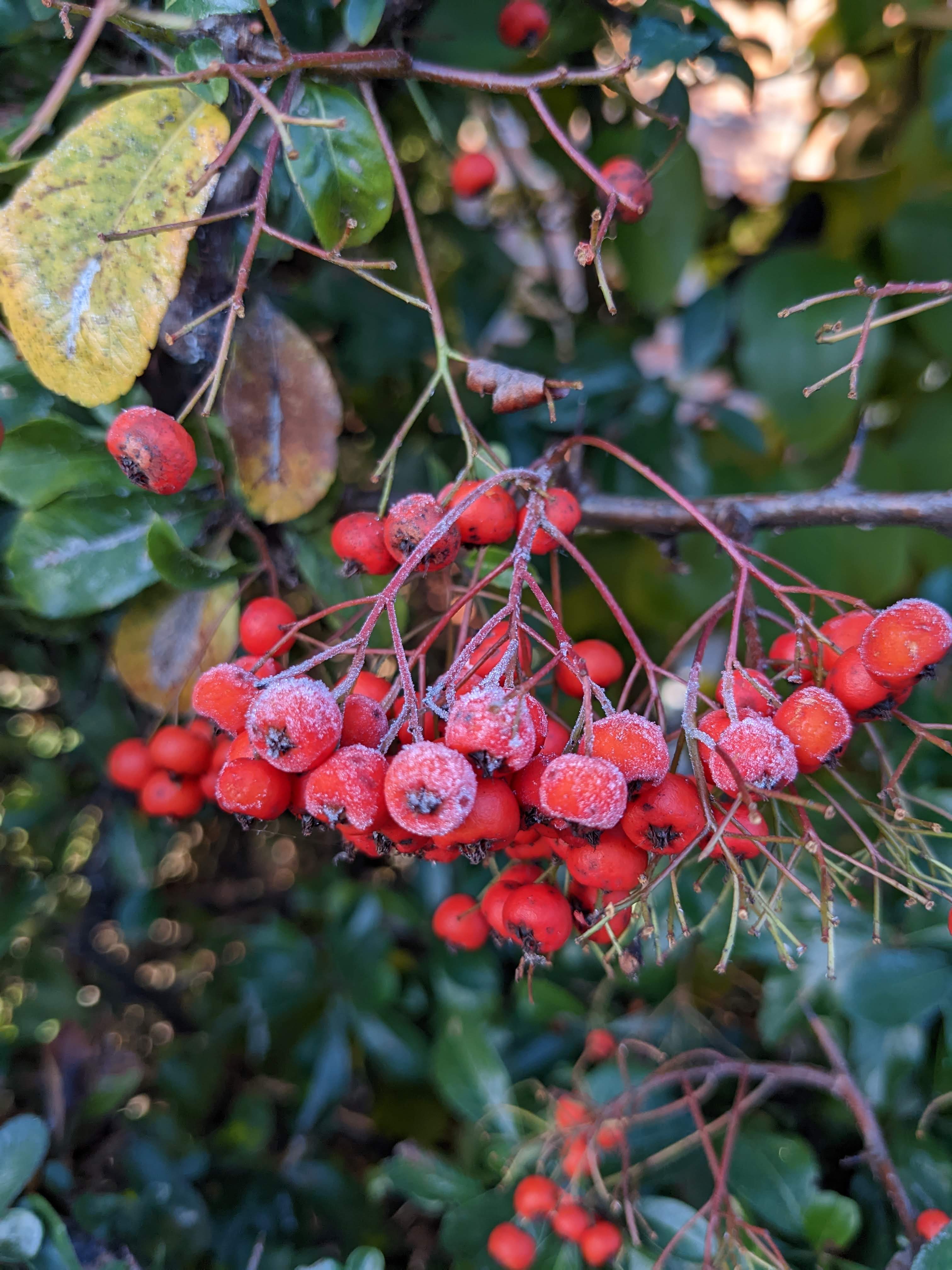
    A spray of red berries with bits of frost on them

    I think the word ‘miracle’ is not a description of something that once happened as if by magic, or by a power beyond comprehension; I think that word is a direction toward the world we know we need and have been infinitesimally schooled by capitalism (with its roots in racism and patriarchy) out of being able to name, out of longing for—sometimes even out of knowing what it is possible to long for. In that sense, to me ‘miracle’ is a word that points us toward a living and livable place where no one is outside the circle. It is a word that first and foremost means imagine and understands that imagination is world-making work, the founding gesture of the possibility of change and toward the kinds of work and kinds of company necessary for that change.

    That something is unlikely does not mean it is impossible. That the word ‘miracle’ has come to imply extraordinariness does not mean that miracles are out of our hands. The people stand between the oil pipeline company and the river. The trade union closes the arms factory for a day, then for a second day. The tenants union finishes raising funds and buys their building. The city passes the basic income ordinance. The passersby make eye contact with the woman sitting on the pavement. The public library is open seven days a week and taxes on corporations pay for medical care for everyone. The light in the sky is a light in the sky. The people are grass, and the canal is a canal.

    Listen, the prophet says, and directs my ears to grass, to water, to the ones all around me, near and far in endless concentric rings. Listen, the prophet says, and the scroll unfurls to words that proclaim release to the captives, that direct oppressors to let the oppressed go free. What is holy? Answering the poor and needy who seek water with water. Honestly? Abolishing the police. Banning fossil fuels. Living wages for liveable hours of dignified work. Sharing our food with one another.

    Near the canal someone is cooking over a camp stove. The government announces that refugees will be housed in tents in the countryside. Swans dive into the clear water to eat the thin stems of lilies. The news report indicates a rising death toll in Gaza, and in cities and towns, in villages and in rural places all over the world people leave their intact and warm and sweet-smelling dwelling places to insist over and over that it is wrong to murder any people, it is wrong to bomb houses, wrong to destroy universities, wrong to target hospitals, wrong to poison the earth, wrong to inflict suffering at any scale.

    Outside, it is unseasonably warm after a week of cold temperatures, and the fuchsias are still blooming. I peel and portion a tangerine and spit the pips and feel the drunkenness of things being various. In old books and on banners carried by families walking through Minnesota winters of the early 1980s, the words war is not healthy for children and other living things blur into the words they shall beat their swords into ploughshares. We have been doing this a long time, this work of imagination. We are not alone. We know what kind of world we want: grass, water, houses, warmth. Flowers. Safety. Clean clothes. Books.

    Teach us what enough means. World of infinite beauty, right here around us. We make it together. Above us, way out in an atmosphere we can never reach but that touches us, the stars continue shining.

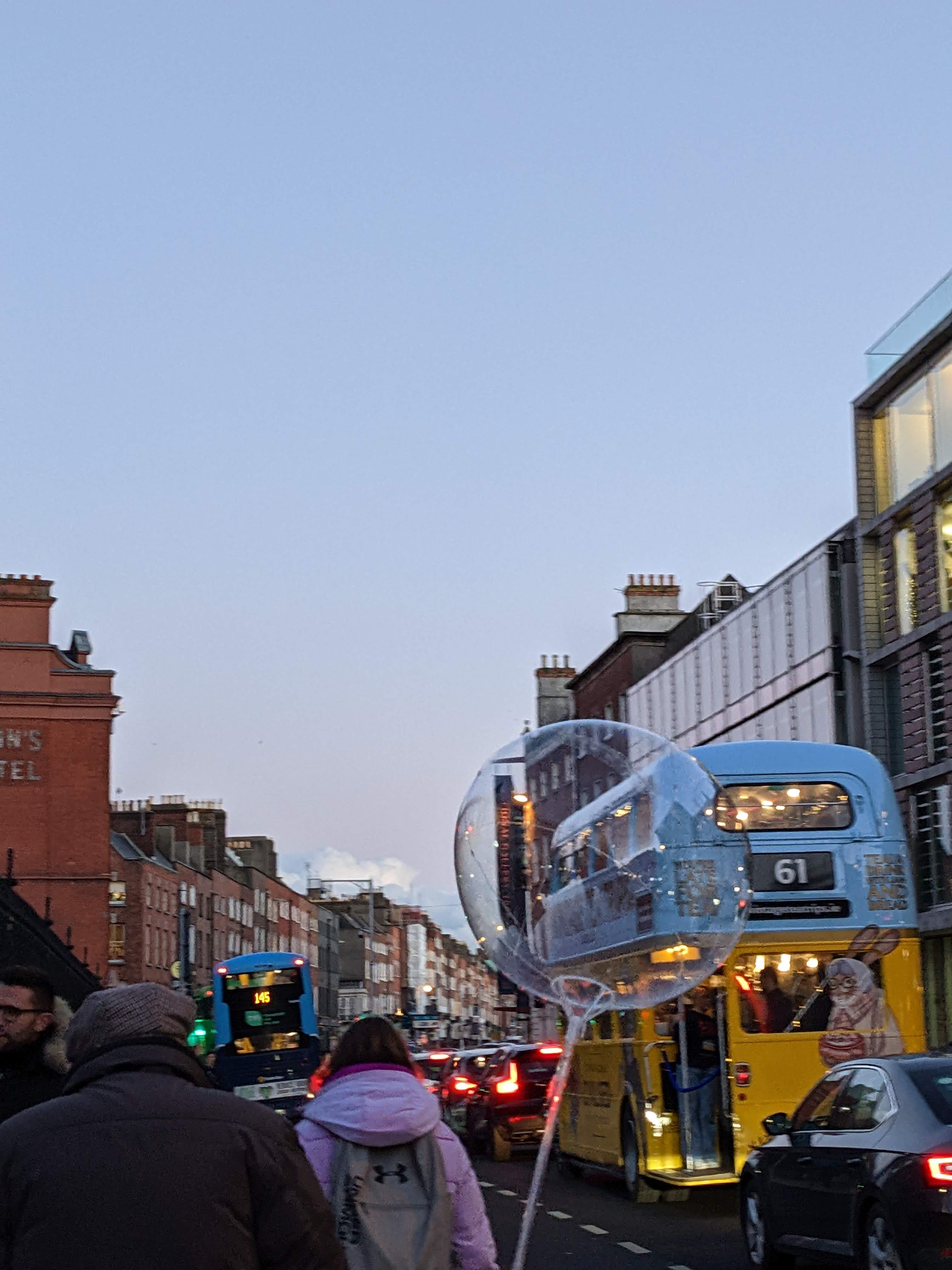
    a busy city street—buses, cars, buildings—at winter dusk. in the foreground a child walking away from the camera carries a transparent, iridescent balloon that is at the center of the image and distorts the view through it very slightly.

    Colors for this time of year: almost-not-there blue, camellia pink, translucent orange, wet street gray, dark brown, red-brown, light purple, opal pink, dust-blue, persimmon, faded red, porcelain blue, condensation gray, gold, glaucous green, anther yellow. The meek, the poor, the vulnerable, the mourning, the hopeless, the abandoned, the neglected, the excluded, the overlooked, the weak—this is their season. These are their colors, how beautiful. The colors of justice, liberation, courage, solidarity.

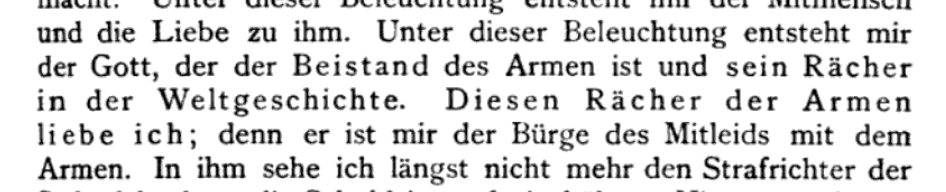
    Hermann Cohen: “the God who appears to me is the comforter of the poor and their avenger in world history. This avenger of the poor is the God I love.”

    Thank you for reading. See you next week.

  • [while walking]

    [while walking]

    and looking, and walking and looking

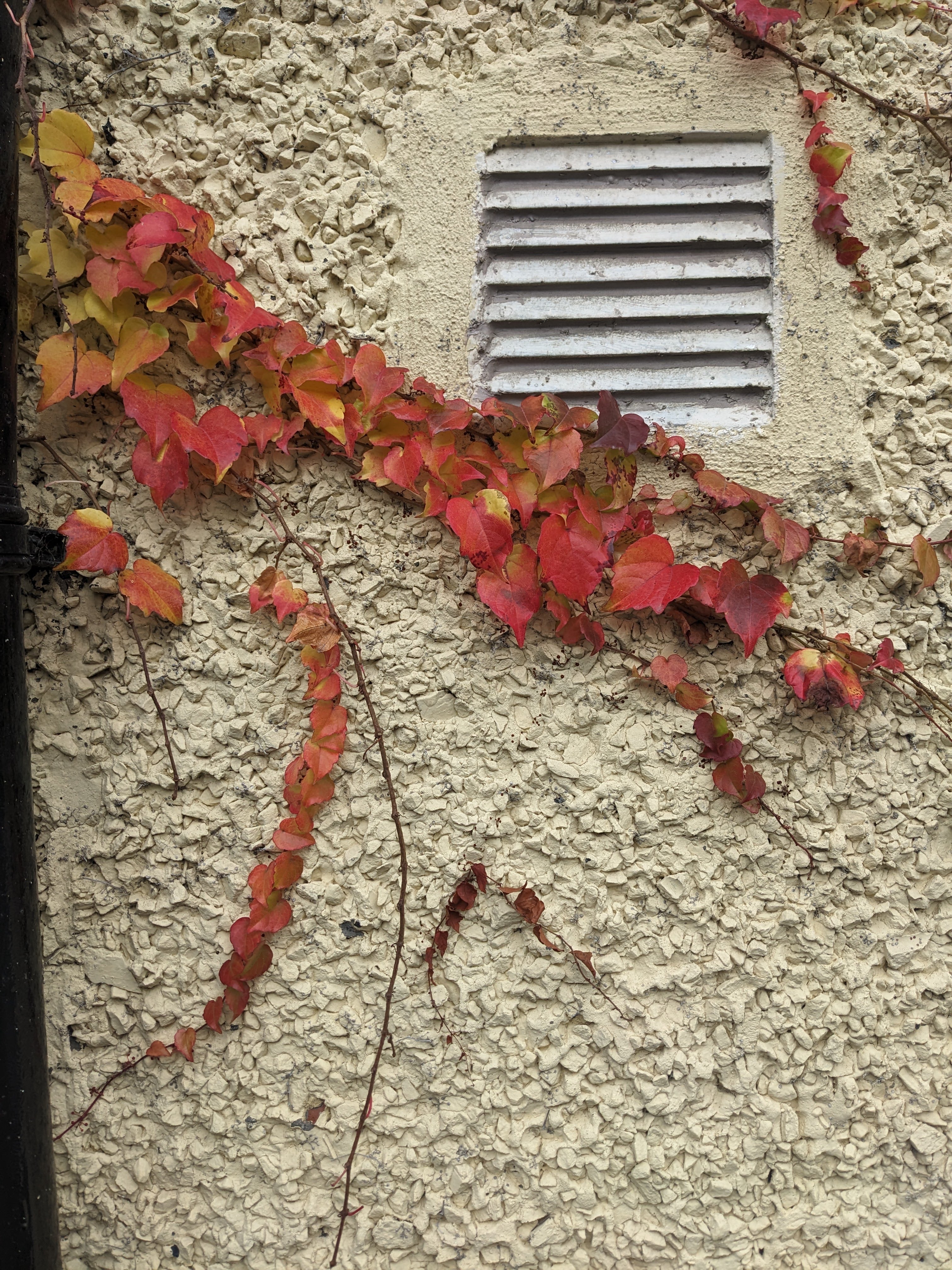
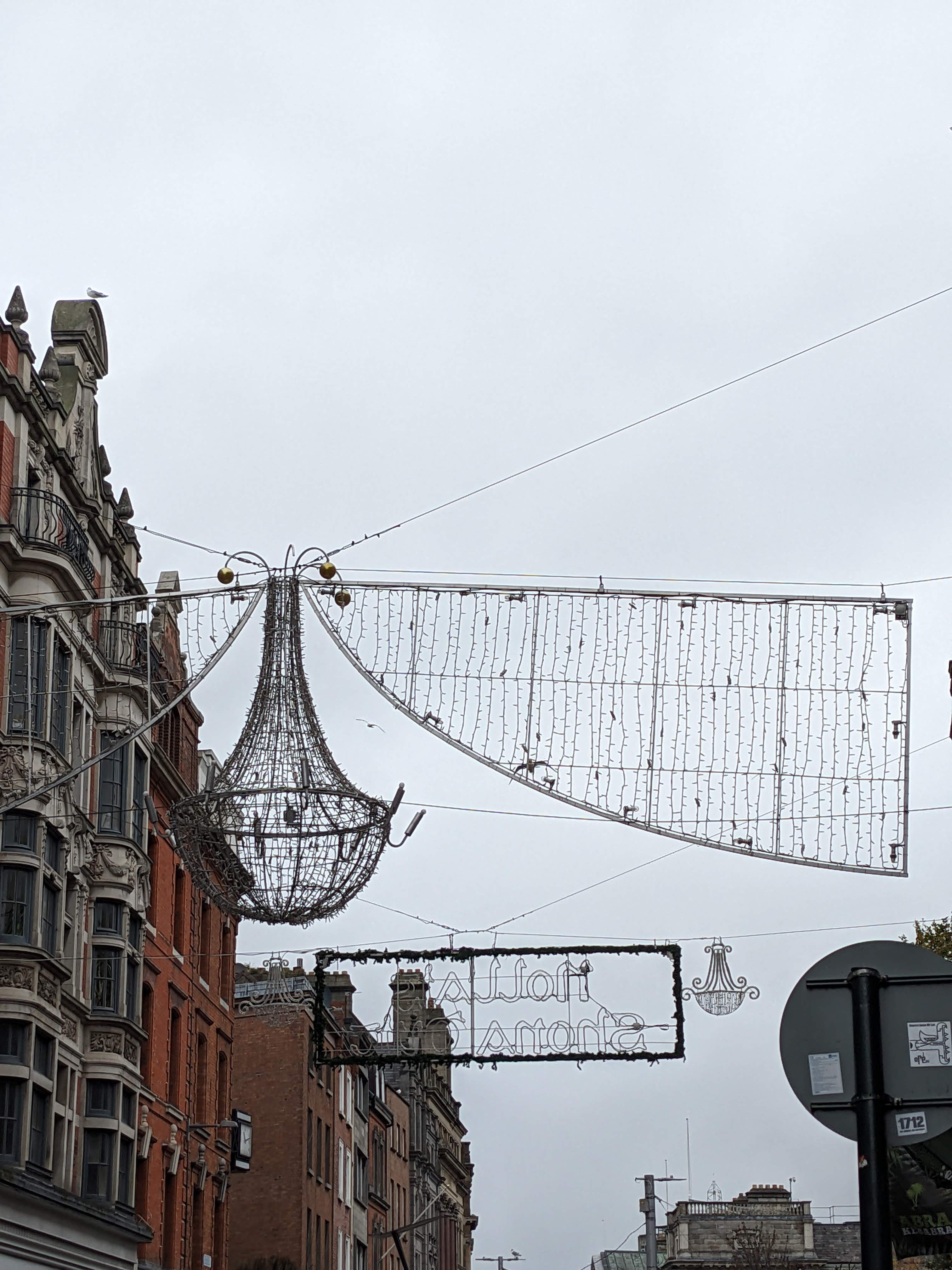
    Three storms in the north Atlantic have taken most of the leaves off the sycamores and hazels. They lie in piles, some saturated with water and becoming compost quickly as foot commuters trample them. Some are swept up over the day, so I see them in the morning but walk home along a completely cleared path. Out the back window, the little birch tree is totally bare now. Its leaves were bright yellow—not gold as the hazels and sycamores were, but a cadmium yellow. Now the branches are revealed in their creaminess, outlined in peach that darkens to red. Through the big windows of the house across the back courtyard I can see gulls flying. Winter is here—my students tell me this when I remark on the fall weather. They are right: winter in this landscape is so subtle, as subtle as spring was in Maine. It will pass without my seeing it, if I look for temperatures below freezing or the arrival of snow. My friend texts from much farther north and I see the snow on roofs where she is. Here, the sidewalks are perpetually damp and the laundry will only dry if it is set next to the radiator. The boiler breaks and the landlord is in no hurry to fix it, so as the mercury falls below zero Celsius we wrap ourselves in blankets and put hot water bottles under our clothes. The laundry hangs in the cold damp air of the apartment.

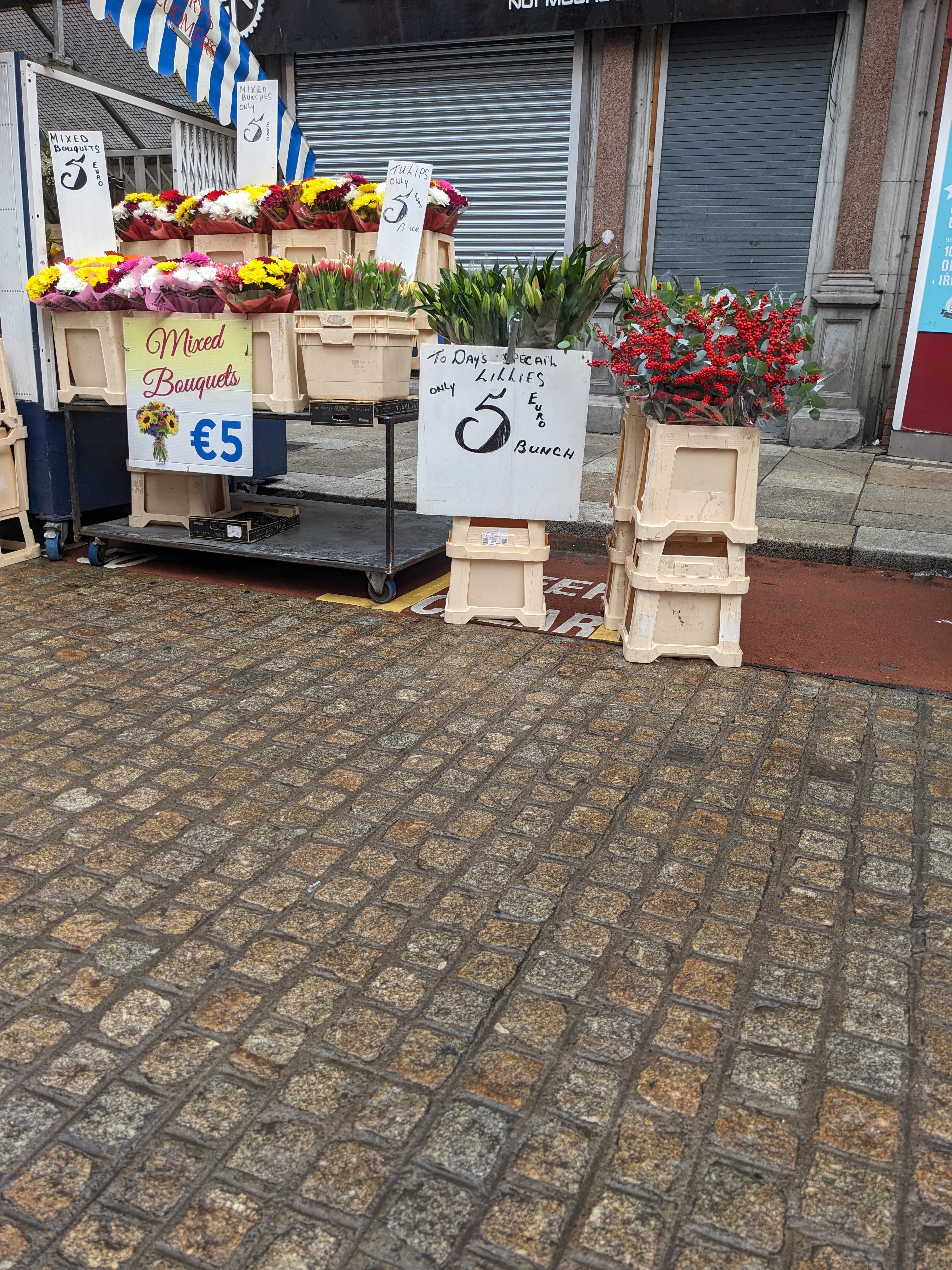
    On the corners of major streets the flower sellers show up every morning, and now there are cut trees and evergreen branches as well as the hydrangeas, chrysanthemums, lilies, freesias, carnations that are the general stock. They never seem to run out of tulips. And on Moore Street, the vendors’ flowers and fruit are priced with signs that someone’s drawn by hand. I like the care with which that number 5 was made. Makes me think of this other instance of the number 5 (I Saw The Figure Five in Gold), which points to this one.

    November was an exceptionally outward-facing month for me, with readings and performances and talks and extra lectures at work. And now that most of that is done (I have one more talk coming up, December 10 at 2 p.m. US Eastern/7 p.m. Irish time; information here) it is very good to have a moment to step back and say, oh, that’s what I’ve made.

    It’s not possible for me to see what a thing is while I’m making it, and that goes for everything. It’s necessary to step back from the place I’m cutting out or sewing together a dress, and from the poem, and from the performance, and from the drawing, and see it apart from me. Then I can make the kinds of decision that are about seeing patterns from outside rather than feeling them from inside. I think this is what Corita Kent (and her students) meant when she wrote that “to create and to analyze are different processes” (rule 8). We need both in artmaking. But we have to be bifocal with them. Go out and come back, be immersed sometimes and up for air at others. It’s good to have a very active period of making. And it’s also good take stock of what you make. It’s good to pause, and it’s good to wait. Breathe in and also out.

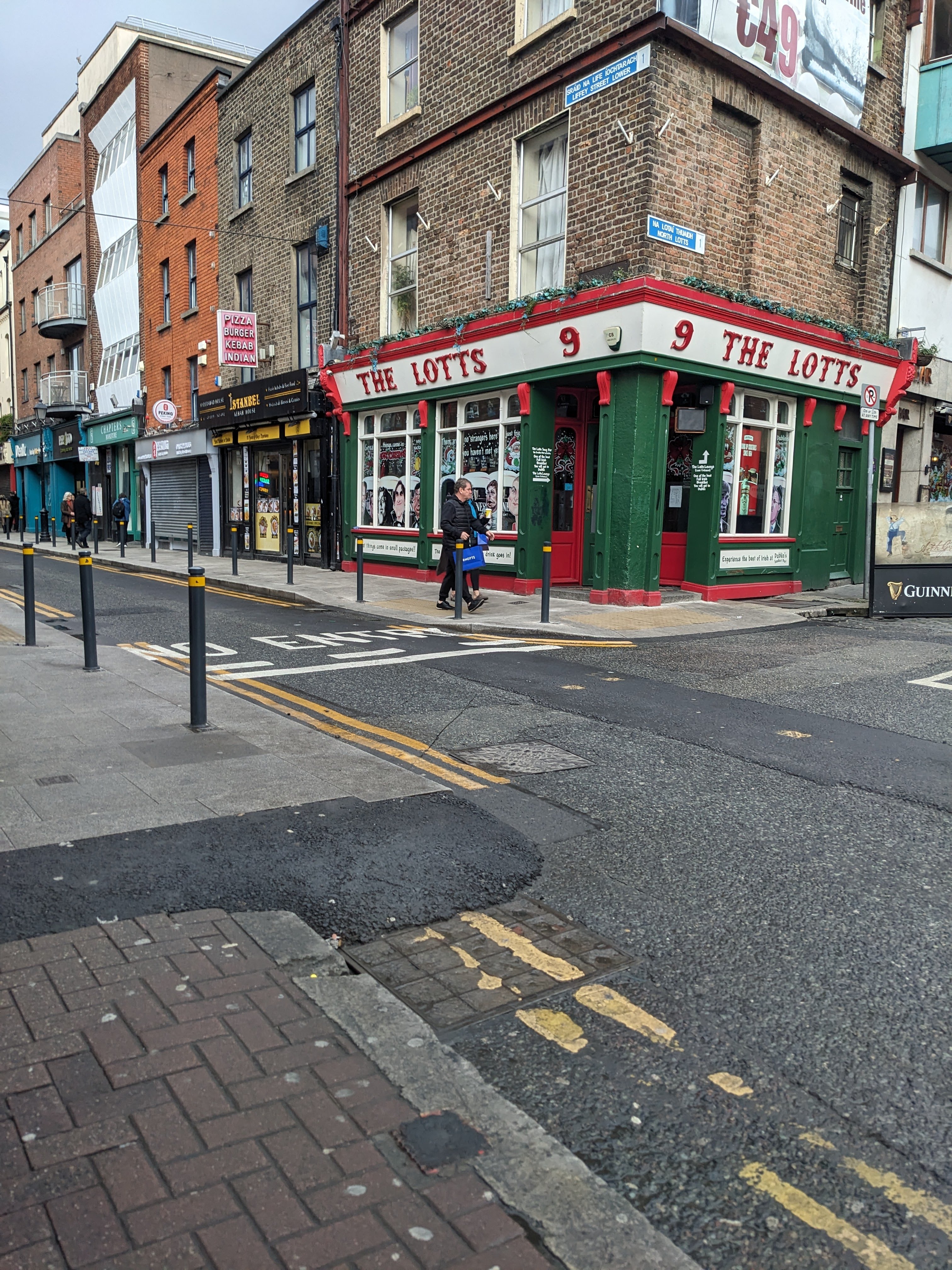
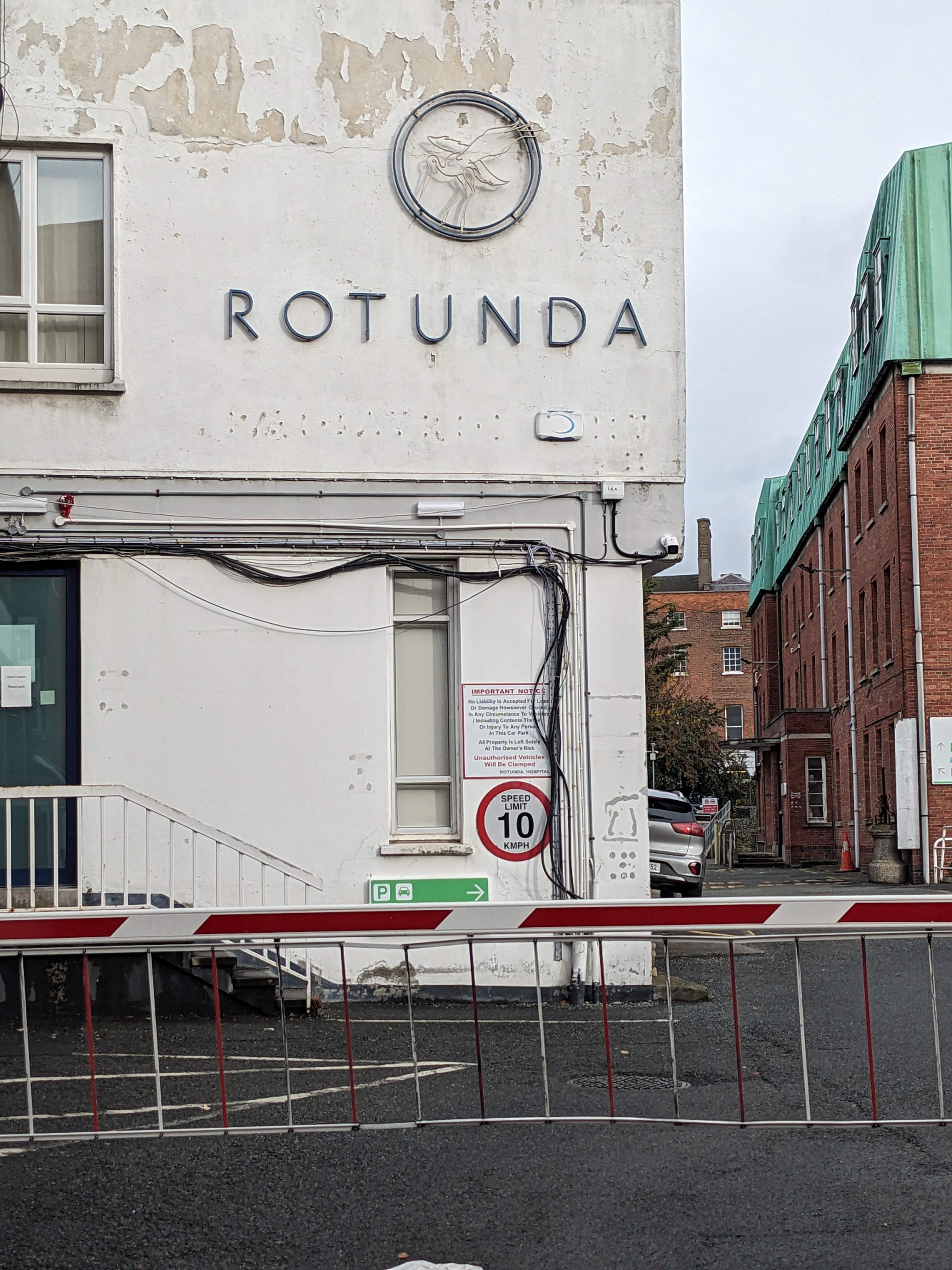
    The work I did this past month meant I spent more time at work than usual but it also brought me to parts of the city I don’t often transverse on foot, as I looked for certain materials (for costume-making) and tracked down certain places (for poem-making). I love the old neon sign on the Rotunda Hospital, just north of the city center, its delicate stork and that great O. I saw the figure O in neon.

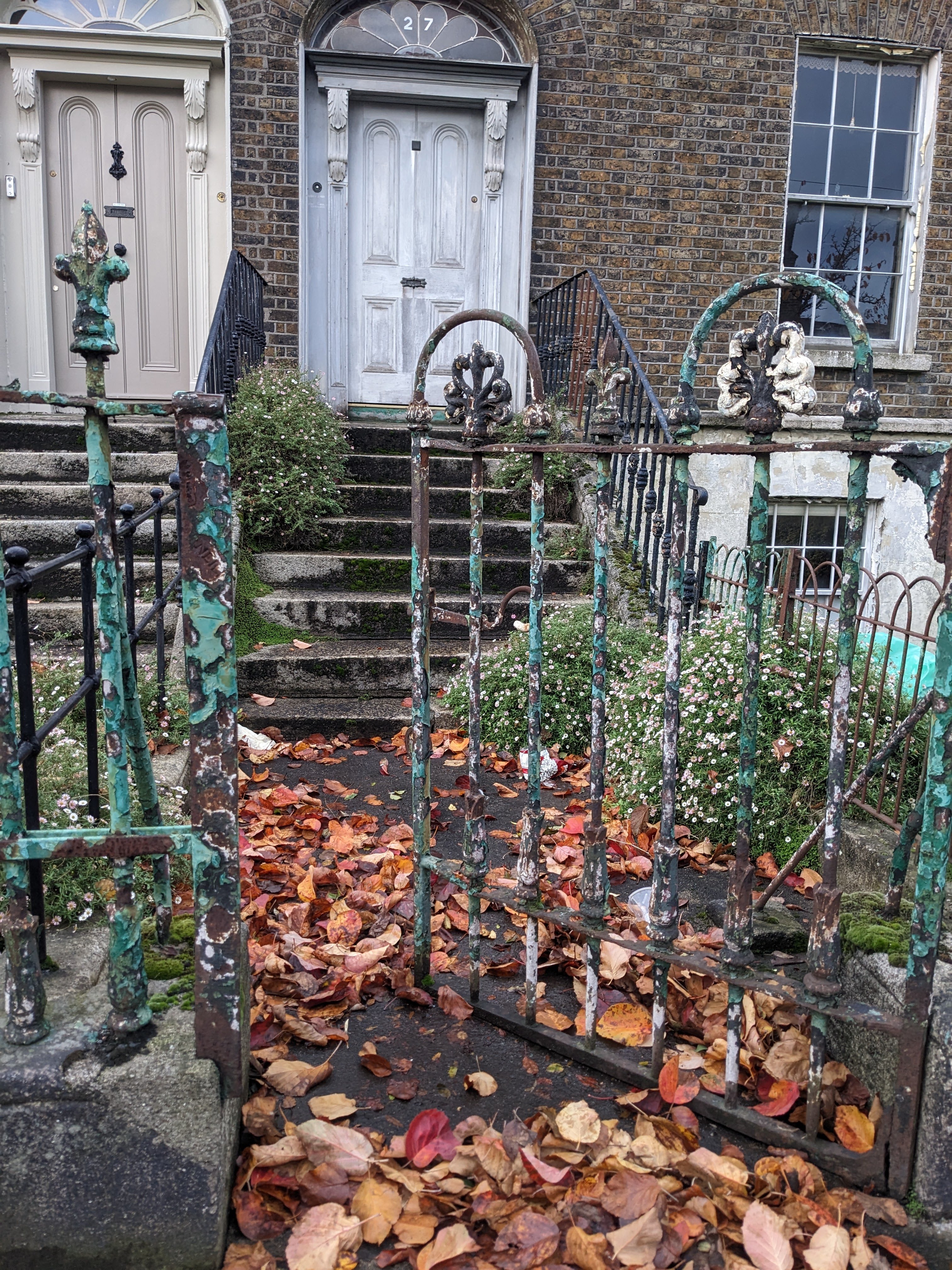
    And this gate, that greenblue color I see in many places in this city, especially gates. Every place is a paintbox. I have been thinking about samples recently—the musical practice of borrowing and the sample as a tester or miniature, and the forms samples take (like paint sample cards). Bits of something else brought into a new situation, they change the situation and are changed.

    I go to the art museum on a very gray morning and find myself surrounded by someone else’s vision of light. I’ve been listening to “Ladies and Gentlemen, We are Floating in Space” by Spiritualized on repeat. I am reading Brian Dillon’s Suppose a Sentence and Kate Beaton’s Ducks. We boil the kettle to make more hot water bottles and also cups of orzo with a tiny bit of sugar and a good bit of milk.

    This time of year it is easy to be bogged down—under the darkness, under the damp, under the fact that the heating is broken, under the cost of living and the made-cheapness of human life, under the very real weight of grief and horror and fear. How to go on? Step by step, little bit by little bit, without anesthetizing myself to the sharpness of the world that is: the indicator of its preciousness and the thing that spurs me to act. But also, without insisting on a hairshirt.

    It’s comfort. That’s what I’m talking about. Not numbness, not a commercialized ‘self-care’ that’s really just care for a corporation’s bottom line. Not a “peace of escapism, this peace that fails to confront the real issues of life, the peace that makes for stagnant complacency” (Rev. Dr. King; source). Comfort of body and of whatever the thing is that used to get called a soul. The dignity and integrity of the person. And that’s what I want to write about this month: the words of a few old songs, comfort and joy.

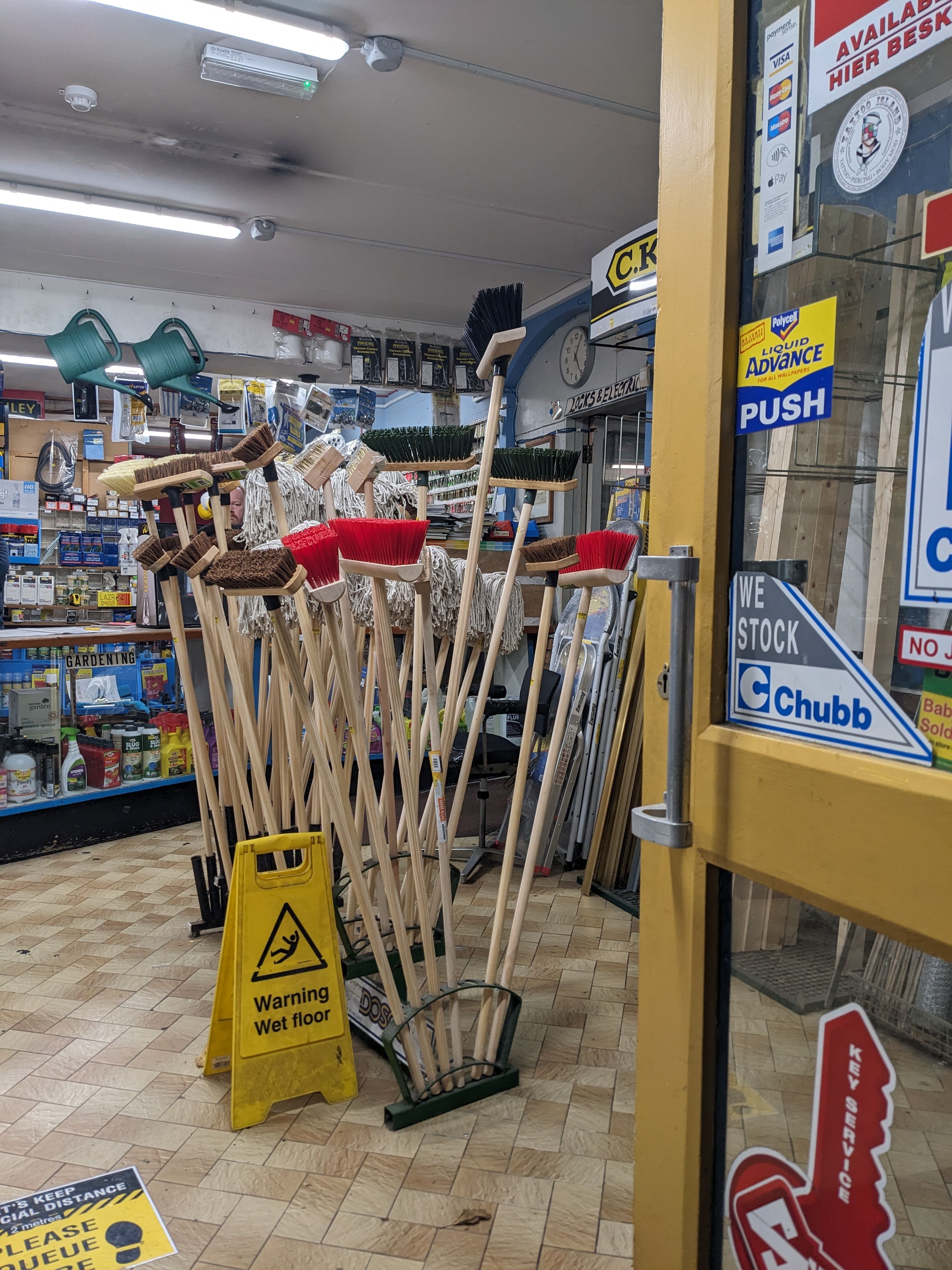
    I’ll try, this month. I’ll do my best. But for now I will leave you with this beautiful display of brooms, snapped (with permission) through the door of a shop on an already-dark Thursday evening at the end of November, as I and everyone rushed through the city, our passage lifting up the leaves among us, waiting for the ones who sweep them up while we’re asleep.

    Comfort for everyone, and safety, and belonging.
    And freedom from occupation, and from fear.
    And shared, active liberation.
    And peace of the positive kind, that is the presence of justice.
    Swords into ploughshares.
    Free Palestine.

    Thanks for reading. See you next week.

  • [while washing the dishes]

    [while washing the dishes]

    I looked closely at the grommets of the world

    We are eleven weeks into a twelve-week term right now, and if you are a teacher you know what I’m going to say next. I’m tired. I want to be clear: I love my work. I absolutely love thinking about poetry, love teaching, especially love teaching undergraduates. I love reading, walking, looking, and talking with others. I guess most of us who teach in universities love this work. Part of loving my work is the pleasure I feel in the creative act of teaching—responding to and thinking with others, making plans, writing lectures, arranging information visually, working to see students’ own wants and needs for their writing and to guide them in it. And also: we are eleven weeks into the term and we are probably all wiped out. I’m wiped out, anyway.

    During term time, while I do some writing and some making (and in fact this year I’ve done a lot more than usual of both), it’s only as the end of the term approaches and a wider kind of time appears on the horizon that the Ideas begin to arrive. This tends to happen just as the semester’s frenetic pace comes to its peak. Events! Deadlines! Conferences! Student consultations! Extra teaching I said yes to when November seemed really far away! Class plans to make! God forbid, a social occasion! Feedback to write! How is it Sunday again! Against the whipsaw of term-time, the drawing in of evening feels like extension and suspension. I look forward every year to late November and December. (I know someone else who does, too, and she wrote a book about it that’s just come out.) The nights are really getting longer now. It’s at this point, the point of the cosy darkness and the impending break in teaching, that I begin to get ideas for making and ideas for writing.

  • if on a winter's afternoon a traveler

    if on a winter's afternoon a traveler

    looking for a present, came across this post

    A note about a few upcoming events:

    This afternoon at 2 p.m. US Eastern (this evening at 7 Irish time) I will give the first of two lectures as the Annulet Inaugural Linkages Lecturer, a talk entitled “When you get someplace new, learn to read the landscape like an alphabet”. This talk will be broadcast online, for free. To register, please click here.

    On November 21, I will read and talk with Majed Mujed and Hua Xi as part of the Trinity College Literature & Resistance Series, in the Trinity Long Room Hub. You can book a place here (in-person only).

    On December 10 at 2 p.m. US Eastern I will give the second of the Linkages Lectures. I will give a talk entitled “On the line”. This talk will be broadcast online, for free. To register, please click here.

    Once these are done, I am never doing anything in public again. For at least a month. But I’m sure by the start of the new year I will be full of vim again. If you’d like to have me to read or speak at your university, school, class or organization in 2024, please drop me a line.


    This week, something a little different to what I usually do here, at least in some ways.

    The world is hard. It is also full of beauty. Looking for beauty doesn’t mean ignoring the hardness and pain of the world; we can hold the facts of devastation together with the facts of late roses in the autumnal dark. Beauty—the richness of ordinary life—is a reminder of why we go on, and what we go on for. Maybe it is even simply why we can go on, and how. Ordinary beauty is a signal of what we want for one another. It’s a sign of care, pleasure, warmth, safety, complexity.

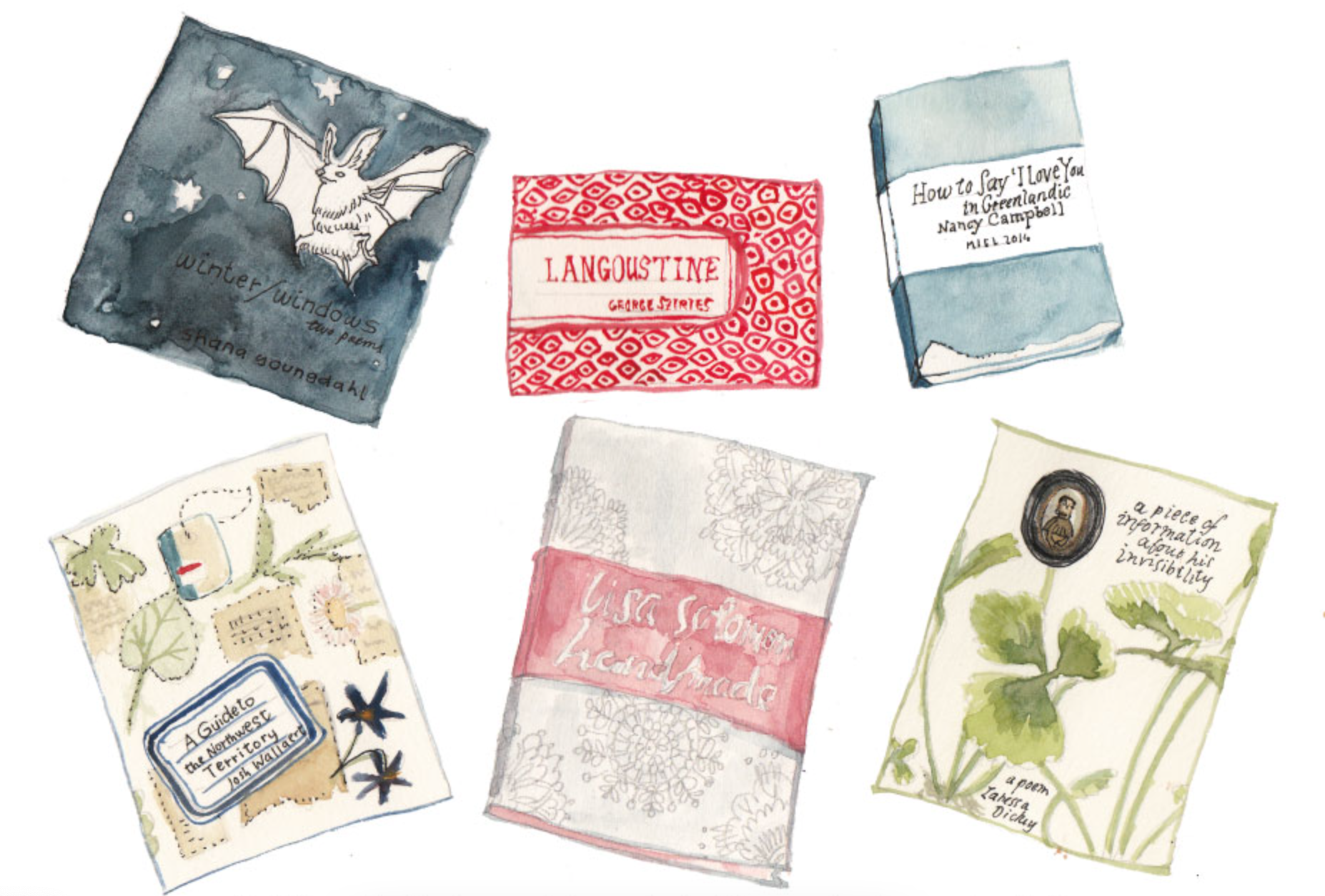
    A long time ago, I ran a small press called MIEL that made books as well as other things. (The name of the press means HONEY. I chose it for its sweetness and its made-by-bees-ness and its cultural properties and its color.) One of the things I did as part of bring the work of the press to readers was to write a blog about interesting, enchanting, desirable, unusual, and beautiful things that other small presses, artists, and craftspeople made. I loved to scour the much earlier internet for things that would surprise and delight both giver and receiver. I tried to look for things that were not mass-produced and that were made with care, the kinds of things that might mean giving just one present, but a very well-made one.

    This month as I’ve written about books and reading, I thought about MIEL and those blogposts, and decided that in place of this week’s essay I would look for and write about pleasing things. Maybe you are looking for or thinking about presents at this time of year; maybe not. Either way, I hope there is some reminder of how rich and beautiful the world of made things is.

    Most things I’ve collected here are either made by the person who sells them, or sold by someone who runs a small business. In the case of books, I’ve linked to secondhand sites or independent bookshops if possible. The makers and sellers are spread across the world, so if buying from shops and makers in your city or neighborhood matters, consider these categories of interest or ideas. I’ve indicated a couple of places where shipping may require special attention. If I can vouch directly for the object (because I’ve bought it or been given it), I’ll say so. No one has paid me or offered me anything to write about any of this. Whether or not you celebrate Christmas or any other present-oriented winter holiday, I hope you’ll enjoy my recommendations of beautiful, practical, and pleasant things.

    Finally, if you are in a position to do so: there are about 191,000 children in New York City who do not have a place to live. Some of them celebrate Christmas. The organization The Sled makes it possible for us, strangers, to buy one of those children a present they’ve asked for. You can do that here. (When I posted this elsewhere, someone replied that they were going to share this with their PTA. If you have that kind of connection, too, please share onward.)


    For artists and writers

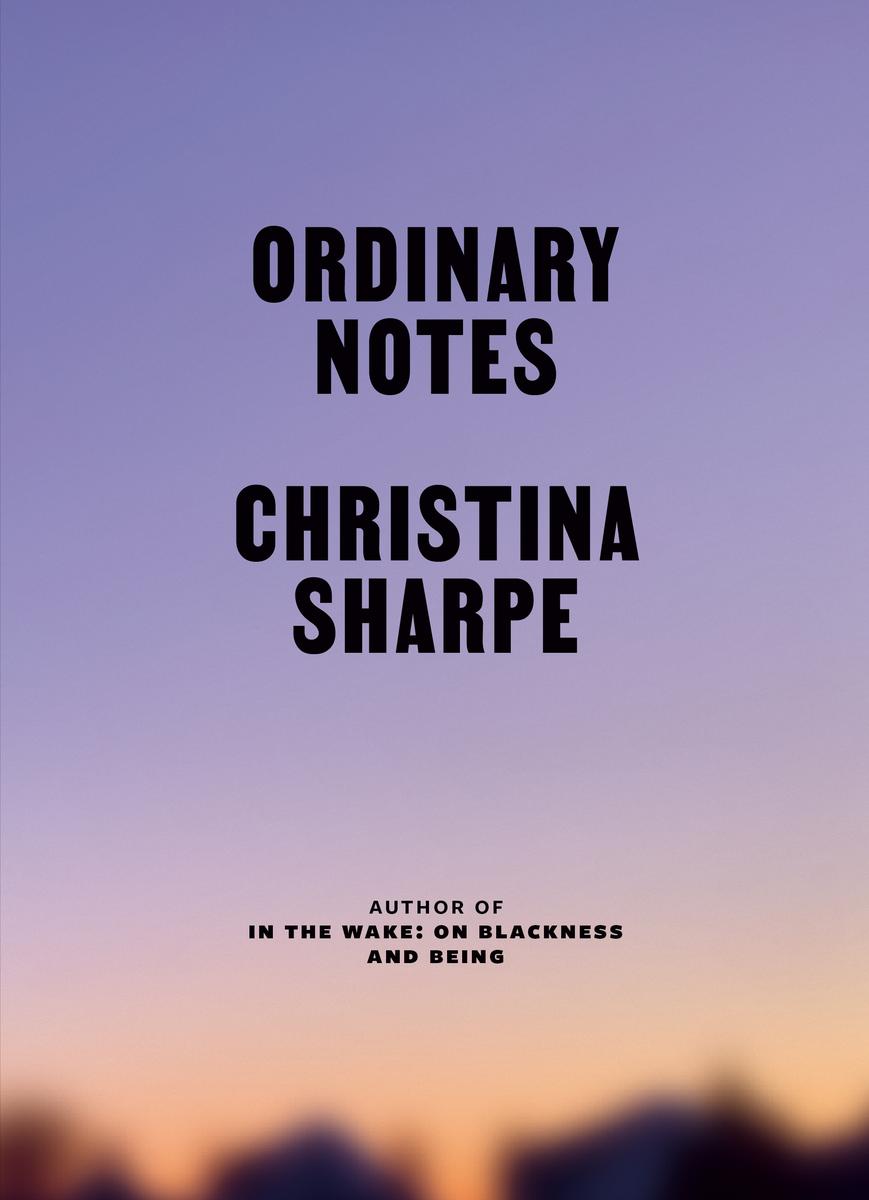
    There is no recent book I can recommend more highly than Christina Sharpe’s Ordinary Notes (link to purchase in the EU; in the UK). It is complex, intricate, exacting—and enacts, across its several hundred pages of text and image, a vital definition of beauty as “method”. This book thinks about seeing, about how to live together, about memory and memorials, about artmaking. It’s also about what Saidiya Hartman calls the “afterlife of slavery”, and for Sharpe that’s not unrelated to the practice of beauty as a method, or to the documentation of and sharp attention to all of ordinary life. If you have a writer, thinker, or artist in your life who hasn’t read this book, give it to them.

    There will probably not be another post like this, but maybe you want to read about walking, writing, looking, etc.:

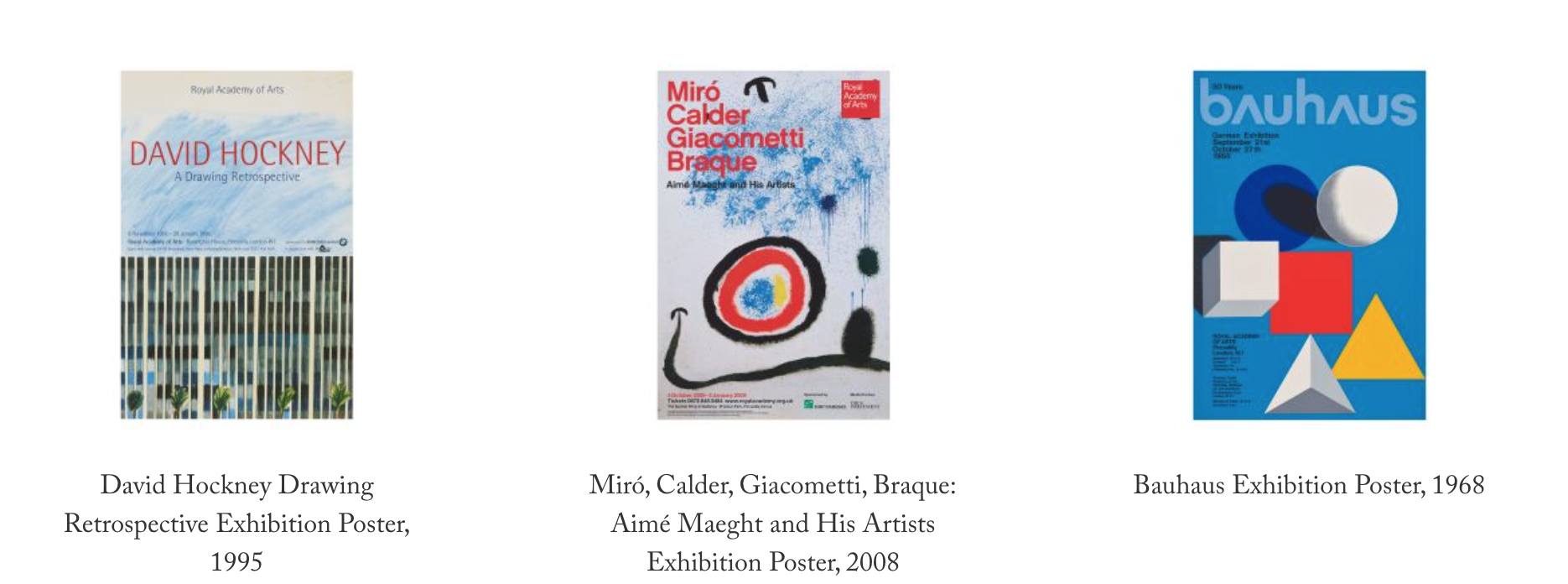
    If you are in the UK (shipping elsewhere may be prohibitive), the Royal Academy shop often has older exhibition posters for sale, some very cheaply. Be sure to check the dimensions; some are deceptively small, some deceptively large. (Last year I ordered two posters for my office where I work and was surprised when they came—they are the really big ones that would be posted outside to advertise an event. They were carefully packaged for shipping and the paper is a nice heavy weight.)

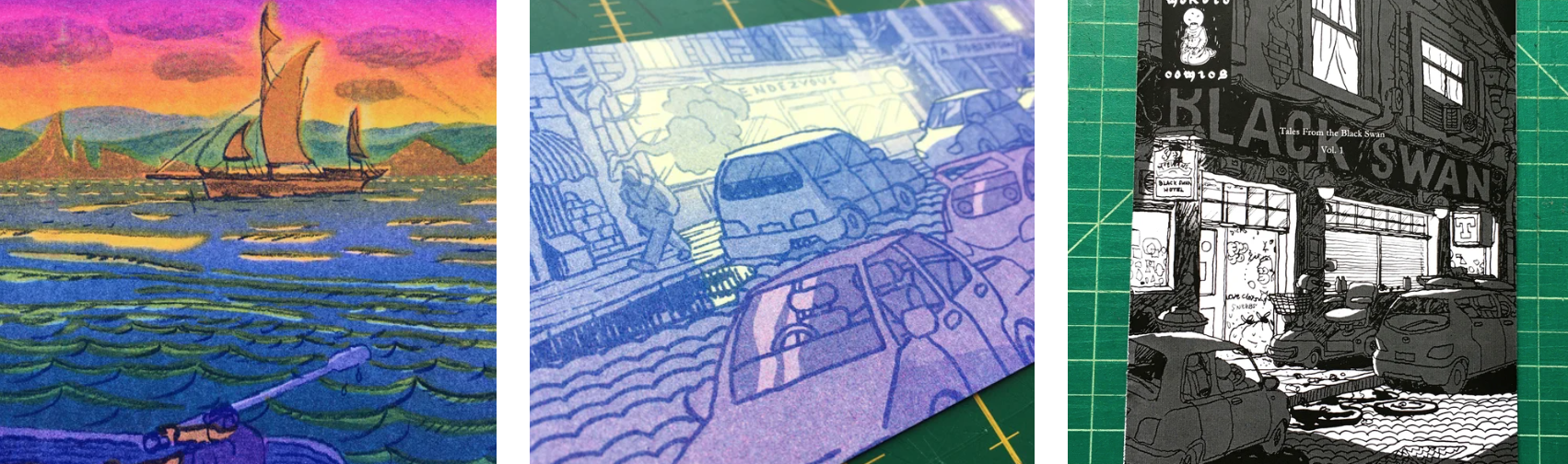
    Jamie Kinroy’s prints and zines are strange, spooky, and often very funny. He’s based in the UK. For young and old, but maybe an especially nice present for a teenager who likes to draw weird things. I know Jamie and his work, and have given several of his zines as presents.

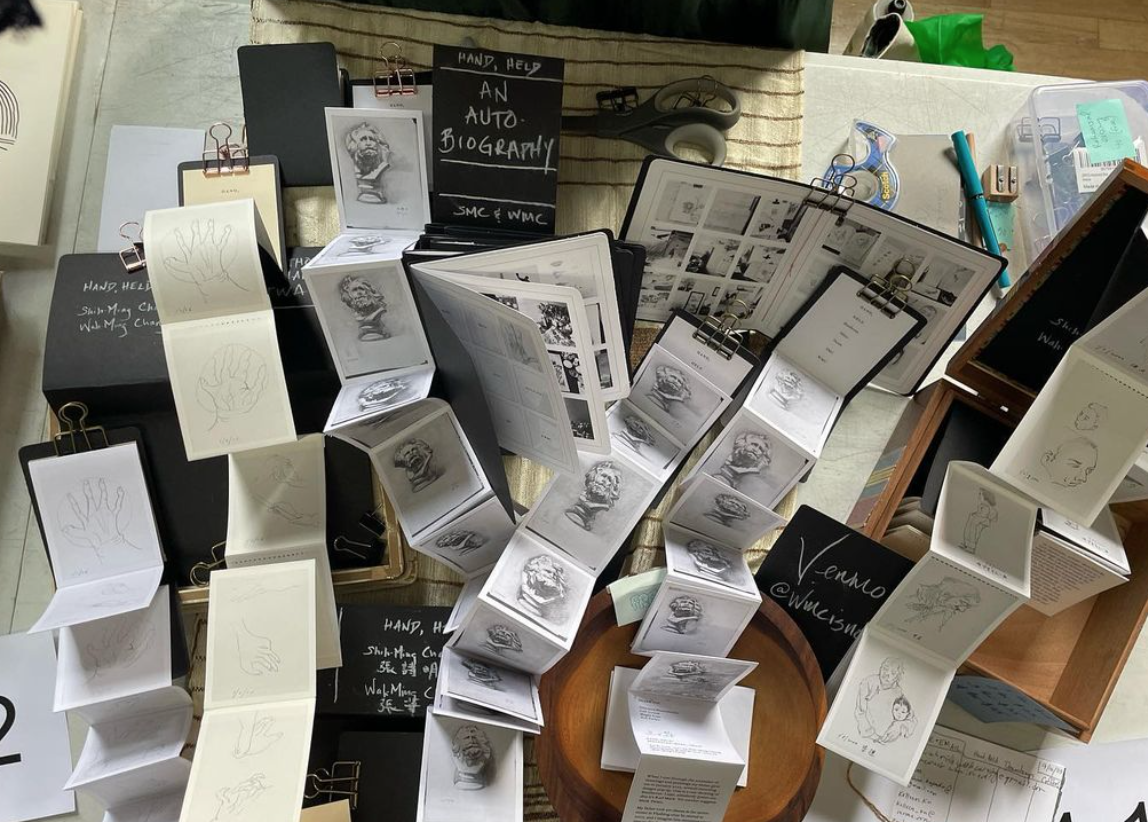
    Wah-Ming Chang is making a moving, poignant series of books and booklike objects in a series she’s calling Hand, Held as she works on a biography of her father, an artist. She sells them via contact on Instagram, and you can find them here.

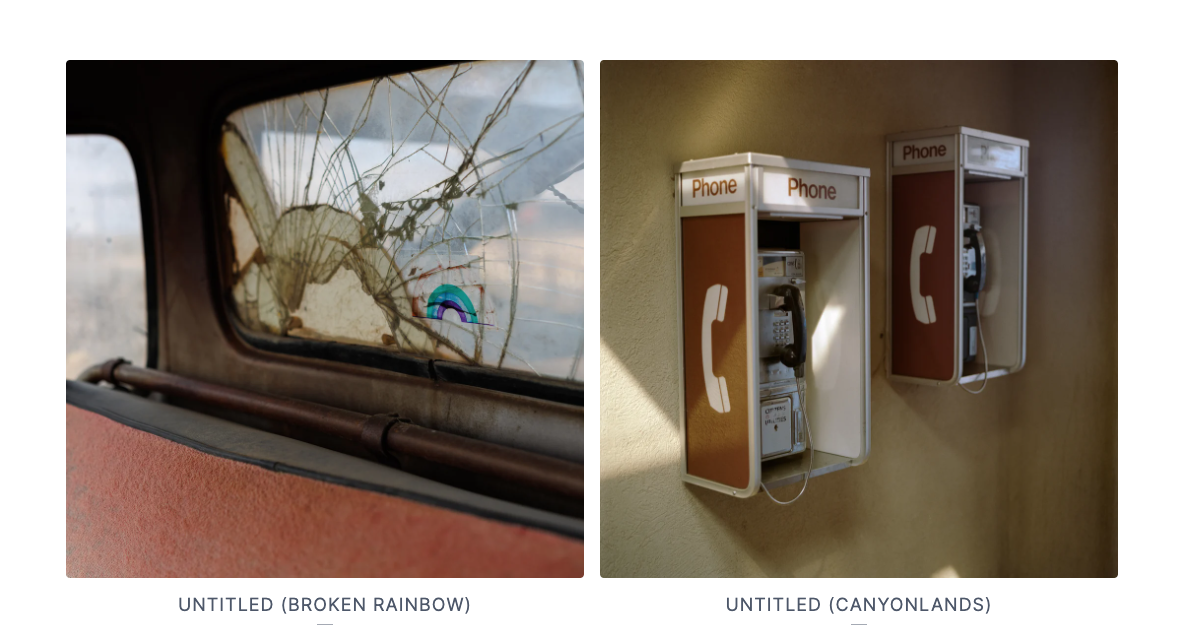
    Printmaker and photographer Andrew Schroeder has been collecting images of ordinary life for as long as I’ve known him. Working as a photo tech for colleges means he comes across the paraphernalia of past ways of making images, and he’s recently begun collecting those, too, making photographs of slides, negative carriers, and other ephemera. I love how in his photos what might be overlooked or discarded comes to the center of my vision.


    For people with children and their children

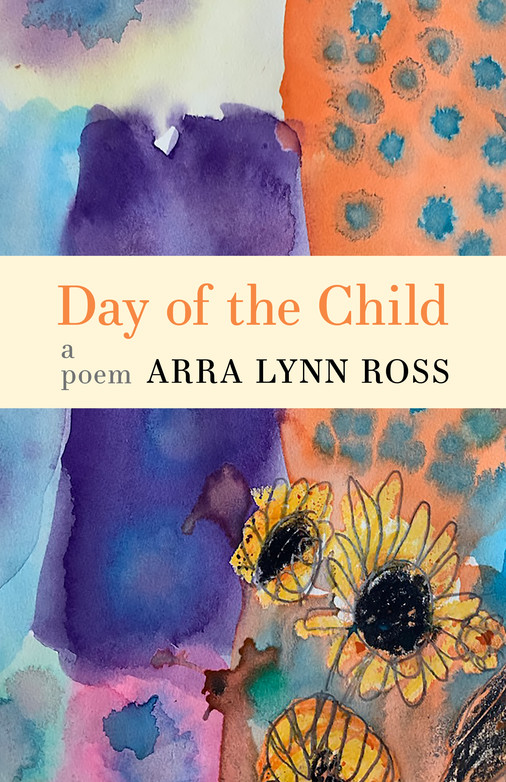
    Arra Lynn Ross’s slender book Day of the Child (UK) is a long poem in short pieces. It deftly captures the day-to-dayness of living with others and what Roland Barthes called “idiorhythmy,” a state in which people, living together, make space for multiple tempos and experiences of time. It’s a great example of a work made by many small returns to the page, and as such might be meaningful to anyone struggling to balance the demands of a domestic life with those of an artistic life. (Full disclosure: I provided a blurb for this book—and have read it several times, given it to others, and talked about it elsewhere. It’s good!)

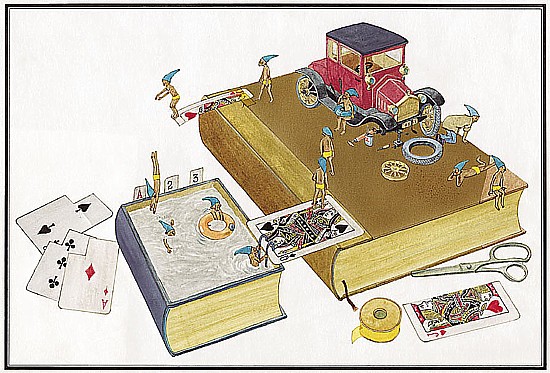
    Mitsumasa Anno’s books—of alphabets, numbers, animals, and imaginary and real places—are beautiful to look at for children and adults alike. A selection of used copies is generally available on eBay. I treasure the copies I have from my childhood.

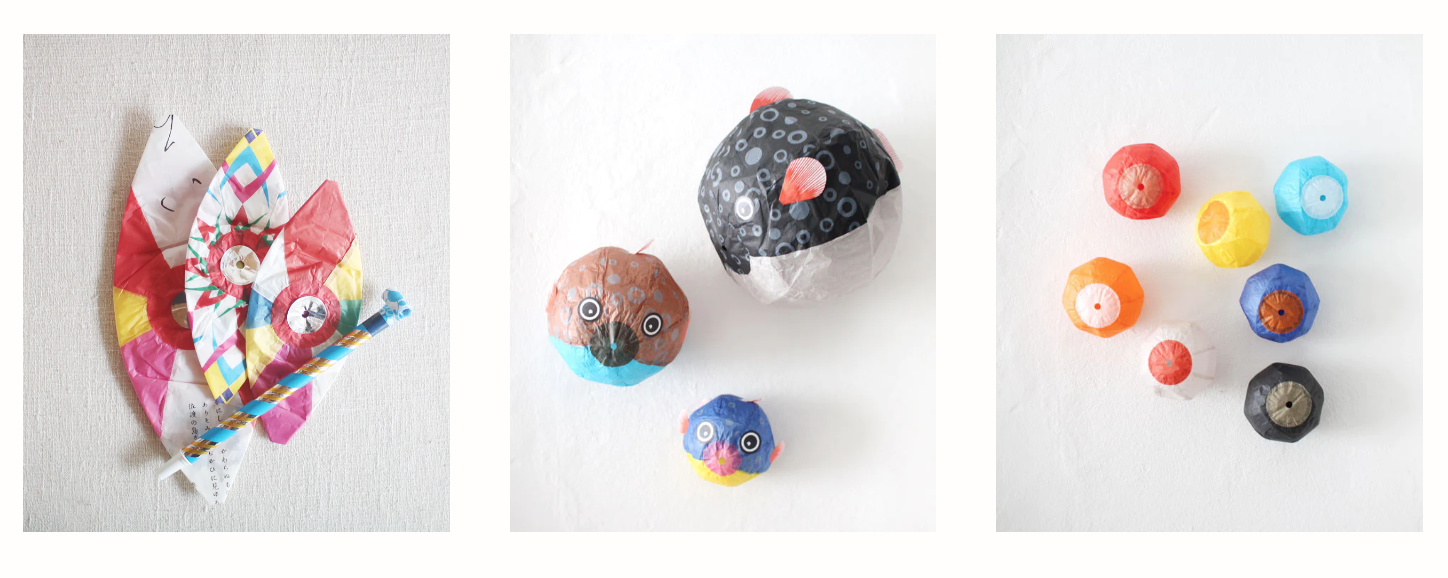
    Uguisu has a collection of paper balloons that are charming and will delight anyone under the age of 100. You may also be able to find these in a shop near you, especially a Japanese department store, a Japantown, or an art supply store. (On a related note though in a different shop altogether: Here is some exceptionally cute washi tape with designs of Japanese folk toys on it.)

    I have ordered things from Uguisu in the past and they always arrived safely and well-packed, often in beautiful envelopes!

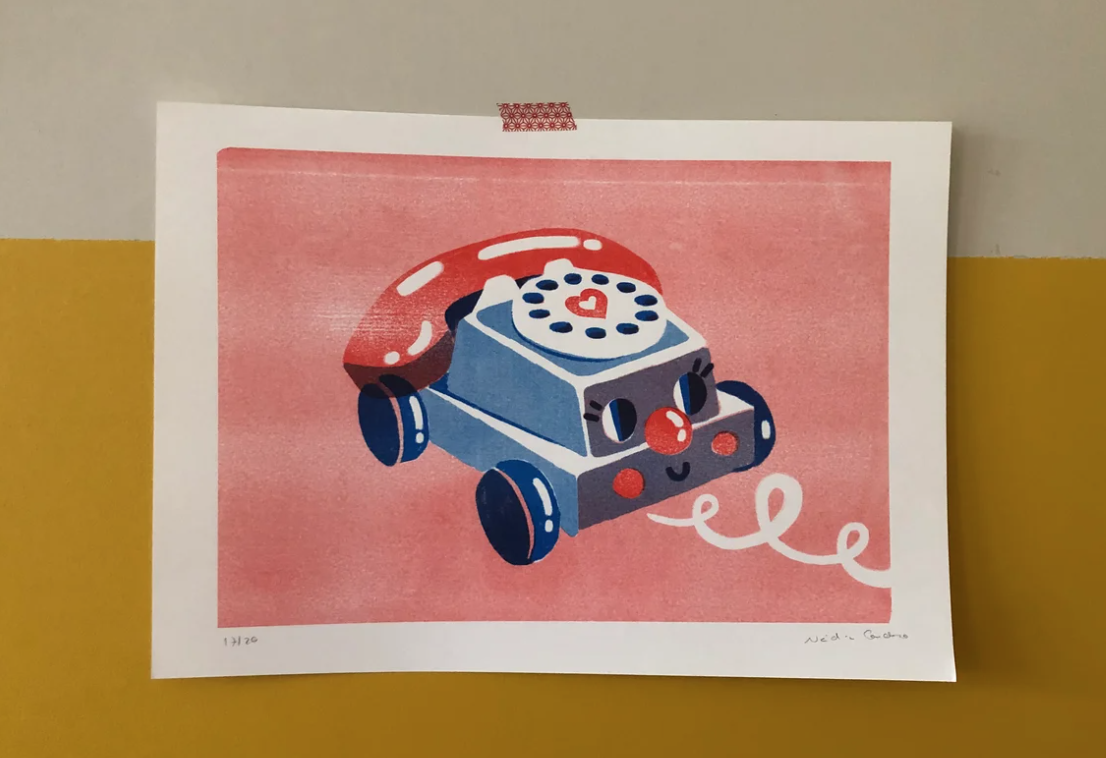
    Speaking of toys, Nadia Cardoso’s risograph print of the Fisher-Price telephone is perfect. She also makes very adorable ceramics, most of which sell out immediately. She’s based in Dublin and often exhibits at Dublin Comic Arts Fair, which is where I encountered her well-made and carefully packaged work.

    Finally, the easiest presents are sometimes the ones that can go in an envelope and fly across the sea. I remember the sheer pleasure of a sheet of stickers from childhood (and, ahem, more recently). Meowashi on Etsy sells extremely cute stickers you may have trouble making decisions about. Consider yourself warned.


    For color-lovers

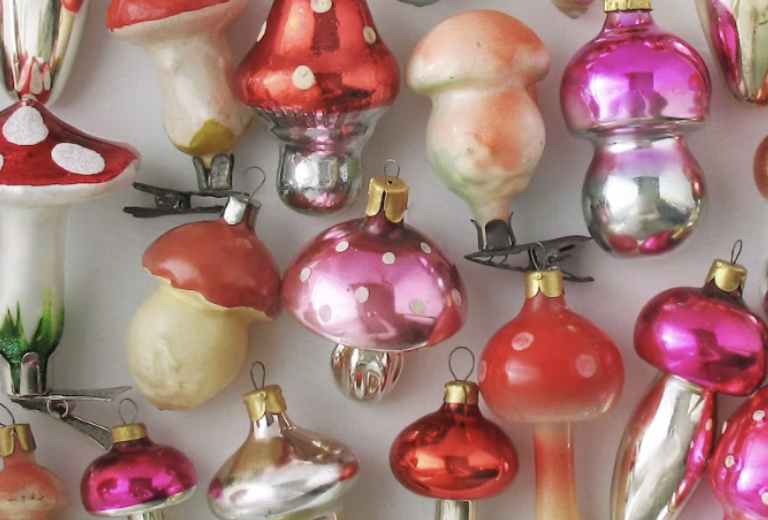
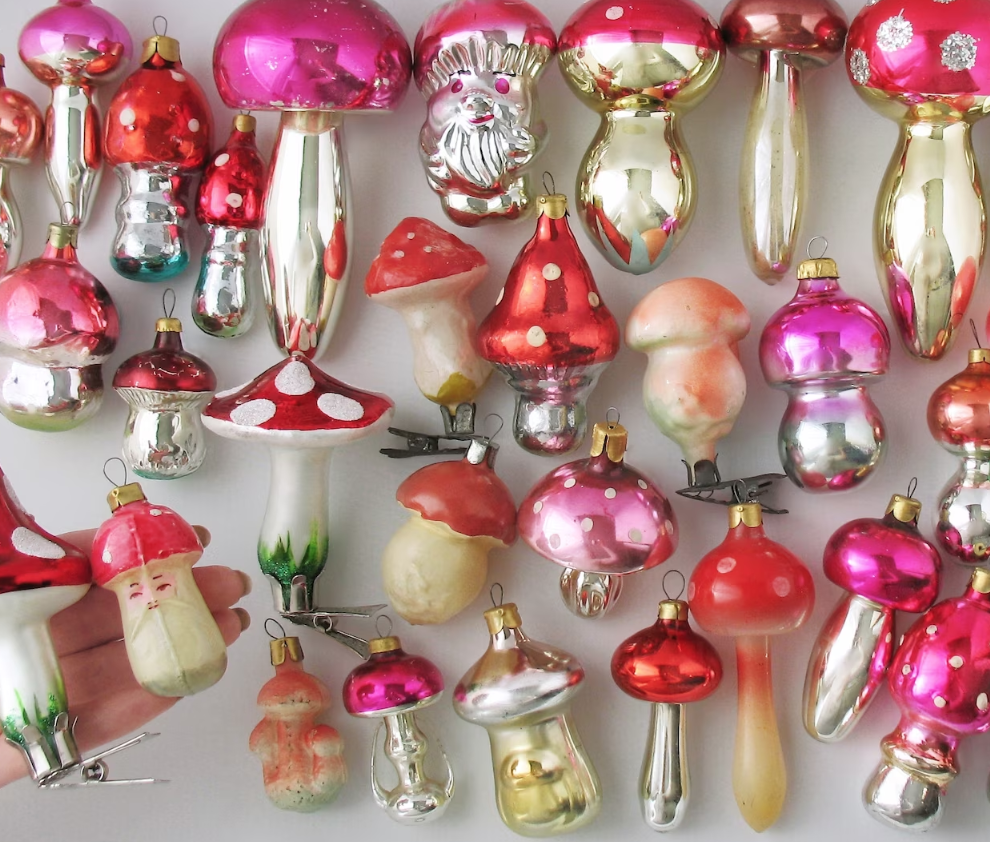
    There are several shops on Etsy—most that I can find seem to be based in Ukraine—that sell vintage glass ornaments. The above image is from Vintage Glass Decors. Most ornaments are priced between €5 and €15—not cheap, but if you’re looking for something unusual, or just want to look at the pretty shapes and colors, worth a browse.

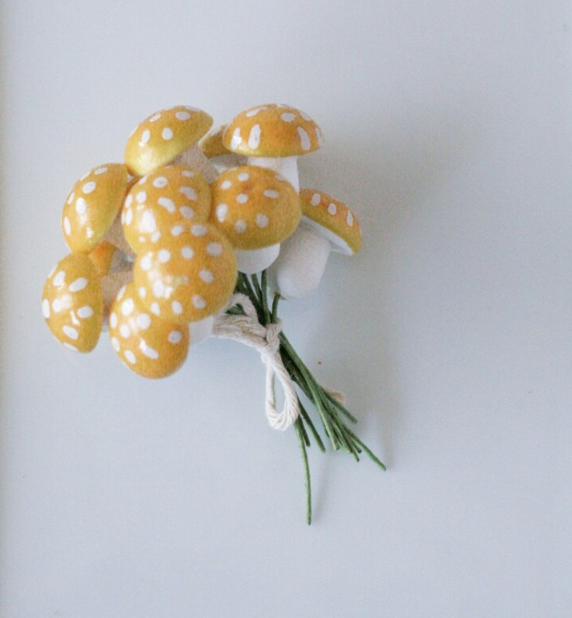
    Simply for the charm of them, spun-cotton mushrooms. The Etsy shop Caramelos usually has several colors in stock. I have ordered from Caramelos in the past and always had good experiences.

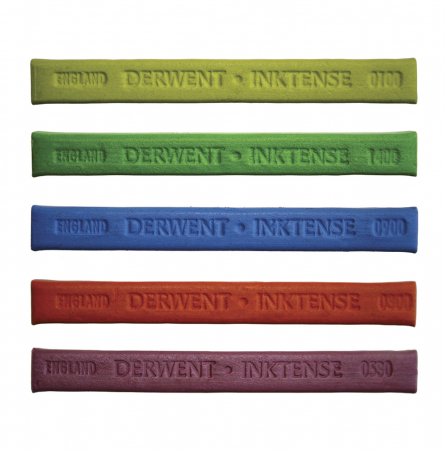
    Derwent Inktense blocks give saturated color and can be used to draw or used wet as paint. They are really pleasing to work with. In Ireland here; in the UK here; in the US here, or ask at your local art store. They can be purchased individually or as sets in a tin. Anyone who loves color will enjoy these.


    For people who sew

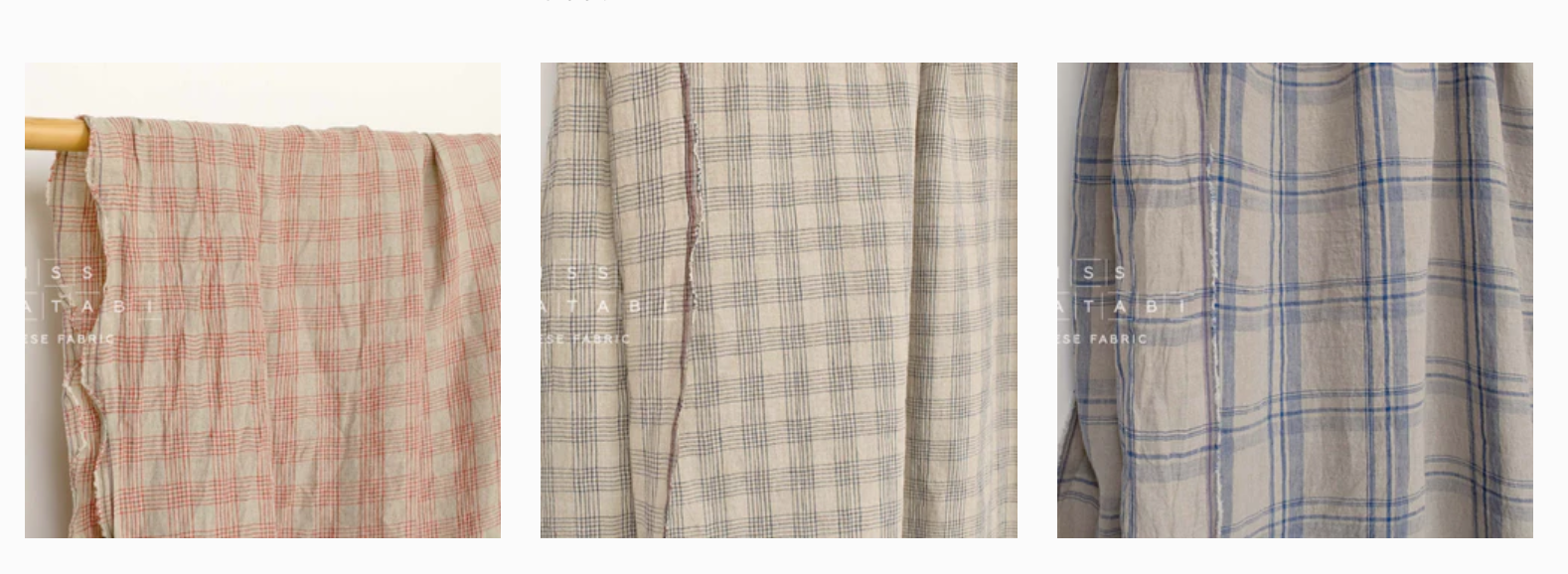
    Miss Matatabi has a collection of soft cottons with subtle plaids, good for garment sewing. (I haven’t ordered any of these but I’ve ordered from Miss Matatabi many times over the years and have always found the shop to have good service.)

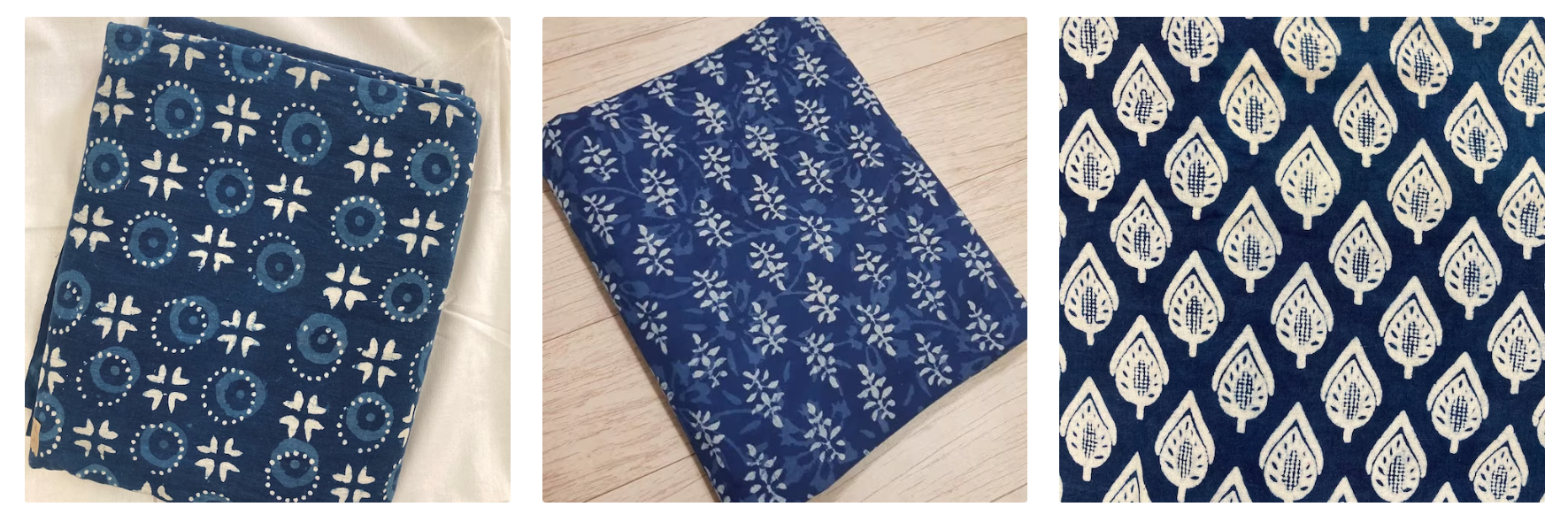
    The block-printed fabrics at Cotton Weavers are really nice. They are lightweight, have a (to me) pleasant smell from the production process when they first arrive, and I have had excellent experiences with this shop’s shipping.

    In Ireland, The Fabric Counter has a nice range of 100% linen fabric. It’s good quality—may seem a little shiny when it arrives, but the sizing washes out and the hand is very soft and supple after that. Great for garment sewing. I can’t vouch for shipping as I’ve only purchased in the shop. They do ship outside of Ireland.

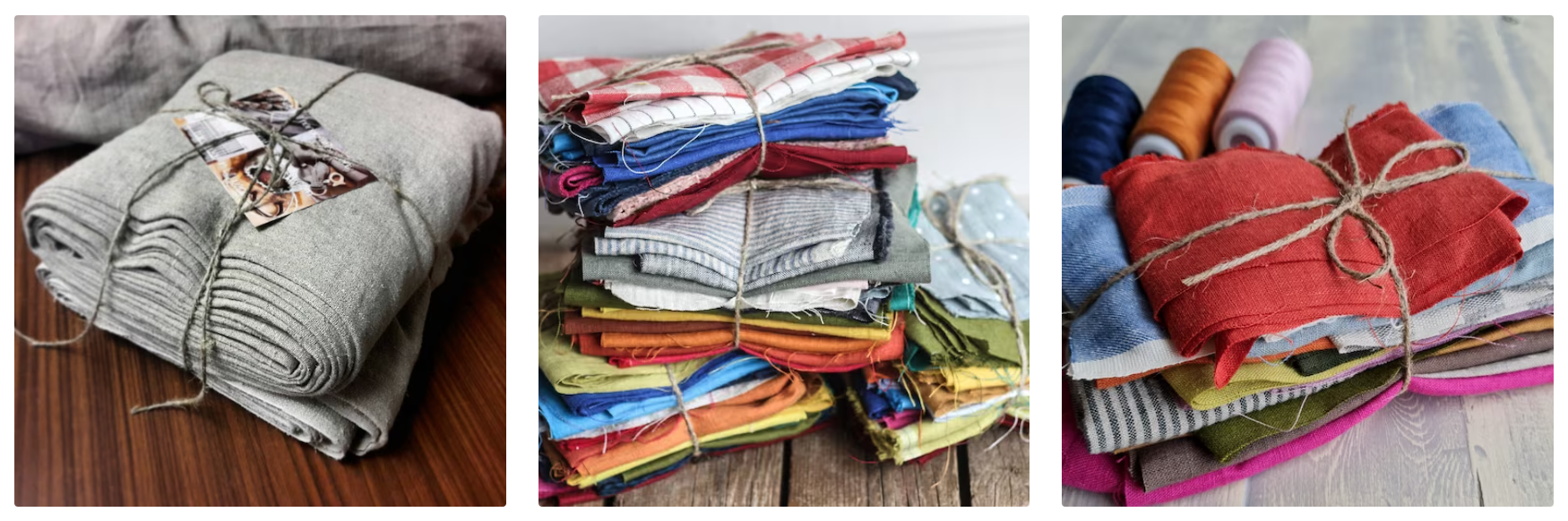
    The Raw Linen is one of many Lithuanian linen sellers on Etsy. They sell finished objects, but what I’ve bought from them in the past are bundles of scrap fabrics. You can specify colors and they are really good about making sure you get what you ask for. The fabrics are very high quality, 100% linen. Great for someone who makes or would like to make quilts or toys or small objects or patchwork of any kind.

    If you have someone in your life who likes to sew, Gütermann makes 100% cotton threads that are a treat to work with. Here is a place in the UK that sells ‘30’ (a slightly heavier thread, good for hand-sewing especially). Here is a place in Ireland selling a lighter weight 100% cotton thread. Gütermann threads are widely available in the US and elsewhere; ask your local fabric shop.


    For the pleasure of everyday life

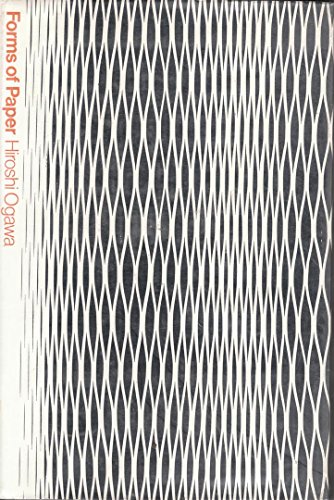
    How To Wrap Five Eggs: Traditional Japanese Packaging by Hideyuki Oka and Forms of Paper by Hiroshi Ogawa are simply beautiful objects to have around. They will give you new ways of looking at your everyday surroundings and of thinking about the composition of the world.

    Not cheap at all, but Uguisu has some unusual candles in very appealing colors and shapes, as well as cast-iron candle holders.

    I have ordered beeswax candles from this company in the US and they were good quality. Beeswax candles are such a nice present; if you have a local farmer’s market or similar shop, there is a good chance someone there is selling them. Ditto to un- or lightly scented soap. I am sure I’m not the only person here whose favorite ‘department store’ as a child was Walgreens? Soap, tealights, chocolate, and stationery still make good presents.

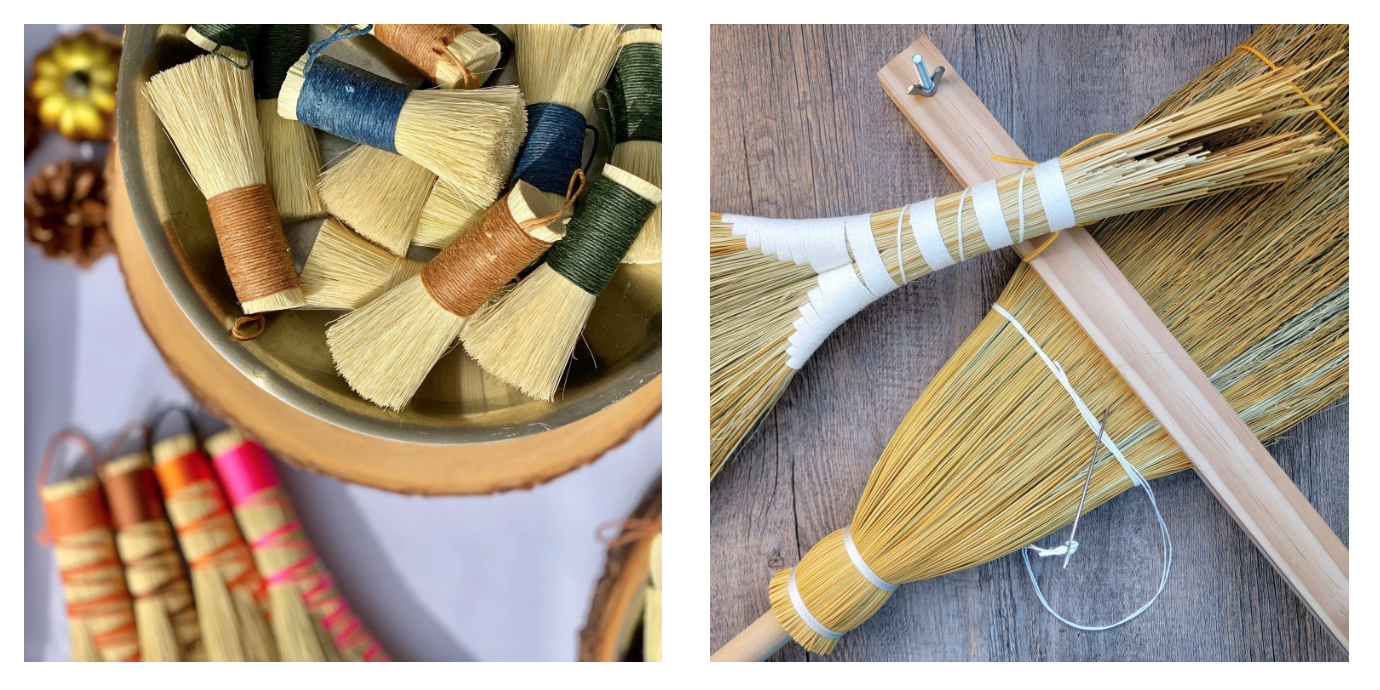
    We gave a newlywed couple a pair of brooms made by Redmond Philbert. They loved them. We bought them in this shop when we lived in Maine. There may be a traditional broom-maker near you, or maybe you’re near one of these upcoming markets.

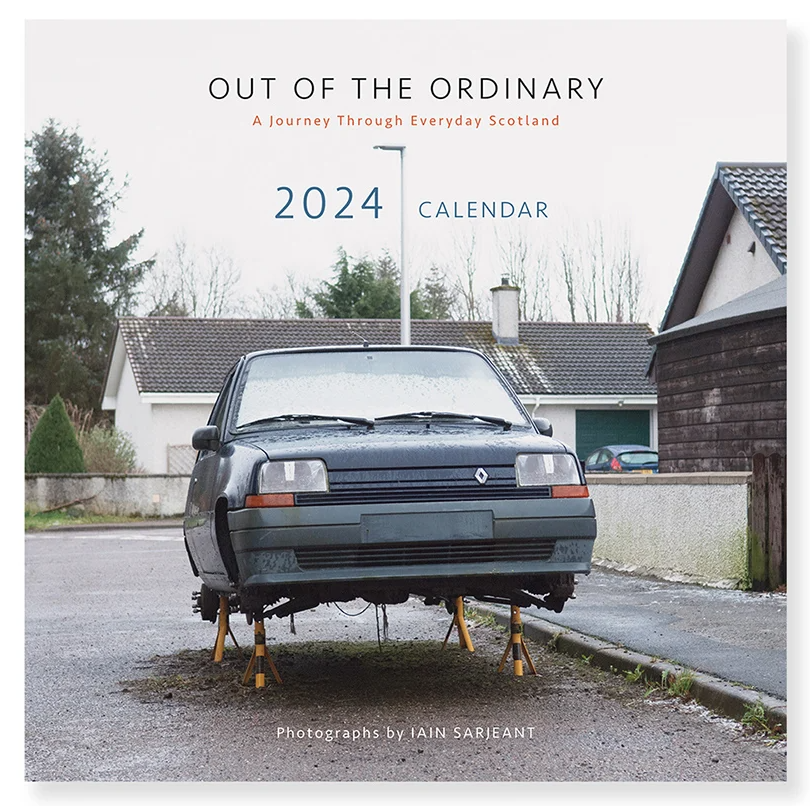
    I only recently came across Another Place Press, but their calendar looks like it would be a delight every month.


    For music-lovers

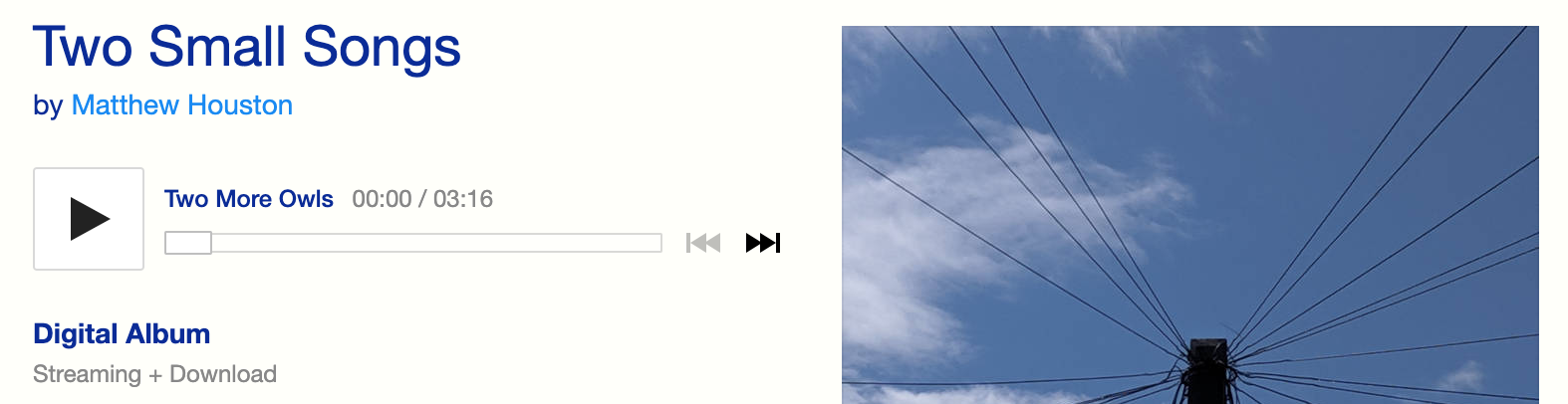
    The album Two Small Songs (2020; digital only): gentle lyrics, thoughtful playing. “Night/Words” is one of my favorites of Matthew Houston’s songs. Full disclosure: he’s my partner. And he’s also a really good musician.

    A lot more raucous is So Said So’s 2022 release Evil Wants You (digital, on cassette, and CD). Made by a trio comprising Matthew Houston, Cory McWilliams, and Dominic Grosso, this album is a call to pay attention to and care for the world around us, the people in it, and the art we make. My favorite track is “When My Sister Called Me”.

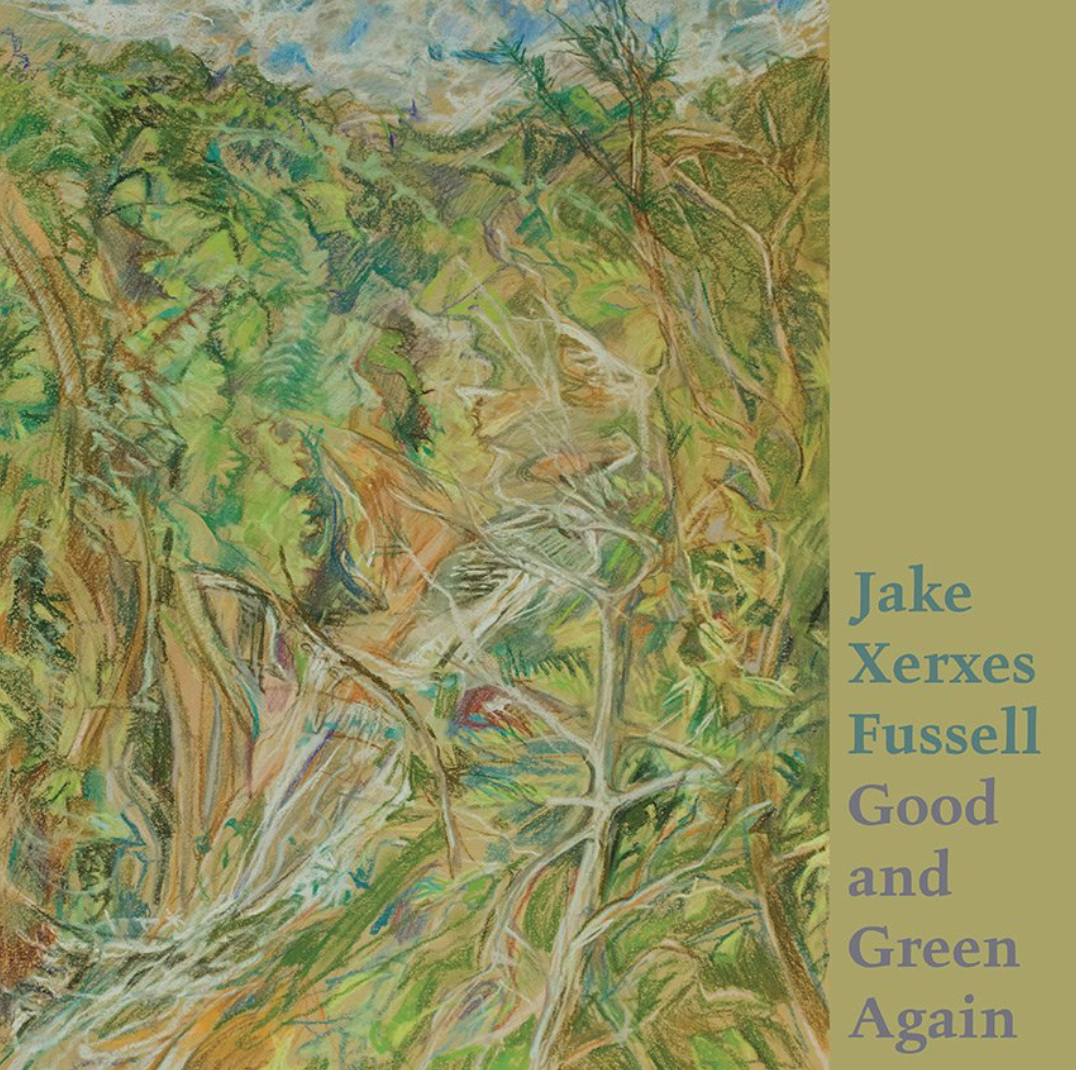
    Jake Xerxes Fussell’s album Good and Green Again (2022, on vinyl and CD) is beautifully picked US folk: melodic and slightly melancholy, it does sound green to me.

    Ichiko Aoba’s atmospheric and delicate music is sure to delight. She has many albums, so have a listen on Bandcamp. Some are solo guitar, some are with electronics, some are with other players. Some releases are digital-only; others have physical media.

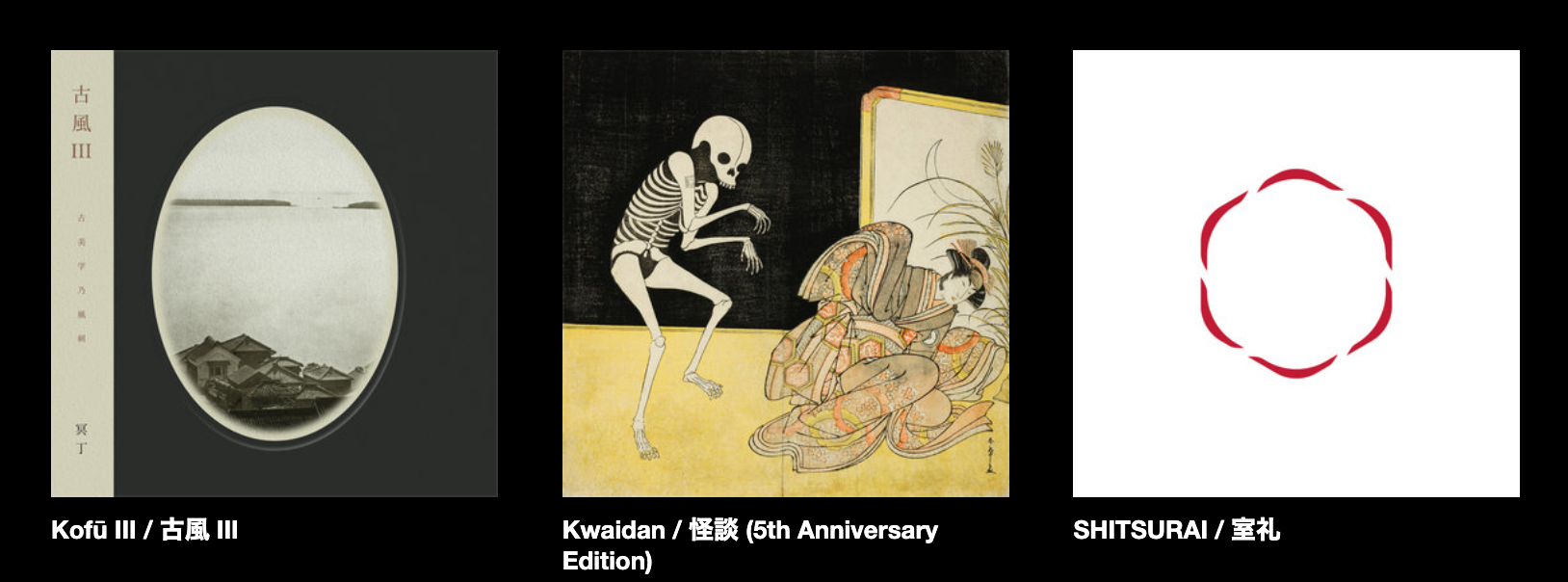
    Everything Meitei makes, I love. Great music for train journeys, for evening listening, for writing (if you write with music/sound). Complex and layered and endlessly interesting. Some releases are digital-only; others have physical media.


    For pretty much anyone

    And last but not least, one of the best purchases of my year was Gentle Laundry, a zine from Late Night Copies Press. (Note: they only ship once a week, or sometimes once a fortnight, and they use media mail. So order from them early if you have a deadline!) Gentle Laundry is informative, interesting, well made, and took me back to the pleasure of reading early issues of Martha Stewart Living. The press (and the artist who made this zine) makes/does a lot of stuff I like, and this zine is a hands-down winner. For anyone in your life, including yourself, who would be curious about chemistry, home economics, what to do with smelly clothes, and how to use (and make) non-petroleum-based washing detergents. (And what the differences are between a soap and a detergent, too!!) Can you tell I’m very enthusiastic about this? For $10+shipping, your clothes-washing life will change.


    I hope you’ve enjoyed this catalog of pleasures. I’m interested to know if there is something made by a small press, an artist, or a craftsperson that you’ve loved or would recommend.

    And finally—
    Let all beings be free, safe, beloved, and well.
    Stop the bombs. Swords into ploughshares. Free Palestine.

    See you in a week.